
REVIEW · GOTHIC QUARTER TOURS
Barcelona’s El Raval and the Gothic Quarter: A Self-Guided Audio Tour
Barcelona’s back streets can feel like a movie set. This self-guided audio tour threads El Raval and the Gothic Quarter into one walk with clear narration, built-in navigation help, and stops you can reach without rushing.
I like the easy pacing you get with a self-guided format, especially in neighborhoods where you naturally slow down to look closer. I also like that the VoiceMap setup comes with offline access so you can keep your data for real-life use while still hearing the audio and seeing the map.
The main drawback to consider is app navigation. If your phone GPS struggles in tight lanes and tall-building corridors, you may need to lean more on the on-screen map than on position tracking.
Key Things You’ll Notice on This El Raval and Gothic Quarter Walk
- Offline audio and offline maps mean you can keep moving even with patchy signal
- A built-in map helps you avoid the mental tax of getting lost
- Lifetime access lets you repeat the walk whenever you want, not just on one day
- Stories with sharp local details, from the House of Mercy to El Peto
- Photo, art, and food landmarks are spread through the route so it never feels like one long museum stop
- Neo-gothic sights in the Gothic Quarter come with context, not just postcard views
Price and Value: $11.99 for a Walk You Can Repeat
At $11.99 per person for roughly 1 hour 15 minutes to 1 hour 30 minutes, this is a value play if you want a smart walking route without buying multiple tickets. You are paying for narration, map help, and a guided path through older Barcelona neighborhoods, not for timed entry into museums.
The big value is the format. With lifetime access, you can come back later, try a different pace, or pair the walk with other days in the city. For Barcelona, that matters because the best moments often happen when you pause in a square, pop into a market, or stop for coffee instead of racing through a checklist.
One practical thing to plan on: you’ll want to bring a smartphone with headphones. The experience provides the VoiceMap app, plus offline audio, maps, and geodata, but it does not include the phone or audio gear. Also, any market or café stops are on your schedule, since tickets and food are not included.
You can also read our reviews of more guided tours in Barcelona

Where You Start on La Rambla, and How the Route Stays User-Friendly
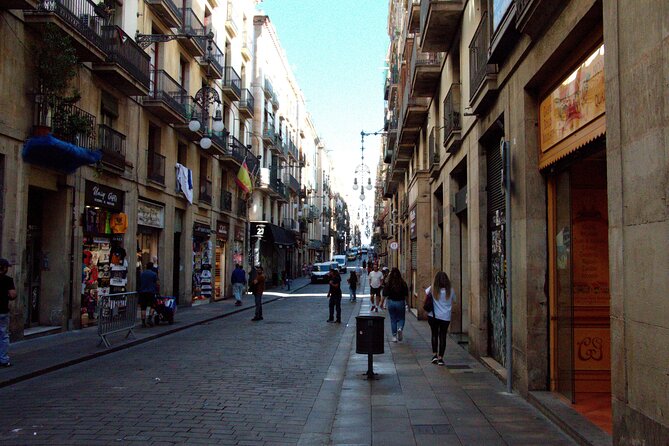
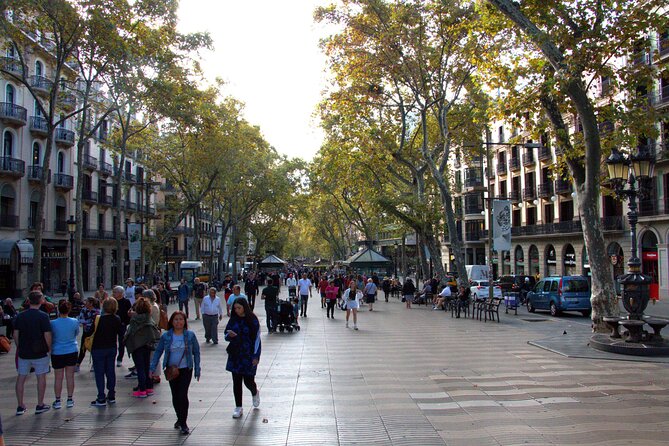
You begin at Font de Canaletes on La Rambla, 133 (Ciutat Vella). The tour ends back at the meeting point, so you are not trying to solve a one-way logistics puzzle.
The route design is the hidden strength here. You get a map in the app, and the narration is meant to keep you moving through narrow lanes, side streets, and popular squares. That matters in Barcelona because getting turned around is easy once you leave the main thoroughfares.
Still, keep expectations realistic. The one review complaint about GPS confusion makes sense in dense areas. If your phone’s location marker jumps around, treat the on-screen map as your primary tool, not your phone’s dot. This is especially useful in the places where streets get tight and the buildings feel tall and close.
First Stretch Into El Raval: Dense Streets, Tough Truths
After leaving La Rambla, the tour heads into El Raval, a neighborhood that historically became one of Europe’s most densely packed urban areas. The audio framing helps you see the area as more than a set of street corners. You are learning how a district shapes daily life, and how that life changes over time.
Expect narrow lanes and a slightly unpredictable feel, in a good way. Raval has that mix of old buildings, quick street views, and sudden opens into small squares where you catch your breath. The self-guided format is perfect here because crowd energy can swing fast, and you can move when you want rather than when a group does.
The tour then guides you through a darker, specific story: how Barcelona’s destitute mothers used to drop off unwanted babies through a hole in the wall at the House of Mercy. The stop is short, but the topic hits hard. I like tours that do not just show beauty. This one gives you context for why some corners of the city carry heavy human history, not only aesthetic charm.
Mercat de la Boqueria and the Fun Test of Time
Next up, you get an easy win: Mercat de la Boqueria. The tour notes that it has been operating since the 1100s, which is the kind of fact that instantly changes how you view a food market. You stop thinking of it as a tourist place and start thinking of it as a living institution.
You also get a practical advantage. Market streets can be overwhelming, but stepping in on your own timing is calmer than being shoved forward at peak hours. Since entry fees and tickets are not included, you are free to enter and browse without worrying about a paid itinerary hurdle.
If you want to make this stop extra fun, keep it simple. Walk in, listen to the audio cue, and pick one thing to look at closely, not five things to buy. In a place like Boqueria, you’ll get more from slow observation than from trying to sample everything at once.
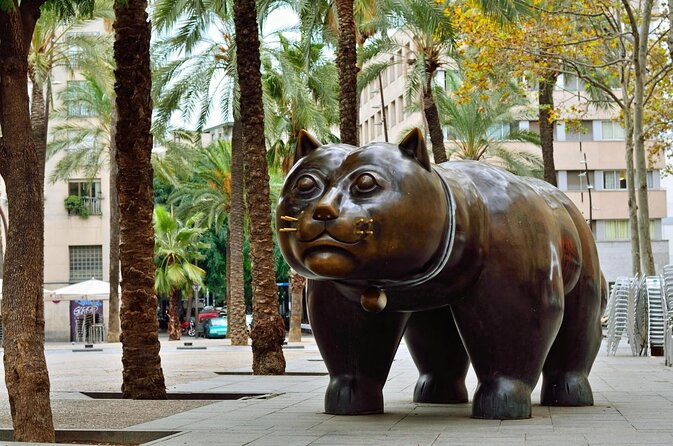
Rub the Crown Jewels: Fernando Botero’s El Gato
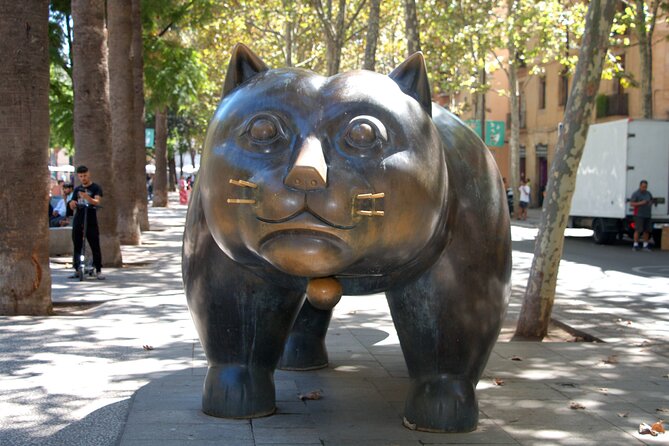
One of the most playful moments on the walk is Fernando Botero’s fat feline statue, El Gato de Botero. The tour encourages you to rub the crown jewels, which turns a sculpture into a shared ritual.
This is the right kind of break in a walk that includes heavy history. After House of Mercy, you need a lighter beat. The audio makes the art feel less like a lecture and more like a local tradition you can join.
The practical tip here is to pause. Statues in Barcelona are often surrounded by passersby, and the sightline can shift as people walk around. Take 30 seconds, get your view, then keep moving. You will not miss anything if you keep it casual.
More Barcelona tours and experiences for the shortlist

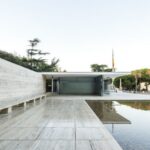



Palau Güell: Gaudí With the Volume Turned Down
Then comes Palau Güell (Güell Palace), one of Gaudí’s most understated buildings. That phrase matters. Many first-time Gaudí fans expect fireworks everywhere, but Palau Güell is more about control, detail, and the sense that the architecture is doing work even when it looks calm.
This stop is valuable because it teaches you to spot craftsmanship instead of just chasing famous forms. In self-guided audio format, you can stay at the facade longer than a timed group visit, especially if you want to compare what you’re seeing to what the audio describes.
A heads-up based on the tour’s structure: tickets or entrance fees are not included. So you will likely get the most value from the exterior experience and any quick views you can make from where you are. If you care about going inside, you may want to check separate ticket options during your planning.
Squares and Narrow Lanes: Plaça de Sant Jaume to Plaça Sant Felip Neri
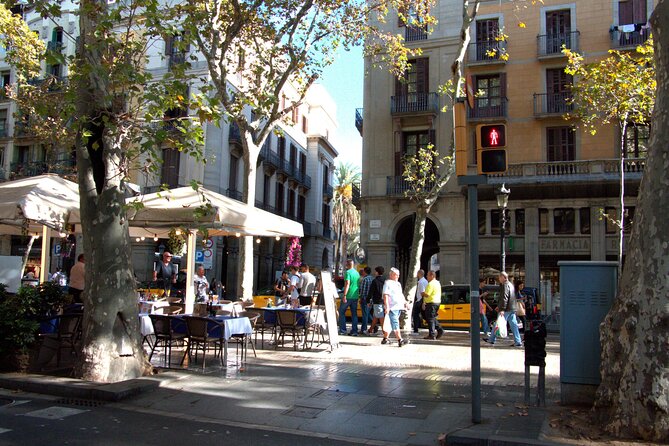
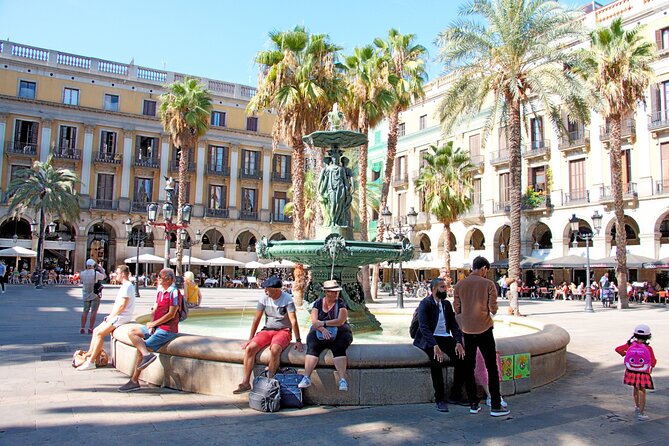
For the walking portion, the tour weaves through lanes and popular squares like Plaça de Sant Jaume, Plaça Nova, and Plaça Sant Felip Neri. This is where the self-guided format shines because Barcelona squares reward pausing. You can stop when your feet tell you to, and you can keep walking when your curiosity does.
These squares also help you “reset” your brain between different neighborhood vibes. Raval feels dense and layered. The Gothic Quarter feels more monumental. Squares are the transition points, and the audio timing makes them feel intentional rather than accidental.
If you’re someone who normally rushes from sight to sight, this tour can change your habits. It nudges you to slow down just enough to notice street textures, small storefronts, and the way people actually move through the space.
Can Culleretes: Two Origin Stories, One Fun Moment of Thinking
At Can Culleretes Restaurant, the audio brings you two origin stories and invites you to choose which one you believe. That’s a small thing, but it makes the stop interactive without asking you to do anything complicated.
I like stops like this because they turn you from a passive listener into an active judge. You are not just soaking up facts. You’re weighing stories, and that makes the neighborhood feel alive rather than static.
Carrer d’Avinyo and Picasso’s Les Demoiselles d’Avignon Connection
Next, you take a shortcut through Carrer d’Avinyo, a street that inspired Picasso’s Les Demoiselles d’Avignon. The value here is not just the art reference. It is that Barcelona’s streets are not only for getting around, they’re part of why artists could see the world differently.
This kind of cultural link works best on a walking tour because you can stand where the inspiration grew. Even if you do not know every detail of the painting, the audio context helps you connect the dots between street geometry and creative transformation.
Meson del Cafe and the Coffee Break That Fits the Walk
The tour also includes a stop at Meson del Cafe, where you can find what the tour describes as the city’s best coffee. It even mentions that you might bump into the mayor.
Take that as part of the local charm, not a guarantee. Either way, it is a smart placement for a break because it lands later in the walk, when you likely want something warm, quick, and not too complicated.
Because food and drink are not included, you get to decide what fits your budget and appetite. If you want a pure walking-and-story experience, you can just take a short pause. If you want a small recharge, order one drink and let the rest of the city continue moving around you.
Enter the Gothic Quarter: Cathedral of Barcelona and Pont de Bisbe
When the tour shifts into the Gothic Quarter, you get the kind of sights that look like postcards, but the audio tries to help you see them as lived-in architecture. The narration points out neo-gothic attractions, including the Cathedral of Barcelona and Pont de Bisbe (the Bishops Bridge).
This is one of those areas where crowds can build fast. The self-guided format helps because you can approach the bridge when it feels calm, not when your smartphone group schedule says it should be busy.
The cathedral stop is especially worth your attention if you like architecture details. Even without ticketed access, you can still appreciate the scale and the way Gothic spaces create a different sound in your ears, like the street noise gets absorbed.
El Peto: The Kissing Mural Made of 4,000 Images
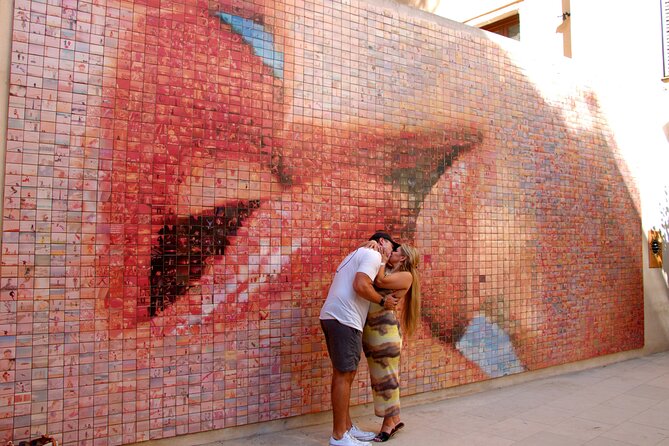
One of the most distinctive stops is El Peto, a kissing mural made of 4,000 photographic images of freedom, donated by the public. This is not a typical statue or landmark stop. It feels personal, because it is built from many people’s contributions.
I like that it is included near the end of the walk. By then, you have already seen the neighborhood’s older layers, including Roman development, and you’re ready to look at a more modern expression of identity.
Give it extra time if you can. This is the kind of artwork that rewards a closer look, because you keep noticing new faces and the message becomes more than a single sentence.
Barcino and the Roman Wall: When the City Shrinks Back in Time
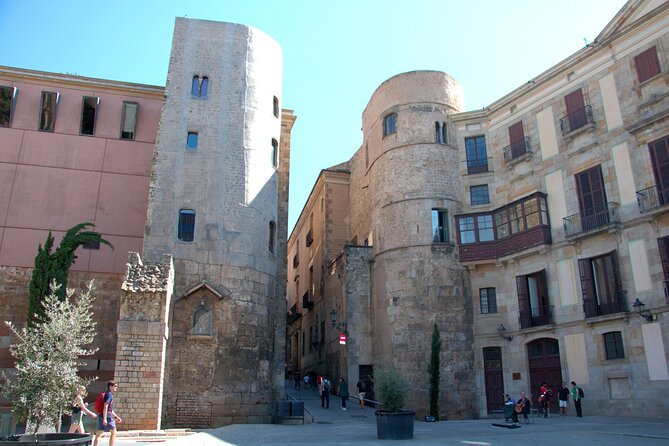
The tour also covers how the small fortified Roman village of Barcino developed into the great city that Barcelona is today. You are shown where tombs of the dead lined the ancient village wall, which turns the idea of ruins into something more concrete.
This stop is valuable because it stitches the whole walk together. El Raval and the Gothic Quarter can feel like separate worlds, but the Roman origin story shows the continuity. The city’s shape keeps echoing, even when streets change and neighborhoods evolve.
Even if Roman Barcelona is not your usual obsession, this segment is worth listening for. It gives you a simple framework to understand why the Gothic Quarter has the density and layout it has, and why certain walls or street patterns feel “built-in.”
Heads-Up on Crowds, Pacing, and Why This Works as a Self-Guided Tour
Self-guided walking tours can be hit or miss, mostly because people wander off script or get lost. This one helps with the map, and it is designed for a smooth walking flow through older streets.
The crowd benefit is real. You can avoid waiting behind big groups, and you can pause when something catches your eye, whether that is a market stall, a statue, or a side alley that looks too interesting to ignore.
Just remember you are doing the guiding yourself. Bring comfortable shoes, charge your phone fully, and plan for a slow rhythm. The audio is timed for about 75 minutes, but your feet might want longer at Botero’s cat or El Peto.
Who This Tour Suits Best
This is a great fit if you want:
- A story-driven walk through El Raval and the Gothic Quarter, not just a photo chase
- Offline audio and offline maps for a low-stress phone experience
- Flexibility to pause, stand, and look without worrying about catching up to a group
- A route that mixes art, food culture, and architecture in one loop
It might feel less ideal if you strongly dislike app-based guidance or if you expect turn-by-turn directions to behave perfectly in every alley. In tight neighborhoods, GPS can be messy, so you’ll want to trust the on-screen map and not fight your phone.
Should You Book This Self-Guided Audio Walk?
I’d book it if your priority is getting a smart route through El Raval and the Gothic Quarter without extra ticket costs and without feeling trapped in a crowd. The $11.99 price makes sense because you are buying narration, offline access, and a repeatable walk you can reuse on another day.
Skip it, or at least be cautious, if you know you hate using apps for navigation. One clear concern is GPS orientation confusion, which can happen in dense areas. If you can handle the on-screen map as your backup, the experience is exactly the kind of flexible city walk that turns Barcelona streets into a story you can follow at your own speed.
More Guided Tours in Barcelona


More Tours in Barcelona



More Tour Reviews in Barcelona

Not for you? Here's more nearby things to do in Barcelona we have reviewed








More Gothic Quarter Tours worth opening.
 ★ 5.0Barcelona Gothic Quarter Tapas & Taverns Food & Wine TourFrom $1311,470 reviews
 ★ 4.7Gothic Quarter Ghosts and Legends Walking TourFrom $191,443 reviews
 ★ 4.8Old Town and Gothic Quarter Walking TourFrom $211,393 reviews
 ★ 5.0Barcelona Old Town & Gothic Quarter Small Group TourFrom $221,308 reviews
 ★ 4.8El Born and Gothic Quarter Wine & Tapas Bar TourFrom $81674 reviews
 ★ 5.0Kids and Family Gothic Quarter Walking Tour in BarcelonaFrom $25465 reviews
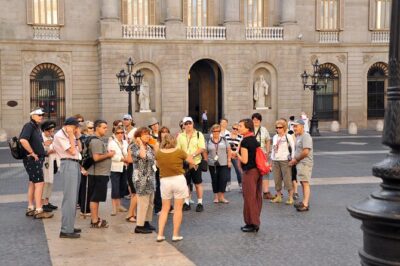 ★ 4.5Barcelona Gothic Quarter Walking TourFrom $33456 reviews
★ 4.9Gothic Quarter Walking TourFrom $212383 reviews
★ 4.5Barcelona Gothic Quarter Walking TourFrom $33456 reviews
★ 4.9Gothic Quarter Walking TourFrom $212383 reviews
Continue by place or experience