
REVIEW · BARCELONA CITY TOURS
Barcelona: Mies van der Rohe Pavilion Ticket and Audio Guide
A building that teaches you to slow down. The Mies van der Rohe Pavilion is architecture pared down to essentials, and with the included audio guide you get the story behind every choice as you walk at your own pace. I also love how quiet and uncluttered the visit feels, even though the site is famous for shaping modern design.
One thing to keep in mind: this is a minimalist stop. If you want lots of things to do beyond one powerful space, the $10 ticket can feel a little steep for how compact the experience is.
Key Highlights You Should Know Before You Go
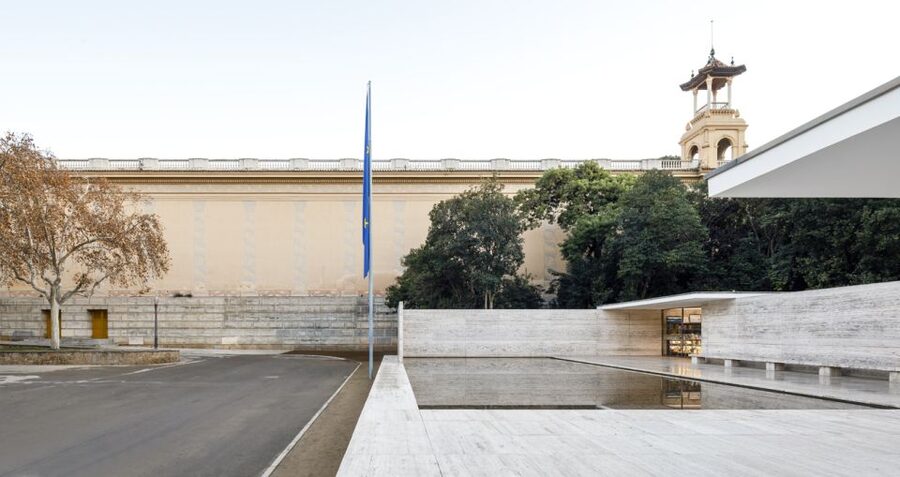
- Pared-down modernism, up close: you’re not just looking at lines, you’re reading the design.
- Audio guide in five languages: Spanish, Catalan, English, French, and German.
- A calm visit that rewards attention: fewer distractions, more seeing.
- A big backstory in a small footprint: 1929 exhibition, dismantling, then rebuild in 1986.
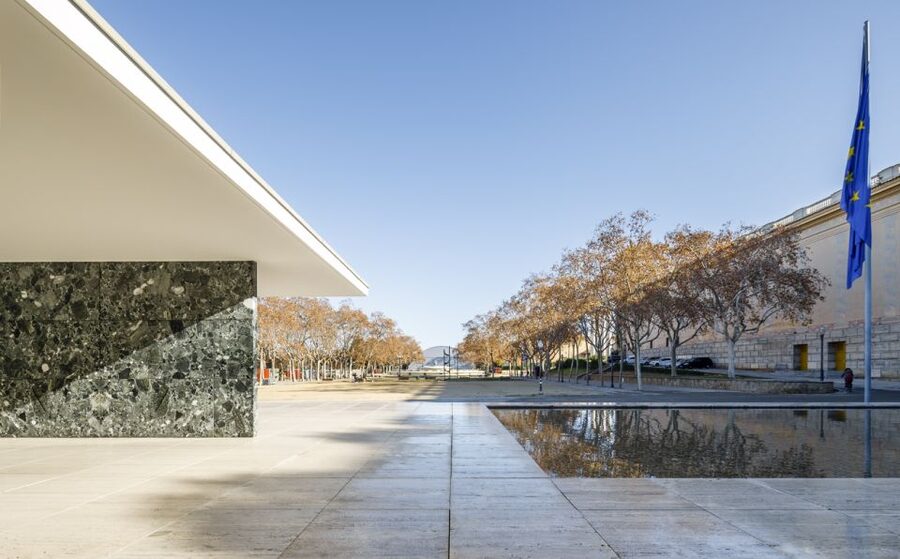
- Materials you can track by origin: the pavilion’s palette is tied to sources like the Alps, Tivoli, Atlas, and Tinos.
- Sometimes the look changes: artistic interventions can alter the appearance.
A Modernist Snapshot in One Quiet Stop
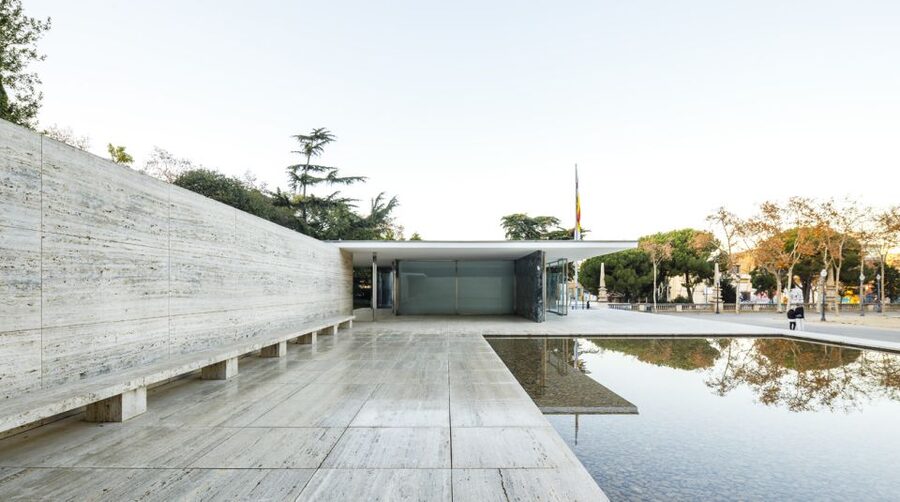
The Mies van der Rohe Pavilion is the kind of place that makes you walk differently. You pause more. You look longer. That’s not an accident. It was designed to feel like space itself is the main feature.
You come for the architecture, but you stay for the clarity. I like how the pavilion keeps everything simple so your eyes can move from interior to exterior and back again, without visual noise. When the proportions and lines are this clean, even small shifts in angle and reflection start to matter.
The experience also works well for a travel rhythm shift. Barcelona can be loud and crowded. This is a calm architectural pocket that helps you recharge while still feeding your curiosity.
More Barcelona tours and experiences for the shortlist

Ticket Value: $10 Buys Entry Plus a Real Guide
At $10 per person, this is not a “cheap photo stop.” But you also aren’t paying for a ticket alone. Your admission includes an audio guide, and that changes how much you get out of the building.
Here’s the value logic I use: if you care about design, the pavilion is worth your time because it’s influential to generations of architects and artists. The audio guide helps you connect the visible elements to the deeper intent, so you don’t just see a beautiful structure, you understand why it became a benchmark for modern architecture.
Also, the ticket is set up to help you spend less time stuck in lines. For a famous site in a busy city, that matters. Even if you only have a half day of flexible time, you can keep your plan smooth.
Arriving and Getting Started on the Right Foot
The pavilion visit is tied to starting times, so I’d treat it like a set piece rather than a “walk by when you feel like it” stop. You’ll have the best experience when you arrive on time and start the audio guide without rushing.
I’d also plan for the fact that this is sometimes used in creative settings. During one visit, the site was active with professional photographers and models, and they basically became part of the atmosphere. If you’re trying to see the pavilion like a still-life, you might find that the scene feels busier than you expect, even while the space stays calm.
Finally, note that the pavilion’s appearance can be altered by artistic interventions. That can be a surprise, so I like knowing it’s possible ahead of time. If you’re a detail person, this is especially worth tracking when you choose your time slot.
The Audio Guide: Five Languages That Actually Help You See
The audio guide is available in Spanish, Catalan, English, French, and German. That’s a practical win. You’re not forced to guess at what you’re looking at, and you can follow the explanation at the pace that fits your attention span.
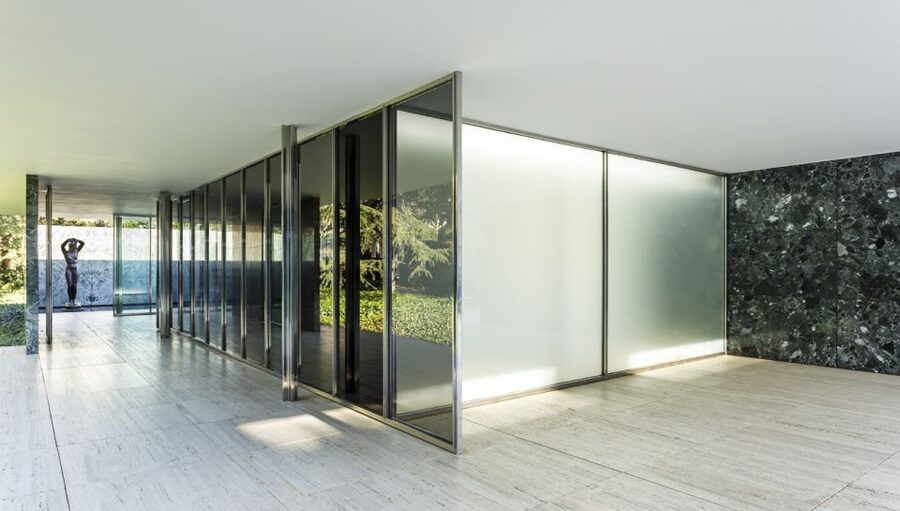
What I appreciate most is that the guide doesn’t just list facts. It supports the way the pavilion is designed to be read: the purity of its forms, the sobriety, and the linear interplay between interiors and exteriors. The building is visually simple, so without context it can feel like you’re looking at “just a few walls and planes.” With the audio guide, those surfaces start behaving like a message.
If you want to get the most out of it, give yourself time to pause. Let the guide run while you stand still. That’s where the contrasts make sense, especially the way the materials and reflections shift as you move.
Inside the Pavilion: Architecture That Makes You Pay Attention
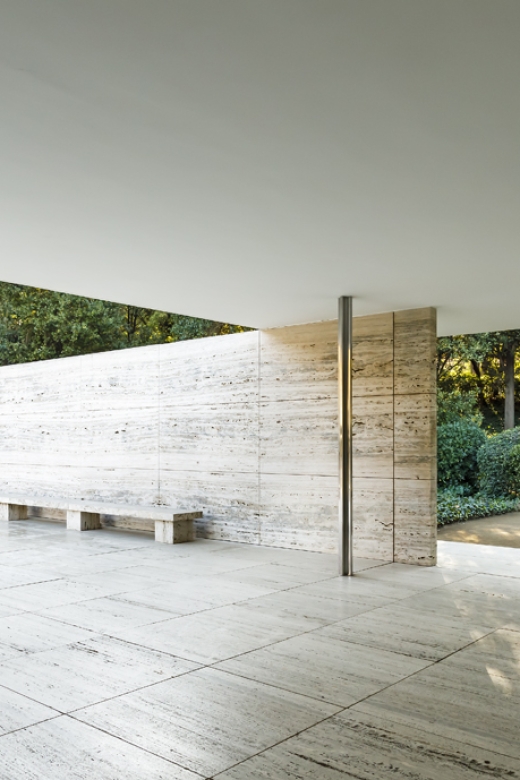
This pavilion is famous because it pares everything down to essentials. The design is sober, controlled, and intentionally precise. You can feel that in the way the space directs your gaze, because the pavilion is built around strong, clear relationships between inside and outside.
One thing I really like is how it invites slow viewing without making it complicated. There’s no need to hunt for “the big highlight” like you might at a museum full of objects. The pavilion is the highlight, and the audio guide helps you notice the building’s rules.
You’ll also get a sense of the pavilion as a benchmark in modern architecture. It’s not just historically important. It acts like a reference point for how later architects thought about space, proportion, and materials.
You can also read our reviews of more guided tours in Barcelona



Materials With a Story: Alps, Tivoli, Atlas, and Tinos
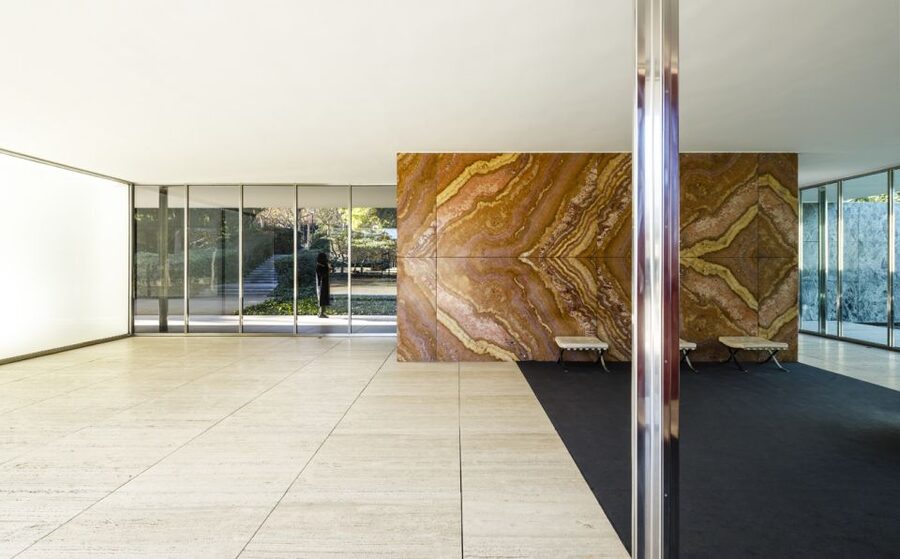
A big part of why this pavilion matters is how carefully the palette was chosen. The materials were brought from places including the Alps, Tivoli, Atlas, and Tinos. That detail is more than trivia. It’s part of the pavilion’s personality.
When you’re standing in the space, you can see how the design uses contrasts with restraint. The pavilion doesn’t shout. It balances tones and surfaces so that reflections and edges feel crisp rather than chaotic.
If you’re a “materials nerd,” this is a treat. Even without a technical background, you can learn to read what you’re seeing. The audio guide helps connect the material origins to the finished look, so you stop thinking of it as generic modernism and start seeing it as a carefully staged composition.
Mies and Lily Reich: Why This Collaboration Still Matters
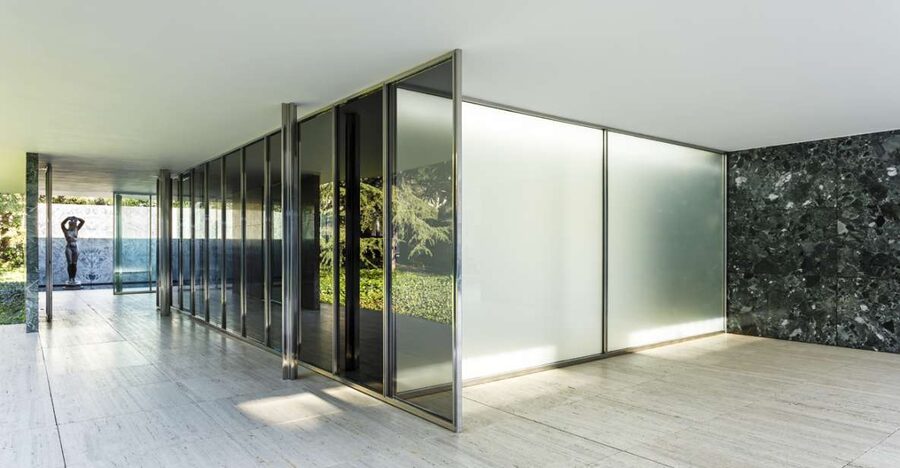
The pavilion was designed by Mies van der Rohe and Lily Reich. That pairing matters because it reinforces the pavilion as a deliberate, human-centered design statement, not a cold machine of space.
I like that the pavilion doesn’t just represent one person’s style. It shows a design language that’s precise and restrained, built to let the experience of space be the star. If you’ve ever wondered why certain modern designs feel calm and others feel sterile, this pavilion is one of the clearest examples of balance.
As you walk around, keep an eye on how the structure frames emptiness. The pavilion’s power is partly about what it removes, not only what it adds.
From 1929 Exhibition to 1986 Reconstruction
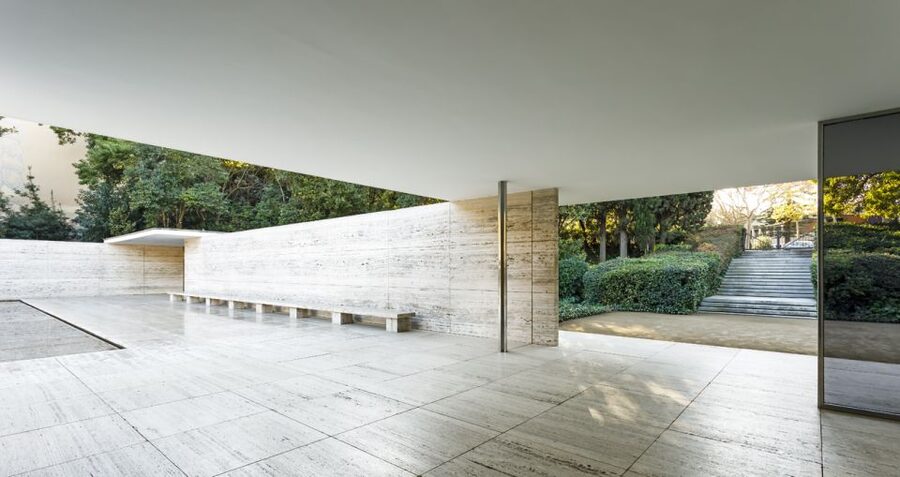
Here’s a key reason to visit with the audio guide, not just your eyes. The pavilion was the German national pavilion for the 1929 Barcelona International Exhibition. After the exhibition ended, it was dismantled.
Because of its significance, the pavilion was later reconstructed and reopened on its original site in 1986. That reconstruction history changes how you experience it. You’re not only seeing a design from the modern movement era. You’re also seeing a preserved idea that people decided was important enough to rebuild.
This is one of those rare cases where the backstory doesn’t feel like paperwork. It changes your perception of the building. The pavilion becomes a living reference for what architects wanted to communicate in the early twentieth century, and then what later generations chose to rescue.
Photography, Models, and That Professional-Scene Feeling
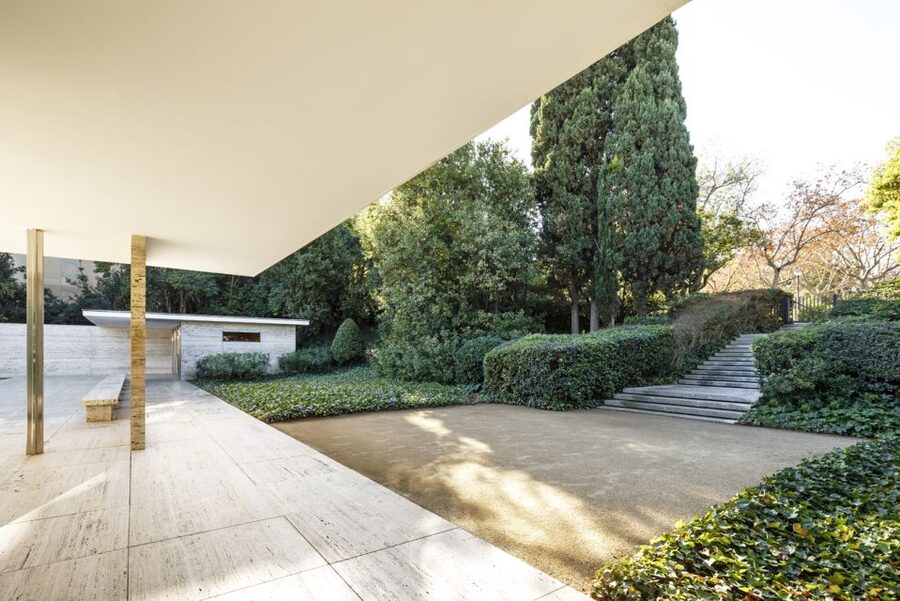
You might catch the pavilion used by professional photographers and models. In my experience, that kind of activity can either distract you or sharpen the atmosphere, depending on how you approach it.
Here’s how I’d handle it: don’t fight it. If the space is being used creatively, it can actually help you understand how the pavilion photographs. The clean lines and calm surfaces create a strong visual stage. And if you’re watching from a thoughtful angle, the presence of models can make the scale and geometry feel more concrete.
The pavilion still feels calm overall, even in use. That contrast is part of its charm.
A Short Nature Trail Near the Site
One review highlighted a short nature trail near the pavilion area. If you want to stretch your legs after standing still for a while, that’s a smart add-on.
I’d treat it like a reset. The pavilion is about stillness and sightlines. A quick walk nearby helps you shift gears from architecture watching to general outdoor breathing, so the whole day feels more balanced.
Rules to Know Before You Step In
The pavilion has clear on-site rules. Don’t plan to bring food or drinks, and there’s no smoking. Pets aren’t allowed either, though assistance dogs are permitted.
Also, tripods are not allowed. If you travel with camera gear, plan accordingly and be ready to shoot hand-held if needed. These rules aren’t just restrictions. They help keep the space calm and moving, which is part of what makes the visit feel different from a typical tourist stop.
Should You Book the Mies van der Rohe Pavilion Ticket and Audio Guide?
Book it if you want one focused architectural experience, and you’re happy to slow down and look carefully. The combination of a skip-the-line ticket plus a five-language audio guide gives you value beyond basic entry, especially because the pavilion’s story includes the original 1929 exhibition and the 1986 reconstruction.
Skip it if you’re looking for a longer, busier attraction with lots of variety. This is intentionally minimalist. If you don’t care much about design details, you might feel underwhelmed for the time you spend.
My practical call: if modern architecture is on your interest list at all, this is a strong use of a half day in Barcelona. You come away thinking more clearly about space and materials, not just having seen a landmark.
FAQ
How much does the Mies van der Rohe Pavilion ticket cost?
The price is $10 per person.
How long is the experience?
The activity is listed as lasting 1 day.
What is included with the ticket?
You get an entrance ticket to the Mies van der Rohe Pavilion and an audio guide.
What languages are available for the audio guide?
The audio guide is available in Spanish, Catalan, English, French, and German.
Is the pavilion wheelchair accessible?
Yes, it is wheelchair accessible.
Are food and drinks allowed?
No, food and drinks are not allowed.
Is free cancellation available?
Yes, you can cancel up to 24 hours in advance for a full refund.
More Guided Tours in Barcelona
More Tickets in Barcelona


More Tour Reviews in Barcelona

Not for you? Here's more nearby things to do in Barcelona we have reviewed









More Barcelona City Tours worth opening.
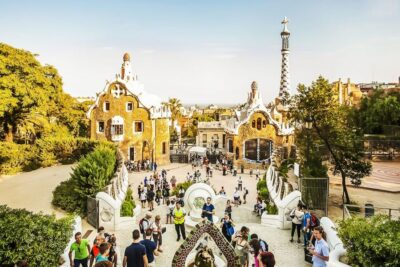 ★ 4.4Park Güell Admission TicketFrom $2576,534 reviews
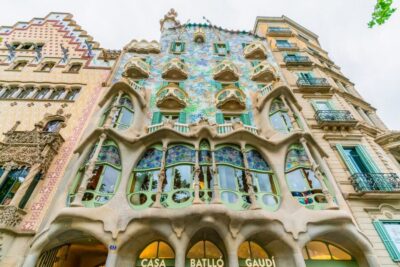 ★ 4.7Casa Batlló Entry with Self-Audioguide TourFrom $3425,359 reviews
 ★ 4.424 or 48-Hour Hop-On Hop-Off Bus TourFrom $3920,872 reviews
 ★ 4.7Park Guell Guided Tour with Skip The Line EntryFrom $3117,563 reviews
 ★ 5.0Barcelona in 1 Day: Sagrada Familia, Park Guell,Old Town & PickupFrom $12013,541 reviews
 ★ 4.3Barcelona Aquarium: Entry TicketFrom $3113,335 reviews
 ★ 4.8Sagrada Familia Skip-the-Line Entry Ticket & TourFrom $6712,789 reviews
 ★ 4.4FC Barcelona Museum “Barça Immersive Tour” TicketFrom $3510,944 reviews
Continue by place or experience