
REVIEW · SAGRADA FAMILIA TOURS
Barcelona: Sagrada Familia Skip-the-Line Entry Ticket & Tour
Sagrada Família makes more sense with a guide. I like the skip-the-line entry format and the way a real expert walks you through Gaudí’s symbols, not just the photos. Two things I especially enjoy: you get a clear story of the Nativity and Passion façades, and you learn why the interior feels like a walk under trees. The one drawback to plan around is that towers are not included, so if that’s your must-do, you’ll need a separate option.
You’re also not stuck staring upward and guessing. A guide can point out design logic you would miss on your own, including how ongoing construction is progressing and what the current predicted completion timeline looks like. Plus, you’ll end with extra context at the Schools and museum, where the project becomes human-scale, not just jaw-dropping architecture. One more consideration: security and strict start times can bite if you arrive late, so show up early.
Key takeaways before you go

- Skip-the-line, but still strict timing: you’ll move fast, yet you must be there on schedule.
- Nativity façade first, then the interior: the tour order helps you understand what you’re seeing.
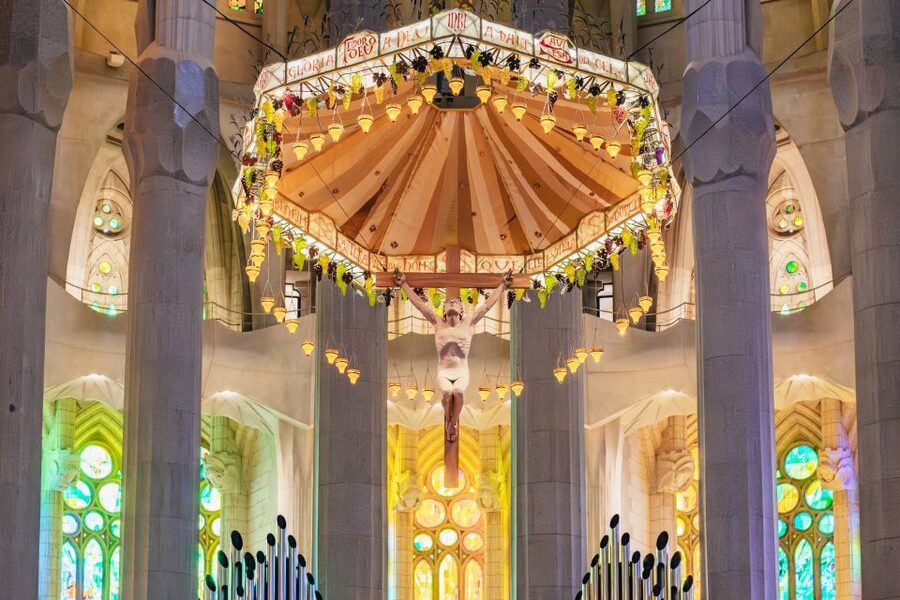
- Forest-like interior explained: colored glass and branch-like columns make more sense with narration.
- Passion façade plus worker history: it’s not only about Gaudí’s genius, it’s about the people building it.
- Museum stop adds depth: sketches, plans, and models turn the building from a landmark into a design process.
- Small-group feel: past tours with guides like Victor, Miguel, and Raoul are praised for pacing and questions.
Why a small-group guide makes Sagrada Família click
Sagrada Família is famous for a reason, but the building is also complicated. When you have an expert leading you through the main highlights, you stop treating it like a single big wow moment and start reading it like a story. That is the value here: you get the “how” and “why,” not just the “look.”
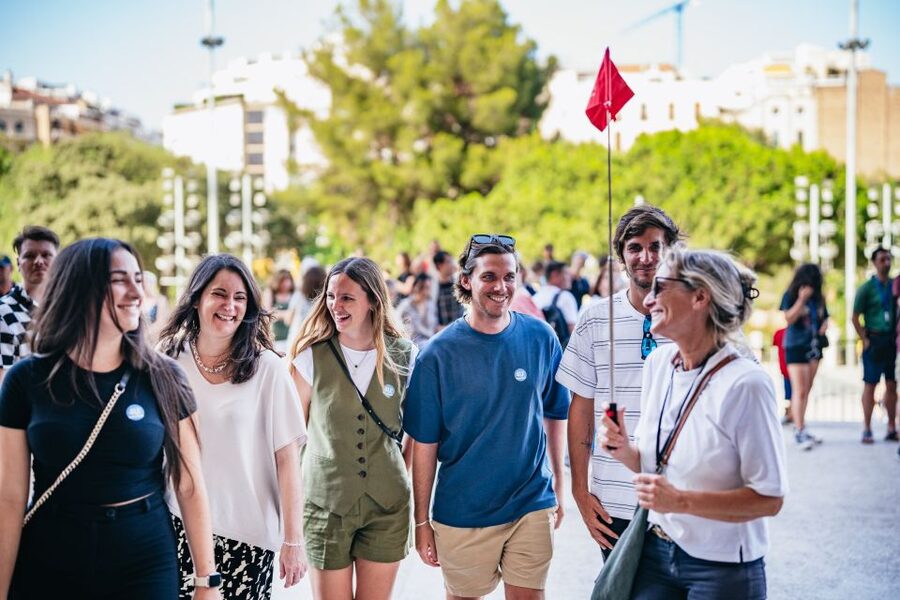
I also like that you can choose a small-group or private experience. In the small-group setup, the guide can still keep things interactive, and the tour pacing tends to feel calm rather than rushed. Names that have shown up in excellent guides include Victor, Miguel, Raúl, José, Carla, Juan, and Juan-Miguel, and multiple people specifically call out storytelling that makes details easier to grasp.
The other smart part: you’re guided through key sections you would normally skim. You hear about Gaudí’s life and work, what was finished first, what came later after his death, and how construction techniques are still being used today. If you want one experience that helps you understand the place before you wander off to keep exploring, this format does that.
More Barcelona tours and experiences for the shortlist
Meeting point and security: how to keep the day calm
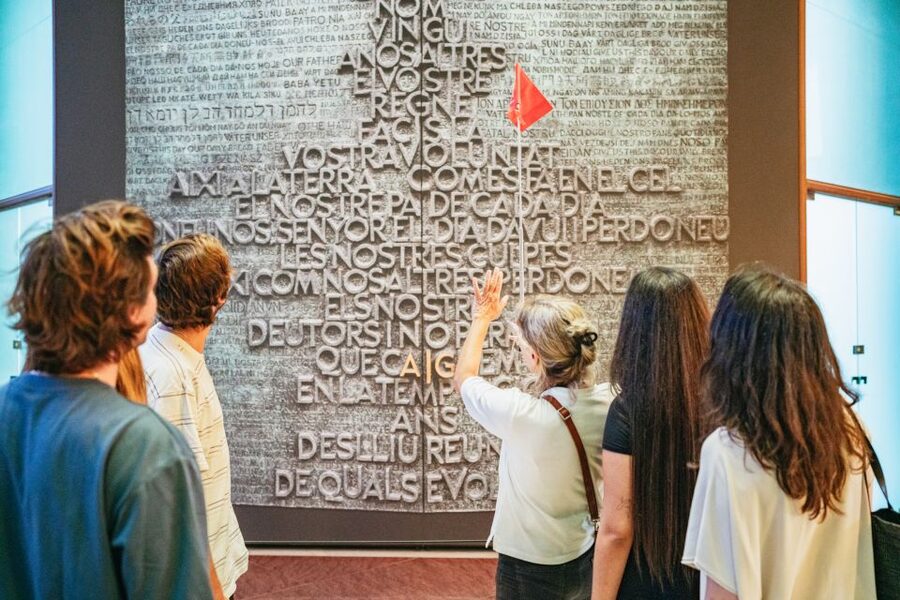
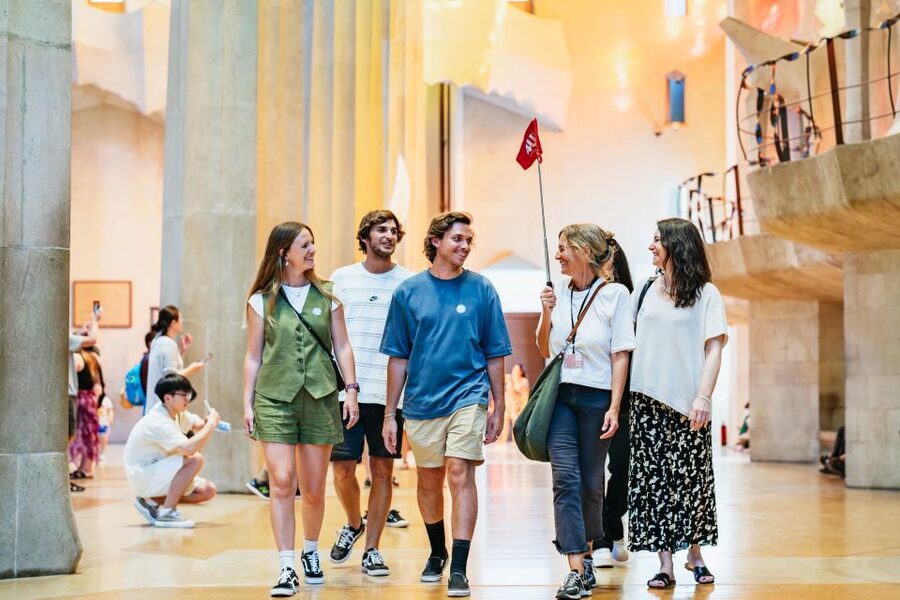
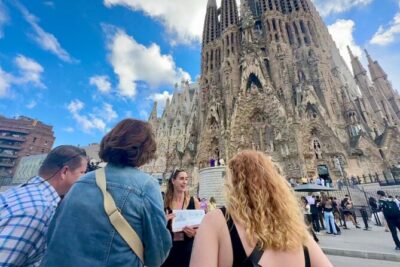
This tour starts outside, and the meeting spot is easy to miss if you rush. Meet your guide between Hard Rock and KFC, in front of the modernist lamppost, and look for the guide with a red flag. Go there at least 15 minutes early, because entry times are strict. If you arrive late, your booking can be treated as a no-show.
Plan for security. Expect it to take up to 25 minutes in high season, and it’s described as similar to airport-style screening. That means the best move is simple: travel light. Keep items minimal so you’re not stuck juggling bags while everyone else funnels through.
Also read the rules before you go. Hats aren’t allowed inside the nave or museum (with exceptions for religious or health reasons). Bare feet are not permitted. Swimwear, transparent clothing, and very revealing outfits are not allowed, and hats are restricted for a safety reason. If you show up dressed modestly and with an ID or passport ready, the whole start feels smoother.
Nativity façade stop: symbols you can actually spot
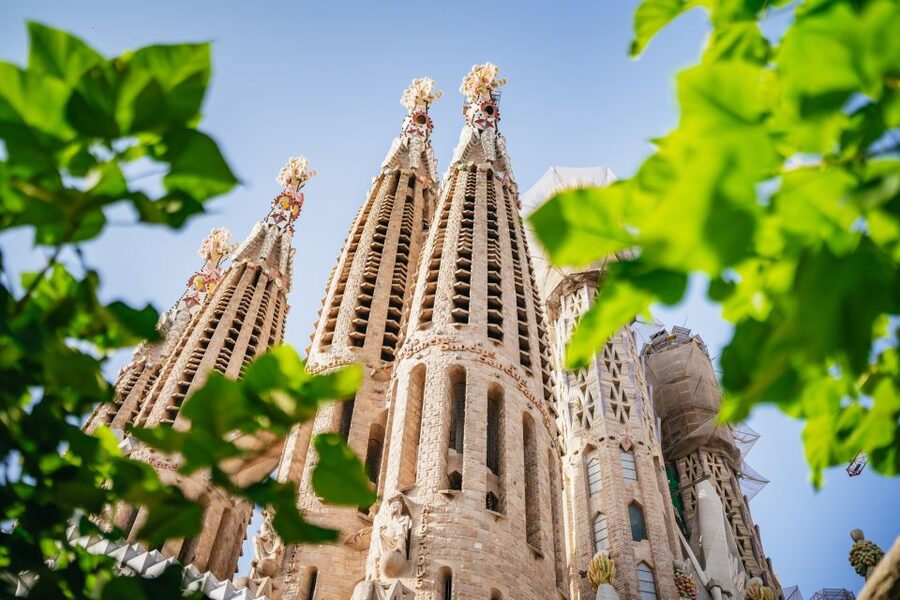
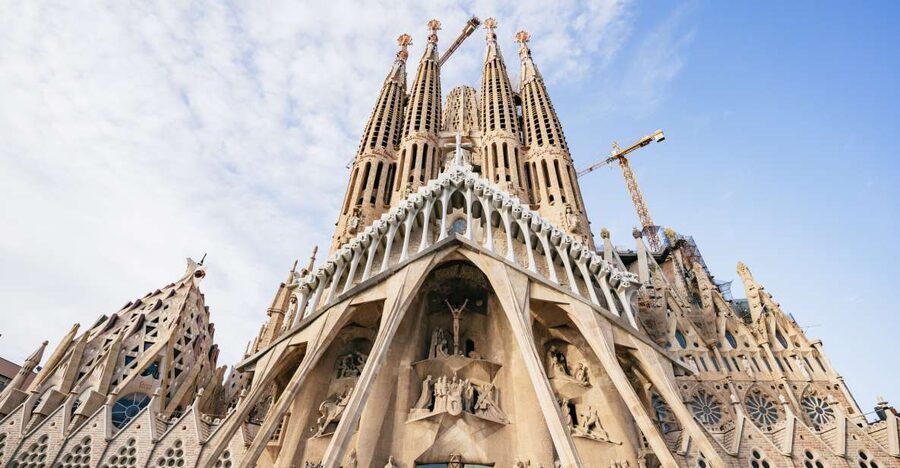
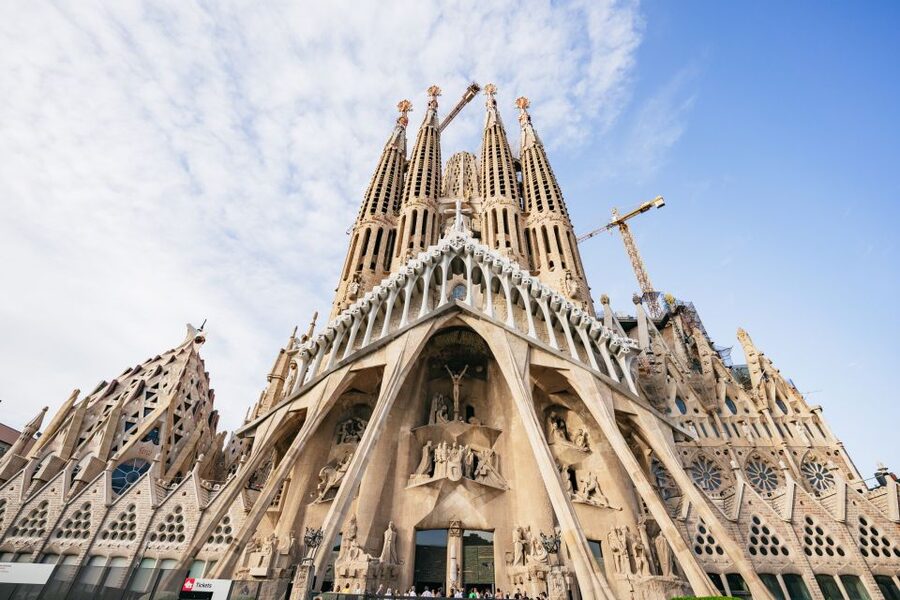
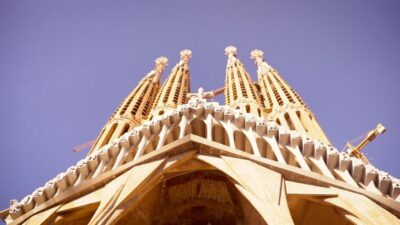
After meeting your guide, you head through security and get your first big interpretive stop: the Nativity Façade. This is the first completed section of the basilica, so it’s a strong place to begin. It gives you an anchor point. Instead of trying to understand everything at once, you start with a part that was built earlier, then expands into what the full project represents.
Your guide will explain how the façade tells meaning through design choices and sculpture. The biggest benefit is practical: once you know what to look for, the stone carvings stop being random decoration. You start noticing patterns, narrative structure, and the way Gaudí used form to communicate.
You also learn about the construction story as you go. The tour includes discussion of ongoing work and the current predicted completion date, so you’re not leaving with only the past. You’re leaving with a sense of where the basilica sits in the timeline of a project that kept evolving beyond Gaudí’s lifetime.
A small caution: the itinerary can shift for special events or big crowds, so don’t assume every minute will match a perfect script. The good news is that the core flow remains focused on the main façades and interior experience.
Inside the basilica: forest-light views and why it feels alive
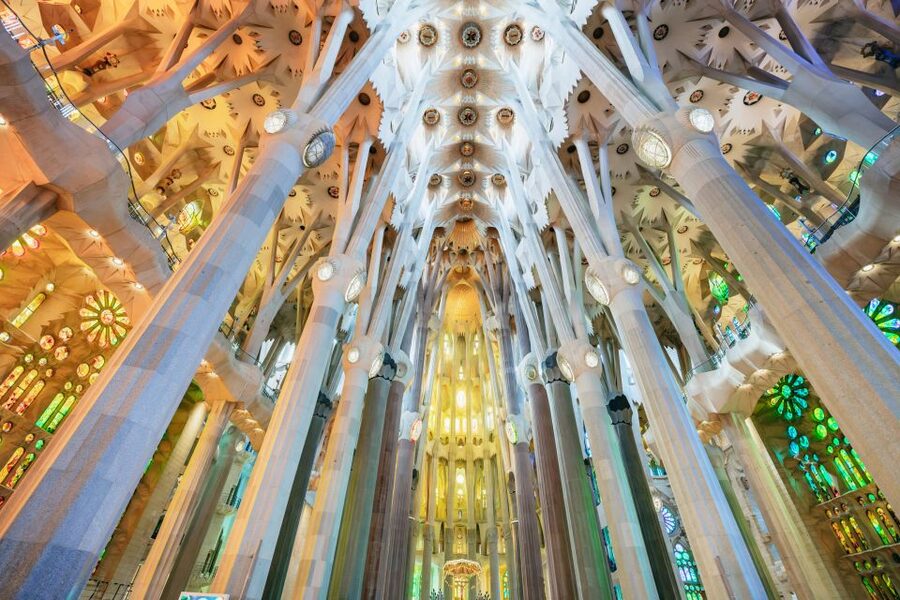
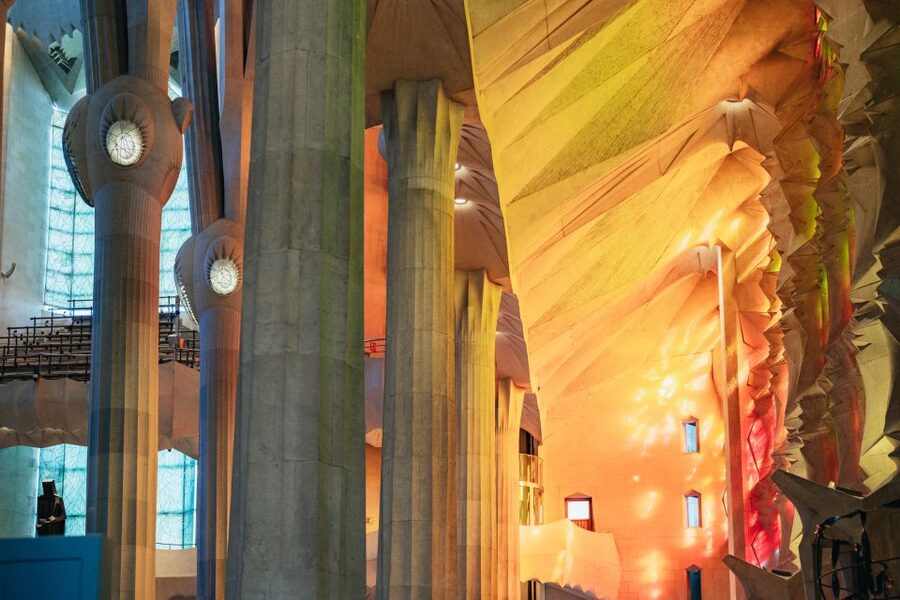
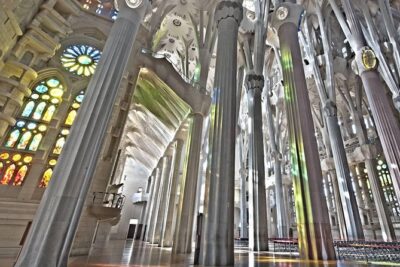
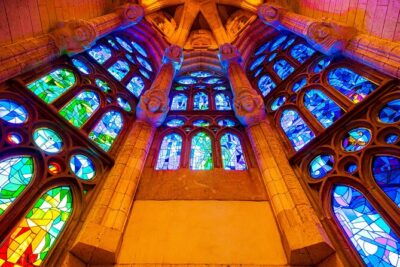
This is where you should slow down, even if your feet want to sprint. Once inside, the tour focuses on how the space works, especially the stained-glass color and the branch-like columns that climb overhead. With a guide, you understand the design intention: Gaudí aimed for the interior to feel like walking through a woods, with light sifting through leaves.
You’ll likely notice the light more strongly if you know what you’re looking for. Multiple guides on this route are praised for pacing and pointing out details, and one review specifically mentions how sunset light coming through stained glass can be amazing. You don’t need a perfect weather forecast for this effect, but timing can matter. If you can, choose a time slot that fits your day’s light.
The columns also become easier to appreciate when you hear the logic behind the architecture. Your guide explains how the building creates a forest-like atmosphere, not by using literal trees, but by shaping space, rhythm, and light. That’s what turns a pretty interior into a memorable experience.
One practical note: you still have to follow indoor rules like the no-hat policy. If you’re sensitive about sun or heat, bring a plan for it that does not involve a hat inside. A lightweight scarf can work for many people, but double-check it meets modest clothing rules.
Passion façade, Sagrada Familia Schools, and the human side
After the interior, the tour moves to the Passion Façade, which represents the crucifixion story. This façade carries a different mood than the Nativity side, and your guide will explain the drama behind the stark, angular sculpture language.
Here’s why I think this stop is valuable. It prevents the visit from becoming one-note. If you only remember the colorful interior, the façades help you see the full range of Gaudí’s approach, from nature-like softness to sharper emotional storytelling.
Then comes something a lot of first-timers miss: Sagrada Família Schools. The tour includes a stop that connects the basilica to the workers who built it. You’ll hear about how the schools served children of those building the project, and that the structures were reconstructed more than once and even moved locations to make way for the basilica. That detail changes how you see the site. It’s not only an art monument, it’s a long-term community project.
Finally, your guide ends with the museum. That matters because it helps you understand the scale of thinking behind the sculptures and columns. Instead of leaving with only impressions, you leave with design clues that make the next visit easier to “read.”
More Barcelona tours and experiences for the shortlist


Museum sketches and models: what to pay attention to
The museum stop is where you trade emotion for evidence. The tour includes a guided walkthrough that highlights original sketches and plans, showing the complexity behind Gaudí’s vision. This is also where you can see objects tied to Gaudí’s life and the basilica’s own history, including an upside-down model of the basilica.
What I like about this part is that it turns the building into a process. You start to see why the interior looks the way it does, and how the team translates models and plans into real construction. Even if you never catch every technical term, you’ll grasp the main idea: clever geometry plus craft plus years of work.
This stop also gives you a chance to slow down without feeling guilty. The museum is calmer than the main entry areas, so if you’re the type who wants to take your time, this is the moment.
A consideration: the basilica can occasionally close to the public. If that happens on the day you booked, your exact experience may change, so keep flexible expectations.
Price and logistics: is $67 for 1.5 hours worth it?
At about $67 per person for a 1.5-hour guided experience, you’re paying for three things: an expert who can explain meaning, official access, and time saved on entry. Skip-the-line is not just convenience. It protects your schedule so you can spend your paid time inside getting value, not waiting outside.
You also avoid the common first-timer problem at Sagrada Família: standing still, taking photos, and feeling like you missed the point because you didn’t know what you were looking at. A good guide helps you “translate” the design, which is why this tour keeps earning extremely high ratings. Many comments praise guides for being fun, professional, and interactive, and for sharing stories that make the place feel more human.
The tradeoff is clear. Towers are not included. If tower views are your main priority, factor that into your plan early.
Also, bring realistic expectations about what an entrance ticket plus guided time can cover. You’re not touring every corner of the basilica. You’re getting the core highlights with interpretation, plus the museum and worker history. For most people visiting Barcelona for the first time, that’s the best value because it helps you understand what you see next on your own.
Should you book this Sagrada Família skip-the-line tour?
Book it if you want the fastest path to understanding, especially if it’s your first visit to Gaudí’s signature masterpiece. This tour is a good match for architecture lovers, history buffs, and anyone who prefers their photos paired with context. I’d also choose it if you like questions and discussion, since many praised guides are described as patient and engaging.
Consider a different plan if towers are your top must-do, since tower access is not part of this ticket. Also consider building in a buffer for security and strict timing, because the site runs on admission schedules and starts on time.
If you’re choosing between a basic entry ticket and this guided option, the decision is simple. When the guide is good, Sagrada Família stops being a checklist and becomes a place you can actually read.
FAQ
How long is the guided tour?
The tour runs for about 1.5 hours.
Is tower access included?
No. Access to the towers is not included.
What does skip-the-line entry mean here?
You get skip-the-ticket-line access, and you still go through a security check after you enter the area.
Where do I meet the guide?
Meet your guide between Hard Rock and KFC, in front of the modernist lamppost. Look for the guide with a red flag. The meeting address listed is Av. de Gaudí, 1, Eixample, 08025 Barcelona.
What time should I arrive?
Arrive at least 15 minutes before the starting time. Admission times are strict, and late arrival can be treated as a no-show.
How much time should I allow for security?
Security checks may take up to 25 minutes in high season.
What languages are available?
The live tour guide is available in English, French, and Spanish.
Is the tour wheelchair accessible?
Yes, the tour is wheelchair accessible.
What rules should I follow for clothing and items?
You need a valid passport or ID card. Hats are not allowed inside the nave or the museum (with exceptions for religious or health reasons). Modest clothing is required, with no swimwear, no transparent clothing, and no plunging necklines, exposed backs, or exposed stomachs. Bare feet are not permitted.
More Tickets in Barcelona


More Tours in Barcelona

More Tour Reviews in Barcelona
Not for you? Here's more nearby things to do in Barcelona we have reviewed








More Sagrada Familia Tours worth opening.
 ★ 5.0Barcelona in 1 Day: Sagrada Familia, Park Guell,Old Town & PickupFrom $12013,541 reviews
 ★ 4.5Fast Track Sagrada Familia Guided TourFrom $668,795 reviews
 ★ 5.0Park Guell and Sagrada Familia Tour with Skip the Line TicketsFrom $1196,384 reviews
 ★ 4.3Sagrada Familia Skip-the-Line Guided TourFrom $655,365 reviews
 ★ 4.9Sagrada Familia Priority Access Guided TourFrom $584,917 reviews
 ★ 4.3Sagrada Familia Tour & Optional Tower VisitFrom $564,868 reviews
 ★ 4.3Sagrada Familia Guided Tour with Tower AccessFrom $854,729 reviews
★ 4.8Sagrada Familia Skip-the-Line Guided TourFrom $643,824 reviews
★ 4.3Sagrada Familia Guided Tour with Tower AccessFrom $854,729 reviews
★ 4.8Sagrada Familia Skip-the-Line Guided TourFrom $643,824 reviews
Continue by place or experience