
REVIEW · GOTHIC QUARTER TOURS
Gothic Quarter and Born District: Photographic Workshop
Phones turn Barcelona into a photo story.
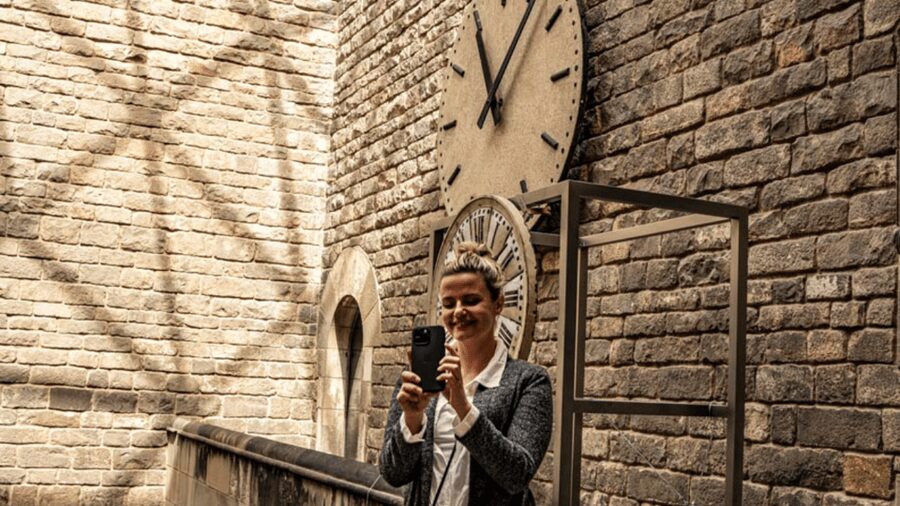
This small-group workshop uses your smartphone as the creative tool to explore El Gòtic and El Born with history and street-level composition in mind. Two hours goes fast when you are constantly shooting, getting feedback, and learning how to frame the city’s details like a local.
What I especially like is how you practice real photography habits on the spot, not just sightseeing. You will focus on specific landmarks like the Gothic Cathedral and Plaza Sant Felip Neri, while also learning how to make murals and textures read clearly through a phone camera.
One thing to consider: you need a charged phone and enough storage, and you should expect steady walking on uneven old-stone streets. If you only want postcard views with zero effort, this one may feel a bit hands-on.
Key highlights worth planning around
- Small group size (max 10) means you get real guidance, not just a passive stroll
- Gòtic and Born streets, plus icon stops like the Gothic Cathedral and Pont del Bisbe
- Murals and story-based visuals including Joan Font Cuberta’s Besos and El Beso moments
- A hands-on print session where you print your favorite photo from your phone
- A personalized postcard made from your own shot
- Instructor Tirma’s teaching style blends relaxed vibes with constant shooting tips
Why this Barcelona phone-photo workshop makes sense
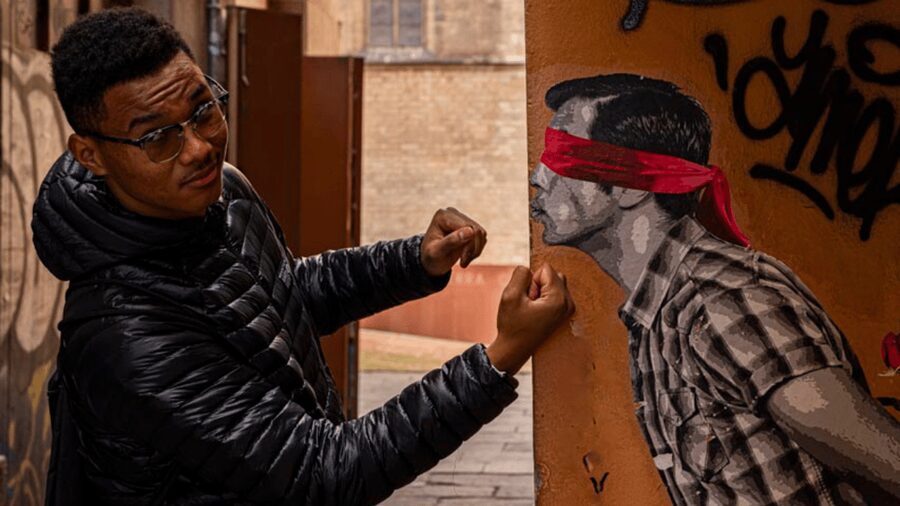
Barcelona is perfect for phone photography because the city gives you layers. You get stone, shadow, signage, tiny surprises in doorways, and murals that look different depending on where you stand. This workshop leans into that reality instead of pretending your camera is a magic wand.
I like the basic idea: you are not just asked to take photos, you are guided to see better. That changes everything. In two hours you can come away with images that feel intentional, not random. You also get a local expert’s narration, which matters because good photos usually start with context.
And the neighborhoods chosen here are smart. El Gòtic and El Born are compact, full of angles, and dense with visual history. Even if you have visited before, it is the kind of place where you keep noticing new frames once someone points them out.
More Barcelona tours and experiences for the shortlist



Getting started at Plaza de Carles Pi i Sunyer (in front of Mango)
The workshop meets at Plaza de Carles Pi i Sunyer, right in front of Mango. It is an easy central reference point, and the start matters because you immediately transition into photography mode instead of waiting around.
You will be walking for the full session, so comfortable shoes are not optional. Old streets mean you cannot always count on smooth sidewalks, and you will want stable footing while you frame shots. Also, bring a charged smartphone. The session includes a printing step, so you do not want your battery to die mid-work.
Group size is capped at 10 participants, which usually leads to a better rhythm. You get prompts, quick corrections, and time to try again. The mood from the instructor side is also very “friend walking with you,” relaxed but active. You will shoot often, not just listen.
Plaza de Carles Pi i Sunyer and the Besos mural on your phone
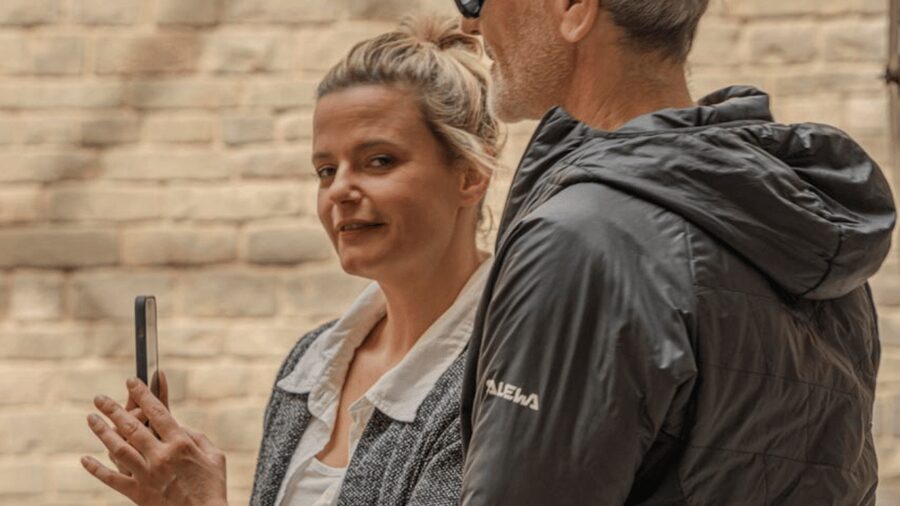
The first creative jump comes at Plaza de Carles Pi i Sunyer with the mural Besos by Joan Font Cuberta. Murals can be tricky on phones because you can end up with a “flat sticker” look or parts that get lost in glare. Starting here helps you practice early decisions: where to stand, how to include surrounding architecture, and how to keep the subject readable.
This stop is also a good warm-up because you can clearly see the difference between a casual photo and one that has a plan. You learn how to let the mural work with the street around it, rather than fighting it.
If you are new to mobile photography, this is a great entry point. If you already shoot a lot, it is still useful because it forces a quick reset: slow down, choose your angle, and make the frame do the talking.
Gothic Cathedral framing: turning big stone into clear images
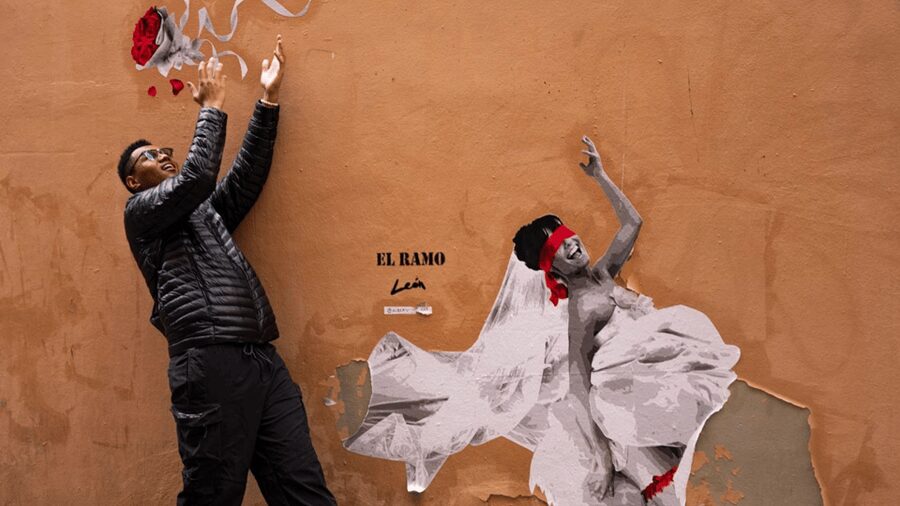
A highlight here is the Gothic Cathedral area, where you will be guided to capture the grandeur with your mobile lens. The Cathedral is massive, and phones can struggle with two common problems: getting the whole thing without distortion, or zooming too much and losing crisp lines.
What I like about this part is the focus on using your phone thoughtfully. You are not just told where to stand. You get guidance on how to translate towering architecture into something that looks sharp and intentional on a small screen.
This is also where your history context pays off. When you understand what you are looking at, you tend to photograph details you would otherwise ignore. Instead of one wide shot, you start collecting the pieces that make the Gothic atmosphere feel real: textures, arches, and the way light moves across stone.
Cross Pont del Bisbe: a street-level shot bridge between eras
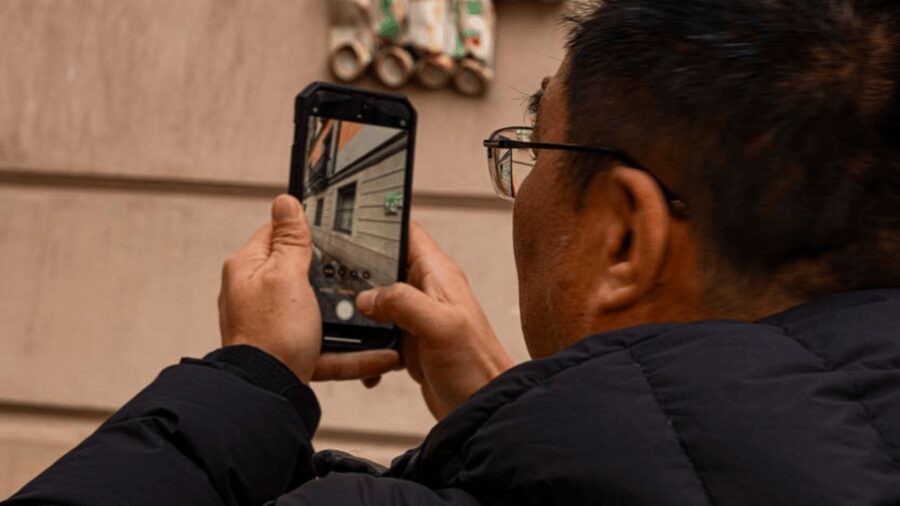
Next comes Pont del Bisbe. Bridges in old cities are photo gold because they create a natural frame and a sense of direction. You get vertical lines, repeating stone shapes, and a built-in “leading route” for your eye.
This stop is about connection, not just beauty. You will learn how to include the street as part of the story, so your photos feel like moments in time instead of disconnected snapshots. The goal is that the viewer should understand you moved, you turned, you looked back, and you chose a viewpoint.
It is also an excellent place to practice quick composition. You do not have to wait for a perfect empty street, you learn how to keep your subject clear while the city does its normal busy thing in the background.


Plaza Sant Felip Neri: serenity and stones that whisper
You then shift to Plaza Sant Felip Neri, a quieter spot that still feels full of atmosphere. The workshop here is a reminder that not every strong photo needs high energy. Sometimes you want calm symmetry, soft corners, and a “pause” in the visual story.
For phone photography, plazas can be a challenge because brightness can flatten details. This is a good moment to practice contrast and framing so the stones do not look washed out. The guidance helps you turn a simple open space into an image with structure.
Even if you think you only came for Cathedral views, this stop gives you a different side of Barcelona. It feels like stepping down from the main energy into something more reflective.
Plazas Sant Jaume and del Rei: political crossroads in visual form
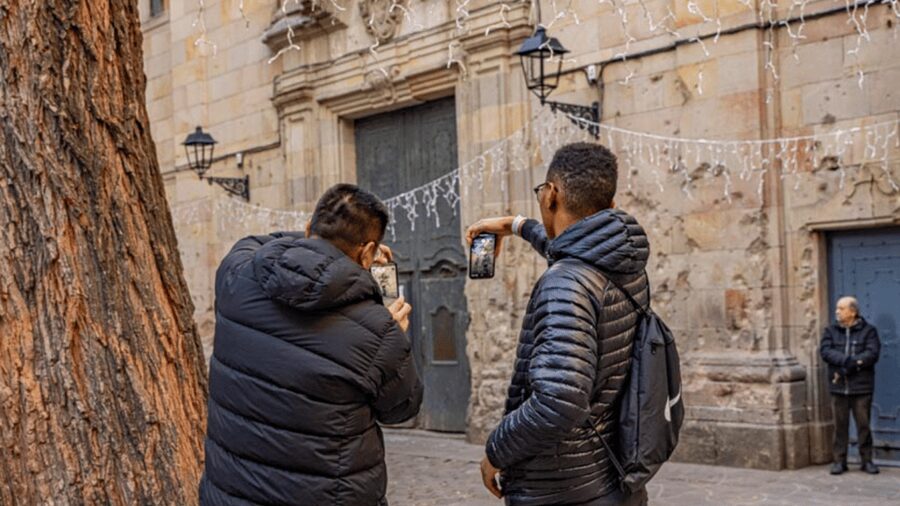
From there, the workshop moves to Plaza Sant Jaume and Plaza del Rei. These are political crossroads, and the photography approach is different. You are looking for visual documents, meaning you photograph buildings, signs, and structural clues that tell you where power and civic life used to meet.
The practical takeaway for your camera is that you should pay attention to straight edges and how the frame balances height. You want your composition to read clearly even when you are dealing with complex facades and layers.
These stops are also valuable because they give you a reason to slow down. You are not just taking a “cool shot.” You are capturing what makes these neighborhoods distinct from every other old-town area in Europe.
A true street walk through Gòtic and El Born
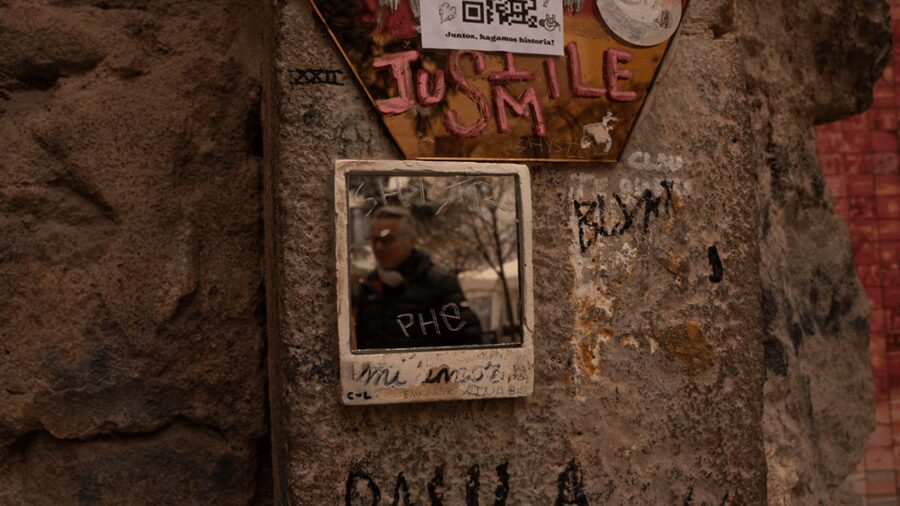
After the major landmarks, you walk through the neighborhoods themselves. This part is important because it is where your photos start to become personal.
El Gòtic and El Born have an everyday texture: narrow streets, doorways, small contrasts of light and shadow, and the kind of street life that creates atmosphere even when nothing “big” happens. Your guide’s role here is not to rush you. You get prompts to keep looking and to aim your phone at details that match the story you are building.
This is also where the instructor style shows up. The feedback from the experience is consistently about being treated warmly and walking at a relaxed pace, while still finding great photo opportunities. You will likely learn something like how to stop and really see for a second, then shoot with purpose.
Mercat del Born and the El Beso color thread
One of the most fun segments is Mercat del Born. This is where the workshop leans into color and continuity. There is a painting connected to the story, El Beso, and the idea is that it becomes a visual thread you can follow through your phone lens.
Practically, markets are challenging for cameras because the light can be mixed and there are many competing subjects. The benefit of having a guide is that you avoid the common trap of photographing everything, then ending up with nothing that feels cohesive.
Think of it like this: you are training your eye to build a set of images. The workshop encourages you to make connections, so your final selection feels like a narrative, not a random collage.
Your print session: turning phone shots into something real
One of the most memorable parts is what happens at the end of the creative walk. You do a print session for a personalized photo, using your mobile phone. This is a big deal for phone photography workshops because most end with digital files only.
Printing forces a new level of attention. You have to pick your best image, and you see instantly how your frame reads when it is not just a screen. It is also a simple way to take home proof that you were there and you made something.
The workshop also includes creating a unique postcard from your favorite shot. That means you are not just leaving with photos in your camera roll. You leave with a physical memory you can send or keep.
There is an option for additional printing for an extra charge if you want more than the included photo, but the essentials are built in.
What to bring, and how to avoid common phone-photo problems
Do not overthink it, but do prepare. The workshop specifically asks for a charged smartphone. Add one more practical habit: before you leave your hotel, check storage. The workshop includes a printing step, and you will likely take more photos than you think, especially once you start getting composition prompts.
Comfortable shoes help because the pace includes walking and turning. Also, bring patience for a working session, not a “sit down and watch” activity. Even if you are on vacation, you are learning to take control of your camera.
If your phone storage is tight, do a quick cleanup first. If battery life is low, plan to top up earlier in the day. These are small steps, but they prevent the annoying feeling of reaching a great photo moment while your phone is dying.
Price and value: is $57 fair for two hours?
At $57 per person for about two hours, this workshop is priced in the mid-range for a guided, experience-based activity in a central, high-demand area. The value is not only in the route, it is in what you get alongside it.
You are paying for several things at once:
- A local expert guide who shares history while helping you shoot
- Small-group attention with a maximum of 10 people
- Multiple iconic photo stops across El Gòtic and El Born
- Included printing for a personalized photo
- Included postcard creation tied to your chosen image
If you are the type who wants photos that look better and feel more intentional, the guidance plus printing makes the cost easier to justify. If you mainly want a casual walk with scenery and you already know your phone camera well, you might feel $57 is more than a free self-guided stroll.
For most people, though, the included physical outputs (print plus postcard) push it into “you get something tangible” territory, which is often where these experiences feel worth it.
Who this workshop suits best
This one is a great fit if you:
- Want to improve your phone photos without needing a separate camera class
- Like history and want it woven into what you photograph
- Enjoy active tours where you shoot often, not once in a while
- Prefer small groups and direct instruction
It is also useful for solo travelers because a group of up to 10 with a friendly guide makes it easy to participate without feeling awkward. The instructor’s teaching style comes through as relaxed and fun while still pushing you to take better shots.
It is not suitable for children under 15, so it is better for teens and adults. If you have mobility limitations, the experience is described as wheelchair accessible, but you should still expect walking on uneven streets during an outdoor urban photo route.
A few practical notes before you book
The workshop runs in Spanish, Catalan, and English, so you can choose based on your comfort. It is designed to be about two hours, and it ends at a central location so you can keep exploring after.
The main “choose wisely” point is your phone readiness. If you are traveling light with no charger and no spare battery, you may end up rushing your shots at the worst time. Bring the basics, and you will enjoy it more.
The meeting point is Plaza de Carles Pi i Sunyer (in front of Mango), so make sure you can find that quickly on arrival. Old neighborhoods can be maze-like, but a fixed landmark helps.
Should you book the Gothic Quarter and Born photo workshop?
I’d book it if you want a smart mix of Barcelona history, hands-on mobile photography practice, and a real takeaway. The included printing and postcard creation make it feel more like an experience you complete, not just a tour you attend.
Skip it if you hate active participation, or if you know your phone battery and storage are likely to be a problem. Also, if you only want resting, sightseeing, and no shooting instruction, this workshop’s rhythm may feel too focused.
If you are aiming to leave Barcelona with photos that actually tell a story, this is one of the most practical ways to do it in a short window. You shoot, you learn, and you end with something you can hold.
FAQ
How long is the photo workshop?
It lasts approximately 2 hours.
How much does it cost?
The price is $57 per person.
Where does the workshop meet?
It meets at Plaza de Carles Pi i Sunyer, in front of Mango.
What should I bring?
Bring a charged smartphone and wear comfortable walking shoes.
Is the workshop suitable for kids?
It is not suitable for children under 15.
What languages are offered?
The instructor speaks Spanish, Catalan, and English.
What is included besides the photo walk?
You get a guided local experience in small groups, photo exploration in El Gòtic and El Born, an included printing session for a personalized photo, and you create a unique postcard with your favorite image.
More Workshops & Classes in Barcelona


More Tour Reviews in Barcelona
Not for you? Here's more nearby things to do in Barcelona we have reviewed




More Gothic Quarter Tours worth opening.
 ★ 5.0Barcelona Gothic Quarter Tapas & Taverns Food & Wine TourFrom $1311,470 reviews
 ★ 4.7Gothic Quarter Ghosts and Legends Walking TourFrom $191,443 reviews
 ★ 4.8Old Town and Gothic Quarter Walking TourFrom $211,393 reviews
 ★ 5.0Barcelona Old Town & Gothic Quarter Small Group TourFrom $221,308 reviews
 ★ 4.8El Born and Gothic Quarter Wine & Tapas Bar TourFrom $81674 reviews
 ★ 5.0Kids and Family Gothic Quarter Walking Tour in BarcelonaFrom $25465 reviews
 ★ 4.5Barcelona Gothic Quarter Walking TourFrom $33456 reviews
★ 4.9Gothic Quarter Walking TourFrom $212383 reviews
★ 4.5Barcelona Gothic Quarter Walking TourFrom $33456 reviews
★ 4.9Gothic Quarter Walking TourFrom $212383 reviews
Continue by place or experience