
REVIEW · BARCELONA CITY TOURS
Full Day Visiting Tarragona and Sitges from Barcelona
A Roman aqueduct and a seaside promenade in one day. That mix is exactly why this tour works so well, especially if you want more than just Barcelona’s city blocks. You get a smooth ride out to UNESCO Roman Tarraco plus time to enjoy the Mediterranean in Sitges, with key photo stops along the way.
What I like most is the way the day is structured around viewpoints and walkable highlights, not frantic checklists. I also love that pickup is offered from convenient spots in Barcelona, and the transport is set up to keep things comfortable in a long day. The itinerary leans on major monuments first, then slows down so you can enjoy the coast.
One consideration: not every major site is included with entry. A few places (like the amphitheatre/circus and the cathedral) have extra admission fees, so you’ll want to budget ahead and expect some self-guided walking once you arrive.
Key Things I’d Remember About This Tarragona and Sitges Day
- Pont del Diable and the Roman aqueduct story, tied to water delivery from the Francolí River
- Rambla Nova as a true daily-life promenade, not just a tourist street
- Views from the Balcón del Mediterráneo, aimed at the port, beach, and Roman amphitheatre
- A strong Roman sweep through the amphitheatre, circus, tower, and historic walls
- Sitges time that includes both the Passeig Marítim and the hilltop Church of Sant Bartomeu and Santa Tecla
- Practical value for groups, since the price covers private transport for up to 7 people
Roman Tarragona Starts With a Wow-View Aqueduct
The day kicks off outside Tarragona with the kind of Roman engineering that still looks unreal up close. The Acueducto de les Ferreres, also called Pont del Diable, is an arched aqueduct bridge that once carried water from the Francolí River to old Tarraco, about 25 km away. It’s one of those monuments that teaches you something instantly: these Romans built for endurance.
You’ll get time to take it in without feeling rushed. Admission is included, so you can focus on the experience rather than juggling money and tickets before you even start the walk. The best part is that the aqueduct sets the tone for everything after it, because Tarragona was built to function like a system, not a bunch of isolated ruins.
I find it helpful that the tour frames Tarraco as a living place. You’re not just seeing stone. You’re getting the logic of how a provincial capital worked, where water, roads, and public buildings all mattered.
More Barcelona tours and experiences for the shortlist


From Tarraco’s Kilometre Zero to a Real Promenade
Next you move into central Tarragona for Tarraco’s Imperial Square, described as the city’s Kilometre Zero. It’s a small idea with big meaning. Tarragona sat at the heart of Roman travel routes, and that square is the kind of spot where you start to understand why people built a city in this location.
Then comes La Rambla Nova, the main promenade and daily-life spine of Tarragona. This is where the day shifts from ruins to something more human: terraces, restaurants, and shops, plus architecture that reflects the city’s 19th and 20th century layers. If you’re craving a break from ancient stone, this is the good one.
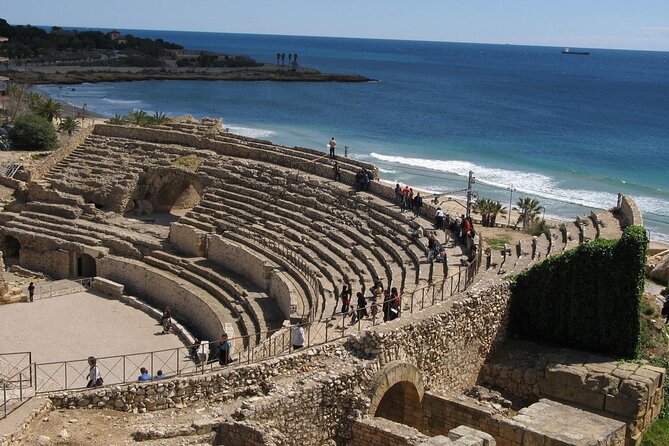
At the east end, you reach the Balcón del Mediterráneo, a lookout designed for exactly what you want on a Mediterranean itinerary. From there, you look toward the coast, the port, the beach, and the Roman amphitheatre at the same time. That sightline is the tour’s biggest “wow per minute” moment.
There’s also a bit of Catalan culture here in the middle of the sightseeing. The Monumento a los Castellers honors the castellers tradition with a life-sized tower design, a 4 in 8. Even if you’ve never seen a human tower, it’s a reminder that this region’s identity is carried in public rituals, not only in monuments.
El Serrallo: Fishermen Colors, Seafood Stops, and Sea Air
After the promenade and viewpoints, you head toward El Serrallo, Tarragona’s maritime neighborhood. This is where the tour slows into a more local pace. You get pastel-colored fishermen homes, seafood restaurants, and a walk that feels designed for lingering.
You’ll also see the las Fonts de Serrallo (the Serrallo Fountains), decorated with modern sculptures. It’s a nice contrast. Roman Tarragona can feel heavy on the past, but these fountains show the city continuing its creativity now.
If you’re thinking about where to eat, this is the right neighborhood to do it. Lunch is not included, and typical menu costs run €15 to €30. Planning a lunch here makes sense because you’re already in the right setting, and you’ll be close to the rest of your walk.
Parc del Miracle Sets Up the Roman Buildings Like a Stage
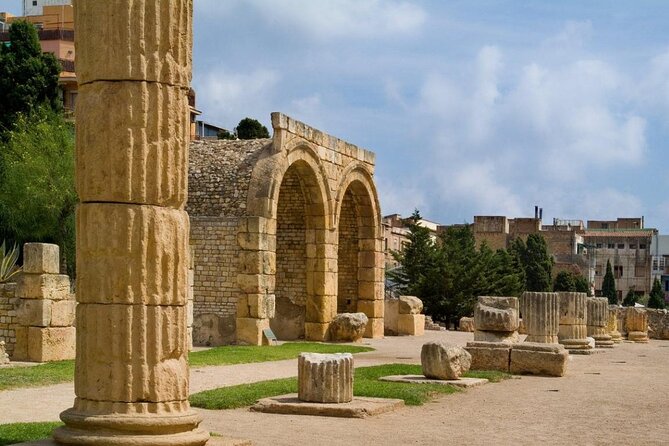
Once you’re back up toward the Roman highlights, the stops start to feel like a connected route. The Tarraco Amphitheatre is part of the UNESCO world heritage cluster. It was built close to the sea outside the old city wall. That location matters, because the building’s setting makes it feel open and exposed, like it was meant for crowds and visibility.
A key practical note: amphitheatre admission is not included. So you’ll want to decide whether you pay for entry based on what you enjoy. If you like reading the architecture up close, buying the ticket will feel worth it.
Next you reach Parc del Miracle, a sea-facing garden right in front of emblematic Tarraco monuments. This stop is included, and I think that inclusion is smart. Gardens are a recovery moment, especially on a full day. You get views that tie the sea to the old Roman structures without turning everything into ticket-only time.
This is also a good place to pause, take photos, and reset your legs before the tour moves into more wall and tower material.
Circus, Tower, and the Roman Wall Circuit
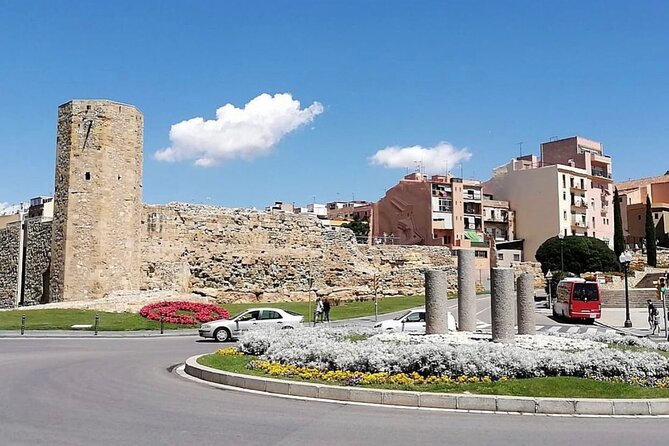
The Roman story in Tarragona continues with Circ Roma, the Roman circus. It’s conserved in the city, built with the support of the concilium provinciae, the yearly meeting of representatives for the province. Like the amphitheatre, it’s UNESCO-listed, but entry here is not included.
Then there’s the Torre del Pretorio Romana, a Roman tower built around 73 AD. The description matters: it’s said to traverse the circus and connect the Lower City with the forum. That detail gives you a framework for how Tarraco functioned. It wasn’t just monuments in separate corners. It was movement and connection, done at scale.
After that, you transition into medieval Tarragona vibes with Pla de la Seu. This is one of the best places to feel the city’s old-town atmosphere. It’s presided by the cathedral, with gothic mansions and notable preserved buildings like the Casa Balcells and the arcades on Calle Merceria (14th century). It’s a nice reminder that Tarragona’s past does not end at Rome.
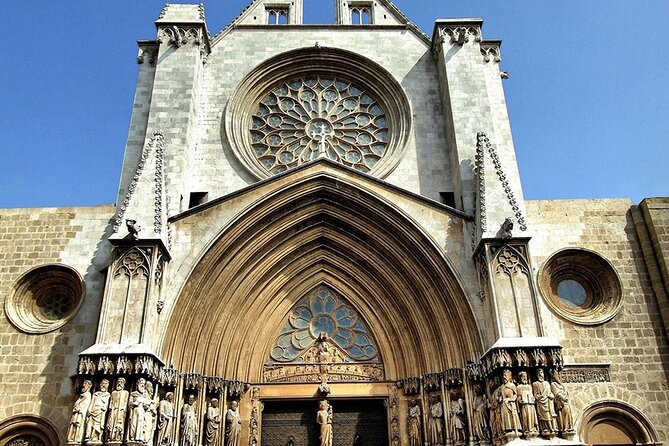
You then have the Tarragona Cathedral, the Catedral Basílica Metropolitana y Primada de Santa Tecla, built in an Early Gothic style. Admission is not included here either. Still, even without entry, it’s worth seeing from the surrounding area because the site’s layers go deeper than you’d guess. The ground has held a Roman temple for imperial cult, a Visigoth cathedral, and an Arab mosque before the Gothic structure you see today.
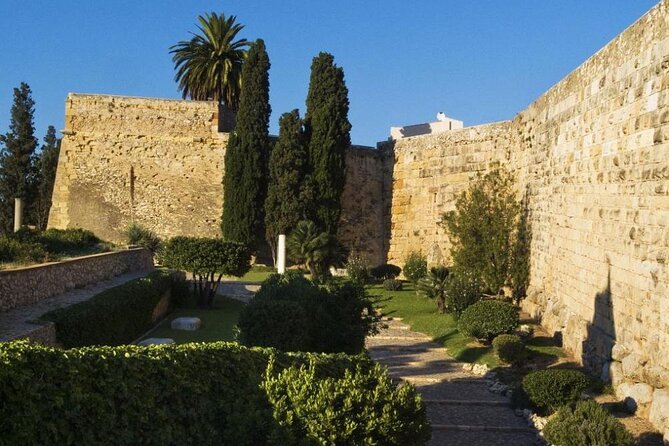
From there, you get the Murallas de Tarragona and Passeig Arqueològic. The walls have Roman origins and are described as part of UNESCO heritage, with the oldest construction connected to Roman Tarraco. The archaeological walk runs along the Roman wall between the original wall and later additions, with opportunities to view towers such as the tower of the Archbishop and the tower of Minerva.
If you like a physical sense of history, this is your part of the day. The walls help you “place” everything you saw earlier, especially the amphitheatre area and the old city layout.


Two Extra Stops That Add Texture Beyond the Main Loop
The tour also includes detours that expand the idea of Tarraco beyond the city center.
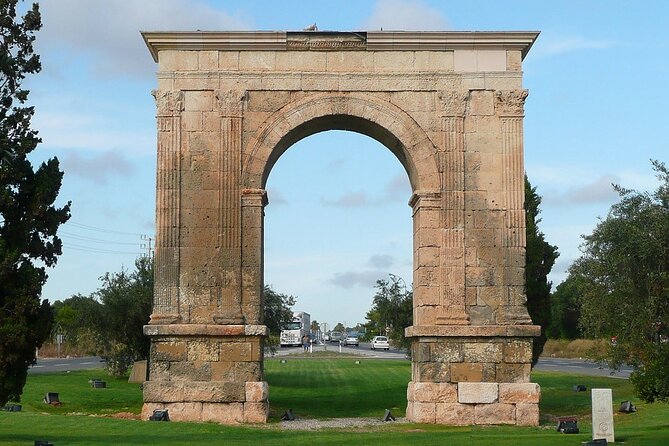
You’ll visit the Arch of Bará, a Roman triumphal arch built around 20 km north-east of Tarragona in the village of Roda de Bará. It’s part of the Tarraco archaeological group recognized by UNESCO. Even if an arch sounds small compared with an amphitheatre, it helps you understand Roman territory. This was not a single-site story.
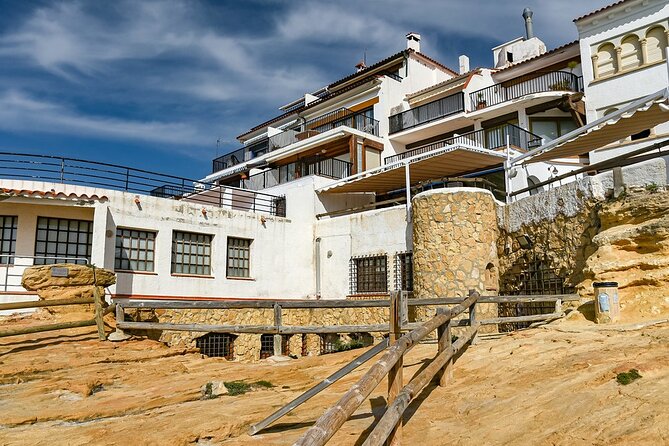
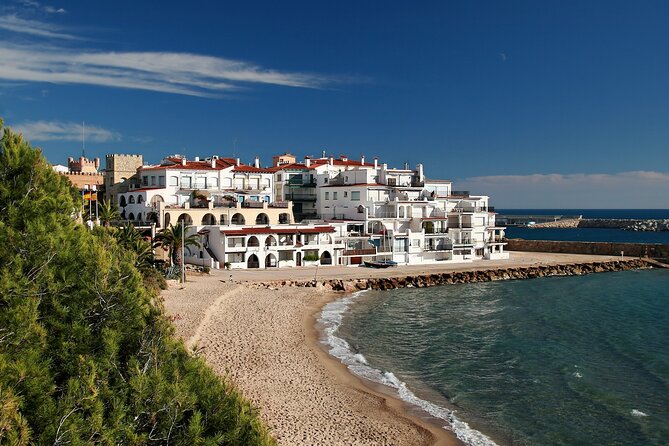
Then there’s El Roc de Sant Gaieta, also in Roda de Bará. This one is not Roman in origin the way the other stops are, but it adds a very different kind of meaning. It’s described as a typical fishermen villa in Mediterranean style, built starting in 1964 and finishing in 1972. The streets include references to Romanesque, Arabic, and Gothic styles. It’s an unusual stop, and I like that it breaks the constant stone-and-empire feeling, giving you something more about local architecture and taste.
You’ll get enough time to look around, but it won’t swallow your day.
Sitges: Where the Roman Day Gets Sunny and Social
After Tarragona, the vibe turns toward coastal ease with Sitges, a Catalan seaside town at the south-east of Barcelona, surrounded by the Natural Park of Garraf. Sitges is known for Mediterranean beaches and a promenade lined with big mansions. The old town streets are full of shops, restaurants, and bars, including a well-known gay scene.
The tour gives you time in Sitges for a look around, plus specific time for scenic walks. The main stroll stop is the Passeig Marítim, a 2.5 km sea promenade from the Church of San Bartolomé to the Hotel Terramar. The included time here is ideal because it lets you actually enjoy the sea air instead of just passing through.
You also visit the Church of Sant Bartomeu and Santa Tecla, built in the 17th century with late modifications. The description highlights the church’s asymmetric silhouette above a hill facing the beach. In Sitges, that church is one of those “anchor landmarks” that helps you orient yourself fast.
There’s also a stop at Palau de Maricel, part of the novecentista artistic complex. It’s described as a building built between 1913 and 1916 that today holds cultural activities. Admission here is not included, listed at €10 per person, so you can decide if you want to pay to go inside based on your interests. If you’re not into museums, you may still enjoy the architecture and setting without purchasing entry.
The biggest Sitges win is that it feels like an actual town, not just a photo line. You get enough time to mix scenery with strolling and casual eating.
Price and Tickets: What You’re Actually Paying For
This tour costs $804.39 per group for up to 7 people, with private transportation in an air-conditioned vehicle, bottled water, and pickup offered in Barcelona city, the port, and the airport area. There are also kid options like baby chairs and boosters on demand.
When you break it down per person, the value depends on your group size. With a full group, the transport cost per person becomes easier to justify. With only 2 people, it’s still a reasonable full-day format, but you’ll feel the premium more.
The other value is how the tour handles timing. You’re not doing multiple train and bus transfers plus ticket planning across two towns. Instead, you get a structured day that puts the key sights close together geographically.
Ticket costs are the only real variable:
- Included admissions include Pont del Diable, Parc del Miracle, Balcón del Mediterráneo, Monumento a los Castellers, Tarraco Imperial Square area time, Passeig Marítim in Sitges, and other listed included stops.
- Not included admissions include Tarraco Amphitheatre and Roman Circus (€7 per person), Tarragona Cathedral (€5 per person), and Palau Maricel Sitges (€10 per person).
Plan for lunch on your own, typically €15 to €30. If you eat in El Serrallo or along the promenade areas, you’ll usually get a more satisfying setting for the price.
Guide Style and How to Expect the Day to Feel
One of the strongest themes from the experience is the human touch. In particular, a guide named Pedro comes through in the feedback as friendly, punctual, and helpful with explanations while driving. That matters because Roman sites can feel overwhelming if nobody gives you a way to connect them.
Still, there’s a practical caution. Depending on how the day runs, you might find that the transportation is the main guided component, with you doing more of the on-your-own wandering at each stop. Plan for some independent walking, and consider this a “see it, then explore it” style day, not a deep guided tour where someone stays at every doorway.
If you’re bringing kids, this itinerary can work well because there’s room for short breaks and viewpoint pauses. One account notes flexibility, including a beach stop for swimming between Tarragona and Sitges. That’s the kind of small kindness that can make a long day easier.
Who Should Book This Full Day Tarragona and Sitges Trip
This is a great match if:
- You want Roman Tarragona highlights plus an actual seaside payoff in Sitges.
- You like a day with viewpoints, short stops, and walkable areas, not endless museum time.
- You’re traveling with a group of up to 7 people and want private transport rather than public transit chaos.
- You’re comfortable paying a few extra admission fees for the big-ticket entries like amphitheatre and circus.
You might want to think twice if:
- You hate buying tickets on the spot or you want everything fully included.
- You prefer a strictly guided, inside-every-site experience with no independent walking at all.
Should You Book It
Yes, if your goal is a high-impact day with two very different atmospheres: Roman Tarraco’s monumental past and Sitges’ Mediterranean calm. The route makes smart use of geography, and the included viewpoint stops do a lot of heavy lifting.
If you book, I suggest two habits. First, budget for the extra admissions (amphitheatre/circus, cathedral, and optional Palau Maricel). Second, decide in advance what you want most, Roman architecture access or scenic pacing, because the day gives you both but you still control how much you pay to go inside.
FAQ
How long is the full-day tour?
The tour runs for about 8 hours.
Is pickup offered, and where?
Yes. Pickup is offered in Barcelona city, the Port, and the Airport.
Is this a private tour?
Yes. It is a private tour/activity, and only your group participates.
What language is the tour offered in?
The tour is offered in English.
What is included in the price?
Included items are private transportation, an air-conditioned vehicle, bottled water, and baby chairs and boosters on demand. Some admissions are also included for specific stops.
Are lunch or meals included?
No. Lunch is not included. You’ll need to budget for a lunch menu estimated at €15 to €30.
What admission fees are not included?
Amphitheatre and Roman Circus are €7 per person, the Tarragona Cathedral is €5 per person, and Palau Maricel in Sitges is €10 per person.
Which Sitges stops are included?
Passeig Marítim is listed as included, while Palau Maricel is listed as not included. The church stop in Sitges is free.
Does the tour offer child seats?
Yes. Baby chairs and boosters are available on demand.
What is the cancellation policy?
Free cancellation is allowed up to 24 hours in advance for a full refund, based on the tour’s local start time.
More Full-Day in Barcelona



More Tour Reviews in Barcelona
Not for you? Here's more nearby things to do in Barcelona we have reviewed








More Barcelona City Tours worth opening.
 ★ 4.4Park Güell Admission TicketFrom $2576,534 reviews
 ★ 4.7Casa Batlló Entry with Self-Audioguide TourFrom $3425,359 reviews
 ★ 4.424 or 48-Hour Hop-On Hop-Off Bus TourFrom $3920,872 reviews
 ★ 4.7Park Guell Guided Tour with Skip The Line EntryFrom $3117,563 reviews
 ★ 5.0Barcelona in 1 Day: Sagrada Familia, Park Guell,Old Town & PickupFrom $12013,541 reviews
 ★ 4.3Barcelona Aquarium: Entry TicketFrom $3113,335 reviews
 ★ 4.8Sagrada Familia Skip-the-Line Entry Ticket & TourFrom $6712,789 reviews
 ★ 4.4FC Barcelona Museum “Barça Immersive Tour” TicketFrom $3510,944 reviews
Continue by place or experience