
REVIEW · CASA BATLLO & LA PEDRERA TOURS
Barcelona Architecture Walking Tour With Casa Batlló Upgrade
One neighborhood, ten styles, nonstop stories. This Barcelona architecture walking tour strings together major Modernista landmarks with the kind of guided explanation that makes façades feel like real documents. I especially like how the route is built around big names like Gaudí, while also giving you time for less famous stops that still matter.
Two things I really like: the Casa Batlló upgrade at the end can turn a good exterior tour into a ticketed priority visit, and the tour is led by an architect guide option when you choose the upgrade. One drawback to plan for: it is a lot of walking in busy street noise, and some departures may not include listening devices, so you will want to stand where you can hear clearly.
Key highlights to know before you go
- Expert architect guidance (when you select the upgrade), with context that connects the buildings to Catalan modernism
- Gaudí at street level, including multiple viewpoints around the Sagrada Familia
- A smart Modernisme sweep, from Recinte Modernista de Sant Pau to Passeig de Gràcia
- Casa Amatller chocolate sampling during the stop at the ground-level shop
- Small group size with a maximum of 20 people for a more controlled walk
- Optional Casa Batlló admission, so you can match the experience to your budget
A 2.5-hour modernism run you can actually finish
This tour is priced at $35.07 per person and runs about 2 to 2.5 hours. That time window matters. It is long enough to connect dots between architects and ideas, but short enough that you do not blow half a day just to see building exteriors.
The format is also practical: you get a local guide and a walking route with set stops, rather than a vague “wander around and hope” situation. You also get a mobile ticket, which helps on a day when you are juggling transit and other timed entries.
And yes, Barcelona is loud. You are walking through neighborhoods with traffic, chatter, and constant visual distractions. If you like architecture details, bring your patience for crowds and use the guide’s explanations as your “map.”
You can also read our reviews of more walking tours in Barcelona



Starting at Sant Pau, where modernism begins with big ideas
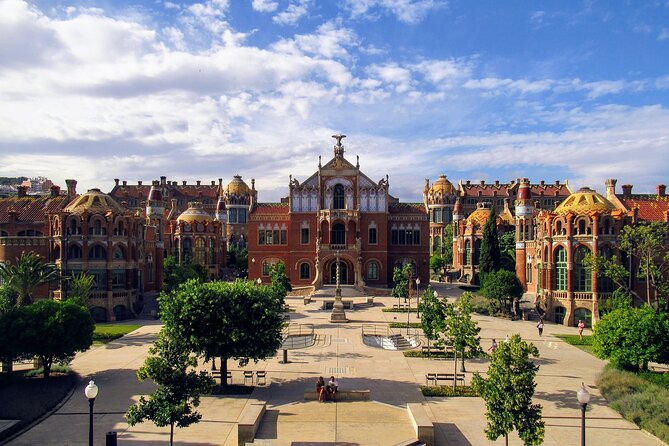
You kick things off at Recinte Modernista de Sant Pau. This is designed by Lluís Domènech i Montaner, one of the fathers of Catalan modernism. You will spend about 15 minutes here, and the focus is on how this site once functioned as a major hospital, still in use until the late 1990s.
Why this stop works: it gives you the foundation before you jump to the flashier names. Sant Pau is not just pretty. It is a lesson in how modernist architecture mixed design ambition with real civic purpose.
A practical note: admission is not included at this stop, so you should expect exterior viewing and guided context more than a full inside visit.
Sagrada Familia viewpoints, symbol spotting, and street-by-street orientation
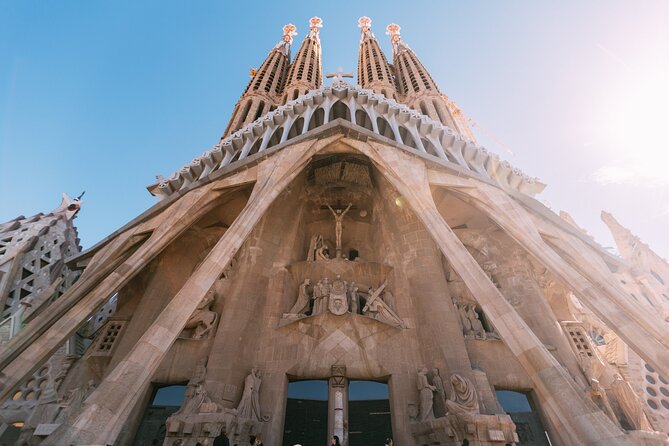
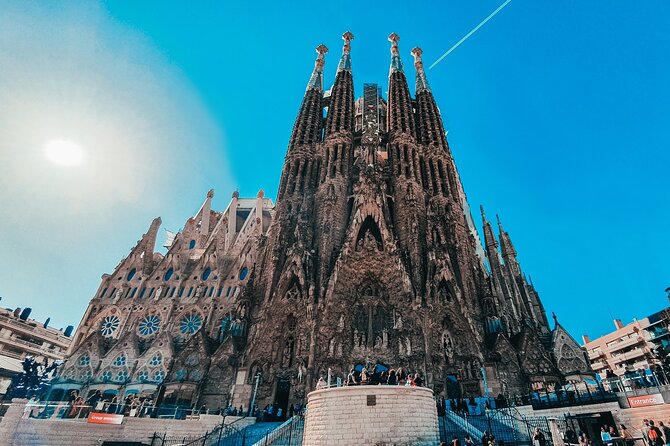
Next is Basilica de la Sagrada Familia. You will stroll along Avinguda Gaudí and get about 30 minutes to take in the church from multiple angles. Admission is not included, so treat this as a guided approach and observation time.
This is one of the biggest reasons to book a guided architecture walk. The guide points out secrets embedded in the facades, so you are not just looking at a landmark. You are learning how to read it. Once you know what to look for, the building stops feeling like one big sculpture and starts feeling like a coded system.
If you have never visited Sagrada Familia before, this stop can help you decide how you want to tackle the interior later, since you get the “why” first.
CaixaForum Macaya, a short pause with a longer story
After Sagrada Familia, you have a brief stop at CaixaForum Macaya for about 10 minutes. The tour framing here is about story and context, not a long sit-down visit. Admission is not listed as included.
This stop is useful because it breaks up the pace. It also gives you a chance to see how modernist ideas can show up in places that are not always top-of-mind for first-time visitors. You will get more meaning out of this kind of stop if your guide talks about the surrounding area and why the building is there, not just what it looks like.
Casa de les Punxes, the fairy-house style that still has rules
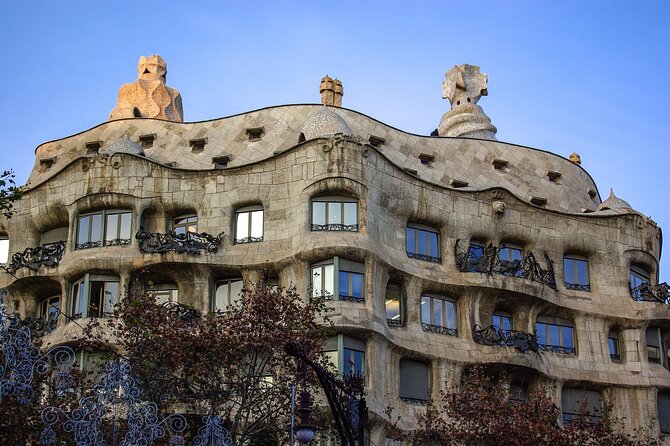
Next comes Casa de les Punxes, where you get about 15 minutes. The tour leans into its reputation as the most fairy-tale style house in Barcelona, and you will hear the story behind that nickname.
This is where architecture fans tend to perk up, because modernism is not just grand boulevards and famous names. It is also playful symbolism, bold shapes, and a designer’s willingness to be theatrical.
Again, there is no admission implied for this stop, so think of it as guided exterior interpretation.



Passeig de Gràcia: where you get the “Modernisme concentration” feeling
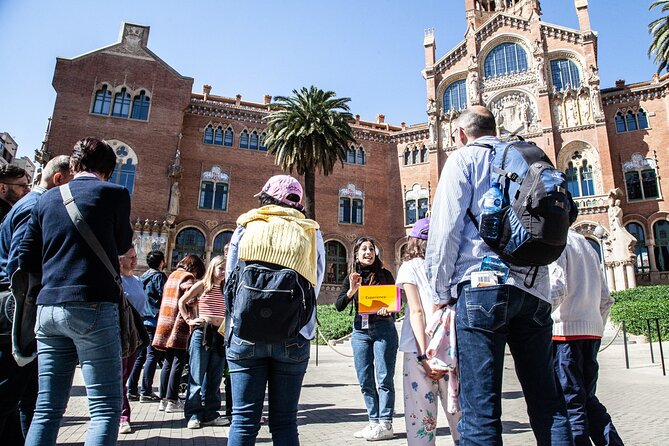
Then you move into Passeig de Gràcia, a road you will recognize instantly once you are there. The tour gives you about 30 minutes to learn about famous modernist houses, including Casa Milà, Casa Batlló, Casa Amatller, and Casa Lleó Morera. This part of the day is about pattern recognition.
Why this stretch is valuable: these buildings are close enough that you can compare style choices line by line. And you can understand how each architect pushed the same overall modernist moment in different directions.
You also get the tour’s framing of the area as La Mansana de la Discordia, the “block of discord,” which is a clever way to describe how the architecture feels like it is in friendly competition.
Casa Batlló upgrade: when the ticket turns a walk into a full experience
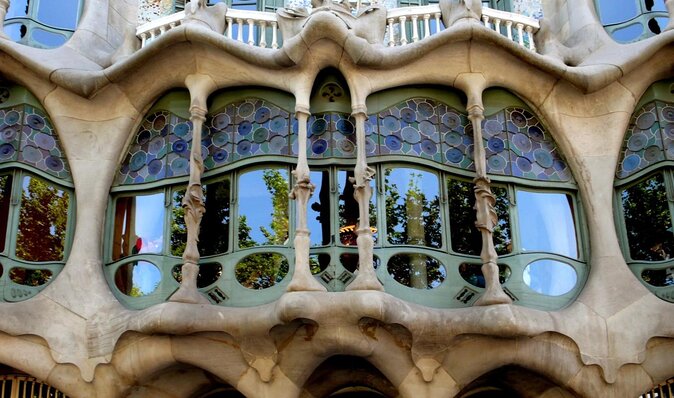
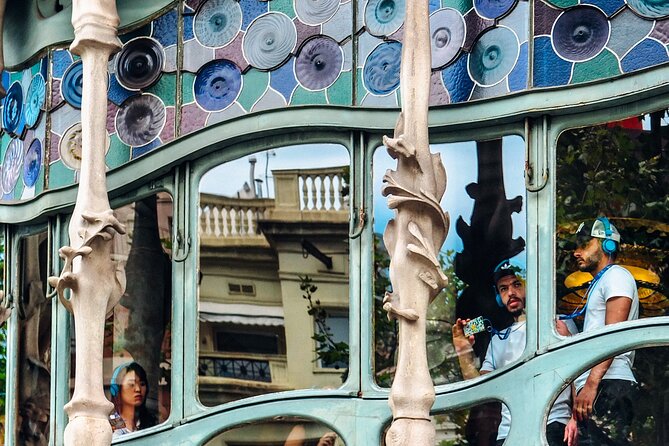
At some point during the route, there is a clear Casa Batlló focus. The important part for you is that Casa Batlló admission is an optional upgrade. In other words, the tour can stay as an exterior architecture walk, or you can add the ticketed visit to see more of Gaudí’s most elaborate work.
So is it worth upgrading? Here is how I’d decide:
- If you only have limited time in Barcelona, upgrading can be smart because you are already in the right neighborhood and the tour is setting you up to notice details.
- If you care about interior design, you will benefit more from the upgrade than a ticketless walk alone, since major entry time is what you miss on most walking routes.
- If your budget is tight, you can still have a strong day without it, because the guide will point out key exterior elements at multiple Gaudí stops.
One detail that makes this upgrade feel practical is the timing. You are not randomly trying to fit Casa Batlló into your schedule later. The tour is structured to flow toward it.
Casa Amatller chocolate stop: yes, it counts as learning time
One of the best “I can’t believe this is included” moments is the chocolate sample at Casa Amatller. You spend about 15 minutes here, and the itinerary notes entry as free for that stop, with the tour guiding you through the ground-level shop and giving you a chance to sample.
This works because it anchors the architecture day in daily life. Modernist buildings are not frozen in time. They became part of commerce, culture, and routine. The guide’s explanation plus the sampling gives you a real sensory memory, not just photos of stone and glass.
If you are the kind of person who forgets the details after a museum day, this small stop is a good memory hook.
How guides make or break an architecture walk
Small groups can still feel chaotic if the pacing is too fast or the guide does not manage the space. In one instance, a fast pace and street noise made it harder to hear, and the lack of listening devices was a real factor. That is not universal, but it is a good reminder to choose your spot and be ready to keep up.
On the other hand, some guides bring serious energy and depth. Names that come up in the guide experiences include Perrine, Cal, and Patricio. The best-guided versions of this tour are not just reciting facts. They connect architecture to Catalan culture and history through the lens of the architects.
If you want to maximize your return:
- Arrive on time so you are not starting at the back of the group.
- Have your hearing set to high. Stand near the guide.
- Ask one or two good questions instead of waiting for a full Q and A.
What you should expect at each step of the walk
This tour is built like an architecture highlights sampler. That means the time at each stop is limited, and the guide’s role is to compress the meaning into the minutes you have.
Here’s the practical expectation:
- Sant Pau gives you the modernism foundation (about 15 minutes).
- Sagrada Familia gives you the symbol spotting and multiple angles (about 30 minutes).
- CaixaForum Macaya is a short narrative pause (about 10 minutes).
- Casa de les Punxes adds personality and visual drama (about 15 minutes).
- Passeig de Gràcia and La Mansana de la Discordia gives you comparisons across famous houses (about 30 minutes plus walking time around the area).
- Casa Amatller provides the chocolate sampling and a quick shop entry moment (about 15 minutes).
If you are hoping for long indoor time inside big-ticket buildings, this route is not that. It is a guided walking plan designed to set your eyes, not replace separate ticketed experiences.
Logistics that affect your comfort, from group size to pacing
The tour caps at 20 travelers. For a walking architecture day, that is a sweet spot. It usually keeps the group easier to manage and helps the guide speak to everyone without shouting nonstop.
Duration is 2 to 2.5 hours, so you will want practical walking shoes and a quick plan for water. Barcelona heat can be sneaky in shoulder seasons too.
Also, this tour is described as near public transportation and offered in English. That means it is straightforward to plug into a typical day itinerary.
Who this tour is best for (and who should pass)
You should strongly consider this tour if:
- You want a fast, organized way to see major modernist highlights without guessing your route.
- You like architecture details explained in plain language.
- You are visiting for a short time and want the “big names” plus a few extras.
You might skip it or pair it with other plans if:
- You mainly want interiors. This is built around guided viewing and short stops, with building entry generally not included.
- You get frustrated by busy streets and frequent moving. It is a walking route, not a sit-and-study session.
Should you book this Barcelona architecture walking tour?
I think this is a strong book for first-timers who love architecture and want their time organized. The value comes from the combination: a guided route, modernist context, and the option to add the Casa Batlló admission when you want more than exteriors. At $35.07, it is also a reasonable entry fee for a focused specialist guide day in a city where architecture can otherwise turn into a photo hunt.
Book it if you can commit to hearing the guide and keeping pace. Skip or change plans if you prefer long ticketed museum-style visits or you know you struggle with street noise.
FAQ
What is the price of the Barcelona architecture walking tour?
The tour costs $35.07 per person.
How long is the tour?
It runs about 2 hours to 2 hours 30 minutes.
Is the tour offered in English?
Yes, it is offered in English.
Where does the tour start?
It starts at Recinte Modernista de Sant Pau, Carrer de Sant Antoni Maria Claret, 167, Horta-Guinardó, 08025 Barcelona, Spain.
Where does the tour end?
It ends at Pg. de Gràcia, 35, Eixample, 08007 Barcelona, Spain, in front of the Casa Lleó i Morera.
What is included in the ticket?
Included are a local guide, a walking tour of Barcelona architecture, a chocolate sample at Casa Amatller, and an expert architect guide and Casa Batlló admission as optional upgrade items.
Is entry to buildings included?
Entry to buildings is listed as not included, though some stops are marked as free and the Casa Batlló admission is available as an optional upgrade.
Is a mobile ticket provided?
Yes, you receive a mobile ticket.
How large is the group?
The tour has a maximum of 20 travelers.
Is free cancellation available?
Yes, you can cancel for a full refund if you cancel at least 24 hours in advance.
More Walking Tours in Barcelona



More Tours in Barcelona


More Tour Reviews in Barcelona
Not for you? Here's more nearby things to do in Barcelona we have reviewed









More Casa Batllo & La Pedrera Tours worth opening.
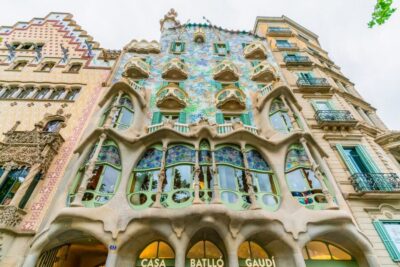 ★ 4.7Casa Batlló Entry with Self-Audioguide TourFrom $3425,359 reviews
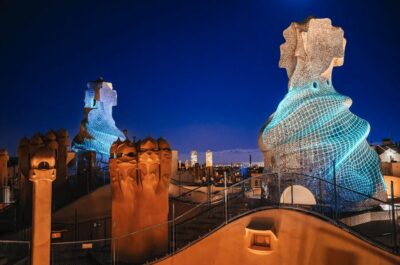 ★ 4.4La Pedrera Night ExperienceFrom $474,633 reviews
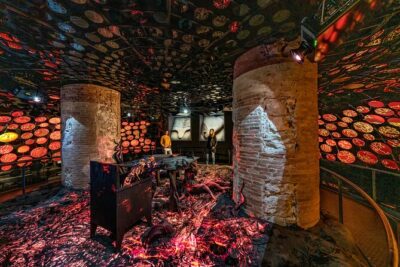 ★ 4.5Casa Batllo Admission Ticket with Intelligent Audio GuideFrom $543,168 reviews
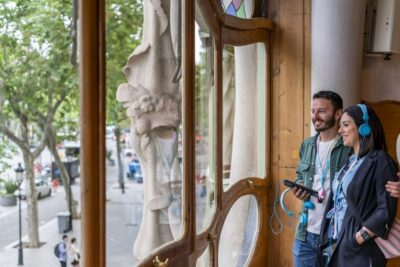 ★ 4.8Casa Batlló Be The First Entry TicketFrom $531,158 reviews
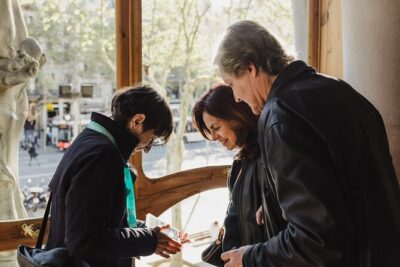 ★ 5.0Complete Gaudi Tour: Casa Batllo, Park Guell & Sagrada FamiliaFrom $1621,152 reviews
 ★ 4.5La Pedrera-Casa Mila Admission Ticket with AudioguideFrom $411,032 reviews
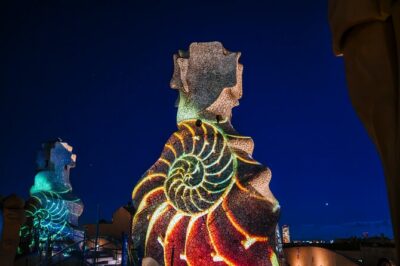 ★ 4.0La Pedrera – Casa Mila Night ExperienceFrom $45564 reviews
 ★ 4.6Casa Vicens, Pedrera, and Casa Batlló Guided TourFrom $140260 reviews
Continue by place or experience