
REVIEW · CASA BATLLO & LA PEDRERA TOURS
La Pedrera-Casa Mila Admission Ticket with Audioguide
Gaudí’s odd angles feel fresh and personal. This self-led visit gives you free audio with your La Pedrera, Casa Milà admission, so you can pause, rewind, and learn as you go. I especially like the way the roof terrace turns architecture into a citywide lookout, with those famous corkscrew chimneys. The main catch is weather: if it rains, the roof terrace closes for safety, and you will lose that top-level highlight.
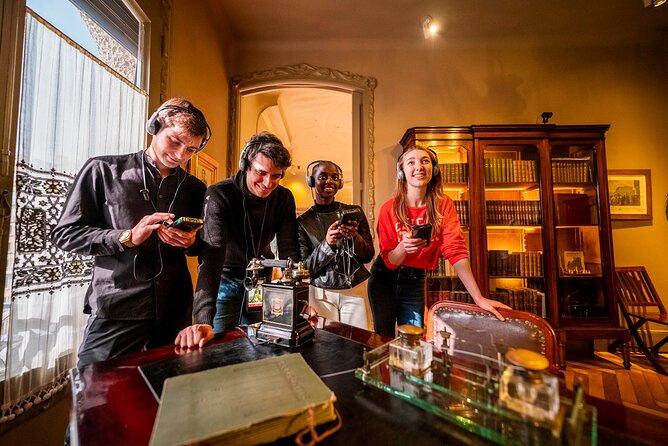
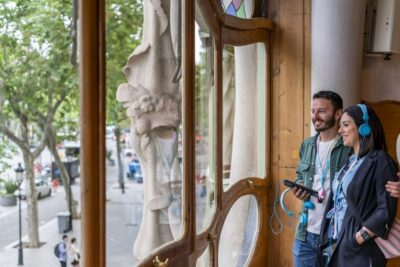
I also like the practical setup. You enter via a timed slot, pick up your headset on site, and move through five floors across about 4,500 square meters at your own pace. There is even a left-luggage room if you want a lighter visit, and the whole thing is small in scale, with a max of 9 travelers per activity group. One more consideration, worth knowing up front, is that audio can be technical sometimes, so it helps to check your headphones early and keep your expectations flexible.
Key highlights to know before you go
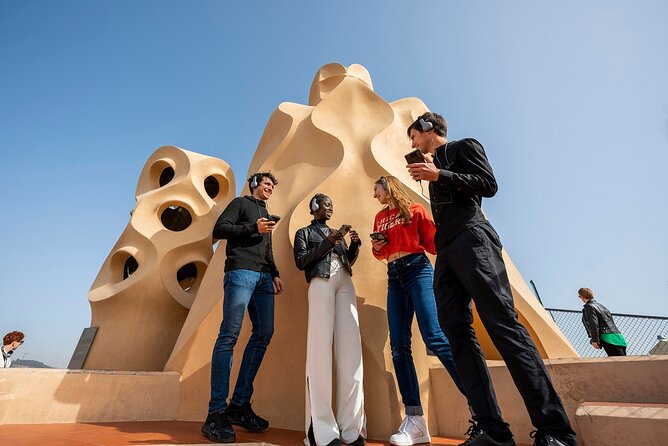
- Free English audio guide that explains what you are seeing, while you explore on your schedule
- Timed entry with lots of time slots helps you avoid the worst rush points
- Five floors across 4,500 square meters, including recreated interior spaces
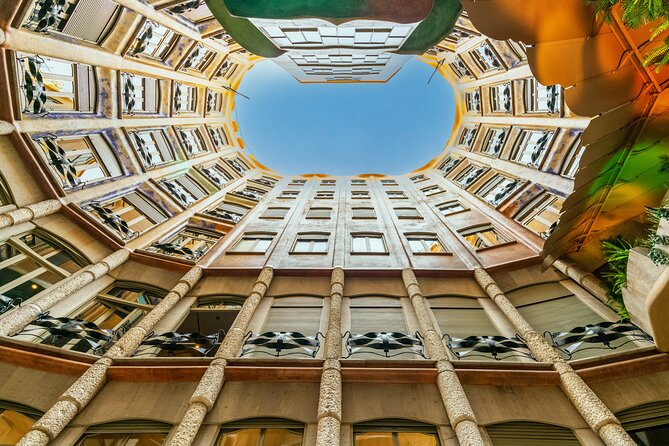
- Two decorated courtyards with Gaudí-style mosaics and swirling visuals
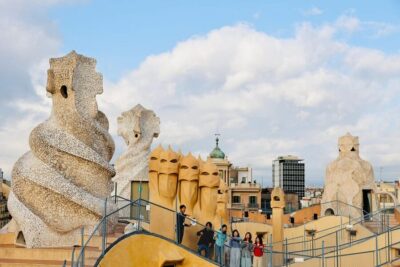
- Roof terrace views with corkscrew chimneys and skyline panoramas
- Left-luggage room so you can travel lighter through tight indoor spaces
La Pedrera, Casa Milà, and why it works so well with an audio headset
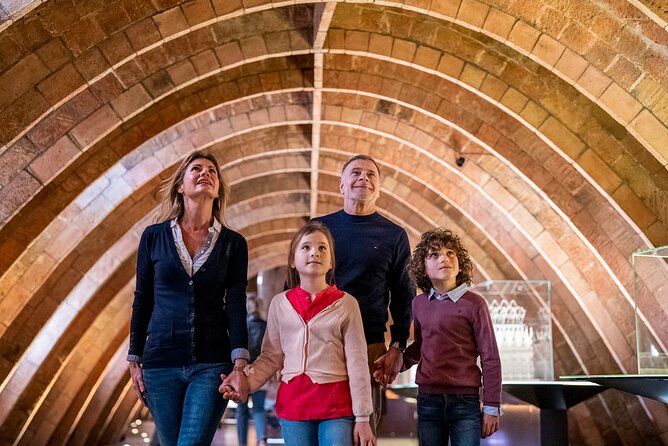
La Pedrera, also known as Casa Milà, is one of Barcelona’s big Gaudí nameplates, designed between 1906 and 1912 and listed by UNESCO. It is the last building Gaudí worked on before he turned most of his attention to La Sagrada Familia, and you can feel that transition in the way the structure pushes ideas about form and nature.
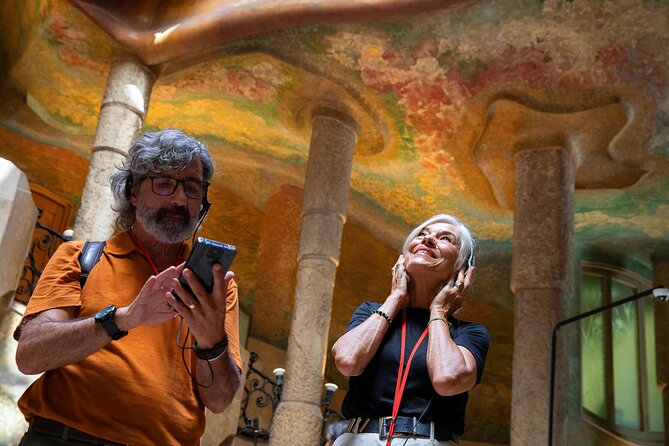
What makes the audio format especially smart here is that the building is full of details that reward slowing down. The lobbies, stair columns, and courtyard surfaces can look playful at a glance, but the storytelling helps you see the logic behind the curves and textures. If you already love architecture, you will get more from each room. If you are newer to Gaudí, the headset helps you avoid the common problem of staring at cool shapes without understanding what you are looking at.
Also, this is not just a quick walk-through. You are looking at multiple levels plus a rooftop viewpoint, so you get time to find your favorite corners instead of getting swept along by a group.
More Barcelona tours and experiences for the shortlist

Ticket basics: timed entry, mobile ticket, and what the 90 minutes really means
Your reservation comes with a mobile ticket and a time slot. Plan to arrive at the start time you picked. The experience runs about 1 hour 30 minutes, but in real life your pace will depend on how often you stop for photos and how much you want to replay audio segments.
The activity is offered in English, and the audio guide is included with your admission. It is self-led, which is great if you hate being rushed, but it also means you need to manage your own flow. That is where a timed entry helps. When you arrive on schedule, you typically avoid a long scramble and you can settle in before the crowd pressure ramps up.
A small detail I think matters: this is set up for an activity group size with a maximum of 9 travelers. That usually helps with how smoothly people move from room to room, even though La Pedrera can still feel busy once you are inside.
Finally, a quick note that affects your day planning. Flash photography and tripods are prohibited. If you like tripod setups, skip them or leave that gear in the left-luggage room so you do not run into restrictions mid-visit. Service animals are allowed, and the site is near public transportation, which makes it easier to fold into a day of sights along Passeig de Gràcia.
Entering the building: lobbies and courtyards where Gaudí’s textures do the talking
Once you arrive at your reserved time slot, you enter and collect your audio guide. Then you start with the spaces that set the tone for the whole visit. Expect decorative lobbies and courtyards with kaleidoscopic visual energy: mosaics, swirling patterns, and those signature Gaudí-inspired flourishes.
Two courtyards in particular shape the experience: Passeig de Gràcia and Provenca. They are not just pretty backdrops. The way light bounces off the surfaces and the way the stair and column geometry frames the space makes you feel like the building is always in motion. With the audio playing, you get context for why the design leans into organic ideas instead of strict, rigid lines.
Self-led here is a plus. If you are the type who likes to stand quietly and look, you can. If you prefer to keep moving, you can. The headset is there, but it is not forcing a fixed script on you every few minutes.
The only downside to plan around is crowding in indoor areas. Some rooms and transitions feel tight, so if you are traveling with a stroller or bulky bags, you will want to use the left-luggage room to keep your movement smooth.
The apartment recreation: what La Pedrera was like in the 20th century
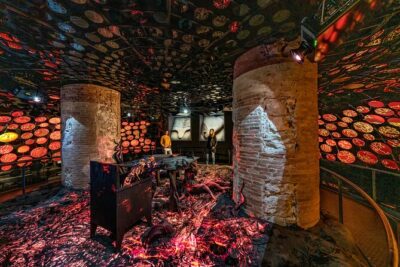
A big reason La Pedrera feels like more than a photo stop is the recreated apartment interior. You get a look at what an apartment in the building would have felt like during the 20th century. It helps you understand the scale of the rooms and how the architecture would have worked in everyday life, not just as an art object.
As you move through these interior spaces, keep listening through the segments tied to the building’s philosophy. This is where the audio tends to make the structure make sense. You are not only seeing curves and textures, you are also getting ideas about how Gaudí thought about nature, comfort, and function.
One practical tip: give yourself time in this area. It is tempting to rush because the visuals are so strong, but slowing down helps you notice the details you would miss if you are power-walking to the roof.
Exhibition spaces and Espai Gaudí: where the story goes beyond rooms
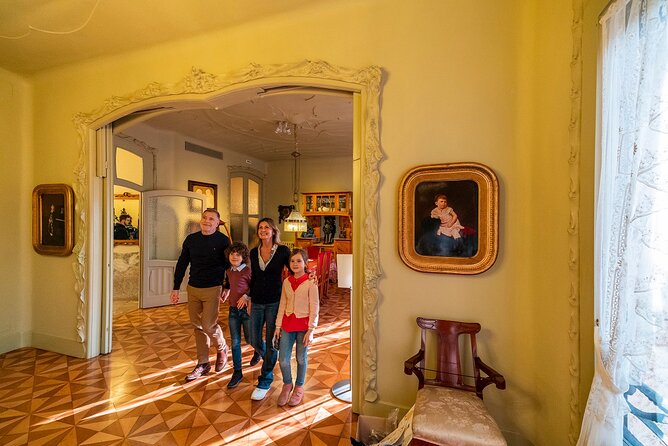
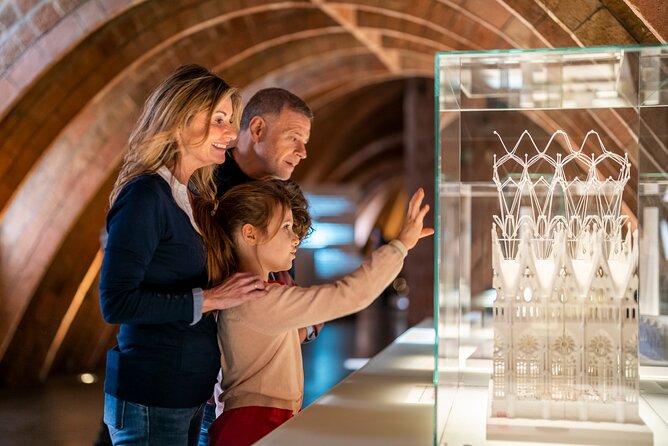
After the apartment recreation, you will reach the exhibition hall, which is the former residence of the owners, the Milà family. This is a key moment in the visit because it turns the building from a set of striking spaces into a timeline you can follow.
Then you head into Espai Gaudí, where you can browse an exhibition detailing Gaudí’s life and works. This part is especially useful if you want to connect La Pedrera to his bigger body of ideas. Even if you have seen other Gaudí sites, this exhibition helps you see what connects them.
The value here is not only the visuals, but the way the audio guide prepares you to notice patterns. When you later read or watch exhibit content, you are not starting from zero.
If you need to keep your energy up, take breaks strategically. Indoor exhibition zones can be slower, and that can actually help you recharge between the high-impact courtyards and the roof terrace finale.


Roof terrace and corkscrew chimneys: the payoff view, with real weather risk
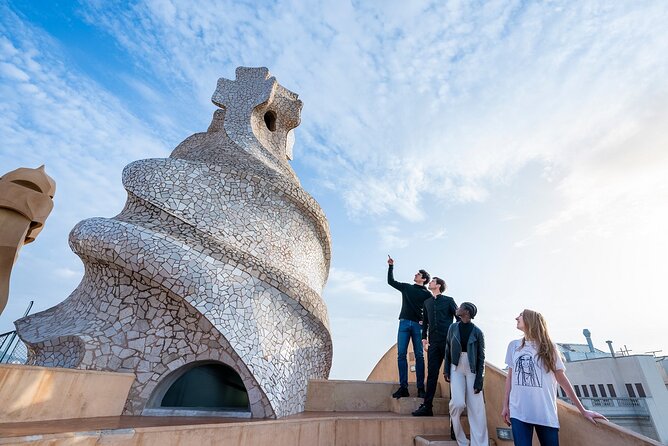
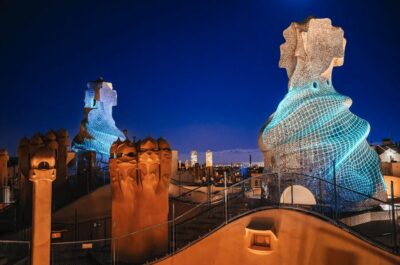
The roof terrace is the showstopper for many people, and for good reason. You get panoramic vistas over Barcelona and a clear view of the corkscrew chimneys. From up top, the building’s design feels like it has grown out of the city, not been placed on it.
However, the one thing that can ruin your perfect plan is rain. In the event of rain, the roof terrace will be closed for safety reasons, and that will not count as grounds for a full or partial refund. So if you are visiting during a wet season or you are not sure about the forecast, build flexibility into your day.
Here is how I suggest you handle that uncertainty:
- If the sky looks threatening, plan to spend more time indoors on courtyards and exhibitions.
- If the sky seems stable, aim to reach the roof section earlier rather than later, because crowds gather and rooftop space can get tight.
Also, the rooftop has parts that feel a bit tricky if you are not paying attention. Watch your footing, keep your balance, and do not rush past viewpoints just to beat the crowd.
Pacing tips: how to enjoy it when Barcelona crowds start moving
If you only remember one practical thing, make it this: go early if you can. After late morning, the flow thickens and the small spaces can feel like you are moving through a pinball machine of other people’s photos.
Timed entry helps, but it does not magically erase the fact that this is a top Barcelona landmark. So your best move is to use your 1 hour 30 minutes wisely:
- Start listening to the audio right away, so you learn as the building first grabs you.
- Spend your middle time where the rooms are most concentrated, then save rooftop energy for last.
- If you want photos, aim for rooftop earlier. Waiting can mean blocked angles and more people clustering around the best viewpoints.
Audio can also affect pacing. Some headsets have been reported working smoothly, while others have had occasional issues. Either way, you will feel better if you test your audio early and adjust quickly. If the sound is not clear, ask on site right away instead of suffering through half the visit.
And yes, the building can be busy, but the site does manage visitor flow. You still need patience in tight transitions, so keep your expectations friendly.
Value check: is this La Pedrera audio ticket worth $41.03?
At $41.03 per person, this ticket is not a bargain, but it is also not overpriced for what you actually get. You are paying for admission plus a roof terrace access, and the visit covers about 4,500 square meters across five floors. That is a lot of space for one ticket, and the rooftop views can make the experience feel more complete than a basic interior-only visit.
The audio guide is the key value driver. Architecture tours without context can turn into a blur of pretty details. With guided audio, you get explanations while you move at your own pace, which usually means you feel like you learned something, not just that you looked at something.
A fair note: if you are expecting a live guide talking nonstop, this is not that. It is self-led with audio. If you like structured storytelling, you might feel less satisfied. But if you like control, you will love the freedom.
So the value is strongest if:
- You want to explore at your pace
- You enjoy architecture details more than quick highlights
- You care about rooftop views and want the narrative audio to frame them
Practical details you should plan around
A few items can save your day:
- Rooftop may close in rain for safety, with no refund due to weather.
- You cannot use flash photography, and tripods are prohibited.
- The ticket is valid only for the day selected at booking, so match your visit date exactly.
- Children must be accompanied by an adult.
- Service animals are allowed.
- There is a left-luggage room, which can help if you are carrying backpacks, suitcases, or even stroller gear.
- Most people can participate, and the activity is near public transportation.
If you are traveling with gear, the left-luggage room is worth considering. Tight stairways and crowded corridors are easier when your hands are free.
Should you book the La Pedrera, Casa Milà audio admission?
Book it if you want the best mix of Gaudí payoff and flexible pacing. The included free audio guide is the right format for a building like this, and rooftop access is a major reason to choose this ticket over simpler options.
Skip it or consider another plan if:
- You need rain-proof certainty for rooftop views, because the terrace can close.
- You strongly prefer a live guide who answers questions and drives the timing, since this is self-led.
- You are extremely short on time. This is designed for about 90 minutes, and rushing can make the audio less useful.
If you can, reserve a time slot that fits your energy and aim for earlier entry. When the crowds hit later, the building stays impressive, but the experience becomes more about navigating people than absorbing the details. With a good start time and your headset ready, La Pedrera is one of the most memorable ways to experience Gaudí’s imagination in Barcelona.
FAQ
What is included with the La Pedrera ticket and audio guide?
Your ticket includes La Pedrera, Casa Milà admission with rooftop access, plus a free audio guide.
How long should I plan for the visit?
Plan for about 1 hour 30 minutes.
Is this experience self-guided or guided by a person?
It is self-led. You collect the audio guide, listen during your visit, and after the audio commentary ends you can continue exploring independently.
What languages are available for the audio guide?
The audio guide is offered in English.
Is the rooftop terrace part of the ticket?
Yes, rooftop access is included, but the roof terrace will close if it is raining for safety reasons.
What happens if the roof terrace is closed due to rain?
If it rains, the roof terrace closes for safety and that does not provide grounds for a full or partial refund of the admission ticket.
Is my ticket valid for another day if my plans change?
No. The ticket is only valid for the day selected at the time of booking.
Can I leave luggage or a stroller on site?
Yes. There is a left-luggage room where you can leave items to make your visit more comfortable, including backpacks, suitcases, and baby strollers.
Are flash photography or tripods allowed?
Flash photography and tripods are prohibited.
More Tickets in Barcelona
More Tour Reviews in Barcelona

Not for you? Here's more nearby things to do in Barcelona we have reviewed






More Casa Batllo & La Pedrera Tours worth opening.
 ★ 4.7Casa Batlló Entry with Self-Audioguide TourFrom $3425,359 reviews
 ★ 4.4La Pedrera Night ExperienceFrom $474,633 reviews
 ★ 4.5Casa Batllo Admission Ticket with Intelligent Audio GuideFrom $543,168 reviews
 ★ 4.8Casa Batlló Be The First Entry TicketFrom $531,158 reviews
 ★ 5.0Complete Gaudi Tour: Casa Batllo, Park Guell & Sagrada FamiliaFrom $1621,152 reviews
 ★ 4.0La Pedrera – Casa Mila Night ExperienceFrom $45564 reviews
 ★ 4.6Casa Vicens, Pedrera, and Casa Batlló Guided TourFrom $140260 reviews
 ★ 4.7Casa Milà Early-Morning Access Guided TourFrom $47200 reviews
Continue by place or experience