
REVIEW · HISTORICAL TOURS
Tarragona and Sitges Small Group Tour – Roman History & Culture
Roman Aqueducts are hard to top. This full-day, small-group tour pairs the walkable Pont del Diable aqueduct with a guided stroll through Tarragona’s Roman bones and old-quarter streets, then swaps history for sea air in Sitges. It is a straightforward, well-paced day that also gives you time to wander on your own, not just follow a rope line.
What I like most is the Roman stop selection: Tarragona’s aqueduct first, then the forum and circus areas inside the working city, which makes the past feel real. I also like the way the itinerary builds in breaks, including a quick coastal pause at Roc de Sant Gaieta before your longer beach time in Sitges.
One consideration: you do have limited time in each city, and Sitges can get busy, so plan your lunch and beach momentum early to avoid spending the best light waiting for tables.
Key highlights to zero in on
- Pont del Diable walk across the top for a genuinely memorable view of a 1st-century BC water system
- Tarragona’s Roman forum and circus tucked into modern streets, plus Placa de la Font inside the circus area
- A cathedral stop that can line up with local antiques if your day matches the Sunday market timing
- Roc de Sant Gaieta as a quick reset with rocky shoreline vibes and tiny white houses
- Sitges beach time with real free wandering for cafes, boutiques, and a possible swim (bring your swimsuit)
- Small-group minivan feel with an air-conditioned ride and time to ask questions of guides like Sergio and Henrique
How the Barcelona to Tarragona to Sitges flow really feels
This tour runs like a day built for people who want variety without sprinting. You meet in central Barcelona near Palau de la Música at 8:15am to settle in, use the restroom, and meet your guide. The tour leaves at 8:30am, then you get an air-conditioned minivan ride to Tarragona, about 90 minutes.
That drive matters. It gets you out of the city before the day gets loud, and it gives you time to sit back before your first big moment. You arrive in Tarragona for the aqueduct stop around 10:00am, then you keep rolling with more walking and guided context through the old quarter.
You’ll return to central Barcelona around 7pm, ending near Plaça de Catalunya. That is a practical finish point, easy for the metro or a quick taxi, and it spares you the late-day stress of negotiating routes back to your hotel.
You can also read our reviews of more historical tours in Barcelona



Pont del Diable: the Roman aqueduct you can actually walk on
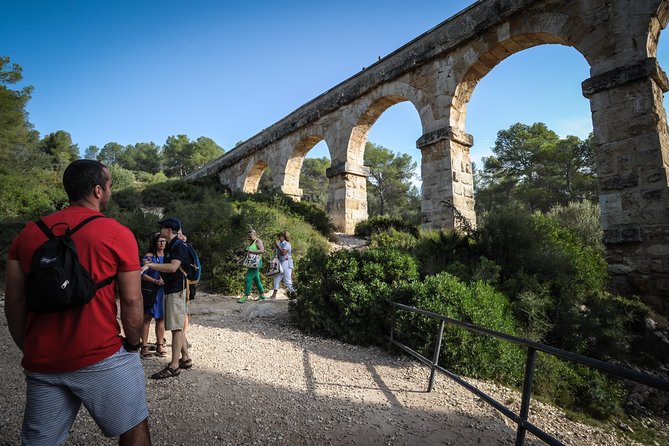
Your first Tarragona highlight is Pont del Diable (Les Ferreres), a famous Roman aqueduct from the 1st century BC. The big draw is simple: you do not just look at it from below. You’re able to walk across the top from one side to the other.
That top-walk is the moment that makes this tour feel more special than a drive-by ruin stop. You get real perspective on the engineering, and you can imagine what it took to maintain a water supply system for a city. It is one of those rare tourist experiences where you are physically on a structure built nearly 2,000 years ago.
In my book, the aqueduct stop also works as a mental warm-up. After that, Tarragona’s old quarter is easier to follow because you already have a concrete sense of how Romans shaped daily life.
Practical note: bring footwear you trust. Even if the walking is not long, you want solid grip on uneven surfaces.
Tarragona’s old quarter: cathedral views and Roman-to-modern overlap
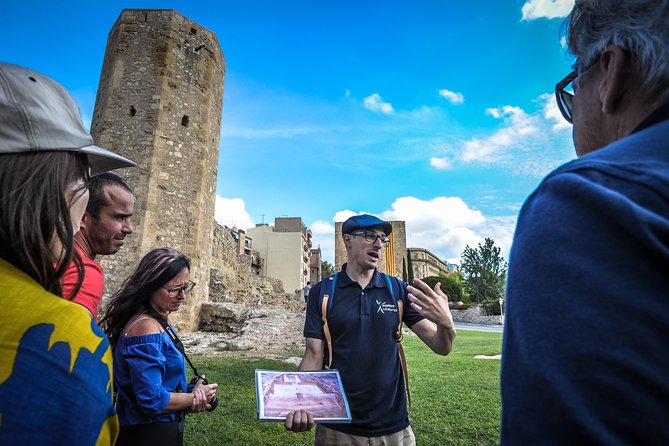
After the aqueduct, you travel back into Tarragona’s historic core. You enter through a narrow gateway in the ancient walls, and you start seeing what makes Tarragona different from many Roman sites: the Roman layer is not sealed off in a museum zone. The new city overlaps the ancient acropolis area, so modern life and Roman remains share the same streets.
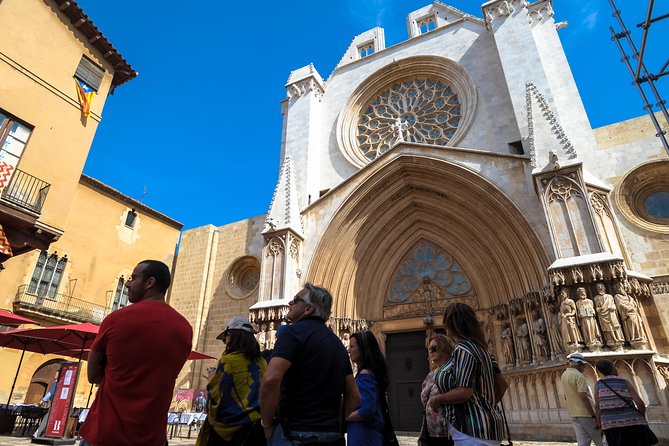
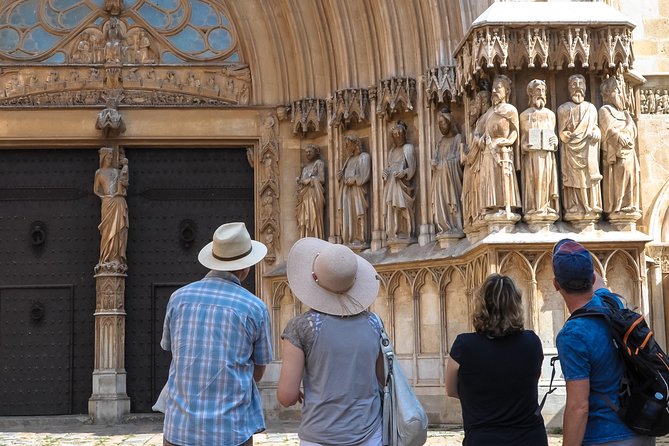
The tour route includes an archaeological walkway where you admire surviving stone walls, then you move through the old quarter passing places like a medieval hospital. You also stop at the Cathedral, where there can be a Sunday morning antique market around that time window if your schedule lines up with a Sunday.
Even if the market is not happening on your day, the cathedral stop is still useful. It gives you a higher vantage point and an easy place to regroup, check directions, and orient yourself before the Roman forum and circus sections.
One thing I appreciate here is that this is not only about seeing stones. The guide sets up what you are looking at and ties it back to how the city functioned. In guide-led tours, the real value is often the explanation that turns ruins into readable places.
Roman forum and circus at Placa de la Font
Around 11:00am, the tour shifts into the Roman heart zone: the Roman Forum and the nearby Roman Circus hidden within the urban design. This is where Tarragona feels extra satisfying if you care about how Roman cities were laid out.
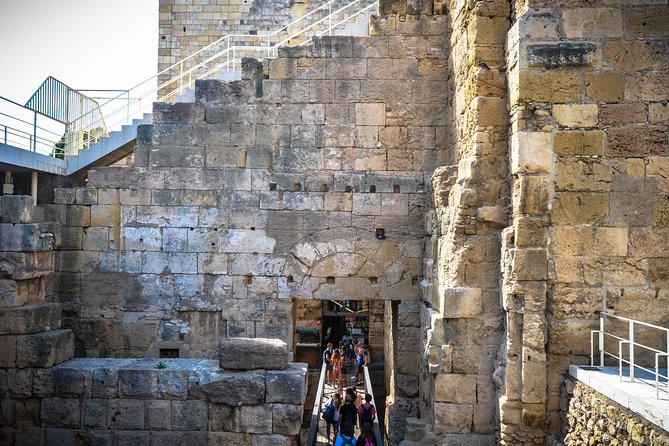
You walk along paths and passages associated with the circus stands, including underground passageways that held the circus seating structure. Then you reach Placa de la Font, a major square located inside the Roman circus area.
That spot is memorable because it is a real public square on top of an ancient performance space. If you pause and let your imagination do its job, the geometry starts to make sense: how a long stadium-like arena would funnel motion and sound.
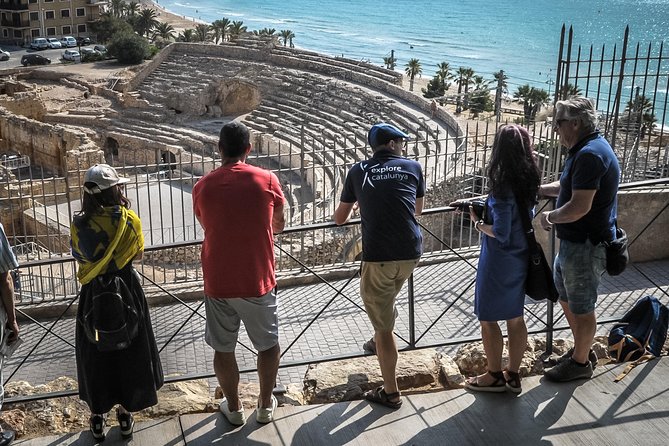
A smart bonus is the way the route sets up other layers too. The tour includes viewpoint moments over the Roman amphitheater, and you also see how a Christian church was built using blocks from the amphitheater stage area. That kind of reuse is not random trivia. It is a practical clue about how later communities repurposed older architecture rather than starting over.
Time reality check: some people want more time in these Roman zones. The tour gives you a focused guided circuit plus some walking, but it is still a full-day program, so your free minutes are limited.
Roc de Sant Gaieta: the quick coastal breather before Sitges
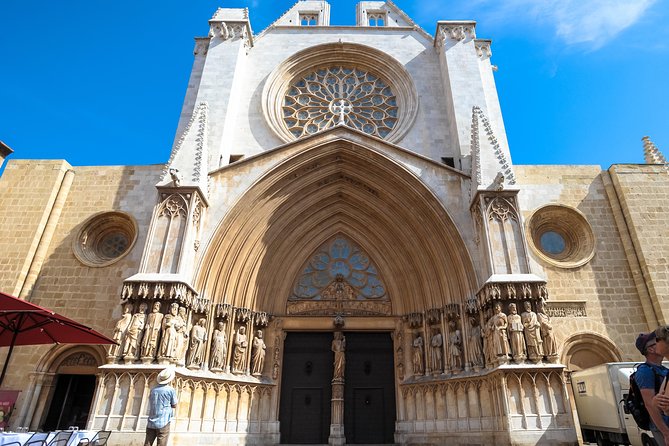
On the way to Sitges, you get a brief stop around 1:30pm at El Roc de Sant Gaieta. It is a small seaside village built on a rocky shoreline, with tiny white houses tucked along the coast.
You only get about 20 minutes, so think of this as a palate cleanser, not a full attraction. The value is the change of pace. You go from stone and city layers into sea light and coastal air, which makes Sitges feel like an actual reward rather than another stop on a checklist.
If you like taking photos or just getting a breath of salt air, this is the moment. I also like that it gives you something scenic without eating up half your afternoon.



Sitges beach time: cafes, boutiques, and how to beat the crowd
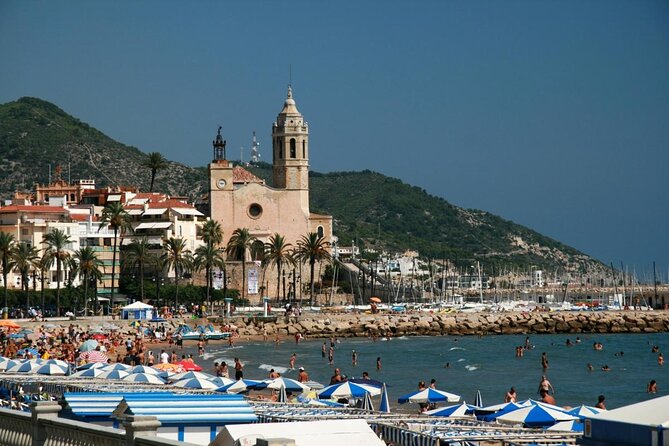
Your final stop is Sitges, arriving around 2:30pm with about 3 hours on the ground. Sitges started as a quiet fishing village, and it has grown into a fashionable seaside town since the late 1890s.
What you’re doing here is part sightseeing and part freedom. You walk through whitewashed streets that can feel like a smaller Mediterranean version of a postcard resort, then you hit the seafront and pick your own pace. The tour specifically builds in time for you to enjoy the beach area, grab a drink or a meal, and browse boutiques and cafes.
A practical detail: lunch is not included, so you choose where you want to eat. If you want a calmer table, don’t treat lunch like a last-minute scavenger hunt. Use your first chunk of Sitges time to pick an area and get seated, then you can spend the rest of the time on the beach or in the shops.
Swimming is optional. The tour notes you have an opportunity to go swimming in Sitges, and if you want to do it, bring a swimsuit and a beach towel. Even if you end up not swimming, the option changes the feel of the day, because you’re not only sightseeing in seaside air.
One consideration from the vibe of the day: Sitges can be busy, especially when the town has more people out and about. That matters because it can slow down restaurants and sidestreets. Your best move is simple, decide your lunch zone early and keep your expectations flexible.
Price and value: why this day trip can be worth it
At $119.48 per person, you’re paying for three things that are hard to replicate cheaply without a plan: a guided Roman circuit, a comfortable door-to-central-city day, and the convenience of not coordinating transport yourself.
You get:
- A professional guide
- Air-conditioned minivan transportation
- A small-group tour (maximum 15, and the listing also notes up to 8 travelers)
- Mobile tickets
What you do not get is food and drinks, plus entrance fees for museums and monuments in Tarragona. In practice, that means your budget should include at least a lunch in Sitges. But you are not paying entrance fees for everything on the list, and you do get standout sights where admission is not your main cost driver, especially the aqueduct top walk and the outdoor Roman areas.
If you are the type of traveler who wants Roman sites explained in real time, this price tends to feel fair. If you are only interested in quick photos and already know the story of Tarragona’s Roman layout, you might find the guided stops a bit structured. But for most people, the guide context is the difference between seeing ruins and understanding them.
Who this tour suits best (and who should consider other options)
This is a good fit if you:
- Want a day trip from Barcelona that actually changes scenery, Roman city to seaside town
- Prefer smaller groups so you can ask questions and adjust your pace
- Like Roman architecture and city planning, not just one monument
- Enjoy having real free time in Sitges for beach, snacks, and wandering
It is also a nice match for couples and friends who want history and downtime in the same day.
You might want to consider a different plan if:
- You hate walking between several stops in one day
- You are extremely focused on interior access or specific museum time in Tarragona, because the day emphasizes key outdoor Roman areas and walking rather than long museum stays
- You want a full day in Sitges with minimal structure, since Sitges is three hours here, not all afternoon
Tips to make the day smoother
A few small moves make a big difference on a tour like this.
- Wear supportive shoes. You’ll be walking in old-town streets and along Roman areas, and comfort matters early.
- Bring sun protection. The day includes outdoor walking and beach time, and you’ll be out in daylight for long stretches.
- Pack swim gear if you want it. The tour notes an opportunity to swim in Sitges. If you bring a towel, you can actually make the most of that window.
- Plan your lunch zone quickly in Sitges. If you wait until you’re starving, you might spend too much time deciding instead of eating and relaxing.
- Ask your guide about the story behind what you see. This tour tends to work best when you use the guide as your shortcut to meaning, not just route directions. Guides such as Sergio, Henrique, and Jordi are repeatedly praised for how much they explain and how they handle questions.
Should you book the Tarragona and Sitges tour?
If you want a Roman day that does not feel stuck in one place, I’d book it. The Pont del Diable top walk plus Tarragona’s Roman forum and circus areas make it a standout, and the Sitges portion gives you the reward for your walking with sea views and freedom to browse and eat.
I would book it especially if:
- You enjoy guides who talk history in a clear, practical way, and you want to ask follow-up questions
- You like the mix of structured viewing plus unstructured time in a real town
- You want an easy, small-group way to see beyond the usual Barcelona sights
I might skip it if you are only chasing one specific Roman interior site or if you already know Tarragona’s Roman layout well and would rather build your own itinerary with longer stays. Here, time is shared between Roman Tarragona, a coastal break, and Sitges beach time, and that balance is the whole point.
FAQ
What time does the tour start, and where do we meet?
The tour starts at 8:30am. You meet at C/ Palau de la Música, 1, Ciutat Vella, 08010 Barcelona (near Palau de la Música). You can arrive earlier at 8:15am to meet your guide and use the restroom.
How long is the tour, and when do we return to Barcelona?
The duration is about 10 hours 30 minutes. You return around 7pm to Plaça de Catalunya.
Is food included?
No. Food and drinks are not included, so you’ll want to plan for lunch and snacks during your free time in Sitges.
What language is the tour offered in?
This tour is English only.
How big is the group?
It is described as a small-group tour. The tour includes a maximum of 15 people, and one part of the info also notes a maximum of 8 travelers.
Can I swim in Sitges?
The tour says there is an opportunity to go swimming in Sitges. If you want to swim, bring a swimsuit and a beach towel.
What is the cancellation policy?
You can cancel for a full refund up to 24 hours before the experience start time. If you cancel less than 24 hours before, the amount paid is not refunded.
More Historical Tours in Barcelona


More Tours in Barcelona

More Tour Reviews in Barcelona

Not for you? Here's more nearby things to do in Barcelona we have reviewed








More Historical Tours worth opening.
 ★ 4.8Tapas Walking Tour with Food, Wine, and HistoryFrom $784,261 reviews
 ★ 4.5Barcelona Tapas Walking Tour: Food, Wine & HistoryFrom $661,928 reviews
 ★ 4.52.5-Hour Bike or E-Bike Historical TourFrom $281,262 reviews
 ★ 4.4Barcelona Erotic Museum – Explore Art, History & FunFrom $17450 reviews
 ★ 5.0Andorra Original History and Sightseeing Tour (Private, Pickup)From $240350 reviews
 ★ 4.8Dark History Night Walking TourFrom $24344 reviews
 ★ 5.0Girona History and Legends Tour Small Group from GironaFrom $38299 reviews
 ★ 5.0Historical and Modernist Bike Tour BarcelonaFrom $43262 reviews
Continue by place or experience