
REVIEW · BARCELONA CITY TOURS
The Gothic Trail – Ghosts of Barcelona Exploration Game
A haunted quiz in Barcelona? That’s the idea behind the Gothic Trail game. I like the self-paced format and the English audio stories, which let you explore at your rhythm without babysitting a group. The big drawback to weigh is that you are still walking a real route in the Gothic Quarter, so timing matters.
You’ll start at Plaça de Sant Jaume and move through a chain of squares and landmarks, solving puzzles to learn the next chapter of the story. I also appreciate the no-human-contact setup, which keeps things quiet and avoids tour crowd pressure. The main consideration: if you dislike puzzle games or get stuck, the experience can feel slow or even a bit frustrating.
Key Things I’d Keep in Mind Before You Play
- Start anytime, pause anytime: you can break and resume later, no appointment theater.
- Clue-to-location puzzles: each stop is reached by solving the game’s prompt first.
- English audio included: the narration carries the spooky atmosphere while you walk.
- Private by design: only your group plays, so you are not herded by strangers.
- Night-time timing matters: one review strongly suggests not starting after 10pm.
A Smartphone Ghost Hunt Through Barcelona’s Gothic Quarter
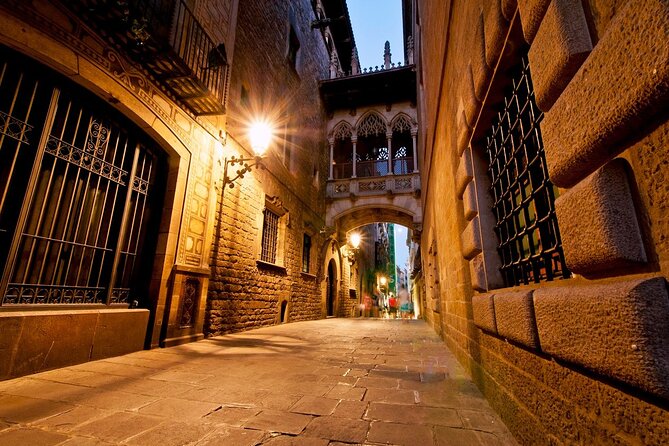
The Gothic Trail is not a live guided ghost story. It’s a smartphone exploration game that turns part of Barcelona’s Gothic Quarter into a moving set of questions, clues, and eerie local tales. The app role is simple: it gives you a quiz-style challenge, you solve it, then you get sent to the next real-world location.
That may sound gimmicky, but it’s a good match for this area. The Gothic Quarter is made for wandering, and this game gives your wandering a purpose. You are not just looking at stone and shadows, you are hunting for the next prompt and paying attention to what’s around you.
The experience also leans into flexibility. You can start at any hour, take a break, and resume later. You can even restart the app as needed. For many people, that turns a “tour” into something that feels more like exploring with a plan you control.
More Barcelona tours and experiences for the shortlist


Price, Timing, and Why $7.20 Can Feel Like Good Value
At $7.20 per person for an experience that typically takes about 1 to 2 hours, the price is easy to justify if you want something light on logistics. You are paying for two things: a guided structure without a physical guide, and story content delivered through your phone.
Compared with a classic walking tour, the value is mainly in the control. There is no fixed schedule telling you where to be and when. You can stop if you need a restroom, you can slow down, and you can even resume later instead of treating the outing like a strict appointment. That matters in Barcelona, where plans change fast and you may want to connect the game with other sightseeing.
The time window is also generous. The listed hours are daily from 12:00 AM to 11:55 PM. That’s unusually wide, and it means you can fit it around your day. Still, one strong piece of feedback stands out: don’t start after 10pm, because you may have to finish while the Gothic Quarter is less comfortable to wander.
How the App Adventure Actually Works (Clue, Walk, Learn)
Here’s the rhythm you can expect. The app guides you to a sequence of stops. At each stage, you follow a clue and solve a puzzle to reach the next location. Once you’re there, the game provides indications on how to continue and also teaches you about the place you discovered.
That structure is the heart of what makes it fun. Instead of reading a plaque and moving on, you have a reason to look closely and move deliberately. You are scanning for context clues while you walk, then switching gears at each stop to absorb the story the game tells.
Also, the fact that it’s quiz-based matters. Some of the enjoyment is solving the question itself, not just hearing spooky audio. One review praised that the challenges were a mix, with some easier and some more confusing, which kept the game feeling interactive and not automatic.
If you’re the type who likes puzzles, you’ll probably find this more engaging than a standard self-guided route. If you’re not into problem-solving, you might feel the experience is uneven, which matches a less favorable review that described puzzles as incoherent or not meaningful. The app works smoothly, but the enjoyment depends on whether the puzzle style clicks for you.
Route Walk: From Plaça de Sant Jaume to Carrer del Bisbe
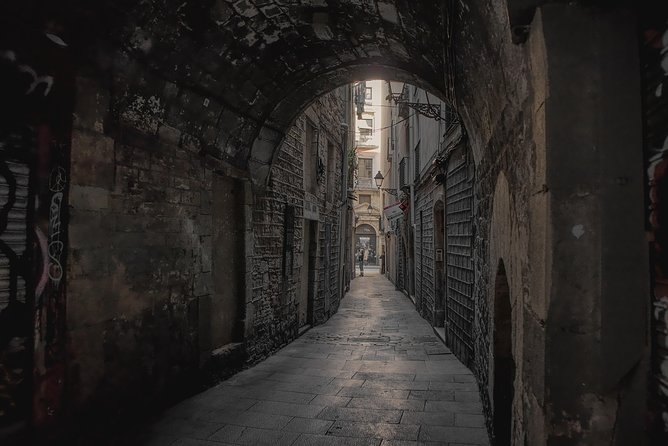
Your game start is Plaça de Sant Jaume (Pl. de Sant Jaume, Ciutat Vella). The endpoint is Carrer del Bisbe 1 in Ciutat Vella. The route is designed as a walk through central, historic streets, moving from squares to landmarks and ending near a strong cluster of cathedral area sites.
The stops are described in a clear progression:
- a beautiful square
- an important landmark
- a must-see basilica
- a major landmark
- an important landmark
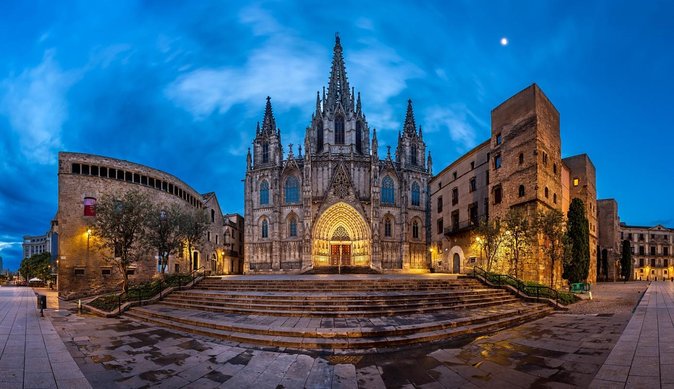
- a beautiful cathedral
You can think of it like three acts. Act one gets you into the Gothic vibe through open squares and major sights. Act two pulls you deeper with a basilica moment and more landmark clues. Act three shifts toward the cathedral finish, with the game’s prompts helping you pace your arrival.
Stop 1: A Beautiful Square
You begin in a public square area near the center of the old town. This is a smart opening. Squares are easier for first-time orientation, and they help you settle into the app quickly. You’ll start by engaging with the first clue and puzzle, then the game points you to the next place.
Practical tip: treat this first stop like your warm-up. If you need to check your phone settings or audio volume, do it here, while you’re still near the start.





Stop 2: An Important Landmark
After the square, you move to a landmark stop. The game’s logic is that each new location comes from solving the puzzle rather than just walking down a street until you find it. That means you’ll spend more time looking around, instead of passing things without noticing.
Potential drawback: if you’re traveling with people who want a purely relaxing walk with no head-scratching, this is where you’ll feel the friction first. The game asks you to work.
Stop 3: A Must-See Basilica
Then comes the basilica stop. A basilica is the kind of place where stone details and layout reward slower looking. Even if you’re not a church expert, you’ll have the game as a guide, so you’re not wondering what you should be paying attention to.
What I like about this placement is that it gives the story weight at a natural moment. Mid-route is often when games either get boring or start delivering something meaningful. Here, a basilica is a good mid-course “anchor” location.
Stop 4: A Major Landmark, Plus the Game’s Guidance
Next, you reach a major landmark. At this point, the game does something useful: once you arrive, you get indications on how to continue your game, and you also learn the story connected to where you are.
That stop-to-stop guidance is more than decoration. It prevents that classic self-guided headache of wondering if you’re going in the right direction or missing the next step. The game aims to keep you moving with purpose.
Stops 5 and 6: More Landmarks, Then the Cathedral Finish
The last legs return to landmark and important-location stops before the endpoint near the beautiful cathedral area.
If you enjoy building suspense, this ending works because cathedrals and large church spaces tend to feel dramatic even when you’re not trying. The game’s “arrive, solve, learn, continue” structure sets up the ending as a payoff rather than a random final stop.
One detail worth noting: some parts of the route are described as puzzle-led discovery with repeated patterning. That repetition can be good if you like consistency, and it can be tiresome if you want novelty every step.
What Makes This Experience Feel Different From a Standard Tour
This isn’t just “spooky sightseeing.” The game adds a layer of participation. You’re not standing still and listening to a guide’s narrative. You are interacting with the content in small doses while walking between stops.
The no human contact design is also a real perk, especially in a place that gets crowded. You still get the experience of seeing key sights, but you’re not stuck in a group cluster. One of the strongest reasons to consider it is simple: it’s safer in the sense that there is no guide contact and no crowd-control script to follow.
The private setup also helps. This is listed as private, with only your group participating. And if you have more than 15 people, you can book multiple slots. That can be useful for groups planning a fun, low-friction activity.
Best Time to Play: Daylight Is Easier, Nights Need a Plan
The game runs all day on paper, but real life is different. Based on direct feedback, avoid starting after 10pm. The reason is practical: if you’re still completing the tour when it’s late, you’ll be doing your wandering at night in the Gothic area.
If your schedule pushes you toward evening, I’d handle it like this:
- Start earlier so you can finish while it still feels comfortable to walk.
- Give yourself buffer time. Games can take longer than planned if puzzles slow you down.
- If you’re traveling with kids or anyone who gets stressed in puzzle mode, plan even earlier.
The Gothic Quarter can be charming after dark, but this game turns you into a puzzle walker. Walking pace plus late-night conditions equals a timing decision.
Who This Game Suits Best (And Who Might Not Love It)
This experience fits best if you want structure without a guide. You like the idea of a quiz and puzzle prompts that take you from one real location to the next. You also want something flexible enough to pause and restart, without the pressure of keeping up with a set group.
It can also work well for people who enjoy learning through stories rather than facts. Since the game gives you audio stories and place-specific narratives at each stop, you get “why this place matters” in bite-sized form.
That said, there are reasons you might skip it. One review called the riddles incoherent and not meaningful. If you tend to dislike puzzles or you get annoyed when clues don’t connect, this could feel like wasted money. And another review suggested it may feel slightly overpriced compared to a walking tour, even though the reviewer still planned to keep using the app.
So think of this as a value proposition with a tradeoff: you’re saving time and paying less than many guided options, but you’re also choosing a puzzle style that may not be for everyone.
My Booking Verdict: Should You Play the Gothic Trail?
If you want an easy way to see central Gothic sights while staying in control of timing, I’d book it. The strengths are clear: self-paced flexibility, English audio stories, and a private setup that avoids tour crowd pressure. At $7.20, you’re not taking a huge financial risk, and the 1 to 2 hour length makes it a clean add-on to a day of walking.
I would not book it as your only plan if you’re short on patience. If you’re puzzle-shy, or if you need a fully guided, low-effort experience, a traditional walking tour might suit you better. And if you are aiming for the evening, take the strong advice from feedback and avoid starting after 10pm.
If you do book it, treat it like a game you can control. Walk steadily, solve what you can, and enjoy the fact that the route pushes you to look at the city differently.
FAQ
Where does the Gothic Trail game start and end?
It starts at Plaça de Sant Jaume (Pl. de Sant Jaume, Ciutat Vella, 08002 Barcelona) and ends at Carrer del Bisbe, 1 (Ciatat Vella, 08002 Barcelona).
How long does the experience take?
The duration is listed as about 1 to 2 hours.
Is there an English version?
Yes. The experience is offered in English, with audio stories for the English version.
Do I need a physical tour guide?
No. This is described as a private experience with no human contact.
Can I start at any time and take breaks?
Yes. You can start at any hour, take a break, and resume later. You can also play it anytime after booking without rescheduling.
Is it private, and can larger groups book?
It is private, with only your group participating. For groups larger than 15, you can make multiple bookings.
Is free cancellation available?
Yes. You can cancel for free up to 24 hours in advance for a full refund.
More Self-Guided Tours in Barcelona



More Tour Reviews in Barcelona
Not for you? Here's more nearby things to do in Barcelona we have reviewed
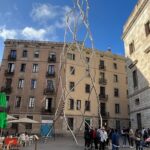








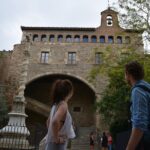

More Barcelona City Tours worth opening.
 ★ 4.4Park Güell Admission TicketFrom $2576,534 reviews
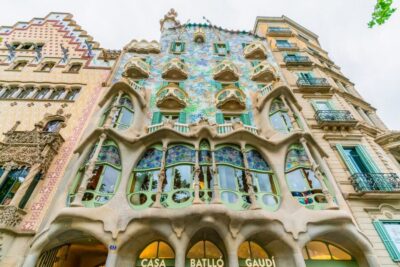 ★ 4.7Casa Batlló Entry with Self-Audioguide TourFrom $3425,359 reviews
 ★ 4.424 or 48-Hour Hop-On Hop-Off Bus TourFrom $3920,872 reviews
 ★ 4.7Park Guell Guided Tour with Skip The Line EntryFrom $3117,563 reviews
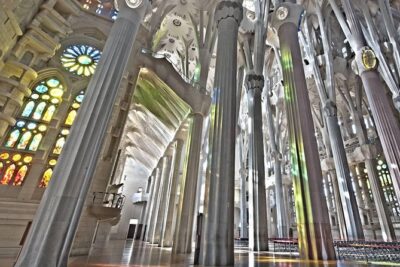 ★ 5.0Barcelona in 1 Day: Sagrada Familia, Park Guell,Old Town & PickupFrom $12013,541 reviews
 ★ 4.3Barcelona Aquarium: Entry TicketFrom $3113,335 reviews
 ★ 4.8Sagrada Familia Skip-the-Line Entry Ticket & TourFrom $6712,789 reviews
 ★ 4.4FC Barcelona Museum “Barça Immersive Tour” TicketFrom $3510,944 reviews
Continue by place or experience