
REVIEW · WALKING TOURS
From a Roman Village to a Resort Town: A Self-Guided Walking Tour of Sitges
Sitges history plays like a movie on foot. This self-guided audio tour strings together the story of a Roman village to a resort town, using location-aware narration so you can wander at your own tempo and still stay on track. You start right by the sea, then work your way through the town’s biggest landmarks, with commentary in English as you pass them.
I love how the route lets you choose your pace, either a quick walk around 45 minutes or slower with extra stops for photos. I also like the mix of big-name sights and very specific stories, from the Monumento a Bacardi and the Bacardi founder Facundo Bacardi Masso to modernist art and Santiago Rusinol.
One thing to plan for: the walk includes some hills, so you’ll want comfortable shoes, and you should know museum entrances are not included if you decide to go inside.
Key Highlights You’ll Actually Feel on the Walk
- English, self-guided audio so you can stop whenever you want without matching someone else’s schedule
- Offline access to audio, maps, and geodata in the VoiceMap app
- Geo-aware routing that helps you find the next stop fast
- Classic Sitges photo stops, including the Church of St Bartholomew and Saint Tecla
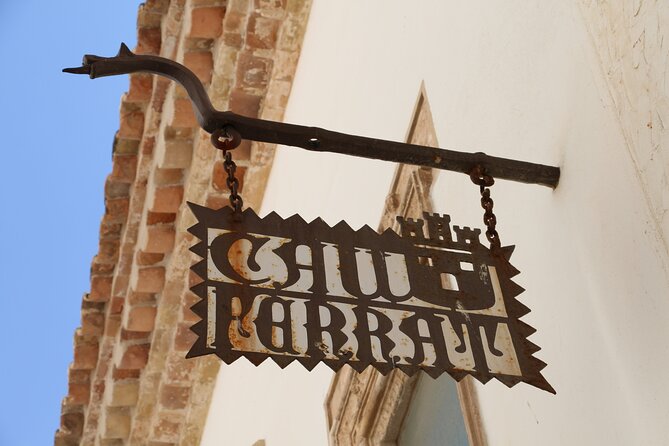
- Modernist art storytelling, featuring Palau de Maricel, Museu de Maricel, Museu del Cau Ferrat, and Santiago Rusinol
- Seafront-to-town-center flow, ending near Carrer Primer de Maig by the promenade
From Pic Nic Boardwalk to Sitges Center: How the Route Feels
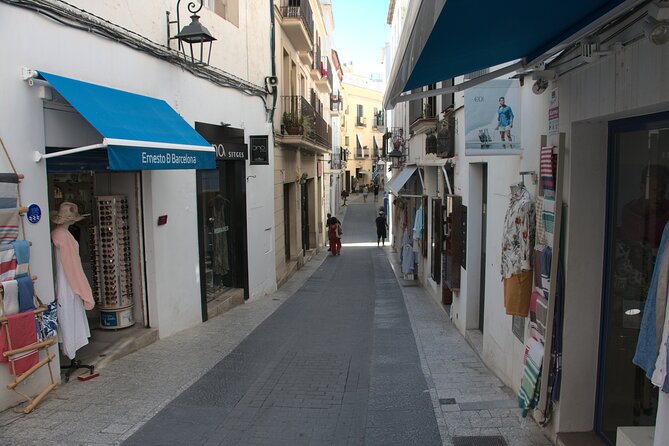
This tour is built for strolling. You are looking at about 45 minutes to 1 hour on foot, but the real point is control. You can keep moving for a satisfying loop, or you can pause when something grabs your attention, especially around the seafront where viewpoints and photo angles come quickly.
The route starts by Pic Nic on the Passeig de la Ribera boardwalk area, which is a smart choice. You get comfortable right away with the sea on one side and the town unfolding in front of you, plus you’ll hear early context before you’re deep in the middle of town. Expect a few gentle climbs as you transition inland, so treat it like a walk, not a flat promenade stroll.
You can also read our reviews of more walking tours in Barcelona



VoiceMap Offline Audio: Simple Setup That Keeps You Moving
This is a VoiceMap audio tour in English, and the big practical win is what you get for free after booking: lifetime access. You can come back to the same route later, or revisit Sitges at a different time of day without paying again.
The app includes offline access to audio, maps, and geodata, which matters in towns where mobile signal can be hit or miss. You can load your route, then keep walking without babysitting data plans. One helpful detail from user feedback: the app is geo-aware, which tends to make the stop-by-stop experience smoother because the audio lines up with where you are.
Two things to be ready for. You will need your own smartphone, and you’ll want headphones for audio. The tour does not include either, so pack them like you would for any walking audio guide.
Platja de la Ribera Seafront Start: Settling Into Sitges History
Your tour kicks off at Restaurant Pic Nic on Passeig de la Ribera (73). From there, the narration gets you oriented with a quick sense of what Sitges is, and how this area has shifted over time. The tour’s theme is the change from a smaller village identity into a resort town, and you get that framing early so the rest of the landmarks make more sense.
As you walk along the boardwalk by Platja de la Ribera, you’ll hear the “how it got here” version of Sitges’ past. This part is valuable because it stops you from treating the town like a set of random sights. Instead, the buildings and monuments feel connected, even when you’re just moving street to street.
If you like an easy beginning, this is the sweet spot. You’re not hunting for a starting plaque, and you’re not thrown into hills right away. You’re on a straightforward corridor by the sea, with audio that’s timed to your pace.
The Bacardi Moment at the Monumento a Bacardi
One of the most memorable stop points is the Monumento a Bacardi. As you pass by, you learn about Facundo Bacardi Masso, a Sitgetan tied to Bacardi Rum fame, and the claim that he invented the first white rum in the world.
This is exactly the kind of local story that makes self-guided walking feel better than reading a brochure. You’re not just seeing a monument, you’re hearing why it matters to the town’s identity. And because it’s on your route, you do not have to plan a detour.
Practical tip: take a moment at this stop, even if you’re tempted to keep moving. The audio here is the kind that you’ll want to hear cleanly, and a short pause makes it easier to orient yourself for the next segments.
Xiringuito and Baluard Plaza: Beach Bars to 1700s Defenses
Next up, you pass Xiringuito, described as the first beach bar in Spain. This is a fun stop because it’s not a museum artifact, it’s part of the living town. You’re getting a cultural detail about how people relax here and how that tradition has roots.
Then the narration shifts to defense with Baluard Plaza, an imposing structure from where the military defended the town in the 1700s. That contrast is a big reason this route works. You go from leisure to strategy, from beach-time to the town’s older need for protection.
If you’re the type who likes seeing how a place works in layers, this section delivers. The sea is still close, but the story reminds you why towns build where they do and how their architecture often reflects survival needs.
You can also read our reviews of more guided tours in Barcelona





The Church of St Bartholomew and Saint Tecla: Your Most Photographed Stop
As the tour continues, you reach one of Sitges’ biggest photo draw points, the Church of St Bartholomew and Saint Tecla. It’s called the most photographed site in Sitges, and you can see why. Even if you’re not religious, churches tend to be the visual anchors of a town, and this one is a strong landmark reference point.
This stop is worth treating as a “slow down” moment. Don’t just walk past it while the audio plays in the background. Take a few angles, look at the building’s placement in the streets, and let the narration connect the church to the town’s wider identity.
A quick caution: if you’re filming or doing a lot of photos, allow a little extra time so you don’t feel rushed when you hear the next cues.
Palau de Maricel and Museu de Maricel: Modernism You Can See
One of the tour’s strongest threads is art history, especially the Catalan Modernist movement linked to Sitges. You get there through a sequence of landmarks, starting with Palau de Maricel, described as a magnificent building set up to attract even more artists to town.
Then the narration points you toward prominent galleries and museums, including Museu de Maricel. You’ll hear how this artistic movement and its members shaped the Sitges you see today. Even if you do not go inside a museum, the exterior placement makes more sense once you understand the “why artists came” story.
This is where the tour feels most rewarding for people who enjoy culture without the pressure of a scheduled group tour. You can pause, look at details, and decide whether you want to add museum time on your own.
Museu del Cau Ferrat and Santiago Rusinol: The Hedonistic Artist Story
The route also passes Museu del Cau Ferrat, the home of Catalan Modernism leader Santiago Rusinol. You’ll hear about Rusinol too, including stories tied to his hedonistic lifestyle, and how he played a key role in Catalan Modernism in Sitges.
This portion helps the art history land in human terms. Instead of treating modernism like a textbook topic, the narration brings in a personality and a lifestyle, which makes the connection feel more immediate. You’re walking past cultural institutions, but the audio makes it feel like you’re following the footsteps of specific people.
If you like art history that feels personal, this is a highlight. If you’re not an art-history person, this still works because the tone is anchored to recognizable landmarks you are already walking past.
Cap de la Vila and the Walk’s End at Carrer Primer de Maig
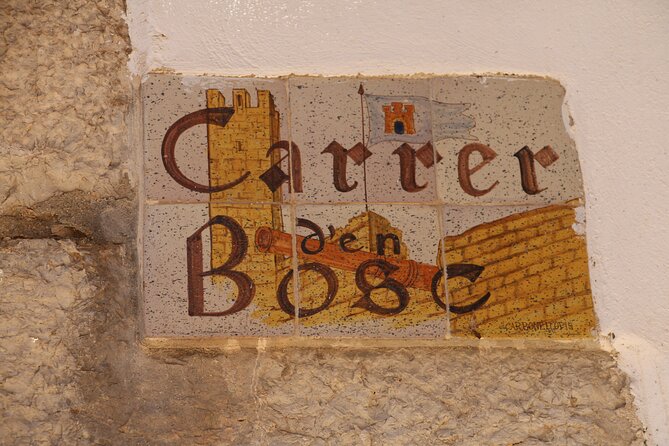
As you near the end, you stroll through Cap de la Vila plaza. It’s described as once known as the end of the village, now part of the town’s center. That’s a satisfying last piece of narrative because it loops back to the tour theme of transformation.
The tour ends near the promenade in Carrer Primer de Maig. Your listed start and end points make sense for a strolling day: you begin by the seafront and finish by the same waterfront zone where it’s easy to keep exploring on foot.
If you’re planning your day, treat this as a strong “orientation walk.” After this, you’ll have a feel for where the key church, modernist highlights, and major story points sit in relation to the shoreline.
Price and Value: Why $11.99 Can Make Sense
At $11.99 per person, the tour is priced like a small add-on, not a full-day guided experience. The value hinges on two things you should care about.
First, you get lifetime access. If you think you might come back to Sitges, or you want the option to replay the narration while walking again, this matters. Second, offline audio with maps and geodata can prevent the most common walking-tour annoyance: losing your way or guessing which stop comes next.
It is also a good value for solo travelers or small groups who want to avoid crowd pacing. You are not paying for a guide’s time, you’re paying for a well-timed route and narration that you can follow at your own speed.
The trade-off is also clear. You are responsible for your own navigation and any museum entrance decisions. Since tickets are not included, you might view some sights from the outside only, unless you add entry tickets separately.
What to Bring and How to Avoid Common Walking-Guide Friction
I recommend you pack like you’re going on a short, hilly walk with audio. Bring comfortable shoes because the route includes hills. Bring a charged smartphone because you’re using the VoiceMap app and you’ll want it to work smoothly.
Also plan for headphones since they are not included. A small but real point: when your audio depends on your phone, battery management is your best friend. If you can, start your walk with a full charge.
Finally, set expectations around museums and attractions. The tour passes by places like Museu de Maricel and Museu del Cau Ferrat, but tickets or entrance fees are not included. You can still enjoy the architecture and the story, and you can decide on your own whether to spend extra time inside.
Who Should Book This Sitges Self-Guided Walk?
This tour fits best if you want:
- A self-paced walk that avoids the pressure of a group schedule
- A guided-feeling experience with a practical audio guide, in English
- A route that mixes seafront history, defensive-era structure, church photography, and modernist art storytelling
It’s also a good match if you’re the kind of traveler who enjoys learning while moving through real streets, not only standing in one museum room. You get a chain of landmarks that help you understand the town’s identity in one walk.
If you crave a long, ticket-heavy day with museum admissions planned for you, this might not be the right format. Since entrances are not included, you’ll need to add that time yourself.
Should You Book This Sitges Walk?
Yes, if you want an easy, thoughtful way to see Sitges without battling crowds. The route is short enough to fit into a half-day plan, and the mix of stories, especially the Bacardi Monument and the Santiago Rusinol thread, gives you more than just pretty streets.
Book it especially if you value offline audio and the confidence of geo-aware guidance. That combination makes self-guided walking feel genuinely effortless.
If you hate hills, or you’re expecting museum ticket stops as part of the price, you may want to choose a different format. Otherwise, this is a strong, practical way to learn Sitges while walking it.
FAQ
How long is the self-guided Sitges walking tour?
The tour is listed as about 45 minutes to 1 hour.
What language is the audio available in?
It is offered in English.
Where do I start the tour?
You start at Restaurant Pic Nic, Passeig de la Ribera, 73, 08870 Sitges, Barcelona, Spain.
Where does the tour end?
It ends at Queen Apartment by Blausitges, Carrer Primer de Maig, 1, 08870 Sitges, Barcelona, Spain, by the promenade.
What do I need to use the VoiceMap audio tour?
You’ll need a smartphone and headphones. They are not included.
Is offline access included?
Yes. Offline access is included for audio, maps, and geodata in the VoiceMap app.
Are museum tickets or entrance fees included?
No. Tickets or entrance fees to museums or other attractions are not included.
Is this tour private for my group?
Yes. It is listed as a private tour/activity, with only your group participating.
What is the cancellation policy?
Free cancellation is available, and you can cancel up to 24 hours in advance for a full refund. If you cancel less than 24 hours before the start time, the amount paid is not refunded.
More Walking Tours in Barcelona



More Tours in Barcelona




More Tour Reviews in Barcelona

Not for you? Here's more nearby things to do in Barcelona we have reviewed










More Walking Tours worth opening.
 ★ 5.0Barcelona Tapas and Wine Experience Small-Group Walking TourFrom $835,804 reviews
 ★ 4.8Tapas Walking Tour with Food, Wine, and HistoryFrom $784,261 reviews
 ★ 4.5Barcelona Tapas Walking Tour: Food, Wine & HistoryFrom $661,928 reviews
 ★ 4.9Tapas Food Crawl Walking Tour with TastingsFrom $821,798 reviews
 ★ 4.7Gothic Quarter Ghosts and Legends Walking TourFrom $191,443 reviews
 ★ 5.0Barcelona Helicopter, Sailboat & Old Town Private Walking TourFrom $5131,395 reviews
 ★ 4.8Old Town and Gothic Quarter Walking TourFrom $211,393 reviews
 ★ 4.7Helicopter Flight, Boat Ride, and Walking TourFrom $1701,334 reviews
Continue by place or experience