
REVIEW · BARCELONA CITY TOURS
From Barcelona: Private Full-Day Tarragona and Sitges Tour
Two coasts, one long day, with real payoff. I love the jaw-dropping scale of the Les Ferreres aqueduct and the chance to end with real downtime at Playa de San Sebastián. One heads-up: it is a 10-hour outing with plenty of walking, so plan your legs accordingly.
What makes this trip work is the pairing. You start in Tarragona, where Roman Tarraco still shapes the town, then you shift gears to Sitges, with its modernist corners and sea breezes. Guides matter here, and I’ve heard glowing comments tied to punctual, accommodating service from people like Ramon, Ruben, and Nuria, which is a big deal on a schedule-heavy day.
You’re also paying for comfort and time, not just sightseeing. Hotel pickup plus private transport means less hassle than piecing together buses and walking between stops, but it is still a long drive south, since Tarragona sits about 100 kilometers from Barcelona.
Key things that make this tour worth your time
- Les Ferreres Aqueduct, the Devil’s Bridge is 217 meters long and 26 meters high, built to impress even when you’re not a Roman-ruins person
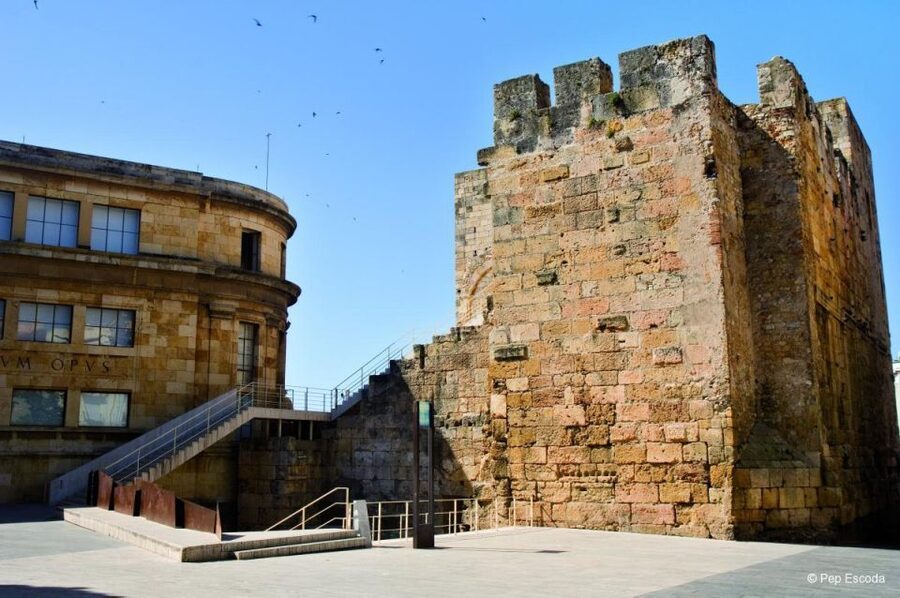
- Roman Tarraco in walkable chunks, including the Roman Forum and medieval walls you can actually trace on foot
- The Tarragona amphitheater ruins by the sea, plus context about gladiator battles and how later buildings changed what you see
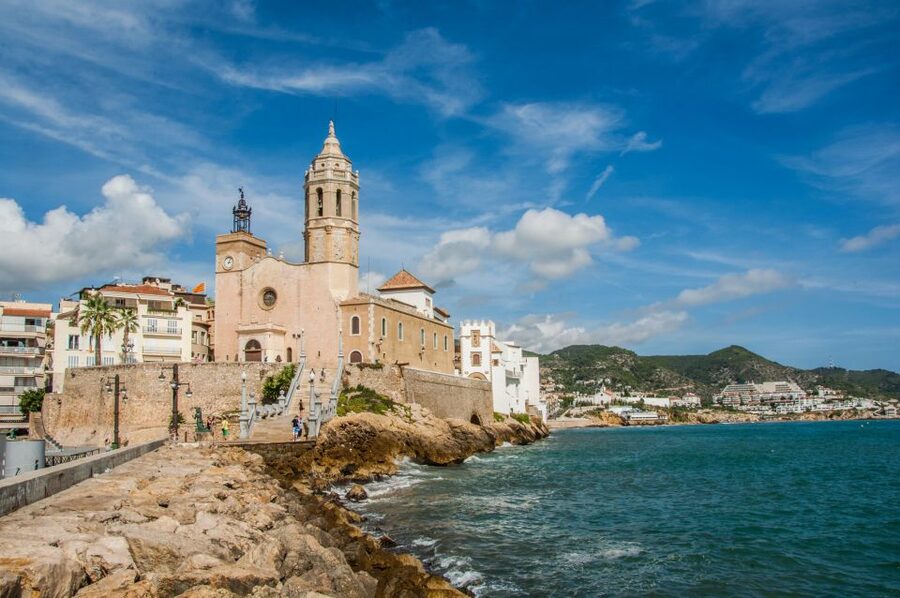
- Sitges modernism and local stories, from Casa Bacardí and Casa del Rellotge to the church area around San Bartolomé and Santa Tecla
- Playa de San Sebastián break, with guided drop-off and free time that makes the day feel balanced instead of nonstop ruins
Tarragona and Sitges from Barcelona, a smart change of pace
This is one of those day trips that avoids the usual trap: it does not try to do everything in a single city. Tarragona and Sitges are close enough for a day tour, but different enough that the day feels like two chapters, not one long blur.
In Tarragona, you’re walking through layers: Roman engineering, then medieval city life, then the modern town rhythm running alongside ruins. In Sitges, the mood flips to coastal strolling, modernist facades, and side streets where you can slow down without feeling like you’re wasting time.
If you like structure but still want breathing room, the flow works well: guided walking in the big history zones, then free time at the beach.
You can also read our reviews of more private tours in Barcelona



Les Ferreres Aqueduct, the Devil’s Bridge, built for scale
You start with a classic Tarragona stop, Les Ferreres Aqueduct, also called the Devil’s Bridge. The Romans did not build little. This one stretches 217 meters long and rises 26 meters high, which means you feel the size even before you start getting details from your guide.
Why I like this stop: it is not just “look at old rocks.” It shows the practical genius of Roman planning, because an aqueduct is meant to function, not only to impress. Standing near it gives you a rare sense of how engineering becomes part of a landscape over centuries.
Also, it sets the tone for the rest of the day. Once you’ve wrapped your head around why an aqueduct had to be this high and this long, the rest of Tarragona’s Roman remains make more sense.
Roman Tarraco on foot, Forum, walls, circus ruins, and amphitheater context
After the aqueduct, the day moves into downtown Tarragona on walking tours: Roman Forum, Roman walls, and the remains tied to public entertainment.
Start with the Roman Forum, which was the town’s center for about 2000 years. That long duration matters. When you’re in the right places, you can sense how a city’s civic life keeps echoing even when the buildings change.
Then there’s the Muralla Romana de Tarragona, the Roman wall area. It is the kind of stop that rewards attention, even if you are not hunting for every artifact. You’re basically learning how Tarragona defended itself and how the town kept evolving around those older boundaries.
A highlight in this section is also the circus ruins hidden under later structures. If your guide explains it well, you get the feeling of layers stacked on layers, including how games and crowds were organized before much of what you see today existed.
Finally, you reach the Tarragona amphitheater, including ruins located by the Mediterranean shore. This is where the tour’s storytelling becomes practical. Your guide connects what you see to how public spectacles worked, including the history of gladiator battles in that amphitheater setting.
One more reason this amphitheater stop hits: it is not trapped behind fences in a museum mood. The sea is right there, and the setting helps you understand why people would show up for events in the first place.
The amphitheater stop is guided, so ask for the “what changed” story
This part is guided, and that’s important. The ruins are compelling, but what makes them click is the explanation of how later buildings and centuries altered visibility and context.
That “what changed” theme shows up in the way guides teach Tarragona. I’ve heard guide feedback tied to pacing and comfort too, like Ruben making sure there were bathroom options during the day, which is genuinely useful on a 10-hour schedule.
So, when you’re at the amphitheater, I’d focus on two things your guide can clarify:
- what part you’re looking at now versus what the site once represented
- how the coastal location fit into the entertainment role of the space
Even if you only catch part of the story, the scene makes it easy to connect the dots.
Sitges walking tour, modernist corners and the sea mood shift
Once you leave Tarragona, you head to Sitges, a coastal town about 38 kilometers from Barcelona on the Costa del Garraf. Sitges has long attracted artists and creative types, and you can feel that in the mix of traditional fishermen’s houses and a more lively street scene with boutiques and places to eat.
The walking tour focuses on winding streets and corners, plus several modernist stops:
- Casa Bacardí Sitges (you pass by)
- Casa del Rellotge
- the church area around San Bartolomé and Santa Tecla
- Maricel Palace
- the so-called Quiet Corner, known for live music
Your guide also shares Sitges stories tied to the Americanos, wealthy locals who made fortunes in the Americas. That’s more than a trivia nugget. It helps explain why the town’s architecture and status symbols feel so deliberate, even in a place that looks relaxed and holiday-like now.
Why I enjoy Sitges on a day like this: it gives your brain a break. You’ve just been in Roman public spaces and city walls. In Sitges, you’re exploring streets that reward slowing down, noticing details, and letting the day drift a bit.
More Barcelona tours and experiences for the shortlist





Casa Bacardí, Maricel, and the kind of architecture you can actually spot
Modernist architecture can be hit-or-miss on a quick trip, because you might not know what you’re looking at. The advantage here is that the tour ties the buildings to stories: who built, why it matters locally, and how it fits the town’s identity.
If you care about details, this is one of those days where you can see enough exterior features to make the architecture feel real, not just a photo stop. If you don’t care as much, you still get guided orientation, which makes Sitges easier to enjoy on your own after.
And since you end with beach time, Sitges stops are designed to keep energy reasonable. You are not being marched through every block at a sprint.
Playa de San Sebastián, the planned downtime that changes the whole day
At the end, you get free time at Playa de San Sebastián, one of the best urban beaches in Europe, noted by the New York Times. The key detail here is that it is not just a drive-by photo moment.
You can relax at beachside terraces, and if the weather permits, the plan includes time to swim. That option matters on a day like this because it breaks up the walking with a real reset.
Also, this is where Sitges makes sense after Tarragona. The coastal vibe becomes the payoff for all that earlier history. It turns the trip from “busy sightseeing” into “history plus a genuine vacation feeling.”
Practical note: you’ll want comfortable shoes for the day overall, since both towns are walk-focused.
Price and logistics, what the $271 really buys
This tour is priced at $271 per person and runs for 10 hours with hotel pickup in private transport. That price will feel steep if you think of it as “transport plus entry tickets,” because you could do parts on your own with train and bus.
But when you price it as time saved and stress avoided, it starts to look more reasonable. For many people, the big win is not only the private vehicle, it’s having one guide manage the flow across two towns, with guided walking and entrance coverage.
You’re also paying for the ability to spend time efficiently. Tarragona’s Roman remains take effort, and Sitges has a lot of small streets where a guide helps you see what you might otherwise miss. The guided parts are doing real work here.
Where the value gets debated is also where the day can feel long. You are paying to be moved between two destinations and guided for much of it, so you need to be okay with a full day of walking and sitting in a car for stretches.
Who should book this Tarragona and Sitges tour
I’d consider it if you want:
- a guided Roman and medieval Tarragona day without doing the planning
- Sitges modernist streets and seaside time as part of the same package
- a setup with a professional guide and entrance included at the sites on the program
- private, small-group energy rather than a huge bus crowd
It may not be ideal if:
- you prefer short, slow days with lots of downtime
- you have mobility needs that limit walking, especially since the tour data says it is listed as wheelchair accessible, while also noting it is not suitable for people with mobility impairments
If you fall into that last category, you should check with the operator directly before booking.
Tips so your day feels smooth, not rushed
Since this is a 10-hour day, your best strategy is simple: protect your legs and let the guide do the heavy lifting.
- Wear comfortable shoes. Both Tarragona and Sitges are walking days.
- Expect guided time at key sites like the amphitheater and the Sitges village walk, so plan to listen and move in rhythm.
- Use the beach free time at Playa de San Sebastián as your “reset” moment. If weather is good, swimming can be part of the plan.
Finally, if your guide is like Ramon or Eduard, you’ll probably end up enjoying the conversation side too. One review highlights Eduard’s in-depth history and great conversation style, which is exactly the kind of guide interaction that makes a day trip feel personal.
Should you book this Tarragona and Sitges full-day tour?
Book it if you want a day that blends Roman Tarragona, Sitges modernist streets, and a real beach break without dealing with transit logistics. The private transport, the guided walking, and the included entrance help the day feel organized instead of scattered.
Skip or reconsider if you’re the type who gets tired from long walking days or long drives. At $271, it’s not an impulse buy, so only choose it if you’ll use the structure: guided sites in Tarragona, guided orientation in Sitges, then time to actually relax at the ocean.
If you want a single, high-impact day outside Barcelona that still ends with sun and sea, this one fits the bill.
FAQ
How long is the Tarragona and Sitges tour?
It’s listed as a 10-hour experience.
Where does the tour start?
Pickup is included from your hotel in Barcelona.
Is this a private tour?
The tour is described as a private group, and it’s also noted as a small group (semi-private or private).
Which major sites are included in the day?
You’ll visit the Les Ferreres Aqueduct (the Devil’s Bridge), the Roman Forum, the Roman walls, the Tarragona amphitheater, and you’ll tour Sitges, including a stop near Playa de San Sebastián for free time.
Are entrance tickets included?
Yes, entrance to the different sites is included.
What languages are available for the guide?
The live guide is available in Spanish and English.
Is there free time for the beach?
Yes, you get free time at Playa de San Sebastián.
Will I have time to swim?
If weather permits, the plan includes time to enjoy a swim at San Sebastián Beach.
Is the tour wheelchair accessible?
The information says it is wheelchair accessible, but it also notes that it is not suitable for people with mobility impairments. If you’re concerned, you should confirm details with the operator before booking.
What should I bring?
The tour information says to bring comfortable shoes.
Is free cancellation available?
Yes, free cancellation is listed up to 24 hours in advance for a full refund.
More Private Tours in Barcelona


More Tours in Barcelona




More Tour Reviews in Barcelona

Not for you? Here's more nearby things to do in Barcelona we have reviewed










More Barcelona City Tours worth opening.
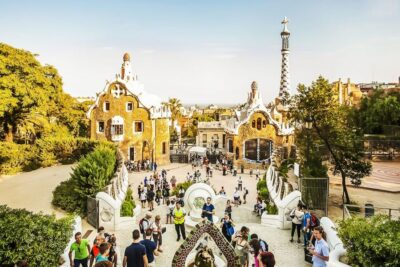 ★ 4.4Park Güell Admission TicketFrom $2576,534 reviews
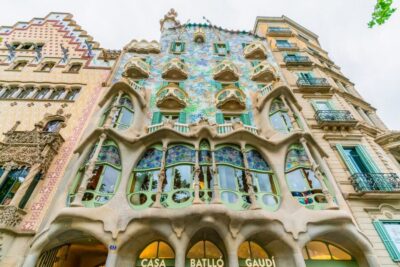 ★ 4.7Casa Batlló Entry with Self-Audioguide TourFrom $3425,359 reviews
 ★ 4.424 or 48-Hour Hop-On Hop-Off Bus TourFrom $3920,872 reviews
 ★ 4.7Park Guell Guided Tour with Skip The Line EntryFrom $3117,563 reviews
 ★ 5.0Barcelona in 1 Day: Sagrada Familia, Park Guell,Old Town & PickupFrom $12013,541 reviews
 ★ 4.3Barcelona Aquarium: Entry TicketFrom $3113,335 reviews
 ★ 4.8Sagrada Familia Skip-the-Line Entry Ticket & TourFrom $6712,789 reviews
 ★ 4.4FC Barcelona Museum “Barça Immersive Tour” TicketFrom $3510,944 reviews
Continue by place or experience