
REVIEW · BARCELONA CITY TOURS
Walking Tour Mysteries and Legends of Barcelona and its Ghosts
Ghosts and history in Barcelona, with real street details.
This 1.5 to 2 hour night walk is built around mysteries and legends, not the usual postcard stops. You move through Ciutat Vella at dusk and hear local chronicles tied to specific corners, plaques, and monuments you can actually point at.
Two things I really like: first, the route is short enough that it feels focused, yet it covers a lot of ground in the Gothic Quarter. Second, the guide storytelling style gets singled out in the best way, with guides like Violant (also known as Yolanda) who answer questions and make the details feel human, not textbook.
One possible drawback: it leans into spooky lore, but you are still mostly walking and viewing from the outside. If you want heavy indoor museum time or confirmed access to every landmark, you may feel a bit limited at the external-visit stops.
Key highlights you will feel right away
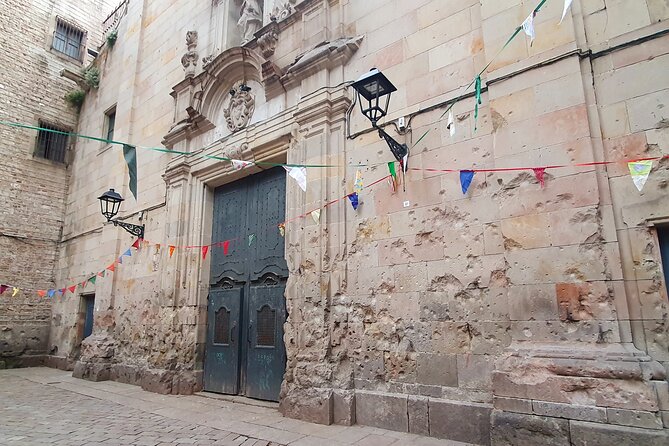
- Carrer d’Estruc begins the story with plate and number clues and the famous House of severed heads
- Portal de l’Angel turns into a mini quest, including an angel you are meant to spot and follow
- Carrer de la Portaferrissa links Barcelona’s Masonic past to visible street-level clues
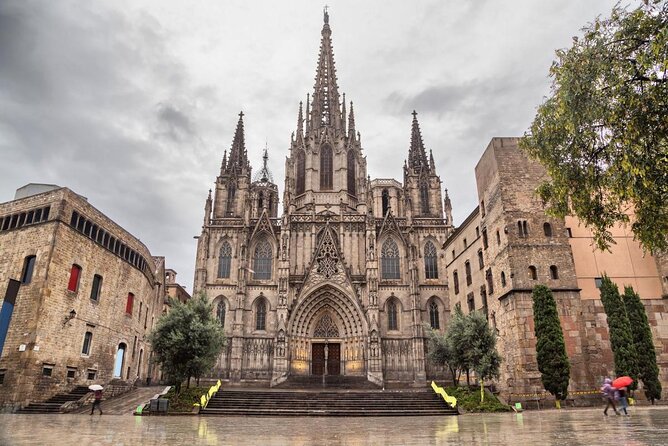
- Gothic cathedral perimeter myths keep the spooky side local, tied to the lanes around it
- Sta. Eulalia mystery payoff ends at Plaça de l’Àngel with the transfer to the cathedral crypt
A dusk ghost walk that stays rooted in real streets
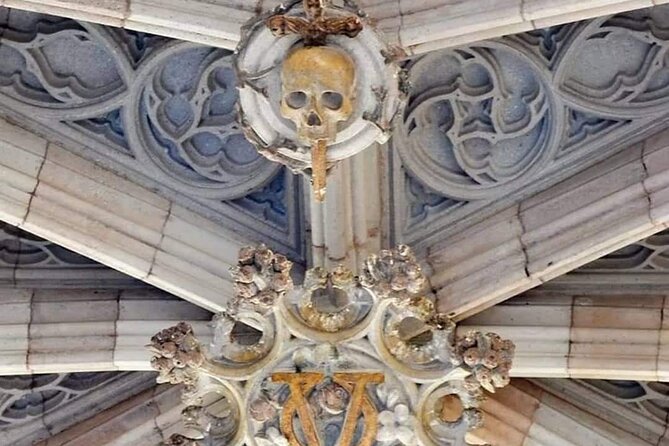
This is the kind of tour that works because it starts when Barcelona’s light gets softer. Dusk changes how you see old stone. It also makes the stories easier to swallow. One guide point is that the city’s chronicles hold “unknown history” that you will not get on most standard routes, and the format helps. You are not just hearing tales in one place. You are moving from clue to clue, so the legends stick.
You will walk through parts of Ciutat Vella where the streets feel like they have layers. Roman, medieval, Gothic, and later folklore all share the same sidewalks. Even when you are not entering buildings, you are still getting real orientation: what this street connects to, why this square sits where it does, and which landmark a legend claims. That is a big deal on short night tours.
The spooky theme is steady, but the tone (based on how the guides are described) is more curious than scary. You are invited to ask questions, and the stories are tied to physical details like symbols, gates, and architectural features, not jump-scare horror.
You can also read our reviews of more walking tours in Barcelona


Price and timing: why $16.21 feels fair
At $16.21 per person, you are paying for a guided route, not a museum ticket package. The timing helps the value. You are out for about 1 hour 30 minutes to 2 hours, so you get a complete story arc without burning an entire evening.
There is also a practical benefit to the small group size. The tour caps at 20 travelers, which usually means less standing around and more chances to hear the guide clearly on narrow streets. If you like asking questions, this matters.
One more value point is the mix of free-entry stops and external-view locations. Several stops are marked with free admission ticket details, and others are outside only. That can sound like a drawback, but it actually keeps the pacing smooth at night. You are not stuck waiting for long entry lines where access timing becomes unpredictable. For a short ghost tour, that is smart.
If you are trying to squeeze this into a busy Barcelona itinerary, the 7:00 pm start is also workable. You still get time before dinner, and you are not walking in the harshest daylight hours.
Where you start and how to finish (so you do not lose time)
The meeting point is Carrer de Fontanella, 10, in Ciutat Vella. The tour starts at 7:00 pm. You finish at Plaça de l’Àngel, right by Jaume I metro stop (Yellow Line L4).
That end point is a real planning win. If you want to continue your night after the tour, you have an easy transit anchor. It also helps you avoid the common problem of ending far from everything. Here, the wrap-up square is a logical place to grab a late drink or keep wandering on foot.
The tour uses a mobile ticket, and you should receive booking confirmation at the time you book. That reduces stress right before departure.
Also note this tour runs when weather is good. It is a walking experience, so if conditions are rough, expect it to be rescheduled or refunded, depending on how it is handled that day.
Stop 1: Carrer d’Estruc and the House of severed heads
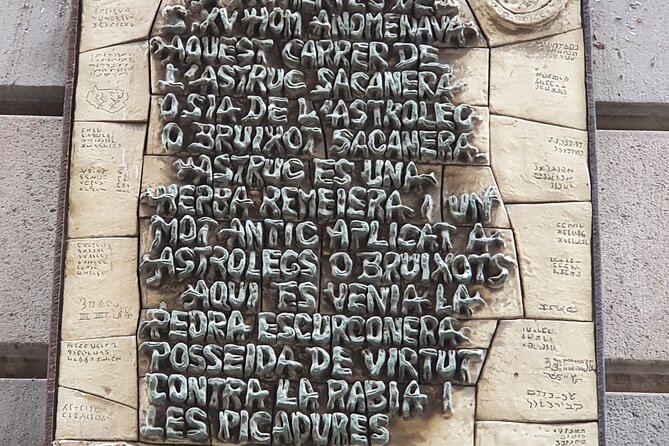
You kick off on Carrer d’Estruc, one of those magical, narrow Barcelona streets that already feels like it belongs in a legend. The opening focus is the connection between this street and Jew Estruc Sacanera, plus the meaning behind the plates and numbers you see along the way.
This stop is not just spooky branding. It is a clue-based start. You learn how to read street details, which is exactly how the rest of the tour works. The highlight here is the reference to the House of the severed heads. Even if you only glance at the spot quickly during your own wandering later, the tour teaches you what to look for so you will not miss it.
Practical tip: arrive with comfortable shoes. Night walking in Ciutat Vella means cobblestones, tight corners, and lots of small turns. You want your feet to feel steady so you can focus on the guide’s street-level pointers.
Portal de l’Angel: the medieval entrance and the angel hunt
Next you shift to Portal de l’Angel, and the tour treats it like a stage. You will visualize one of the entrances of medieval Barcelona, then work through a “miracle” connected to it, ending with a bit of an angel hunt.
This is one of the most effective kinds of storytelling for a walking tour. Instead of reciting facts, the guide points you toward something you can look for right there. That makes the legend feel grounded in the actual city layout.
Why it matters: this is a common tour trap in Barcelona. People rush straight from landmark to landmark and miss how medieval entrances shaped the city’s movement. Here, the guide draws a connection between what you are seeing and how the city would have functioned. You will walk away with a clearer mental map of how the area was once connected.
If you like city puzzles, this stop is fun. If you prefer calmer history without the playful mystery angle, you still get value because it anchors your understanding of the old entrance and the area around it.


The Romanesque site and the Roman necropolis, viewed outside
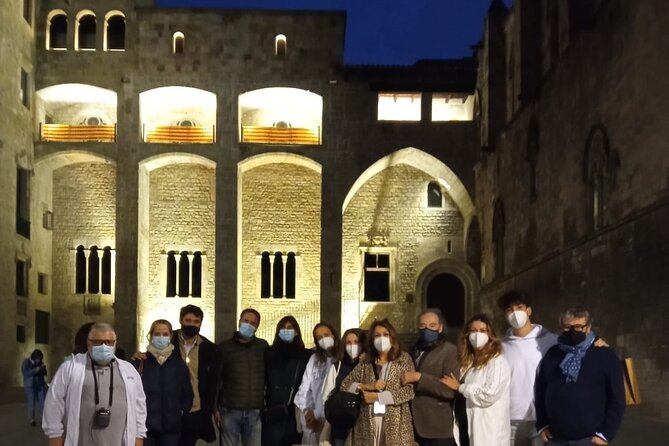
The route includes a Romanesque jewel and a nearby clue about a Roman necropolis. The key thing you need to know is that both are external visits only, with admission not included.
That sounds basic, but for these particular themes, outside viewing is often the right approach. Roman and medieval layers can be about placement more than rooms. When a necropolis is part of the story, the “why here” matters more than what you can see in a gallery.
What you can do to get the most out of these stops:
- Look for how the setting connects to neighboring streets.
- Pay attention to any orientation cues the guide gives, like what is above, below, or nearby.
- Treat these like “place clues,” not “inside exhibits.”
If you come expecting a cathedral-crypt style deep access at every location, this is where you might adjust expectations. But the benefit is that the tour keeps momentum, and momentum is precious on a short 1.5 to 2 hour experience.
Carrer de la Portaferrissa: the oldest Masonic lodge clues
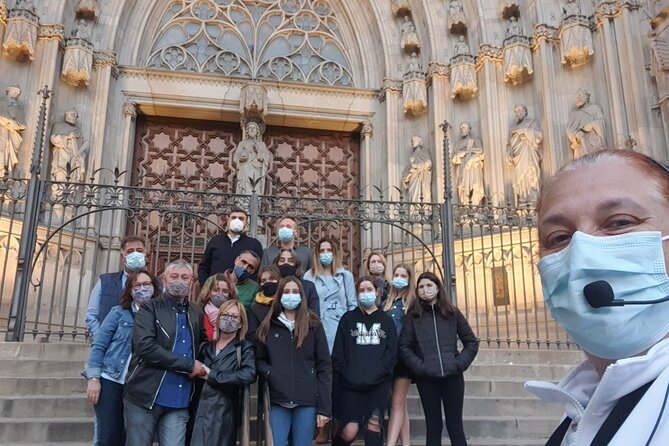
On Carrer de la Portaferrissa, the tour zooms in on something you likely would not look for on your own: the oldest Masonic lodge in Barcelona, and the four elements that identify it.
Even if you are not a Masonic-history nerd, this stop is valuable because it expands what legends can mean. Not every mystery is about ghosts. Some are about secret societies, symbols, and the way groups left marks in plain sight.
The “four elements” angle is especially useful for you. It gives you a checklist. During your own later stroll in Barcelona, you can recall the idea of looking for specific identifying features rather than just admiring architecture in general.
Practical takeaway: if you love symbol hunts, this tour style is made for you. If you want straightforward, linear history only, you might find the symbolic side a bit extra. Still, it stays connected to real street-facing details.
Around the Gothic cathedral: myths and ghosts in the lanes
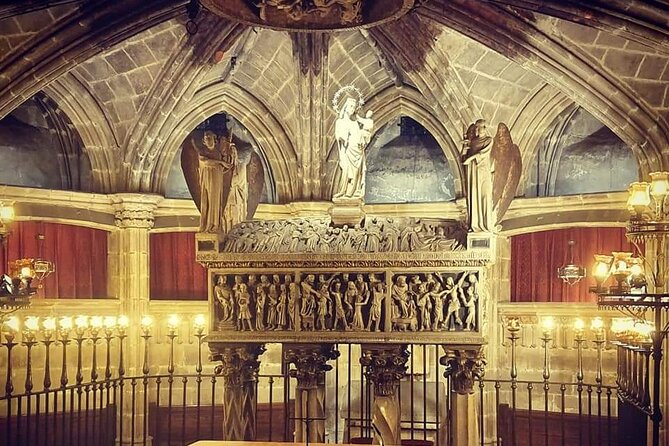
One stop explicitly focuses on dismantling myths of a Gothic cathedral and revealing the ghosts that inhabit it, plus the mysteries of the streets that circumvent it. Here, you should expect external visit only, admission not included.
This is a great moment in the tour for two reasons:
1) You are still close enough to the cathedral area that the setting makes sense.
2) The guide shifts the focus from the building as an object to the building as part of a street network.
Barcelona’s Gothic Quarter can feel like a maze. Stories about surrounding lanes help you understand why locals might have felt certain places were “haunted.” The streets create echoes, hiding lines of sight, and you can feel how that supports folklore even without any supernatural event.
A small caution: since you are outside, you are not getting museum-level information. You are getting legend plus context. If you want confirmed academic details inside, do this tour as your legend layer, then pair it with one museum visit on another day.
Plaça Sant Felip Neri: strange phenomena and a darker day
At Placa Sant Felip Neri, the tour steps into an enclave with a very specific vibe: it includes stories about strange phenomena and also references its blackest day. You are also told a key historical nuance: even though the place is Gothic, in the Gothic era it did not exist as such.
That last point matters because it helps you avoid a common misunderstanding. Barcelona is full of buildings that people assume are older or built in the same style as their surroundings. A guide who points out timeline contradictions helps you appreciate the city more honestly, not just romantically.
What to do at this stop:
- Slow down and read the square as a layout, not just a postcard.
- Listen for how the guide connects the “phenomena” stories to the timing or changes in the area.
- Ask questions if something feels unclear. The tour is set up for that kind of interaction.
If you enjoy more eerie lore and local moral history, this stop gives it to you. It is not just “spooky for fun.” It has a historical edge.
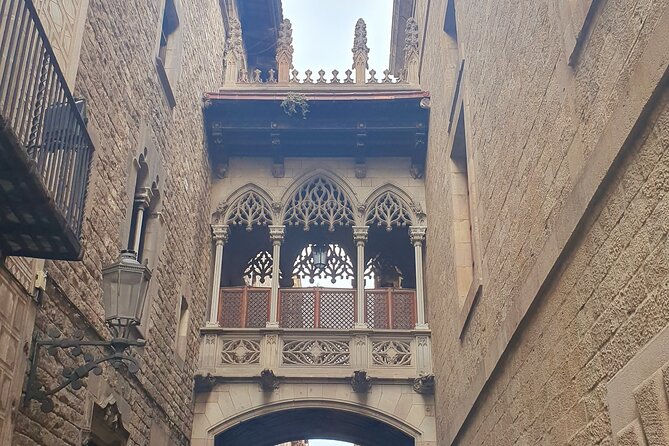
Pont del Bisbe: what it was built for, and what stones hide
At Pont del Bisbe, you learn what the bridge was built for, then hear about the black history tied to its stones. This is another external-view stop, about 10 minutes.
Bridges are great story anchors. People remember them, cross them, and reuse them every day. That means a bridge can become a memory machine for a city: trade routes, boundaries, power structures. When your guide explains the original purpose, the later legends become easier to understand. They often attach to places where people once had reasons to be afraid or secretive.
If you are the type who likes “why did they build it like that” questions, this is a strong stop. It gives you a practical architectural explanation to hold the folklore.
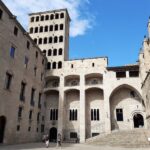
Plaça del Rei: the saying about the snail of Barcelona
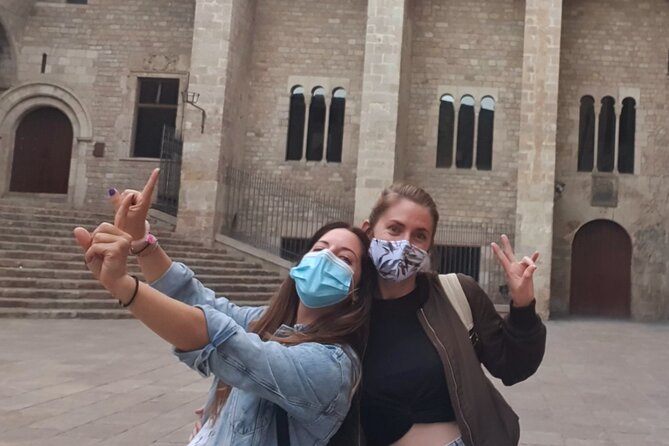
Plaça del Rei is where the tour turns from dark legends into something more playful. You will talk about the square’s beauty and why the Barcelona saying about being more difficult to find than the snail of the city exists.
This is a welcome tonal shift. It prevents the tour from becoming one long spooky stream. Folklore includes jokes, slang, and sayings, not only ghost tales. That helps you feel like you are experiencing living culture, not only haunting.
If you do like your night tours to stay balanced, this stop does that job. It also helps you connect legends to everyday language, which is how you remember them later.
Baixada de la Llibreteria and Plaça de l’Àngel: Roman gate, Sta. Eulalia, and the crypt transfer story
The tour ends with a very targeted storyline at Baixada de la Llibreteria and Plaça de l’Àngel.
At Baixada de la Llibreteria, you learn the location of the Roman gate that led to Rome. Then you head into the Angel Square tied to the miracle of Sta. Eulalia. Even though you are walking, you are being guided through layers: Roman movement, medieval miracle stories, and later religious transformation.
Finally, you finish at Plaça de l’Àngel, where the mystery of Sta. Eulalia is centered on her transfer from the hermitage of Ntra. Sra. De las Arenas to the crypt of the cathedral.
This finale is smart for you because it creates a narrative payoff. The whole tour has been about hidden histories and mysteries. Ending with Sta. Eulalia connects legends to a known religious figure and a specific journey of place to place.
Practical tip for the last 10 minutes: keep your attention high. People start to mentally check out near the end. Here, the last stop is where your map of the whole tour clicks together.
Guide style, questions, and why Violant (Yolanda) is a big deal
One reason this tour seems to hit well is the way the guide handles questions and storytelling. In particular, a guide named Violant, also referred to as Yolanda, is praised for sharing deep knowledge in a way that stays fun and empathetic. She is also described as answering questions and staying friendly throughout.
You should expect the guide to be active, not just silent while you walk. The tour’s format is built for conversation: lots of short stops, each with a clear theme, then a quick reset as you move.
If you are shy, you can still follow easily because the guide keeps pointing you toward what to notice. If you are curious, this tour rewards you. The group size is capped at 20, so you will not feel like you are yelling over a crowd.
Is this Barcelona ghost tour worth your night? My decision
Book this tour if:
- you want a short, focused night walk instead of a long all-day sightseeing grind
- you like legends that tie to specific street-level details like portals, plaques, bridges, and squares
- you want a guide who will explain and answer questions, not just recite
Skip or choose something else if:
- you need lots of indoor access, because several stops are external visits only
- you are sensitive to themes of ghosts and darker local history, since the tour openly includes ghost stories and “black history” moments
If you want my practical call: this is a good value Barcelona night activity. At $16.21, you are buying story plus orientation in Ciutat Vella. The short duration means you can pair it with dinner and one daytime landmark on another schedule. For many first-time visitors, that is an easy way to make Barcelona feel more personal after the main sights.
FAQ
What time does the tour start and how long is it?
It starts at 7:00 pm and runs about 1 hour 30 minutes to 2 hours.
Where do we meet, and where does the tour end?
You meet at Carrer de Fontanella, 10, Ciutat Vella, Barcelona. The tour ends at Plaça de l’Àngel, next to Jaume I metro stop on the Yellow Line L4.
Do I need to buy tickets for the stops?
Some stops are listed with free admission ticket details, but other locations are external visit only and admission is not included.
Is this tour a small group?
Yes. The tour has a maximum of 20 travelers.
What is the ticket format?
You receive a mobile ticket, and you should get confirmation at the time of booking.
What if the weather is bad or plans change?
The tour requires good weather. If it is canceled due to poor weather, you will be offered a different date or a full refund. Cancellation is free up to 24 hours in advance for a full refund.
More Walking Tours in Barcelona


More Tours in Barcelona
More Tour Reviews in Barcelona
Not for you? Here's more nearby things to do in Barcelona we have reviewed








More Barcelona City Tours worth opening.
 ★ 4.4Park Güell Admission TicketFrom $2576,534 reviews
 ★ 4.7Casa Batlló Entry with Self-Audioguide TourFrom $3425,359 reviews
 ★ 4.424 or 48-Hour Hop-On Hop-Off Bus TourFrom $3920,872 reviews
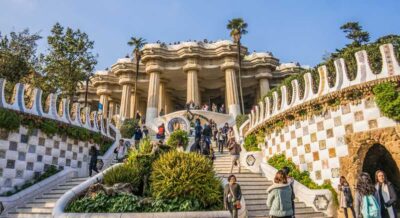 ★ 4.7Park Guell Guided Tour with Skip The Line EntryFrom $3117,563 reviews
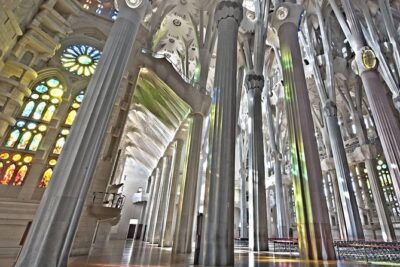 ★ 5.0Barcelona in 1 Day: Sagrada Familia, Park Guell,Old Town & PickupFrom $12013,541 reviews
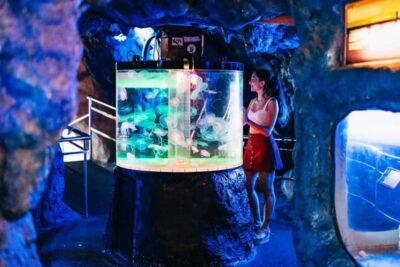 ★ 4.3Barcelona Aquarium: Entry TicketFrom $3113,335 reviews
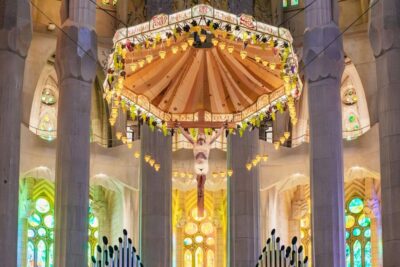 ★ 4.8Sagrada Familia Skip-the-Line Entry Ticket & TourFrom $6712,789 reviews
 ★ 4.4FC Barcelona Museum “Barça Immersive Tour” TicketFrom $3510,944 reviews
Continue by place or experience