
REVIEW · PRIVATE
Tarragona Private Tour with Hotel Pick Up
Tarragona feels like a time machine, and getting there is the easy part. What makes this tour a great fit from Barcelona is the door-to-door hotel pickup plus a tight, well-paced day where the important entrance tickets are included. You’ll see Roman Tarragona, then roll straight into Catalan city life right by the sea.
One drawback to plan around: you’ll do a fair amount of walking, and some interior access can depend on the day of the week. If you’re aiming for specific sites inside buildings, double-check the schedule for your travel date.
Key points before you go
- Hotel pickup from any Barcelona hotel or apartment means you start relaxing, not navigating.
- Entrance fees are included for the amphitheatre, and you also get into the Roman Circus venue.
- Roman stops are built into the route (aqueduct, amphitheatre, walls, plus ruins you walk through).
- Private guide time means explanations stay clear and you can ask questions without rushing the group.
- Cathedral, Castellers, and the Central Market add local flavor beyond ruins.
- Sunday timing can be tricky, since some places may be closed, especially for interior viewing.
From Barcelona hotel pickup to Roman Tarragona without the car headache
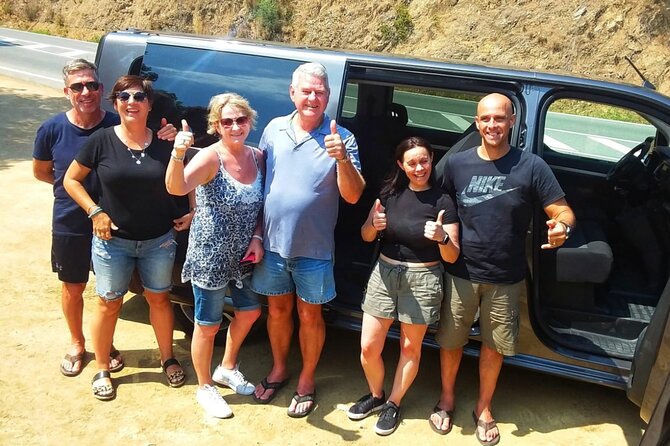
This is the kind of day trip I recommend when you want a “real excursion” but you do not want to rent a car, fight traffic, or stress about parking. Your day begins with a pickup from essentially anywhere in Barcelona city. The night before (or the day before departure) you get a message with your exact pickup time and your guide details through the booking system, which helps a lot if you are coordinating with friends or family.
Once you’re in the vehicle, the trip out is part of the experience, not wasted time. The guide gives context about what you’re about to see, so the Roman sights in Tarragona feel like a connected story rather than random stops.
Price-wise, it is not cheap at $276.34 per person, but you are buying several things at once: private touring, hotel transport, and key entrance tickets. For many people, the math works better than DIY when you factor in both time and admission costs.
You can also read our reviews of more private tours in Barcelona



The drive that sets the mood: Barcelona highlights en route
On the way out of Barcelona, you get an overview of the city, with photo opportunities and orientation points. You pass major landmarks such as Catalunya Square and the Barcelona Cathedral, then head along Passeig de Gracia, where Gaudi’s famous apartment houses like Batlló and Pedrera sit along the boulevard.
This matters because it gives you a quick “what’s where” map. If you are only in Barcelona for a few days, that context is helpful when you later go back on your own and try to link what you saw from the car to what you explore on foot.
In other words, you get a mini Barcelona intro before you zoom in on Roman Tarragona. That’s a smart use of half a day.
Pont del Diable, Devil’s Bridge aqueduct: the first big wow
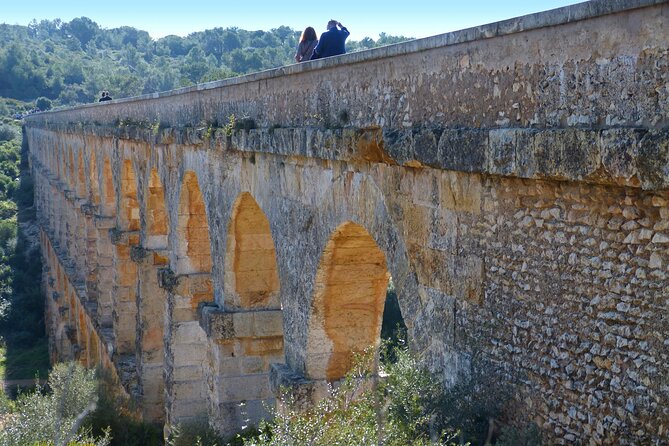
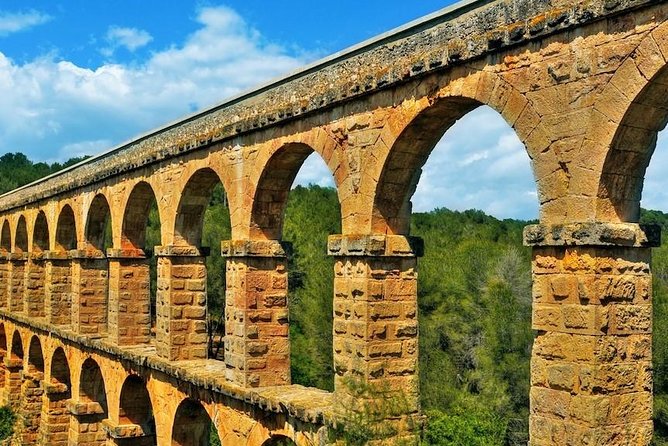
Stop one is the Pont del Diable aqueduct, often called the Devil’s Bridge. It is a Roman engineering feat, roughly 217 meters long and about 26 meters high, built to carry water and keep the city supplied for centuries. It even provided water right up until the 18th century, which helps you understand why Tarragona mattered so much as a Roman center.
You also get a great photographic setting because it sits near woodland and open air. The best part is that this is not a tiny stop. You are given time to look around, take pictures, and really notice the scale before you head into the city.
Entrance here is free, which is a nice bonus. The only real “consideration” is weather and comfort. This area is outdoors, so wear sunscreen and a light layer if you’re going in cooler months.
Antiga Casa del Consolat and the old-town walk you can actually enjoy
After the aqueduct, the tour shifts into a walking rhythm in Tarragona’s older streets. You start near the Antiga Casa del Consolat Tarragoni, and then you move through narrow cobbled lanes and shady little squares.
This portion works because it gives you the feel of the city at pedestrian speed. Roman walls and amphitheatres are impressive, but the city’s character comes from the way locals live around them. The guide’s job here is to help you connect medieval and Roman layers, so the old town does not feel like just a pretty maze.
Entrance at this stop is free, so you’re paying for the guide’s explanations and time, not tickets. If you like walking but hate rushed group pacing, this part is usually where the tour feels most relaxed.
Inside the amphitheatre: Roman Tarragona in full scale
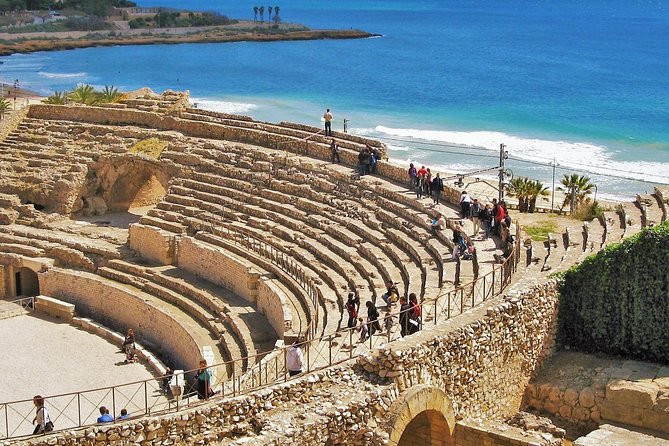
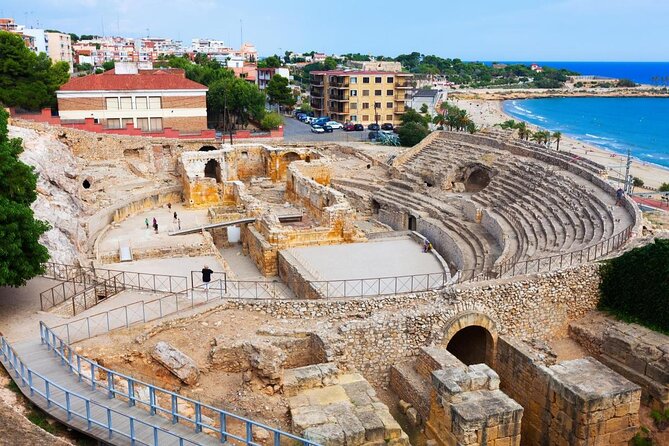
Tarragona’s Roman amphitheatre is one of the top draws of the day, and this tour includes entry. It is one of the UNESCO listed Roman remains, cut into the hillside near the coast. The key detail I’d not miss is the timeline: it dates to the start of the second century AD.
Your guide brings it to life by explaining what it was used for, including gladiator contests and public executions. Even if you think you know Roman spectacles, hearing how the amphitheatre functioned in its setting helps you picture the space, not just view it.
You also get around an hour here, which is enough to read the scene, absorb the scale, and still have a calm moment for photos. One practical note: you may want shoes with solid grip. Hillside architecture plus cobbled or uneven paths can be slow if you are not comfortable.


Roman walls, cathedral area, and the Castellers monument
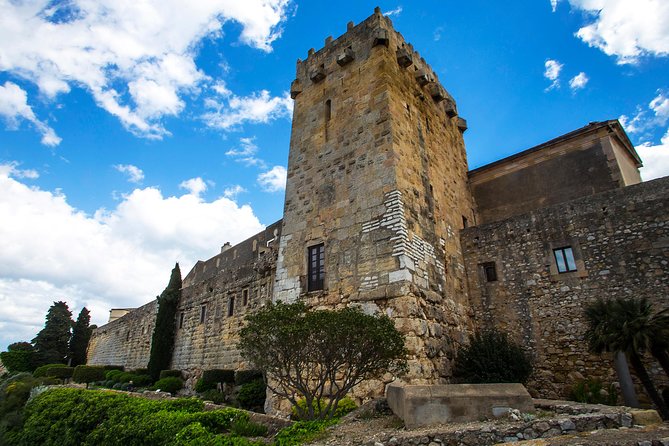
Next up is the Murallas de Tarragona, the Roman walls. This stop is shorter, around 30 minutes, but it’s meaningful because you are looking at some of the oldest standing construction tied to the original Roman military camp and the later city development. Walls like this are not just backdrops. They explain how the Romans controlled movement and shaped urban life.
Then you move into views of Tarragona’s cathedral, which is described as a National Monument and Cultural Good of National Interest. This is a good tonal shift after the Roman military and entertainment spaces, and it helps you see how the city continued to develop after Rome.
A particularly memorable aside is the Castellers monument you pass by. Castellers are human tower builders, and this specific creation is described as made of 219 figures, about 11 meters high, and weighing around 12 tons. That detail sticks because it sounds almost impossible until you see the scale. It adds a living Catalan tradition into a day dominated by ancient stone.
Central Market and the Mediterranean Balcony: local life plus big sea views
To balance the Roman content, the tour includes a stop at the Mercado Central de Tarragona. It is basic but beautiful, in a Modernist hallmark building from 1915, and it sits just off Rambla Nova. This is a practical way to understand what daily Tarragona looks like: where seasonal and local products are sold from nearby rural areas.
Entrance is free, and you only get about 30 minutes, but that’s enough time to walk through, take in the building, and mentally switch gears from ruins to real life.
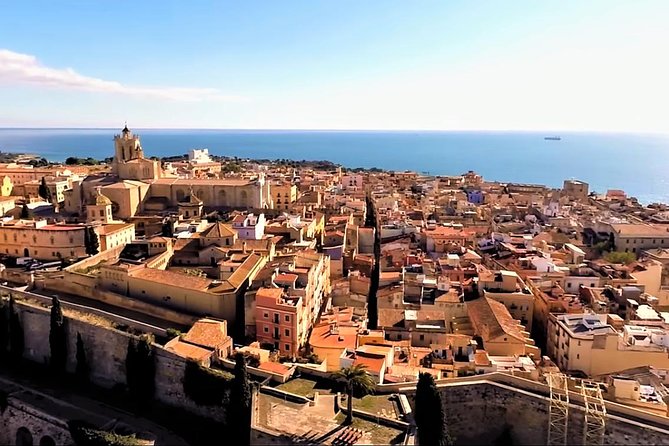
Then the tour hits the viewpoint at the Mediterranean Balcony, at the end of La Rambla Nova. You get panoramic views over the coastline and the sea, plus that quick sensory payoff of Mediterranean breeze. It’s also a great way to reset your legs before your final walk through Roman remains.
The museum area and the Tarraco Model: connect the dots
Near the National Archaeological Museum of Tarragona, you get more context about what you are seeing. The museum is described as a public museum promoting recovery, conservation, research, and dissemination of heritage from the Roman city of Tarraco and its surrounding influence.
Even if you are not spending a long time inside, having a guide point out what Tarraco was helps the ruins feel more intentional. You hear stories about Roman civilization and how the city functioned, not just what happened there.
Right in front of the museum area, the Tarraco Model is mentioned as a scale model of Tarraco from the 2nd century BC, in its period of maximum splendor. That model is valuable because it turns scattered ruins into a planned urban picture. Without it, ruins can feel like separate impressive fragments. With it, you start seeing the bigger layout.
Roman remains walk: why the last part feels like real time travel
The tour’s closing stretch is a walk through Roman remains of Tarraco. This is where it feels least like a checklist and more like walking through a layered story.
You are guided to look at the structure around you, and the feeling described is important: when you walk underneath imposing Roman stone, it can feel like you are stepping back toward how soldiers and citizens moved through the space. The practical tip here is to slow down. This part is not about speed. Take a couple of minutes to look up, touch the stone if that is permitted, and let the scale sink in.
It is the best section for photos too, because you are not only capturing a building. You are capturing the sensation of being inside the ruins.
Price, walking level, and what to bring for a smoother day
This tour is priced at $276.34 per person, with about 5 hours total time. For some people, that sounds like a premium. For others, it is a fair trade because you avoid the hassle of getting there yourself and you get key entry tickets plus private guiding.
Walking is a real factor. You’ll do an aqueduct stop outdoors, a medieval old town walking segment, time in and around the amphitheatre and walls, and then additional strolling through viewpoints and Roman remains. The tour is still manageable for most travelers, but you should treat it as a walking day.
What to bring:
- Comfortable walking shoes with grip
- Water, especially in hot months, since food and drinks are not included
- Sun protection (or a light layer, if the day is cool)
- A small camera bag or daypack so you can keep your hands free for photos
One more practical point from the real world: vehicle comfort matters on longer drives. The tour includes an air-conditioned vehicle, which is a big plus on hot days.
Who this Tarragona tour is best for
This is ideal if you:
- Want Roman Tarragona without renting a car from Barcelona
- Care about seeing major ruins in one organized half day
- Appreciate a guide who connects the dots between Roman and later city life
- Prefer private time over trying to hear explanations in a big group
It also works well as an add-on during a Barcelona trip. Tarragona is a one-day shift, but it feels like a different world once you’re there, especially when you start at the aqueduct and end with sea views.
If you are traveling with older relatives or anyone who tires easily, plan for slower pacing and take your time at each stop. A private setup can help here, but the day still includes multiple walking segments.
Should you book this private Tarragona tour?
I’d book it if you want a day that is structured, ticketed, and guided, without the logistics headache of DIY. The best value points are the hotel pickup, the Roman amphitheatre entry, the mix of aqueduct plus city ruins, and the inclusion of Catalan landmarks like the Castellers monument and the Central Market.
I would think twice if your travel day is a Sunday and you specifically need interior access at every stop. Tarragona is the kind of place where opening hours can shift, and you do not want your day to feel half-closed.
If you book, do one thing that pays off: wear good shoes and bring water. Then you will get the full payoff, aqueduct photos first, amphitheatre goosebump potential next, and a sea-view reset at the end.
FAQ
What is the duration of the Tarragona private tour?
The tour lasts about 5 hours.
How much does the tour cost per person?
The price is $276.34 per person.
Where does pickup happen?
Pickup is offered from any hotel or apartment in Barcelona city. You provide the exact address when booking.
Is the tour truly private?
Yes. It is a private tour/activity, and only your group participates.
What language is the tour offered in?
The tour is offered in English.
Are entrance fees included?
Entrance fees are included for the Tarragona Amphitheatre. The tour also includes entrance to the Tarragona Circus.
Does the price include food and drinks?
No. Food and drinks are not included.
What stops will I visit in Tarragona?
You will see the Pont del Diable aqueduct area, Antiga Casa del Consolat old town area, Tarragona Amphitheatre, Roman walls, the cathedral area, a Castellers monument viewpoint, Mercat Central market, and viewpoints such as the Mediterranean Balcony. The tour also includes stops near the National Archaeological Museum and the Tarraco Model area, plus a walk through Roman remains.
Is there a mobile ticket?
The tour includes a mobile ticket.
What is the cancellation policy?
You can cancel for a full refund if you cancel at least 24 hours before the experience’s start time.
More Private Tours in Barcelona


More Tours in Barcelona


More Tour Reviews in Barcelona
Not for you? Here's more nearby things to do in Barcelona we have reviewed










More Private worth opening.
 ★ 5.0Montserrat Monastery Small Group or Private Tour Hotel pick-upFrom $1145,144 reviews
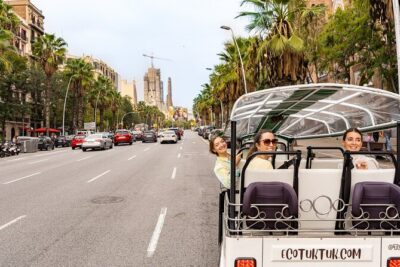 ★ 5.0Tour Welcome Barcelona with Local Guide in Eco Tuk Tuk PrivateFrom $281,882 reviews
 ★ 5.0Barcelona Private Tour by Sidecar MotorcycleFrom $1991,750 reviews
 ★ 5.0Barcelona Helicopter, Sailboat & Old Town Private Walking TourFrom $5131,395 reviews
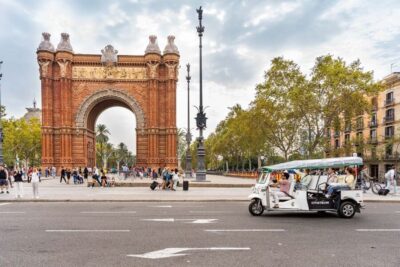 ★ 4.9Private City Tour by Eco Tuk TukFrom $331,339 reviews
 ★ 4.5Sagrada Familia & Gaudi Tour Private or Small Group with TicketsFrom $901,188 reviews
 ★ 4.5Barcelona Airport Private Arrival TransfersFrom $311,097 reviews
 ★ 5.0Sagrada Familia, Park Guell & Tapas Private TourFrom $237903 reviews