
REVIEW · BARCELONA CITY TOURS
Samurai Experience in Barcelona
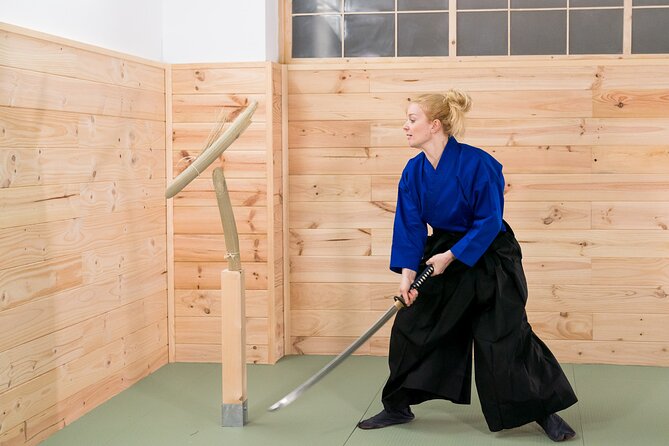
You can learn Samurai moves in a very practical way. This private Barcelona session mixes a quick Samurai history briefing, traditional dress, meditation, and hands-on sword practice, capped with a Japanese VIP Zone snack break. You get the structure of a lesson, plus the fun of group practice, all in about 2 hours.
Two things I really like: you start with the “why” (history and meditation) before touching weapons, and you actually do skill building with a bokken then progress to a katana cut sequence. One thing to consider up front is the height rule, since kids under 140 cm cannot cut with the real katana for safety.
Key Points to Know Before You Go
- Private session, only your group for a more controlled, focused experience.
- Dress in traditional Samurai clothing, so you feel the part before you train.
- Bokken practice first, then you move into the katana cut and foam-sword combat.
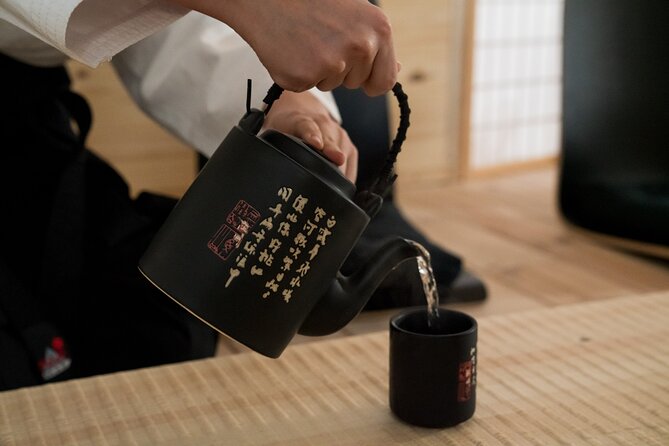
- Japanese VIP Zone with tea, beer, and Japanese sweets for a proper cooldown.
- Clear safety limits for height and age, including real-katana cutting only for those 140 cm and up.
- One mat and one foam stick included for cutting, with extras available as add-ons.
Samurai Training Meets Barcelona in a 2-Hour Lesson
This is not a museum talk where you sit, nod, and leave. The format is active and structured, which matters because it turns “Samurai interest” into a skill you can actually feel in your body. You begin with a welcome and a summary of Samurai history, then you shift into traditional attire and short meditation. That sequence sets the tone: calm first, then action.
Barcelona also adds a nice contrast. You are doing a very Japan-forward activity in Sant Martí, near public transport, and the whole experience loops right back to the meeting point. That makes it easier to fit into a day of walking the city without stressing over logistics.
If you like experiences that mix culture plus hands-on practice, this hits that sweet spot. You’re not just hearing about weapons. You’re learning how they’re used, in a safe way designed for participants.
You can also read our reviews of more tours and experiences in Barcelona.



Price and Value: What $88.92 Buys You
At $88.92 per person for about 2 hours, the price makes sense because it bundles more than you might expect for a short activity. You’re paying for instruction, plus the full “setup” that makes the training possible.
Here’s what’s included:
- Japanese tea or coffee
- Samurai clothing, plus training swords and foam swords
- One Japanese beer for participants who are 18+
- Japanese snacks (mochi)
- Cutting gear per participant, including a mat and a foam stick for cutting with the katana (for those over 140 cm)
What you do not get included:
- Extra foam sticks and extra bamboo tatamis for cutting
That last line is the only real “budget watch” item. If you think you’ll want multiple cutting rounds, plan on that being an add-on. Still, for many people, the included cutting setup is plenty because the point is the experience, not collecting gear.
The other value factor is the private nature. A private session usually means more attention and less waiting around, which helps when you’re learning something new like stance, grip, and timing.
Where You Start in Sant Martí and How the Session Flows
You meet at Carrer del Consell de Cent, 605, Sant Martí, 08026 Barcelona, Spain. It ends back at the same spot, so you do not have to plan an extra commute at the end.
The experience runs about 2 hours. That timing matters because you can treat it like a focused block, not a half-day detour. And because it’s private, it avoids the common feeling of being squeezed into a schedule that barely lets you settle in.
You also get a mobile ticket, which is handy in a city where paper tickets can feel like extra friction. Confirmation is sent at booking time, and the activity is offered in English, so you can follow the steps and safety cues clearly.
Welcome and Samurai History: The Lesson Starts Before Training
The first part is a welcome plus a summary of Samurai history. I like this approach because it gives you context before you touch anything sharp-adjacent. When you understand the role Samurai training played in discipline, mindset, and martial tradition, the rest of the experience lands better.
Right away, the pacing feels built for first-timers. You’re not thrown into sword technique without a frame. You get the story, then you get the tools and the physical steps.
This is also where the tone is set. The session does not try to be Hollywood-style. It’s more like a guided practice with cultural grounding.
Dressing the Part: Traditional Samurai Clothing With a Purpose
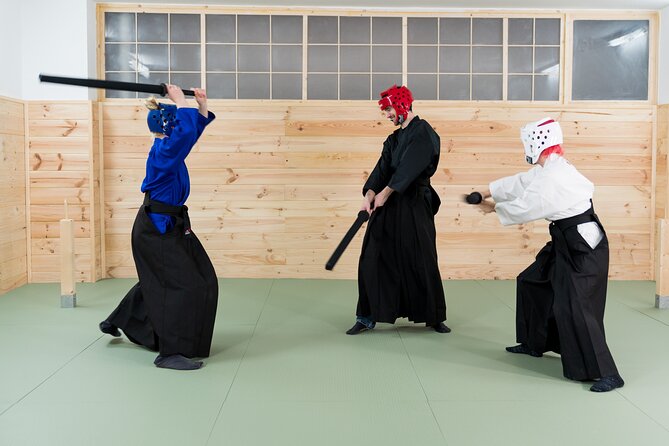
Next, you dress in traditional Samurai clothing. This is not just for photos, though you will get a team photo later. The clothing step also helps you understand posture and movement. Martial training is physical, and costume can change how you focus on form.
It also makes the experience feel more like a real ceremony or training session instead of an outdoor activity you squeeze into your day. You are still in Barcelona, but your attention shifts. You stop thinking about where your next tapa stop is, and you start thinking about stance and control.
If you plan to take photos, wear something that is easy to handle and you can work with around the clothing process. You’ll likely want to keep your hands free and your mind calm for the next steps.



Samurai Meditation: Why the Calm Part Matters
After the history and dressing, you do Samurai meditation. This part is short, but it’s important. It slows everything down, which makes the training portion safer and more comfortable.
In activities like this, people often want to skip to the action. Yet meditation helps with exactly what you need for sword handling: attention, controlled breathing, and a willingness to follow instruction closely.
Even if you do not know the tradition, you can treat it like a reset. I like that the session includes this, because it signals that discipline and safety are part of the point, not just an extra step.
Bokken Lessons: Learn the Wooden Sword First
Then you learn to use a bokken, the wooden sword. This is a smart choice for a first-time participant. It lets you practice the basics without the fear factor, and it trains your grip, stance, and timing.
The training with a bokken matters because later you will do cutting and then foam combat. If your body already understands how to hold and swing safely, the whole sequence becomes smoother.
The session includes the bokken and other training gear, so you do not need to bring anything. You just need to listen, move carefully, and respect the space around other participants.
If you’re worried about your coordination, this part is where your confidence builds. The wooden sword makes errors less dangerous and more educational.
Katana Cut and Safety Rules You Must Know
Next comes the katana cut. This is the headline moment for a lot of people, and it’s also where the safety rules become non-negotiable.
Key points:
- Kids under 140 cm cannot use the real katana for safety reasons.
- The experience provides cutting gear for participants over 140 cm, including one Japanese mat and one foam stick per participant (included).
- Extra foam sticks and bamboo tatamis to cut with the katana are not included.
So what does this mean for you? If you are traveling with kids, check heights before you arrive. It’s not a “maybe” situation, it’s a hard rule. If someone in your group is under 140 cm, they can still participate, but not in the real-katana cutting part.
Also, if you’re hoping to maximize cutting reps, think ahead. You get a single mat and foam stick included per participant, and extra cutting supplies are separate.
The good news: the session is designed around these limits, so the flow stays organized. You’re not left standing around hoping your turn comes with the right gear.
Foam Sword Combat and Team Photo Finish
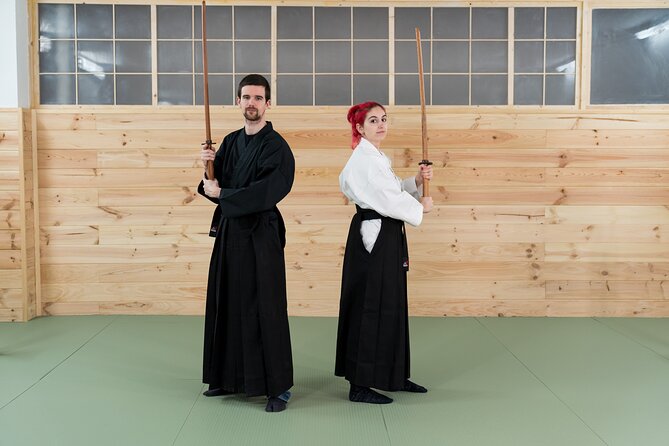
After the katana cut, you move into combat among participants using included training equipment such as chambaras, which are foam swords. This is where the energy picks up without the same risk as real blades.
I like that the combat is part of the program because it helps you understand that training is not just about isolated cuts. You learn how to react, how to respond to someone else’s movement, and how to keep your swings controlled.
You also finish with a team photo, which is a fun way to mark the moment when everyone has done the same steps. It’s the kind of souvenir that feels earned.
A private session can make the photo moment easier too, since timing and grouping are under control rather than rushed by a big crowd.
Japanese VIP Zone: Beer, Tea, Mochi, and a Proper Cooldown
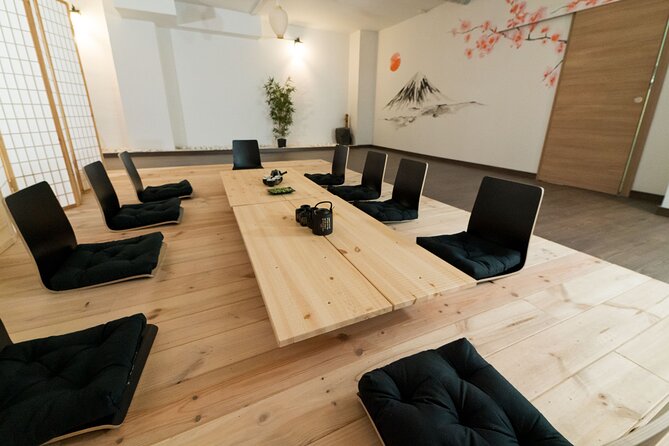
The last major segment is the Japanese VIP Zone for about 30 minutes. This is not just a snack stop. It’s a recovery buffer after active training, and it gives you a chance to relax and enjoy Japanese drinks and sweets.
What you get here:
- Japanese tea
- One Japanese beer per participant (only if you’re 18+)
- Japanese sweets (including mochi)
I appreciate this structure. After movement, people tend to get warm and hungry. Having food and drinks built into the experience saves you from hunting for a late snack while you’re still in training mode.
If you’re drinking beer, pace yourself. You just spent the last part focusing on control and body mechanics, so a calm return to normal pace is smart.
Who This Is Best For in Barcelona
This works best for:
- Adults who want an activity that mixes culture plus hands-on practice
- First-time learners who want guided instruction with clear safety boundaries
- Groups who want a private session rather than a crowded, one-size-fits-all class
- People who enjoy themed experiences that include both Japanese tradition and interactive training
It may be less ideal if:
- You want long, deep lectures. The history is a summary, not a long academic session.
- Your group has children under 140 cm who specifically want to cut with the real katana. That part is restricted.
Important participant rule: minor participants must be accompanied by their mother/father/legal guardian. If you’re planning a family trip, make sure the adult requirement is met.
Also, service animals are allowed, and the meeting area is near public transportation, which can help if your schedule is tight.
What to Wear and Bring (So You Feel Comfortable)
You’re getting dressed in traditional Samurai clothing, so focus on being easy to manage rather than dressing up in complicated outfits. Wear comfortable basics underneath so you can move well during meditation and training.
Practical tips:
- Wear closed-toe shoes with good grip. You’ll be standing and moving.
- Keep jewelry minimal. Things like long necklaces or loose bracelets can get in the way.
- Bring a small bag or phone wallet if you want to keep essentials, but don’t plan on carrying heavy items during training.
- If you’re sensitive to alcohol, you can still enjoy the tea and snacks. The beer is only one per participant and requires 18+.
Also, since this ends back at the meeting point, you can plan to get back to your day without a complicated “last leg.”
Should You Book Samurai Experience Barcelona?
I’d book it if you want a short, structured activity where you learn first and then do. The big strengths here are the combination of history plus real practice, the progression from bokken to the katana cut, and the fact that you end with food and drink in the Japanese VIP Zone. It feels like more than a costume photo session.
Skip it if your top priority is a long cultural immersion or if your group includes kids under 140 cm who want the real-katana cutting experience. That safety rule is firm.
If you’re in Barcelona for a few days and want one memorable, active thing that isn’t just another line and another waiting game, this fits nicely. The private format helps you get a calmer session, and the 2-hour timing keeps it realistic.
Free cancellation is available up to 24 hours in advance, so you can also book with some breathing room.
FAQ
How long is the Samurai Experience in Barcelona?
The experience lasts about 2 hours.
Is this experience private?
Yes. It is a private tour or activity, and only your group will participate.
What language is the experience offered in?
It is offered in English.
Where do I meet for the tour?
The start location is Carrer del Consell de Cent, 605, Sant Martí, 08026 Barcelona, Spain. The activity ends back at the meeting point.
What are the height rules for the real katana?
Kids under 140 cm cannot use the real katana for safety reasons.
Is the Japanese beer included?
Alcoholic beverages are included as one Japanese beer per participant, but it must be age 18 or older.
What cutting supplies are included?
You get 1 Japanese mat and 1 foam stick per participant to cut with the katana (for participants over 140 cm). Extra foam sticks and bamboo tatamis are not included.
Is a mobile ticket used?
Yes, the ticket is mobile.
Are service animals allowed?
Yes, service animals are allowed.
What is the cancellation policy?
Free cancellation is available. You can cancel up to 24 hours in advance for a full refund.
More Tour Reviews in Barcelona
Not for you? Here's more nearby things to do in Barcelona we have reviewed










More Barcelona City Tours worth opening.
 ★ 4.4Park Güell Admission TicketFrom $2576,534 reviews
 ★ 4.7Casa Batlló Entry with Self-Audioguide TourFrom $3425,359 reviews
 ★ 4.424 or 48-Hour Hop-On Hop-Off Bus TourFrom $3920,872 reviews
 ★ 4.7Park Guell Guided Tour with Skip The Line EntryFrom $3117,563 reviews
 ★ 5.0Barcelona in 1 Day: Sagrada Familia, Park Guell,Old Town & PickupFrom $12013,541 reviews
 ★ 4.3Barcelona Aquarium: Entry TicketFrom $3113,335 reviews
 ★ 4.8Sagrada Familia Skip-the-Line Entry Ticket & TourFrom $6712,789 reviews
 ★ 4.4FC Barcelona Museum “Barça Immersive Tour” TicketFrom $3510,944 reviews