

REVIEW · PRIVATE
Private Tour Spanish Civil War & Franco’s Dictatorship
Barcelona’s walls remember a brutal war. This private, English-language walking tour follows a guide through key places where the Spanish Civil War and Franco’s dictatorship left visible marks, from Plaça Catalunya to Plaça Nova. In real city space, the conflict stops being a textbook topic and turns into something you can point at.
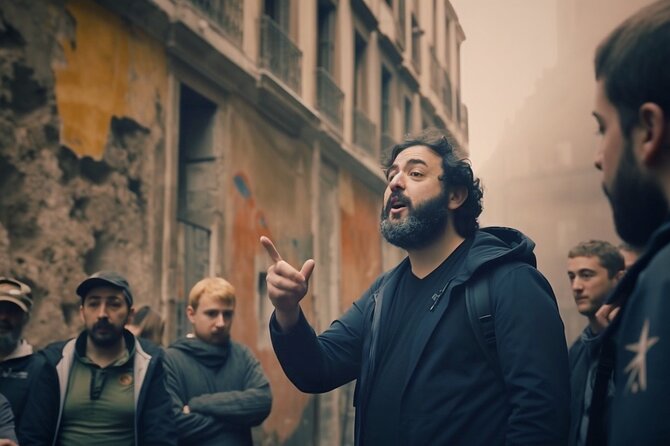
I love the private pace because you get real time for questions, not just a quick stop-and-go script. I also like the way the route ties in stories people often miss, including a George Orwell connection to the city during the war and the fierce political mood in the Raval neighborhood.
One possible drawback: the subject is heavy, and most of the time you’re outdoors walking between stops, so it helps to dress for the weather.
Key things you’ll notice on this tour
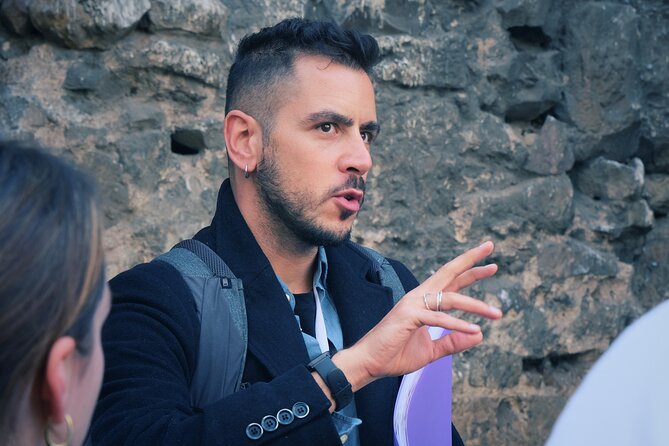
- Private guide, your questions matter. It’s only your group, so the conversation stays focused.
- Six stops, one connected timeline. You move from early fighting and ideology to bombing damage and postwar repression.
- Orwell to anarchism, not just battle dates. You’ll get human-scale angles on the conflict.
- War scars you can still see. A square known for the most visible bombing damage is part of the walk.
- A church remnant tied to the International Brigades. The tour looks for evidence you might miss on your own.
- No admission fees at the stops. Each planned stop is listed as free for admission, and you’ll use a mobile ticket.
A private Civil War walk makes the story feel immediate
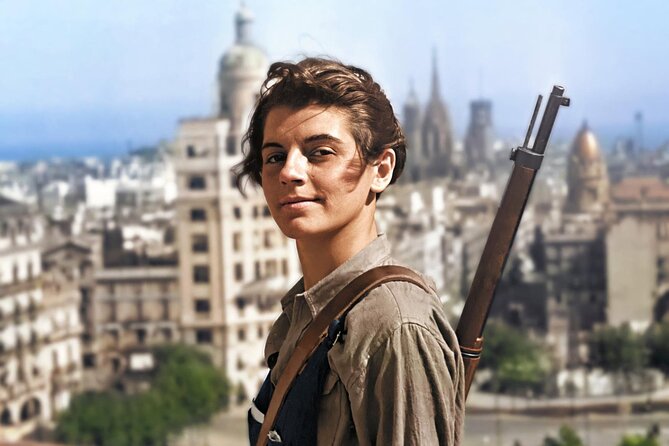
This is a private tour, which changes the whole vibe. With only your group involved, you’re not competing for attention while your guide tries to keep pace for a larger crowd. The tour is designed as a guided walking route, and that matters because Barcelona’s geography helps you understand cause and effect, where people were living, fighting, and suffering.
One detail I really appreciate is the guide factor. On this experience, guides like Yannis have been highlighted for being hugely passionate and strong on the kind of context that turns confusing events into a clear picture. Since the topic is politically and historically complex, having a guide who can answer follow-up questions is not a luxury. It’s the difference between hearing facts and actually understanding what you’re seeing.
You’ll also get it in English, so you can spend your mental energy on the story, not on translating.
You can also read our reviews of more private tours in Barcelona

From Plaça Catalunya to Plaça Nova: the timing works
Plan on about 2 hours 30 minutes. That’s long enough to connect multiple phases of the war and dictatorship, but short enough that you’re not trapped on your feet all day. The tour also offers flexible time options, which can help if you want to fit it between museum visits, beach time, or a late dinner plan.
You start at Foot Locker, Pl. de Catalunya 20, in Ciutat Vella. The walk ends at Plaça Nova, also in Ciutat Vella, close to the Cathedral. That finish is handy because you’ll already be in an area where it’s easy to continue exploring on your own afterward.
If you’re the type of traveler who likes to know what you’re looking at before you move on, this length is a sweet spot. If you prefer a slower, purely interpretive walk with extra stops for lingering photos, you might want to build extra time into your day anyway.
Stop-by-stop: how Barcelona anchors the Spanish Civil War
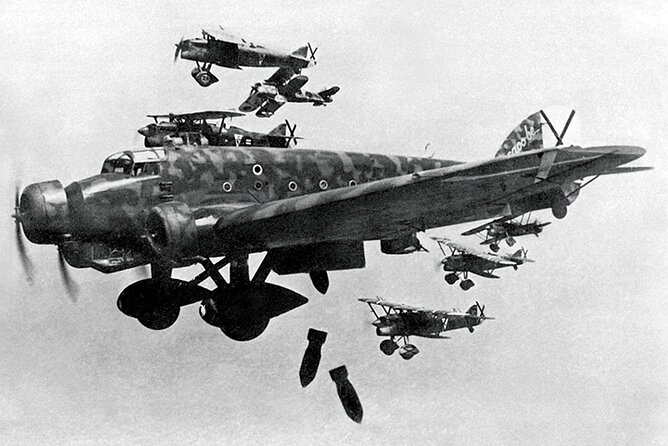
This tour is built around six specific places, each chosen to represent a different angle of the war. Your guide connects what you see in the street with what was happening politically and socially at the time.
1) Plaça Catalunya, and the battle for Telefonica
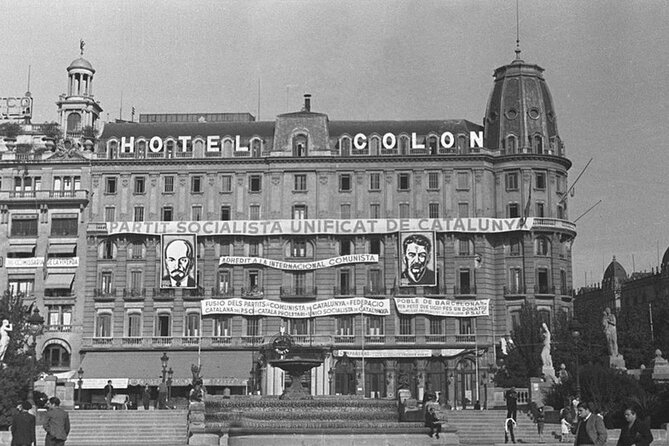
At Plaça Catalunya, you begin with a broad introduction and a key early conflict linked to the fight over the Telefonica building during the Spanish Civil War. Even if you do not know much Spanish history, you’ll quickly understand why a communications hub matters. Controlling messages, coordination, and information is power in wartime.
I like this starting point because it gives you a frame right away. Instead of jumping into one neighborhood story, you start with the idea that the war was fought not only with weapons, but with control of systems. It’s a smart way to prevent the rest of the walk from feeling like disconnected anecdotes.
2) La Rambla, a George Orwell connection
Next is La Rambla, where you’ll hear about the hotel connected to George Orwell during the Spanish Civil War. This stop is valuable because it shifts the focus from institutions to observers. Writers and journalists often register what others are too close to see, and they help future generations understand daily reality, not just propaganda.
In practice, this can be one of the most interesting stops if you like how personal perspectives fit into big events. The only consideration is that this part of Barcelona is a major public space. Even with a guide organizing the walk, you may have to work around normal pedestrian traffic.


3) Plaza de Vicenc Martorell, the Raval’s resistance and anarchism
Then you head to Plaza de Vicenc Martorell, in the Raval area. Here the focus turns to working-class suffering, resistance, and Anarchism. This is where the war stops being just a conflict between armies and becomes a conflict inside communities, with real people trying to survive and resist oppression.
What I like about this stop is that it adds nuance. Civil War history is often summarized as sides and dates, but anarchist movements and working-class politics shaped what people believed was at stake. You’ll get a different mental picture of Barcelona than the one you might form from architecture or shopping streets alone.
4) Antic Hospital de la Santa Creu, the corridor of civilians and wounded
At Antic Hospital de la Santa Creu, you visit a 15th-century hospital. Your guide connects the building to the reality that wounded soldiers and civilians flowed through medical spaces during the war. This stop is a reminder that conflict damages everyone, including people not involved in fighting.
The tour also uses the hospital to bridge from wartime suffering to what came after. Your guide will talk about the end of the war and the cultural oppression under the dictatorship. That transition is important. Many city-history tours stop at the battle period. Here, you’re shown how control lingered long after the guns quieted.
One drawback to consider: because it’s an older site connected to illness and injury, it can feel emotionally intense even when the guide keeps it factual. If you prefer lighter historical topics, this may not be your best fit.
5) Basilica de Santa Maria del Pi, a Civil War remnant in plain sight
At Basilica de Santa Maria del Pi, you’ll learn that the church hides a little-known remnant of the Spanish Civil War in plain sight. The guide discusses the International Brigades, tying the religious space to an unexpected piece of wartime evidence.
I’m especially interested in this type of stop because it trains your eyes. You do not need to be a historian to appreciate the idea: sometimes the clearest clues are the ones you walk past every day. This is also where a private guide helps, because without one, you might notice something physical but not know what it means.
If you’re someone who likes “look closer” moments in cities, this stop is worth paying attention to.
6) Plaça Sant Felip Neri, bombing damage you can see
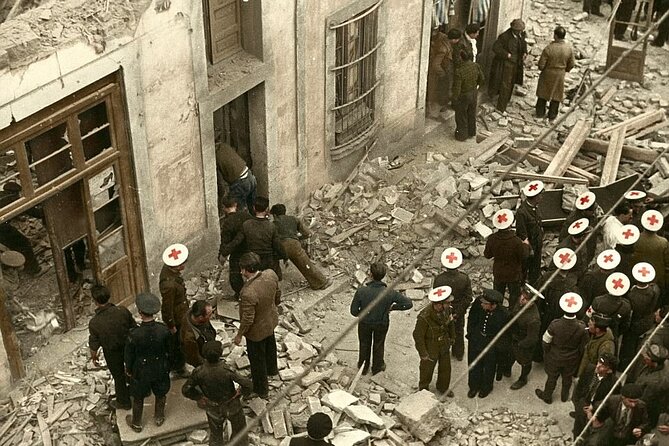
The final stop is Plaça Sant Felip Neri, a square described as having the most visible damage from aerial bombings. Here, your guide covers the tragic bombing and the role of the Axis powers.
This is the stop that turns abstractions into concrete reality. You’ll see what war did to normal public space, not just military targets. It’s also a powerful finishing note because it reinforces how the conflict escalated and hit civilians directly.
The practical thing to remember is that aerial-bombing damage is not always labeled for casual visitors. Your guide’s interpretation is the point, so be sure you’re actually listening during the briefing and not just looking around for photos.
How Franco’s dictatorship and the war’s ideology fit together
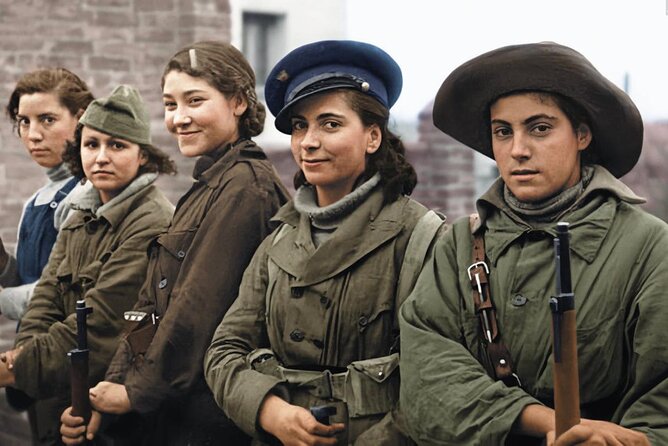
What makes this tour more than a list of landmarks is the way it connects ideology to physical space. You start with power struggles, like the fight over a communications building. You then get the writer’s perspective through George Orwell. After that, you move into the working-class realities of the Raval, where resistance and Anarchism were part of the political landscape.
Then the route guides you into consequences. The hospital represents the immediate human cost. The church remnant and the International Brigades discussion broaden your view to international involvement. Finally, the bombing-damage square ties the war’s scale to what people endured in everyday life.
Under Franco’s dictatorship, control was not only military. It was also cultural, which your guide explains in the context of the dictatorship’s impact after the war ended. That’s a key takeaway for me: you leave understanding that the conflict had a long shadow. The city bears that shadow in stone, in scars, and in the stories people chose to preserve or ignore.
If you like history that’s grounded in places you can still reach on foot, this is a good match. If you only want big-picture dates with minimal emotional weight, you might feel the focus is too story-driven.
Price and value: is $181.41 per person worth it?
At $181.41 per person for about 2 hours 30 minutes, you’re paying for three things: a private group format, a guide who can explain context as you walk, and a carefully chosen route with no paid admission required at the planned stops.
Here’s how I think about value in a case like this:
- You’re not paying museum entry fees, since each stop is listed as admission free.
- You’re paying for explanation at six meaningful sites, not just walking through neighborhoods.
- You’re getting private time, which matters most when the topic is complicated and you want to ask questions.
There’s also mention of group discounts, which can improve value if you’re booking as a small group and splitting the cost. If you’re traveling solo and the price feels steep, it’s worth comparing against general group tours. But for many people, a private guide is exactly what you want for this subject.
One more practical note on comfort: no lunch or food is included. So I suggest eating before you go, or planning a meal after you finish at Plaça Nova.
Booking basics that actually affect your day
This tour uses a mobile ticket, and it’s offered in English. It’s also described as near public transportation, so you’re not relying on taxis just to reach the meeting spot. Service animals are allowed, which can matter for travelers who need that flexibility.
Weather is part of the equation, since it’s a walking experience and the tour description says it requires good weather. If the weather is poor, you should expect a different date offered or a refund.
And yes, tips are not included. Guides do accept tips/gratuities, so if you’re happy with the way your guide handled a tough topic, it’s appropriate to show that support.
Should you book this Barcelona Spanish Civil War tour?
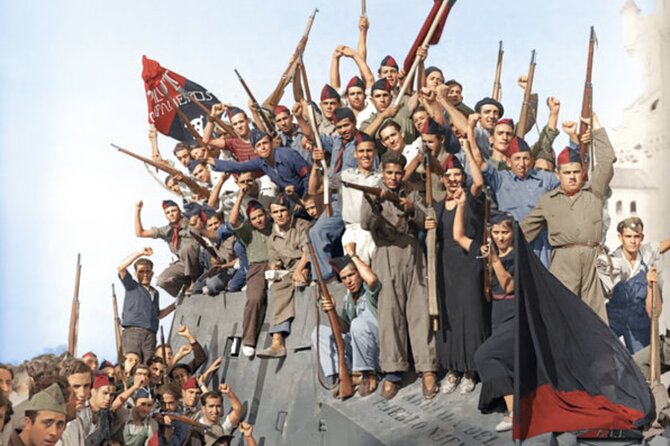
Book it if you want a place-based understanding of the Spanish Civil War and Franco’s dictatorship, with a guide who can explain how ideology, suffering, and oppression connect in real locations. It’s especially good for travelers who like asking questions and getting answers in the moment, because the private format keeps the experience personal.
Skip it if you’re not up for heavy themes or you strongly dislike walking outdoors for long stretches. Also consider your expectations. This is not a broad, all-over Barcelona history day. It’s a focused route with six key stops that tell one connected story.
If your goal is to leave Barcelona with a deeper grasp of what happened here and why it mattered long after the fighting, this is a smart use of a half day.
FAQ
How long is the private Spanish Civil War and Franco dictatorship tour?
It lasts about 2 hours 30 minutes.
What is the price per person?
The price is $181.41 per person.
Is this tour private?
Yes. It is a private tour/activity, and only your group will participate.
Where does the tour start and end?
It starts at Foot Locker, Pl. de Catalunya 20, Ciutat Vella, 08002 Barcelona, Spain. It ends at Plaça Nova, Ciutat Vella, 08002 Barcelona, Spain, close to the Cathedral.
Is food included?
No. Lunch or any food and drink are not included.
What about cancellation if weather is bad?
The tour requires good weather. If it is canceled due to poor weather, you’ll be offered a different date or a full refund. You can cancel for a full refund up to 24 hours in advance.
More Private Tours in Barcelona
More Tours in Barcelona
More Tour Reviews in Barcelona
Not for you? Here's more nearby things to do in Barcelona we have reviewed






More Private worth opening.
 ★ 5.0Montserrat Monastery Small Group or Private Tour Hotel pick-upFrom $1145,144 reviews
 ★ 5.0Tour Welcome Barcelona with Local Guide in Eco Tuk Tuk PrivateFrom $281,882 reviews
 ★ 5.0Barcelona Private Tour by Sidecar MotorcycleFrom $1991,750 reviews
 ★ 5.0Barcelona Helicopter, Sailboat & Old Town Private Walking TourFrom $5131,395 reviews
 ★ 4.9Private City Tour by Eco Tuk TukFrom $331,339 reviews
 ★ 4.5Sagrada Familia & Gaudi Tour Private or Small Group with TicketsFrom $901,188 reviews
 ★ 4.5Barcelona Airport Private Arrival TransfersFrom $311,097 reviews
 ★ 5.0Sagrada Familia, Park Guell & Tapas Private TourFrom $237903 reviews