
REVIEW · BARCELONA BIKE TOURS
Private electric bike tour – Discovery of Barcelona
Barcelona is best when you move with purpose. This private e-bike ride strings together the old-city core, the sea, and Gaudí’s most famous neighborhoods without wasting hours in taxis or on slow-moving sidewalks. I love how it blends big landmarks with the kind of context that makes you look twice at familiar facades.
Two things I especially like: you get easy electric-bike cycling for hills and longer distances, and you also get a guide who helps you connect the dots between Catalan modernism and Barcelona’s later 20th-century identity. One consideration is that the route is active, with lots of short stops and turns, so it is not a good match if you want a very relaxed, minimal-effort stroll the whole time.
The best part is the flow. You start in the historic heart, then keep working your way toward the water and up the slopes toward Montjuïc, ending back where you began, so you do not have to plan a complicated second half of your day.
Key highlights
- Private, just your group: more freedom for pacing, questions, and photo stops.
- E-bikes do the heavy lifting: especially useful for Barcelona’s hills.
- Gaudí, but with context: you see Sagrada Família plus two major house commissions.
- Gothic city center to sea: cathedral area, Santa Maria del Mar, and Port Vell along the way.
- Montjuïc views and 1929 legacy: Placa d’Espanya, Poble Espanyol, Olympic sites, and Miró’s foundation.
Why a private e-bike tour fits Barcelona so well
Barcelona rewards walking, but it punishes your knees and time. With an e-bike, you get the best mix: you can cover a lot of ground while still stopping often enough to enjoy details instead of just passing by.
This is a private tour, which matters more than many people expect. You are not competing with a crowd for space at viewpoints, and you can move at a pace that feels comfortable. If you want extra time at one spot, you can usually ask for it. If your group needs a breather between clusters of landmarks, your guide can shift the tempo.
There is also a real safety component here. You are given an e-bike and helmet, and the guide walks you through getting comfortable on the bike before you roll into busy streets. One thing I’d watch for: e-bikes are fun, but you still have to pay attention around pedestrians and tight corners. If your group is brand-new to biking, plan for slower starts and take your time.
You can also read our reviews of more cycling tours in Barcelona

Meeting at Carrer de Cervantes, getting on the right bike, and rolling out
The tour starts back at Carrer de Cervantes, 5, in Ciutat Vella. Since this is a central area, it is simple to reach by public transport, and you do not have a long, uncertain transfer before the fun begins.
Once you meet, the setup is practical. You get the e-bike and helmet, and the guide helps you get going smoothly so you can focus on Barcelona instead of figuring out your gear. In the real world, bike fit can make or break comfort, especially on a half-day ride. Some guests noted that the operator had options for smaller riders, which is a good sign if you have been nervous about bike sizing on tours like this.
From there, the rhythm is stop, look, learn, then move on. You will likely do short sight checks throughout the day, with a longer sequence clustered around Gaudí and another around Montjuïc. If you prefer an early start, do it. One common challenge in the city is crowding later in the day, and a morning tour helps you keep the ride enjoyable.
Gothic Barcelona: Placa de Sant Jaume and the Cathedral square
You begin in Placa de Sant Jaume, where Barcelona’s civic identity is on full display. This is the square of City Hall and the Catalan Government Palace, and it is a strong starting point because it frames the story of the city in a very direct way. Instead of treating Barcelona like a collection of sights, you start with the idea of power, governance, and regional identity.
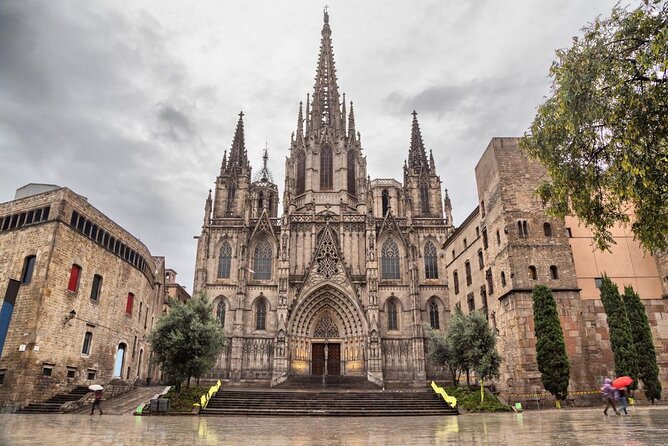
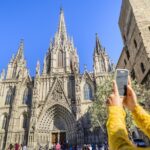
From there, you head toward the Barcelona Cathedral area. Even if you do not go inside, the square setting helps you see the cathedral as part of the city’s historical center, not as an isolated ticket stop. The guide focuses on the key points of the cathedral’s story, which is useful if you want to understand what you are looking at rather than just photographing the façade.
What I like about this early pairing is that it gives you contrast fast. Civic square first, then a religious center. That contrast makes later architecture explanations easier to follow as you move through different styles and eras.
Catalan modernism at Palau de la Música Catalana
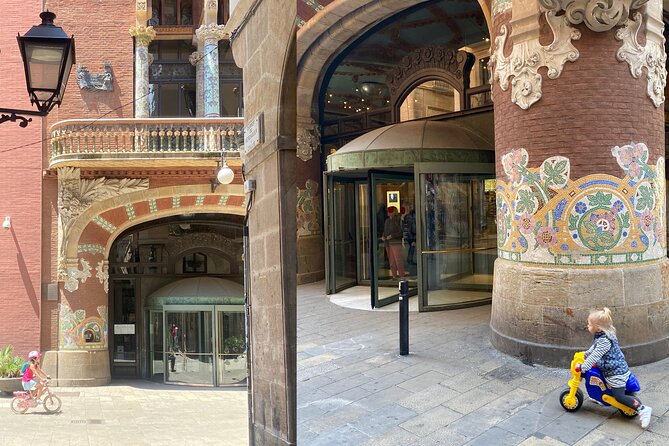
Next comes Palau de la Música Catalana. If you have seen photos of it, you might think you already know what it looks like. But the value here is in learning what you are looking at before you view it in your head as just a pretty building.
You also get an education in Catalan modernism, including who architect Lluís Domènech i Montaner was. That matters because Barcelona loves style, but it also loves meaning. When you understand the people and ideas behind the buildings, the details start to make sense instead of feeling like ornament.
This stop is short, so the goal is not to linger for hours. It is more like a well-planned primer so you can notice patterns later, even after you bike away.
Markets and sea-breeze culture: Santa Caterina, Santa Maria del Mar, Port Vell, and Barceloneta
Barcelona is not only about landmark monuments. It is also about how people eat, work, and gather. That is why the route includes the Mercado de Santa Caterina. It is described as a smaller neighborhood market with a transformation in the early 1900s, and it is the kind of place that helps you feel the city’s daily life side instead of just its postcard side.
Then you move to Basilica de Santa Maria del Mar. It is often described as one of the city’s most beautiful Gothic churches, and even a quick stop gives you a sense of scale and style. This is also a good pause to reset mentally. After the cathedral area, Santa Maria del Mar adds another Gothic flavor, so you can compare how different parts of the old city express the same broad era.
From there, you reach Port Vell, the old port transformed ahead of the Olympic Games. That historical pivot is important. Barcelona did not just build new buildings. It reshaped entire zones, and the guide’s framing helps you understand why the waterfront feels like a “before and after” location.
Finally, you roll into La Barceloneta, the classic seaside neighborhood with a working background tied to fishermen and labor. There’s even a short break on a terrace to quench your thirst, which is a smart moment on an e-bike day. You get to enjoy the seaside atmosphere without turning the afternoon into a planning exercise.
You can also read our reviews of more private tours in Barcelona
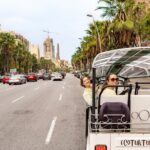
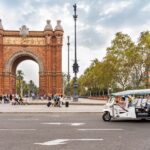
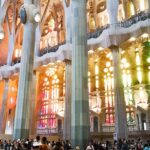
Gaudí zone: Sagrada Família, La Pedrera, and Casa Batlló
If your goal is to see Barcelona’s most recognizable architecture without spending your entire vacation in lines, this is a strong segment of the tour.
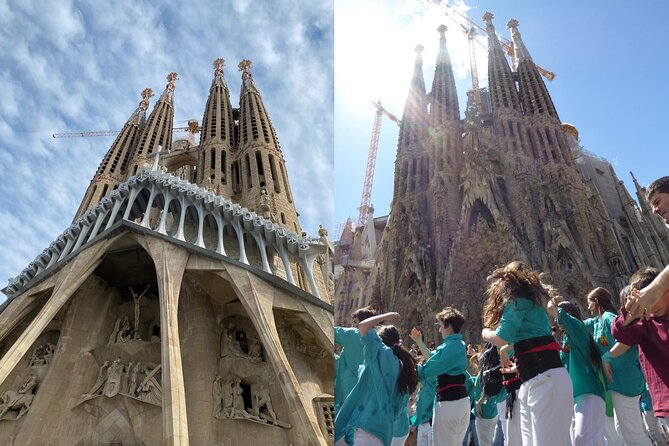
First is Basilica de la Sagrada Familia, Antoni Gaudí’s most important work and the monument most associated with the city. Even with time limited to a stop-and-see approach, the guide’s explanations help you understand the scale and symbolism you are seeing. This is the kind of landmark where a little context changes everything, because it is easy to treat it like a single impressive façade when it is really an entire architectural language.
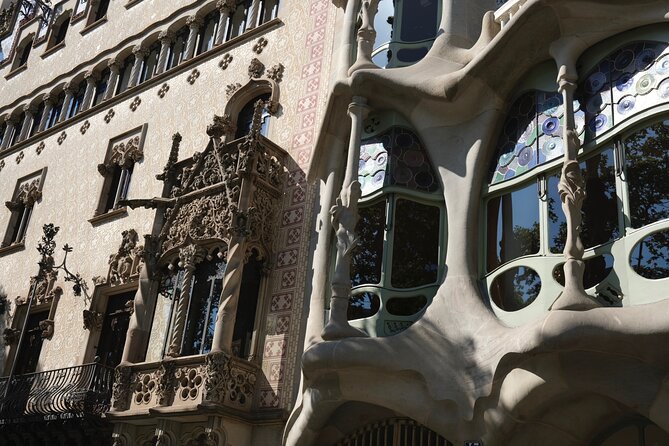
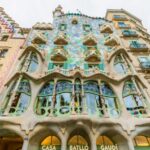
Then the tour goes to Casa Milà, also known as La Pedrera. It is described as Gaudí’s last civilian commission, and that framing helps you appreciate it as a milestone rather than just another colorful building. You then add Casa Batlló, another Gaudí house and one of his most admired works. Together, these stops work like a mini Gaudí lesson: you see how his approach shifts while still staying unmistakably his.
One practical note for these Gaudí stops: tickets to attractions are not included. So if you want to go inside, you will need to plan separately. The tour is designed to help you understand what you see from the street level and why it matters.
Placa d’Espanya and the 1929 World’s Fair legacy
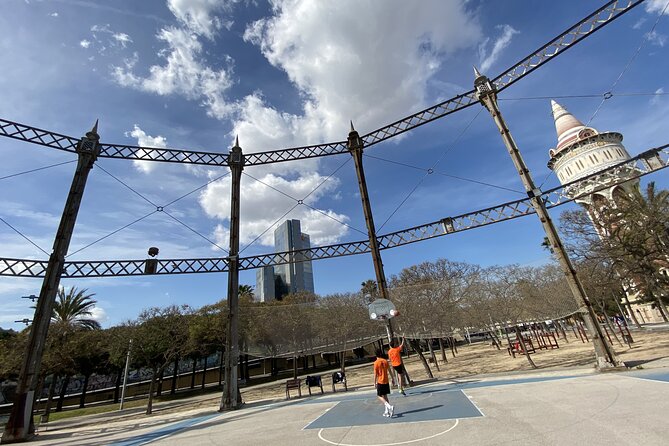
Once you leave the densest old-city sections, the ride starts to feel more panoramic. Placa d’Espanya is next, with the square, its arenas, and the fountain layout connected to the Universal Exhibition of 1929. The guide uses that setting to explain why this area looks like it does, and how exhibition planning shaped a modern part of the city.
You also hear about major architectural landmarks around here, including the Caixa Forum and the Mies van der Rohe pavilion. It is a useful stop if you like seeing how Barcelona’s identity moved from older medieval and modernist eras into 20th-century world-showcase ambition.
What I like is that this segment keeps the story from getting stuck in one style. You start the day with civic and Gothic Barcelona, you move to Catalan modernism, and now you land in an area tied to a world expo. You can literally see Barcelona changing layers across one half-day.
From Poble Espanyol to the Museu Nacional d’Art de Catalunya
Poble Espanyol is next, described as an artifical village built for the 1929 World’s Fair. Even if you have mixed feelings about a “theme village,” it still has value. It is a snapshot of how the city packaged culture for an international audience, and that context connects cleanly to what you just learned about Placa d’Espanya.
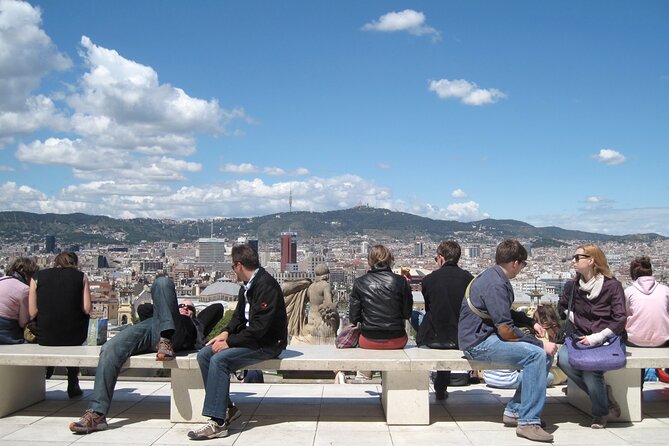
Then you move to Museu Nacional d’Art de Catalunya. Originally the Spanish pavilion for the 1929 Universal Exhibition, today it is one of the city’s key art museums, and you also get a nice view of Barcelona from the area. That view component is not a small detail. This tour is structured to give you visual resets, and this is one of those “stop, breathe, look back at the city” moments.
If your group is the kind that wants the full museum experience, remember again that entry tickets are not part of the tour. So treat this segment as viewing and context first, and decide later if you want to return for a museum day.
The Olympic ring: Estadi Olimpic to Montjuïc viewpoints
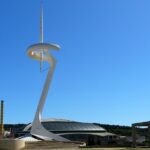
You then reach Estadi Olimpic, an essential piece of the Olympic ring. The point of bringing you here is not only the stadium itself, but the broader story of how Olympic Barcelona reorganized public spaces. The guide also references other parts of the ring, including the Palau de Sant Jordi and the telecommunications tower designed by Santiago Calatrava.
After that, you go to the Joan Miró Foundation on the heights of Montjuïc. It is a short stop, but it gives you a taste of the creative side beyond architecture alone. Miró is part of Barcelona’s cultural brand, and the Montjuïc placement makes it feel like a destination, not an afterthought.
Finally, the tour ends with Jardins del Mirador del Alcalde, gardens of the Alcalde watchtower with a beautiful view of the city and the port. If you only remember one thing from the whole half-day, make it this. This is where the route earns its “I can see a lot in four hours” reputation, because you finally get the skyline perspective that makes the earlier neighborhoods click into place.
How the guide style affects your whole experience
A lot of tours have a checklist of stops. This one has a storytelling rhythm. Jean-Pierre, the guide, shows up in the way that matters most on a private ride: he sets you up calmly at the start, keeps you safe, and then uses the stops to teach you the city.
You will notice patterns in the feedback people gave: taking time to explain how to operate the e-bike, being patient with newer riders, and keeping the pace comfortable. There are also mentions of flexibility if timing needs to shift due to other plans. That matters because Barcelona crowds, street closures, and general city chaos can always throw curveballs.
Language is another advantage. Jean-Pierre is trilingual, so you might hear English, French, and Spanish as the group prefers. That is helpful if you have mixed-language companions and you want explanations in the language that clicks best.
If you like asking questions, this tour tends to encourage it. And if you like photos, you will have time for them. A theme in the experiences is that the ride does not feel rushed.
Price and value: what $96.11 gets you (and what it does not)
At $96.11 per person for about four hours, the value comes from three places.
First, you are not just buying a route. You are buying a private guide plus the e-bike and helmet. In a city like Barcelona, where hills and distances can slow you down, that equipment is not a gimmick. It is what lets you see major sights in one morning or afternoon without burning your day.
Second, the tour is built for understanding. Many people can photograph Sagrada Família or Casa Batlló. Fewer people leave with a clearer sense of why they look the way they do, how modernism developed in Catalonia, or how 1929 and Olympic redevelopment changed the city’s shape.
Third, the stops are mostly designed to be enjoyable without paid entry tickets. The data notes free admission for the listed sightseeing moments, and that aligns with how the tour feels in practice: you are gathering insight from outside and short viewpoints, not spending your time at ticket counters.
What is not included is attraction entry tickets. If you want to go inside Sagrada Família, or do deeper museum time at the major institutions, you will need to budget extra for those. The tour is a great way to decide what you want to revisit later.
Who should book this, and who should skip it
This is a great fit if:
- You want a big overview without turning Barcelona into a daily marathon.
- Your group includes people who get tired on hills or want an easier way to cover distance.
- You care about architecture and want the story behind Gothic, Catalan modernism, and Gaudí.
- You like private tours for pacing and comfort, not for prestige.
You might want to choose something else if:
- Your group has no interest in cycling and only wants a slow walk.
- You are uncomfortable sharing narrow streets with pedestrians, even with an e-bike.
- You only want museum or monument entry tickets as the main goal. This tour is built for street-level context and viewpoint time.
Also, try to plan the tour for a morning slot if you can. Crowds can make any cycling day harder, and e-bikes are at their best when the ride feels smooth.
Should you book this private Barcelona e-bike discovery tour?
I think you should book it if you want the highest chance of leaving Barcelona with real understanding, not just a pile of photos. The private format plus e-bike setup makes it practical even if this is your first time on an electric bike. Jean-Pierre’s guiding style, calm start, and steady pacing show up repeatedly in how people describe the experience.
If you are the type who enjoys “see it, then know why it matters,” this tour is built for you. It connects the historic center, the sea, and Montjuïc into one coherent half-day arc, and the city views at the end make the effort feel worth it.
FAQ
How long is the Barcelona discovery tour?
It runs about 4 hours.
Is the tour private?
Yes. It is private, so only your group participates.
What languages is the tour offered in?
It is offered in English.
What does the price include?
The e-bike and a helmet are included.
Are attraction or monument tickets included?
No. Tickets to attractions are not included.
Where do you meet and where does the tour end?
You meet at Bike rental on Carrer de Cervantes, 5, Ciutat Vella, 08002 Barcelona, Spain, and the tour ends back at the meeting point.
What’s the exact start area in Barcelona?
The meeting point is in Ciutat Vella at Carrer de Cervantes, 5.
When will I get confirmation?
Confirmation is received at the time of booking.
What is the cancellation rule?
Free cancellation is available up to 24 hours in advance for a full refund.
Does the tour run in any weather?
This experience requires good weather. If it is canceled due to poor weather, you are offered a different date or a full refund.
More Cycling Tours in Barcelona

More Tours in Barcelona


More Tour Reviews in Barcelona
Not for you? Here's more nearby things to do in Barcelona we have reviewed





More Barcelona Bike Tours worth opening.
 ★ 5.0Barcelona 3-hour Bike or E-Bike Tour: Highlights and Hidden GemsFrom $321,429 reviews
 ★ 4.6E-Bike Tour with Montjuic Cable Car & Boat RideFrom $191817 reviews
 ★ 5.0Barcelona e-Bike Tour: Gaudí & Old Town Small GroupFrom $38769 reviews
 ★ 5.0Barcelona Off the Beaten Track Bike TourFrom $47676 reviews
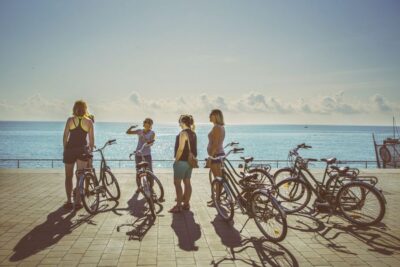 ★ 4.9Unusual Barcelona Bike Tour in FrenchFrom $35463 reviews
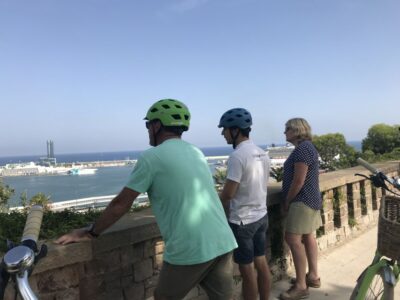 ★ 4.8Montjuic Hill E-Bike TourFrom $48386 reviews
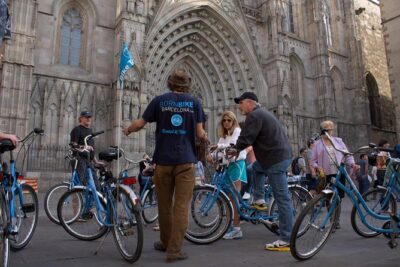 ★ 5.0Historical and Modernist Bike Tour BarcelonaFrom $43262 reviews
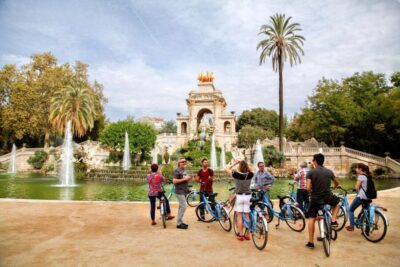 ★ 4.7Barcelona Historical 3-Hour Bike TourFrom $42222 reviews
Continue by place or experience