
REVIEW · BARCELONA GAUDI TOURS
Private Barcelona Modernism and Gaudí Walking Tour
Barcelona’s stone has a secret.
This private Modernism and Gaudí walk turns big landmarks like Sagrada Familia into clear, human stories, from design choices to what’s still under debate today. You’ll also get a smart sweep through the Eixample district, where Barcelona basically laid out a stage for Modernisme to take over.
I love how the tour balances the famous names with the lesser-known buildings along the way, so you learn patterns, not just trivia. I also like that you’re led by real local guides in English and Spanish, with strong art-and-architecture focus and an easy, conversational pace. One thing to keep in mind: it’s still a city walk, so comfortable shoes matter, and some stops can be spaced out more than you expect.
Key Things I’d Do Again on This Tour
Walk Modernisme like a map, not a lecture, with stops grouped around what to notice and why it matters.
Start at Sagrada Familia with the Passion façade angle, so the construction story feels less abstract.
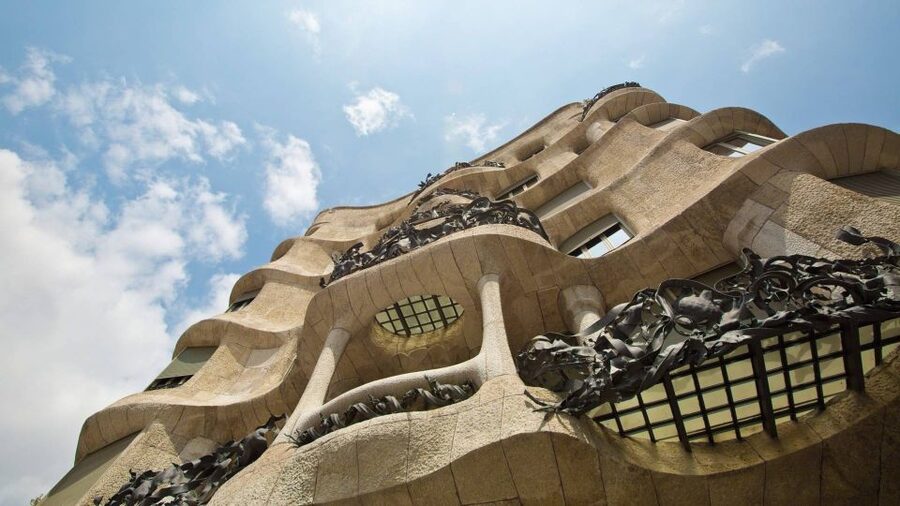
Use Passeig de Gràcia as your main “open-air classroom”, especially around La Pedrera and Casa Batlló.
See the Modernisme neighbors of Gaudí, including buildings tied to Lluís Domènech i Montaner and Josep Puig i Cadafalch.
Max group size stays small (up to 12), which makes it easier to ask questions.
A Private Walk That Explains Barcelona’s Modernisme on the Move
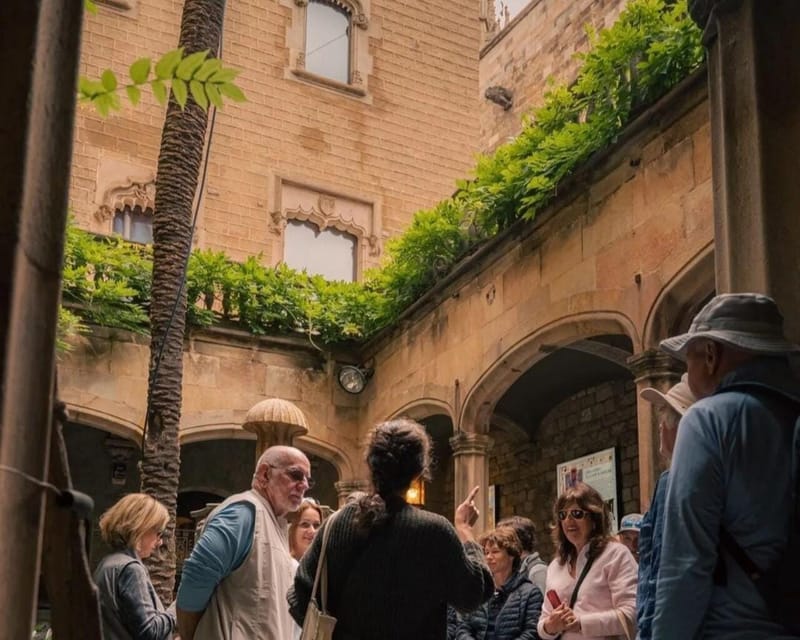
This isn’t a generic bus-tour version of Barcelona. It’s a focused walking route built around Modernisme, with a guide helping you read architecture the way you’d read a good street-level story.
You’ll start with Antoni Gaudí, then broaden out to the wider cast of Catalan Modernism. That matters because Barcelona’s Modernisme is not only one man’s style. It’s a whole movement with different personalities, materials, and ideas competing and collaborating in the same neighborhoods.
You also get an advantage that’s hard to replicate on your own: you’re walking while someone points out what to look for. Facades that feel random at first start to connect, especially once you understand how each architect thought about nature, geometry, and city life.
You can also read our reviews of more walking tours in Barcelona



First Stop, Sagrada Familia and the Passion Facade Story
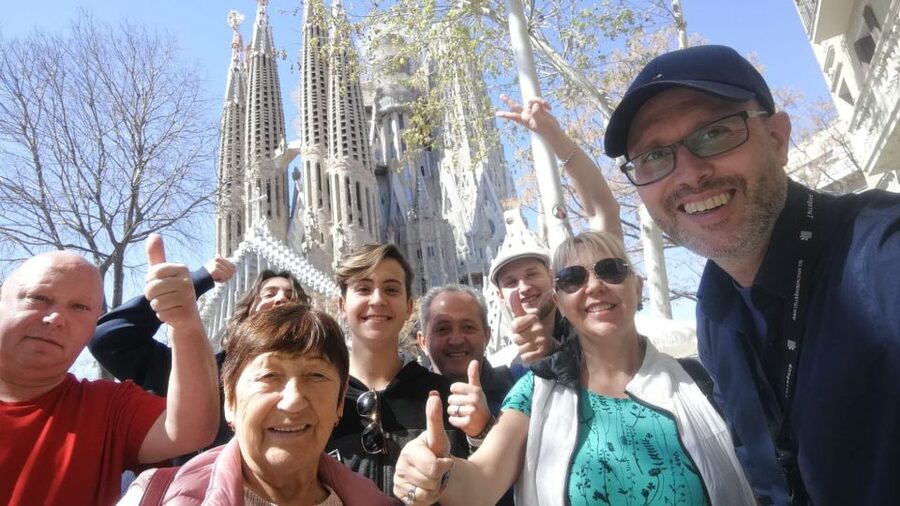
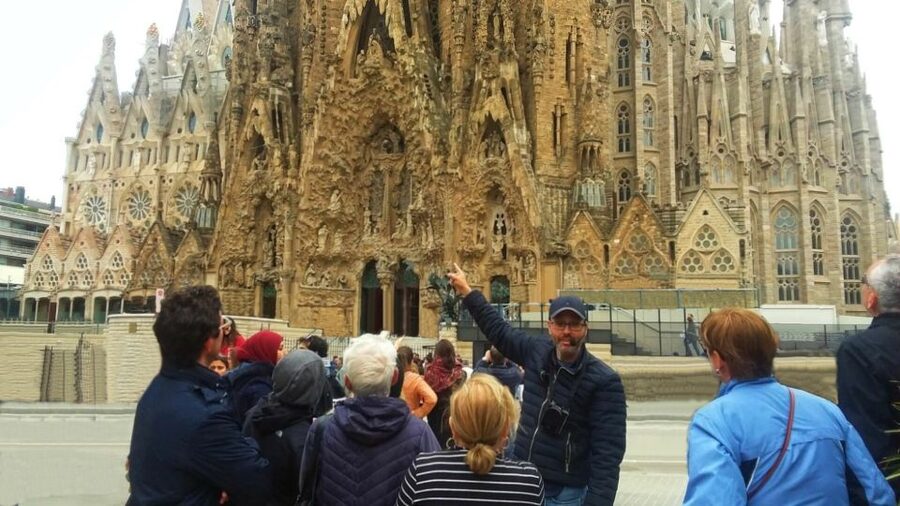
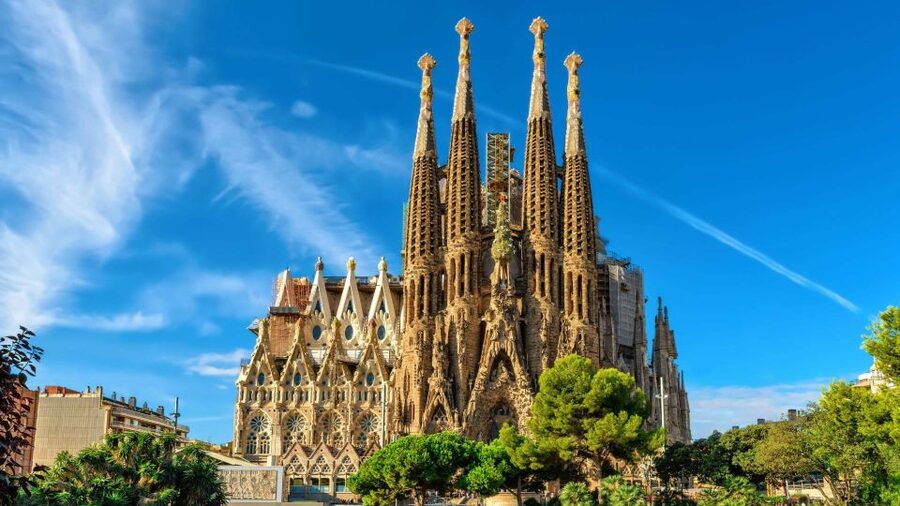
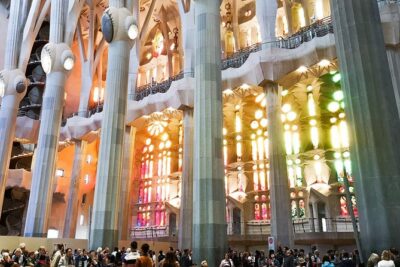
The tour begins at La Sagrada Familia, Gaudí’s monumental basilica and a UNESCO World Heritage Site still under construction after more than a century. Seeing it with a guide helps you notice why it’s so distinctive, not only for its scale but for the details that make it feel alive.
A key part of your visit is the ongoing construction conversation. You’ll hear about the controversies around the project, and specifically what was added later, including the Passion façade designed by Gaudí’s successor, Josep Subirachs. That one story changes how you look at the building, because it reminds you that Sagrada Familia is both a completed vision and a long-running question.
Even if you think you already know the famous photos, standing there and learning how the façades work is a different experience. You’ll leave with a clearer sense of what Gaudí planned versus what later designers interpreted.
Eixample’s Grid, Cerdà’s Plan, and Why the Street Layout Matters
After Sagrada Familia, you move into the Eixample district, Barcelona’s 19th-century expansion area designed as the city grew beyond its medieval walls. This is where you start to understand why Modernisme could flourish.
The Eixample is known for its orderly layout, wide streets, and that characteristic grid feel. But the guide’s real trick is connecting the urban plan to the buildings. You’ll learn about Ildefons Cerdà’s urban planning vision, which aimed to balance architecture, nature, and everyday urban life.
Once you grasp that, the walking route makes more sense. You’re not just hopping from one attraction to another. You’re watching how city planning shaped where and how architects could experiment.
Passeig de Gràcia Highlights: La Pedrera and Casa Batlló
Passeig de Gràcia is the showpiece avenue for Modernisme in central Barcelona, and this is where the tour really pays off for architecture fans. You’ll encounter major works with strong visual identities, and the guide helps you slow down and look at specific elements.
La Pedrera (Casa Milà)
You’ll see La Pedrera, another UNESCO World Heritage Site and Gaudí’s last civil project. The guide’s focus here tends to be on how Gaudí uses form and rhythm, not just decoration. Even if you don’t catch every architectural term, you’ll get the overall idea: it looks sculpted because it is designed to feel like nature.
You can also read our reviews of more private tours in Barcelona



Casa Batlló
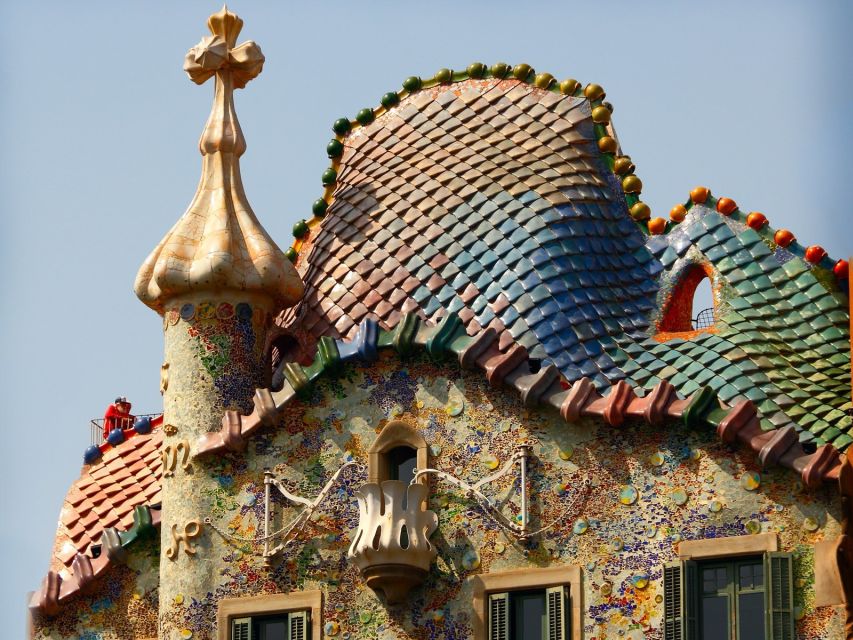
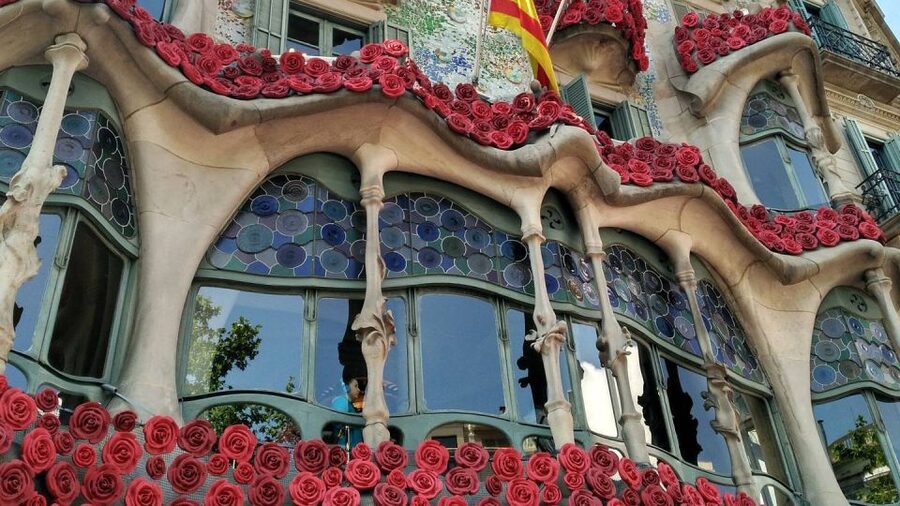
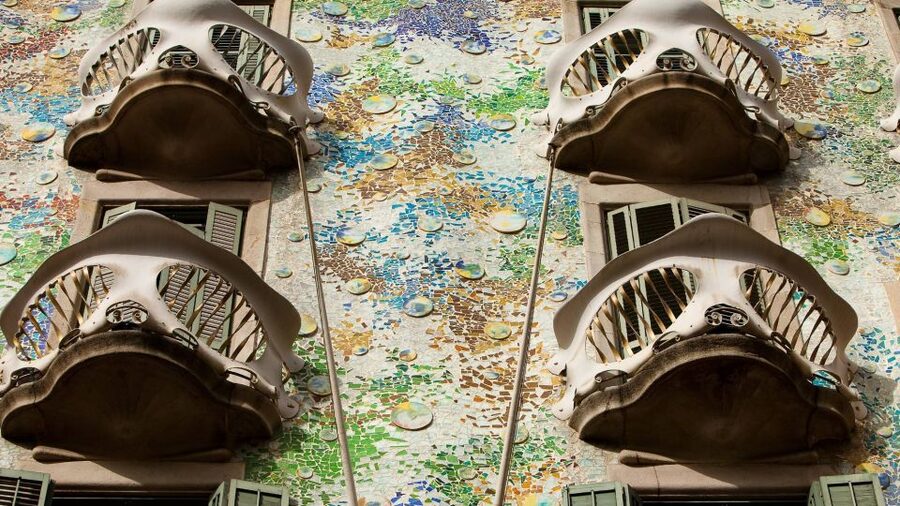
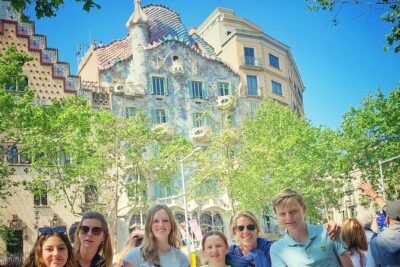
Next is Casa Batlló, a building often compared to the rolling sea because of its undulating forms and colorful façade. The best part is when the guide explains how that “sea” comparison is more than poetic marketing, it’s tied to how the building moves visually as you walk past.
If you’re the kind of person who likes to compare two buildings side by side, this pair works well. La Pedrera feels like a wave turned to stone. Casa Batlló feels like a storybook façade built from motion.
The Architectural Trio and Neighboring Houses on the Same Avenue
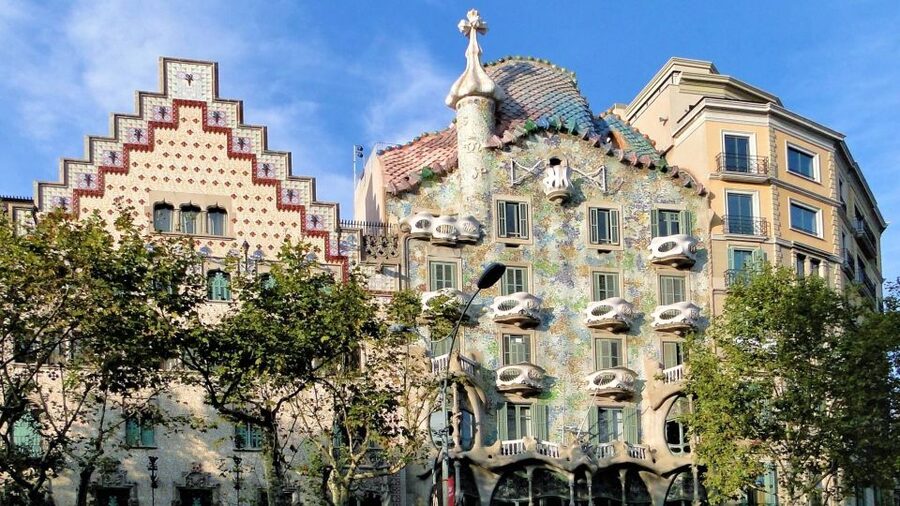
You’ll also spend time around the famous trio on Passeig de Gràcia. The tour doesn’t just tell you that they’re famous. It helps you understand what each building represents, so you can tell the architects’ approaches apart.
Casa Calvet, Casa Lleó Morera, and Casa Amatller
On your route, you’ll see Casa Calvet, an example of Gaudí’s earlier work. You’ll also see Casa Lleó Morera by Lluís Domènech i Montaner, and Casa Amatller by Josep Puig i Cadafalch. The trio link is helpful because it gives you a shortcut memory tool.
When you compare them, it gets easier to notice where one architect leans more toward ornamental detail, and where another leans toward structure and material logic. You can think of these stops as a kind of visual test for what you’re learning during the walk.
Casa Comalat and the Organic Influence
Your tour includes Casa Comalat, described as influenced by Gaudí’s organic shapes. This helps connect the dots between Gaudí and other Modernisme work. You start seeing how ideas travel across the city even when the designers have different signatures.
Palau del Baró de Quadres and More Puig i Cadafalch
Another stop is Palau del Baró de Quadres, a striking example of Modernisme by Josep Puig i Cadafalch. This kind of building is valuable because it keeps the tour from turning into only Gaudí all the time. It gives you a sense of the “family resemblance” across Catalan Modernisme, while still showing individual differences.
Beyond Gaudí: Domènech i Montaner and Puig i Cadafalch’s Contrasts
One reason this walk works well is that it treats Gaudí as the star, not the entire cast. You’ll see buildings credited to both Lluís Domènech i Montaner and Josep Puig i Cadafalch, which adds variety and context.
By the time you reach the later stops, you’re usually better at spotting what you’re seeing. That means Casa Terradas (Casa de les Punxes) and Palau Montaner land differently. You’re not just looking at another façade. You’re reading how Modernisme designers used structure and surface to express identity.
These last stops tend to feel like proof that Modernisme was bigger than one style template. It was a conversation happening across multiple architects, neighborhoods, and ideas about how the city should feel.
How the 3 to 3.5 Hour Route Adds Up
The tour runs about 3 to 3.5 hours, and that timing is long enough to gain clarity, but short enough that you’re not trapped on the street all day.
There’s also a practical rhythm to it. You start with a major anchor at Sagrada Familia, then you transition into neighborhood context in the Eixample. After that, Passeig de Gràcia becomes a concentrated cluster of landmark stops.
One consideration: the buildings can be farther apart than you expect, and you’ll do plenty of walking. You’ll want to pace yourself, especially in warmer months.
Also, pay attention to where the tour ends. Some guides end near Sagrada Familia, so if you’re trying to schedule inside-access, plan your day so you’re not stuck doing an outside viewing twice.
Guides in English or Spanish, and Why Names Matter
This is a private format with professional local guides who speak both English and Spanish. The group stays small, with a maximum of 12 participants, and that size helps questions feel natural instead of rushed.
The guides’ impact shows up in the vibe: they’re not just reciting dates. You’ll get a lot of explanation that connects design choices to the bigger story of Barcelona.
You may get guides such as Stephanie, Isabel, Antonio, André, Roberto, Jordi, Miguel, Olga, Flora, or Daniel. The common thread across them is strong storytelling plus willingness to answer questions, which is exactly what makes architecture stick.
If you like tours where you feel like you’re walking with an informed friend, this style delivers that. It’s especially useful if you’re not sure what you should be looking for yet.
What You Pay for About $21 and When It Feels Like a Bargain
The price listed is $21 per person, for a 3 to 3.5 hour private guided walk covering multiple major buildings and several Modernisme landmarks around Eixample and Passeig de Gràcia.
That price can feel surprisingly low considering how much you’re seeing and how much guide-led context you get. Where value really shows is when you want to understand the patterns across buildings rather than collect individual selfies.
When it might not feel like the best fit: if you’re the kind of visitor who only wants to enter buildings and go inside, a walking-focused route may not satisfy on its own. In that case, pair it with separate timed entries.
Practical Tips Before You Wear Out Your Shoes
Bring comfortable shoes. This is a walking tour, and the stop spacing can add up.
Also, you should know that luggage or large bags are not allowed. If you’re carrying day-bag essentials, you’ll be fine, but leave bulky items behind if you can.
Finally, the meeting point can vary depending on the option booked, so check your specific confirmation details. A quick look at where to meet saves stress later.
Who Should Book This Tour
This tour is a great match if you want:
- A clear introduction to Gaudí and Catalan Modernisme without needing an architecture degree
- A route that balances famous sights with additional buildings you might not find on your own
- A small-group feel where it’s easier to ask questions
- A walking plan that focuses on what to notice, not only what’s famous
It’s also a smart first-day or early-middle-day activity in Barcelona, especially if you want to understand the Eixample neighborhood framework before you explore on your own.
Should You Book This Private Modernism and Gaudí Tour?
Yes, if you want Barcelona to make sense through architecture. The guide-led approach gives you context for Sagrada Familia, the urban logic of Eixample, and the concentrated Modernisme scene on Passeig de Gràcia.
Book it when you care about learning, not just sightseeing. The $21 price point for a 3 to 3.5 hour guided walk is strong value, especially with a small max group size and guides who seem genuinely engaged.
Skip or consider alternatives if you need lots of indoor time at specific buildings. This experience is built around walking and seeing the architecture up close from the street.
If you’re ready to trade random wandering for a guided path that teaches you how to look, this is one of the most practical ways to get your bearings in Barcelona.
FAQ
How long is the Private Barcelona Modernism and Gaudí Walking Tour?
It lasts about 3 to 3.5 hours.
What does the tour cost?
The price is listed as $21 per person.
How big is the group?
It’s a small group tour with a maximum of 12 participants, and private group options are available.
What languages are the guides?
Guides speak English and Spanish.
Where does the tour meet?
The meeting point may vary depending on the option booked.
What should I bring?
Wear comfortable shoes.
Is luggage allowed?
No, luggage or large bags are not allowed.
Are gratuities included?
Gratuities are optional.
Can children join the tour for free?
Children up to 2 years old can join free of charge.
More Walking Tours in Barcelona


More Tours in Barcelona


More Tour Reviews in Barcelona
Not for you? Here's more nearby things to do in Barcelona we have reviewed








More Barcelona Gaudi Tours worth opening.
 ★ 4.5Park Güell and Gaudí House Museum Entry TicketFrom $336,326 reviews
 ★ 4.5Sagrada Familia & Gaudi Tour Private or Small Group with TicketsFrom $901,188 reviews
 ★ 5.0Complete Gaudi Tour: Casa Batllo, Park Guell & Sagrada FamiliaFrom $1621,152 reviews
 ★ 4.1Park Güell: Guided Tour with Optional Gaudí Experience EntryFrom $35832 reviews
 ★ 5.0Barcelona e-Bike Tour: Gaudí & Old Town Small GroupFrom $38769 reviews
 ★ 5.0Ramblas, Old Town, Gothic and Gaudi Architecture Walking TourFrom $35723 reviews
 ★ 4.5Gaudi´s Casa Vicens Skip the Line Ticket with AudioguideFrom $26685 reviews
 ★ 4.8Discover Gaudí, Sagrada Familia, and Park GüellFrom $158651 reviews
Continue by place or experience