
REVIEW · BARCELONA CITY TOURS
Picasso’s Barcelona on Electric Bike Small Group Tour
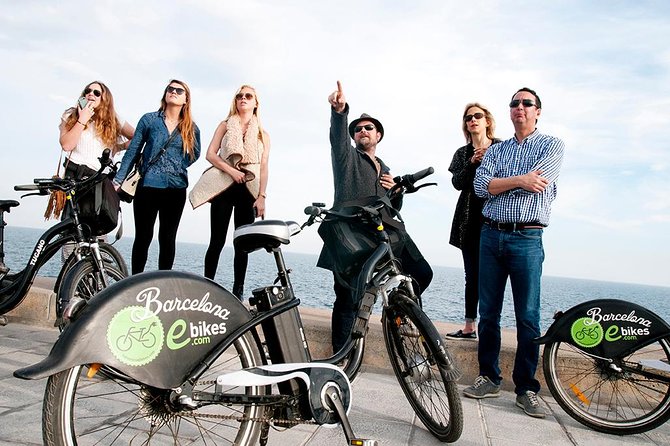
Barcelona moves fast, when you ride. This electric bike route strings together the old town, the Born neighborhood, and the waterfront in one tidy 2.5-hour loop with a guide talking through it. You get helmets, water, and a wireless headset so you can actually hear the story while you glide between sights.
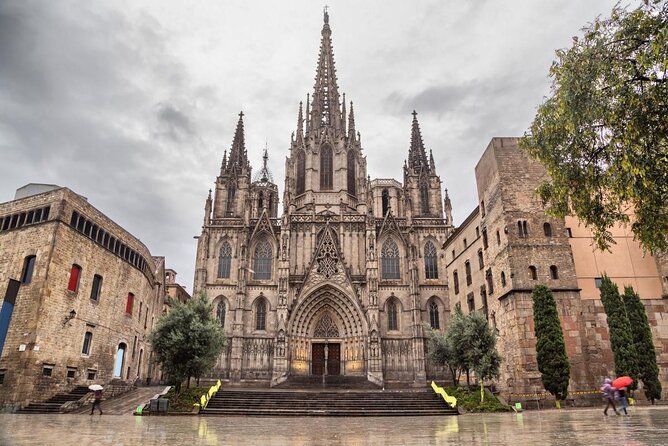
I love how the ride gives you a big-picture overview without turning the whole day into a long walk. I also like the mix of places that feel distinctly Barcelona, from Cathedral Square to the Sea Cathedral at Santa Maria del Mar, plus a stop in the park tied to Picasso’s family life.
One possible drawback: the tour is short, so it is not a deep, Picasso-only art lecture. If your group ends up with a slower pack, the pace can feel a bit crowded, and English delivery can vary from guide to guide.
Key highlights you will actually feel on the ride
- Electric bikes that make distance feel easy, even if you are not a confident cyclist
- A guided route that connects neighborhoods, not just postcard stops
- Built-in comfort tools like helmets, water, and a wireless headset
- Old town meets seafront, including Born’s medieval lanes and Port Olímpic
- Park stop tied to Picasso, at Parc de la Ciutadella, where his family once spent time
- Small group size up to 10, so you are not lost in a crowd
Why this Barcelona e-bike tour makes sense for your first days
Barcelona can be a lot on foot. This tour is designed to get you moving through Ciutat Vella and beyond without wearing you out before dinner.
The big advantage is time. A 2 hours 30 minutes ride is long enough to connect several major districts, but short enough that you can still build your day around it. You start at 4:00 pm, which is often a sweet spot for light and energy in the city, especially in summer.
And yes, the tour name says Picasso. The route includes Parc de la Ciutadella, where Picasso and his family used to enjoy time. But the day is really about Barcelona itself, with plenty of neighborhood story, architecture, and how modern Barcelona reshaped the waterfront.
You can also read our reviews of more cycling tours in Barcelona
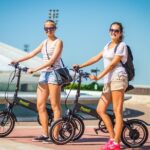
Meeting at Plaça de Sant Agustí Vell, then getting oriented quickly
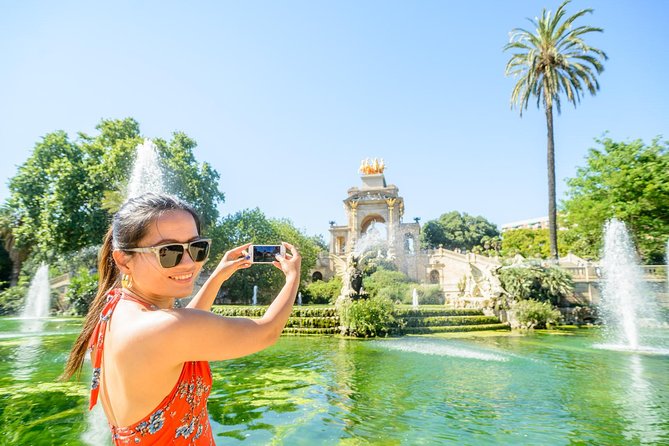
You meet at Plaça de Sant Agustí Vell, 16, in Ciutat Vella. The tour ends back at the meeting point, so you are not left guessing where you will land when you are done.
Because the start is in a busy old-town area, I suggest arriving a bit early and using maps rather than relying on landmarks you might recognize from photos. One common issue is that the meeting location can feel tucked away, especially if you are coming from El Born or the Gothic Quarter side.
Once you arrive, there is a short briefing and time to get used to the bikes. That matters more than it sounds. A few minutes of testing at the beginning helps you ride confidently through tighter streets and pedestrian-heavy zones later on.
Stop-by-stop: Cathedral Square, Barcino roots, and the Born under the market
This tour is structured as a sequence of short, meaningful segments. Each stop is quick, but the pacing is meant to keep you looking up, not down at your bike.
Barcelona eBikes, bike setup, and your first taste of the route
The first stop is the shop area where you meet the guide. You get a briefing, then you see the bikes and you start riding.
This is where you learn how the motor feels. Even if you are an experienced cyclist, the assist changes your speed and how you handle stop-and-go moments. Taking a minute here to get comfortable pays off later, especially near squares and busy crossings.
Barcelona Cathedral area, practice space in a major square
Next is the Cathedral of Barcelona area, right in front of the cathedral in a large square. The guide explains how the bikes work, and you also get time to test them.
Why this helps you: a big square is a forgiving place to feel the bike response. You also get your bearings fast because you see a central old-town anchor before you move into smaller streets.
More Barcelona tours and experiences for the shortlist

The old Roman heart, Barcino, in the Born area
After that, you move into the part of the city tied to Barcelona’s earliest roots. The focus here is on the old Roman area called Barcino, and the Born neighborhood connection to that deeper layer of the city.
This stop is more about context than a single monument. You will start to understand why the Born feels different from the wide-open cathedral zone. It is the same city, but the streets and history are layered differently.
Santa Caterina Market, local life with a standout roof
You also pass through the Santa Caterina Market area. The market is described as having a colorful roof and an organic structure, which gives it a visual signature that you can spot even from across the street.
Market stops are where you get the most “real Barcelona” feeling. Even if you only glance in, you pick up local rhythm: what people buy, what’s seasonal, and how daily life moves next to sightseeing.
El Born Centre de Cultura i Memoria, the history under the market
The route then includes El Born Centre de Cultura i Memoria, a former market space with a roof from earlier days and now repurposed into a culture and memory center. The highlight here is the older part of the city found beneath the market area.
What you can expect: this is the tour’s “look down and think” moment. The guide helps connect what you see above ground with what is preserved underneath.
One practical note: the tour gives you time at each stop, but it is not long museum browsing. If you want to read every sign slowly, plan to revisit afterward.
Parc de la Ciutadella and the Arc de Triomf views you will remember
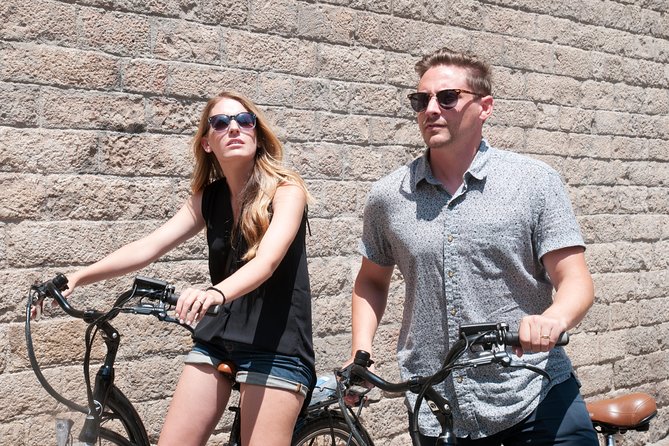
After the Born, the ride shifts toward the kind of Barcelona that looks like a postcard, but still feels lived-in.
Riding into Parc de la Ciutadella, and Picasso’s family tie
At Parc de la Ciutadella, you get a stop focused on the Universal Exposition of 1888. Later, the park becomes linked to Picasso and his family enjoying time there, which is where the tour name earns its badge.
This segment is valuable because it changes the tempo. You go from medieval lanes and dense streets to wider paths and park space, which makes the electric bike feel extra fun. It also helps you understand how Barcelona blends grand public spaces with gritty neighborhood detail.
Arc de Triomf glimpses while you ride
While passing through a beautiful park, you catch sight of the majestic Arc de Triomf. You do not need a long walk for this one because you are seeing it as part of the ride.
I like these “glimpse” stops because they keep your attention moving. You get a major structure in your visual memory without turning the tour into a photo contest.
Port Olímpic and what the 1992 Olympics changed
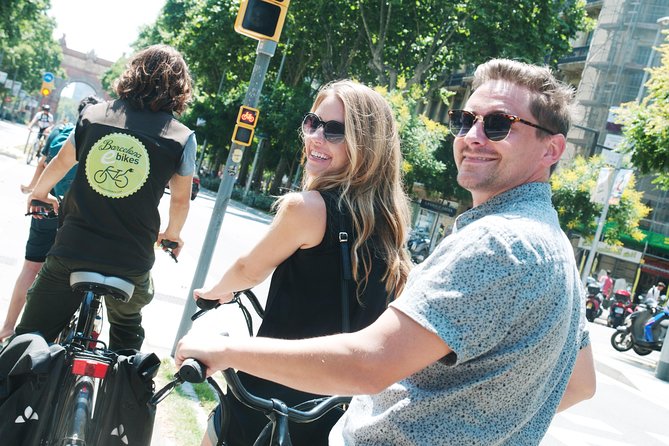
The route then heads to Port Olímpic, the sea front area transformed for the Summer Olympic Games of 1992. The guide explains what those games meant for the city.
This is one of the spots that can surprise people. If you came expecting a strict art tour, you might find the emphasis leans more toward city development and major events. That shift showed up in a couple of experiences where the Olympic and waterfront story felt stronger than the art expectations.
Still, it is a useful stop. The waterfront is where Barcelona shows how it modernized. Even from street level, the setting helps you understand why the city now has the kind of promenade and public access that visitors can enjoy.
The local fishermen neighborhood segment
There is also a ride through a very local neighborhood traditionally home to fishermen and women of Barcelona. This is the counterpoint to Olympic spectacle, and it gives the sea-front section more texture.
If you like contrast, you will enjoy this part. You see how the city reworked its edges, while other traditions stayed rooted.
Santa Maria del Mar, the Sea Cathedral, and the maze of craft lanes
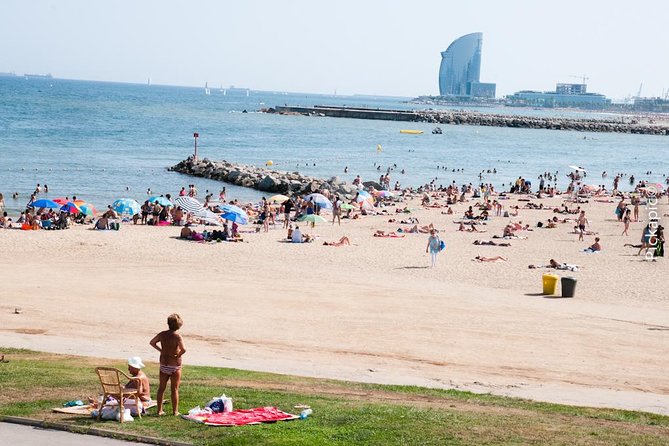
The final major sight stop is Basilica de Santa Maria del Mar, known locally as La Catedral del Mar. The guide frames it as the Gothic basilica built by people from the Born neighborhood to protect them from the sea.
This explanation matters because it turns a church into a story of community. You stop in a place that reflects civic pride, and the guide connects that to the neighborhood’s identity.
Getting a feel for medieval workshop streets
After the basilica, you ride into a maze of little streets tied to medieval craftsmen and craftswomen. The tour describes an essence still present today, including hand-made clothes and jewelry you may spot as you pass.
This is one of the more “wander later” moments. The bike gets you through quickly and highlights the feel. Then you can come back on your own time to look closely, shop if you want, and take a slower look at what still exists from that workshop tradition.
A note on the ride experience near small lanes
Small streets mean more people crossing, tighter spacing, and frequent slow moments. The headset helps a lot, but you still need to ride with focus.
One real-world consideration: if your group includes kids or slower riders, you may spend more time adjusting and watching traffic. That can reduce how relaxed the ride feels, even with e-assist.
Price and value: what $50.69 buys you in real time
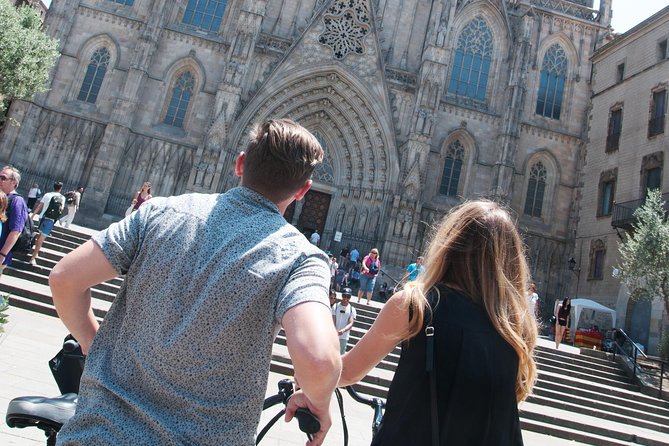
At $50.69 per person, this is not a “grab a quick photo” activity. You are paying for the combination of planning, bike support, and guided context across multiple districts.
Here is the value math that made this tour work for many people:
- You cover more ground than walking, because electric assist reduces fatigue
- You get a pro guide plus a wireless headset, which keeps the experience informative without you having to guess or read
- You get provided gear like helmet and water, which means less planning on your end
The biggest question is what you want from your Barcelona time. If you want a big-picture loop and to understand how neighborhoods connect, the price starts to feel fair fast. If you want a highly specialized art focus on Picasso, you may wish you spent that money on a more targeted museum day instead.
Also, this tour is typically booked about 13 days in advance on average. That is not a sign to panic, but it does suggest popularity. If you are traveling at a peak time, it is smart to lock in your slot sooner rather than later.
Who this e-bike tour suits best
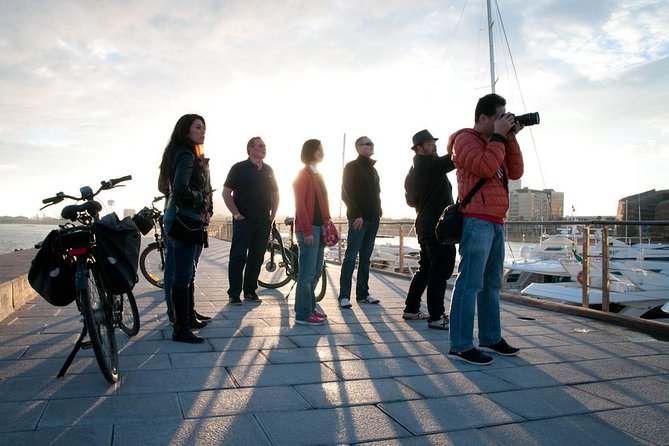
This tour fits best if you want:
- A first-time overview of Barcelona’s center plus a sea-front segment
- A guided ride where you can hear explanations through a wireless headset
- An easy way to move between major sights without spending the whole afternoon walking
It can also work well for people who are trying to balance sightseeing with energy. Many Barcelona days get exhausting fast, and e-bikes help you keep your attention on the streets, not your legs.
If your idea of a perfect tour is a long, slow, art-first museum day, you may find the stop durations too short and the variety of topics a bit broad. But if you like streets, squares, and city connections, this is a strong match.
Should you book this Picasso’s Barcelona e-bike tour?
Book it if you want an efficient, fun ride that links old town highlights, Born streets, Parc de la Ciutadella, and Port Olímpic into one coherent Barcelona story. The electric bikes, helmet, water, and headset package makes it feel built for tourists who want more from their time.
Skip it or consider another option if you are chasing a strict, Picasso-only art itinerary, or if you dislike group riding where kids or slower cyclists might affect your pace. In that case, you might prefer a self-guided bike rental and spend longer on the specific places that matter most to you.
FAQ
How long is the Picasso’s Barcelona electric bike small group tour?
The tour lasts about 2 hours 30 minutes.
What is the group size limit?
The tour has a maximum of 10 travelers.
Is the tour offered in English?
Yes, the tour is offered in English.
What is included in the tour price?
The included items are bottled water, a professional guide, a helmet, the electric bike tour, use of the bicycle, and a wireless headset.
Where do we meet and when does it start?
You meet at Plaça de Sant Agustí Vell, 16, Ciutat Vella, 08003 Barcelona, Spain, and the start time is 4:00 pm. The activity ends back at the meeting point.
Can I cancel for a full refund?
Yes. You can cancel for a full refund if you cancel at least 24 hours before the experience’s start time. Free cancellation is available up to 24 hours in advance.
More Cycling Tours in Barcelona
More Tours in Barcelona


More Tour Reviews in Barcelona
Not for you? Here's more nearby things to do in Barcelona we have reviewed





More Barcelona City Tours worth opening.
 ★ 4.4Park Güell Admission TicketFrom $2576,534 reviews
 ★ 4.7Casa Batlló Entry with Self-Audioguide TourFrom $3425,359 reviews
 ★ 4.424 or 48-Hour Hop-On Hop-Off Bus TourFrom $3920,872 reviews
 ★ 4.7Park Guell Guided Tour with Skip The Line EntryFrom $3117,563 reviews
 ★ 5.0Barcelona in 1 Day: Sagrada Familia, Park Guell,Old Town & PickupFrom $12013,541 reviews
 ★ 4.3Barcelona Aquarium: Entry TicketFrom $3113,335 reviews
 ★ 4.8Sagrada Familia Skip-the-Line Entry Ticket & TourFrom $6712,789 reviews
 ★ 4.4FC Barcelona Museum “Barça Immersive Tour” TicketFrom $3510,944 reviews
Continue by place or experience