
REVIEW · TICKETS
Món Sant Benet Monastery Tickets
A monastery visit with a soundtrack. I love the audioguided entrance that helps you move through the complex, and I love the Catalan history museum that turns architecture into a story you can actually follow.
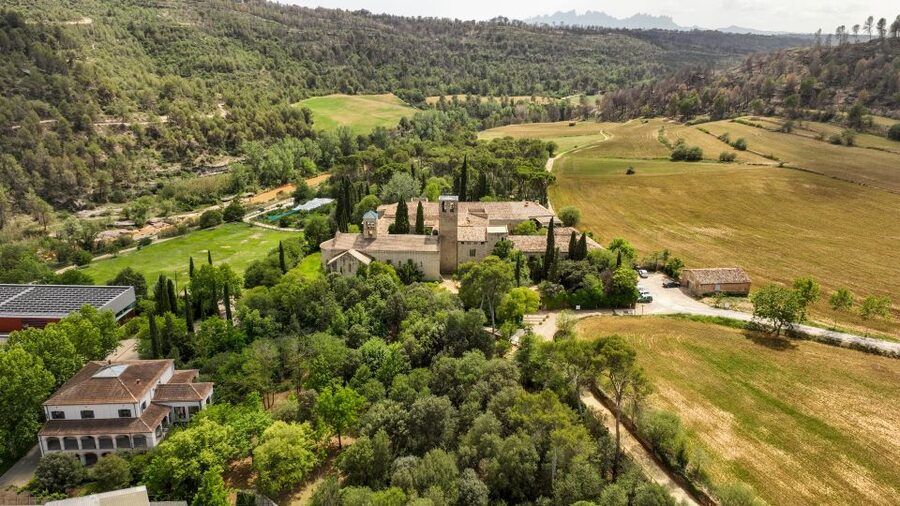
Món Sant Benet is in Sant Fruitós de Bages, about 68 km from Barcelona, and it’s one of those places where medieval stone meets a modern way of telling you what life was like.
One thing to consider: the visit is set for about 1.5 hours, so if you like to read everything slowly and linger in every room, you may want to build in extra time for the grounds and dining.
Key points to know before you go
- Audioguided entrance is included, with Catalan, English, Spanish, and French
- You see the church, cloister, wine cellar, and cells in the Montserrat gallery
- The museum uses an emotive approach to explain Catalonia through the last millennium
- Plan for fine dining on site (extra cost), including Michelin-starred L’Ó
- The whole experience runs about 1.5 hours, so it is structured, not a slow wander
Món Sant Benet monastery tickets: what you’re paying for at about $18
At roughly $18 per person, Món Sant Benet feels like good value if you want more than a quick look at pretty buildings. You are paying for an audioguided entrance plus access to a well-organized visit through a medieval complex that has been converted into a museum.
The price makes sense because the experience is not only “see the church.” It’s “see the church, then understand why that mattered in Catalonia.” The museum is designed to connect medieval art and daily monastic life to bigger changes in society across centuries. In practice, that means you leave with more context than you would from simply walking around a historic site.
You also have a real option to extend the day. The complex includes three restaurants, and one of them is L’Ó, which is Michelin-starred. Meals are own expense, but the fact that you can roll straight from museum to dining is part of the overall value play here. If you like pairing culture with a proper sit-down meal, this is an easy win.
More Barcelona tours and experiences for the shortlist
Getting there from Barcelona and how the visit timing really works
Món Sant Benet is in the Catalan town of Sant Fruitós de Bages, about 68 km (42 miles) from Barcelona. That distance is close enough for a day trip, but far enough that it feels like a true detour from city sightseeing.
The timed experience is about 1.5 hours. That matters because the site is structured. You are guided through the main parts in a way that keeps you moving, and the audio support is built for that flow. If you show up ready to follow along and take in the main rooms, you will get a satisfying arc of architecture plus Catalonia’s history.
The meeting point is at La Fabrica, reception of Món St Benet Monastery, on Camí de Sant Benet, Sant Fruitós de Bages. The visit ends back at the meeting point, so you are not left figuring out logistics while tired.
Audioguided entrance: how the monastery museum keeps you oriented
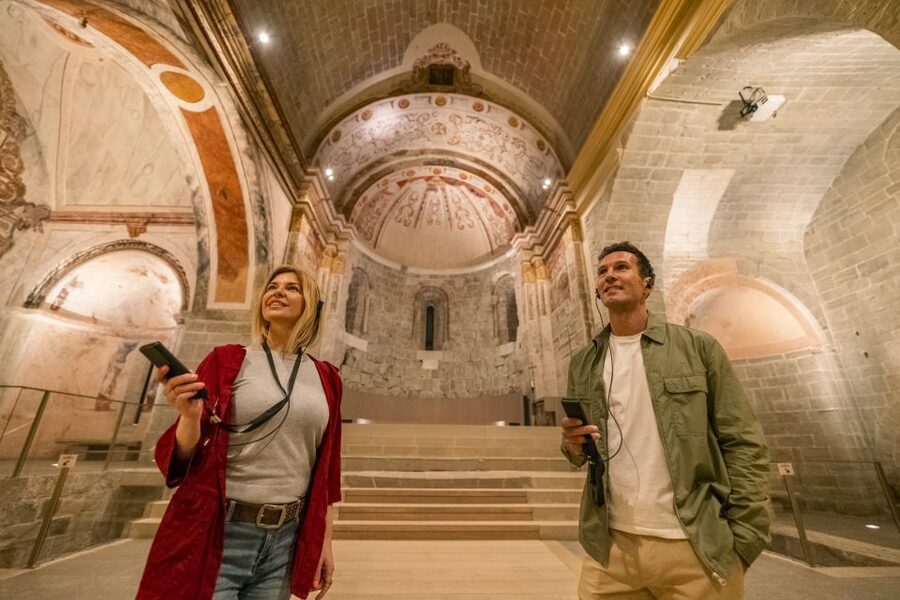
The biggest quality-of-life feature here is the audioguide included with your entrance. It is available in Catalan, English, Spanish, and French, which is a big deal if you want to understand what you are looking at without relying on a last-minute guide or guesswork.
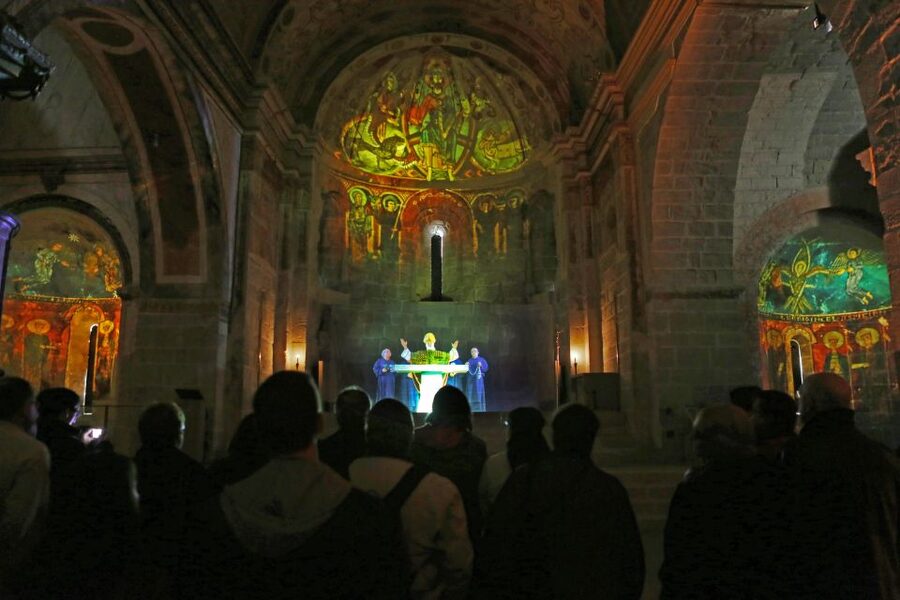
The audio format matters because the museum experience is not just static displays. You are set up to notice how the complex worked as a lived space long ago. Expect the kind of presentation where voices, everyday noises, and images from the past appear between the walls of the 1,000-year-old buildings. That “sound plus story” approach helps the monastery stop feeling like a cold monument.
I also appreciate that this style of museum tends to work well even if you are not a specialist in Romanesque art. One of the strongest themes from people who enjoy it most is how teaching-friendly the experience feels, especially for Romanesque Catalan art. If you have ever felt lost in museums that throw dates at you, you’ll probably like this one.
Church and cloister: where the medieval building explains itself
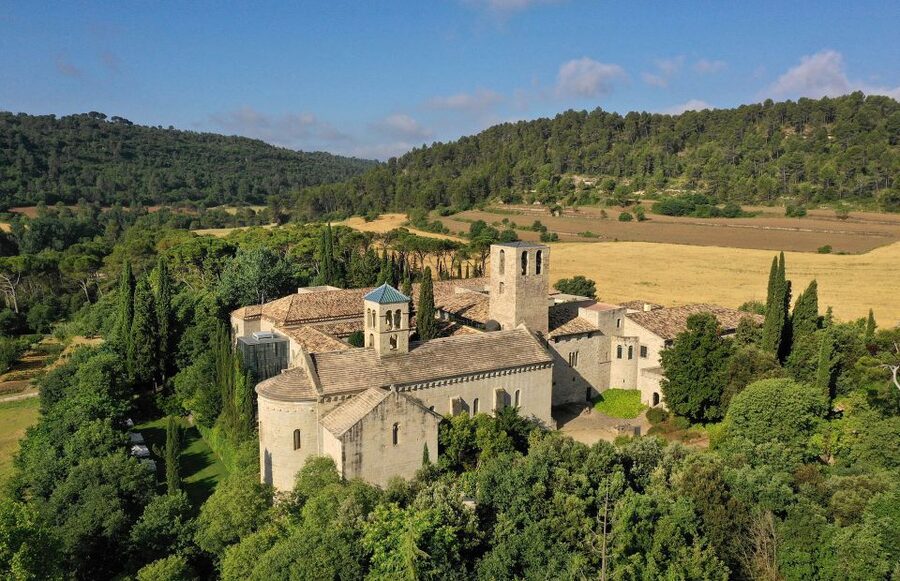
You cannot really understand Món Sant Benet without spending time in the core religious spaces, especially the church and the cloister.
In the church, focus less on trying to memorize details, and more on the overall layout and mood. The audio guidance helps you connect the physical space to monastic life. You are looking at a setting built for routine, devotion, and community rhythms. Even if you only learn a few key points well, the church gives you the “why” behind the monastery’s design.
Then you move to the cloister, and this is where your brain tends to start clicking. Cloisters are meant to be lived-in courtyards of calm movement, and the museum presentation helps you see how the architecture supports daily flow. If you enjoy quiet spaces where a building’s purpose is obvious, the cloister is a highlight.
A practical tip: treat these as your anchor stops. If you rush through them, the rest of the visit can feel like extra information. If you slow down just a bit here, the museum story makes more sense.
Wine cellar and monastery cells: history you can touch with your eyes
Two parts of the complex do a great job of expanding the monastery beyond religion. First is the wine cellar, then the cells in the Montserrat gallery.
The wine cellar is a reminder that monasteries were also about work and production. Even if you do not care about winemaking, you get the sense that the monastery was tied to local agriculture and long-term planning. In a museum focused on Catalan history, that practical side matters. It shows social evolution through everyday systems, not just paintings and dates.
Next comes the cells in the Montserrat gallery. This is where the experience gets personal, in a controlled museum way. Cells are small by nature, and looking at them helps you understand how routine and simplicity shaped daily life. If you like Romanesque-era spaces that still feel human-scale, this section tends to land well.
If you are the type who likes to learn by contrast, pay attention to what changes between areas: church and cloister feel public and communal, while cells feel private and disciplined. That shift helps you understand why the monastery did not only function as a building, it functioned as a way of life.


The Catalan history museum: how the last millennium is turned into a visit
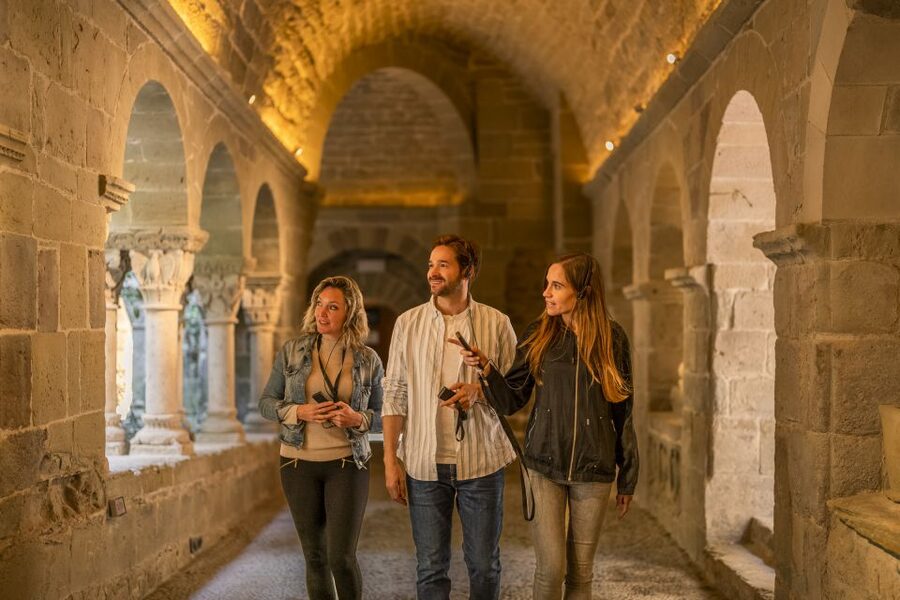
Món Sant Benet’s museum portion is built around a big claim: it takes you through key points in Catalan history and explores the social evolution of Catalonia across the last millennium.
That scope is usually a recipe for information overload. Here, it is handled better because you are not only reading panels in a single room. You are moving through the complex while the audio guides you through themes that match what you see. That is why people who love the experience tend to describe it as didactic. It teaches without turning the visit into a lecture.
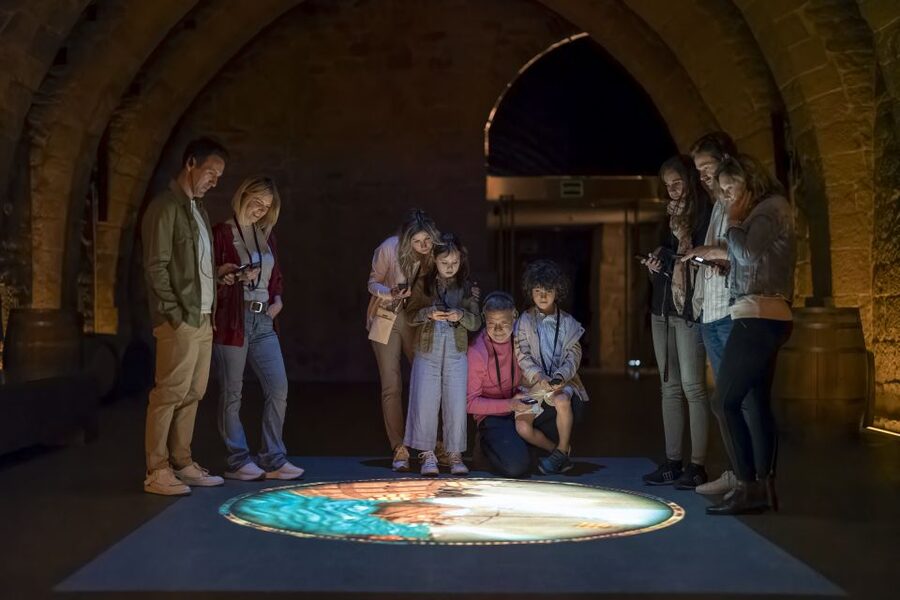
One of the most compelling parts is the emotional storytelling. The concept of voices, everyday noises, and past images appearing in the 1,000-year-old walls makes the museum feel like a bridge rather than a timeline stuck behind glass. You get the sense that history is not just events, it is habits, work, and belief systems shifting over time.
If you want a museum day that feels grounded and human, rather than purely academic, this is a smart pick.
Fine dining at Món Sant Benet, including Michelin-starred L’Ó
The monastery visit does not end at the last room. You can stay for food, and that is a real part of the experience plan.
There are three restaurants on site. One of them is L’Ó, which is Michelin-starred. The rest are also part of the on-site dining lineup, but the key point for you is that you can go from museum to meal without organizing transport or timing a second reservation across town.
Budget note: dining here is an extra cost. If you are traveling with a tight schedule or want to keep spending under control, you can treat the meal as optional, or pick a lighter plan off site. But if you like making the most of special places, this is a convenient way to turn the ticket purchase into a full half-day.
I think the best use of dining time is simple: after the museum, you are ready to sit. You have already absorbed the architecture and the story. Food becomes the decompression period before heading back.
Who should buy Món Sant Benet tickets, and who might not love it
This experience suits you best if you want:
- A structured museum visit with an audioguide, not a self-made route
- Real focus on a medieval monastery complex, including church, cloister, and daily-life spaces
- A story connected to Catalan history rather than generic background facts
- A chance to pair culture with optional fine dining on the same site
It might feel less perfect if:
- You prefer long, slow wandering where you control pace minute by minute
- You hate structured time limits and want to spend half your day in one room
- You only want a quick photo stop. This is not that kind of experience.
One more practical point: the audio is central. If you are someone who routinely ignores audio guides and reads everything only, your experience might not match the way the museum is designed. If you do listen, you will get more out of the architecture.
Should you book Món Sant Benet tickets?
Yes, you should book if your idea of a great day trip includes a medieval setting plus a museum that actually teaches. For about $18, you get an audioguided entrance, access to the principal monastery spaces, and a guided connection to Catalonia’s past that goes beyond surface descriptions.
Book it especially if you:
- Want a museum with a strong teaching approach, including Catalan Romanesque art themes
- Like history told through buildings, not just documents
- Plan to stay for a meal, maybe even at L’Ó if your budget allows
Skip it if you only want a fast sightseeing stop, or if you cannot stand a visit that is intentionally timed to about 1.5 hours. In that case, you might prefer a less structured half-day.
FAQ
What is the price for Món Sant Benet Monastery tickets?
The price is listed as $18 per person.
How long is the visit?
The duration is about 1.5 hours. Starting times depend on availability.
Where does the tour start?
The meeting point is La Fabrica, reception of Món St Benet Monastery, at Camí de Sant Benet, Sant Fruitós de Bages.
Is the audioguide included?
Yes. An audioguided entrance to Món Sant Benet is included.
What languages is the audio guide available in?
The audio guide is available in Catalan, English, Spanish, and French.
What areas of the monastery can you see?
The principal features listed include the church, cloister, wine cellar, and cells in the Montserrat gallery.
Are there restaurants on site after the visit?
Yes. There are 3 restaurants on site, and one listed is the Michelin-starred L’Ó restaurant. Dining is own expense.
Is it wheelchair accessible?
Yes. The activity is listed as wheelchair accessible.
Is free cancellation available?
Yes. You can cancel up to 24 hours in advance for a full refund.
How far is Món Sant Benet from Barcelona?
It is about 42 miles (68 kilometers) from Barcelona.
More Tickets in Barcelona

More Tour Reviews in Barcelona
Not for you? Here's more nearby things to do in Barcelona we have reviewed








More Tickets worth opening.
 ★ 4.4Park Güell Admission TicketFrom $2576,534 reviews
 ★ 4.3Barcelona Aquarium: Entry TicketFrom $3113,335 reviews
 ★ 4.8Sagrada Familia Skip-the-Line Entry Ticket & TourFrom $6712,789 reviews
 ★ 4.4FC Barcelona Museum “Barça Immersive Tour” TicketFrom $3510,944 reviews
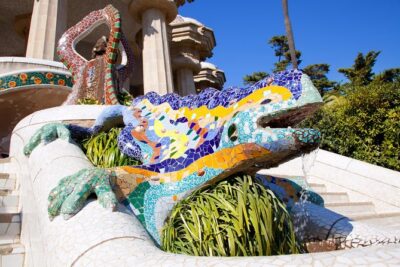 ★ 4.5Park Guell Guided Tour with Skip the Line TicketFrom $386,996 reviews
 ★ 5.0Park Guell and Sagrada Familia Tour with Skip the Line TicketsFrom $1196,384 reviews
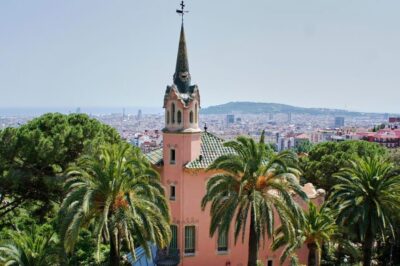 ★ 4.5Park Güell and Gaudí House Museum Entry TicketFrom $336,326 reviews
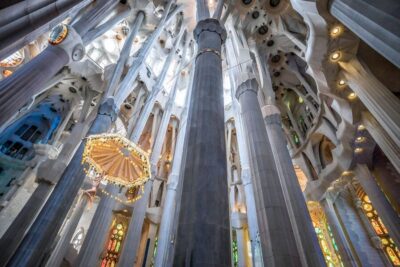 ★ 4.7Sagrada Família Skip the Line Tour & Entry TicketFrom $633,528 reviews