
REVIEW · BARCELONA CITY TOURS
Luca’s Hidden Old Barcelona: the Gothic and El Born Tour
Old Barcelona tells its story at street level.
This 2-hour 15-minute walk through the Gothic Quarter and El Born is built around real places, not postcard stops, and it ties stone, politics, and everyday life into one easy route. Gothic facades, MUHBA archaeology, and a few quieter corners of the old city make it feel like Barcelona has chapters you can actually read.
I love the tight small-group setup, with a guide who clearly lives for the details, plus the way Luca keeps the story moving city block to city block. I also like the practical value for the price, since multiple stops are free to access and the tour style helps you notice things you’d otherwise speed past.
One thing to plan for: a good chunk is outdoor walking, and summer sun can be intense. If your English is only average or you get tired in heat, you may want to pace yourself and ask for pauses, since the tour packs a lot of information into a short time.
Key highlights worth knowing before you go
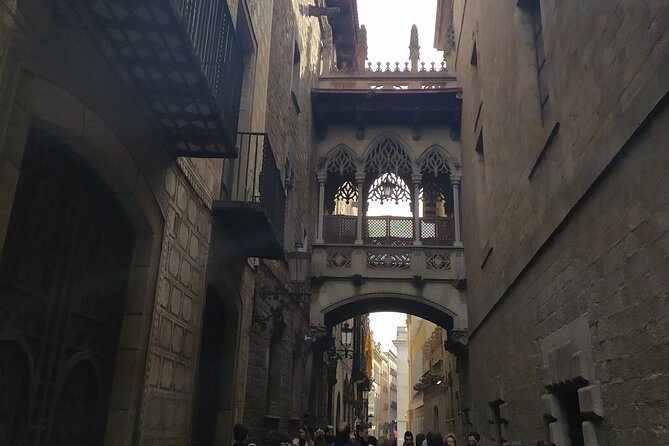
- A story-first route that links the government square, Roman remains, and medieval neighborhoods into one timeline
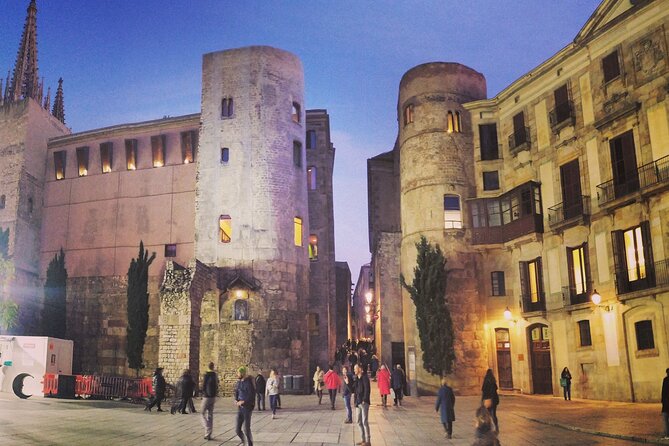
- MUHBA stops without the headache: four columns from the Temple of Augustus and the El Call area are built into the walk
- Gaudi’s favorite church, plus civil war context at Esglesia de Sant Felip Neri, right where the old city feels very close
- Santa Maria del Mar as the emotional anchor of El Born, not just another church photo stop
- Politics explained through place at El Fossar de les Moreres, where the fight between Madrid and Barcelona becomes tangible
Entering Old Barcelona from Plaça de Sant Jaume
If you want a fast way to understand Barcelona, start in the place where power gathers. The tour begins at Pl. de Sant Jaume 3 in Ciutat Vella, in the political and social center that has mattered for centuries.
You’ll get oriented right away. This isn’t a “look up at the skyline” tour. It’s about what the streets were built to do, who they belonged to, and how the city’s old institutions shaped the neighborhoods you’ll walk through next.
A big part of the appeal is pacing. With a maximum of 15 people, you can hear the guide and still move like a small group. And because it’s on foot, you’ll naturally slow down where the streets twist, instead of seeing the Gothic Quarter like a maze you’re trying to escape.
You can also read our reviews of more tours and experiences in Barcelona.
Pl. de Sant Jaume to MUHBA Temple d’August: from power to Rome
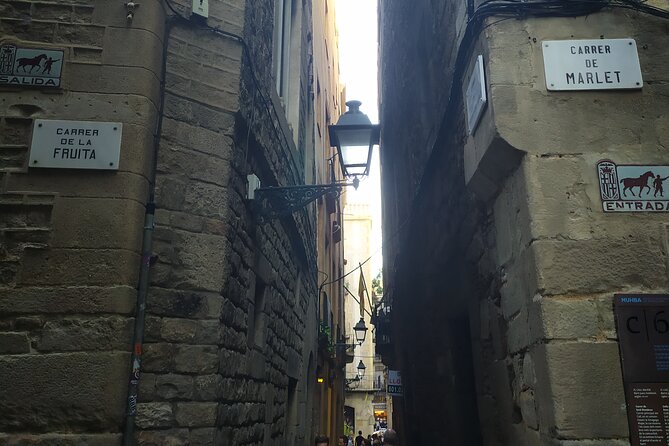
The first stop is Placa de Sant Jaume, a central square tied to Barcelona’s regional government and the city hall area. Even if you only glance at it from street level, you get the point quickly: this part of town was designed for decision-making, not casual wandering.
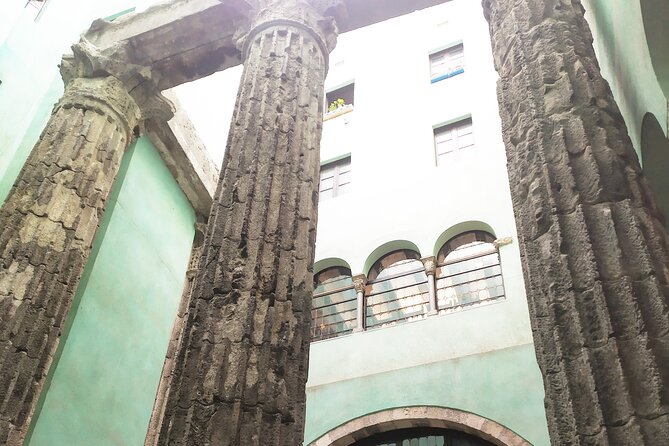
Then you shift from civic politics to ancient leftovers at MUHBA Temple d’August. The highlight here is the Roman story told through objects you can see up close, including four columns connected to the huge Temple of Augustus that once stood in the area. It’s a rare moment when the city’s deep past feels physical, not theoretical.
This pairing, government square then Roman remains, is why the tour works. It shows you how Barcelona’s identity kept layering over itself. You’re not just collecting monuments. You’re building a timeline in your head.
The Gothic Cathedral stop: outside views and quick context
From there, you’ll walk to the Catedral de Barcelona area and explore the cathedral’s exterior. This is the kind of stop that helps you separate “what’s there” from “what happened there.”
The key value is context. You’ll get explanations for Gothic features you might not recognize on your own. And you’ll learn the difference between authentic medieval design and later ideas that mimic the look, which can be surprisingly helpful when you start comparing facades across the quarter.
Since the cathedral entry isn’t part of the plan, you’re not losing time waiting at ticket points. You get the visual impact and the historical framing without turning the walk into a logistics game.
A signature moment in the Gothic Quarter
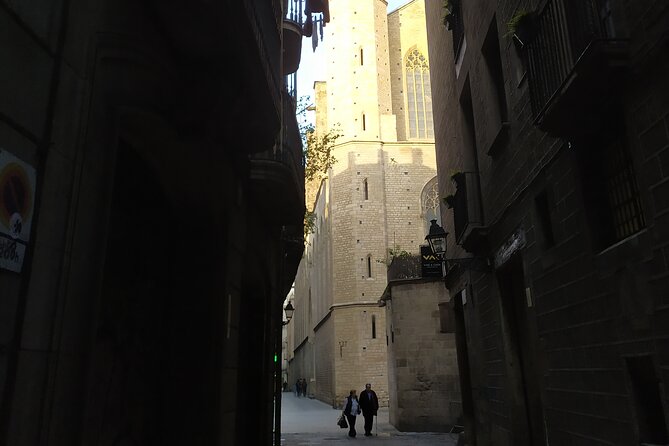
Next comes a quick pause at one of the main feature stops in the Gothic quarter. The exact landmark isn’t spelled out in the tour summary you’ll receive, but the intention is clear: you slow down for the moment that most represents the area.
Expect this to be the kind of place where streets open just enough for photos, but you still feel the maze of medieval lanes pressing in on both sides. It’s also a good breathing point. The Gothic Quarter is photogenic, but it’s also easy to rush it without a guide to keep you grounded.
If it’s warm, this is a smart time to drink water. The tour’s rhythm is history-heavy, and comfort helps you actually enjoy the details being shared.
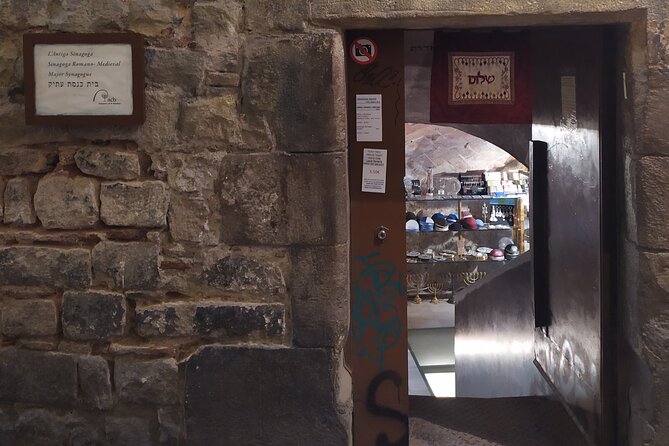
MUHBA El Call: where medieval Jewish life becomes real
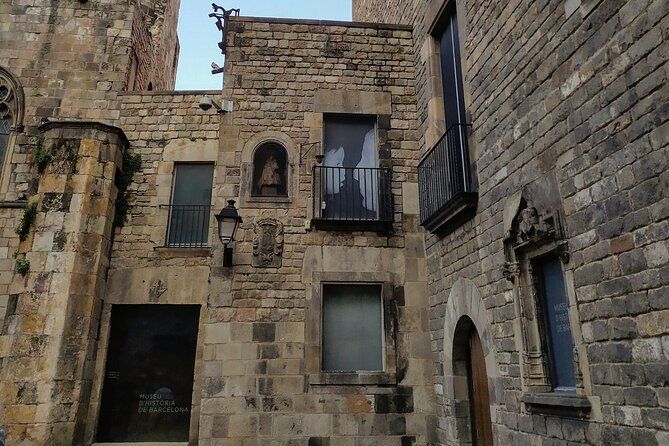
After the main Gothic sights, the tour moves into MUHBA – El Call, the medieval Jewish neighborhood. This stop is free, and it’s one of the strongest ways to broaden the tour beyond architecture.
Instead of treating the old city like a museum of churches and palaces, this section reminds you that Barcelona’s story included many communities. You’ll get the sense of how the neighborhood functioned and why this part of town matters to Barcelona’s identity.
The practical upside is how efficiently it fits into your walk. You’re not zigzagging across town. You’re staying in one coherent loop that keeps each stop connected.
Sant Felip Neri: Gaudi’s favorite church and the shadow side
One of the tour’s most memorable stops is Esglesia de Sant Felip Neri. The tour connects it directly to Antoni Gaudi by noting it as Gaudi’s favorite church in his lifetime, which instantly changes how you look at the place.
This is also described as one of the cutest little squares in the old city. But the guide doesn’t let it stay sweet. You’ll talk about a darker layer of Barcelona’s recent past, including the Spanish civil war, and why this area holds that weight.
That mix is exactly what I look for in an old-town tour. Architecture is the hook, but the meaning is what keeps you paying attention. Here, you get both.
El Born and La Ribera: medieval neighborhood energy, minus the crowding
Then the tour slides into El Born / La Ribera, an important medieval neighborhood. This section is longer, around 30 minutes, because you’re not just looking at one building. You’re walking through the feel of the area.
El Born can be busy, but the tour approach helps you see past the obvious storefronts. The guide’s commentary makes the streets read like a map of past daily life, not just a trendy hangout.
This stop also matters because it bridges the Gothic Quarter’s religious and political spaces to a more residential and communal medieval pattern. It’s the tour’s natural “breathing zone” before the big church moment.
Basilica de Santa Maria del Mar: the church people actually love
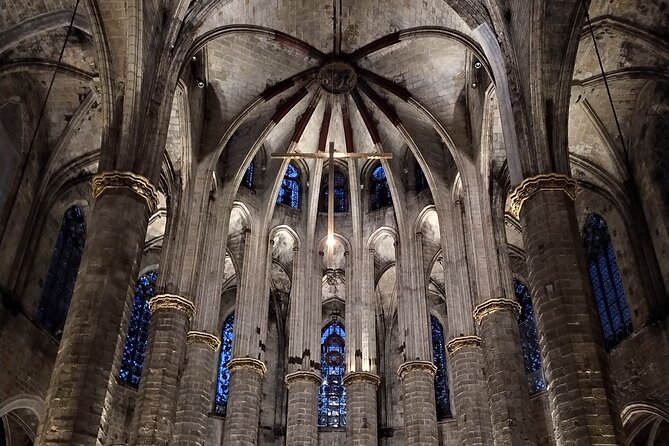
Next is Basilica de Santa Maria del Mar, highlighted as the most loved church in Barcelona. That wording matters. This is not presented as just a famous building. It’s framed as a living part of the city’s attachment to its own past.
You’ll spend about 10 minutes here. That’s enough time to notice details without turning the tour into a checklist. And if your main goal is to understand why the old city feels emotional, this is one of the best places for it.
If you’ve ever wondered why some churches feel different from the outside, this is the stop where a guide can help you see the cues. You’ll leave with a clearer idea of what makes this basilica special in Barcelona culture.
El Fossar de les Moreres: politics explained where it happened
The tour’s political center of gravity comes at El Fossar de les Moreres. The stop is framed as fundamental for understanding the conflict between Madrid and Barcelona, and it uses place as the explanation.
This is where the walk stops being only about buildings and becomes about identity and power. You’ll hear why this history still echoes, and why Catalan and Spanish conflict isn’t just a headline you read once and forget.
The tone tends to get sharper here. One of the strengths of Luca’s style, based on what you can expect from his presentation, is how he brings the gray areas to the front. People often appreciate that he doesn’t treat history like a simple hero-villain movie.
Passeig del Born: medieval entertainment in one short stretch
After the heavier stop, you end with Passeig del Born, described as the medieval entertainment square. It’s a short visit, about five minutes, but it works like a palate cleanser.
You’re seeing the city not only as governance, war, and faith, but also as everyday culture. Even a small square can tell you a lot about how people gathered, relaxed, and spent time when the world wasn’t defined by today’s stress.
This is also a good reminder that medieval city life included social breaks, not just survival.
The tour feel: what 2 hours 15 minutes really means
Expect about three miles of walking. That comes from the way this route flows through Ciutat Vella and El Born, with frequent short stops and a few longer points of attention.
The duration is tight, so the guide keeps moving, but not in a sprint. You’ll usually get around 5 to 15 minutes per stop, with the longer chunks saved for places where a deeper explanation fits, like El Born and MUHBA El Call.
Group size matters here. With up to 15 people, you won’t feel like you’re shouting over a crowd. You can also ask questions as you go, and the guide is known for doing that style of interaction rather than lecturing straight through.
One practical note: if you’re visiting in hot weather, pay attention to shade. There’s at least one caution from experience that the group sometimes stays on sunny sides of streets. Bring water, wear light clothes, and don’t be shy about requesting a short pause.
How Luca’s guide style changes the value
The big reason this tour earns such strong ratings is the guide energy and delivery style. Luca is described as funny, fast-moving in his storytelling, and armed with photo references like a personal binder.
That matters because the Gothic Quarter can feel like a lot of similar stone at first glance. When a guide compares what is original versus what is a later imitation, you start seeing the city with smarter eyes.
Also, you’ll get recommendations at the end. In past experiences, people mention a big list of food and sightseeing suggestions, including places for tapas and ice cream, plus restaurant ideas like a fish place. If you want your first day to turn into a full plan, that follow-up guidance is a real bonus.
Price and value: why $13.27 feels fair
At $13.27 per person, this tour is priced like an efficient local lesson, not a premium museum ticket. The value comes from two things working together.
First, many stops are ticket-free within the plan, including MUHBA Temple d’August, MUHBA El Call, and El Fossar de les Moreres. Second, you’re getting a real professional guide for a long enough stretch to connect the dots between sites.
Even the stop that has a fee is handled in a practical way. The cathedral visit is outside only, so you’re not paying for entry as part of this specific plan.
If you’re doing only one walking tour in Barcelona’s old city, this is a strong contender because it turns sightseeing time into understanding time.
Getting there, where it starts and ends, and what to pack
Meet at Pl. de Sant Jaume 3 in Ciutat Vella. The tour ends at El Born Centre de Cultura i Memòria, Mercat del Born, Plaça Comercial 12, still in the old city.
That ending is handy if you want to keep wandering after. El Born is a natural place to find lunch, snacks, and the kind of street life that makes you want to stay out longer than planned.
For packing, keep it simple:
- Comfortable shoes, since it’s on foot and the route adds up
- Water on warm days
- Your best English listening skills if you want every detail, since the guide can talk quickly
Who this tour suits best
This tour fits best if you want to understand the old city as a story, not just a photo set. It’s ideal for first-time visitors, especially if you want a route that covers both the Gothic Quarter and El Born without wasting time crossing town.
It’s also good for people who enjoy architecture but don’t want only architecture. The Spanish civil war talk and the political conflict framing at El Fossar de les Moreres are big for readers who like history with real context.
If you have reduced mobility, the tour summary says it is not suitable as-is, though the company can adapt the tour to your own pace or arrange a private experience. For anyone who needs less walking, it may be worth asking directly before you book.
Should you book this Gothic and El Born walking tour?
Yes, if you want a well-paced, history-and-place tour that keeps the Gothic Quarter from feeling like random stone. The combination of MUHBA archaeology, Gaudi-linked Sant Felip Neri, and the political weight at El Fossar de les Moreres makes this more than a standard highlights walk.
Book it sooner rather than later if your dates are flexible. It’s commonly booked about 26 days in advance, and small-group tours in the center of Barcelona can fill.
Skip it only if you dislike outdoor walking in heat or you’re looking for a lighter, purely scenic tour. This one is meant to teach you how Barcelona’s past keeps shaping the city you see today.
FAQ
How long is the Gothic and El Born walking tour?
The tour runs for about 2 hours 15 minutes.
How much does the tour cost?
It costs $13.27 per person.
What language is the tour offered in?
The tour is offered in English.
Where do I meet the guide?
You meet at Pl. de Sant Jaume, 3, Ciutat Vella, 08002 Barcelona, Spain.
Where does the tour end?
It ends at El Born Centre de Cultura i Memòria, Mercat del Born, Plaça Comercial, 12, Ciutat Vella, 08003 Barcelona, Spain.
Is the ticket mobile?
Yes, the tour includes a mobile ticket.
How large is the group?
The tour has a maximum of 15 travelers.
Are any tickets or admissions included?
Many stops are free, including MUHBA Temple d’August, MUHBA El Call, Esglesia de Sant Felip Neri, Basilica de Santa Maria del Mar, El Fossar de les Moreres, and Passeig del Born. The cathedral stop is outside only and admission is not included.
Is this tour accessible for people with reduced mobility?
The tour is not suitable for people with reduced mobility, but it may be adapted to your pace. A private experience could be arranged.
Is cancellation free?
Yes, free cancellation is available. You can cancel up to 24 hours in advance for a full refund.
Are service animals allowed?
Yes, service animals are allowed.
More Tours in Barcelona


More Tour Reviews in Barcelona
Not for you? Here's more nearby things to do in Barcelona we have reviewed








More Barcelona City Tours worth opening.
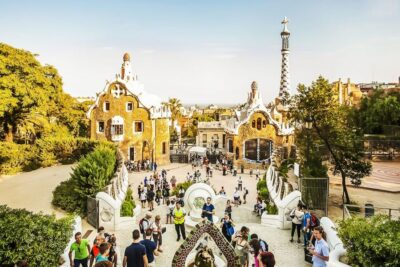 ★ 4.4Park Güell Admission TicketFrom $2576,534 reviews
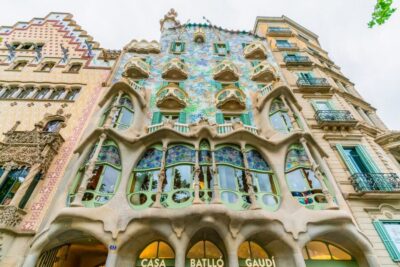 ★ 4.7Casa Batlló Entry with Self-Audioguide TourFrom $3425,359 reviews
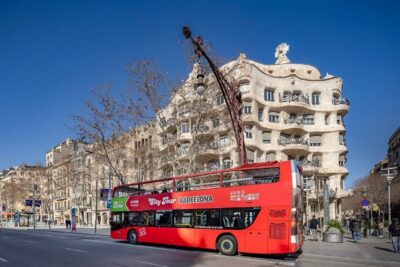 ★ 4.424 or 48-Hour Hop-On Hop-Off Bus TourFrom $3920,872 reviews
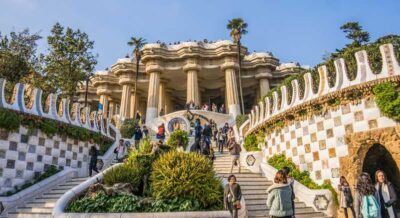 ★ 4.7Park Guell Guided Tour with Skip The Line EntryFrom $3117,563 reviews
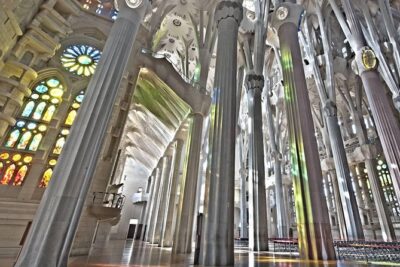 ★ 5.0Barcelona in 1 Day: Sagrada Familia, Park Guell,Old Town & PickupFrom $12013,541 reviews
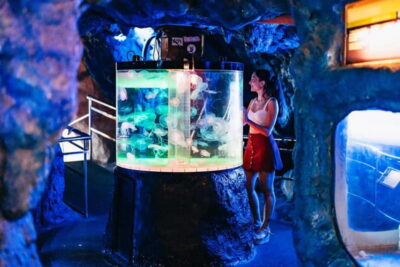 ★ 4.3Barcelona Aquarium: Entry TicketFrom $3113,335 reviews
 ★ 4.8Sagrada Familia Skip-the-Line Entry Ticket & TourFrom $6712,789 reviews
 ★ 4.4FC Barcelona Museum “Barça Immersive Tour” TicketFrom $3510,944 reviews