
REVIEW · BARCELONA CITY TOURS
Jewish Walking Tour Barcelona by Expert Jewish Guide 2h
Barcelona’s Jewish Quarter is easier on foot. You’ll move through the medieval streets of the Gòtic area with a guide who connects architecture to real lives and big turning points.
I especially love the stop-by-stop way the tour builds context, starting at the civic center and ending where power shifted. I also like that you visit the Major Synagogue and the El Call area, not just “pretty streets,” so the story has real anchors.
One thing to factor in: it’s a walking tour focused on a specific slice of Barcelona. You’ll want comfy shoes, and there’s a €5 per person donation request at the synagogue site.
Key Things You’ll Love Most
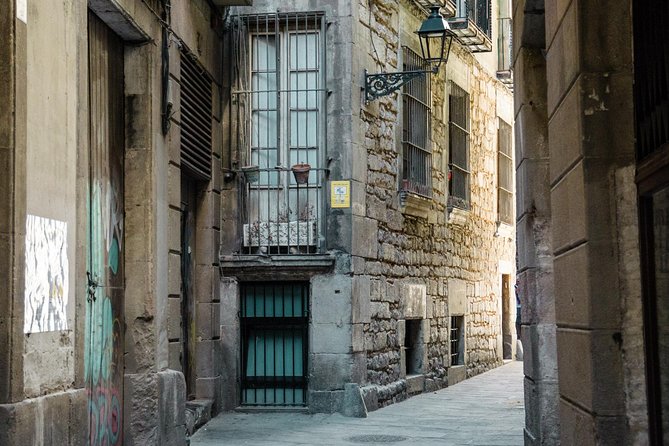
- Historic anchors that you can actually see, including the Major Synagogue and the El Call area
- Two solid hours of guided storytelling, paced for the tight alleyways of the Gòtic Quarter
- Local guides with strong track records, with names like Ella and Dina frequently praised for making details click
- Architecture and urban layout lessons, not just dates and names
- Time-efficient route, hitting major stops like Placa de Sant Jaume and Placa Del Rei
Jewish Barcelona on Foot, in About Two Hours
If you only have a couple of hours and want more than a postcard version of Barcelona, this tour is a smart choice. It’s built around a compact walk through the old Jewish Quarter, where you can stand in front of the physical clues and hear what they meant.
The pace works well for a first visit. You’re not racing across the city, but you are kept moving through the streets that shaped Jewish life, community leadership, and the sharp breaks in history.
This also helps if you like history that feels specific. Instead of big sweeping statements, you’ll get pointed explanations tied to places you can see right in front of you.
You can also read our reviews of more walking tours in Barcelona



Starting at Conesa Entrepans, Finding the Route Fast
Your walk begins at Conesa Entrepans in the Gòtic, at Carrer de la Llibreteria, 1. It’s an easy meeting point in the older part of town, and the tour ends back there, which keeps things simple after you’re done.
The tour is offered in English, and it’s described as private in the sense that it’s only your group participating. That matters for comfort. In tight historic streets, less crowd pressure helps you actually hear the guide and ask questions.
You’ll likely want to arrive a few minutes early. Meeting on a busy corner is normal in Barcelona, and getting settled avoids that end-of-trip rush feeling.
Placa de Sant Jaume, the Political Heart You’ll Use as a Compass
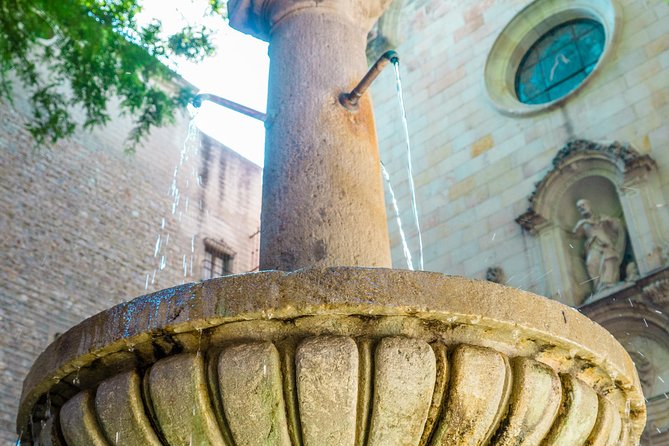
Stop one is Placa de Sant Jaume, Barcelona’s political heart and a symbolic gateway to Jewish Barcelona. You spend about 15 minutes here, which is a good length for setting the frame without turning the tour into a lecture in the open air.
This is a useful “why this neighborhood matters” moment. From this civic center, your guide can explain how public power and community life were linked, and how the city’s layout shaped movement, visibility, and influence.
If you’re the type who likes to understand a neighborhood’s logic, this stop is the foundation. It helps the rest of the walk make sense, especially once you shift from squares to narrow lanes.
Major Synagogue, One of Europe’s Oldest Synagogue Sites
Next comes the Major Synagogue, where you’ll spend about 30 minutes. This site is described as an ancient synagogue in the center of Barcelona, and it’s often noted as one of the oldest synagogues in Europe.
What I like about this stop is that it’s not treated like a museum label. You get context for what you’re looking at, and you can connect architectural clues to the story your guide is telling. That kind of explanation is exactly what makes sites like this more than a photo stop.
Plan for costs on the ground. Entrance fees are not included, and a €5 per person donation is kindly requested onsite at the synagogue. It’s not a big amount, but it’s one of those details that can surprise you if you assume everything is fully included.
MUHBA – El Call, Winding Alleys and the Weight of Real Events
The tour then moves to MUHBA – El Call for about 30 minutes. This is where you feel the neighborhood’s shape. The alleys are winding, and your guide uses that street geometry to explain how daily life unfolded, and how events changed it.
This stop is where the tour tends to land hardest, because it’s not only about cultural life. It also points to Jewish life and tragedy across centuries, which is a reminder that history here includes both community and harm.
I also like how El Call is an “on-your-feet” history lesson. You don’t just read about the past, you experience the layout that made certain things easier, harder, safer, or riskier. That’s the kind of mental image you carry long after you leave.
You can also read our reviews of more guided tours in Barcelona


Placa Del Rei, When Jewish Leadership Met Royal Power
Stop four is Placa Del Rei, with 30 minutes here. The tour frames this square as a place where Jewish leaders served kings, and where history changed forever.
Squares can feel generic in big cities, but this one is presented with purpose. You’re not just looking at stone. You’re hearing how leadership, service, and shifting power played out in the city’s political world.
If you like a timeline you can physically locate, this is the payoff stop. It helps you connect earlier context from Placa de Sant Jaume to the specific way influence could flow between communities and ruling power structures.
Guides Matter, and This Tour Leans on That Strength
This experience lives or dies by the guide, and the record here is strong. Many guides get praise for clear storytelling and for pointing out details you would miss on your own.
Names that come up repeatedly include Ella and Dina, both praised for deep historical knowledge and for making narrow streets feel alive. Lilac and Lilach also get strong mentions, including guides who emphasize architecture and even personal anecdotes that add texture to the sites. Alan, Eyal, Leilah, and Rina are also among the names singled out for being warm, energetic, and attentive to questions.
One practical benefit of a great guide is pacing. If it’s raining or the group needs a moment, a good guide can keep the story moving without feeling like the whole tour falls apart. One review even mentioned a torrential downpour, with the guide still keeping things informative.
Price and Value, What You’re Really Paying For
The price is $96.79 per person for about 2 hours. That sounds specific, and the key question is whether it buys you something meaningful. In this case, I think it does, because you’re paying for guided interpretation in a part of Barcelona where wandering without context can leave you with a lot of stone and not much understanding.
You also get the essentials that matter in this kind of walking tour: a professional local guide and a structured route across major points. That structure is what turns “I walked around” into “I understood what I was seeing.”
On top of that, remember the synagogue donation request. It’s not included in the base cost, so you should budget an extra €5 per person for the onsite request. Still, that’s straightforward, and it’s easy to handle with cash or payment methods depending on what’s available at the site.
How to Prepare for the Walk (So You Enjoy It)
This tour is in the Gòtic Quarter, so wear shoes that can handle uneven stone and lots of turns. The route includes squares and alleys, which means you’ll be changing directions often.
Bring a small water bottle if you’re visiting in warmer months. Water isn’t listed as included, and the tour is two hours long, which is long enough to feel it if you start dry.
If you want to ask questions, do it early. The first half of the tour tends to set the context, and those questions will make the later stops more rewarding. Guides are praised for being open to queries, so it’s worth using that.
Weather and Timing, What Can Change
You’re outside for the entire route, and Barcelona weather can be unpredictable. The tour is scheduled around the main stops, with about 15 minutes at the square gateway and 30 minutes at each of the three key sites.
That timing means the tour isn’t overly long, even if you pause briefly for photos or clarification. If weather hits, your best bet is a positive mindset. Think of it as a story walk where the guide keeps shaping the meaning of what you see, rain or shine.
Who Should Book This Jewish Walking Tour Barcelona?
This is a great fit if:
- You want context and interpretation, not just a list of sights
- You like history connected to architecture and street layout
- You’re interested in Jewish life in Catalonia, including how community presence intersected with broader Spanish and European developments
It might be less ideal if:
- You want a very broad survey of all Jewish sites across Barcelona, beyond this specific route
- You prefer a mostly indoor or museum-only experience
- You dislike walking through historic, sometimes narrow streets
If you’re a first-time visitor to Barcelona, I like this as a high-value “meaning tour” early in your trip. It gives you a lens for what you’ll see later, even when you’re exploring on your own.
Should You Book It?
Yes, if you want a focused walk with strong guide energy. The best part is that the tour doesn’t treat these stops like isolated landmarks. It ties each place to how Jewish life shaped, and was shaped by, the city.
Also, you’re getting a good balance of time: a short framing stop at Placa de Sant Jaume, then three heavier hitters at the Major Synagogue, MUHBA – El Call, and Placa Del Rei. That structure makes the two hours feel full without dragging.
Just plan for one extra cost at the synagogue donation request, wear comfortable shoes, and show up ready to listen. If you do those things, you’ll leave with a clearer picture of Jewish Barcelona that you can actually place on the map.
FAQ
How long is the Jewish Walking Tour Barcelona?
It lasts about 2 hours.
What language is the tour offered in?
The tour is offered in English.
Is this tour private or a shared group?
It’s listed as private, meaning only your group participates.
Which stops are included on the walk?
You’ll visit Placa de Sant Jaume, the Major Synagogue, MUHBA – El Call, and Placa Del Rei.
Is there an entrance fee at the synagogue?
Entrance fees are not included. A €5 per person donation is kindly requested onsite at the synagogue.
Where does the tour start and end?
It starts at Conesa Entrepans in the Gòtic, and it ends back at the same meeting point.
More Walking Tours in Barcelona


More Tours in Barcelona


More Tour Reviews in Barcelona

Not for you? Here's more nearby things to do in Barcelona we have reviewed
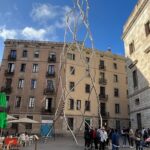







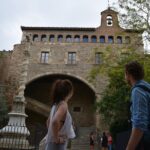

More Barcelona City Tours worth opening.
 ★ 4.4Park Güell Admission TicketFrom $2576,534 reviews
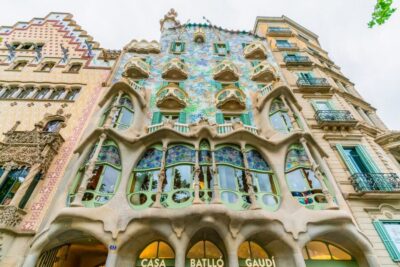 ★ 4.7Casa Batlló Entry with Self-Audioguide TourFrom $3425,359 reviews
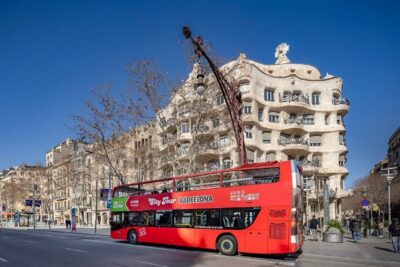 ★ 4.424 or 48-Hour Hop-On Hop-Off Bus TourFrom $3920,872 reviews
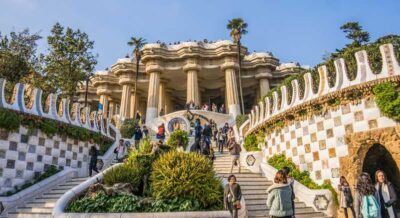 ★ 4.7Park Guell Guided Tour with Skip The Line EntryFrom $3117,563 reviews
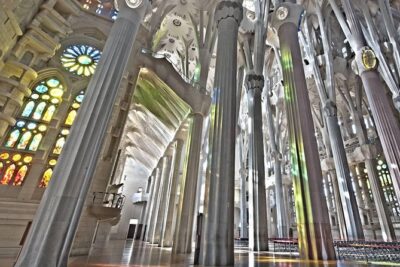 ★ 5.0Barcelona in 1 Day: Sagrada Familia, Park Guell,Old Town & PickupFrom $12013,541 reviews
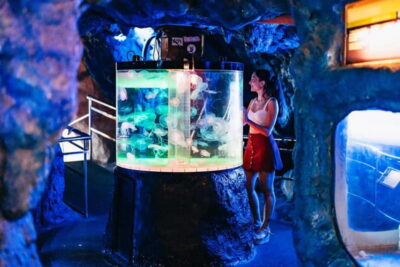 ★ 4.3Barcelona Aquarium: Entry TicketFrom $3113,335 reviews
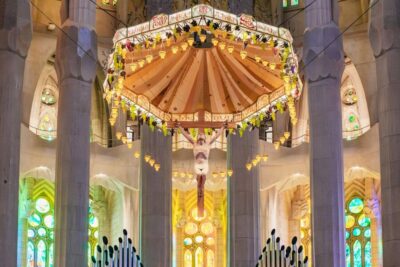 ★ 4.8Sagrada Familia Skip-the-Line Entry Ticket & TourFrom $6712,789 reviews
 ★ 4.4FC Barcelona Museum “Barça Immersive Tour” TicketFrom $3510,944 reviews
Continue by place or experience