
REVIEW · BARCELONA CITY TOURS
Jewish tour by Jewish Guide in Barcelona
Barcelona hides Jewish history in plain sight, and this Jewish-led walk gives you a focused route through the old streets with a Jewish guide like Adi at the front and a private tour feel for your group. I love how the stops connect Jewish Barcelona to big city landmarks you already see on a first visit, and I love the pace that keeps questions in the loop. One thing to plan for, the Major Synagogue museum stop needs extra payment, and the synagogue donation is not included.
You can choose from multiple start times, use a mobile ticket, and meet at Starbucks on Plaça de Sant Jaume in Ciutat Vella. The experience runs about 2 hours in English, then ends back at the same meeting point, so it fits cleanly into a morning or early afternoon.
Key things you’ll appreciate before you go
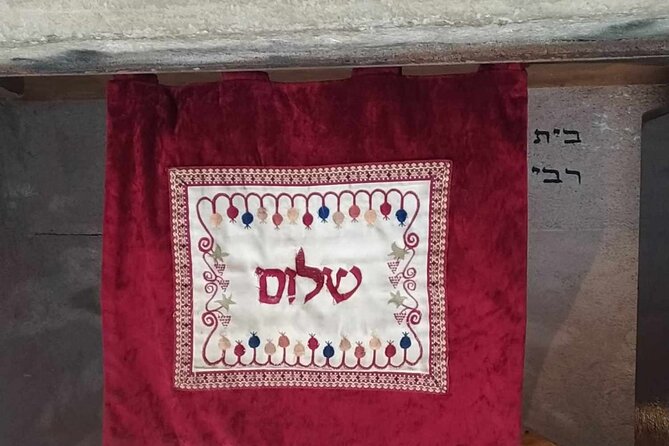
- Jewish-led storytelling in the heart of El Call with guides such as Adi, Daphna, On Tal, Dina, and Ron often highlighted for clear, human explanations
- A tight six-stop route that pairs Jewish sites with major Barcelona landmarks
- Most entrances are free, but the Major Synagogue museum stop is not included, with about a 5 euro synagogue donation expected
- Roman and medieval layers in one walk, from Muralla Romana to Gothic Quarter streets
- A private format where your group gets the guide’s full attention and time for questions
- Good pacing that works even when you bring kids or you prefer a slower question-driven stroll
Entering El Call: why this Barcelona route feels personal
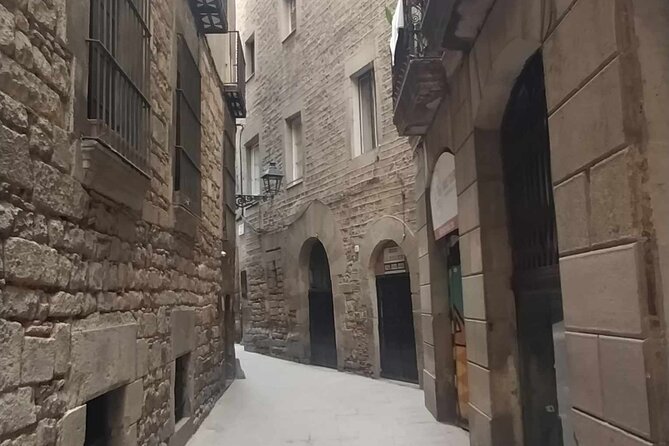
Barcelona can look like one long postcard. This tour is different because it teaches you how to read the city like a document. You follow a line through the historic Jewish quarter area, but you’re also shown how other eras sat on top of it, including Roman remains and later religious power.
The big value here is the guide. This is not a “read the sign and move on” walk. It’s led by Jewish guides, and that matters because the stories tend to include the community’s perspective, not just dates and architecture. You’ll also notice how the route keeps linking Jewish life to the city’s public spaces, so you’re not treating this as an isolated museum corner.
Another reason I like it: the time is realistic. About two hours means you get enough stops to understand the arc of the neighborhood, without turning your day into an endurance test.
You can also read our reviews of more guided tours in Barcelona

From Plaça de Sant Jaume to the Catalan Parliament, you start in the right mindset
Most tours begin at the obvious landmark. This one starts at Plaça de Sant Jaume, which is a smart choice because it sets context fast. You’re in the center of civic Barcelona, near the Catalan Parliament and the City Hall, but you’re also right at the edge of the historic Jewish quarter zone.
In the first chunk of time, the guide helps you reframe the square. Instead of seeing it as just a grand meeting place, you start noticing how power, administration, and public institutions shaped everyday life around El Call. That “why is this here?” thinking sticks with you through the rest of the walk.
Practical note: this is a stop where you’ll want to listen closely at the start. The orientation sets up what you’ll later hear about houses, streets, and sites that many people walk past without realizing what they represent.
Major Synagogue museum stop: plan for the donation and look closely
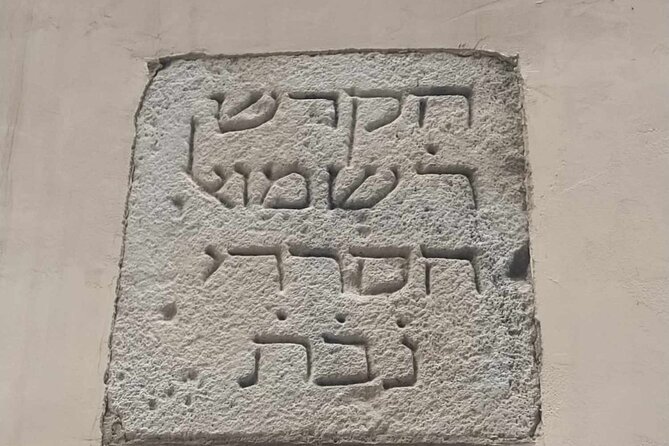
The Major Synagogue stop is the tour’s main paid entrance moment. The synagogue museum is described as one of the oldest synagogues in the world, so even if you’ve seen other European synagogues, this is the “anchor” visit.
Entrance fees are not included in the base price. Expect about a 5 euro cost as a donation connected to the synagogue. The exact amount may depend on the site’s current setup, but the tour clearly flags that you’ll pay extra here.
What I’d do with your time: don’t rush the museum portion. This is where you should slow down mentally. Synagogues hold layers in stone and layout, and your guide can help you connect what you’re seeing to the neighborhood outside. If you’re the type who likes details, ask about what makes this synagogue historically significant and how it relates to Jewish life in Barcelona over time.
If you’re short on time before lunch, the good news is that this stop is only about 20 minutes in the plan. You get a focused museum look without losing the rest of the tour.
Gothic Quarter and El Call streets: learning how the neighborhood worked
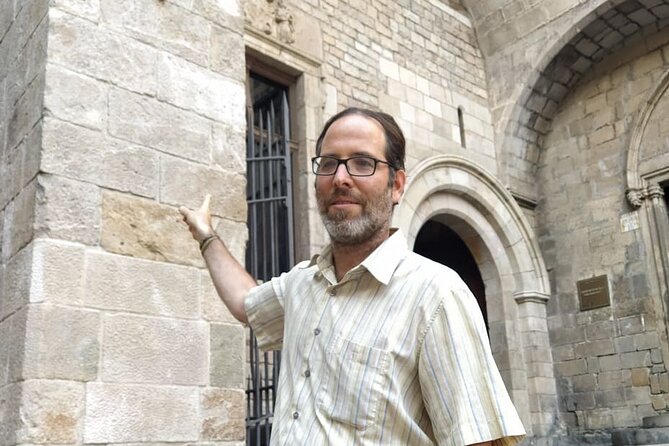
After the synagogue, the tour shifts into the Gothic Quarter, where the historic Jewish quarter, El Call, is located. This is the part where the city’s medieval texture becomes a teaching tool.
The Gothic Quarter is old, yes, but your guide helps you understand it as a living system. You’re not just walking “somewhere ancient.” You’re walking the type of streets where community life, privacy, and survival had to fit into tight urban space. It’s also the segment that often makes people pause, because the tour tends to point out features you would miss if you were just following your phone map.
From the experience perspective, this is where your questions matter most. Ask about street layout, how neighborhoods changed, and what clues exist in everyday architecture. Many guests find this section especially effective because the guide’s explanations make the stones and street turns feel logical, not random.
Plaça del Rei: the Nachmanides disputation site in plain sight
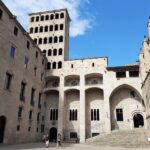
Next comes Plaça del Rei, where the tour connects a major historical moment to a specific location: the Nachmanides disputation took place here. That kind of detail turns a square into a story with weight.
Even if you don’t know the names, you can still follow the thread because the guide frames it through what was happening in Jewish history and how public events affected communities. The tone in this part tends to be serious, but the pacing stays manageable, and you still get time to orient yourself around what you’re seeing.
This stop is about 20 minutes. That’s long enough for context without dragging. If you like history with a human edge, this is a good moment to ask the guide to connect the disputation to broader themes you’ve heard earlier in the walk.


Muralla Romana: Roman wall remnants you can literally trace
Muralla Romana is one of those stops that changes your perception of Barcelona’s age. You’re seeing the original Roman wall of the city, and you’re doing it during a walk that’s already focused on Jewish life and later historical shifts.
I find this pairing especially useful. It helps you stop thinking in single timelines. The city doesn’t replace layers in a neat line. It builds, adapts, and reuses space, and the wall gives you a physical reminder of that continuity.
Because the Roman wall segment is short, about 20 minutes, the key is to look for what your guide points out. Follow their focus. If they’re asking you to notice angles, thickness, or how the structure sits in the current street scene, that’s the kind of detail that makes the site stick in your mind later.
Museu Frederic Mares: Inquisition-era history in Barcelona
The final major site is Museu Frederic Mares, tied to the historical location of Spanish Inquisition headquarters in Barcelona. This is the emotional endpoint of the walk, because it connects the neighborhood’s past to power and persecution.
This part is not about sensational shock. It’s about placing events in a real geography. Standing where the guide connects history to the city’s institutional footprint helps you understand that the consequences of ideology were not abstract. They were organized and enforced through locations.
The tour keeps it to about 20 minutes here, which is the right amount. You get enough context to understand why the site matters without turning the last stop into a long lecture. If you’re sensitive to heavy topics, you may want to arrive on an unhurried day, so you can process when the walk ends.
Why the Jewish-led private guide changes what you notice
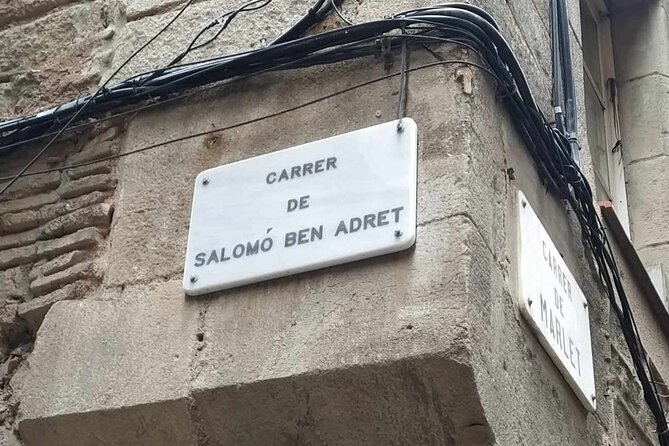
A private tour, with only your group, is more than a luxury line. It means the guide can respond to your pace and your questions. Many people love tours like this because the storytelling feels tailored, not generic.
You can also expect more conversation, not just a monologue. In the guide experiences that tend to get praised, you often hear humor mixed into the serious parts, and you get a clear sense of where the tour is heading. That matters because Jewish history in Spain is not a straight line, and the guide’s job is to keep you oriented.
If you want to maximize the value, come prepared with two or three questions. For example:
- What’s the biggest connection between the Jewish quarter and public Barcelona spaces?
- Which stop best explains how daily life was shaped by political change?
- What detail should I look for in the streets as we walk?
Also, there’s a small but real advantage in having a Jewish guide. You’re hearing the material through lived community memory and identity-based perspectives, not just as a checklist of monuments. That makes the walk feel more human and less like a pass-through to the next photo.
Price and value: $70 for two hours, with entrances handled smartly
At $70 per person for about two hours, this tour sits in a reasonable midrange for a private, guided walking experience in central Barcelona. The best part is how the costs are structured.
- Included: a private professional guide
- Not included: entrance fees, with the synagogue donation called out as about 5 euro
- Free stops are part of the plan for the other key photo and context sites
So you’re paying mostly for interpretation and time, not just for entry into one museum. If you’re the type who learns faster when someone explains the city while you walk, this is where your money goes.
If you only wanted one museum visit, you might compare the price to a standalone ticket. But the real value is the route. You get a connected story across multiple landmarks, including Roman and Inquisition-era sites. That added context is what makes the price feel fair, not inflated.
Timing, start times, and how to set yourself up for an easy walk
The tour offers multiple start times, which is a practical advantage in Barcelona. City heat, crowd flow, and your own energy level all matter. Pick a time when you can pay attention, not when you’re rushing to catch another train.
As for logistics you should plan around: it’s a walking format with six stops, so comfortable shoes are smart. The duration is about two hours, and each main stop is around 20 minutes, which suggests a steady rhythm with brief transitions.
You’ll also be near public transportation, and the meeting point is very easy to find: Starbucks at Plaça de Sant Jaume, 3, in Ciutat Vella. Since the tour ends back at the meeting point, you can plan a nearby lunch without having to backtrack across town.
Language is English, and most travelers can participate. Service animals are allowed too.
Should you book this Jewish history tour in Barcelona?
Yes, if you want Jewish history taught in context, not as isolated facts. This walk is ideal when you like a clear route, a guide who keeps the story moving, and stops that connect Jewish life to the broader Barcelona cityscape.
I’d especially recommend it if:
- You care about El Call and the Major Synagogue area
- You want Roman wall remnants and Inquisition-era context tied into one walk
- You prefer asking questions and getting direct answers from a guide such as Adi, Daphna, On Tal, Dina, or Ron
Skip it only if you’re looking for a purely casual stroll with no history discussion. This experience is designed for interpretation, and you’ll likely get the most value when you’re ready to listen, ask, and look carefully at what’s in front of you.
FAQ
How long is the Jewish history walking tour?
The tour lasts about 2 hours.
What does the tour cost?
It costs $70.00 per person.
Is this tour private?
Yes. It is a private tour/activity, and only your group participates.
What language is the tour offered in?
The tour is offered in English.
Where do we meet, and where does the tour end?
You meet at Starbucks, Plaça de Sant Jaume 3, Ciutat Vella, 08002 Barcelona, Spain. The tour ends back at the same meeting point.
Are mobile tickets used?
Yes, the tour offers a mobile ticket.
Do you have multiple start times?
Yes, there are multiple start times available.
Are entrance fees included in the price?
No. Entrance fees are not included. The Major Synagogue museum admission is not included, and there is a synagogue donation cost mentioned at about 5 euros.
Is it near public transportation?
Yes, the meeting area is near public transportation.
What is the cancellation policy?
You can cancel for a full refund up to 24 hours before the experience’s start time. Free cancellation is allowed if you meet that timing window.
More Guided Tours in Barcelona

More Tours in Barcelona
More Tour Reviews in Barcelona
Not for you? Here's more nearby things to do in Barcelona we have reviewed








More Barcelona City Tours worth opening.
 ★ 4.4Park Güell Admission TicketFrom $2576,534 reviews
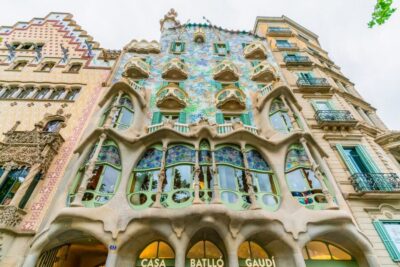 ★ 4.7Casa Batlló Entry with Self-Audioguide TourFrom $3425,359 reviews
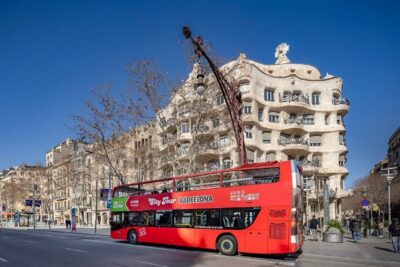 ★ 4.424 or 48-Hour Hop-On Hop-Off Bus TourFrom $3920,872 reviews
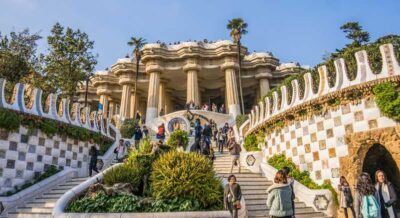 ★ 4.7Park Guell Guided Tour with Skip The Line EntryFrom $3117,563 reviews
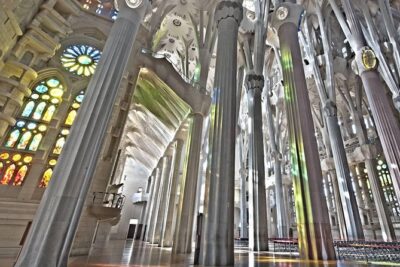 ★ 5.0Barcelona in 1 Day: Sagrada Familia, Park Guell,Old Town & PickupFrom $12013,541 reviews
 ★ 4.3Barcelona Aquarium: Entry TicketFrom $3113,335 reviews
 ★ 4.8Sagrada Familia Skip-the-Line Entry Ticket & TourFrom $6712,789 reviews
 ★ 4.4FC Barcelona Museum “Barça Immersive Tour” TicketFrom $3510,944 reviews