
REVIEW · BARCELONA CITY TOURS
Hidden Barcelona
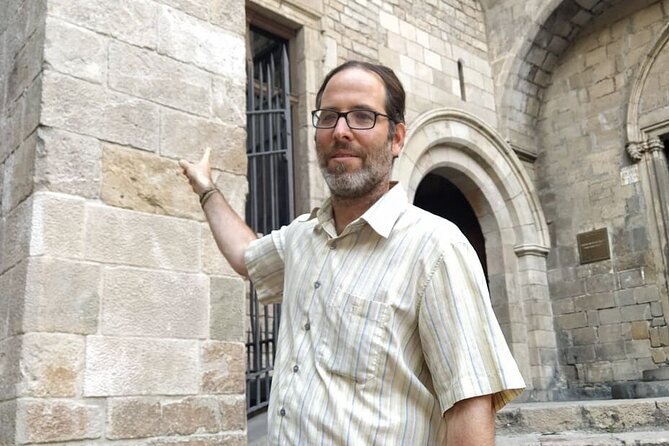
Barcelona has secret layers, and this walk proves it. You follow a tight, footstep-friendly route through Ciutat Vella where the stories are often darker, sometimes funny, and always close up, not rushed. It is built for history lovers who want answers on the spot, plus time to ask your guide what you are really curious about.
What I like most is the private setup, which means you get your guide’s full attention the whole way. I also like the stop selection, which mixes big landmarks with small, easy-to-miss places, and many points are ticket free to enter. One thing to consider is that the pacing is efficient, so each site gets a short look, and you may want a longer revisit afterward if you fall in love with one stop.
Key highlights you can feel in your schedule
- Private with Adi so you can ask questions as you go, no waiting around
- Free admission ticket listed for every stop on the route, great for value
- Two hours, eight stops means you see a lot, without turning it into a full day
- Dark history plus light moments, from executions to the Spanish Civil War, and movie locations
- Roman through medieval through modern, with Roman remains, cathedral time depth, and the 1929 bridge
- Mobile ticket keeps things simple on the ground
Why this Hidden Barcelona walk feels personal with Adi
This is not a big bus-tour kind of day. You are in a private group, so the guide can slow down when you want, and speed up when you are ready, instead of herding people along.
Ad i leads in a way that makes it easy to talk. In the experience style here, you are not just hearing facts, you are getting conversations, plus the little bits of gossip and practical observations that make the places feel lived in rather than like a checklist. The English guide format also helps if you want to ask follow-up questions without guessing.
The route is also designed for a relaxed rhythm. There is no pressure to sprint between stops, and the timing is built for walking plus short site hangs, which works well if you like soaking up atmosphere instead of just taking photos.
You can also read our reviews of more tours and experiences in Barcelona.
Two hours for about $56.78: how the value adds up in Ciutat Vella
At around $56.78 per person for about two hours, the real value is what you get for the price: a private guide and multiple major historical stops. You are paying for interpretation, not just transport or sightseeing, and the stop list is heavy on story-rich locations.
Many stops are listed as admission ticket free, which matters when you are trying to keep costs under control in Barcelona’s older districts. Even when you are only staying briefly at each place, the variety here helps you understand the city’s layers fast.
If you are someone who likes a lot of context but hates long museum marathons, this is a good fit. If you want deep, time-consuming entry to interior spaces with lots of quiet reading, you might find the time per stop a bit short and plan a follow-up visit.
Placa de Sant Jaume: the civic heart right where Barcelona “decides”
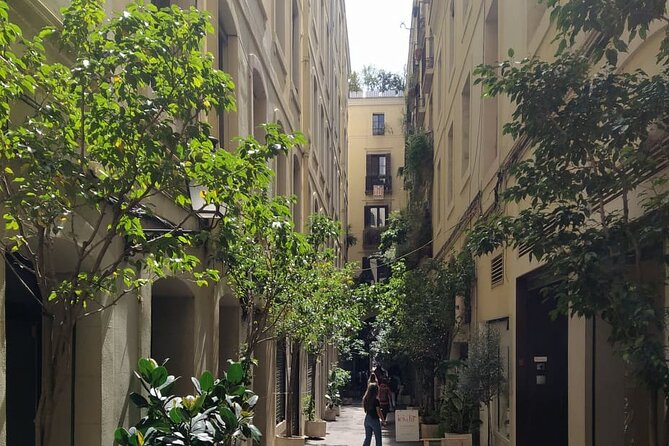
You start at Pl. de Sant Jaume, 3, in Ciutat Vella, and the first stop sets the tone. This is the main square of Barcelona, where the city hall and the Catalan parliament anchor the political pulse of the area.
What I like about starting here is the clarity. The square gives you an immediate frame for why the later stops matter, because this is the stage where power and public life overlap. Even in a short visit, it helps you understand why the surrounding buildings and nearby streets can feel so charged.
It is also a smart warm-up stop for your guide-chat time. You can ask how Barcelona’s regional story connects to the places you will see next, and then the rest of the route clicks into place.
Expect about 20 minutes here, and since admission is listed as ticket free, you can focus on observation and conversation rather than ticket lines.
MUHBA Temple d’August: Roman Barcelona you almost miss
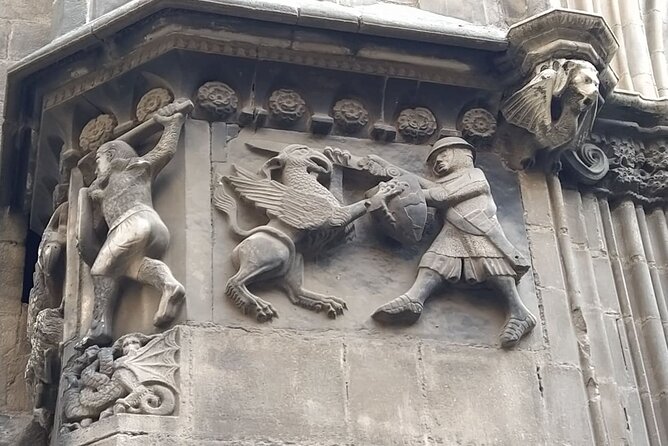
Next is MUHBA Temple d’August, a Roman temple site that is described as among the oldest places in the city, and it is also easy to overlook if you are walking without guidance. You spend about 15 minutes, which is enough time to notice the scale and the fact that the Roman layer is still physically present in the streetscape.
This stop works because it changes your mental map. Barcelona is famous for Gothic and modernist architecture, but you often need a nudge to remember the city has a much older foundation. When your guide points out what you are looking at, the ruins stop being vague and start feeling specific.
A practical tip: when your guide mentions Roman features or what to watch for, pause and look closely. This is the kind of site where one observation can turn the whole area from background scenery into a real “oh, that is it” moment.
Admission is listed as ticket free, so you can keep the visit simple and focus on interpretation.
Placa del Rei: royal power, then the darker side of public life
Placa del Rei is the place of the palace of the kings of Catalonia, and it comes with history that does not always stay comfortable. You get about 15 minutes here, and the focus is on how important events unfolded in this space, including public executions.
This stop is valuable because it keeps the story honest. Barcelona is often marketed as art and architecture, but public squares like this were where rule, punishment, and spectacle played out. When a guide brings those details in context, it is less like shock for shock’s sake and more like understanding how cities functioned.
If you are sensitive to dark topics, it helps that your guide can shape the story into a wider picture. I find that the difference between a cold lecture and a thoughtful explanation is huge here, especially because the square itself is so open and visually calm.
Since admission is listed as ticket free, you can take in the space without adding extra friction. Use the time to ask what changed over time, because your next stops connect to that long timeline.


Barcelona Cathedral: the church with deep time and big presence
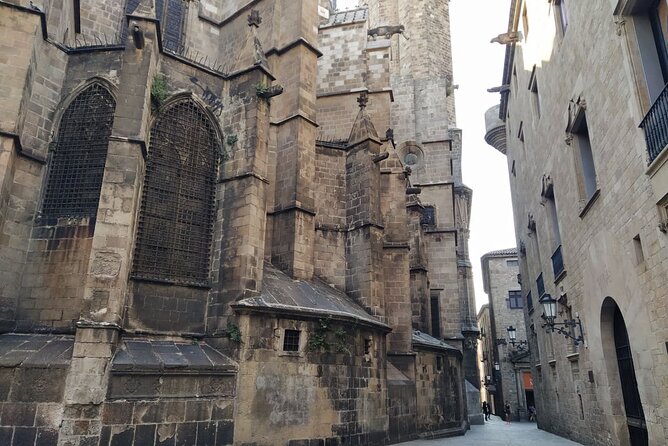
Barcelona Cathedral is the next anchor point, and it is framed here as the most important church of Barcelona with roots going back to 1298 BC. That phrasing is striking, and even if you only take away the idea of extreme age, it sets your expectations for how long this site has shaped local life.
You get about 15 minutes at the cathedral, and the value is in how a guide connects what you see to the city’s evolving identity. Cathedral stops can become passive if you are just standing and snapping pictures, but with a live guide, you can focus on the details your attention is meant to catch.
One consideration: with a short stop, you will not get the slow, quiet “read every stone” experience. You are building understanding fast, then you decide if you want to return later for a longer look once you know what to notice.
Admission is listed as ticket free, so your time is best spent listening and asking questions about what makes this cathedral feel like a key part of Barcelona’s story.
Casa de l’Ardiaca courtyard: lawyers guild, roman remains, and a mailbox with meaning
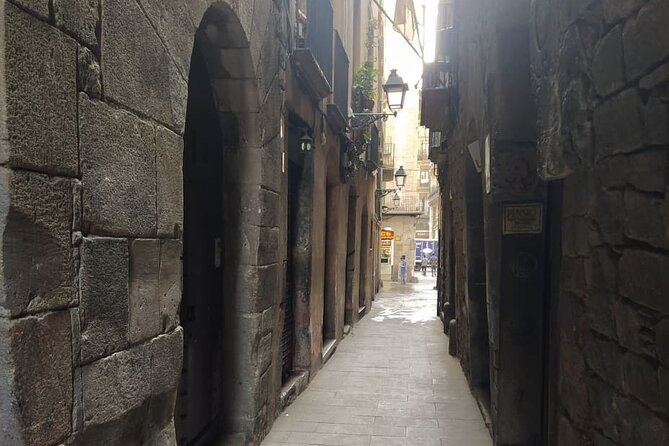
Casa de l’Ardiaca is the kind of stop that makes you feel smarter for having a guide. You are led to a beautiful courtyard where it is linked to the guild of the lawyers, and you also get the story behind a mailbox made by Lluis Domènech i Montaner with a funny meaning behind it.
Along with the humor, you get a serious visual payoff: roman remains are said to be hiding in the back. That combination is exactly why this route feels different from the standard highlight reel. It is not only about grandeur, it is about texture, quirk, and layers.
You will spend about 15 minutes here. That is enough time to notice the courtyard feel, understand the legal-guild angle, and then see how the Roman traces fit into the later architecture. When a guide points out the mailbox meaning, it also changes how you remember the place, because you are left with a specific story, not just vague aesthetics.
Admission is listed as ticket free. Use that to your advantage by slowing down, look around the courtyard edges, and ask your guide what to notice from different angles.
Placa Sant Felip Neri: Spanish Civil War shadows and movie-day facts
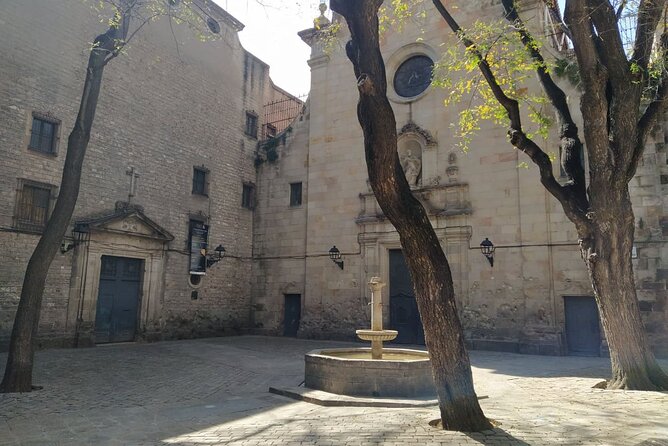
Placa Sant Felip Neri is described as a beautiful hidden square where there is a church and a school. The dark history here is tied to the Spanish Civil War, but the story does not end there, because this is also the place where a few movies were filmed.
You get about 10 minutes at this stop. That short time works because it is a square you can immediately feel, then understand through the guide’s storytelling. It is easy to dismiss small squares as decorative, but when a guide connects a place to real conflict and real filmmaking, it becomes more than a backdrop.
If you like contrast in your sightseeing, this one delivers. You see how the same physical space can carry tragedy and creativity depending on the era. I like that the guide makes room for both sides rather than treating it as a gloomy stop without context.
Admission is listed as ticket free. Take a moment to stand still instead of rushing through, because squares like this are meant for stillness, not sprinting.
Pont del Bisbe: the 1929 World Exposition bridge you can read like a postcard
Pont del Bisbe is a real landmark of Barcelona, and you can spot it because it is visually distinctive. You also get the context that it was made for the world exposition of 1929.
You spend about 15 minutes here. This is where the tour shifts from older ruins and medieval power into a more modern civic moment, while still staying inside the older district feel. The guide’s explanation helps you connect the bridge to Barcelona’s habit of using major events to accelerate change.
What I like about including a 1929 stop is that it shows history is not only ancient. It is also recent enough that you can walk across it and feel it as part of daily life.
Admission is listed as ticket free, and since you are outdoors, it is a great photo pause and a breathing moment in the route. If you need a short reset between heavier stories, this is that kind of stop.
Museu Frederic Mares: Spanish Inquisition headquarters in a quiet patio
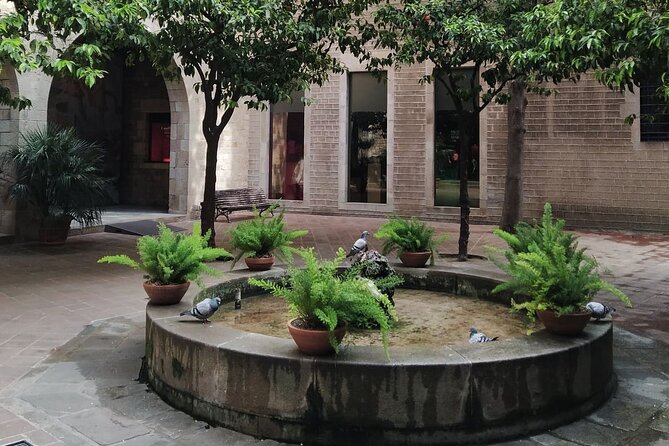
Museu Frederic Mares is described as a beautiful patio with a dark story. The key detail here is that it was the headquarters of the Spanish Inquisition in Barcelona.
You get about 15 minutes at this stop. I like how this ties the earlier square-level public history to a more private, institutional kind of power. A patio can look peaceful, but the guide helps you see how places can hold fear even when they appear calm.
This is also a good test of how well the guide handles sensitive topics. In a strong guided stop, you do not just hear about cruelty, you understand why the location mattered and how the city remembers it in everyday space.
Admission is listed as ticket free. If you want to maximize the value, ask your guide what details in the space reflect the kind of authority this site represented, then take a quiet minute afterward to look with those answers in mind.
How to pace yourself on an efficient two-hour history loop
This tour is timed like a clean, two-hour loop, with each site getting roughly 10 to 20 minutes. That means you should come ready to listen and then look, not the other way around.
Since you can ask questions freely in a private setting, I recommend you pick one theme before you start. For example, you might focus on power, religion, or Roman roots. Then, as you move from Placa de Sant Jaume to the cathedral and beyond, you will notice how the stories echo each other.
Comfort matters. Wear shoes you can walk in for about two hours in older stone streets around Ciutat Vella. If you bring a camera, plan to pause longer at places where your guide mentions a specific detail, like the mailbox story at Casa de l’Ardiaca or the 1929 origin of Pont del Bisbe.
And yes, it is a free admission kind of day at each listed stop. Still, you will get the most value by treating it like a guided walk first, and a photo session second.
Should you book Hidden Barcelona?
Book it if you want a private history tour that stays conversational, includes both major and small sites, and keeps momentum without turning it into a sprint. This route is especially good for history buffs who like dark chapters explained with context, not just presented as shock.
Skip it or plan a follow-up visit if you need long, slow time at major interiors. Each stop is short by design, so you should treat this as your fast, guided key to Barcelona’s layers, then return on your own if one place pulls you in.
If you are traveling with a partner or small group and you like asking questions freely, this one makes it easy. And with Adi bringing humor plus facts into the same story, the walk tends to stick with you in a very practical way, not as a pile of names.
FAQ
How long is the Hidden Barcelona tour?
It is approximately 2 hours.
What is the price per person?
The price is $56.78 per person.
Is the tour private?
Yes. It is private, and only your group participates.
What language is the tour offered in?
The tour is offered in English.
Where do I meet, and do I return there?
You meet at Pl. de Sant Jaume, 3, Ciutat Vella, 08002 Barcelona, Spain, and the activity ends back at the same meeting point.
Do I get a mobile ticket?
Yes. The tour includes a mobile ticket.
Do the stops require paid admissions?
Admission tickets are listed as free for the stops on this route.
What is the cancellation policy?
You can cancel for a full refund up to 24 hours before the experience starts. If you cancel less than 24 hours before, the amount paid is not refunded.
More Tour Reviews in Barcelona
Not for you? Here's more nearby things to do in Barcelona we have reviewed








More Barcelona City Tours worth opening.
 ★ 4.4Park Güell Admission TicketFrom $2576,534 reviews
 ★ 4.7Casa Batlló Entry with Self-Audioguide TourFrom $3425,359 reviews
 ★ 4.424 or 48-Hour Hop-On Hop-Off Bus TourFrom $3920,872 reviews
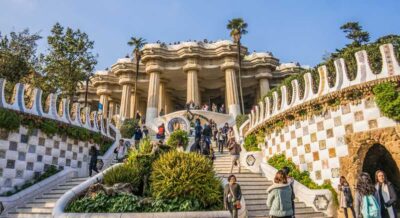 ★ 4.7Park Guell Guided Tour with Skip The Line EntryFrom $3117,563 reviews
 ★ 5.0Barcelona in 1 Day: Sagrada Familia, Park Guell,Old Town & PickupFrom $12013,541 reviews
 ★ 4.3Barcelona Aquarium: Entry TicketFrom $3113,335 reviews
 ★ 4.8Sagrada Familia Skip-the-Line Entry Ticket & TourFrom $6712,789 reviews
 ★ 4.4FC Barcelona Museum “Barça Immersive Tour” TicketFrom $3510,944 reviews