
REVIEW · GUIDED
Guided Tour at Catalonia’s Royal Academy of Medicine
A real-life anatomy classroom sits in one of Barcelona’s grand neoclassical buildings. I love the Ventura Rodríguez anatomical amphitheater and the way the guide connects medicine to architecture you can actually walk through. One watch-out: the visit includes steps, so it may be a tougher fit if you need to avoid stair climbing.
If you care about Barcelona beyond Gaudí, this stop gives you something different and surprisingly human. I also like how the story is anchored in names like Pere Virgili, Antoni de Gimbernat, and Santiago Ramón y Cajal, so the tour feels tied to real medical progress rather than just stones and dates.
The main consideration is physical comfort. The tour is short at 50 minutes, but there are steps, and the activity isn’t suitable for people with pre-existing medical conditions.
Key things to know before you go
- Last anatomical amphitheater in Spain, built for surgeon training in the 18th century
- Ventura Rodríguez design, making the link between teaching, surgery, and space feel practical
- First X-ray experiment connection in Spain, explained during the visit
- Walking the Academy halls, not just standing in one room
- Live guide in Spanish, Catalan, or English, plus an audio guide in multiple languages
Royal Academy of Medicine in Barcelona, where surgery meets neoclassical design

This guided tour at the Royal Academy of Medicine of Catalonia is one of those rare Barcelona experiences that feels both educational and atmospheric. You are not looking at medicine through a screen or a museum case. You’re inside a historic building where the architecture was part of the training, which changes how you understand the place.
I like that the Academy sits in a setting that makes sense to the story. It is next to Barcelona’s main hospital area, so the building doesn’t feel like an isolated “old site.” The experience also leans into the building itself, especially its standout anatomical amphitheater, built for teaching surgeons back in the 1700s.
You can also read our reviews of more guided tours in Barcelona


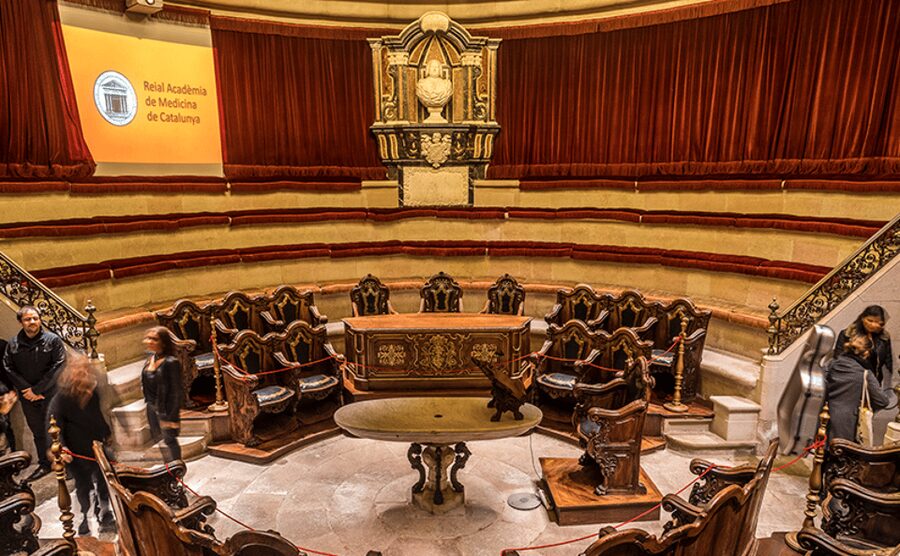
Inside the Academy, Ventura Rodríguez’s anatomical amphitheater

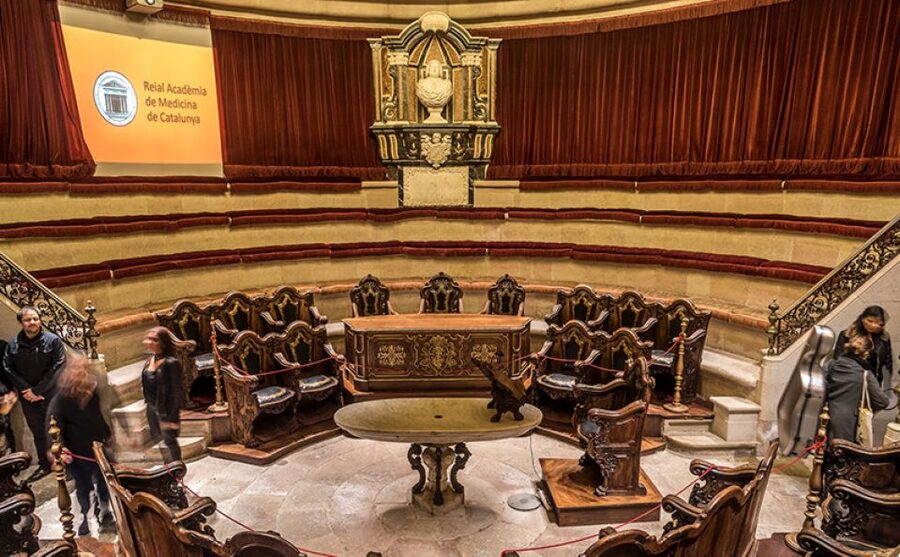
The heart of this tour is the anatomical amphitheater. It is a spectacular circular-style teaching space designed by Ventura Rodríguez, and it was intended for the training of surgeons in the 18th century. Standing there, you get why this kind of room mattered: when you train people to operate, you need more than knowledge, you need a shared view, repeated practice, and a space built for instruction.
What makes this more than a generic “look around” stop is the feeling that the room was designed for learning. The guide helps you connect medicine and surgery to the Academy’s architectural choices, not just to the broad idea of scientific history.
You will also have time to walk through the halls of the Academy. That moving around part matters, because you start to see how the amphitheater fits into the wider building, rather than treating it like a standalone exhibit.
The Spain X-ray experiment connection, why it gets mentioned here
One of the tour highlights is discovering where the first X-ray experiment took place in Spain. Even if you know a little about the discovery of X-rays, learning that it happened in this context gives the story a local anchor.
Why I think this detail is worth your attention: it turns the Academy into a timeline, not a single-era building. You’re standing in an 18th-century training space, then the guide ties it to a much later scientific turning point. That bridge is where the tour feels most satisfying.
Instead of treating science as a sequence of distant breakthroughs, you get a sense that the Academy kept playing a role as medical knowledge evolved.
Names you’ll hear: Pere Virgili, Antoni de Gimbernat, and Santiago Ramón y Cajal
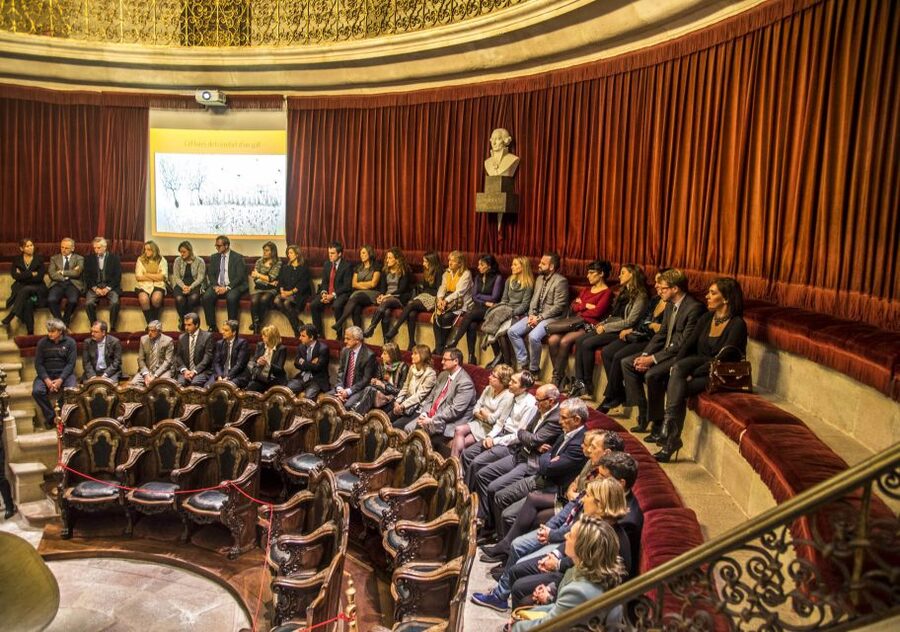
A good historic tour doesn’t just list famous people. It shows why those names connect to the spaces you’re seeing. Here, the guide ties the Royal Academy’s history to medical and surgical figures such as Pere Virgili, Antoni de Gimbernat, and Santiago Ramón y Cajal.
This matters because these names make the building feel less like an artifact and more like an engine. Medicine and surgery don’t move forward by one invention alone. They move through teaching, experimentation, and systems for sharing ideas, which is exactly the kind of role an Academy building played.
If you like science that has a human trail, this is the part that will stick with you. It also makes the walking time more meaningful, since you’re moving through halls with a “who and why” running in your head.
How the 50-minute flow usually feels, from entry to amphitheater to halls
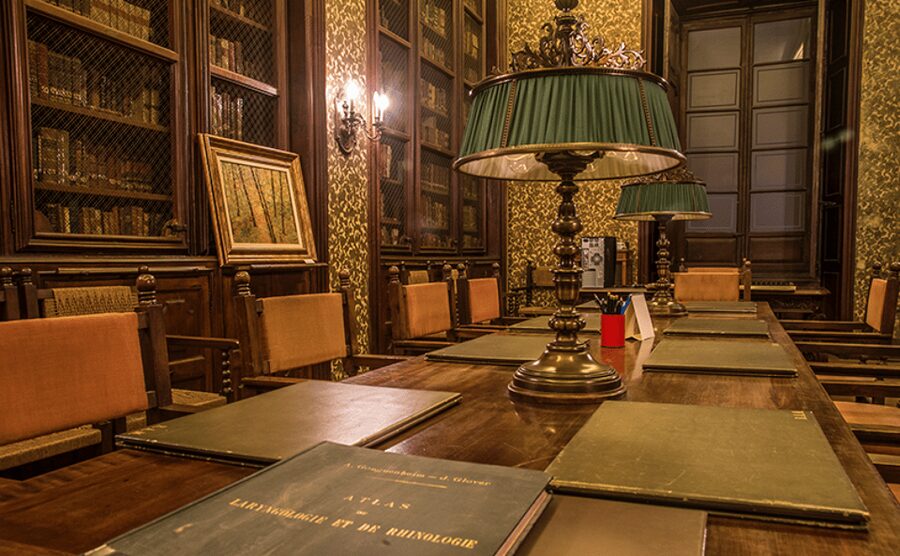
This tour is set at 50 minutes, so it runs at a focused pace. You are there to see the main architectural and medical features, not to spend hours in one wing.
Here is what the experience feels like in practice:
- You arrive at the meeting point and check in for the confirmed departure time.
- The guide brings the group inside when they start the session.
- The tour centers on the anatomical amphitheater, where the key teaching purpose is explained.
- You then continue through the halls, where you learn how the Academy’s medical mission relates to the building around it.
- Near the key moments, the guide brings in the Spain X-ray experiment connection and the Academy’s notable medical names.
Because it is short, you will want to pay attention early. If you blink at the first story, you might miss how the guide ties the amphitheater to the later science references.


Price and value, what $16 gets you in Barcelona
At $16 per person, this tour is priced like a smart add-on to a day of sightseeing. For that money, you get Academy entrance fees and a guided tour, plus an audio guide available in multiple languages.
The value comes from three things working together:
- A real architectural feature you can see and understand, not just a lecture
- A guided narrative that links surgical training and later medical breakthroughs
- The audio guide option, which helps if you want backup while listening to the live guide
In Barcelona, it’s easy to spend more for experiences that feel mostly like a hallway walk. Here, the amphitheater gives you a clear “main event,” so your time and money feel aligned.
Languages and audio support, so you can choose your comfort level
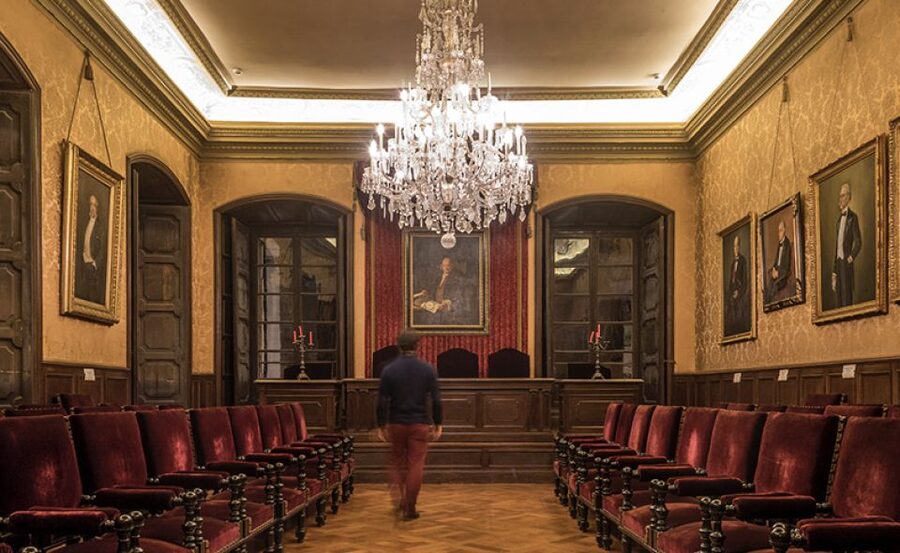
The live tour guide operates in Spanish, Catalan, or English. On top of that, the audio guide is included with language options including Chinese, English, French, German, and Russian.
I like this setup because it gives you flexibility. If your Spanish or Catalan is improving, you can choose the live language and still rely on the audio when details move quickly. If you’re traveling with someone who prefers audio, you won’t feel locked into one mode.
Practical tips that make the tour easier
This is a small building type experience, and small comfort choices help.
- Wear comfortable clothes. You may move around more than you expect for a 50-minute visit.
- Plan for steps. The tour is wheelchair accessible, but the visit includes steps, so you should think about how stairs affect you or your group.
- If you have questions about whether the site will work for your situation, it’s worth taking them seriously, since it isn’t suitable for people with pre-existing medical conditions.
Also note the rules: alcohol and drugs are not allowed.
Who this Royal Academy tour suits best
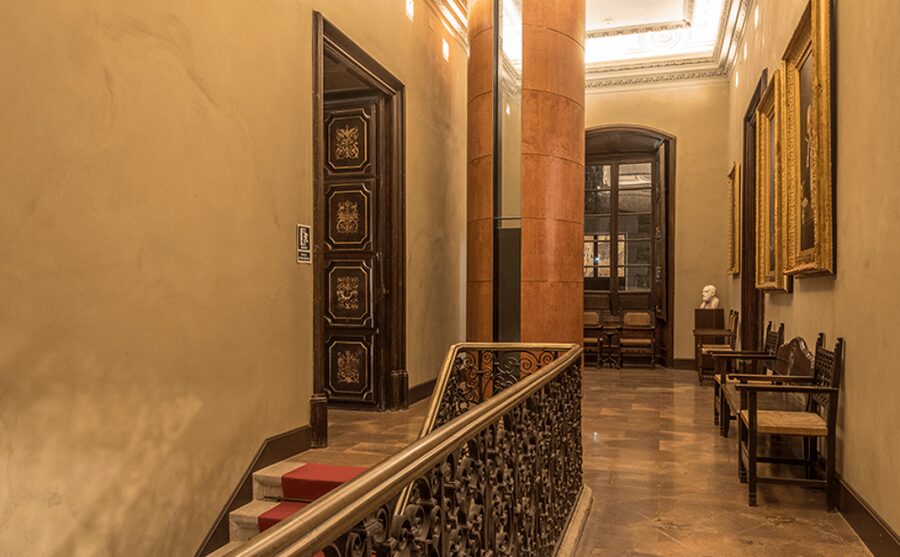
This guided visit is a great match if you like any of these themes:
- Medical history that connects to real spaces, not just textbooks
- Architecture lovers who want a neoclassical building with a strong purpose
- Students or history-minded travelers interested in how surgery training was taught in earlier centuries
- People who enjoy science stories that include a local turning point, like the X-ray experiment in Spain
If your idea of a museum day is mainly quiet browsing, this tour might feel more structured than you expect. On the other hand, if you like a guide putting the pieces together, you’ll likely enjoy the way the story is built around the amphitheater and the science names.
My verdict, should you book this tour?
Book it if you want a focused, 50-minute Barcelona experience that combines neoclassical architecture with the practical story of surgical training and Spain’s X-ray connection. The short format is ideal if you’re fitting in something off the usual main-route attractions, and the $16 price feels fair for what you actually see: a major anatomical amphitheater, guided context, and audio support in several languages.
Skip or reconsider if steps are a deal-breaker for you, because the visit includes them and it is not suitable for people with pre-existing medical conditions. If that’s not your situation, this is an excellent way to understand how medicine, surgery, and scientific progress shaped a real place in Barcelona.
FAQ
How long is the guided tour at the Royal Academy of Medicine of Catalonia?
The tour lasts 50 minutes.
How much does the tour cost?
The price is $16 per person.
Where do I meet for the tour in Barcelona?
Meet at Catalonia’s Royal Academy of Medicine, Carme Street number 47, 08001 Barcelona.
What do I need before the tour starts?
You need the confirmation email from Sternalia before the tour begins.
What languages are available for the live guide and audio guide?
The live tour guide is offered in Spanish, Catalan, and English. The included audio guide is available in Chinese, English, French, German, and Russian.
Is the site wheelchair accessible?
The activity is wheelchair accessible, but there are steps during the visit.
Is the visit suitable for people with medical conditions?
No, the tour is not suitable for people with pre-existing medical conditions.
What should I bring or wear?
Bring comfortable clothes.
Is there a cancellation option if my plans change?
Yes, free cancellation is available up to 3 days in advance for a full refund.
Are there any rules about food or drink?
Alcohol and drugs are not allowed.
More Guided Tours in Barcelona


More Tours in Barcelona


More Tour Reviews in Barcelona

Not for you? Here's more nearby things to do in Barcelona we have reviewed









More Guided worth opening.
 ★ 4.7Park Guell Guided Tour with Skip The Line EntryFrom $3117,563 reviews
 ★ 4.5Fast Track Sagrada Familia Guided TourFrom $668,795 reviews
 ★ 4.5Park Guell Guided Tour with Skip the Line TicketFrom $386,996 reviews
 ★ 4.3Sagrada Familia Skip-the-Line Guided TourFrom $655,365 reviews
 ★ 5.0Montserrat, Girona & Costa Brava Guided Day Trip from BarcelonaFrom $1335,128 reviews
 ★ 4.9Sagrada Familia Priority Access Guided TourFrom $584,917 reviews
 ★ 4.3Sagrada Familia Guided Tour with Tower AccessFrom $854,729 reviews
★ 4.8Sagrada Familia Skip-the-Line Guided TourFrom $643,824 reviews
★ 4.3Sagrada Familia Guided Tour with Tower AccessFrom $854,729 reviews
★ 4.8Sagrada Familia Skip-the-Line Guided TourFrom $643,824 reviews