
REVIEW · GOTHIC QUARTER TOURS
Gothic Quarter & Beyond: Leisurely Local Discoveries
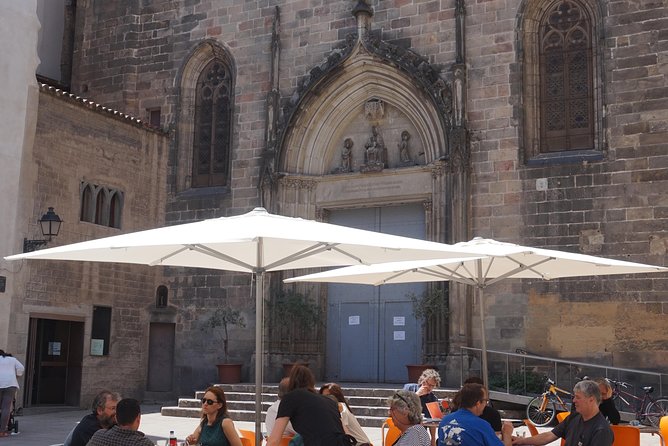
The Gothic Quarter can feel crowded, but this walk slows you down. You get a small-group route with time to ask questions, plus a real local snack. It’s built around quieter corners and photo-friendly details most first-time itineraries skip.
I love that the pace is gentle enough to actually notice things, not just speed-past monuments. I also like the variety of stops, from medieval convents to a UNESCO concert hall. One thing to keep in mind: it requires good weather, so plan for a backup date if Barcelona is being moody.
Key highlights to expect on this Gothic Quarter tour
- Small-group pace (max 12), so your questions do not get lost in the crowd
- Local snack that makes the walk feel like a real day out, not a checklist
- Old churches and convents that many visitors never stop to see
- Photo stops away from the main crush, including Roman leftovers you can spot fast
- UNESCO Palau de la Música explained in plain language
- A finish at Museu Frederic Marès, where art sits in a former royal setting
A 3.5-hour stroll through Barcelona’s quieter Gothic Quarter corners
This tour is designed for people who like Barcelona, but want more than the usual highlights. You’re walking through Ciutat Vella, taking in medieval and Roman traces, then landing at places where architecture tells the story.
The total time is about 3 hours 30 minutes, which is long enough to feel like a proper tour, but not so long that your feet start negotiating for your backpack. And because the group stays at a maximum of 12, you can ask practical questions as you go, like what you should look for in the details, or how these buildings changed over time.
If you’re the type who loves to take photos, you’ll appreciate that you are not only stopping at famous facades. You also get chances to frame lesser-seen spots, including courtyards and remnants that are easy to overlook when you are wandering alone.
You can also read our reviews of more tours and experiences in Barcelona.
Start at Palau de la Música, then walk like you mean it
Your tour starts near Carrer del Palau de la Música, by Palau de la Música Catalana (C/ Palau de la Música, Ciutat Vella, 08003). The route ends at Museu Frederic Marès (Plaça Sant Iu, 5, Ciutat Vella, 08002).
That matters, because it shapes the vibe. You’re not trudging across the city. Instead, you are doing a compact, “right here, right now” loop in the Gothic Quarter area. You’ll likely find it easier to connect the walk with lunch afterward, and you can finish near the museum zone rather than being dropped somewhere random.
Also, the tour uses a mobile ticket, which is handy on a day when your hands already want to hold a coffee, your camera, and maybe a snack you forgot you bought earlier.
Sant Agustí Vell: when convent life turns into museums
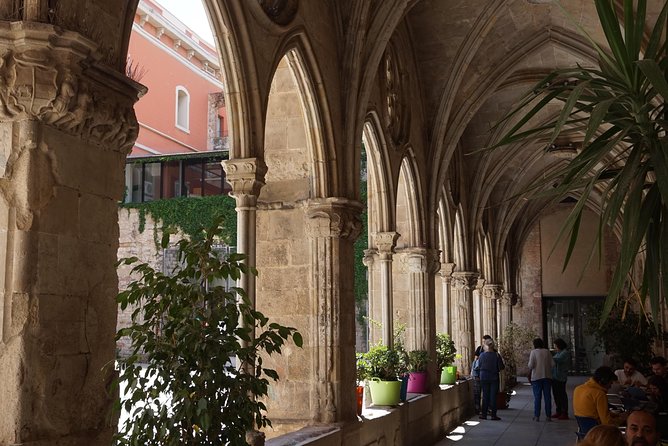
First up is the Centre Cívic Convent de Sant Agustí area, tied to the Convent of Sant Agustí Vell. Work on the earlier convent started in 1349, but the Augustinians had to leave when the Fortress of the Ciutadella plans reshuffled the area. Later, between 1728 and 1750, the new convent and church were created.
What I like here is the layered message: religious spaces in Barcelona kept getting reused. Today, much of the old convent is part of the Ciutat Vella Civic Centre and includes places like the Barcelona Photographic Archive and the Chocolate Museum.
You’ll see parts of the original complex still preserved, including restored sanctuary wing elements and a side part of the church. The stop is marked for about 10 minutes and is listed as free admission, so it works well even if you are not planning museum hours for the rest of the day.
Drawback? If you expect one single big church interior moment, this is more about seeing what remains and understanding how the site evolved. You’ll get more out of it if you pay attention to the structure and ask questions.
Sant Pere de les Puelles: a monastery with a 900-year timeline
Next is Sant Pere de les Puelles, an ancient monastery whose roots go back to 945 AD, when it was consecrated. It became Barcelona’s first convent of Benedictine nuns. It started outside the city walls in a Romanesque context, which is part of why its story feels so tied to the city expanding around it.
This is not a “set it and forget it” building. Over the centuries, the fortunes changed again and again. You’re told about attacks by Arab troops, fires, and then the 19th-century expulsion of its religious community, which pushed the nuns to a more permanent site in Sarrià-Sant Gervasi in 1879.
If you like stories that explain why stones look the way they do, this stop fits. It gives you context for how Barcelona’s boundaries and conflicts shaped architecture, not just aesthetics.
Like the first stop, it’s listed as about 10 minutes and free admission. That makes it a low-stress way to learn a lot without feeling rushed.
Capella d’en Marcús: a Roman road chapel with a social purpose
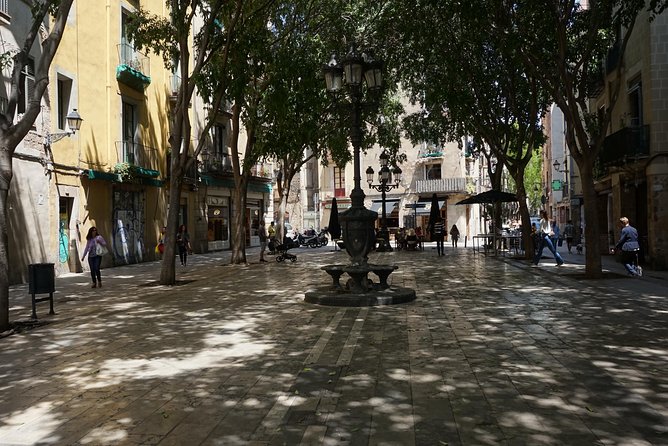
Then you reach Capella d’en Marcús, connected to Bernat Marcús, an influential Barcelona citizen. The chapel, sponsored in 1166, was meant to support travelers and also serve as a kind of hospital for the poorest people in the city.
The name you’ll hear tied to its earlier identity is Capella de la Mare de Deu de la Guia. The location is key because it was placed by an old Roman road leading toward France.
This stop is short, around 5 minutes, and listed as free admission. But short does not mean meaningless. It’s the kind of place that makes the Gothic Quarter feel human. Instead of thinking only about kings, you get reminded that medieval cities also had compassion and basic logistics for people moving through.
Practical note: if you want photos, keep your camera ready, but don’t crowd the spot. Small chapels like this tend to be tight.


Basilica dels Sants Martirs Just i Pastor: medieval church, less tourist traffic
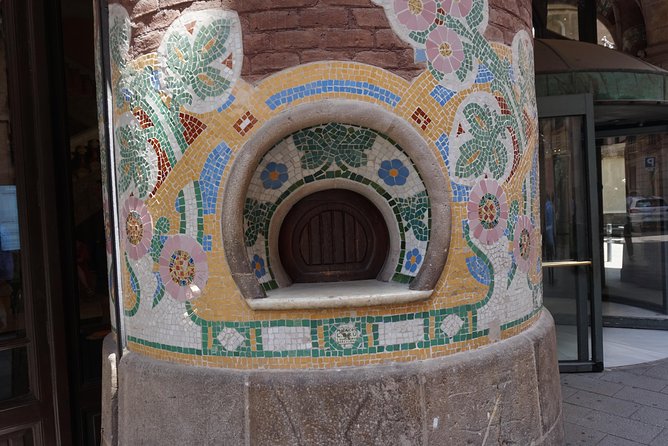
Your route continues to Basilica dels Sants Martirs Just i Pastor. Tradition says it is Barcelona’s oldest church, though you should treat that as tradition rather than a scientific claim. What is clear is that the building is 14th-century and sits in one of the Gothic Quarter’s most beautiful, less-explored areas.
This is a nice mid-tour contrast. You go from quiet convent sites and a chapel with a social story, then you arrive at a church that feels more public, more central to civic life. You also get another chance for photos, especially if you focus on the area around the basilica rather than only the doorway.
It’s about 10 minutes and listed as free admission.
If you are the type who only likes interiors, plan to come ready to look closely at what you can see from outside. This stop can reward patience, not just immediate wow-factor.
MUHBA Temple d’August: four columns from the Roman era
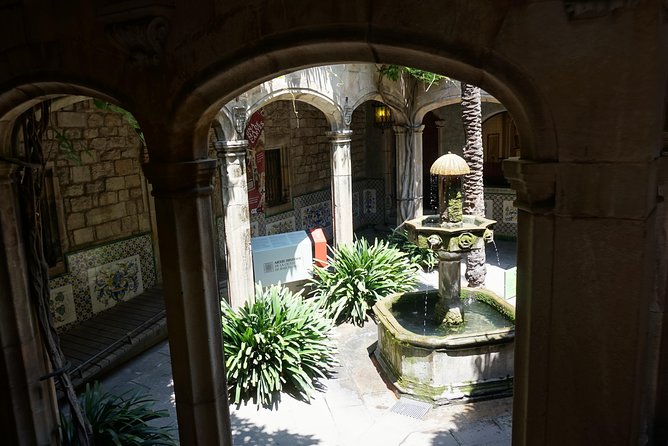
This is one of the “wait, what is that?” moments. At MUHBA Temple d’August, you find a building on Carrer Paradís with a small medieval courtyard. Inside, four columns from the Temple of Augustus have survived.
They are described as being more than 2,000 years old, which is hard to keep in your brain while you are standing in a modern city block. That is exactly why guided context helps. You start connecting Barcelona’s layers: Roman foundations under medieval streets, then later reworkings above them.
This stop is listed for 10 minutes and free admission. It’s also one of the best places to take photos that do not look like every other Gothic Quarter shot. Tight framing, courtyard light, and the columns themselves do the work.
Palau de la Música Catalana: the UNESCO moment explained simply
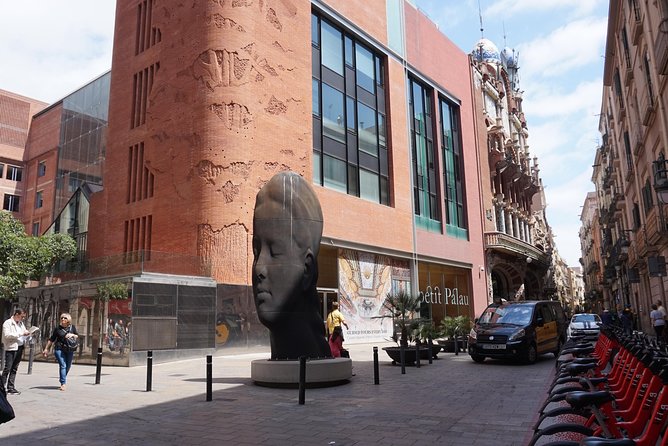
Now comes the “okay, now we get it” stop: Palau de la Música Catalana. This concert hall is noted as the only concert hall in the world declared a UNESCO World Heritage Site.
The architect was Domènech i Montaner, and the hall was designed as the home of the Orfeó Català choir. It was funded through public donations, which is a huge part of the story. It does not feel like a showy monument dropped from the sky. It feels like people put resources into building something they believed in.
I like that this part of the tour gives you more than a wow photo. You get the context for why it matters culturally, plus what to look for so your pictures show details, not just crowds and scaffolding.
Time here is about 10 minutes, listed as free admission. You’ll likely want to linger, but the structure of the tour keeps you moving so you can finish with purpose.
Museu Frederic Marès: art collected by one person, housed in palace walls
Your final stop is Museu Frederic Marès, located in the heart of the Gothic Quarter. The museum sits in part of a former royal palace that once belonged to the Counts of Barcelona.
What makes this place feel different from a typical city museum is the collector focus. Frederic Marès gathered an extensive collection of artworks and objects over his lifetime, and you see that personal collecting habit reflected in the museum layout.
It’s a strong landing spot because the tour ends where the architectural storytelling turns into a human story. You move from centuries of building history, into the idea that individuals also shape what a city remembers.
This stop is about 10 minutes and listed as free admission. Even if you don’t plan to do a full museum visit, the guided introduction helps you decide whether to stay longer on your own.
Price and value: what $61.54 buys you in real time
At $61.54 per person, the value comes from three things that are hard to replicate on your own.
First, you get a focused route in a tight area, so you are not spending half your time figuring out where to go next. Second, it’s a small group (max 12), which changes the feel. You can ask questions as you walk, instead of asking questions at the museum front desk and hoping someone answers in time.
Third, you get a traditional snack included in the experience. That sounds small until you remember you are doing 3.5 hours of walking in a historic district. Food breaks turn an intense sightseeing day into something more like a local afternoon.
Also, it’s offered in English and includes a mobile ticket, which keeps things simple. And since the tour is often booked around 27 days in advance, it’s worth planning ahead if your dates are firm.
If you are on a budget, this is the kind of add-on that can replace a bunch of separate small visits. If you already have strong museum plans, you may treat it as your guided intro to the area and let the tour guide you to what you should prioritize next.
Who this tour is best for, and who might want something else
This works especially well if you like:
- Learning the “why” behind Gothic Quarter buildings, not only the “what”
- Photo moments that are not just the postcard angles
- A walk where questions are encouraged and time feels generous
- A less hectic pace inside a compact area
It may not be ideal if you want:
- A long, deep museum experience at every stop
- Mostly big interiors with lots of time to wander solo
- A flexible schedule that you can extend beyond what the route allows
Weather is also a factor. The tour requires good weather, so if you are visiting in a rainy window, keep a backup plan in mind.
Should you book this tour?
Yes, if you want an efficient, story-driven walk through the Gothic Quarter that does not feel like a sprint. The small-group format and the chance to learn from guide-led explanations make the free-admission stops feel worth your time, even when the locations are quiet or lesser known.
I’d book it if you care about architecture details, Roman-to-medieval layering, and practical sightseeing flow from Palau de la Música toward Museu Frederic Marès. You’ll also leave with food satisfied, photos captured, and a clearer sense of how Barcelona’s layers overlap.
Skip it only if your travel style is purely self-guided, or if you want long museum time rather than a curated walking introduction.
FAQ
Where does the tour start and end?
It starts at Carrer del Palau de la Música, C/ Palau de la Música, Ciutat Vella, 08003 Barcelona, Spain. It ends at Museu Frederic Marès, Plaça Sant Iu, 5, Ciutat Vella, 08002 Barcelona, Spain.
How long is the tour?
The duration is approximately 3 hours 30 minutes.
What is the price per person?
The price is $61.54 per person.
Is the tour offered in English?
Yes, the tour is offered in English.
What is the maximum group size?
The tour has a maximum of 12 travelers.
Do I get a mobile ticket?
Yes, the tour includes a mobile ticket.
Are the stops free to enter?
Many of the stops are listed as free admission, including the convent-related sites and the Roman columns at MUHBA Temple d’August.
What if the weather is bad?
This experience requires good weather. If it is canceled due to poor weather, you will be offered a different date or a full refund.
Are service animals allowed, and is it near public transportation?
Service animals are allowed, and the tour is near public transportation. Most travelers can participate.
More Tour Reviews in Barcelona
Not for you? Here's more nearby things to do in Barcelona we have reviewed








More Gothic Quarter Tours worth opening.
 ★ 5.0Barcelona Gothic Quarter Tapas & Taverns Food & Wine TourFrom $1311,470 reviews
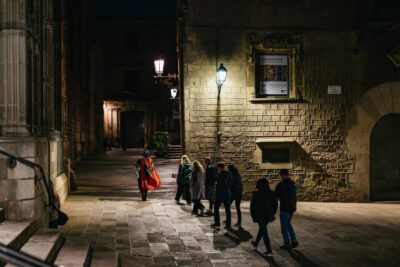 ★ 4.7Gothic Quarter Ghosts and Legends Walking TourFrom $191,443 reviews
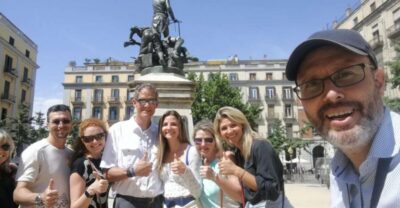 ★ 4.8Old Town and Gothic Quarter Walking TourFrom $211,393 reviews
 ★ 5.0Barcelona Old Town & Gothic Quarter Small Group TourFrom $221,308 reviews
 ★ 4.8El Born and Gothic Quarter Wine & Tapas Bar TourFrom $81674 reviews
 ★ 5.0Kids and Family Gothic Quarter Walking Tour in BarcelonaFrom $25465 reviews
 ★ 4.5Barcelona Gothic Quarter Walking TourFrom $33456 reviews
★ 4.9Gothic Quarter Walking TourFrom $212383 reviews
Continue by place or experience