
REVIEW · BARCELONA CITY TOURS
From Barcelona: Medieval Villages Day Tour
Three medieval towns feel like a movie set. This Barcelona day tour strings together Besalú’s arcaded old streets, Rupit’s hanging bridge, and Tavertet’s cliff views with hands-on storytelling along the way. I especially like the mix of guided walks plus real free time (you get 2 hours in Rupit), and I like how the route adds surprise stops like Castellfollit de la Roca at a basalt edge. One drawback to plan for: it is a long day, so your time in each village is tight if you love to linger.
I also like that the day is not just three towns and back. You pass famous viewpoints tied to the Cingles de Tavertet sandstone cliffs, and you’ll hear about older layers of the region, from the megalithic tomb field to the Iberian Wall.
The morning starts at the Explore Catalunya office, across from the Palau de la Música on Via Laietana, so you can show up, get briefed, and get moving fast.
Key points to know before you go
- Besalú’s medieval Jewish sites include a restored 12th-century mikveh and remains of a synagogue
- Rupit’s free time is built in, with plenty of room to wander at your own pace
- Castellfollit de la Roca is a quick but striking basalt-cliff stop, with tiny-town scale
- Cingles de Tavertet gives you big countryside views, plus stops tied to older history
- Tavertet feels quieter thanks to its preserved houses and small size, not big crowds
Why This Medieval Route Works From Barcelona
This tour is basically a smart way to trade city time for Catalonia’s older corners. In ten hours, you get three distinct medieval village moods, with the scenery changing as you go. That mix matters, because the difference between Besalú, Rupit, and Tavertet is not just “old buildings,” it is how each place was built and used.
I also like the pacing. Each village gets a guide-led orientation, then you get time to walk without a script. Even if you do not love history lectures, the free wandering is where the day clicks.
One more practical bonus: you are not fighting public transport or renting a car. You just meet in the morning, then ride in a small van with local guidance through the countryside.
You can also read our reviews of more tours and experiences in Barcelona.


Besalú’s Arcades and the Mikveh That Changes the Story
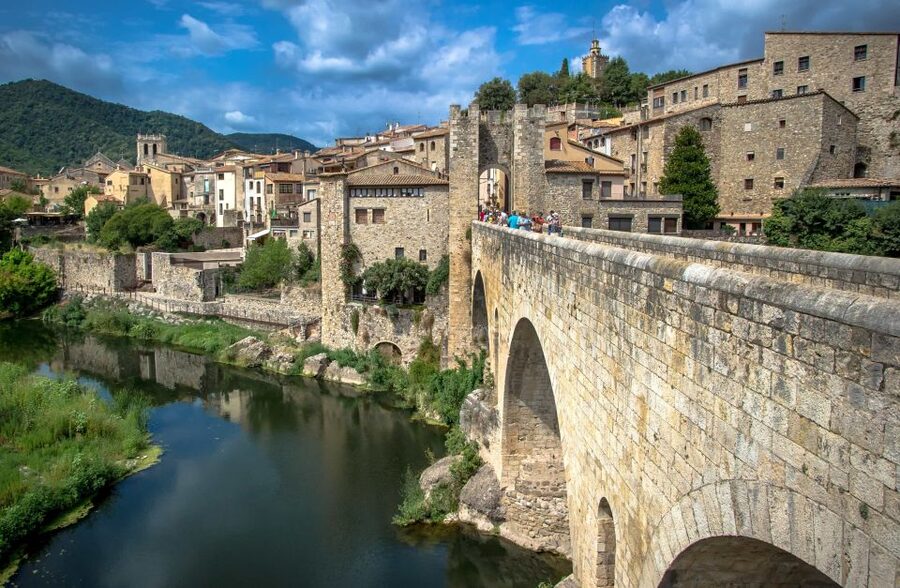
Besalú is the historical anchor of the day. You arrive and start with a guided walk through the medieval core, where arcaded streets make it feel like the town was designed for strolling and staying protected from weather.
What I like most here is the stop at the restored mikveh, described as a 12th-century Jewish bath. It is the kind of detail that turns a “pretty old town” into a real historical place. You also see remains tied to a medieval synagogue, which gives context for the community life that existed in the area long before modern Spain.
You are not stuck in one “photo spot” either. Your guide keeps the walk moving through streets and key features, so you get a sense of layout, not just snapshots. If you enjoy religious history and how it shows up in architecture, Besalú is the stop that will satisfy you most.
Potential drawback: if you are the type who wants to spend hours in one place, the guided time plus short exploration window can feel a bit compressed. Still, it gives you a strong base for the rest of the day.
The Basalt Cliff Detour: Castellfollit de la Roca Makes a Quick Impression
On the way from Besalú toward Rupit, you pass Castellfollit de la Roca. It is one of those mini stops that seems almost too small to matter, yet it visually punches above its weight.
The key detail is the basalt precipice setting. The town is described as having about 1,000 inhabitants living in a very compact area, which helps you understand why the village feels tight and dramatic. Even if you do not stay long, it gives you a different Catalonia flavor than the medieval cores.
Think of this as the “pause and breathe” moment before you reach Rupit. You get a scenic reset, then you roll into the cobblestone world.
Rupit’s Cobblestones, Hanging Bridge, and Free Time That Actually Works
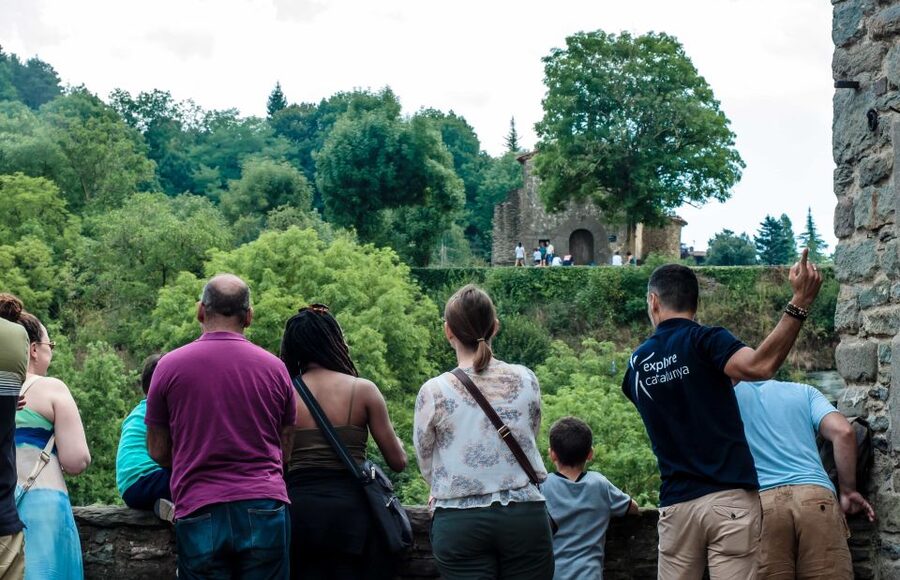
Rupit is the village most likely to win you over fast. First, you get the guided highlights, then you are handed the keys for unhurried wandering.
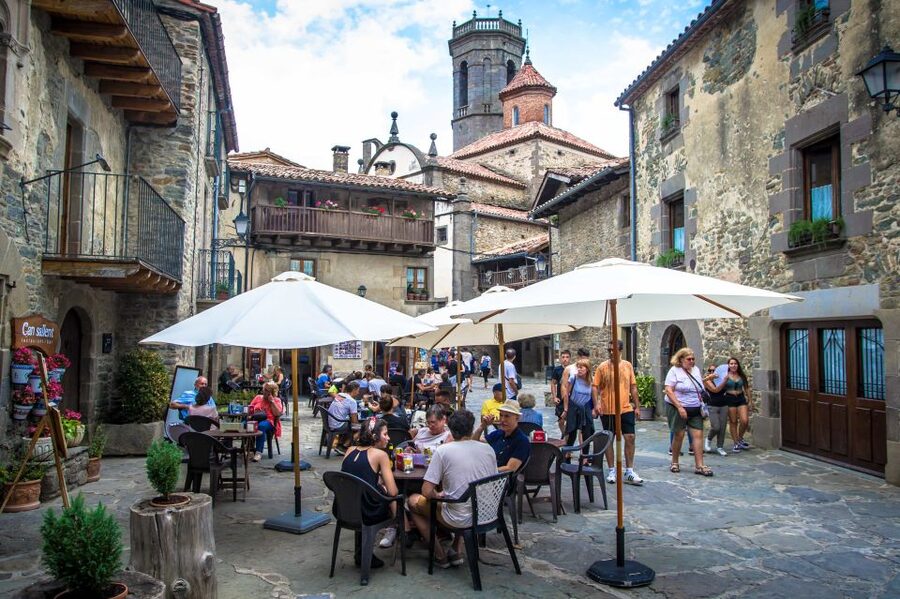
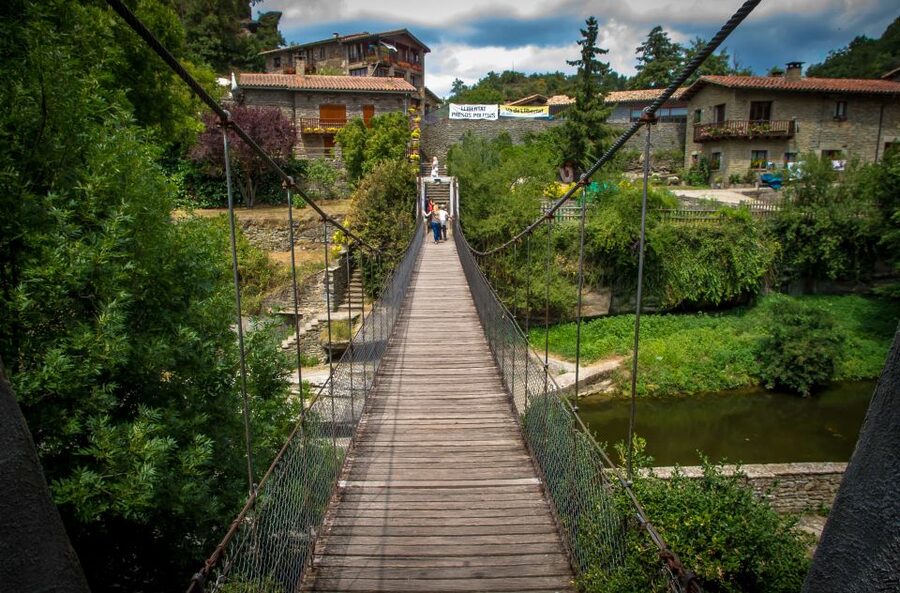
In Rupit, you can follow the cobblestone streets lined with older country houses. The highlight most people bring up is the hanging wooden bridge, which is both charming and useful as a vantage point for understanding how the town sits around its dramatic terrain.
Your guide also shows you the Baroque-era Church of Sant Miquel. That church visit matters because it connects the medieval village with the later layers that kept the town alive long after its earliest peak.
Then comes the best part for independent exploring: you get 2 hours of free time. That is long enough to do casual browsing, slow down, and decide what you want to repeat. It is also long enough to find a quiet spot, watch people move through narrow lanes, and just enjoy being away from the city.
You can also pick up lunch at a local restaurant during this block. The day is priced as a guided and transport-heavy experience, so food is on you here.
If you want to plan your time, here is a simple strategy: walk your “first loop” with the map in your head, then return for a second pass at the places that pull you in. With two hours, you can do that without feeling rushed.
One small caution: some people feel the Rupit portion is just slightly short. If this is your top priority village, keep your expectations aligned with a guided walk plus two hours of explore time.
Road Stops That Add Context: Cingles de Tavertet and Older History En Route
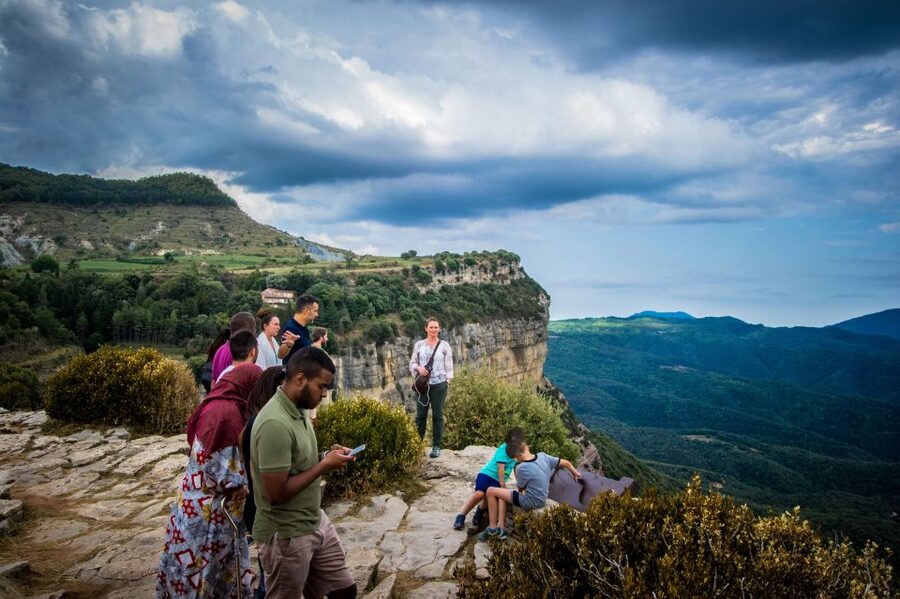
After Rupit, the route shifts from village lanes to open viewpoints. You take a scenic drive toward the top of the Cingles de Tavertet sandstone cliffs, where the scenery is the main character.
This is also where the tour adds “why it looks like this” history. You pass a megalithic tomb described as a field of funerary urns, then you reach the Iberian Wall. These stops are quick, but they are the kind of details that make the countryside feel layered, not random.
If you like geology and human history in the same glance, you’ll appreciate that the cliffs are not just a postcard. They are part of the reason older routes and settlements made sense in this region.
Practical tip: bring your phone battery attitude seriously. You will want photos at multiple points, and the best angles often happen quickly when the van stops.

Tavertet’s Preserved Houses and the Romanesque Church That Anchors the Town
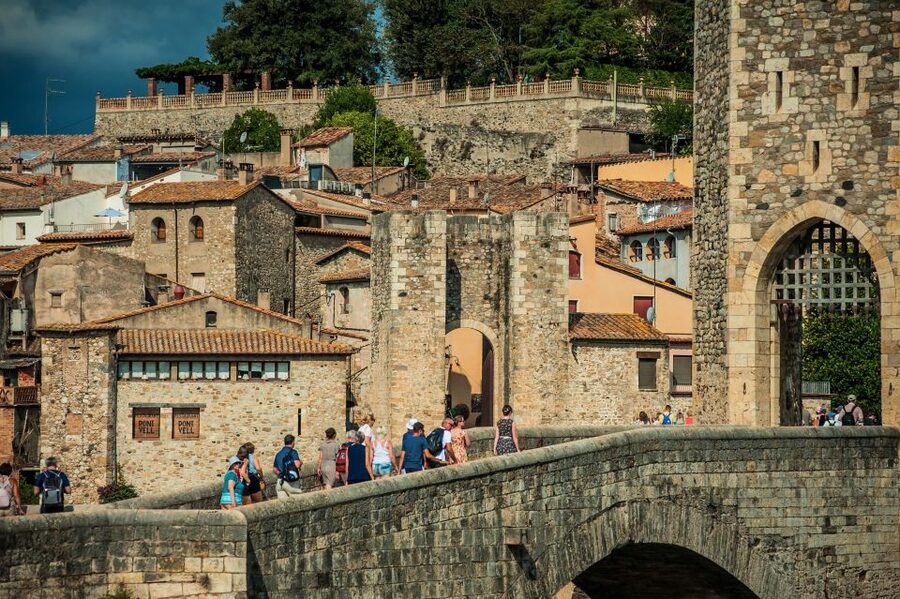
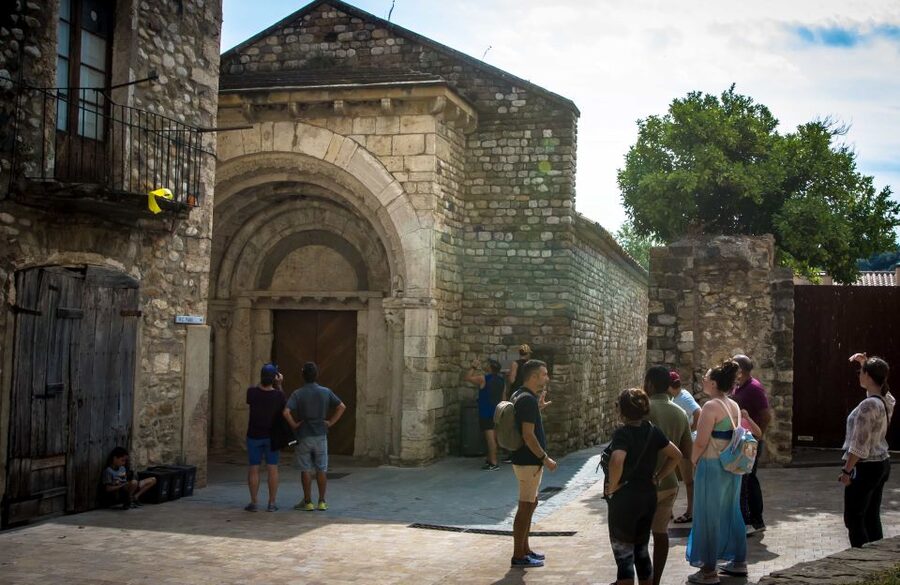
Tavertet is a calmer finale than some medieval towns. It is smaller, and it leans on a clear visual identity: 48 preserved houses from the 17th and 18th centuries, plus a Romanesque church that dates back to the 11th century.
With your guide, you tour the village and learn how those houses survived and what the architecture says about life here. A key stop is the Church of Sant Cristòfol, which gives you that classic Romanesque feel: simple, solid, and made to last.
What makes Tavertet special is how the village connects to the view. You get a short break for coffee at a local café, then you can choose to walk to the viewpoint over Panta de Sau Lake. Even if you do not do the longer walk, the setting is the point. The town sits where the cliffs let you see far.
This is also where the tour’s “off the beaten track” promise feels real. Tavertet is not trying to be a theme park. It just quietly does its job, and the cliffs do the talking.
If you are someone who gets tired walking, plan your energy. The village tour is guided, but you still choose how much you want to do during the free breaks.
Food, Timing, and What to Bring for a 10-Hour Day
This is a full day, and you feel it. You start in central Barcelona, then spend hours riding through the Catalan countryside before returning. That does not make it bad, it just means you should plan like a day trip, not like a casual stroll.
Food is not included as part of the package. You can purchase lunch in Rupit, and you can stop for coffee in Tavertet at your own expense. If you are picky about meal timing, I suggest you eat a proper breakfast before you go, then treat lunch as part of the plan rather than an afterthought.
What to bring:
- A small day bag for a jacket layer, water, and snacks, since you will be between stops for stretches
- Comfortable shoes for cobblestones and uneven village ground
- A camera strap or pocket plan for quick viewpoint photos
Also, lean into the guide’s logistics. Several guide feedback notes highlight that the guide tends to point out where bathrooms are at the stops. That is the kind of planning detail that makes the ride feel smoother.
Small-Group Value and the Guides Who Make It Feel Personal
The price, $117 per person for a 10-hour outing, is not “cheap,” but it is also not just paying for a seat on a bus. You are paying for a local guide and transport that gets you out of Barcelona without the hassle of driving.
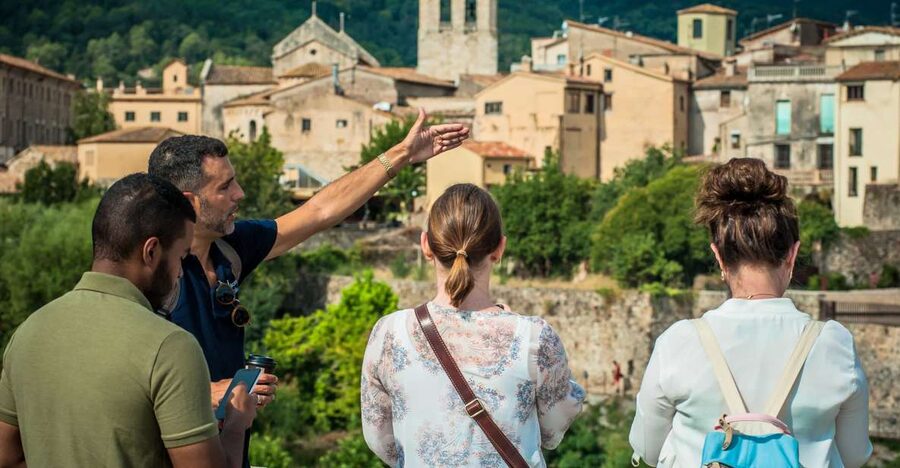
You also get value from how the day is structured. You are not only viewing buildings, you are getting context for what you see, why it mattered, and what to notice while you walk. People repeatedly mention that guides like Berta, Nuria, and Sergio bring strong pacing and friendly energy. Others also highlight guides such as Sergi, Steven, and Javi for their history storytelling and good group care.
I would not pick a tour purely on guide names, but you can use this as a filter for your expectations. If you care about explanations as you walk, this tour is set up for that.
On group size, the vibe is consistently small. Reports include groups of about five up to around eight or nine people in a minivan. That matters because you can ask questions, hear answers, and still enjoy your own pace during free time.
One more value point: the itinerary is not only “big medieval names.” The inclusion of Castellfollit de la Roca and the cliff-and-history drive gives you a sense of going beyond the obvious.
Who This Tour Fits Best (and Who Should Skip)
This tour fits best if you want a day that feels like a real slice of Catalonia, not a checklist. You will likely enjoy it most if you like medieval towns, scenic viewpoints, and guided context you can apply while you walk.
It also works well for couples and solo travelers. The structure is friendly for meeting people, and the free time blocks keep the day from feeling like a forced march.
Who might not love it:
- If you want long stays in one village, this is a fast-hit format
- If you dislike any history talk, the guided orientation in each stop may feel like more structure than you want
Should You Book This Medieval Villages Day Tour?
Book it if your ideal day is three medieval villages, countryside scenery, and a guide who makes the places easier to read. The strongest sell is the combination of Besalú’s medieval Jewish site stop, Rupit’s very walkable core plus two hours of free exploring, and Tavertet’s cliff viewpoint payoff.
If you are on a tight schedule in Barcelona, this is one of the more efficient ways to see beyond the city. And if you hate planning logistics, you’ll appreciate that transport and guided walking are handled for you.
If your goal is pure slow travel, consider booking a tour that gives longer time in fewer places. Here, the day is built to move, so you will be “seeing a lot” more than “living slowly.”
FAQ
How long is the Medieval Villages Day Tour from Barcelona?
It runs for 10 hours.
Which medieval villages are included?
You visit Besalú, Rupit, and Tavertet.
Is there time to explore on your own in the villages?
Yes. You have 2 hours of free time to explore Rupit, plus a short break for coffee in Tavertet.
Where do I meet the guide in Barcelona?
You meet at the Explore Catalunya office, directly across from the Palau de la Musica, off Via Laietena.
Is lunch included in the price?
No. Food and drinks are not included, and lunch is something you purchase at a local restaurant during the free time.
What language is the tour guide?
The tour guide provides narration in English.
Is transportation included?
Yes. Transportation is included as part of the tour.
What is the cancellation policy?
Free cancellation is available up to 24 hours in advance for a full refund.
More Tours in Barcelona


More Tour Reviews in Barcelona
Not for you? Here's more nearby things to do in Barcelona we have reviewed










More Barcelona City Tours worth opening.
 ★ 4.4Park Güell Admission TicketFrom $2576,534 reviews
 ★ 4.7Casa Batlló Entry with Self-Audioguide TourFrom $3425,359 reviews
 ★ 4.424 or 48-Hour Hop-On Hop-Off Bus TourFrom $3920,872 reviews
 ★ 4.7Park Guell Guided Tour with Skip The Line EntryFrom $3117,563 reviews
 ★ 5.0Barcelona in 1 Day: Sagrada Familia, Park Guell,Old Town & PickupFrom $12013,541 reviews
 ★ 4.3Barcelona Aquarium: Entry TicketFrom $3113,335 reviews
 ★ 4.8Sagrada Familia Skip-the-Line Entry Ticket & TourFrom $6712,789 reviews
 ★ 4.4FC Barcelona Museum “Barça Immersive Tour” TicketFrom $3510,944 reviews