
REVIEW · TOURS
Besalu & 3 Medieval Towns Small Group Tour with Hotel Pick-Up
A medieval road trip beats staring at a map. I like that this small group tour (max 8) strings together four medieval stops in one long day, and you get hotel pickup so you do not wrestle with trains and buses. One thing to consider: while the tour is offered in English, some past days have felt more Spanish than English, so if you need clear English the whole time, it is worth checking before you go.
I also love the rhythm of the day. You start with Barcelona highlights from the vehicle, then you walk in Vic, pause for photos at Can Gussinye, roam Santa Pau, and finish in Besalú where the medieval bridge and hilltop castle do not let you off easy. It is a 10-hour outing, so pack for a long day and expect stone streets and lots of walking.
Quick hits before you commit
- Max 8 travelers, so the pace stays friendly and you can ask questions without shouting over a crowd
- Hotel pickup and drop-off in Barcelona city, so you can start from your own doorstep
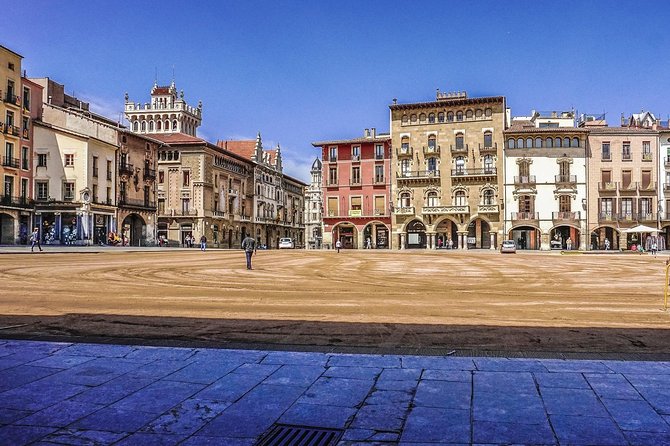
- Vic gets serious time with plaça Major, a cathedral with multiple architectural styles, and a Roman temple dating to the 2nd century
- Photo break at Can Gussinye, perched on a 40-meter high basalt cliff
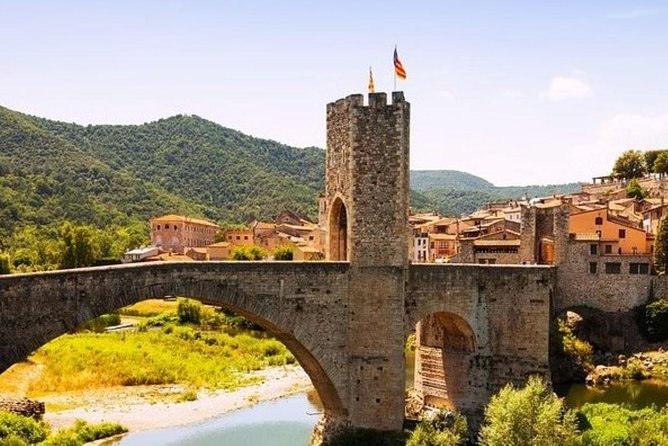
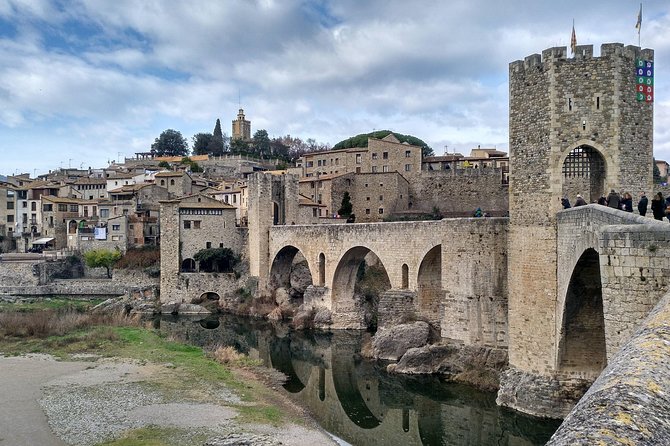
- Besalú is the payoff, with town walls, Jewish community context, the famous medieval bridge, and a hilltop castle
- Admission noted as free for the stops listed, but food and drinks are on you
The day trip concept: medieval towns without the planning headache
This is the kind of tour that makes sense when you want the medieval Catalonia look, but you do not want to plan a mini road trip. You start in Barcelona and leave with a guide, then spend the day moving town to town: Vic, Can Gussinye, Santa Pau, and finally Besalú.
The value here is not just the sights. It is the logistics. With hotel pickup and a small group, you skip the time-consuming stuff: finding the right bus, figuring out parking, and trying to connect routes between places that all feel far apart on paper.
One more smart element: the itinerary is built around walking tours at the key moments. That means you get context while you are standing in the right spot, not later when your photos are already uploaded.
You can also read our reviews of more tours and experiences in Barcelona.
Pickup, route, and that early start from Barcelona
Your pickup window is between 8:00 and 08:30 AM, and the tour start time is listed as 8:30 AM. You are picked up from any hotel or apartment in Barcelona city, and you get a message the day before with the exact pickup time, the guide name, and a phone number for the day.
The vehicle is air-conditioned, and the group stays tiny, up to eight travelers. That matters because the tour includes multiple walking segments, and you want your group to stay together without delays that can stack up in a large coach.
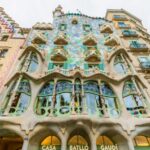
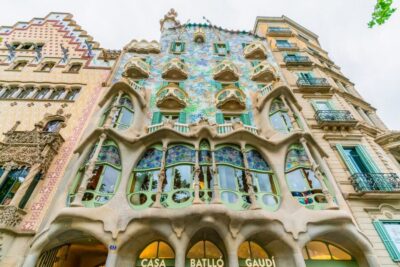
As you drive out of the city, you get an overview of Barcelona along the route. You pass by Plaça Catalunya, Passeig de Gràcia, and you also go by Gaudí facades such as Casa Batlló and Casa Milà (La Pedrera). Even if you are saving those interiors for another day, it is a nice way to get your bearings before the medieval portion kicks in.
A small note on comfort
Most people talk about the day being smooth and organized. But if you are tall, sensitive to leg room, or you have mobility limits, I would treat the small-van setup as something to confirm. A few past guests mentioned cramped seating. For peace of mind, ask the operator what the vehicle layout will be for your specific booking.
Barcelona orientation: a quick taste of Gaudí before the medieval shift
Think of this portion as warm-up time. You do not spend hours in the city, but you do get key reference points. Plaça Catalunya is your mental landmark. Passeig de Gràcia is your reminder that Barcelona is not just museums and shopping, it is also bold architecture.
Passing Casa Batlló and Casa Milà helps the later day land better. The tour is about medieval towns, but you are still in Catalonia, and the region’s story is layered. Seeing Gaudí on the way out makes the switch to Romanesque, Gothic, and Baroque tones in Vic feel more like a theme, not a detour.
Vic first: Plaça Major, Casa Comella, and the cathedral plus Roman Temple
Vic is where the day starts to feel real. It is not just a stop for photos. You get a guided walking tour, and you also get breathing room to wander and eat.
Plaça Major and Casa Comella
You begin around Plaça Major, which is described as the biggest square of Vic. You will see the old town hall, the Casa Comella, a modernist palace. Then you get time to enjoy the square as an open-air social stage, where markets, fairs, and concerts happen.
What I like about starting here is simple: squares are where the city tells you who it is. From there, it is easier to understand the scale and mood of the rest of the old town.
Free time for a Catalan lunch
You also get free time in Vic, and your guide will point you toward good places to eat a traditional lunch. Food is not included, but the guidance helps. You are in a smaller town than Barcelona, so following the locals toward a practical lunch saves you from the tourist menu trap.
Cathedral stop: styles stacked across centuries
After the first walking segment, the tour continues through central sights. You visit the cathedral, a Catholic temple that combines multiple architectural styles, from Romanesque to Neoclassical, passing through Gothic and Baroque.
This is one of those details that changes how you look at buildings. Instead of seeing one style, you start noticing how the city kept building and rebuilding as tastes and power shifted over time.
Roman Temple of Vic: a 2nd-century reminder
Then comes a standout for many people: the Roman Temple of Vic, with roots in the 2nd century. It is built on a podium, with a small chamber and an atrium supported by 8 columns.
If you like when a day trip surprises you, this is the moment. After medieval streets, you get proof that this area was important long before the Middle Ages were even a headline.
Can Gussinye in Castellfollit de la Roca: cliffside views and quick photo time
Next you head out of Vic and pass by Castellfollit de la Roca before arriving at the Can Gussinye stop.
The description is the hook: this medieval village sits on top of a 40-meter high cliff along a basaltic wall. You get about one hour here, which is just enough to soak in the view and take photos without eating up the entire day.
I like this stop because it breaks the walking pattern. You get a scenic pause, and you can reset for Santa Pau and Besalú, which are more about strolling and architectural details.
Santa Pau in the Garrotxa volcanic zone: 2 hours to get lost the right way
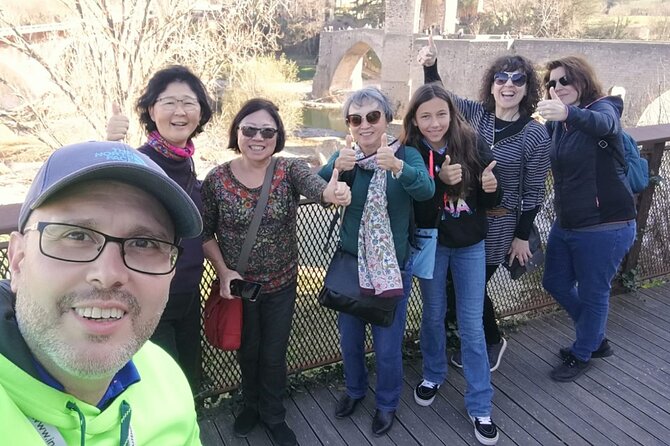
Santa Pau is a small medieval town in the heart of the Garrotxa volcanic zone. The walking tour runs about two hours, and the atmosphere is the point.
You are in greenery, but the town plan stays medieval: tiny streets, stone lanes, and a blend of Gothic and Renaissance elements. The area is also framed as having been tied to the barony of Santa Pau during the Middle Ages, which gives you a reason why the town feels like it mattered.
I find towns like this work best when you treat the guidance as a compass, not a script. Your guide can point out the important corners, and then you do the rest: slow walking, stopping when something catches your eye, and letting yourself wander.
Practical tip
Wear shoes you can trust. Santa Pau’s charm comes from its old lanes, which often means uneven surfaces and small inclines. This is not the stop to test fresh sandals.
Besalú, the grand finale: walls, the medieval bridge, Jewish community context, and the castle
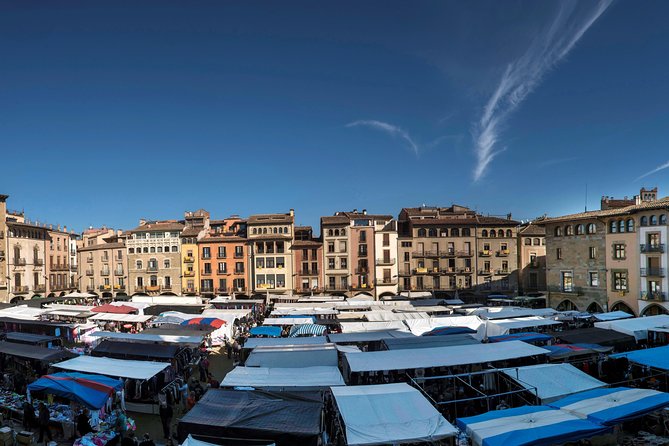
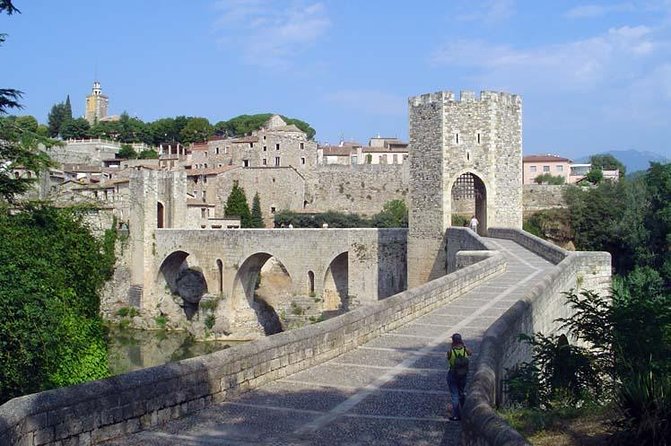
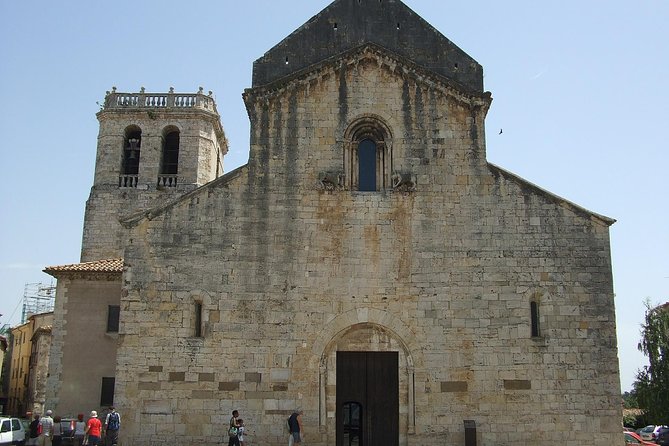
Besalú is the reason many people book this exact route. The tour finishes here with about four hours on site, and it is framed as one of the best conserved medieval old towns in Catalonia, named a Historical and Artistic National Monument in 1996.
Medieval streets plus Jewish community history
Your guide walks you through narrow streets toward the center of town, with explanations that include the importance of the Jewish community in Besalú during the Middle Ages.
This context matters because it turns the visit from sightseeing into understanding. You are not only looking at stones and arches, you are learning how real communities shaped the town’s life.
Town walls and 12th-century gateways
Besalú also has a strong defensive backbone. A large portion of the original town walls dating to the 12th century still remains, along with older gateways leading into town.
When you walk that kind of structure, you feel the logic of medieval planning. Walls are not decoration. They are how the town stayed itself.
The famous medieval bridge
Then you get to one of the most memorable elements: the medieval bridge of Besalú. It is famous in the Catalan territory, and the selling point is the view from and around the bridge. Even if you love architecture, the bridge is also about perspective and light, since you are photographing from an elevated, postcard-friendly angle.
Hilltop castle and views
The tour continues with the medieval castle, documented as far back as the 10th century. The castle sits on a hill with the remains of the canonical Santa Maria in the High Middle Ages.
Because it is hilltop, the payback is views plus photos. You end the day with the kind of sight that makes the early start feel reasonable.
About lunch in Besalú
Food and drinks are not included, so you will choose a restaurant during free time. In the feedback I read, one lunch spot that popped up was Pont Vell, praised for its view. If your guide recommends a place in the same area and style, that is a good sign.
The guide factor: names you might recognize, and what to watch for
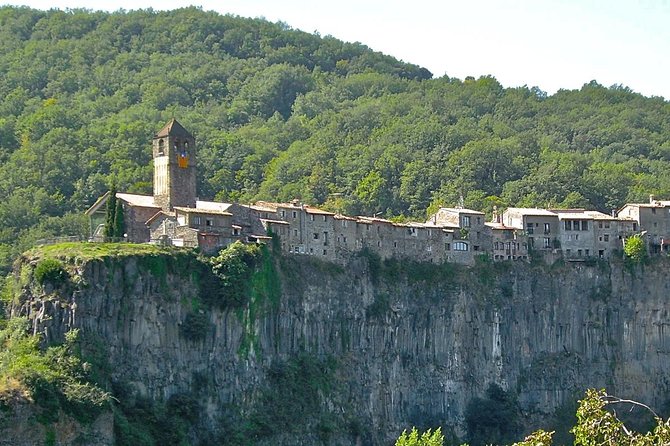
This tour lives or dies by your guide, because so much of the value is in connecting what you see with what it meant.
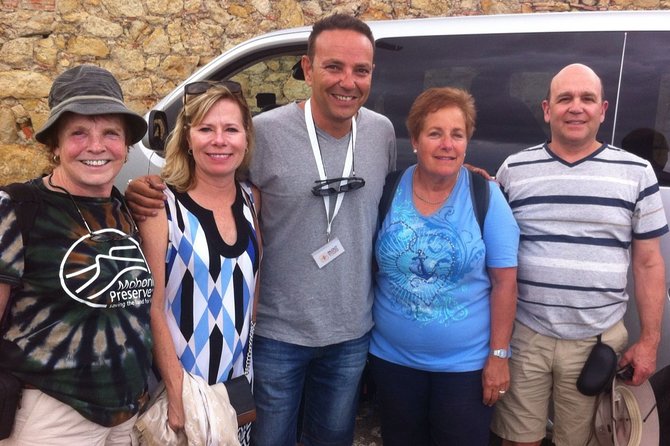
From past days, several guide names have shown up often: Ramon, Xavi, Dulce, Alina, Miquel, and Ruben. People describe them as friendly and engaged, and they often connect architecture, religion, and everyday life into a clear story while you walk.
One detail I like: one guide, Ramon, is specifically described as having a degree in Spanish history, and that kind of academic background tends to show in how the day is explained.
Language reality check for English
The tour listing says English is offered, and most of the day is structured around guided walking segments that should work in any language.
Still, some past guests reported a mismatch where English clarity was not what they expected. If English is your top priority, do this small homework: after booking, message the operator to confirm that your guide will run the tour in English for your group, not just in mixed segments.
This is one of those cases where being proactive saves you from frustration later.
Price and value: does $120.29 make sense for a 10-hour loop?
At $120.29 per person, this is not the cheapest option. But it also is not trying to be. Here is where the value comes from:
- Hotel pickup and drop-off in Barcelona city saves time and stress you would otherwise pay for in taxis or complicated transit
- Small group size (max 8) keeps the experience personal, especially during walking tours
- A professional local guide runs multiple stops, meaning you are paying for interpretation, not just transportation
- The itinerary includes Vic, Santa Pau, and Besalú, plus a scenic break at Can Gussinye, so you see more than one town without building an itinerary yourself
- Some listed admissions are marked free in the itinerary notes, which helps you predict costs
Food is not included. So if you are budgeting, add lunch and drinks for the day. Still, having the guide steer you toward good lunch choices can keep that part from becoming a time sink.
How to plan your day so it feels relaxed, not rushed
This is an all-day outing, about 10 hours. If you try to add a big evening plan afterward, you might be making life harder than it needs to be.
Here are the planning habits that tend to work best:
- Start the day with water and a light breakfast. You leave early and spend a lot of time walking.
- Bring a small camera setup plan. You will likely want photos at Can Gussinye, the Besalú bridge, and viewpoints near the castle.
- Wear comfortable shoes. Old towns mean uneven stone and short stair bursts.
- Keep your expectations realistic. You are going to see a lot, but you are not doing deep museum-level research in each town. The tradeoff is breadth plus guidance.
If you want maximum control, there is also an option to upgrade to a private tour. That can be a good fit if English clarity is critical or if you want a slower pace, but it will come at higher cost.
Who should book, and who might want a different style of trip
This works best if you:
- want multiple medieval towns in one day without planning transit
- like guided walking, where context happens while you are looking at the building
- enjoy history in a practical format, with architecture, religion, and community storylines
You might think twice if you:
- need guaranteed, perfectly clear English nonstop, since mixed-language experiences have been reported
- have tight mobility constraints, because old-town streets and walks take time
- are very sensitive to vehicle comfort, based on some complaints about seating and leg room
Should you book this Besalú and medieval towns tour?
If you want an organized one-day route out of Barcelona that lands you in Vic, Santa Pau, and Besalú with a guide and small-group pace, I think this is a strong choice. The most convincing selling points are the hotel pickup, the small group size, and the way the day builds from squares and cathedrals (Vic) into scenic cliffs (Can Gussinye), then finishes in Besalú with walls, bridge views, and a hilltop castle.
Book it if your goal is “see the medieval Catalonia highlights without the admin.” Pass or ask tougher questions first if you care most about nonstop English clarity or vehicle comfort.
FAQ
What time does the tour start in Barcelona?
Pickup is arranged between 8:00 and 08:30 AM, and the experience start time is listed as 8:30 AM.
Where do you get picked up?
You can be picked up from any hotel or apartment in Barcelona city. You need to include the address when booking, and you will receive a message the day before with the specific pickup time.
How many people are in the group?
This is a small-group tour with a maximum of 8 travelers.
Which towns are included?
The tour includes walking tours in Vic, a Can Gussinye stop (near Castellfollit de la Roca), Santa Pau, and Besalú.
How long do you spend in each town?
The itinerary notes about 3 hours for the Placa Major area in Vic, 1 hour for Can Gussinye, 2 hours for Santa Pau, and 4 hours in Besalú.
Is the tour available in English?
The tour is offered in English.
Is lunch included?
No. Food and drinks are not included, though your guide will show you good places to eat a traditional lunch.
Are admissions included for the stops?
The itinerary notes list admission tickets as free for the stops included, so you will not need to buy separate entry tickets for those listed sights.
Can I cancel for a full refund?
Yes. You can cancel up to 24 hours in advance for a full refund.
Are service animals allowed, and can children join?
Service animals are allowed. Children must be accompanied by an adult.
More Tours in Barcelona


More Tour Reviews in Barcelona
Not for you? Here's more nearby things to do in Barcelona we have reviewed







More Tours worth opening.
 ★ 4.7Casa Batlló Entry with Self-Audioguide TourFrom $3425,359 reviews
 ★ 4.424 or 48-Hour Hop-On Hop-Off Bus TourFrom $3920,872 reviews
 ★ 4.7Park Guell Guided Tour with Skip The Line EntryFrom $3117,563 reviews
 ★ 4.8Sagrada Familia Skip-the-Line Entry Ticket & TourFrom $6712,789 reviews
 ★ 4.4FC Barcelona Museum “Barça Immersive Tour” TicketFrom $3510,944 reviews
 ★ 4.4City Sightseeing Hop-On Hop-Off Bus TourFrom $3910,061 reviews
 ★ 4.5Fast Track Sagrada Familia Guided TourFrom $668,795 reviews
 ★ 5.0Montserrat Half-Day Tour with Tapas and Gourmet WinesFrom $557,359 reviews