
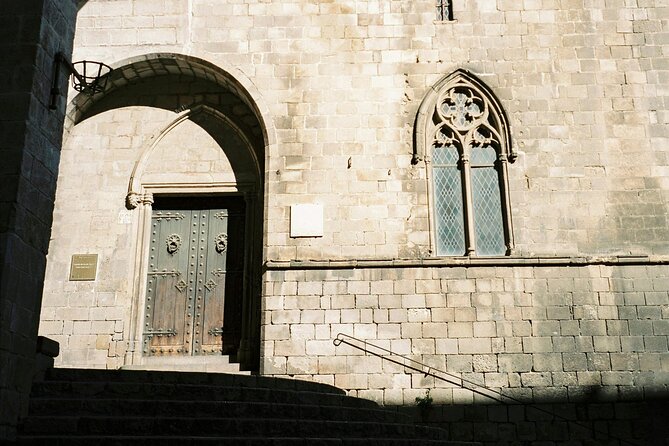
REVIEW · BARCELONA CITY TOURS
Barcelona Walking Tour of Gothic and Born District
Barcelona’s old streets feel like a movie set. This walking tour strings Gothic Quarter highlights and El Born atmosphere into one easy, first-time route. You get a local guide in English, plus Spanish support, and you end in a calmer area where it’s simple to keep exploring.
I love the way this tour helps you get your bearings fast without turning your day into a checklist. I also really appreciate the guide energy, especially when someone like Lena keeps the stories clear and moving, so you don’t just hear dates, you understand why the city changed. One thing to consider: the pace can be more explanation than walking, and at least one guide has been reported speaking as if an extra tip is expected even after booking.
Key points I’d plan around
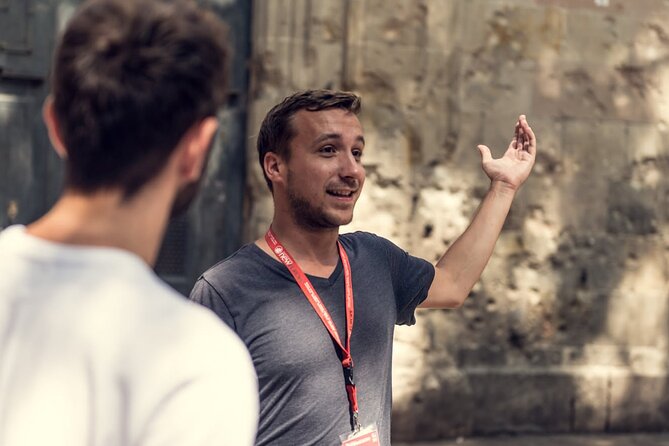
- Small group (max 25), so questions and back-and-forth are actually possible
- Great orientation route for first-time visitors in the Gothic Quarter and El Born
- Free stops mixed with one paid-admission exception, so your out-of-pocket stays controlled
- Story-driven landmarks, from Columbus’s welcome moment to the Monument to the Castellers
- End near El Born Centre or Parc de la Ciutadella, making it easy to continue your day
Why Gothic Quarter plus El Born makes sense
The Gothic Quarter and El Born sit side by side, but they feel different. Gothic Quarter streets tend to be tight, dramatic, and history-heavy. El Born shifts the mood toward a more lived-in old Barcelona, with plazas, churches, and places to linger without feeling rushed.
What makes this tour especially useful is the route design. You’re not just looking at big buildings from the outside, you’re learning the city’s “why” while you walk. That matters in Barcelona, because the same corner can look medieval and modern at the same time, and a good guide helps you read what you’re seeing.
And yes, I like the budget angle here. At $4.79 per person, you’re paying for guidance and context more than for admissions. That’s a smart trade if you’re trying to stretch your travel days.
You can also read our reviews of more walking tours in Barcelona



Price and value: what you’re really paying for
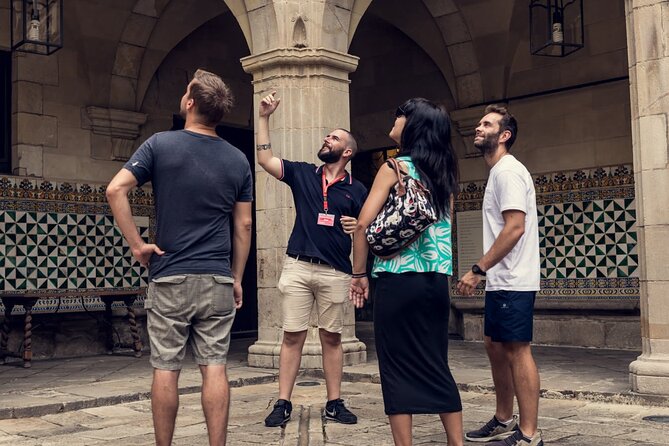
Let’s talk value, because the price is surprisingly low for a guided route.
You’re paying for:
- a local English-speaking guide (plus Spanish-speaking support),
- about 2.5 hours of guided wandering,
- and a stop list that covers major “big picture” landmarks.
What you’re not paying for (mostly):
- additional entry tickets beyond what’s listed as not included.
So your cost stays low if you’re willing to treat this as orientation plus story time. You should also expect a more conversational, talk-forward style than a silent “see and go” walk. That can be great for learning, but if you only want short stops and lots of motion, this might feel a bit heavy on narration.
Meeting point to finish: how the route lands you
The tour starts at Jaume I (Ciutat Vella, 08002 Barcelona) at 11:00 am. That’s a handy start location, because it’s in the thick of the old city where you can connect to other areas afterward.
It ends around Passeig de Picasso (Ciutat Vella, 08003 Barcelona), and the description notes that the finish is by either:
- El Born Centre de Cultura i Memòria, or
- Parc de la Ciutadella.
I like that setup. It’s not ending with you trapped back in the densest part of the Gothic Quarter. You finish close to places where you can slow down, grab a drink, or head to your next museum or neighborhood.
Stop-by-stop walkthrough: what each place adds
This is a 2 hours 30 minutes route with seven main stops. Some are quick, some are longer. The best way to enjoy it is to see each stop as a clue to how Barcelona layers its identities.
Stop 1: Placa del Rei and King Martin’s Watchtower
You begin at Plaça del Rei in the Gothic Quarter. This is one of those squares where you can feel the medieval layout still guiding the streets around it.
The star here is King Martin’s Watchtower. The story you’ll hear connects it to a pivotal moment: after returning from the Americas, Christopher Columbus was received by the Catholic Monarchs. That’s a big, dramatic Europe-wide thread tied directly into local stone.
Why it works on a walking tour: you’re not only seeing architecture, you’re learning how Barcelona participated in major historical narratives. It also sets the tone early, so later stops feel like chapters, not random stops.
Stop 2: Barcelona Cathedral (and the case for taking your time)
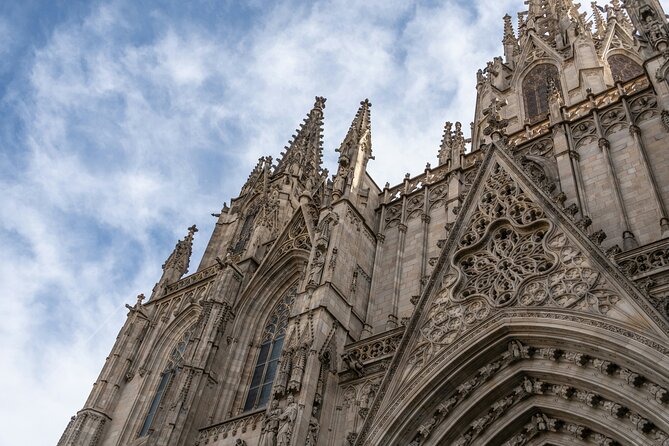
Next is Barcelona Cathedral. This is the city’s iconic Gothic landmark, and the guide’s job is to help you notice what’s important beyond the obvious postcard view.
The cathedral stop runs about 40 minutes. Admission is not included, so you’ll want to decide in advance if you plan to pay for entry or if you’re happy staying outside or viewing what your route allows. If you’re the kind of traveler who loves to look up, spot architectural details, and soak in the mood, this is the stop where that pays off.
A practical note: cathedral interiors can be cool and quiet compared to the streets, which makes them great for a short break during a walk like this.
Stop 3: Church of San Felipe Neri Square and Civil War scars
Then you step into San Felipe Neri Square. The guide focuses on the plaza’s dual nature: historic and peaceful, but marked by reminders from the past.
You’ll hear about the scars from the Spanish Civil War and how the square became a quiet witness to those events. This is one of the stops that adds emotional depth without becoming heavy handed. It also gives you a moment to slow down, look around, and let the guide connect the physical space to the story.
Admission here is free, which makes it a good pause on the route.
Stop 4: Monument to the Castellers and Catalan identity
After the quieter square, the tour pivots to identity and modern tradition. You’ll visit Homenatge Als Castellers, with the Monument to the Castellers as the anchor.
Castellers, the human-tower tradition, is a strong symbol in Catalonia. The guide explains the legends and heroic figures behind it, but the best part is how it ties to values like strength, unity, and persistence.
This stop is short, about 15 minutes, and admission is free. Still, it often becomes a favorite because it connects history to something people actually do today. It’s not just old stones. It’s living culture.
Stop 5: Basilica de Santa Maria del Pi
You move to Basilica de Santa Maria del Pi, a 15th-century Gothic church in the Barri Gòtic.
This is a great example of why Barcelona’s old city feels layered. Even if you’ve seen plenty of Gothic churches, this one can still surprise you through its setting and the way the neighborhood frames it.
The guide keeps the stop around 15 minutes, and admission is not included. If you’re on a tighter budget, you may choose to view from the outside. If you’re into church interiors, you can treat this as optional extra time.
Stop 6: Basilica de Santa Maria del Mar, the Cathedral of the Sea
Next is Basilica de Santa Maria del Mar, often described as the Cathedral of the Sea. The reason is tied to who built it: Barcelona’s medieval merchants and sailors.
This stop is also about 15 minutes, with admission not included. Even without entry, it’s worth paying attention, because the building’s style is known for its unity. The guide helps explain why it earned that reputation and what it meant for a working city of merchants and sailors.
If you’re a fan of architecture, this is the stop where your eye will likely start to pick up patterns. And if you’re not, it’s still a strong emotional payoff because it feels connected to real people and real jobs, not just kings and courts.
Stop 7: El Fossar de les Moreres and the Siege of 1714
Finally, the tour goes to El Fossar de les Moreres, a memorial honoring the defenders of Barcelona who fell during the Siege of 1714. The guide frames it as both resistance and remembrance, tied to Catalan identity.
This stop is about 15 minutes and free, and it gives the tour a grounded ending. Instead of ending at another landmark, you finish with a place built for memory. It’s the kind of stop that stays with you as you walk back through the streets after the tour ends.
What I’d do differently to enjoy it even more
If you want to maximize what you get from this kind of tour, here’s how I’d play it:
- Bring your curiosity, not just your photos. The route works because the guide connects dots between events and buildings.
- If you care about interiors, plan for the cathedral and the two basilicas that are listed as not included. Decide what’s must-see before the walk starts.
- Wear comfy shoes. Some streets are narrow and uneven, and even with frequent stops, you’re still walking for a couple of hours.
- If you prefer a lighter pace, mentally adjust. This tour can feel more like storytelling than nonstop marching.
Who this tour fits best (and who might skip it)
This is a strong choice if you’re:
- visiting Barcelona for the first time,
- short on time and want a low-cost orientation route,
- interested in history but also in how culture still lives on today,
- happy with a small group and guided explanation.
It may be less ideal if you:
- hate guided talk and want maximum time at each stop,
- plan to do a lot of independent museum hopping the same day and need quick, silent views,
- dislike the possibility of an extra tip request style (one guide has been reported emphasizing that since the booking is very low, an additional payout is expected).
The practical travel tips that matter
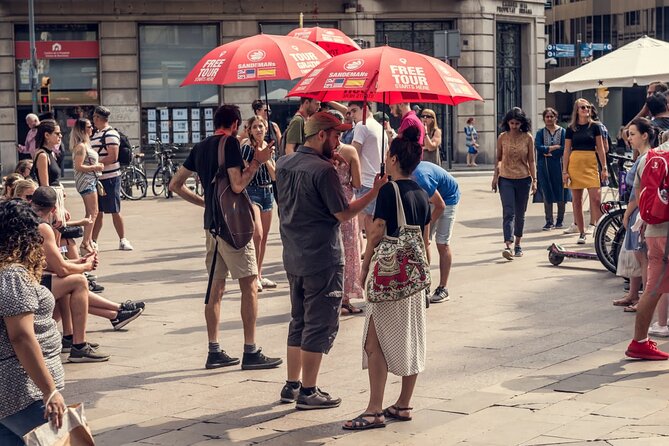
A guided walk is only as good as your readiness. Here are a few things you can do to make the day smoother, without overthinking it:
- Plan to arrive a few minutes early at Jaume I so you’re not rushing when the group starts.
- Bring water, especially in warmer months. Old-city walking adds up fast.
- If you want to enter the Cathedral or any church interiors that aren’t included, check your priorities before the stop. Otherwise you may end up feeling torn at the moment.
- Take a moment at each stop to look up. Gothic churches and medieval towers reward a quick glance skyward, and it helps you connect what the guide is pointing out.
Should you book this Barcelona Gothic and Born walking tour?
I think it’s worth booking if you want an efficient, budget-friendly way to understand Barcelona’s old neighborhoods. The combination of Gothic Quarter landmarks, the emotional stop at Fossar de les Moreres, and the culture symbol of Castellers gives you a broad picture in only about 2.5 hours.
Book it if:
- you’re a first-timer who wants to get your bearings and feel oriented,
- you like guided storytelling,
- you’re okay paying attention more than sprinting from photo spot to photo spot.
Consider a different option if:
- you want a mostly self-paced route,
- you dislike tours that are more talk-forward than walk-forward,
- you’re strict about avoiding any extra money beyond the listed price.
FAQ
How long is the Barcelona Gothic and Born walking tour?
It’s approximately 2 hours 30 minutes.
What does the tour cost?
The price is listed as $4.79 per person.
Where does the tour start and end?
It starts at Jaume I (Ciutat Vella, 08002 Barcelona) and ends by Passeig de Picasso (Ciutat Vella, 08003 Barcelona). The finish is noted as being near El Born Centre de Cultura i Memòria or Parc de la Ciutadella.
Is the tour guided, and in what languages?
Yes. It includes a local English-speaking guide, and there is also a local Spanish-speaking guide.
Are entrance tickets included for the stops?
Some stops are listed as free, while others are not included. Not included: Barcelona Cathedral, Basilica de Santa Maria del Pi, and Basilica de Santa Maria del Mar. Free: King Martin’s Watchtower stop, Church of San Felipe Neri area, Monument to the Castellers, El Fossar de les Moreres.
How big is the group?
The maximum group size is 25 travelers.
Can I cancel and get a full refund?
Yes. Free cancellation is available. You must cancel at least 24 hours before the experience’s start time for a full refund.
More Walking Tours in Barcelona


More Tours in Barcelona


More Tour Reviews in Barcelona
Not for you? Here's more nearby things to do in Barcelona we have reviewed








More Barcelona City Tours worth opening.
 ★ 4.4Park Güell Admission TicketFrom $2576,534 reviews
 ★ 4.7Casa Batlló Entry with Self-Audioguide TourFrom $3425,359 reviews
 ★ 4.424 or 48-Hour Hop-On Hop-Off Bus TourFrom $3920,872 reviews
 ★ 4.7Park Guell Guided Tour with Skip The Line EntryFrom $3117,563 reviews
 ★ 5.0Barcelona in 1 Day: Sagrada Familia, Park Guell,Old Town & PickupFrom $12013,541 reviews
 ★ 4.3Barcelona Aquarium: Entry TicketFrom $3113,335 reviews
 ★ 4.8Sagrada Familia Skip-the-Line Entry Ticket & TourFrom $6712,789 reviews
 ★ 4.4FC Barcelona Museum “Barça Immersive Tour” TicketFrom $3510,944 reviews
Continue by place or experience