
REVIEW · BARCELONA CITY TOURS
Barcelona & The Sea. Regular Tour
Sea and city, in one architecture walk. This 3-hour stroll with a practicing architect and critic shows you how Barcelona’s waterfront story built up from Roman defenses to today’s skyline. I especially like the focus on specific sites plus the way the guide links buildings to how the city grew away from the sea.
I also like that you’re not just handed facts. You get an architecture microguide and stop-by-stop context, from Santa Maria del Mar to modern design on the harbor edge. The only real drawback to plan for is weather, since the route includes beaches and breakwaters.
Key Things You’ll Notice on This Barcelona Shoreline Walk
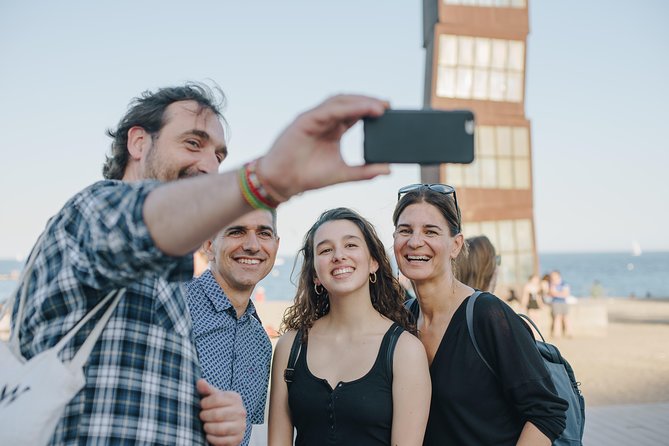
- Practicing architect and critic-led viewpoints for a sharper read of design and planning
- Roman to modern Barcelona in one route, including the Temple of Augustus and Roman defensive walls
- Named-architect stops like Moll de la Fusta by Manuel de Solà-Morales and Casa de la Marina by Jose Antonio Coderch
- Barceloneta Market plus wharf architecture, not just postcard views
- Small group size with a max of 20 people, so questions actually land
- A sea-to-city feel shift, as the center seems to pull away from the coastline
Meeting at Plaça Nova, Then Getting Real About the Waterfront
The tour starts at Barcino Sculpture, Plaça Nova, 40, in Ciutat Vella, and it runs at 10:30 am. It ends back at the meeting point, so you won’t need to figure out transit at the close.
You’ll spend the whole walk moving through a mix of narrow streets, parks, beach areas, and breakwaters. That matters because the waterfront is not one single scene, it is a changing set of edges, repairs, and design decisions over centuries. You’ll see how the city’s relationship to the sea is more than scenery, it is planning.
And yes, you do walk. If you’re the type who hates constant stepping, plan for slower breaks. If you’re okay with an active stroll, you’ll love the way the route lets you compare spaces side by side.
You can also read our reviews of more tours and experiences in Barcelona.


Roman Defensive Walls and the Temple of Augustus: The Coast’s Early Armor
One of the most compelling parts is starting with the Roman defensive walls and the Temple of Augustus. Even if you’ve seen Roman ruins elsewhere, this angle is different because you’re thinking about protection and power along a working shoreline, not just a museum context.
When you stand near the waterfront and trace the logic of the defenses, you start to understand the city’s early “why.” Why here, why this line, why these fortifications, and why the sea mattered. The Temple of Augustus adds another layer, because it signals how formal authority and religious or civic presence were tied to the city’s identity.
This section is where the tour’s big idea clicks: Barcelona keeps reinventing the border between city and water. You’ll start to notice it later at places like the wharves and the beach edge.
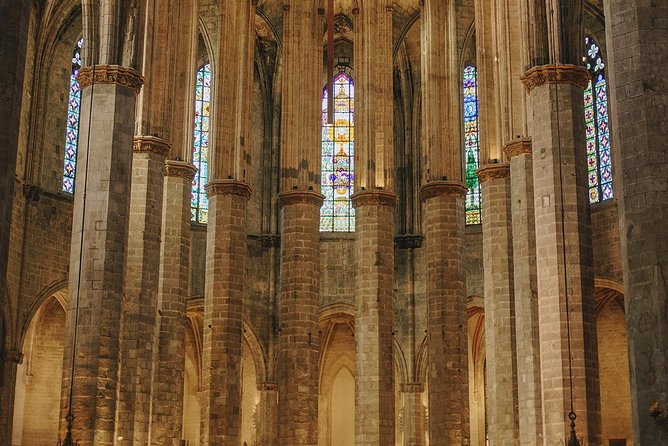
Santa Maria del Mar: Medieval Scale and the Sea-Direction of Design
Next comes Santa Maria del Mar, and this stop is a strong contrast to the Roman story. The church feels like it belongs to the city center, yet you’re still walking toward the sea zones. That tension is the point.
Santa Maria del Mar helps you read how communities organized space, worship, and street life. What you’re looking for is not just beauty, it is how a major civic-religious building anchors neighborhoods. The guide’s architectural critic lens helps you connect form and function, like how light and interior proportion shape the experience of a crowded area.
If you’ve ever wondered why some “city-center” sites feel like they grow inward, this is a good place to see that mechanism. Even as you head closer to Barceloneta, you can still feel the pull of the older urban core.
Moll de la Fusta Wharf by Manuel de Solà-Morales: Where Engineering Meets Style
Then you shift from sacred and medieval to modern waterfront architecture with Moll de la Fusta Wharf, designed by Manuel de Solà-Morales. This is where the tour stops being only history and starts becoming design thinking.
Wharves look practical, but they also shape how people move, linger, and even how the skyline frames itself. On this tour, you get the architect’s way of seeing, which means you notice proportions, material choices, and the relationship between the sea edge and the city.
You’ll also get a sense of why waterfront infrastructure is never neutral. Every redesign, every extension, every improvement changes the visual line you see from the sea and the line you see from the city.
Barceloneta Market by Josep Miàs: A Neighborhood Built for Everyday Life
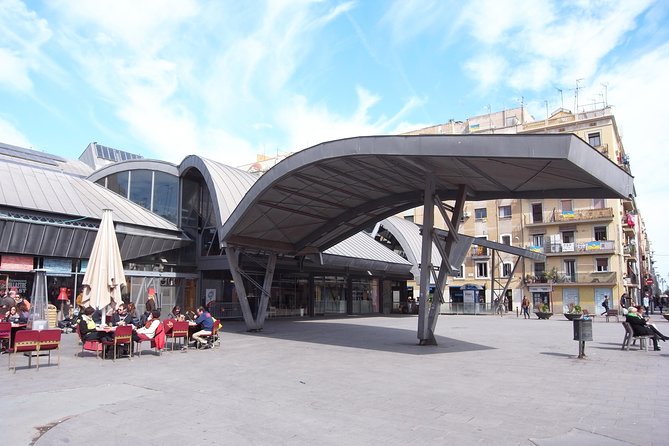
Barceloneta Market by Josep Miàs is another standout, because markets are where architecture meets daily routines. Yes, you can admire the building, but the smarter play is to think about what a market does for a neighborhood along a working coastline.
Markets concentrate foot traffic and energy. They also give a neighborhood a center that is not just a monument. On this stop, you’re learning how Barcelona organizes real life near the water, not only the stage-set version tourists photograph from outside.
If you like your architecture to explain people, this part is a win. You’ll come away with a better sense of how Barceloneta developed into a working, living district.



Casa de la Marina by Jose Antonio Coderch: Modern Housing Along the Water Edge
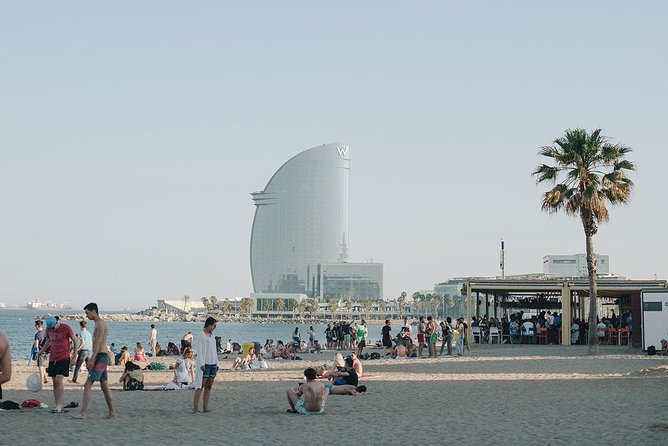
After the market, you’ll see Casa de la Marina, designed by Jose Antonio Coderch. A residential building on the waterfront can be overlooked, but it tells you a lot about when and why the city started treating this edge as livable, not just functional.
This is the stop where the tour helps you compare eras. The Roman and medieval scenes show defensive logic and civic gravity. The modernist and residential choices show adaptation. The guide’s architect-and-critic angle is useful here because you’re not just looking at style, you’re analyzing how design responds to a specific location with wind, sea light, and dense urban pressure.
It’s also a good pause from the constant “major monument” mindset. You’ll appreciate that Barcelona’s architectural story includes apartments, streets, and practical city living.
Somorrostro Beach and the Breakwater Walk: The View That Explains Everything
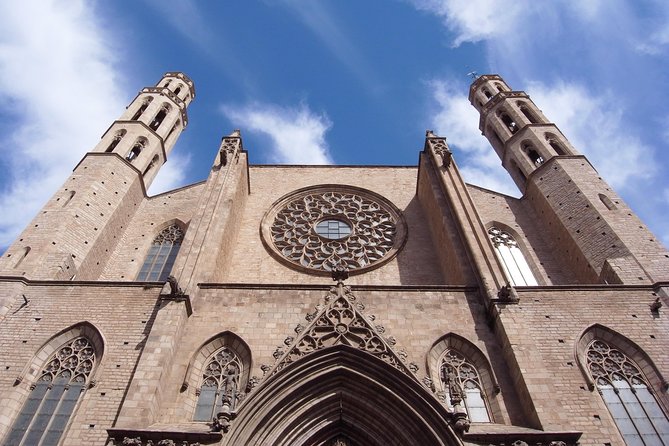
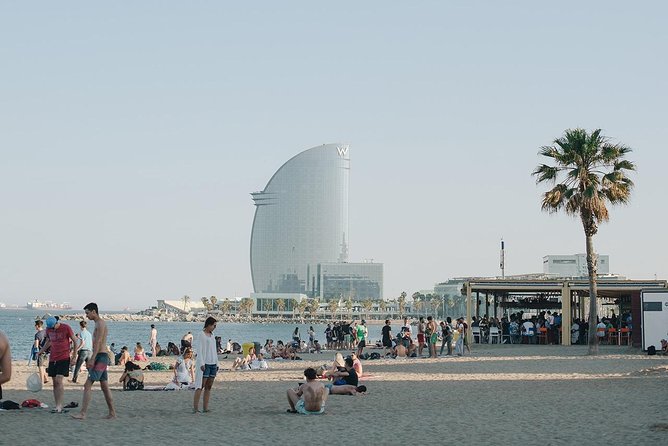
Then comes Somorrostro Beach in Barceloneta, plus the seaside walk that gets you along breakwaters and beach edges. This is the part that makes the whole tour feel grounded in reality.
Standing near the water makes it easy to see what the guide is saying: the city center can feel like it distances itself from the sea as time moves forward. The route is designed so you physically experience that shift, not just hear a lecture about it. You walk, you turn corners, you see how the shoreline connects or cuts off the view, and suddenly the architectural story has a horizon.
Somorrostro gives you that final emotional sense of place. It also helps explain why Barcelona’s skyline by the sea matters. You aren’t just collecting pictures, you’re understanding how the city frames itself when water is in the equation.
Barcelona Skyline Moment: Seeing Urban Growth as a Coastal Story
The tour wraps with the Barcelona skyline. By now, you’ve already seen defenses, civic buildings, market life, modern wharf design, and housing. That means the skyline stop is not only about height or famous silhouettes.
You’ll look at it like a timeline in space. The guide helps you see the city as a series of decisions that shaped where architecture grew and where it pulled back from the coast. When you finish, you’ll likely notice the city differently even from your hotel balcony.
This is one of those moments that feels small while you’re there, but useful later. You’ll know how to place new sights you stumble across during the rest of your trip.
Price and Value: Is $52.06 Worth It?
At $52.06 per person for about 3 hours, this is priced like a specialty walking tour, not a generic group stroll. The value comes from two things you don’t easily replicate on your own: a practicing architect and critic’s framing, plus a route that combines named architectural works with the sea-facing urban logic.
A basic guided tour might point at buildings and offer dates. This tour is more about reading the city. You get an architecture microguide, and you walk a thoughtful line that includes Roman walls, a major church, specific harbor design, market architecture, a notable apartment building, and then the beach and skyline.
The group size is capped at 20 travelers, which usually improves the experience because the guide can answer questions and react to what you’re noticing. And since you’re using a mobile ticket, the admin side is light.
If you care about how cities work, especially how Barcelona grew from water-facing identity toward a wider urban center, this price starts to look fair. If you’re only chasing the easiest big-name views, you might find the architecture focus a little more intense than you expected.
Tips to Get the Most Out of the Walk
- Wear shoes that handle narrow streets and uneven outdoor ground, since the route includes parks and beach edges.
- Go with a mindset of comparing eras. You’ll enjoy the Roman-to-modern shift more if you actively look for “what changed and why.”
- Bring sun protection if the day is bright. The walk includes open coastal areas.
- Use the microguide during the tour rather than saving it for later. It’s designed for on-the-walk notes.
Who Should Book Barcelona & The Sea (and Who Might Skip It)
This tour is a great fit if you love architecture, urban design, or you simply want Barcelona to make more sense than a photo walk. It also works well if you’re in town for the first time and want a structured route that ties together Ciutat Vella, Barceloneta, and the coast.
It’s also ideal if you like guides who can explain the “why” behind form. In the experience, Pia and Ricard stand out for making architecture feel approachable, fun, and grounded in real places, not just theory.
The biggest reason to skip is simple: poor weather. The route requires good weather, and it includes beach and breakwater sections. If you’re visiting during a stormy stretch, you’ll get more out of rescheduling if the operator offers a different date.
Should You Book This Tour?
I think Barcelona & The Sea is a smart booking for travelers who want more than landmarks. The route is short enough to fit into a normal day, but it is dense with architectural moments, from Roman walls and the Temple of Augustus to Santa Maria del Mar, named modernist works, Barceloneta market, and the sea-edge finale.
Book it if you want the city explained through design and location, and if you’re comfortable with a 3-hour walk that includes coastal sections. It is not the best choice if your priority is only quick indoor stops or if the weather is already questionable.
If the forecast looks good, this is one of the better ways to connect Barcelona’s skyline to the sea that shaped it.
FAQ
What is the price of the Barcelona & The Sea Regular Tour?
The price is $52.06 per person.
How long is the tour?
The tour lasts about 3 hours.
What time does it start?
It starts at 10:30 am.
Where is the meeting point?
You meet at Barcino Sculpture, Plaça Nova, 40, Ciutat Vella, 08002 Barcelona, Spain.
Where does the tour end?
The tour ends back at the meeting point.
What key places will the tour cover?
The walk includes the Roman defensive walls, the Temple of Augustus, Santa Maria del Mar Church, Moll de la Fusta wharf, Barceloneta Market, Casa de la Marina apartment building, Somorrostro Beach, and the Barcelona skyline.
How many people are in a group?
The tour has a maximum of 20 travelers.
Is it a walking tour with outdoor sections?
Yes. You’ll walk along narrow streets, parks, beaches, and breakwaters as part of the route.
Does the tour require good weather?
Yes. It requires good weather. If it is canceled due to poor weather, you will be offered a different date or a full refund.
Is free cancellation available?
Yes. You can cancel up to 24 hours in advance for a full refund.
More Tours in Barcelona
More Tour Reviews in Barcelona
Not for you? Here's more nearby things to do in Barcelona we have reviewed









More Barcelona City Tours worth opening.
 ★ 4.4Park Güell Admission TicketFrom $2576,534 reviews
 ★ 4.7Casa Batlló Entry with Self-Audioguide TourFrom $3425,359 reviews
 ★ 4.424 or 48-Hour Hop-On Hop-Off Bus TourFrom $3920,872 reviews
 ★ 4.7Park Guell Guided Tour with Skip The Line EntryFrom $3117,563 reviews
 ★ 5.0Barcelona in 1 Day: Sagrada Familia, Park Guell,Old Town & PickupFrom $12013,541 reviews
 ★ 4.3Barcelona Aquarium: Entry TicketFrom $3113,335 reviews
 ★ 4.8Sagrada Familia Skip-the-Line Entry Ticket & TourFrom $6712,789 reviews
 ★ 4.4FC Barcelona Museum “Barça Immersive Tour” TicketFrom $3510,944 reviews