
REVIEW · BARCELONA CITY TOURS
Barcelona: Old Town Private Walking Tour of Past and Present
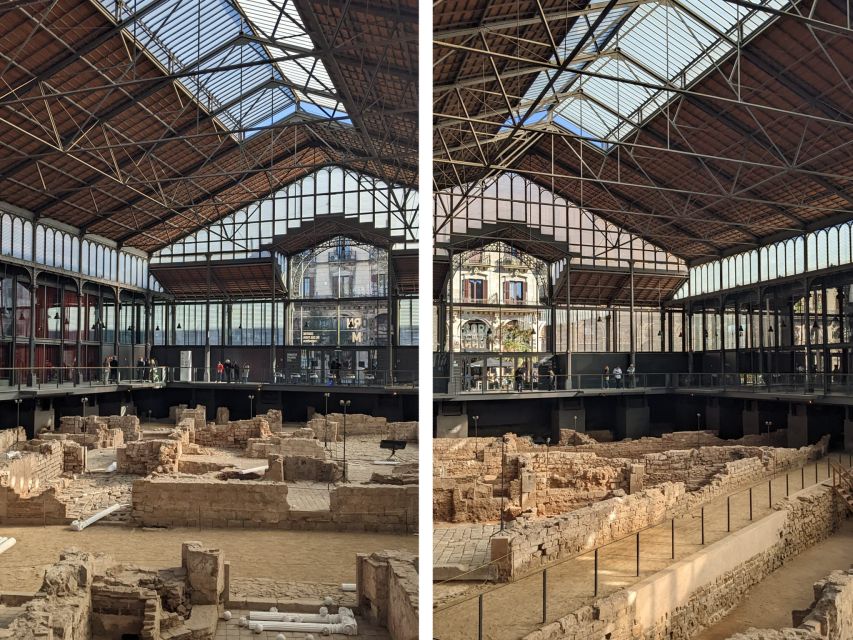
Old Barcelona rewards slow footsteps. This private walk links Roman ruins to medieval plazas and then lands you near modern-day life in El Born, the Gothic Quarter, and Las Ramblas, all shaped by the city’s past and the 1992 Olympics-era transformation.
I love the built-in La Boqueria tasting, because it turns a famous market stop into something useful and shareable, not just standing in lines. The main tradeoff: it is still a long city walk (2 to 3 hours) with lots of changing streets and angles, so you will want comfortable shoes and a plan for sun and shade.
Key highlights at a glance

- Private group up to 8 people means you can actually ask questions and set the pace
- Ciutadella Park acts like a breather after the stone-and-stairs old town streets
- Gothic Quarter Roman-to-Medieval stops include major plazas plus the Temple of Augustus area
- La Boqueria tasting stop includes a shared sampling of local products
- Two different finishing routes let you choose beach time (Port Vell, Barceloneta) or art-and-architecture time (Paseo de Gràcia)
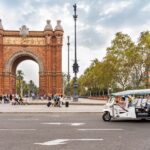
Starting in the right place: Arc de Triomf or Plaça de Sant Jaume

One smart thing about this tour is that you can start in one of two spots: Arc de Triomf or Plaça de Sant Jaume. That matters because it shapes how smoothly your walk flows. Arc de Triomf puts you in a more spacious, easy-to-orient area first, while Plaça de Sant Jaume drops you directly into the historic center vibe, closer to the civic heart of Barcelona.
Either start works well if you are trying to get your bearings fast. From there, you move through the oldest neighborhoods in a way that feels like a story with chapters, not a random list of sights. And because the tour is private, your guide can nudge the route based on what you care about most, like legends, architecture details, or food.
You can also read our reviews of more walking tours in Barcelona

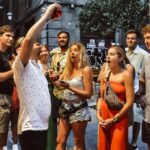
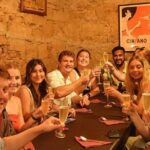
Ciutadella Park as the calm break you actually need

After the meeting point, you head to Parc de la Ciutadella, the city’s urban oasis. This stop is not just a visual reward. It’s practical. When you walk through Barcelona’s old streets, you can feel like you are always turning corners in dense stone lanes. Ciutadella Park gives you space to reset your pace, look around, and catch your breath.
For photos, it’s a gift: open sight lines, greenery, and a softer atmosphere compared to the Gothic Quarter. For your legs, it’s a smart buffer before the more concentrated medieval and Roman-focused areas.
El Born and La Ribera: where Barcelona’s economic past still shows

Next comes El Born and La Ribera, neighborhoods that once formed the economic heart of the city. That historical angle is what makes this part click. You are not just looking at buildings. You are walking through places that used to hum with commerce, daily life, and power.
These streets are also where your guide’s storytelling tends to matter most. The best effect is that the neighborhood stops feeling like a sightseeing zone and starts feeling like lived-in history. You’ll hear connections between the city’s growth, its changing priorities over centuries, and why certain areas became important.
One practical benefit: this is a good section for first-time visitors. If you want a mental map for later, El Born and La Ribera help you understand where you are and why that corner of Barcelona became a center.
A secret stop and the value of not seeing everything the same way

At some point, the route includes a secret stop. You do not get a generic “look at this famous wall” moment. Instead, the point is variety. A well-chosen hidden stop breaks up the big-monument rhythm and gives you something that feels more personal to the city.
In Barcelona, that kind of moment can be the difference between a tour that feels like a highlight reel and one that feels like you are learning how to read the city. The secret stop also helps with photo variety, because it usually changes the scale or texture of what you see compared with the larger squares and cathedrals.
Santa Maria del Mar: the church stop that feels different (and sometimes free)
You will reach St. Mary of the Sea Cathedral (Santa Maria del Mar). This is one of the places where Barcelona’s religious architecture can feel both grand and human-sized, more focused than the biggest-and-most-busy church stereotypes.
You might also have a chance to step inside without charge, if timing allows. If entry is possible, it’s worth it because it can change how you understand the area. From the street, the building tells you one story. Inside, the details and atmosphere often tell you another.
One small tip for your experience: if you care about interior space, plan to pause longer here than you might elsewhere. This is a good place to slow down and let the architecture do its job.
You can also read our reviews of more private tours in Barcelona

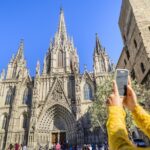
Gothic Quarter time travel, from Roman presence to medieval plazas

The Gothic Quarter is where the tour turns into true time travel. You’ll see a chain of key sites that connect different eras in one walk.
Here are the stops that shape the experience:
- Plaza San Jaume (Plaça Sant Jaume): the civic-sounding center of the old city where Barcelona’s power dynamics show up in stone and square space.
- Plaça del Rei (King’s Square area): a setting that feels tied to rule and residence, not just crowds moving through.
- Santa Eulalia Cathedral: another anchor point that helps you understand why the Gothic Quarter became a spiritual and cultural center.
- Temple of Augustus: Roman-era history shows up as a reminder that Barcelona’s story goes way before medieval walls.
- Plaça Sant Felip Neri: a quieter square that helps break the density of alleyways with a more open pocket of street life.
- Barcelona Cathedral: the big name moment, useful for orientation even if you do not go fully inside.
The best part is how your guide stitches the eras together. You are not just collecting dates. You are learning how the city layered itself: Roman foundations, medieval institutions, and later growth that turned old lanes into the Barcelona you recognize today.
A possible drawback to consider here: the Gothic Quarter’s alley network can be narrow and full of turning. That’s part of the charm, but it also means your comfort matters. Bring your best walking shoes, and don’t be shy about asking your guide to adjust your pace.
Las Ramblas and La Boqueria: the market snack stop that makes sense

Then you shift toward La Rambla and the famous La Boqueria market. This is where the tour earns extra points because it doesn’t treat the market like a quick postcard stop.
Instead, there is a tasting pause with local favorites, typically including cheese and Iberic ham, plus a refreshing fruit juice. Since the tasting is shared, it works well even if you do not want a full sit-down meal. It’s a smart way to try a few things without blowing your budget or your stomach capacity.
Also, if you are the type who likes to shop while you learn, this stop is well timed. The market is basically a live lesson in what Catalonia eats and how food culture fills the street-level experience.
Practical note: markets can be crowded. Going with a guide helps you focus on what to taste and what to skip.
Choosing your finish: beach via Port Vell and Barceloneta, or architecture via Paseo de Gràcia

One of the most useful features is that the end of the tour gives you options. Your guide works with your interests to pick a finish route.
Route A: towards the water, with Port Vell and La Barceloneta
This approach can take you in the direction of Liceu Theater, Plaça Reial (noted as having Gaudí’s first works), and the Columbus monument before you reach Port Vell and then La Barceloneta.
This finish feels right if you want a classic Barcelona ending: maritime energy, easy photo angles, and the sense that the city turns toward the sea after hours of old-town stone.
Route B: back uphill with Plaza Catalunya and Gaudí exteriors
The other route can go upward toward Plaça de Catalunya and then up Paseo de Gràcia to see Casa Batlló and Casa Mila from the outside. You still get the Gaudí impact without committing to ticketed entry during a walking tour.
This finish is best if you want architecture to stay in your head after the old-town history. It also helps you line up what to visit later if you decide you want to go inside one of these famous buildings.
A note on Sagrada Familia
The tour’s theme and highlights also include finishing with a walk by La Sagrada Família, depending on the route choice. If that landmark matters to you, make sure you tell your guide early so the ending fits your priorities.
What makes it good value at $50 per person

At $50 per person for a 2 to 3 hour private walking tour, the value comes from a few concrete things:
- You get a private guide experience, not a packed group where you are stuck listening at a distance.
- The tour includes a mini eco-friendly bottle of water and a shared tasting stop at La Boqueria with local products.
- You are walking through a lot of major reference points, including the Gothic Quarter landmarks and the El Born and La Ribera neighborhoods.
What helps is that it’s not marketed as a “check off everything” sprint. Your guide adapts to your walking pace, which is exactly how you avoid paying for time you feel rushed through.
One more value signal from guide feedback: Fábio is described as accommodating, good at taking photos, and willing to tailor the walk. That kind of personalization is hard to measure, but it is exactly what makes a private tour feel like a good deal.
The guide experience: Fábio and what to expect from the way he works
In the reviews, Fábio comes up often, and the pattern is consistent. He is described as friendly, easy to talk to, and very good at explaining both historical background and modern-day context.
You can also expect helpful practical touches. People mention that he takes photos, shares restaurant recommendations, and adjusts the route based on what the group wants. If you care about avoiding tourist traps and want a first-day plan for where to eat and what to do next, this tour style tends to support that.
He also speaks multiple languages (Portuguese, Spanish, French, English), which makes the experience smoother if you are traveling with someone who prefers a specific language.
How long it really takes, and how to pace yourself without stress
The duration is listed as 2 to 3 hours, and that range is realistic. Your group’s pace, how long you pause for photos, and whether you slow down for interior moments like Santa Maria del Mar can all shift timing.
My advice: treat this as a guided orientation plus story time, not just a speed march. If you want the Roman-to-medieval connections to land, pause when your guide invites you to look closely. That’s when Barcelona starts making sense.
Also, the tour is marked as wheelchair accessible. Still, Barcelona has plenty of uneven streets. If mobility is a concern, tell your guide what is comfortable for you, so they can manage the walking rhythm and stops.
What to bring so the tour feels easy
This is a walking-focused experience, so you want to show up prepared:
- Comfortable shoes
- Sunscreen
- (And bring your normal water habits, even though the tour includes one bottle)
If you know you get tired easily, plan a lighter schedule for the rest of the day. You will cover a lot of ground, and the payoff is in noticing details.
Who should book this tour (and who might not)
This tour fits you if:
- You want a first-day feel for old Barcelona, with both famous and lesser-known angles
- You like history that connects eras, Roman foundations to medieval life to modern neighborhoods
- You want a private group where you can ask questions and adjust pacing
You might skip it if:
- You only want one or two specific landmarks and you hate walking long distances
- You prefer a fully ticketed, inside-the-building museum day rather than a street-and-stories tour
Should you book this Barcelona Old Town private walking tour?
Yes, I think you should book it if your goal is to understand Barcelona fast, but not in a rushed way. The combination of El Born and La Ribera, the Gothic Quarter’s Roman-to-medieval story, and a real tasting stop at La Boqueria is a strong mix for the price. Plus, the ending options let you choose beach energy or Gaudí architecture, so the tour can feel like it was built for your interests.
If you want a safe, low-stress way to get oriented and to build a short list of what to do next, this is exactly that kind of Barcelona experience.
FAQ
Where does the tour start?
You can start at Arc de Triomf or Plaça de Sant Jaume, depending on the option you booked.
How long is the tour?
The tour runs about 2 to 3 hours.
Is this tour private?
Yes. It is a private group with a maximum of 8 participants (children under 6 do not count toward this limit).
What languages are offered?
The live guide is available in Portuguese, Spanish, French, and English.
Is the tour wheelchair accessible?
Yes, it is listed as wheelchair accessible.
What is included in the price?
Included items are a mini eco-friendly bottle of water and a shared taste of local products at La Boqueria.
Are tickets to attractions included?
No. Tickets are not included for attractions, museums, or monuments (tickets can be arranged on request).
What should I bring?
Bring comfortable shoes and sunscreen.
Is it pet-friendly, and are kids welcome?
Yes, it is pet-friendly. Children under 6 years old are free and do not count in the 8-max group limit.
What is the cancellation and payment flexibility?
There is free cancellation up to 24 hours in advance for a full refund, and you can reserve now and pay later.
More Walking Tours in Barcelona

More Tours in Barcelona


More Tour Reviews in Barcelona
Not for you? Here's more nearby things to do in Barcelona we have reviewed








More Barcelona City Tours worth opening.
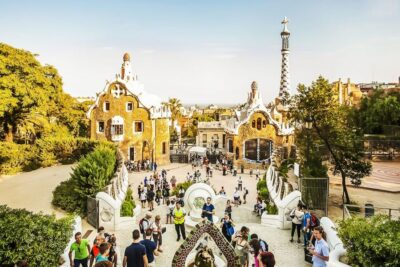 ★ 4.4Park Güell Admission TicketFrom $2576,534 reviews
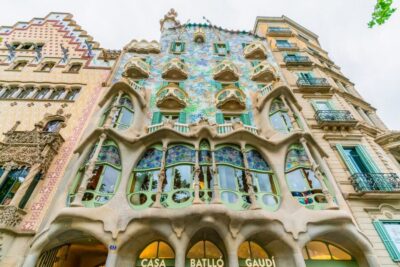 ★ 4.7Casa Batlló Entry with Self-Audioguide TourFrom $3425,359 reviews
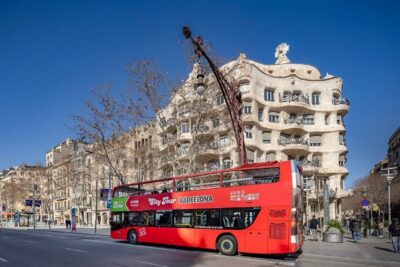 ★ 4.424 or 48-Hour Hop-On Hop-Off Bus TourFrom $3920,872 reviews
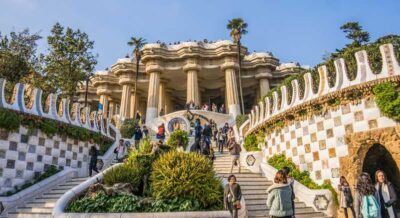 ★ 4.7Park Guell Guided Tour with Skip The Line EntryFrom $3117,563 reviews
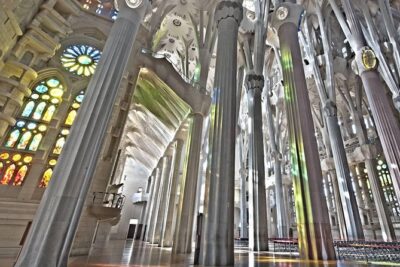 ★ 5.0Barcelona in 1 Day: Sagrada Familia, Park Guell,Old Town & PickupFrom $12013,541 reviews
 ★ 4.3Barcelona Aquarium: Entry TicketFrom $3113,335 reviews
 ★ 4.8Sagrada Familia Skip-the-Line Entry Ticket & TourFrom $6712,789 reviews
 ★ 4.4FC Barcelona Museum “Barça Immersive Tour” TicketFrom $3510,944 reviews
Continue by place or experience