
REVIEW · BARCELONA CITY TOURS
Barcelona Marvels: A Guided Walking Tour of the City’s Highlights
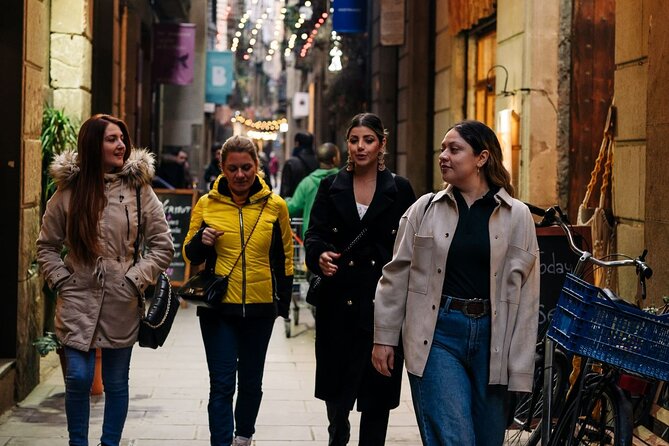
Barcelona can feel like a puzzle. This guided walk stitches together key sights with local legends and Catalan context, so you understand what you are seeing instead of just snapping photos.
I love the “no getting lost” setup, with a leader steering you through the maze of lanes. I also like the variety, you move from squares to church façades to mosaics, with stories tied to each place.
One thing to consider: admission is not included for Catedral de Barcelona and Basilica de Santa Maria del Mar. Everything else in the route lists as free at the stop, so check church expectations before you go.
Key things to know before you lace up
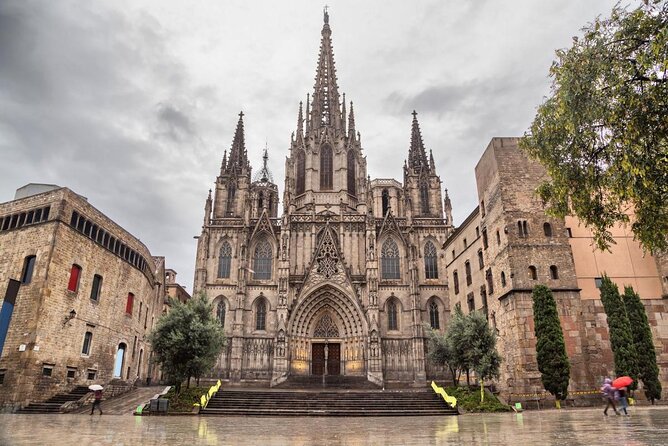
- Max group size of 20 means the walk stays human-sized, not like a school field trip.
- Legends plus landmarks: you get the story behind the Bishop’s Bridge, the kiss-like mosaic, and multiple Gothic-era squares.
- Good practical pacing: about 10 minutes per highlight over roughly 2 hours, so you cover a lot without rushing wildly.
- Some tickets are free, two are not: plan on separate admission for the cathedral and Santa Maria del Mar.
- English guide experience, with strong storytelling style shown in guide names like Juan, Sara, and Mariah.
Why this Gothic Quarter route is easier than going solo
Barcelona’s old center can trick you. Streets twist, squares appear where you did not expect them, and it is easy to walk past the meaning of a place without realizing you missed the point.
This tour fixes that with a guided, stop-by-stop route through the Gothic Quarter and nearby historic pockets. The payoff is faster “reading” of the city: instead of treating the sights like isolated postcards, you learn what to notice, and why Catalan identity and history are written into the stones.
You can also read our reviews of more walking tours in Barcelona



Price and value: what $22.83 gets you in real terms
For $22.83 per person, you are paying for three things: direction, context, and time. At roughly 2 hours, the math works well if you want a smart first pass through the highlights without building your own mini-map.
You also get a structure where many stops are listed with free admission at the spot. The two exceptions are Catedral de Barcelona and Basilica de Santa Maria del Mar, which means a portion of your sightseeing stays low-friction.
Finally, the group size cap of 20 helps keep the experience conversational. In the reviews, guides such as Juan and Sara get singled out for turning history into something you can actually follow, with humor and story rhythm that makes the walk feel shorter than it is.
Starting at Plaça del Vuit de Març: get your bearings fast
The walk begins in Ciutat Vella at Plaça del Vuit de Març, then ends at Basílica de Santa Maria del Mar. Starting in the old city core matters because it anchors you where the stories start, not where you happen to end up after a wandering afternoon.
This is also near public transportation, which helps if you are juggling a busy day. A mobile ticket is included, so you are not hunting for paper confirmations in a crowded phone-bag chaos moment.
When the group stays small, you can actually hear the guide over the street noise. That matters in tight Gothic Quarter lanes where you are surrounded by stone walls and echoes.
Els 4 Gats and Casa Martí: art culture before the churches
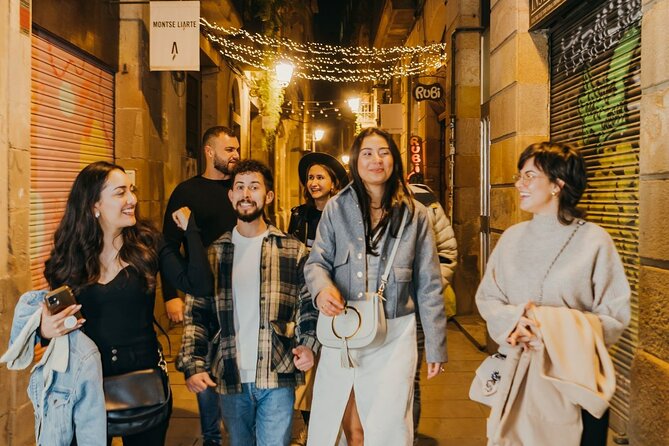
Your first stop is Els 4 Gats, a local restaurant tied to the cultural and architectural heritage of Casa Martí. This is not just a name on a map. It links Barcelona’s modernist atmosphere to the kind of artistic gatherings associated with Pablo Picasso and Antoni Gaudí.
What I like about starting here is the tone. It reminds you that Barcelona is not only medieval stone and church domes, it is also modernist creativity and artistic nightlife. If your guide is the storytelling type, you should get some of the “why this place mattered” framing early, which makes everything after it click.
Even if you do not plan to eat, the location helps you understand the city’s habit of layering eras. You are walking into a place that has been used for culture, conversation, and art long before today’s tourism rush.
The kiss-shaped mosaic, El Mon Neix En Cada Besada
Next comes El Mon Neix En Cada Besada, the photo mosaic that many people think looks like a kiss at first glance. The key is that it is not just a visual gimmick. The story ties to war, freedom, and the fight for Catalan independence.
This is a great stop for two reasons. First, it shows how Barcelona communicates politics through public art. Second, it gives you a quick lesson in “read the symbol” thinking, the same skill you will use when you look at other Gothic and civic sites later in the walk.
It is only a short visit, about 10 minutes, so keep your camera ready. But give yourself a moment to listen. The meaning is in the explanation, not the image alone.
You can also read our reviews of more guided tours in Barcelona

Catedral de Barcelona and Casa de l’Ardiaca: Gothic drama plus Roman leftovers
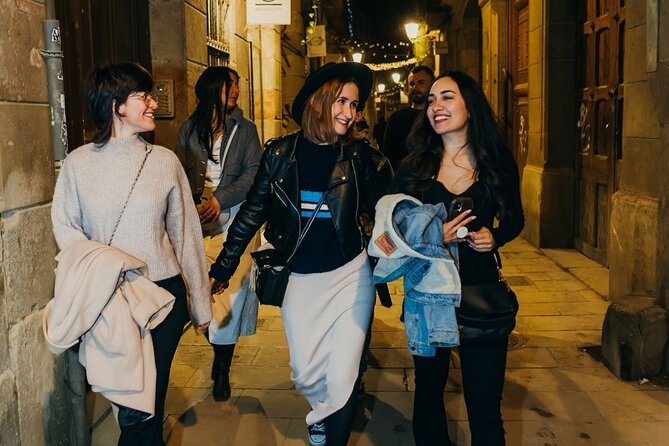
At Catedral de Barcelona, you get a Gothic cathedral with a story tied to the patron saint of Barcelona and her brutal end. Gothic architecture loves theatrical drama, and the tour gives you a way to understand that drama as more than style.
One practical note: cathedral admission is listed as not included. If you are counting on fully included entry fees, plan for at least this one.
Just beside the cathedral area, you visit Casa de l’Ardiaca, a tiny house that holds ruins of a Roman wall and aqueducts dating back to the 1st century BC. This stop is a reminder that Barcelona is not one chapter. It is Roman infrastructure, Gothic religious power, and later civic identity all stacked in a tight radius.
This combination also changes how you look at stonework. You start paying attention to what is “surviving” from earlier periods, and how later generations reuse space instead of starting from scratch.
Pont del Bisbe and the Gothic Quarter squares where legends live
Pont del Bisbe, the Bishop’s Bridge, is a neo-gothic structure tied to a mysterious legend. Even if you already recognize the bridge name, the value here is the story that connects it to the wider Gothic Quarter mood.
Then you move into the smaller civic and historical nooks that make the area feel like a puzzle. Placa Sant Felip Neri is one stop that helps you understand the complexity of Catalan history, including the scars of its sombre past. Even with only about 10 minutes, you get the “why this square matters” frame, which is the difference between seeing a random patch of pavement and understanding a moment in time.
The walk also includes Placa de Sant Jaume, the government square in the center of the Gothic Quarter. You see the seat of Catalan government and City Hall, plus a story about Catalonia’s beloved saint. This is where religion and politics stop being separate topics and start feeling like part of the same urban story.
El Call at MUHBA: the former Jewish quarter in fact and legend
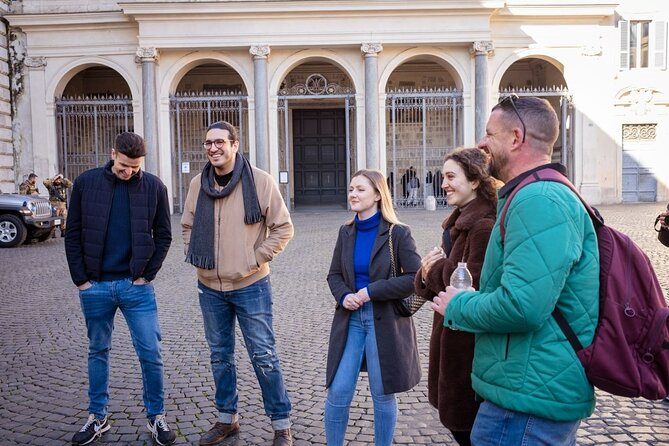
MUHBA – El Call brings you to the former Jewish district. The place is described as a mix of fact and legend, and that blend works well on foot because you can picture daily life in the city’s older neighborhoods.
El Call is also a strong reminder that Barcelona’s identity is not only tied to one group or one century. You are walking through a portion of the city that reflects layered communities, tensions, and survival.
This stop is about 10 minutes, so it is ideal if you want the bigger context without turning your day into a museum marathon. If you want to go deeper later, you now know what to search for when you return on your own.
Placa Del Rei and Plaça de l’Àngel: royal power and a saintly name change
Placa Del Rei is where the mood shifts darker. The Royal Palace setting is linked to the Spanish Inquisition. You do not need extra imagination here. The square helps you feel how power played out in public space.
Then Plaça de l’Àngel, formerly Wheat Square, gives you a story-driven religious moment. It connects to the procession of Santa Eulalia and a heavenly apparition that led to the square’s name change.
This pairing is useful because it shows two types of “city meaning.” One is political enforcement tied to a royal setting. The other is religious narrative tied to how a public place gets renamed over time.
If you are the type who likes to understand why people tell stories in particular places, these stops make you look at the city like a living archive.
Basilica de Santa Maria del Mar to finish: El Born’s maritime heartbeat
You wrap up at Basílica de Santa Maria del Mar in the heart of El Born. The basilica is described as the heartbeat of the neighborhood and tied to Barcelona’s maritime history.
Admission is listed as not included for this stop. That is your last built-in “maybe plan extra time and budget” moment, and it is also the one that pairs well with the evening energy in El Born after the walk.
Even if you do not go inside, the exterior and setting help you understand why this neighborhood earned its place in the city’s story. Santa Maria del Mar feels like a fitting end to a route that started with art culture and moved through Roman leftovers, Gothic drama, and civic power.
What makes the guides matter on this walk
In the reviews, the consistent theme is that the guides bring stories to life. Names you may run into include Juan, Darrin, Craig, Petra, Sara, Tamara, Jamie, Vanessa, Mariah, and Rolene, and the common thread is strong storytelling style.
Juan gets credited with restaurant recommendations, which is a practical add-on for when your walking tour ends and you still need dinner ideas. Sara and others get praised for humor and making the Gothic Quarter feel easier to follow. Tamara is specifically noted for flexibility during busy moments, including steering people to reduce crowd hassle.
Rolene stands out in comments about clear communication, and Mariah shows up for making the walk memorable with friendly, helpful guidance, including patience for slower walkers. If you care about not just facts but also group comfort and direction, that matters.
Who this tour is best for
This is a smart choice if you want a first-time overview of the Gothic Quarter and nearby historic highlights without getting lost. It also fits well if you like city history that is tied to legends, because the route is built around story explanations at each stop.
You will likely enjoy it if you travel in English and want a structured walk rather than a self-guided scavenger hunt. The tour also notes that most travelers can participate, which suggests it is not an extreme hike.
If you prefer museums over outdoor standing, this might feel like too much walking for your taste. The stops are brief and photo-focused, so you get context fast, not a slow, sit-down lecture style.
Should you book Barcelona Marvels?
Yes, if you want an efficient, story-led walk through the Gothic Quarter highlights, with a guide doing the heavy lifting of navigation and explanation. The combination of legends, historic landmarks, and a tight route makes this one of the better ways to get oriented in Barcelona’s old center.
I would consider passing or at least planning your budget carefully if you strongly dislike paying for separate church admissions, because Catedral de Barcelona and Basilica de Santa Maria del Mar are not included. Also, if you want lots of time inside buildings, remember the route favors short stops.
If your goal is to leave Barcelona feeling like you understood what you saw, not just where you walked, this is a strong pick.
FAQ
How long is the walking tour?
It runs for about 2 hours.
What is the price per person?
The tour price is $22.83 per person.
What language is the tour offered in?
The tour is offered in English.
Where does the tour start and end?
It starts at Plaça del Vuit de Març in Ciutat Vella and ends at Basílica de Santa Maria del Mar, Plaça de Santa Maria, 1, Ciutat Vella.
Are admission tickets included for all stops?
Admission is listed as free for several stops, but admission tickets are not included for Catedral de Barcelona and Basilica de Santa Maria del Mar.
How large is the group?
The tour has a maximum of 20 travelers.
Is free cancellation available?
Yes. Free cancellation is available if you cancel up to 24 hours in advance for a full refund.
More Walking Tours in Barcelona


More Tours in Barcelona


More Tour Reviews in Barcelona
Not for you? Here's more nearby things to do in Barcelona we have reviewed








More Barcelona City Tours worth opening.
 ★ 4.4Park Güell Admission TicketFrom $2576,534 reviews
 ★ 4.7Casa Batlló Entry with Self-Audioguide TourFrom $3425,359 reviews
 ★ 4.424 or 48-Hour Hop-On Hop-Off Bus TourFrom $3920,872 reviews
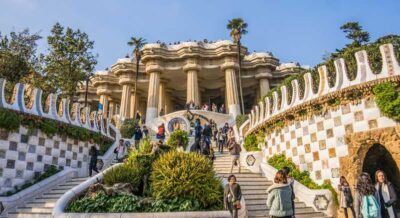 ★ 4.7Park Guell Guided Tour with Skip The Line EntryFrom $3117,563 reviews
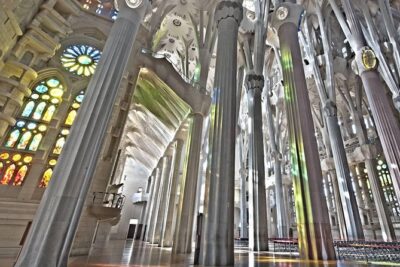 ★ 5.0Barcelona in 1 Day: Sagrada Familia, Park Guell,Old Town & PickupFrom $12013,541 reviews
 ★ 4.3Barcelona Aquarium: Entry TicketFrom $3113,335 reviews
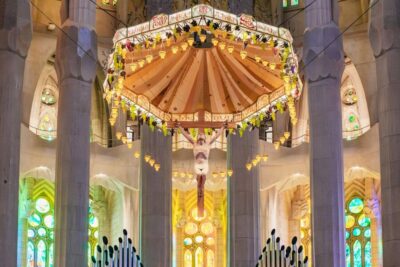 ★ 4.8Sagrada Familia Skip-the-Line Entry Ticket & TourFrom $6712,789 reviews
 ★ 4.4FC Barcelona Museum “Barça Immersive Tour” TicketFrom $3510,944 reviews
Continue by place or experience