
REVIEW · BARCELONA CITY TOURS
Barcelona in Mystery Key
Barcelona suddenly feels like a puzzle. I love the myth versus reality format, where everyday streets turn into clues, and I love that you visit three different altars tied to surprising themes. The one drawback to plan for is that this is a weather-dependent, mostly walking route, so come ready for good shoes and some open-air time.
This is not a standard checklist tour. It is an initiation-style route that continues as a second correlative experience, Barcino Code: The Revealed City, which makes it great if you like stories that lead to more stories. With a maximum of 20 people and a mobile ticket, it feels small, flexible, and easy to fit into a first visit.
You start at CataloniaEixample (08002) and end back at the same meeting point, and the walk keeps you engaged by asking questions along the way. You will hear about mysteries such as whether the Knights of the Holy Sepulcher of Jerusalem were connected to Barcelona, the idea of pregnant virgins in Plaza Catalunya, and the question of a house devoted to the devil. The guide, Sergio, ties it all back to Barcelona’s popular heritage, not just spooky trivia.
Key things that make this route special
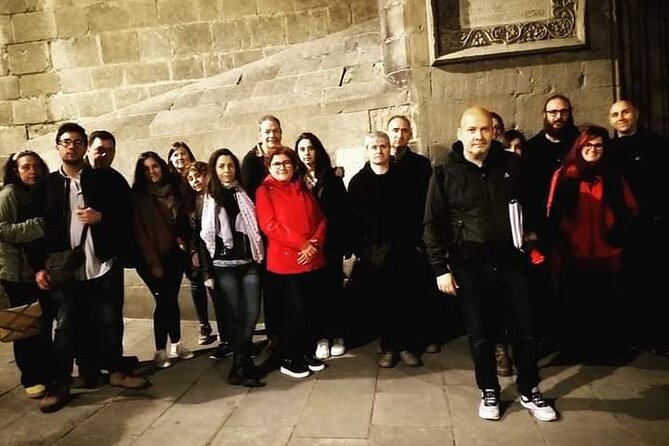
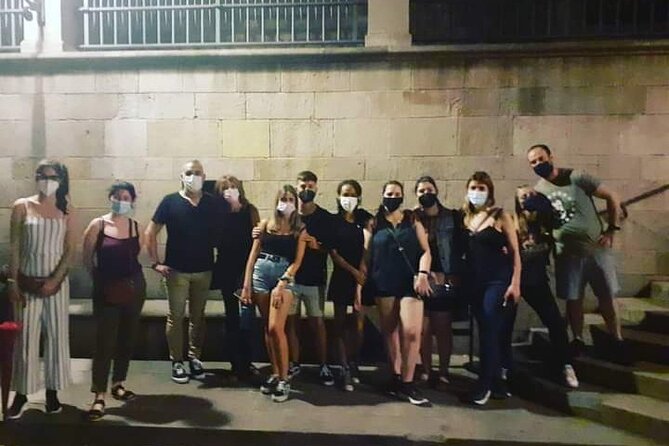
- A participatory street walk that uses questions to keep you noticing details
- Three themed altars (masonic, magic, and fascist) used as lenses on city lore
- Myth-bent Barcelona facts that connect legends to real places and traditions
- Small group size of up to 20 people for a more personal pace
- Continuation option with Barcino Code: The Revealed City if you want the next chapter
A mystery-key route for people who hate the usual script
Barcelona has no shortage of tours. Most fall into the same grooves: famous buildings, big viewpoints, and a lot of dates. Barcelona en Clave de Misterio takes a different road, not by ignoring the city, but by reframing it. You walk a line between myth and reality, with the goal of helping you see how legends can cling to street corners, plazas, and local traditions.
The “mystery key” idea matters because it changes your role. Instead of passive listening, you are drawn into the questions the walk raises. That makes the route feel more like a guided conversation than a lecture, and it also helps you remember what you saw, since your brain is actively looking for the next clue.
You also get something that feels less common in a first visit. Rather than treating Barcelona as a museum, the experience treats it as a living place where popular beliefs, secret societies, and odd historical rumors all leave marks. Even when a story is presented as a mystery, the walk uses it to point you at the texture of the city: how people built, how they named things, and how they kept traditions alive.
You can also read our reviews of more tours and experiences in Barcelona.
Getting started at CataloniaEixample (08002) and why it helps
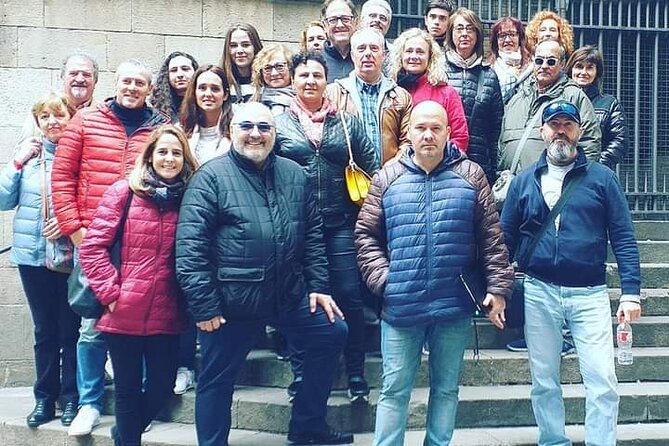
The meeting point is CataloniaEixample, 08002, Barcelona, Spain, and the activity ends back at the same spot. That round-trip setup is practical, especially if you are juggling dinner plans afterward or trying to keep the rest of your day stress-free.
It is also described as near public transportation. That matters because Barcelona can chew up time when you get it wrong with transit and distance. If you use transit, you can usually adjust quickly. If you are walking from nearby lodging, you do not have to plan a long one-way trek either.
One more practical note: the route is street-based. That is good news for your sense of immersion, but it also means you should dress for walking. Bring a light layer if the evening cools down, and keep your phone charged if you like taking quick photos between stops. A mobile ticket is used for entry, so you will want it ready on your device.
The three altars you’ll meet, and what they’re really doing
The heart of this experience is the set of three altars. They are not just themed stops for photos. Each altar acts like a different way of reading the city, using a specific strand of lore to guide your attention.
The masonic altar
The masonic altar takes you into symbolic thinking. You are prompted to connect what you see in public spaces with what people may have believed, wanted, or feared behind the scenes. In a city like Barcelona, where architecture and decoration often carry layered meanings, this kind of lens helps you look at details you might otherwise miss.
The best part here is how the guide turns symbolism into storytelling without making it feel like a textbook. You are looking for clues in the street scene, not memorizing membership lists. That helps if your background is blank, because you are not required to already know the topic.
The magic altar
The magic altar shifts tone. This is where the route leans harder into the idea that Barcelona has legends attached to real places. You will hear about questions like where a magician named Estruch de Sacanera resided. Even if you do not walk away with a neat, single answer, the experience teaches you how the city stores rumor and folklore in a way that still shapes local imagination.
A practical benefit of this altar is pacing. Switching themes keeps the walk from becoming one long mood. You start noticing different kinds of cues, like playful hints, unusual references, and stories that feel too specific to be random.



The fascist altar
The fascist altar sounds heavy, and the topic is serious. In this route, it is approached through anecdotes and the way power, ideology, and public messaging can leave traces in a city’s memory. The goal is not to turn history into entertainment, but to show how different eras can imprint themselves on urban space.
Because the walk is myth-reality themed, you might find yourself sorting through what is legend and what is record. That makes it thoughtful, but it also means you should be mentally ready for a darker strand of Barcelona’s story.
Plaza Catalunya, pregnant virgins, and the art of questioning
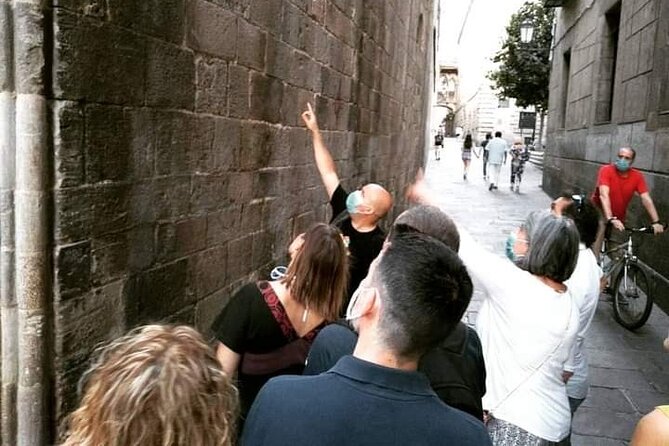
One of the most memorable parts of the route is how it uses questions as signposts. Instead of telling you what to think, the guide offers mysteries and invites you to look at the surroundings with new eyes.
A key example is Plaza Catalunya, where the story includes pregnant virgins. It is presented as a question rather than a simple fact dump, which is exactly why it can stick with you. You start watching how places become stages for meaning, and how strange details can become part of local narrative over time.
The same method shows up with other prompts. You will hear questions like whether there were Knights of the Holy Sepulcher of Jerusalem in Barcelona. You will also get the idea of a house dedicated to the devil in the city. These are the kinds of legends that sound impossible until you start noticing how often cities keep references to the supernatural, the forbidden, and the symbolic in plain sight.
What you get from this is not just spooky amusement. You learn to treat the city as a layered document. Street names, architectural motifs, and public spaces can all act like punctuation marks in stories people repeat. If you have never taken that approach to Barcelona before, you will likely leave with a new way of reading it.
Sergio and the participatory style that keeps you moving
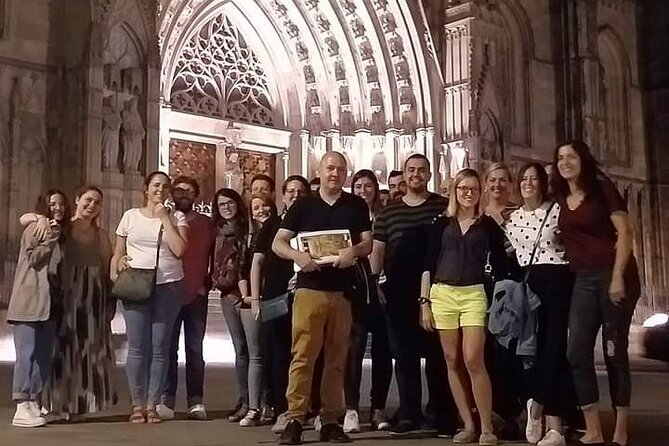
This experience is guided by Sergio. The vibe around his guiding style is simple and clear: he makes the route fun without turning it childish, and he keeps it engaging so the three hours do not drag.
Because the walk is participatory, you should expect to interact, respond, and stay mentally switched on. That is a big reason it works so well as a first-time Barcelona activity. If you are the type who likes to understand what you are seeing, you will enjoy being asked to connect the story with the street.
The group size cap, up to 20 people, also changes the feel. Smaller groups tend to allow a more conversational rhythm. You are more likely to hear the details clearly and to feel like you are part of the walk rather than watching from the side.
If you prefer fully museum-style tours where you sit and listen, this might feel different. But if you like learning through movement, it is a great match. The route style also helps on days when you do not want another ticket line or another long interior space.
What the 3 hours feels like on the ground
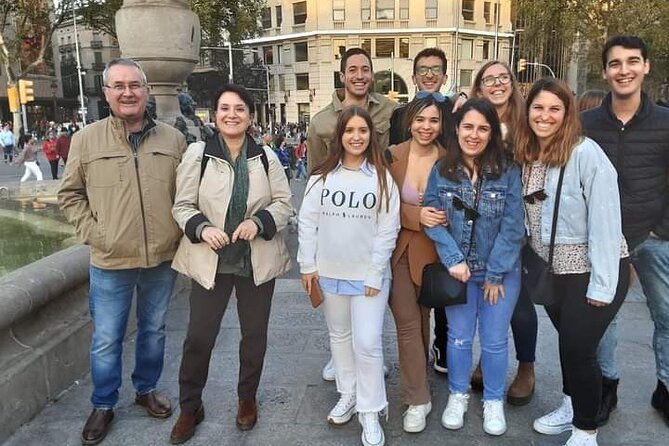
The duration is about 3 hours. That time frame is long enough to cover meaningful ground, but short enough that you can still enjoy the rest of your day afterward.
Since the route is described as eminently street-based and participatory, plan for walking time and occasional standing around at key spots. You will also be absorbing stories tied to specific locations. That means your best strategy is to slow down a notch. Look at what your guide points out, then take a quick second to glance around yourself.
You should also consider weather. The experience notes that it requires good weather. If Barcelona is being rainy or stormy, the operator may offer another date or a full refund. That is worth factoring in if you are building your schedule around this as your main first-visit activity.
Shoes matter. Even if the walking pace stays friendly, you do not want discomfort to steal the fun. Bring water, even on mild days. Small practical steps make a big difference when your attention is meant to stay on the mystery.
Price, value, and why this is more than a cheap gimmick
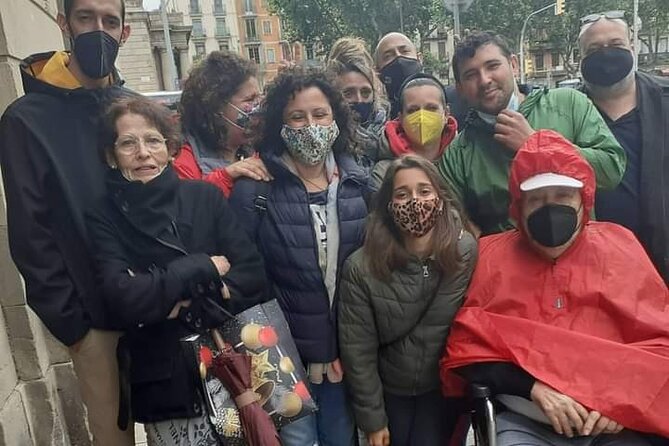
The price is $18.52 per person, and the format includes a mobile ticket. On paper, that is a low cost for a guided, themed walk. What makes it feel like good value is that you are not paying just for a route name. You are paying for a storytelling structure that teaches you how to look at Barcelona differently.
Three hours is also a good unit of value. It is long enough to get context and momentum, but short enough to fit into a budget without turning the day into a full production. If you are trying to sample a new way of understanding the city, this price point gives you room to take a chance.
The three altar concept also adds value. Many themed tours have one big theme and a few stops. Here you get multiple lenses, and you get them tied to questions that lead you into noticing the city’s hidden layers.
If you are someone who loves famous sites, this will not replace a classic highlights day. But it can become your secret weapon for day one, because it changes your mental map fast. After this, the city feels less like a list and more like a story you can keep reading.
How this fits with Barcino Code: The Revealed City
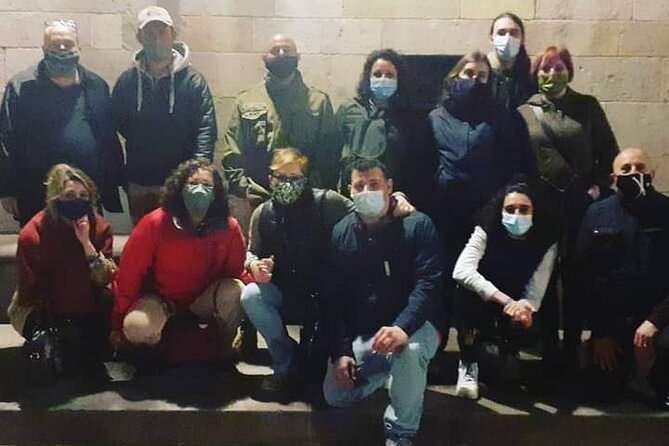
This route is described as an initiation path that continues with a second correlative experience called Barcino Code: The Revealed City. That pairing is useful if you want a two-part system.
Part of the appeal is momentum. You start with the mystery key approach, then you have the option to continue into the revealed angle in the next experience. If you like the sense of progression, this is a nice way to spread your curiosity across multiple walks instead of trying to absorb everything at once.
Even if you do not continue, the initiation format still helps. It sets you up to notice patterns, symbolic references, and local lore. That can make your later self-guided wandering more satisfying, since you already know what kinds of details to look for.
Who should book Barcelona en Clave de Misterio
You should book if you want Barcelona to feel like a puzzle you can solve with your eyes, not a quiz you memorise. This is a great fit for people who enjoy street-level storytelling, asking questions, and learning through movement.
It also makes sense if you are traveling with others who get bored by repetitive museum tours. The myth and mystery framework adds variety to the day, and the three altars keep the route from running on one theme too long.
It may not be the best choice if you hate walking or want a sit-down, indoor-heavy experience. The route depends on good weather, so rain plans matter. Also, since the whole concept is built around mysteries, it is not a pure archaeology or architecture deep dive.
When a mystery route is the right kind of first visit
If this is your first time in Barcelona, this experience can work like a mental shortcut. It teaches you how to connect stories to places, and it gives you a new way to read famous areas like Plaza Catalunya.
That does not mean it replaces the need to see the big sights. It means it can make the big sights more meaningful after the fact. When you later walk through the center on your own, you are more likely to notice symbolic details and local references, because your brain has already been trained to look for them.
If you are short on time, the 3-hour length is ideal. If you are trying to build a fun day that feels different from the standard itinerary, this route is a strong option. You also get the benefit of a small group and a guide who keeps the tone lively, without sacrificing cultural context.
Should you book this Barcelona mystery walk
Yes, I think this is a smart booking for the right kind of traveler. If you like walking tours that ask you to look closely, and you enjoy mystery themed stories that connect to real places, you will probably have a great time with Sergio and his initiation route.
Book it if you have solid shoes and decent weather in the forecast. If you want a quiet, purely factual tour where everything is spelled out, you might find the mystery framing less satisfying.
If you are choosing between another standard highlight tour and this one, I would pick this when you want your Barcelona day one to feel fresh. The three altars, the questions around Plaza Catalunya, and the overall participatory style make it one of the more memorable ways to get your bearings fast.
FAQ
How long is Barcelona en Clave de Misterio?
It lasts about 3 hours.
Where does the tour start and where does it end?
It starts at CataloniaEixample, 08002, Barcelona, Spain, and ends back at the same meeting point.
Is the ticket mobile?
Yes, this experience uses a mobile ticket.
How many people are in the group?
The tour has a maximum of 20 travelers.
Is confirmation sent after booking?
Yes, confirmation will be received at the time of booking.
Are service animals allowed?
Service animals are allowed.
What is the cancellation policy if weather or plans change?
You can cancel for a full refund up to 24 hours in advance. The experience requires good weather, and if it is canceled due to poor weather, you will be offered another date or a full refund.
More Tour Reviews in Barcelona
Not for you? Here's more nearby things to do in Barcelona we have reviewed








More Barcelona City Tours worth opening.
 ★ 4.4Park Güell Admission TicketFrom $2576,534 reviews
 ★ 4.7Casa Batlló Entry with Self-Audioguide TourFrom $3425,359 reviews
 ★ 4.424 or 48-Hour Hop-On Hop-Off Bus TourFrom $3920,872 reviews
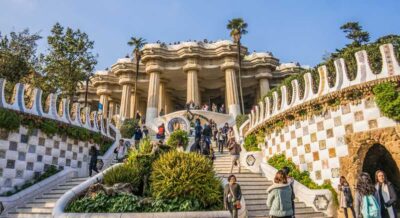 ★ 4.7Park Guell Guided Tour with Skip The Line EntryFrom $3117,563 reviews
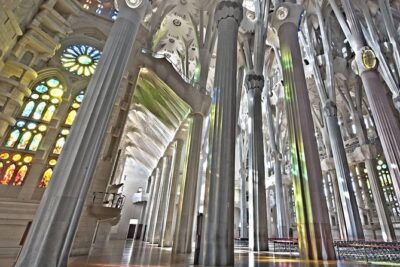 ★ 5.0Barcelona in 1 Day: Sagrada Familia, Park Guell,Old Town & PickupFrom $12013,541 reviews
 ★ 4.3Barcelona Aquarium: Entry TicketFrom $3113,335 reviews
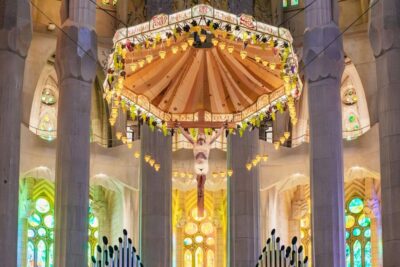 ★ 4.8Sagrada Familia Skip-the-Line Entry Ticket & TourFrom $6712,789 reviews
 ★ 4.4FC Barcelona Museum “Barça Immersive Tour” TicketFrom $3510,944 reviews