
REVIEW · BARCELONA GAUDI TOURS
Barcelona & Gaudi. Regular Tour
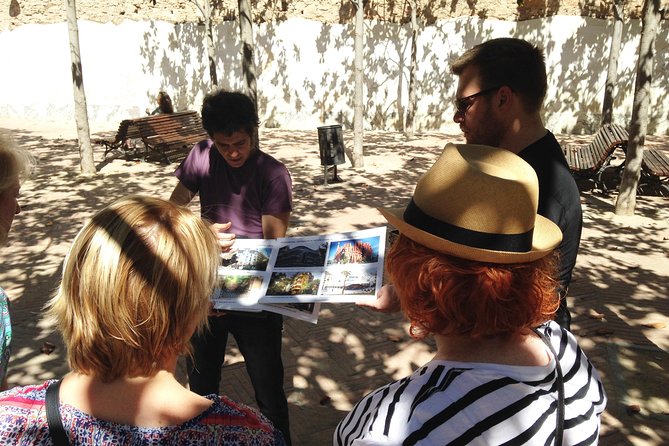
Barcelona’s best Gaudi lesson is a walk. This Barcelona & Gaudi Regular Tour uses the Modernism Route to explain how Antoni Gaudi’s ideas evolved, from human concerns to spiritual obsession. You’ll also see major stops on the Eixample without trying to squeeze in a dozen separate visits.
What I like most is the fact it is led by practicing architects who can connect buildings to the bigger artistic and social story. Second, the walk stays small, capped at 20 people, so questions do not get lost and you can actually keep up with the thread.
One possible drawback: you will not go inside the buildings. Also, it needs good weather, since it’s a walk and the tour depends on outdoor pacing.
Key points I’d plan around
- Architect-led context that ties Modernism, politics, and ideas to real addresses in the Eixample
- Gaudi’s full storyline, including references to the Crypt of Colonia Güell and the Sagrada Família
- Major exterior sights only, with stops at Casa Milà, Casa Batlló, and Casa Calvet
- La Mansana de la Discordia and nearby architecture conversations that go beyond the photo stops
- Small group size (maximum 20) for more personal attention
- English tour with a mobile ticket and a 10:30 am start
Why a Modernism walk is the smart way to see Gaudi
Gaudi can feel like a giant mystery if you only look at the facades. This tour turns the weird shapes into a reasoned story. You start with the route that tracks how Modernist thinking in Barcelona changed, then narrows in on how Gaudi’s approach became almost religious in intensity.
You get a kind of architecture class, but it stays friendly. The format is made for a 3-hour window, so you are not stuck in lectures or forced through a museum pace. You also stay focused on one area, the Eixample, which makes it easier to notice patterns as you walk.
The guide’s architect perspective matters because buildings are not just art objects. They are also responses to budgets, beliefs, and political pressure. The tour specifically covers themes like utopian socialism, positivist materialism, and the intellectual bourgeoisie, so the architecture stops feel earned instead of random.
You can also read our reviews of more tours and experiences in Barcelona.


The story thread: from social concerns to religious absorption
This route follows a clear arc. It starts with Gaudi’s early connections to social concerns, then moves toward his total absorption with the divine. That path is not presented as a straight line of genius, it is framed through the shifting intellectual currents of the time.
Expect talk about eclecticism and the end of Modernism, which helps you understand why Barcelona looks the way it does. You are not just learning styles by name. You are learning why styles rose and then why they shifted, especially as Spain moved through major upheavals.
The tour also touches the Spanish Civil War and anarchism, then swings to beatification and deliquescent surfaces. Even if some of that sounds intense, it is tied back to what you see on the street. It makes the odd details feel like part of an argument, not just decoration.
If you enjoy architecture that comes with context, this is a great fit. If you want purely visual impressions with zero politics, you might find the ideas heavy. The key is that the walk tries to translate the big ideas into street-level understanding.
How the Eixample becomes a living architecture map
The Eixample is where Barcelona’s Modernism shines, but it can be overwhelming if you only follow landmarks. This tour helps you read the neighborhood like a map. As you move between the stops, you get guidance on what to notice and how different architects answered the same urban problem.
You are also led past some hidden Eixample courtyards. That is a nice reminder that Barcelona’s charm is not limited to the postcard streets. Courtyards also give you a break from the street-wall view, so your eyes and legs get a breather at the right time.
La Mansana de la Discordia is another reason the Eixample works for this format. The tour uses it as a practical teaching moment: same neighborhood block, different architects, different visions. You learn to compare, not just collect photos.
Stop by stop: what you see and why each one matters
This is an exterior-focused route. The tour does not go inside the buildings. So your experience is about how each facade, form, and placement functions in its neighborhood setting.
You’ll start at Casa Milà (La Pedrera), move to Casa Batlló, then to Casa Calvet. After that, you tackle La Mansana de la Discordia, and finish with the Fundació Antoni Tàpies. The route ends back at the starting area.
Casa Milà (La Pedrera): Modernism with a Gaudi gravity
Casa Milà is one of the central Gaudi addresses in the Eixample. On this walk, it is not treated as a standalone icon. Instead, it is used to talk about Gaudi’s place within Modernism and how his thinking kept evolving.
Because you are not going inside, the emphasis is on reading the exterior as a statement. That is actually a smart approach on a limited 3-hour walk. You get the building’s message without spending energy on ticket lines or interior logistics.

Casa Batlló: why the style feels like it is moving
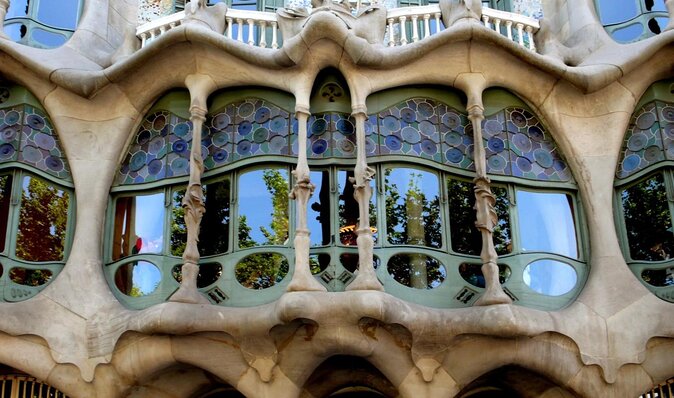
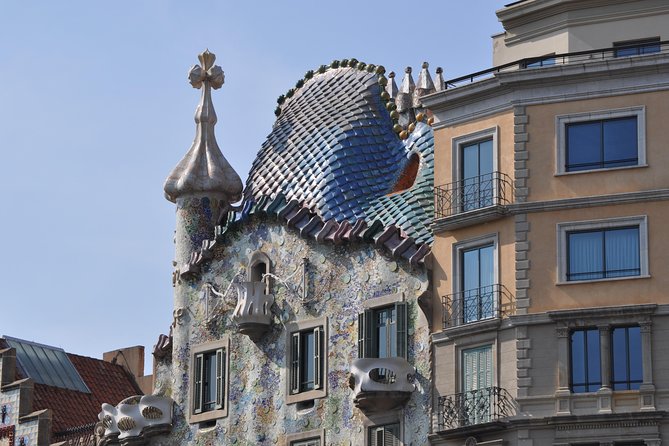
Next comes Casa Batlló, another Gaudi stop that people often photograph first and learn about second. Here, you are guided to connect design choices to the wider story the tour is telling.
The tour also talks about deliquescent surfaces, so you may notice how the building’s exterior language fits that theme. Even without entering, you can understand why Gaudi’s work often seems less like solid geometry and more like controlled transformation.
Casa Calvet: the non-Gaudi contrast that makes Gaudi clearer
Casa Calvet is a useful palate cleanser. It anchors the route in the broader Modernist scene beyond Gaudi’s own work. When you move from one architect to another, you learn to spot what is shared in the era and what is distinct in each mind.
That contrast is one reason this walk feels more educational than a simple Gaudi highlight tour. It keeps you from assuming Gaudi did everything alone. In the Eixample, multiple architects were shaping what Barcelona would look like.
La Mansana de la Discordia: the architecture face-off on one block
Then you hit La Mansana de la Discordia, where the idea is comparison. The tour ties this block to different architects, including Domènech i Montaner’s Casa Lleó Morera and Puig i Cadafalch’s Casa Amatller, alongside the Gaudi presence.
This is one of the best parts of the route because your brain can do actual side-by-side thinking. Same street setting, different design personalities. You learn the why behind the look by hearing the architectural logic framed through the themes the guide covers.
Fundació Antoni Tàpies: Modernism’s afterlife in art
The walk ends with the Fundació Antoni Tàpies. It adds a bridge from architecture to art, and from historical Modernism to later cultural interpretation. Even though you will be outside and not going in, the stop helps you see the neighborhood as more than a time capsule.
This final stop also keeps the momentum. Rather than ending right at a famous facade, you finish with an institution that signals how Barcelona continues to think about modern culture.
Price and value: $54.44 for a 3-hour architect-led route
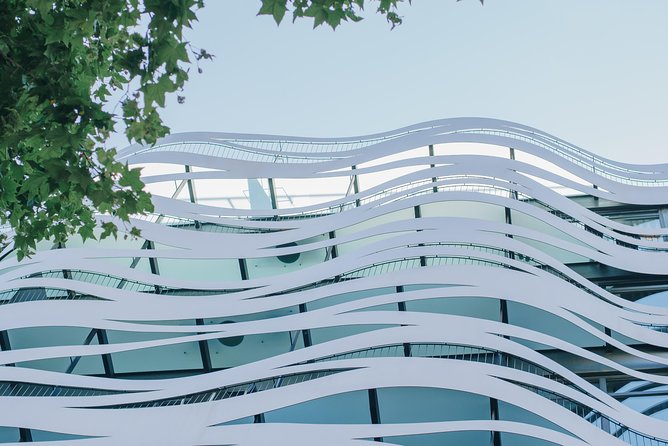
At $54.44 per person for about 3 hours, you are paying for two things: specialist guidance and a tight route that covers multiple major addresses. This is not a quick drive-by and it is not a self-guided stroll where you have to guess what you are looking at.
The small group cap, maximum 20 people, is part of the value. It is easier for an architect-led guide to answer questions and keep the pace personal. That matters on a walk that covers both architectural design and the social ideas behind it.
Also, the tour includes a mobile ticket and confirmation at booking time, which reduces pre-trip friction. Since it is booked on average about 41 days in advance, it is smart to plan early if your dates are fixed.
Pacing, comfort, and the 10:30 am start

The tour starts at 10:30 am and runs about 3 hours. The meeting point is Monument al Llibre on Gran Via de les Corts Catalanes, 634, in the Eixample. Since the tour ends back at the meeting point, you can treat it like a clean, one-time block in your day.
Wear comfortable shoes. This is a walking architecture route with multiple street-level stops. You will also want to be ready for outdoor conditions, because the experience requires good weather. If Barcelona decides to rain, plan for rescheduling or a refund option.
You might also like to set your expectations: you are seeing important exteriors and learning the story behind them. If you need interior access to feel satisfied, this format will not meet that goal.
Who should book it, and who should skip it
I’d put this tour at the top of the list if you like architecture with context. If you enjoy how political and social currents show up in buildings, this walk is built for you.
It is also a solid choice if you want a manageable Gaudi experience. You get multiple major stops, plus architectural comparisons that make Gaudi easier to understand, without burning a whole day.
Skip it if you are only interested in entering specific buildings. Since the tour does not go inside, you are relying on exterior views and discussion, not interior spaces.
It is offered in English and is labeled as “most people can participate.” Service animals are allowed too. That means it is broadly usable for many visitors who can handle an outdoor walking format.
Should you book the Barcelona & Gaudi Regular Tour?
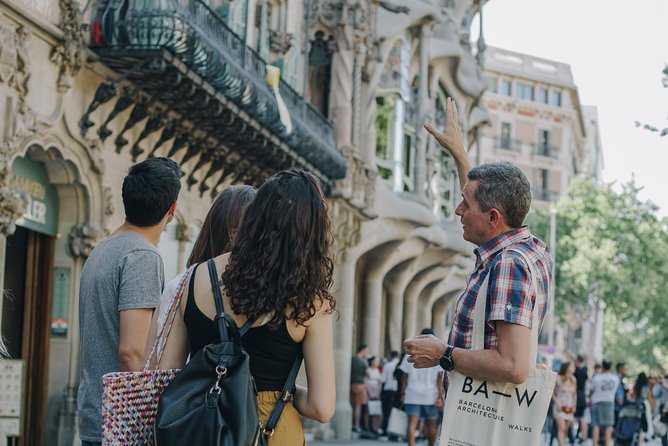
If your goal is to understand Gaudi, this is a strong booking. The guide is an architect, and the tour is designed around a story of Modernism shifting into something deeply personal and spiritual. You get key addresses in the Eixample, plus the intellectual context that helps the details make sense.
Book it if you like small groups, structured walking, and explanations that connect art to the real world. It is also a good value for the number of major stops you cover in one 3-hour block.
Think twice if interiors are your must-do. Also, if your trip has limited flexibility and weather is unpredictable, you’ll want to accept that outdoor plans can change.
If you want Gaudi without guesswork, this route is one of the more practical ways to do it.
FAQ
How long is the Barcelona & Gaudi Regular Tour?
It runs for about 3 hours.
What time does the tour start?
The start time is 10:30 am.
Where does the tour begin?
It starts at Monument al Llibre, Gran Via de les Corts Catalanes, 634, L’Eixample, 08007 Barcelona, Spain.
Does the tour include visits inside the buildings?
No. The tour does not go inside the buildings.
Is the tour offered in English?
Yes, it is offered in English.
What is the group size limit?
The experience has a maximum of 20 people.
Is there a mobile ticket?
Yes, you get a mobile ticket.
What if the weather is poor?
The experience requires good weather. If it is canceled due to poor weather, you will be offered a different date or a full refund.
Can I cancel for a full refund?
Yes. Free cancellation is available up to 24 hours in advance for a full refund. Changes within 24 hours of the start time are not accepted.
More Tours in Barcelona


More Tour Reviews in Barcelona
Not for you? Here's more nearby things to do in Barcelona we have reviewed









More Barcelona Gaudi Tours worth opening.
 ★ 4.5Park Güell and Gaudí House Museum Entry TicketFrom $336,326 reviews
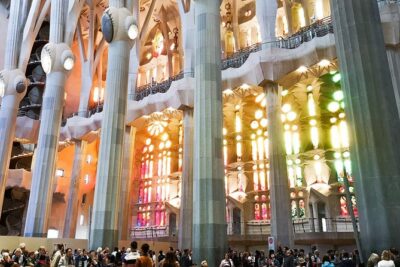 ★ 4.5Sagrada Familia & Gaudi Tour Private or Small Group with TicketsFrom $901,188 reviews
 ★ 5.0Complete Gaudi Tour: Casa Batllo, Park Guell & Sagrada FamiliaFrom $1621,152 reviews
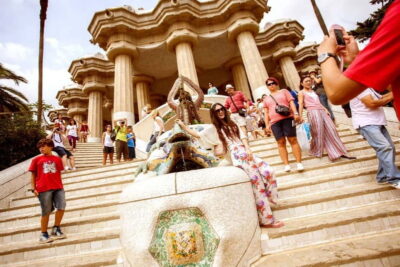 ★ 4.1Park Güell: Guided Tour with Optional Gaudí Experience EntryFrom $35832 reviews
 ★ 5.0Barcelona e-Bike Tour: Gaudí & Old Town Small GroupFrom $38769 reviews
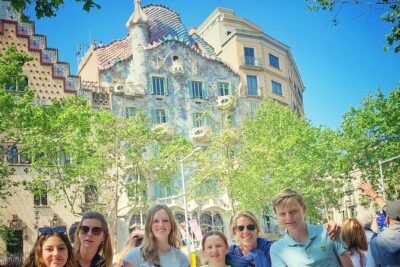 ★ 5.0Ramblas, Old Town, Gothic and Gaudi Architecture Walking TourFrom $35723 reviews
 ★ 4.5Gaudi´s Casa Vicens Skip the Line Ticket with AudioguideFrom $26685 reviews
 ★ 4.8Discover Gaudí, Sagrada Familia, and Park GüellFrom $158651 reviews
Continue by place or experience