
REVIEW · BARCELONA GAUDI TOURS
Barcelona: Art Nouveau & Gaudí Tour
Eixample’s corners explain Barcelona’s power shifts. On this 3.5 hour private Art Nouveau and Gaudí walk in the Golden Square, I love how guide Johannes links the buildings to the Catalonia political story that shaped the city’s identity.
I also like the way the tour treats Modernisme as more than decoration. You get cultural context, from Domènech i Montaner’s folk song symbolism to Gaudí’s string trick and what those ideas mean when you are standing in front of the façades.
One consideration: this is a true outdoor street tour, a 3 weather format, so expect rain, wind, and strong showers. Also, you mostly see exteriors only, so if you want lots of indoor ticketed stops, plan for that separately.
Key things that make this tour worth your time
- Johannes connects politics, people, and architectural style, so the walk feels like one story, not a list of buildings
- Golden Square focus in Eixample, where the 19th century money flex shows up in stone, ceramic, and glass
- Modernisme explained as a cultural movement, starting in 1885, not just an art trend
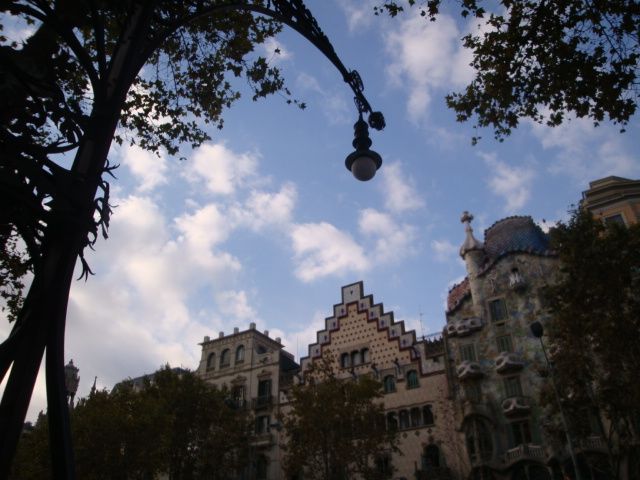
- Passeig de Gracia and trencadís, plus the Block of Discord, with the clues behind the famous details
- Gaudí takeaways you can spot outside, including design logic behind the string model and stories tied to the Sagrada Familia
Starting in Eixample: wide streets, big ideas, zero guesswork
The tour meets at Plaza de Urquinaona, right in front of the Theater Borrás. That matters because it drops you near the nerve center of the city, where you can orient yourself fast before the guide turns you loose in Eixample.
Eixample is famous for its leveled corner façades and its grid. When you walk it with the right context, those practical street corners turn into a design statement. The guide uses the neighborhood’s layout to explain why Barcelona rebuilt its identity after being trapped inside walls for centuries.
This is also where the value shows up. You are not wandering alone. You have a live guide, speaking German or English, who keeps the pace relaxed and the explanations tied to what you are looking at. The walk is not a sprint, and you get time for photos and bathroom breaks. That sounds small, but it changes the whole experience.
You can also read our reviews of more tours and experiences in Barcelona.
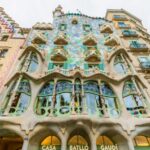
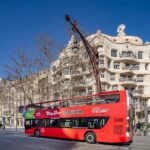
Why Eixample grew after the walls came down
In English, Eixample means city expansion, and the tour uses that word literally. The neighborhood took shape after the city walls were torn down, in 1854. Once that empty space opened up between the old city and Gracia, Barcelona had room to breathe and room to build.
Here is the key point for you: expansion is not neutral. It is money, power, and pride moving into a new physical grid. The tour shows how the wealthier classes, including industrialists, aristocrats, and the so-called Indianos, used Eixample to display success.
The guide also frames the neighborhood as a reaction to political control. Catalonia faced refusals from the central government in Madrid, including autonomy and codetermination. That pressure helped push local elites to signal influence in architecture, because architecture was one of the tools they could actually control.
Once you understand that, you stop seeing façades as isolated artwork. You start reading them like public messaging, written in stone and ceramic.
The 1714 aftershocks: when politics forced architecture to speak louder
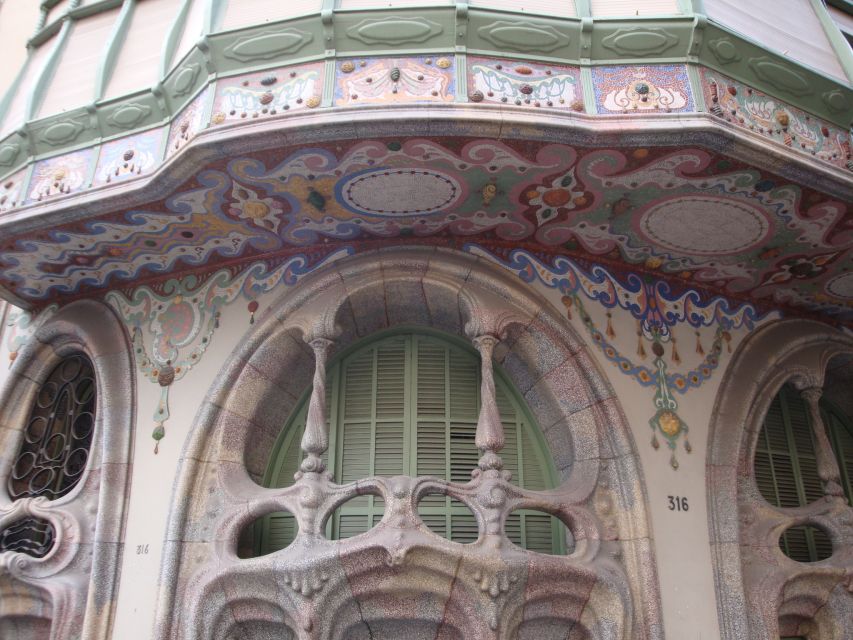
The tour walks you through the repercussions that followed 1714 and the idea of an enslaved city, where the central government restricted local freedom. You do not need a political textbook to follow along, because the guide keeps the chain of cause and effect clear.
Then comes the practical part of that history. Local officials could do little without money. So when money arrived, they spent it. And in Barcelona, the spending often took the form of buildings you can still see today, even though the original social story has changed.
This is one of the most praised aspects of the experience for a reason. Johannes has a habit of connecting the political and local details fast. You are not stuck hearing generic dates. You are hearing why a certain architectural choice made sense at that moment.
For you, that means you leave with a mental map of themes: repression, aspiration, and the desire to look modern while proving you belong at the top.
Cerda’s utopia: the perfect city plan behind the corners
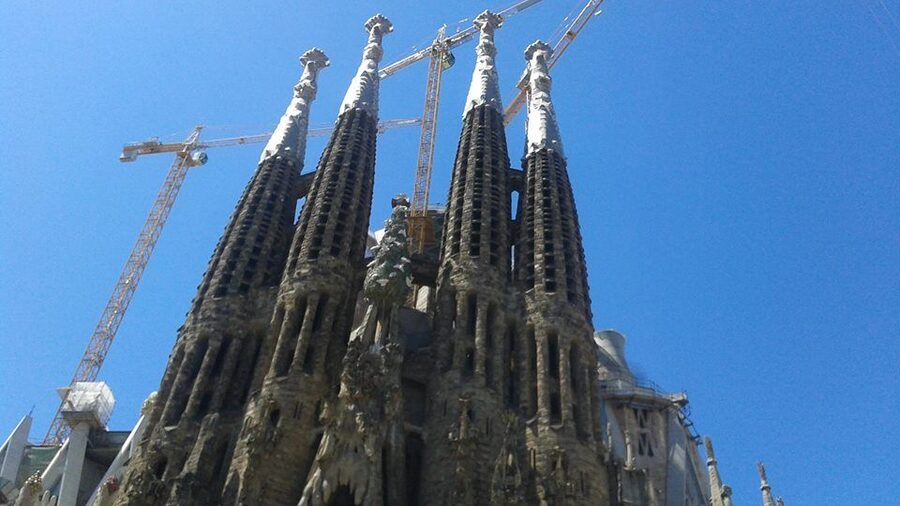
A walking tour in a grid can turn annoying if you feel lost. This one uses the grid instead. The guide brings up Ildefons Cerda’s utopia of the perfect city, and he explains why Eixample’s logic matters.
You will notice the regular street pattern as you walk. But the tour goes beyond lines on a map. It gives you a way to interpret the layout as an urban experiment. The goal was to make a better functioning city, not just a prettier one.
That urban planning story helps the architecture story land harder. Modernisme in Barcelona is not only about artistic innovation. It also fits a city that suddenly had room to stretch and plan.
So when you see the corner treatments and the way buildings face the street, you can connect it to the idea that Barcelona wanted to modernize its future, physically and socially.
Domènech i Montaner and Puig i Cadafalch: Modernisme as cultural meaning
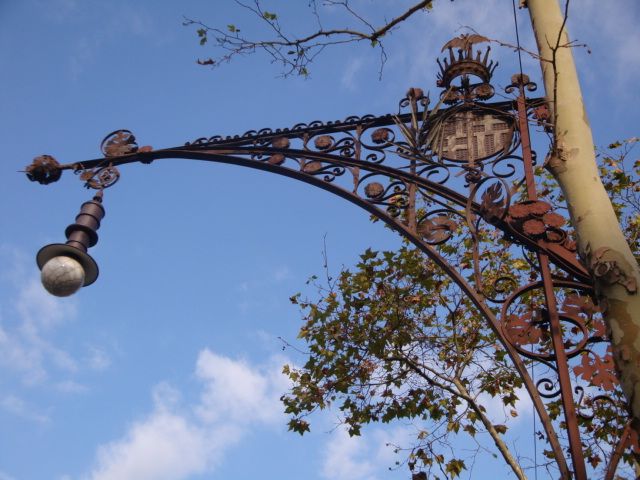
The tour treats Catalan Modernism, also called Modernisme, as a cultural movement that began in 1885. The big idea: it did not start as a strict architectural style. It came from broader cultural energy, including literature and visual art.
This is where the walk becomes fun. You are not just looking for flowers or mosaics. You are learning why those elements were used.
A standout example the guide highlights is Domènech i Montaner and Palau de la Musica. The guide explains the building as an allegory connected to Catalan folk songs, not only as a nod to music but as a stone-built story.
That changes how you look at sculptural work, stained glass hints, and the way ornament is integrated into structure. You start noticing patterns that feel purposeful, not random.
Puig i Cadafalch also enters the story as one of the star architects of the moment when elites wanted to be seen as forward-looking. The tour keeps you grounded in what you can observe from the street, while still giving you the deeper meaning behind the design.
Passeig de Gracia: trencadís shards and the Block of Discord
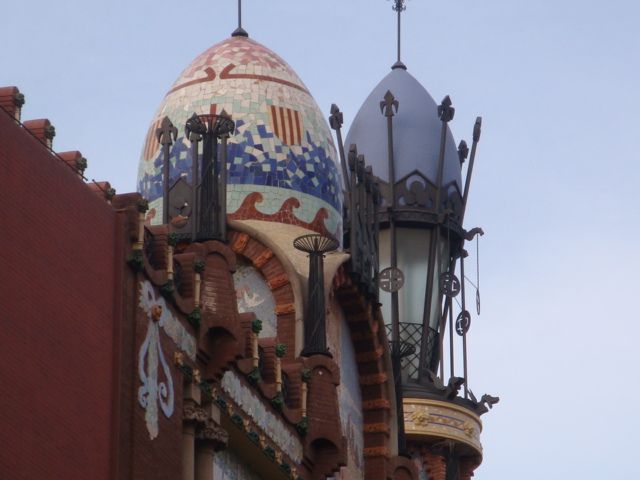
If you only have a short time in Barcelona, Passeig de Gracia is where the city shows off. This tour uses that street as a high-impact corridor.
The guide points out trencadís, the mosaic made from broken pieces, and connects it to the idea of shards bringing luck. That might sound like a myth-y footnote, but the practical part is how the technique behaves visually in real light. When you see it in context, you understand why it looks like it is moving.
Then comes the Block of Discord, a highlight that centers on the idea of three stars. Even if you are not an architecture nerd, you will get the point quickly. This block is a set of contrasting visions by major figures, and you can spot the personalities in the façades.
The tour’s approach is smart here. Instead of just telling you names, it teaches you to compare. You look at how different architects handle ornament, balconies, and the rhythm of windows, and you realize the neighborhood is staging design arguments against itself.
That is one reason the tour stays engaging even when you are tired. You are always doing something, comparing details rather than listening to a lecture.
Gaudí time: dragon legends, strings, and design logic you can spot
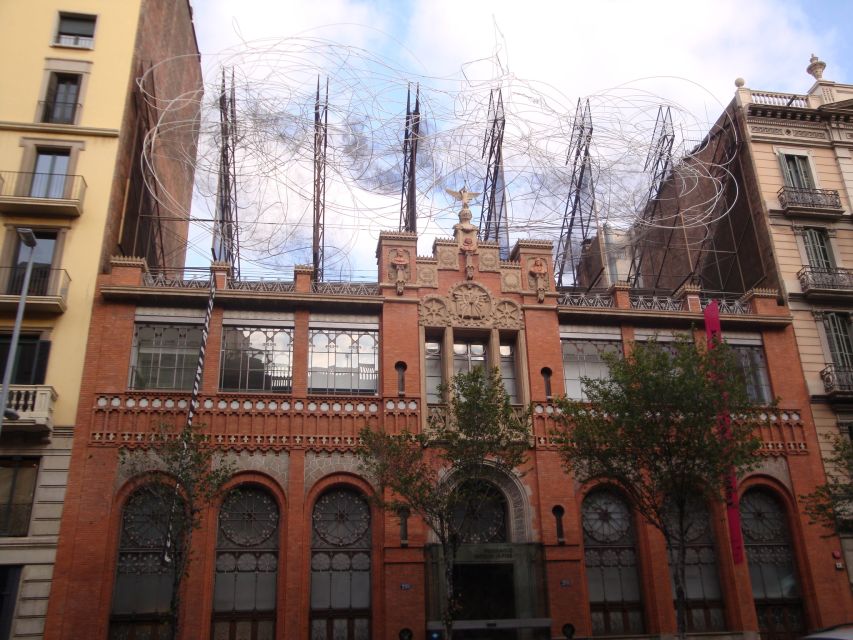
Gaudí is not treated like a statue that you worship from far away. You get stories and then get clues you can recognize on the buildings around you.
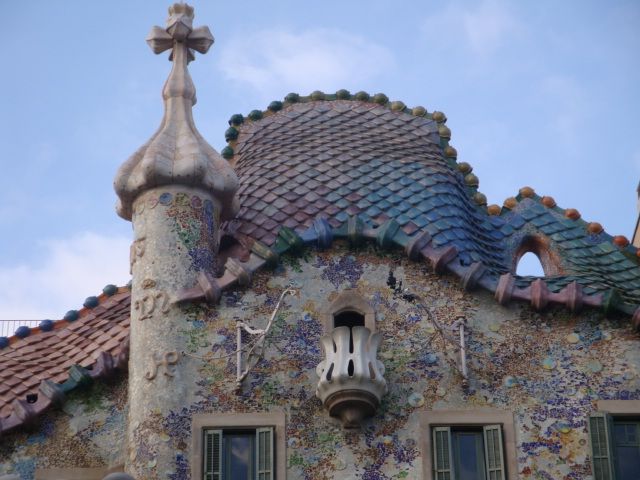
The tour’s highlights include the dragon’s den with relics, and the guide also frames it as Karneval with confetti. That fits the city’s tendency to turn legends into visual spectacle. You will likely recognize how the roofs and color patterns connect to the idea of fantasy, not realism.
Another anecdote you hear about is the so many rooms but no place for the piano idea. It is the kind of quirky detail guides use to help you remember a building’s personality. You can laugh, and you learn at the same time.
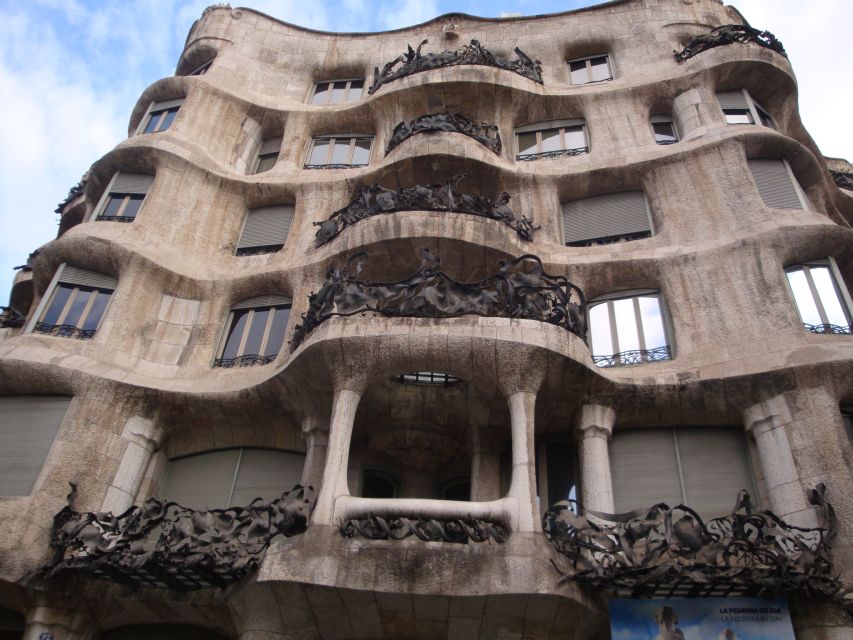
Then the guide brings up Gaudí’s trick with string. This is more than a cool anecdote. It explains the design logic behind curves and structure, and it helps you interpret what you see as intention, not decoration. You start understanding how the shapes were engineered through models and experiments, before they ever became stone.
The tour also touches on the Sagrada Familia angle, including Gaudí’s lost plans. You are not going to get a full inside visit here. Still, the story matters because it connects the building to uncertainty, creativity, and the way plans evolve over time.
In other words, even when you mostly view from the street, you leave with a better brain for Gaudí.
The city’s pop culture side: Dalí, Chupa-Chups, and modern Barcelona identity
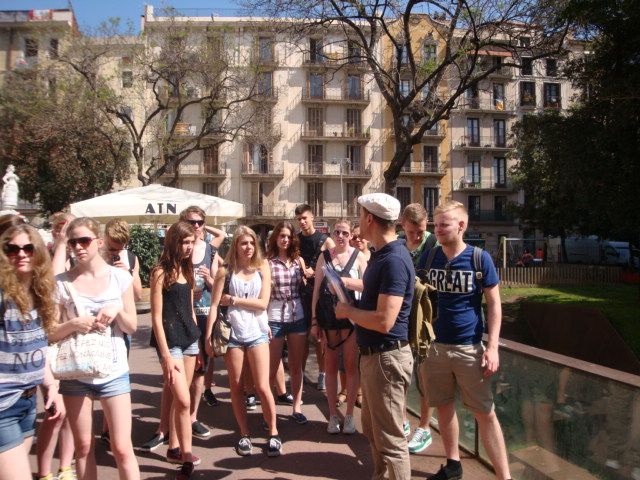
One of the surprises in this tour is how it moves forward in time, not only back. The guide includes references like Dali and the Chupa-Chups empire, and also topics that connect Gaudí to New York.
These are not random name drops. They fit the bigger message that Barcelona keeps remixing its identity. The same city that builds Modernisme palaces also throws creative energy into branding, art, and global attention.
So if you worry that a Gaudí tour will feel stuck in 19th century nostalgia, this format should help. You are watching a city that learned how to stay original.
And the guide keeps it entertaining. Based on what I valued most, Johannes knows when to slow down for a detail and when to hit you with a story that makes the whole street feel alive.
Weather and pace: what to wear and how to make it work
This is a relaxed walk, not a rushed hit-and-run. But it is also a 3 weather tour. It runs in sun, rain, and wind, even strong showers. That means your plan should be realistic.
Wear layers. Bring a thin coat or jacket. In summer, add a hat, sunglasses, and sunscreen, plus a small bottle of water. In rain, have something that keeps you dry enough to keep moving, since you are outside most of the time.
Also, the guide sticks to streets and squares. You admire monuments from their exteriors. Museum visits and interior explorations are not part of the program, with a couple exceptions you will find during the tour flow. Entry fees are not included, which matters because it keeps the focus on street-level learning rather than ticket logistics.
Good news: bathroom breaks are allowed. The tour is set up so you are not trapped. That makes the time feel human, not military.
Price and value: $212 for up to 4 people, plus one key perk
The price is $212 per group up to 4 people for a 3.5 hour tour. That is not cheap if you compare it to basic group walking tours sold per person. But the math changes fast if you are traveling as a small group and want private attention.
At full group size, you can think of it as roughly $53 per person. At two people, it is about double that, so you feel the private-group premium more.
What justifies it is the guided format and the fact that your guide handles the history-architecture connections. Plus, you get a U-Bahn (subway) ticket included, which can save time and reduce walking stress in a city where distances add up.
Entry fees are not included, which is fine because most of what you get is built into the exterior experience. If you are the kind of traveler who wants to pay for nothing except time and guidance, this setup makes sense.
Who should book this tour, and who might skip it
You should book if you like architecture with a storyline. You will enjoy how the guide connects Modernisme to politics, urban planning, and cultural movements starting around 1885. You will also enjoy the pace if you want to stop for photos and take breaks without feeling guilty.
You might skip if your priority is museum interiors and paid attractions. This tour focuses on streets and squares and keeps interiors limited. You will learn a ton, but it is not designed like a ticketed sightseeing day.
It also fits you if you want a smaller-group feel. It is a private group, up to 4 people, and that means the guide can explain at the level you want. If you are traveling with a partner or a couple of friends who share an interest in design, this is a strong use of a half day.
Should you book Barcelona Art Nouveau and Gaudí Tour?
Book it if you want Barcelona’s Modernisme explained through the actual streets where it happened. The Golden Square theme gives you a focused area instead of a scattered tour. The best part is the way Johannes ties political events and local details to the architecture, so you do not leave with memorized names. You leave with meaning.
Skip it only if you are chasing heavy indoor ticket time. If you want buildings from the outside, plus crisp storytelling and a relaxed walk in Eixample, this is a smart fit. Bring weather gear, wear comfortable shoes, and you will likely come away feeling like you can read the city.
FAQ
Where does the tour start?
It starts at Plaza de Urquinaona, in front of the Theater Borrás.
How long is the Barcelona Art Nouveau and Gaudí tour?
The duration is 3.5 hours.
Is the tour private or group-based?
It is a private group tour.
What is the maximum group size?
The price is per group up to 4 people.
Which languages are available for the live guide?
The tour is available in German and English.
Is a subway ticket included?
Yes. A U-Bahn (subway) ticket is included.
Are entry fees included?
No. Entry fees are not included.
Is the tour wheelchair accessible?
Yes, it is wheelchair accessible.
Will the tour run in bad weather?
Yes. It runs in sun, rain, and wind, including strong showers.
What is the cancellation policy?
You can cancel up to 24 hours in advance for a full refund.
Is there a pay later option?
Yes, you can reserve now and pay later.
More Tours in Barcelona


More Tour Reviews in Barcelona
Not for you? Here's more nearby things to do in Barcelona we have reviewed








More Barcelona Gaudi Tours worth opening.
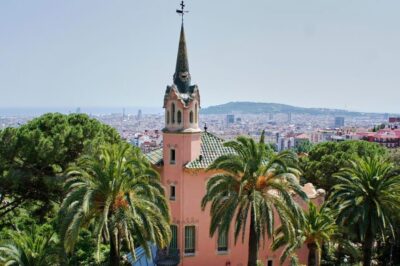 ★ 4.5Park Güell and Gaudí House Museum Entry TicketFrom $336,326 reviews
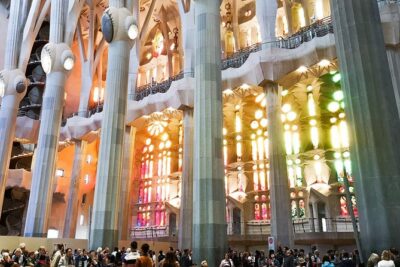 ★ 4.5Sagrada Familia & Gaudi Tour Private or Small Group with TicketsFrom $901,188 reviews
 ★ 5.0Complete Gaudi Tour: Casa Batllo, Park Guell & Sagrada FamiliaFrom $1621,152 reviews
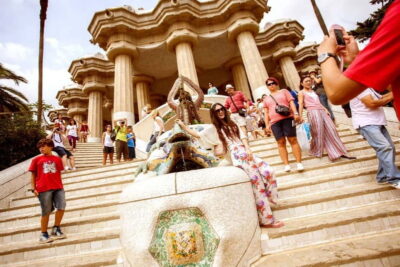 ★ 4.1Park Güell: Guided Tour with Optional Gaudí Experience EntryFrom $35832 reviews
 ★ 5.0Barcelona e-Bike Tour: Gaudí & Old Town Small GroupFrom $38769 reviews
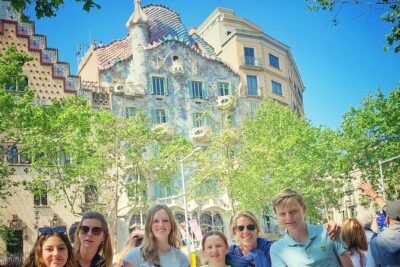 ★ 5.0Ramblas, Old Town, Gothic and Gaudi Architecture Walking TourFrom $35723 reviews
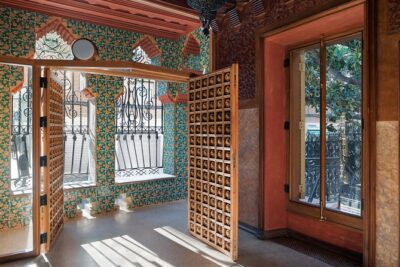 ★ 4.5Gaudi´s Casa Vicens Skip the Line Ticket with AudioguideFrom $26685 reviews
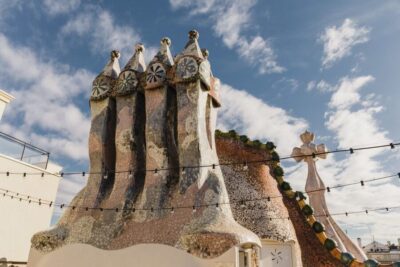 ★ 4.8Discover Gaudí, Sagrada Familia, and Park GüellFrom $158651 reviews
Continue by place or experience