
REVIEW · BARCELONA CITY TOURS
Barcelona: 2.5-Hour Bike or E-Bike Historical Tour
Gaudí in 2.5 hours, with wheels. I like how the e-bike keeps the ride fun on real city streets, and I love the payoff at Sagrada Familia. The one thing to think about is that you still need to feel comfortable pedaling and staying alert in traffic, and it is not a fit for people with heart problems.
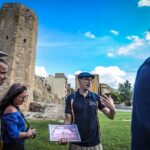
You start near Arc de Triomf, meet a local guide, and glide through parks, neighborhoods, and famous facades at an easy pace. With small groups of 2 to 15 and guides who can explain in many languages, you get to focus on what you are seeing, not on figuring out where to go next.
Key things I think are most worth your attention
- Arc de Triomf photo stop, then straight into the Gaudí vibe with a neo-Mudéjar style opening that sets the tone fast
- Park time at Parc de la Ciutadella, including that Italian-inspired fountain moment (with possible links to a young Gaudí)
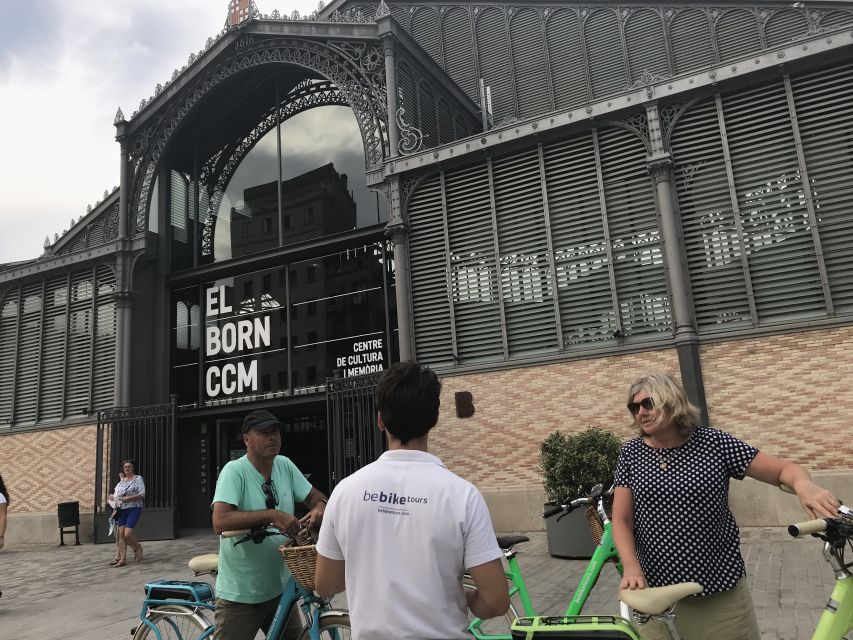
- Born and markets like Mercat del Born, so you see more than just postcard buildings
- Modernism in Gràcia, including the 33-meter bell tower with the famous bell of the Marieta
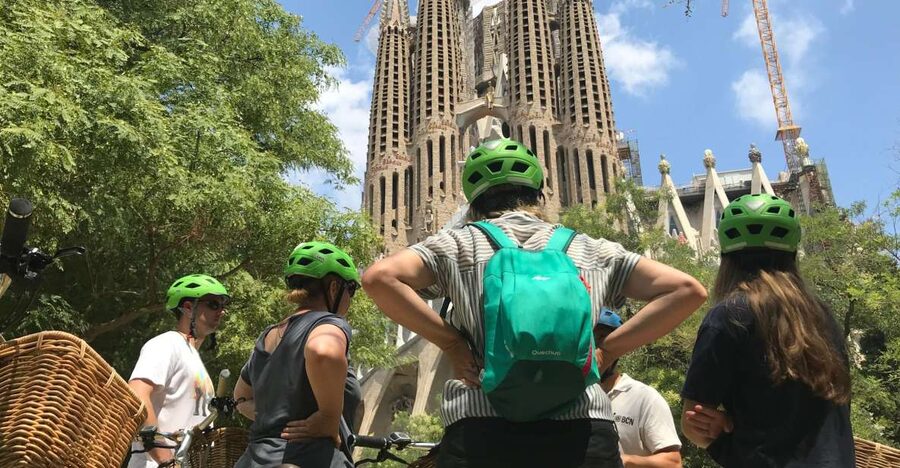
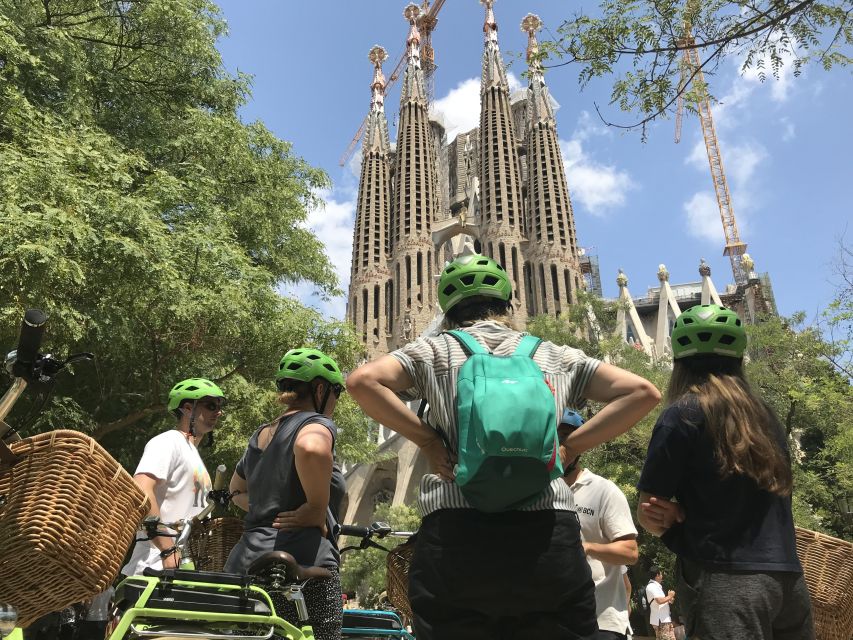
- Sagrada Familia as the grand finish, with guided highlights and time to soak in the spires and facades
Why this Gaudí bike tour is such a strong use of a short visit
If you have only a day (or even half a day) in Barcelona, this is a smart way to stack the big Gaudí hits without burning hours walking back and forth. The whole concept is simple: you ride a practical route, stop often enough to learn what to look for, and finish at Sagrada Familia when your eyes are ready for the wow factor.
What makes it work is the mix of famous stops and Barcelona texture. You get architecture at La Pedrera and Casa Batlló, yes. But you also get places like Parc de la Ciutadella, the Born district, and Plaça Sant Jaume, which help you understand how these buildings fit into the city.
You can also read our reviews of more cycling tours in Barcelona


Getting to Passeig de Lluís Companys and getting your bike fast
You meet at Passeig de Lluís Companys, 10, right by Arc de Triomf. If you are using the metro, hop off at Arc de Triomf on line L1 and walk about 3 minutes along Passeig de Lluís Companys toward Passeig de Sant Joan, and the office is on the left.
This matters because the tour is only 2.5 hours. When you start close to a major landmark, you spend more time riding and less time assembling your day.
You will get a helmet, a bottle of water, and insurance included. Your bike option depends on what you choose, regular or electric. From the experience I’m seeing in the details, the bikes are easy to use and kept in good shape, which is a big deal on a city ride where you want smooth starts at intersections.
Arc de Triomf and Parc de la Ciutadella: start strong, then cool down
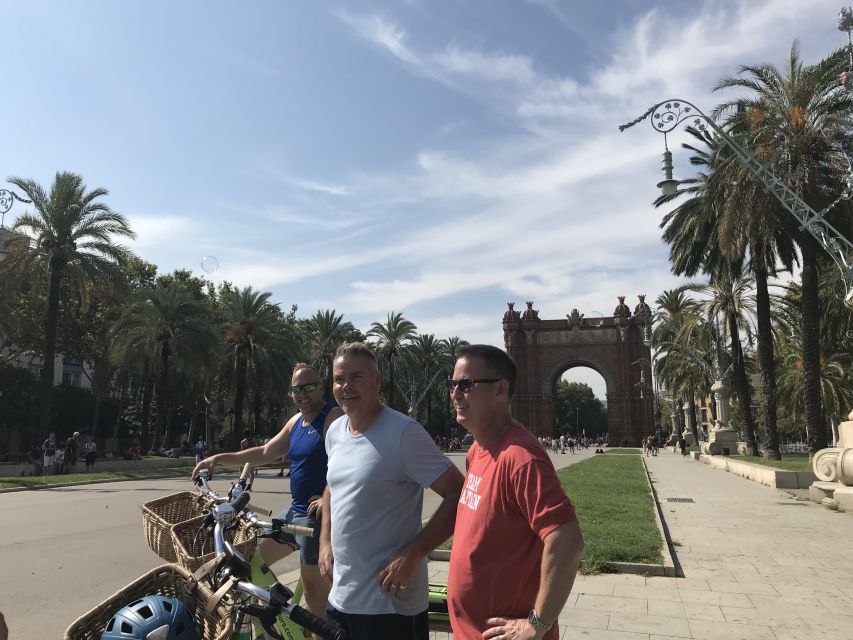
The tour begins with a stop at Arc de Triomf. It is a quick photo moment, but it is also a useful warm-up. You get to set your eye on style early, since the arch has a neo-Mudéjar look that hints at the era of design that Barcelona loves.
Then you head into Parc de la Ciutadella. Here you slow the pace for a bit, with guided sightseeing and some photo time. The highlight is the Italian-inspired fountain. The best part is not just seeing it, it is hearing the angle about possible contributions by a young Gaudí. Even if you do not go into deep academic detail, that kind of context makes the later Gaudí buildings feel less random and more connected.
Practical note: parks are where e-bikes can feel especially pleasant because you can regain your breath and reset your posture before the ride continues.
El Born, Mercat del Born, and St. Mary of the Sea: old Barcelona between the big names
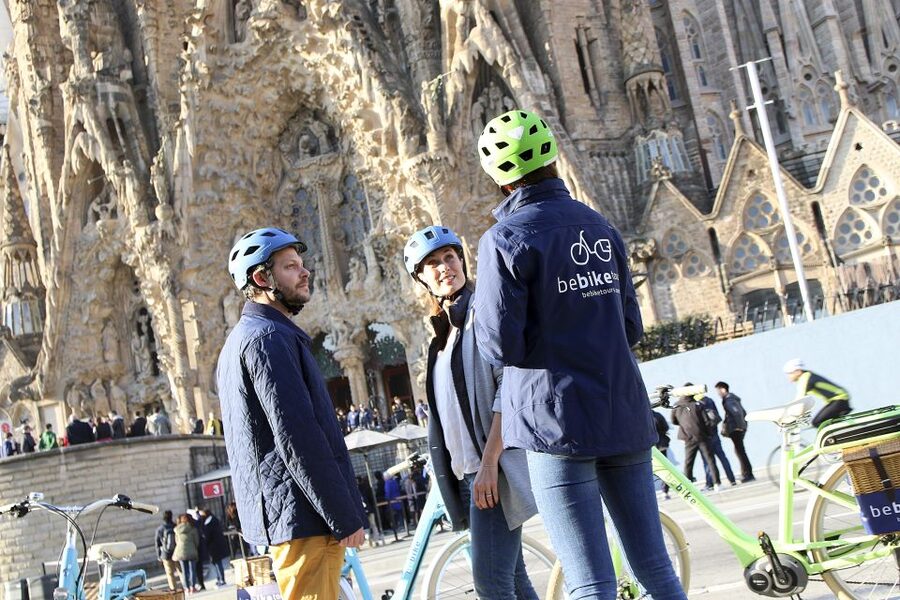
After the park, you roll into El Born, one of the city’s most atmospheric districts. The guide takes you through color and history at street level, including the idea that this area was once a seaside resort for medieval aristocracy. That context helps when you are looking at streets and stonework and trying to place what period you are actually in.
Mercat del Born is a key stop. You get a guided sightseeing moment there, and it is a chance to see how the commercial heartbeat of the neighborhood connects to the more famous architecture nearby. Even if you are not shopping, markets give you that lived-in feeling you do not always get on art-focused walking tours.
You also pass by or stop near St. Mary of the Sea Cathedral, plus you visit Plaça Sant Jaume. This is where the route becomes more than a Gaudí checklist. These stops help you understand Barcelona as a functioning city, not only a museum of buildings.
One consideration: this part of the ride can mean more foot traffic around you, so keep your speed controlled and let the guide handle the rhythm at crossings.
Casa Calvet and Gràcia’s Modernism: the route that feels more local
This is where the tour starts to reward your curiosity. You will see Casa Calvet, designed by Gaudí and designated a Place of Cultural Interest since 1969. It is a great example of how Gaudí’s work is not always the most famous silhouette, but still full of distinctive design choices.
Next you move into Gràcia, and you get a strong sense of why this neighborhood is loved. The area is known for its unique Catalan Modernism style, and you see buildings with extraordinary designs. The route through Vila de Gràcia, which is often described as Barcelona’s coolest suburb and a real administrative and commercial center, gives you that feeling of being in a neighborhood that lives year-round.
A standout visual is the bell tower that is about 33 meters tall, crowned with the famous Marieta bell. When you see it from the street level on two wheels, it hits differently than it does in a photo. You get the scale, the textures, and the way it anchors the surrounding streets.
Practical tip: Gràcia has plenty of character, so if you love street-level design and small architectural surprises, you are going to enjoy this stretch more than the purely famous facades.
You can also read our reviews of more historical tours in Barcelona

Passing Casa Batlló, La Pedrera, and the practical magic of an e-bike
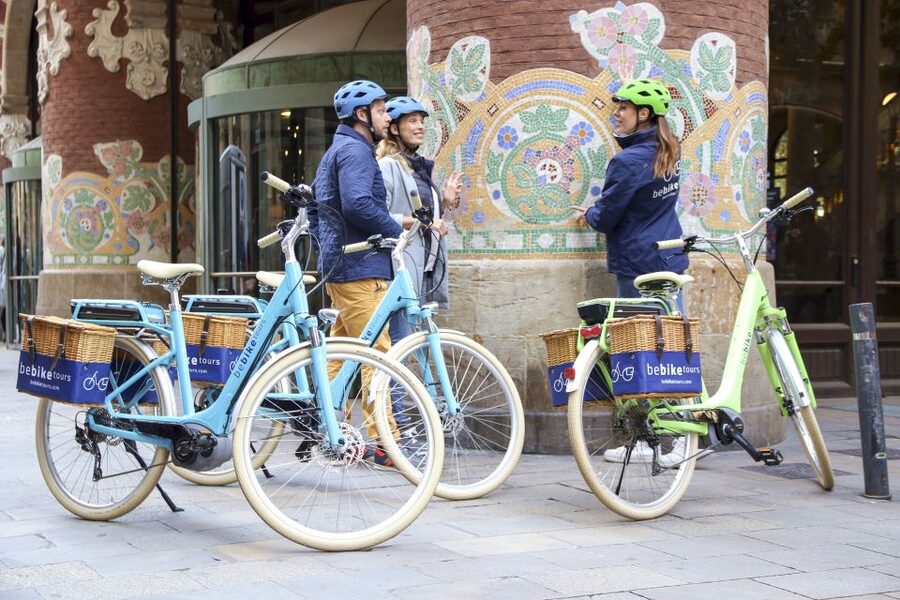
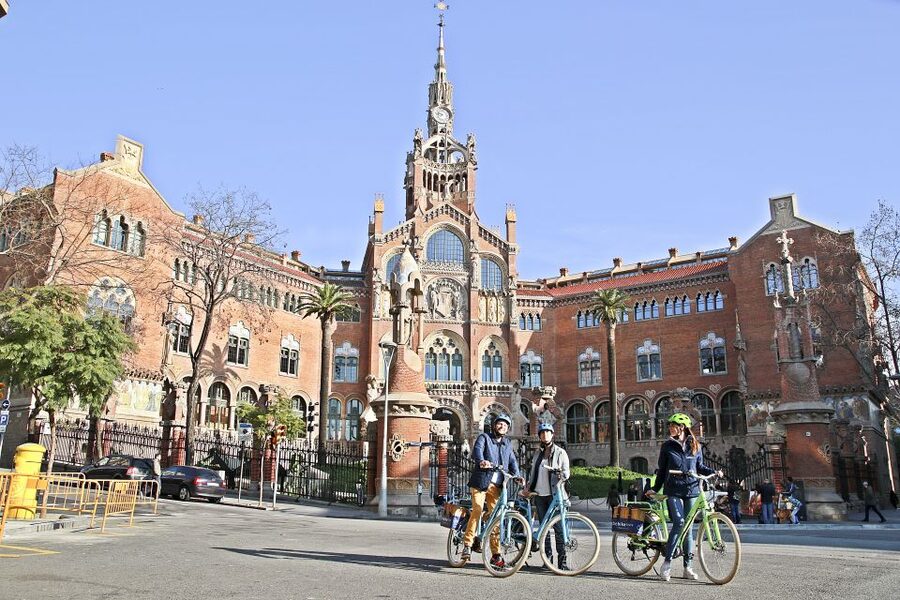
You reach major Modernism icons like Casa Batlló and La Pedrera, also called Casa Mila. These stops are photo stops with guided context, and that is a smart time saver. You are not spending your whole day waiting in lines or walking long distances between separated sights.
With an e-bike, the city ride feels much easier than it would on a regular bike. That said, the pace still includes some uphill sections at times. The good news is that the route is designed to stay comfortable overall, and riders say it is easy to follow, with smooth starts at traffic lights after you get rolling.
Why I like this approach for you: famous Gaudí buildings can be overwhelming. A guided route helps you focus on what to look for in each one, so you come away feeling like you understood the design, not just that you saw the exterior.
Casa Vicens and Passeig de Sant Joan: setting up the Sagrada finale
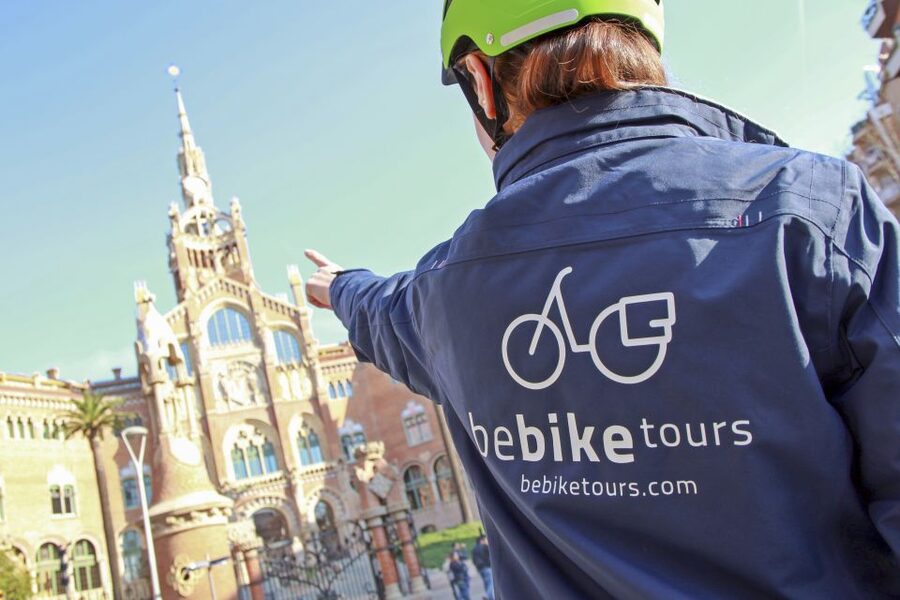
You will also see Casa Vicens along the way. It is considered one of the first buildings in the Art Nouveau movement and is notable as the first house designed by Gaudí. Even if you have not studied his early style, the mention of it being the start of something helps you notice the evolution.
Then you continue toward Sagrada Familia along Passeig de Sant Joan. This is the lead-in that makes the final stop land harder. You get views of what many call Gaudí’s masterpiece, and you learn why the building still feels unfinished in the best possible way.
Sagrada Familia is under construction since 1883, and that detail matters when you look at the facades and spires. It turns your visit from a single moment into an ongoing story, visible in stone and detail.
Sagrada Familia finish: time to look, plus guided direction
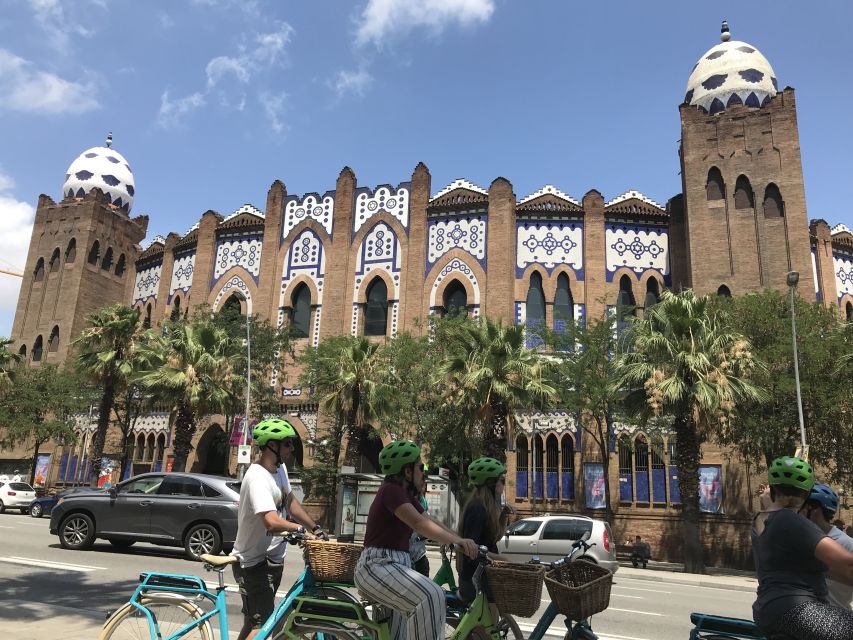
At Sagrada Familia, you get a photo stop plus guided sightseeing, and there is also free time. That free time is important. It gives you room to step back, compare what you just learned to what you are seeing, and decide which angles you want to return to.
This is where the tour’s format pays off. Riding in means you arrive with less fatigue, and you are not forced into a full-day plan just to get the highlights. You can focus on the spires, the facades, and the sense of scale that makes Sagrada Familia feel like it belongs to the skyline, not the sidewalk.
If you are the type who likes taking photos, plan to slow down here. The best shots usually require you to pause long enough to frame the structure, not just snap while rolling.
Price and value: why $28 can make sense for the right traveler
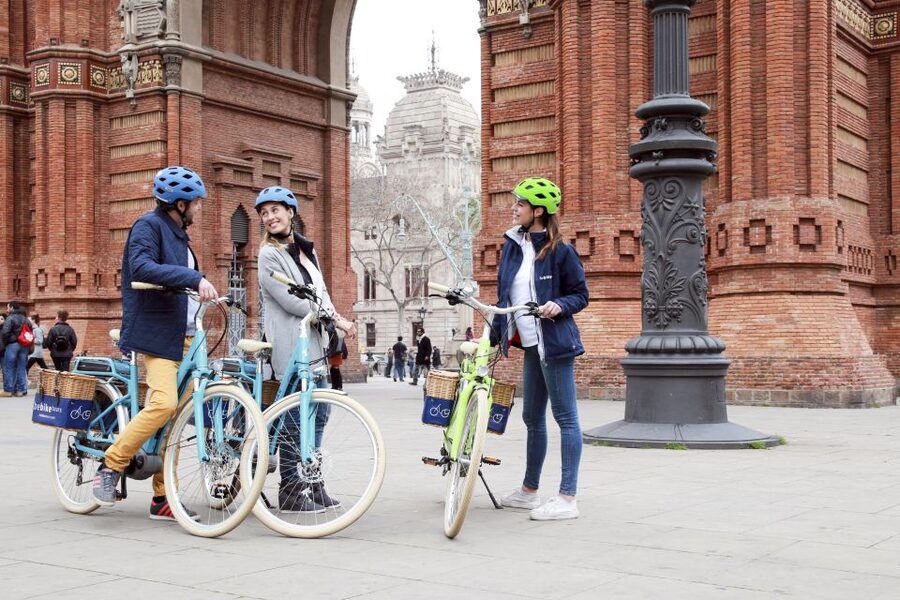
At $28 per person for a 2.5-hour guided tour, the value comes from the whole package, not just the sightseeing list.
Here is what you are paying for that reduces your hassle:
- Local guide who helps you interpret what you see
- Helmet, plus insurance
- Bottle of water
- A route that ties multiple neighborhoods together in one run
For a short visit, this price often competes well with the cost and time of piecing together separate transit tickets, maps, and multiple walking legs. The included gear also saves you from last-minute decisions.
One more value factor I like: the tours run in small groups of 2 to 15. In the feedback details, guides like Sergio are described as both attentive and quick to solve problems, even coordinating a mechanic when a bike issue popped up. That kind of responsiveness is not just comfort, it protects your schedule so the route still feels complete.
Group size, comfort level, and who should choose e-bike vs regular bike
You will be in a small group, and that usually means the guide can manage pacing well. Guides are available in many languages, including Spanish, English, French, German, Italian, Russian, Dutch, and Portuguese, which makes it easier to follow even if your Spanish is rusty.
Who it suits best:
- You want a fast, guided way to hit key Gaudí landmarks plus a few neighborhood stops
- You like street-level photos as much as big buildings
- You want some structure so you know where to look
Who should think twice:
- People with heart problems, since it is not suitable
- Very young kids who are not eligible for the provided child seating rules
- Anyone who is not comfortable riding in a city environment
For families: kids under 6 can join for free in a child safety seat on a parent’s bike, and kids up to 20 kg and 130 cm can also join at no cost in that child seat. That is helpful if you want a family-friendly option without paying extra per child.
As for skill level, e-bike riders often find the ride relaxed. Even with some uphill sections, the route is described as easy to follow, and starts after traffic lights are smooth.
Quick practical tips that help you enjoy the route
- Wear comfortable shoes, you will step off for photos and short guided moments.
- Bring sunglasses and sunscreen. You are outside for much of the ride.
- If you choose e-bike, still keep a light grip and stay focused at intersections. Assistance does not replace good awareness.
- If you want deeper architecture details, ask the guide questions during the stops. Different guides, like Peter or Liuba, are often described as adjusting to the group vibe and questions.
Should you book this 2.5-hour Gaudí bike or e-bike tour?
I’d book it if you want the best mix of Gaudí icons and real Barcelona neighborhoods without turning your day into logistics. It is especially good if you value an efficient route, guided context, and the chance to finish at Sagrada Familia with time to look on your own.
I would skip it if biking is not your thing, or if you are in a health category where riding is not appropriate. Also, if you want only one or two buildings with long, in-depth museum-style time, a short bike tour may feel too quick.
If you are aiming for a fun, practical introduction to Gaudí across multiple districts, this one is a strong pick for a half-day plan.
FAQ
How long is the Barcelona Gaudí bike or e-bike historical tour?
The tour lasts 2.5 hours.
Where do I meet the guide?
You meet at Passeig de Lluís Companys, 10.
Do I get an e-bike, or is it a regular bike?
You can choose a regular bike or an electric bike depending on the option you select.
What is included in the price?
The tour includes the bike (regular or electric), a local guide, a helmet, insurance, and a bottle of water.
Is the tour suitable for children?
Kids under 6 can join for free and ride in a child safety seat on their parent’s bike. Children up to 20 kg and 130 cm can also join for free in the child seat.
What languages do the live guides speak?
The live tour guide is available in Spanish, English, French, German, Italian, Russian, Dutch, and Portuguese.
More Cycling Tours in Barcelona


More Tours in Barcelona


More Tour Reviews in Barcelona
Not for you? Here's more nearby things to do in Barcelona we have reviewed





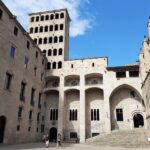

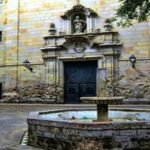


More Barcelona City Tours worth opening.
 ★ 4.4Park Güell Admission TicketFrom $2576,534 reviews
 ★ 4.7Casa Batlló Entry with Self-Audioguide TourFrom $3425,359 reviews
 ★ 4.424 or 48-Hour Hop-On Hop-Off Bus TourFrom $3920,872 reviews
 ★ 4.7Park Guell Guided Tour with Skip The Line EntryFrom $3117,563 reviews
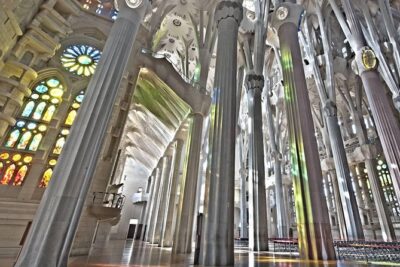 ★ 5.0Barcelona in 1 Day: Sagrada Familia, Park Guell,Old Town & PickupFrom $12013,541 reviews
 ★ 4.3Barcelona Aquarium: Entry TicketFrom $3113,335 reviews
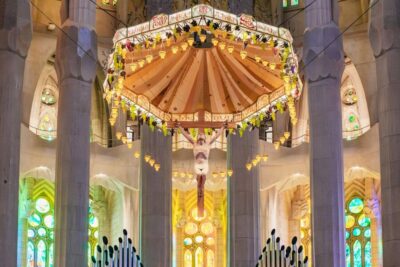 ★ 4.8Sagrada Familia Skip-the-Line Entry Ticket & TourFrom $6712,789 reviews
 ★ 4.4FC Barcelona Museum “Barça Immersive Tour” TicketFrom $3510,944 reviews
Continue by place or experience