
REVIEW · BARCELONA CITY TOURS
Barcelona: Raval Street Art and Graffiti Walking Tour
Barcelona’s walls tell stories, and you’ll hear them. This 2-hour Raval street art and graffiti walk pairs street-level visuals with context, then finishes near the Barcelona Museum of Contemporary Art for you to keep exploring.
I love that the guide actually teaches you how to look: styles, origins, and what local projects are trying to say. I also like the way the route mixes community spaces, like the Arnau Gallery, with a street scene stop at Tres Chimeneas, so the art feels lived-in, not staged.
One consideration: you’re outdoors in a real neighborhood for a short, busy walking tour. Wear good shoes and be ready for tight corners and wall-hugging viewpoints.
Key takeaways before you go
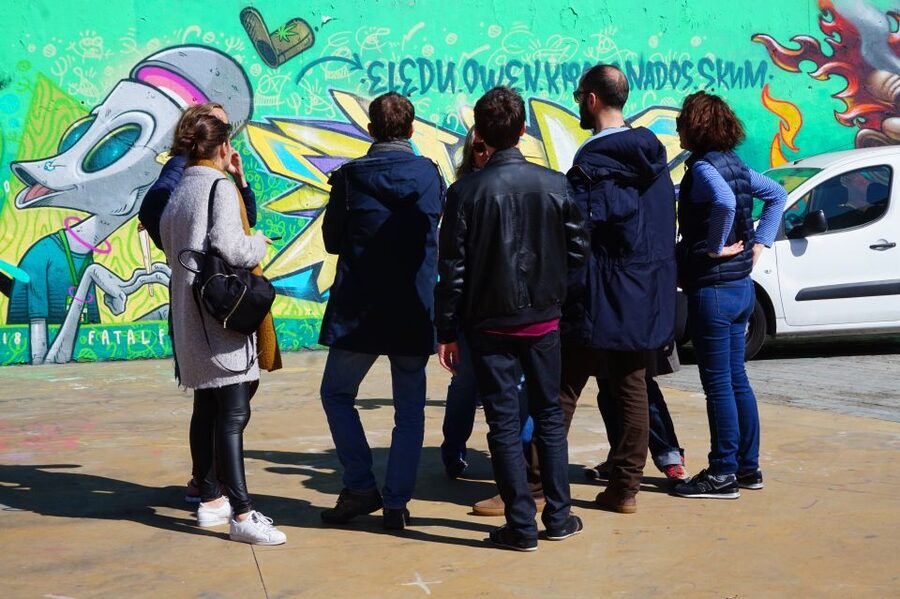
- Raval street art with an on-the-ground local read so you know what you’re seeing, not just that it’s colorful
- Arnau Gallery examples that connect murals to local residents and community projects
- Tres Chimeneas skate spot stop, a real part of Barcelona’s street culture
- International references like Keith Haring added to what the neighborhood is doing now
- Museum of Contemporary Art exterior finish, with optional independent entry afterward
- High guide quality, with multiple named guides praised for friendly, generous explanations
Raval street art in two hours, what makes it worth your time
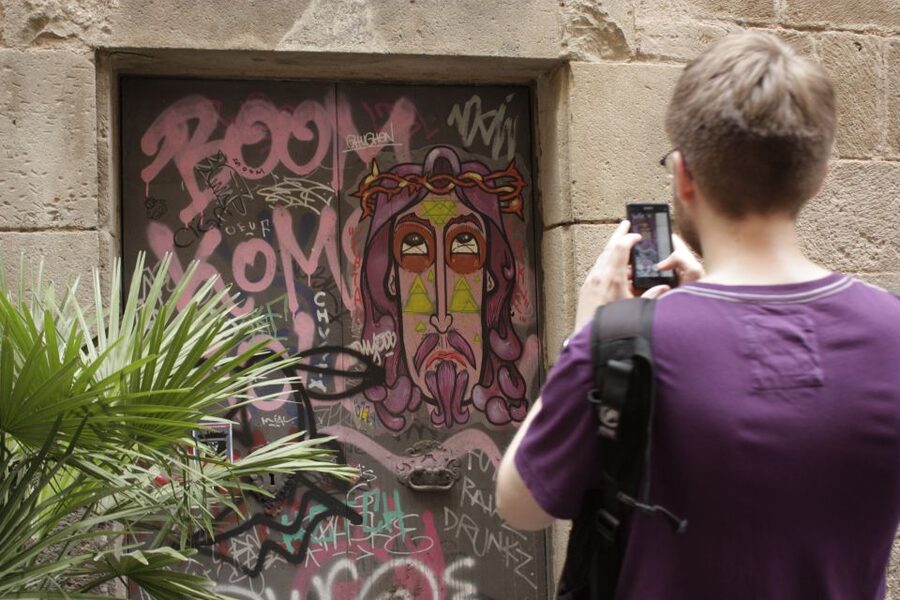
Raval gets labeled with old nicknames, but what I like about a guided walk here is the shift from stereotypes to specifics. You’re not just looking at walls. You’re learning how Barcelona uses street art to talk about identity, creativity, and who gets to make the city’s visual language.
This tour is also a smart time investment. At $33 per person for about two hours, you’re paying for guided interpretation plus a walking route through the places where the art is actually concentrated. You can easily spend that same money on a generic “see the sights” walk where nobody explains anything. Here, the main value is the guide’s ability to connect style and street culture to real locations.
The best part is that the tour doesn’t promise one big mural finale. Instead, it trains your eyes for the small stuff too, like how different graffiti styles signal different communities and eras. Several reviews highlight that guides point out details people miss when they walk by on their own.
You can also read our reviews of more walking tours in Barcelona



Where you meet and how to plan your start
The meeting point is Jardins Talia, on Avenida Paral·lel 100 (08015 Barcelona). Build in a few minutes to find it, because a park meeting spot in a dense neighborhood can take a moment when you arrive hungry or slightly lost.
A couple of practical notes for your start:
- Bring comfortable shoes. You’ll be walking and stopping often to look closely.
- If you want photos, wipe your phone camera lens first. Street art is close-up work, and dust happens fast on the go.
- Plan to arrive with curiosity. The guide will do a lot of explaining, but you’ll get even more if you’re ready to ask questions.
Also remember what the tour includes and does not include. You’re getting a tour guide and a walking tour, but museum admission is not included, so don’t assume the ticket is waiting for you at the end.
Cutting through Raval’s streets, and learning how to look
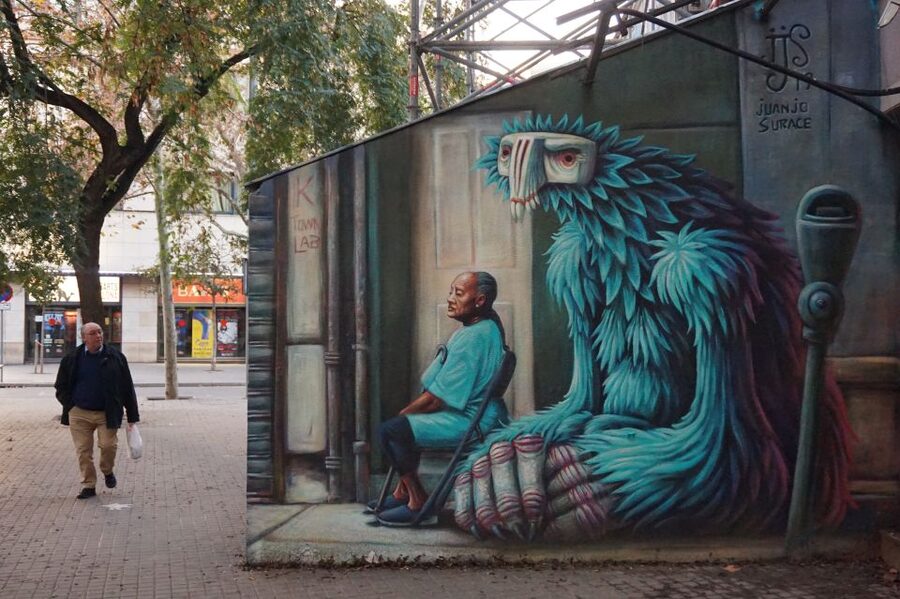
Raval is known for bold street art and graffiti placed across apartment blocks, houses, and public spaces. The neighborhood is often associated with the name barrio Xino, and while that nickname can feel loaded, the street art scene gives you a clearer, more human story. You see how many styles live side by side, and how the neighborhood talks back to change.
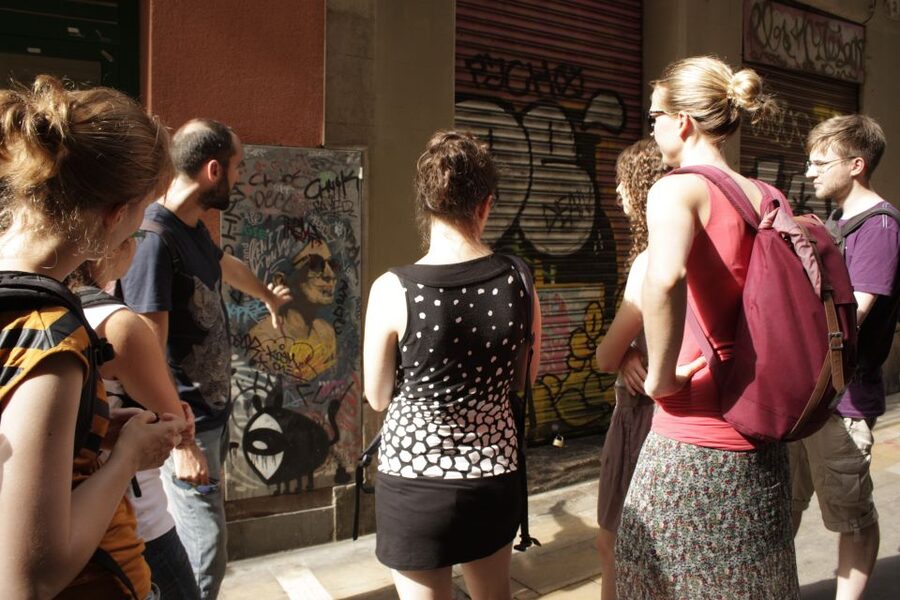
What I like in a tour like this is the guide’s method. Rather than treating each mural like a standalone postcard, the guide helps you read the wall as a kind of public dialogue. That includes the origins of graffiti in general, different styles, and how you can spot local references as you walk.
A strong sign the tour is built for real understanding: reviews repeatedly mention guides explaining the origins and the style differences, then being open to questions, including political topics. If you’ve ever felt that street art tours are mostly photo stops, this one aims to do more than that.
A quick reality check about the pace
Two hours is short. That’s good, but it means:
- you won’t see every wall in Raval
- you’ll see a carefully chosen set of spots
- you’ll want to pay attention at each stop because that’s where the meaning comes in
If you like to linger, keep an eye on the end time so you can still do the museum option afterward.
Arnau Gallery: where local projects get personal
One of the tour’s standout stops is the Arnau Gallery. This matters because it connects street art to the people behind it. Instead of treating the neighborhood only as an outdoor gallery, you get a bridge between the wall and the local art ecosystem.
The value for you is simple: you leave with a better sense of how urban art can move between street visibility and gallery presence. That helps you understand why some works feel like messages from nearby residents, not just artists dropping in from elsewhere.
Reviews also praise the way guides translate what you’re looking at into context. That kind of interpretation turns a stop at a gallery-associated point of interest into an actual learning moment, not just a location photo.
More Barcelona tours and experiences for the shortlist






Tres Chimeneas skate spot: graffiti culture in motion
Then comes one of the more iconic parts of the story, Tres Chimeneas, a legendary skate spot. Even if you’re not a skater, this stop is worth it because skate culture and graffiti culture have long shared audiences, rhythms, and DIY energy.
Here’s what you should watch for on the walk: the way the area’s street art reads differently when you understand the space is used, not only observed. When a place is associated with skating, you’re seeing art shaped by movement, community routines, and youth creativity.
Several reviews underline that the tour offers insight into street art and related hip hop culture, which fits naturally with this kind of skate spot stop. If you want Barcelona that feels current and lived in, this is one of your best bets in the whole experience.
Keith Haring and the international layer of street art
The tour also brings in international street art references, including mention of Keith Haring. That inclusion matters because it helps you place Barcelona’s street scene into a wider conversation.
When a guide connects local work to an internationally recognized artist, it gives you a framework for comparison:
- style choices and recognizable visual signatures
- how artists use the street as a public medium
- why certain themes travel across cities
Just keep your expectations grounded. This tour is about Raval and its street art scene, not a museum-style lecture. You’re using the international references as a lens to sharpen your local viewing.
Ending at the Barcelona Museum of Contemporary Art, what you can do next
The tour finishes with the exterior area of the Barcelona Museum of Contemporary Art. The exterior stop is useful for two reasons: it gives you a sense of the institutional art world right after the street art world, and it helps you orient yourself if you choose to go inside.
Important detail: museum admission is not included. You can visit independently after the tour. The museum showcases works from three distinct periods of modern art, which is a big reason to consider stepping in on your own if you still want more.
Even if you skip the interior, ending here is a strong transition moment. You’ll go from street textures and community-coded visuals to a museum setting that frames modern art in a structured way. That contrast is exactly what makes this kind of pairing interesting.
Price and value: is $33 fair for this tour?
At $33 per person for 2 hours, you’re paying for something specific: an expert guide plus a focused route through one of Barcelona’s street art neighborhoods, with interpretation at the stops.
To judge value, I look at what’s actually included:
- Tour guide
- Walking tour
- Museum exterior included, museum entry not included
The guide quality is repeatedly emphasized in the reviews, including named guides like Juan, Anais, Jeanne, and Sylvia. That matters, because street art without explanation can feel random. With explanation, you start seeing patterns: style evolution, local references, and why certain artists and projects matter here.
Add in the fact that it’s wheelchair accessible and offered in English, French, and Spanish, and the price starts to make sense for a lot of budgets. This isn’t a bargain tour, but it also isn’t priced like a full-day museum day. You’re paying for street-level expertise and time efficiency.
Who this tour suits best (and who might prefer something else)
This is a great fit if you:
- love art that you have to read a little, not just look at
- want a Barcelona neighborhood experience that doesn’t feel like a ticket line
- enjoy learning how street culture connects to music and local projects
- want an easy, short outing with an ending point near a major museum
You might want a different option if you:
- need a lot of museum time included in the ticket (entry is not included)
- dislike walking through dense urban streets, even briefly
- prefer long, slow stops with no pressure of a fixed two-hour window
For most art-minded travelers, though, this hits a nice sweet spot: short enough to fit into a busy Barcelona schedule, structured enough to make the neighborhood make sense.
What stands out in the reviews, and why it matters for your expectations
The overall rating is 4.9, based on 60 reviews, which is a strong signal that the guides are doing something right.
The most praised themes you should expect:
- Friendly, generous guide style, mentioned with guides like Juan
- Clear explanations that connect graffiti styles to origin stories and local projects, mentioned in detail by reviewers
- Guides who welcome questions, including political questions, which can make the tour feel more like a conversation than a lecture
- A feeling of seeing parts of Barcelona you might otherwise skip
A small note that’s also helpful: at least one review points out that while other cities might show more dramatic mural scale, the Barcelona route is still worth it because you get the right background and the right neighborhood context. That’s the whole point here.
Should you book this Barcelona Raval street art and graffiti walking tour?
I’d book it if you want an art-focused walk that actually teaches you how to see. The combination of Raval street art, local project references like the Arnau Gallery, a real culture stop at Tres Chimeneas, and a finish near the Barcelona Museum of Contemporary Art makes this a smart half-move through Barcelona. You get meaning in the moments that matter, then you have the choice to keep going inside the museum on your own.
If you mainly want a quick photo loop with zero interpretation, you might find the guided angle less exciting. But if you like your travel with context, this one has the right ingredients for a solid, cost-effective afternoon plan.
FAQ
How long is the Barcelona Raval street art and graffiti walking tour?
It lasts 2 hours.
How much does the tour cost?
The price is $33 per person.
Where do I meet the guide?
Meet your guide at Jardins Talia park on Avenida Paralel 100, 08015 Barcelona.
Is admission to the Barcelona Museum of Contemporary Art included?
No. The tour includes the museum exterior, and you can visit the museum independently afterward, but museum admission is not included.
What languages are available for the live guide?
The live tour guide is available in English, French, and Spanish.
Is the tour wheelchair accessible?
Yes, the tour is listed as wheelchair accessible.
Can I cancel for a refund?
Yes. You can cancel up to 24 hours in advance for a full refund.
More Walking Tours in Barcelona


More Tours in Barcelona




More Tour Reviews in Barcelona

Not for you? Here's more nearby things to do in Barcelona we have reviewed









More Barcelona City Tours worth opening.
 ★ 4.4Park Güell Admission TicketFrom $2576,534 reviews
 ★ 4.7Casa Batlló Entry with Self-Audioguide TourFrom $3425,359 reviews
 ★ 4.424 or 48-Hour Hop-On Hop-Off Bus TourFrom $3920,872 reviews
 ★ 4.7Park Guell Guided Tour with Skip The Line EntryFrom $3117,563 reviews
 ★ 5.0Barcelona in 1 Day: Sagrada Familia, Park Guell,Old Town & PickupFrom $12013,541 reviews
 ★ 4.3Barcelona Aquarium: Entry TicketFrom $3113,335 reviews
 ★ 4.8Sagrada Familia Skip-the-Line Entry Ticket & TourFrom $6712,789 reviews
 ★ 4.4FC Barcelona Museum “Barça Immersive Tour” TicketFrom $3510,944 reviews
Continue by place or experience