
REVIEW · BARCELONA CITY TOURS
Barcelona: Poble Espanyol Entry Ticket
Barcelona’s Montjuïc hides a mini Spain.
Poble Espanyol is a walkable open-air gallery of Spanish architecture, built in 1929 for the International Exhibition. I like how it gives you a clear sense of styles, from Romanesque to Baroque, without needing to hop trains all day. I also like that it is not just buildings, you can watch crafts being made and then switch gears to the Fran Daurel Museum for modern art. One drawback to plan for, some shops and cafés can feel patchy depending on the day and season, so don’t assume everything is always running.
The setting matters too. With about 40,000 m² of outdoor space in Montjuïc, you trade the city center crowds for a calmer pace, and the higher areas deliver some of the best city views from the peninsula. There are some climbs and steps, so wear grippy shoes and expect a workout if you want to reach every corner.
Key Highlights at Poble Espanyol Entry Ticket
- Spanish streets in 117 buildings that show different architectural styles, side by side.
- Crafts workshops where you can watch makers at work, especially glass, leather, and ceramics.
- Audiovisual shows like Feeling Spain and Fiesta to set context in a short time.
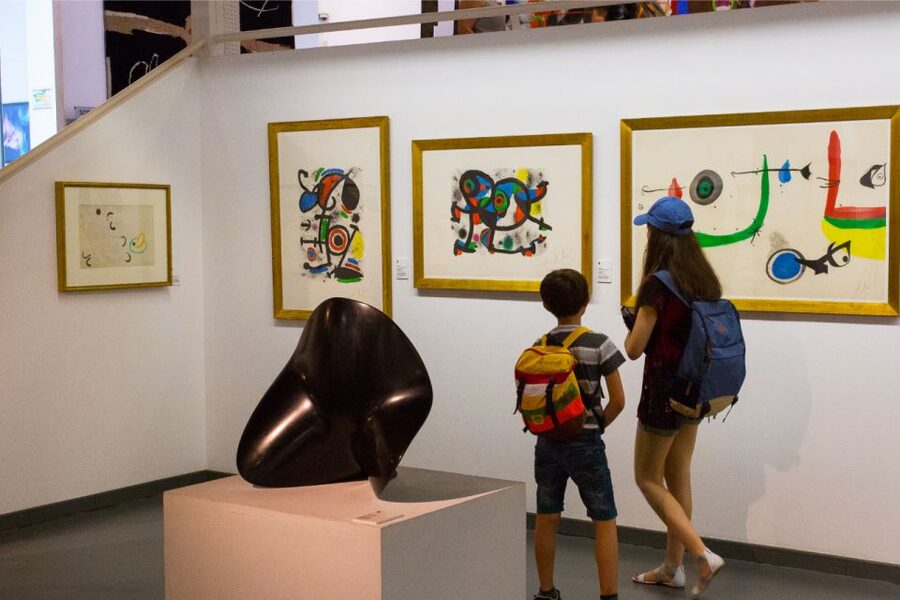
- Fran Daurel Museum with contemporary art tied to big names like Picasso, Dalí, and Miró.
- Best panoramic views of Barcelona from higher points inside the grounds.
- Kids area with giant slides, so families can spread out and keep moving.
Poble Espanyol in Montjuïc: A Mini Spain You Actually Walk Through
If you want the feeling of seeing many Spanish regions in one day, Poble Espanyol is a smart move. Instead of a museum where you shuffle room to room, this is an outdoor village. You stroll streets, pass through building replicas, and get the sense that Spain has many looks, many eras, and many materials, all packed into roughly one walk.
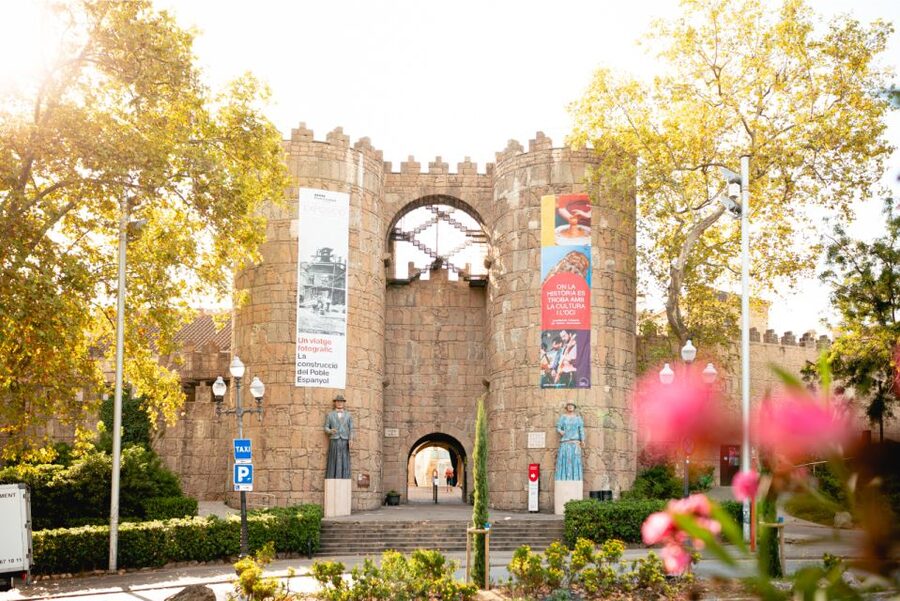
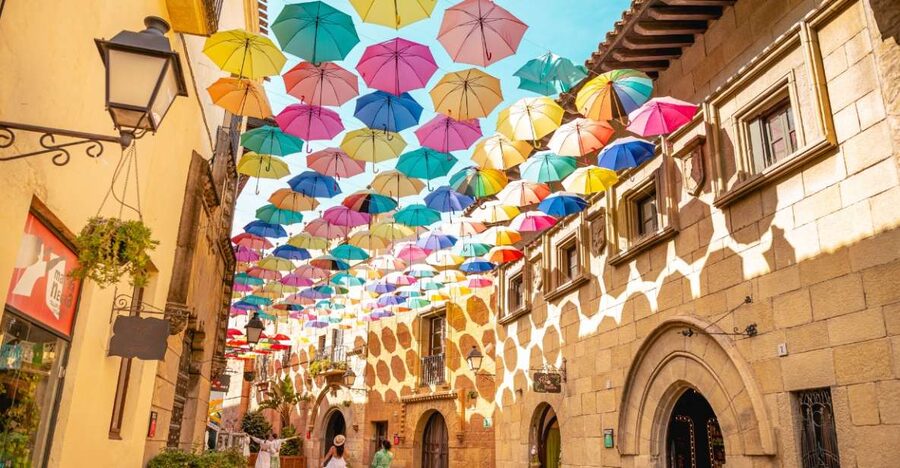
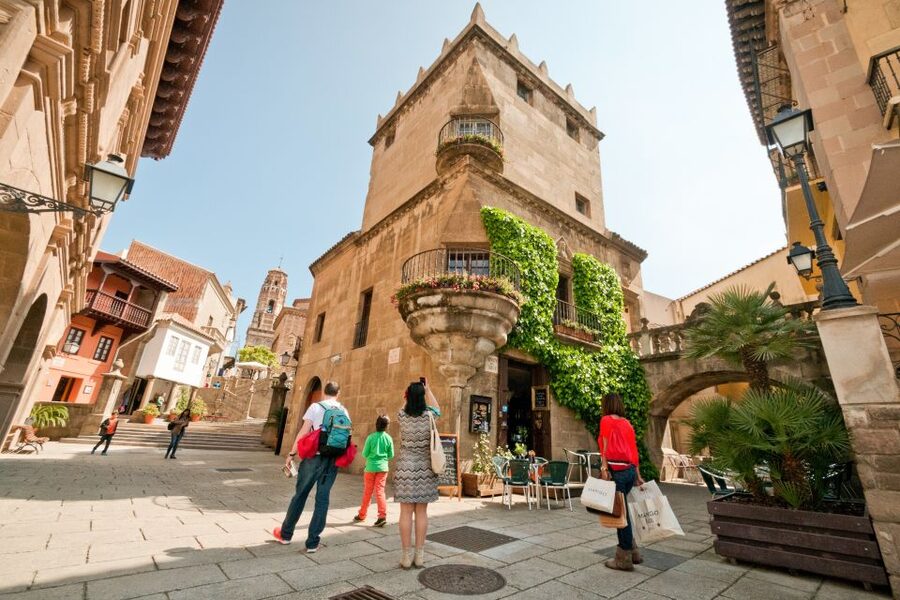
The big reason this works is the scale. You are not just seeing a few facades. The site includes 117 buildings and aims to preserve Spanish architectural heritage through full-scale replicas. That means you can spot differences in shapes, arches, balconies, stonework, and decorative details as you move from area to area.
I also like the location. Montjuïc can be a little of a haul, but once you arrive, the site feels like a “green lung” break from the busiest parts of Barcelona. One review noted the walk to Montjuïc fountains is around 10 minutes, which makes it easy to pair with an evening stroll if your feet are up for it.
One more practical note: this is open-air and you are on your own feet most of the time. Reviews mention there are plenty of climbs and steps to reach all areas. If you are short on time or traveling with someone who tires easily, focus on the museum, the main streets, and the viewpoint areas first.
More Barcelona tours and experiences for the shortlist
What Your $15 Ticket Really Buys (and How Much Time to Plan)
The ticket price is $15 per person, and the value comes from what is included. You are not paying just for entry to buildings. Included with the ticket are things that would normally cost extra elsewhere: access to the Fran Daurel Museum, the audiovisual shows Feeling Spain and Fiesta, the photographic exhibition about the construction of Poble Espanyol, and access to panoramic viewpoint areas. You also get the children’s area with giant slides.
Duration is listed as 1 day, and the ticket is valid for that day, with starting times based on availability. In practical terms, most people will want at least a half-day. Reviews frequently land around 3 to 4 hours for a relaxed visit. If you arrive late or you decide to focus on the highlights, you can still do a solid tasting version in about 2 hours, but you will have to skip corners.
Here is how I suggest you time it:
1) Start with the main streets and architecture zones while you still have energy for walking.
2) Do the museum and any indoor shows when you need a break from the sun or wind.
3) Save the viewpoints and shopping stops for later, when you can slow down and linger.
Also, you get skip-the-line entry. That matters here because you do not want to lose prime outdoor time.
The 1929 Village Built for the International Exhibition
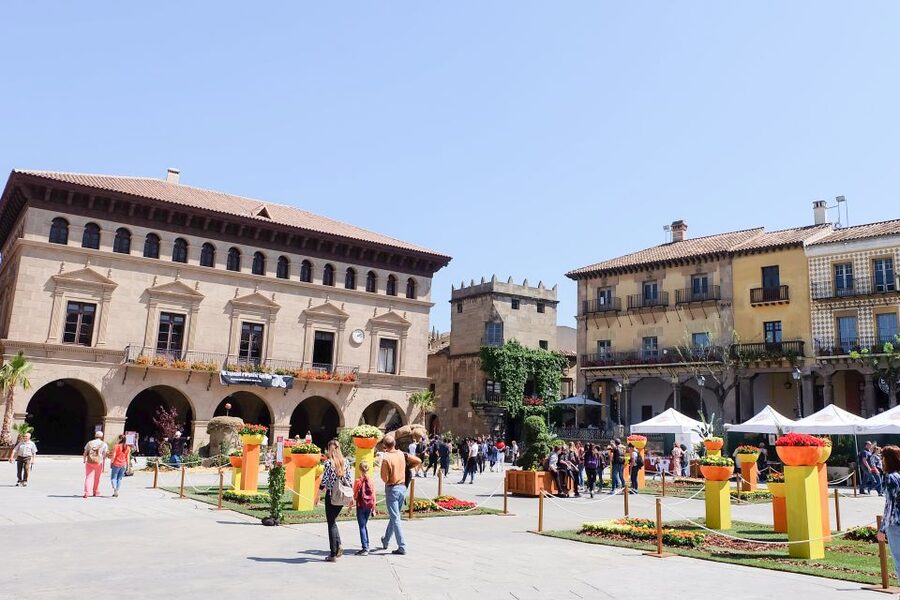
Poble Espanyol traces its origins to 1929, when it was created for the International Exhibition. That history is more than trivia. It helps explain why the site is built like a curated Spanish town, with streets and architecture designed to read well as you walk.
What you will notice fast is that the place is laid out to show variety. The concept is simple: you stroll through streets and you see architectural differences without leaving Barcelona. The range mentioned runs from Romanesque to Baroque, and the replicas are designed to keep the original feel and essence.
I like how this setup helps you “connect the dots.” If you have spent time in other European cities, you can start comparing what you see here to what you remember from real churches, palaces, and old quarters. If you are new to European architecture, it still makes sense because the visual changes are right in front of you, not buried in a label.
If you love photos, this is an easy win. Reviews describe it as full of photo opportunities around every turn. I agree with the spirit of that. The architecture is the content, and the village layout is built to create angles and views as you move.
Tip: Go early if you can. One review said arriving soon after opening made it peaceful and helped with photos. You will get a calmer experience and more time to notice details in stone, wood, tiles, and ironwork.
Architecture Styles You Can Spot Without a Lecture
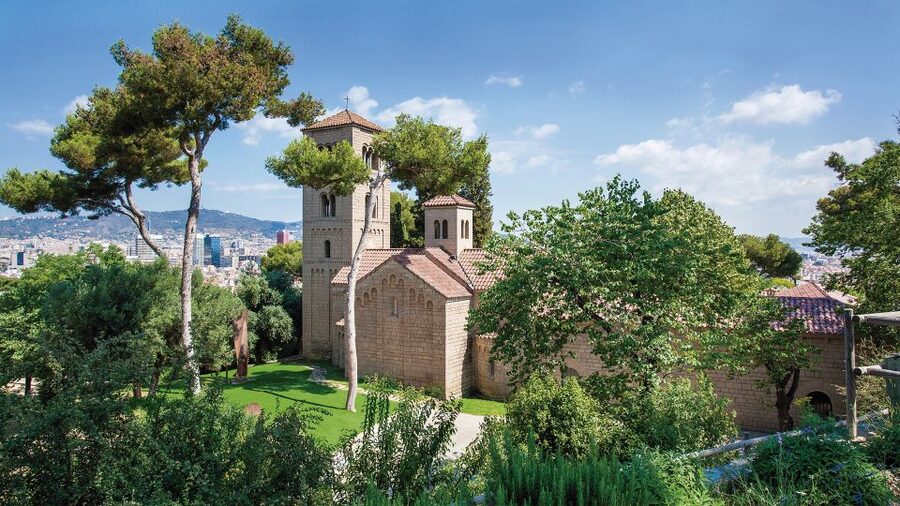
You do not need a tour guide to get something out of the architecture here, though a guide can help with context. The replicas are built to feel real, so you can walk through and learn by observation.
As you move, pay attention to:
- Rooflines and how they step or curve
- Door and window shapes, especially arches
- Decorative density, when it gets ornate versus when it stays simple
- How different materials are used and repeated
The site’s value is that these differences appear in one compact area. That makes it great for a day when you want cultural learning but you do not want to plan a whole transportation route.
One more thing: the site is described as running 365 days a year, which is useful if your dates are tight. Just remember hours can change by season, especially for shops and workshops.
Crafts Workshops: Watching Glass, Leather, and Ceramics
One of the most enjoyable parts is the craftsmanship side. The experience is built around 20 different crafts workshops, and you can typically step in to watch masters at work. The styles highlighted include glass, leather, and ceramics.
This is where Poble Espanyol feels less like a theme park and more like a working craft space. Even when you are not buying anything, watching how people shape materials gives you a better understanding of why the architecture and the objects feel connected. You are seeing design, technique, and tradition, all in the same place.
If you want to take part, be aware that hands-on participation can cost extra, and you might not be able to do every workshop at all times. One review suggested that watching is built in, while taking part may be an additional charge.
My practical advice: build in time for watching, even if it is just 20 to 30 minutes. Craft demonstrations are one of the best ways to slow down and get a sense of place beyond the buildings.
Fran Daurel Museum: Picasso, Dalí, Miró, and More
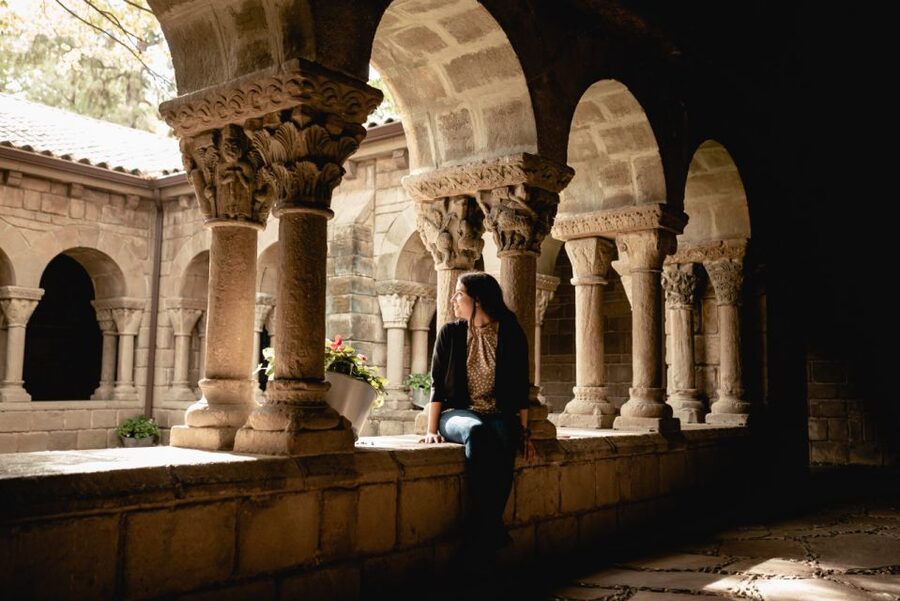
The museum is a big reason this stop lands in the “worth it” category. You get access to the onsite contemporary art Fran Daurel Museum included with your ticket.
The museum is described as featuring contemporary art connected to major names like Picasso, Dalí, Miró, and more. Reviews also call out that the museum can feel larger than expected. That surprises people who are only picturing a small gallery.
If you are the type who gets museum fatigue after 40 minutes, this might still work, because the museum provides a change of pace after the outdoor walking. Treat it like your mid-day reset.
What I like about placing a contemporary museum inside a heritage replica village is the contrast. You go from old forms in architecture to modern creativity in art, and it helps you think about how culture evolves rather than freezing it in the past.
The Audiovisual Breaks: Feeling Spain and Fiesta
Inside the ticket package, you are also offered audiovisual shows: Feeling Spain and Fiesta. These are included, and they are a nice option if you want a structured “story” piece without committing to a long guided tour.
I like audiovisual segments in open-air places because they give you a controlled environment and a chance to catch your breath. Even if you do not stay for every moment, it helps connect what you just saw in the architecture to broader themes of Spanish identity and celebrations.
If you are traveling with kids, this part can also be helpful when energy dips.
Panoramic Views and the Easy Link to Montjuïc Sights
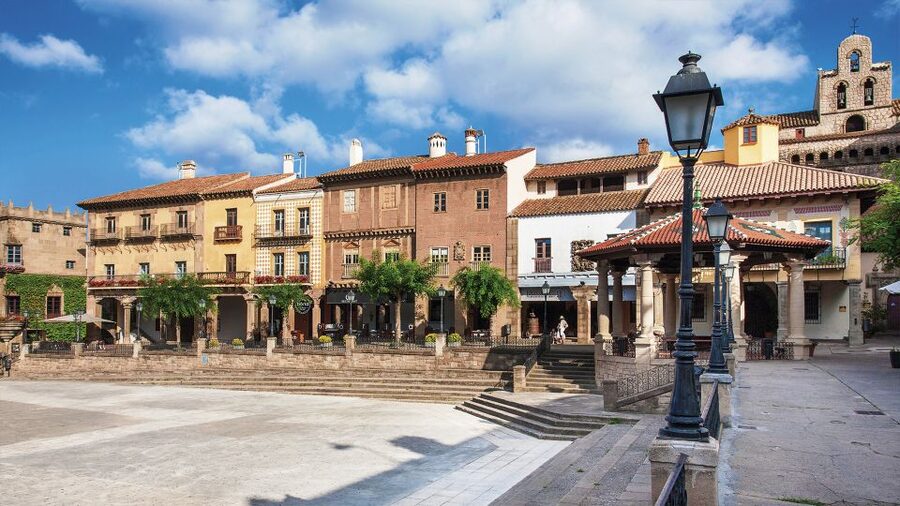
Poble Espanyol has some of the best city views inside the grounds. Panoramic viewpoint access is included, and it is one of the highlights people remember, especially if you come when the light is kinder.
Montjuïc is also a natural pairing. One review said it is about a 10-minute walk to the Montjuïc fountains, which gives you an easy plan for an evening when you want both culture and a scenic payoff.
My tip: when you plan your day, decide whether you want views in the late afternoon or earlier in the day. Views can be worth it even earlier if crowds increase later, but sunset lighting is the obvious reason to aim for later.
Wear shoes with grip. Reviews mention the walk up from the metro is a steady climb and there are lots of climbs and steps to access areas. If you are with someone who struggles, use a slower route and pick the viewpoints you care about most.
Food, Shopping, and Souvenirs That Don’t Feel Like a Trap
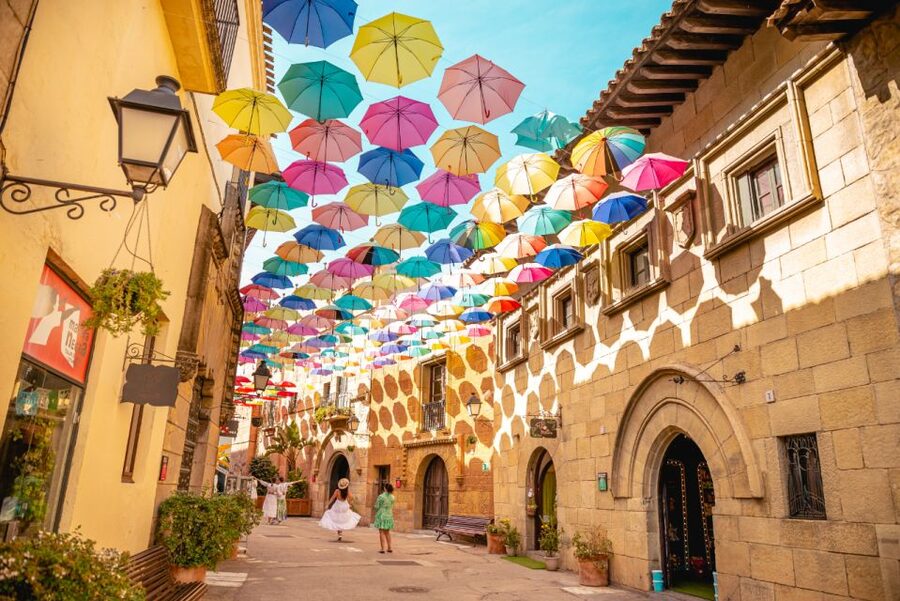
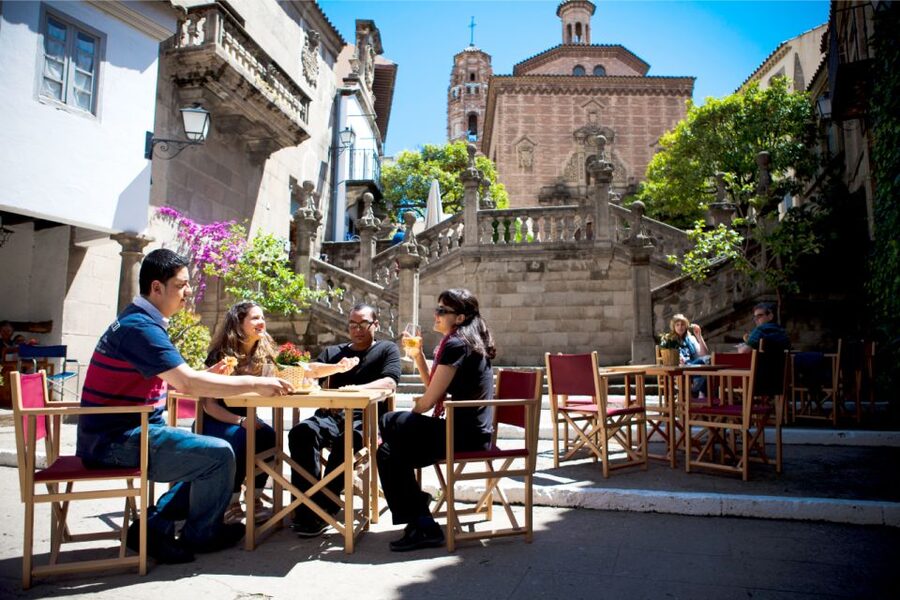
You will find bars, restaurants, terraces, and shops throughout the site, so you are not forced to leave when hunger hits. The shop focus is on local products and crafts, which is what you came for in the first place.
Reviews frequently praise the artisan shops and even call out that prices in shops and cafés can be reasonable. That said, there is also a recurring caution: not everything may be open at all times. One review noted that most boutiques and cafés were closed, leading to a shorter walk. Others mention a similar issue on Sundays or certain days.
So plan like this:
- Expect to spend time browsing, but also keep room for wandering if some areas are quiet.
- If you want a souvenir, check a few shops before you buy. One review advised not to splurge in the first shop because the traditional items appear across many storefronts.
Also, if you are traveling with kids, the giant slides and children area can turn shopping breaks into something active.
Practical Tips for Getting the Most Out of One Day
Here are the details that matter for a smooth day at Poble Espanyol.
Go early when possible. Multiple reviews describe the site as peaceful when arrived soon after opening, with less crowding for photos.
Give yourself enough walking time. Even if you only visit for a few hours, you will still move through a lot of streets and levels. Good shoes are not optional.
Build in a museum stop. The Fran Daurel Museum is included, and it is a strong mid-day anchor so you do not feel like you are only walking.
Use the optional guides if available. One review recommended the audio guide, even though it was not listed as part of the included package. If there is a self-guided audio option on site, it could help you connect architecture details to context faster.
Print your ticket if you can. One older review specifically suggested printing your ticket before going, after a bit of confusion at entry. It is a small thing, but it can prevent stress.
If you travel with a dog, check rules on arrival. One review said they could take a dog through the Spanish town. That is not stated in the main facts list you were given, so I would treat it as “maybe,” and confirm with staff when you enter.
Who This Ticket Fits Best
Poble Espanyol is a good match if you want a day with a cultural core but a relaxed pace. It is especially strong for:
- Families, because you have the children area with giant slides and a place where kids can roam a bit.
- Architecture lovers who want a fast overview of Spanish styles in one compact walk.
- Travelers who want crafts and shopping without leaving the heritage setting.
- Anyone who likes mixing old and new, since the museum adds contemporary art to the heritage replicas.
If your style is strictly “one main landmark per day,” you might find this village feels spread out. In that case, still go, but be deliberate: prioritize architecture zones, then the museum, then views.
And if you hate stairs, plan carefully. Reviews mention lots of climbs and steps even though the site is wheelchair accessible. Ask staff about the easiest routes when you arrive.
Should You Book Poble Espanyol Entry for Barcelona?
Yes, I think you should book if you want value from a single ticket: architecture, craft watching, included museum access, and views in one place. For about the price of a major attraction ticket, you get more variety than you might expect.
Book it especially if your group includes kids or you want a calmer Montjuïc alternative to the city center crowd. It is also a smart choice on a day when you want something different from Gaudí-style Barcelona, because the focus here is Spanish architectural heritage.
If you only have a short window and you are hoping for one big, guided highlight, you may find it better to pair this with another Montjuïc stop rather than trying to do everything. But for most people, Poble Espanyol hits a sweet spot: one day, clear themes, and plenty of room to wander.
FAQ
How much is the Poble Espanyol entry ticket?
The price is listed as $15 per person.
How long is the ticket valid?
The ticket is valid for 1 day. You should check availability to see starting times.
What is included with the ticket?
Included items are entrance to Poble Espanyol, access to the Fran Daurel Museum, audiovisual shows Feeling Spain and Fiesta, access to A photographic journey about the construction of Poble Espanyol, panoramic views of Barcelona, and the children area with giant slides.
Is a video guide included?
No, a video guide is not included.
What are the general opening times?
General opening times are listed as Monday from 10 a.m. to 8 p.m., and Tuesday to Sunday from 10 a.m. to midnight. Opening times might differ by season.
Are shop and workshop hours the same as opening hours?
No. Shop and workshop hours vary by season, with schedules listed from March to April, May to October, and November to February.
Is there a museum on site?
Yes. The Fran Daurel Museum is on site, and access is included with your ticket. It features contemporary art including Picasso, Dalí, Miró, and more.
Is it good for children?
Yes. There is a children area with giant slides, and the site offers family-friendly activities as part of its ongoing programming.
Is it wheelchair accessible, and can minors go in alone?
The site is wheelchair accessible. Unaccompanied minors are not allowed.
More Tickets in Barcelona


More Tour Reviews in Barcelona
Not for you? Here's more nearby things to do in Barcelona we have reviewed





More Barcelona City Tours worth opening.
 ★ 4.4Park Güell Admission TicketFrom $2576,534 reviews
 ★ 4.7Casa Batlló Entry with Self-Audioguide TourFrom $3425,359 reviews
 ★ 4.424 or 48-Hour Hop-On Hop-Off Bus TourFrom $3920,872 reviews
 ★ 4.7Park Guell Guided Tour with Skip The Line EntryFrom $3117,563 reviews
 ★ 5.0Barcelona in 1 Day: Sagrada Familia, Park Guell,Old Town & PickupFrom $12013,541 reviews
 ★ 4.3Barcelona Aquarium: Entry TicketFrom $3113,335 reviews
 ★ 4.8Sagrada Familia Skip-the-Line Entry Ticket & TourFrom $6712,789 reviews
 ★ 4.4FC Barcelona Museum “Barça Immersive Tour” TicketFrom $3510,944 reviews