
REVIEW · BARCELONA CITY TOURS
Barcelona: Jewish Quarter 2-Hour Walking Tour
Barcelona hides a Jewish story in plain sight. I love the small-group size, which keeps questions flowing and the pace human, and I love how the walk threads the Gothic Quarter into one clear narrative. One thing to keep in mind is that parts of the experience can depend on on-site access, plus the synagogue museum entrance fee is not included.
You start in the historic core and end right back where you began, with stops designed to help you read the neighborhood like a map. The visit to Sinagoga Mayor Barcelona and the medieval Mikve are the kind of anchors that make the rest of the story easier to hold onto.
Key things to know before you go
- Oldest synagogue in Europe: see Sinagoga Mayor Barcelona as your anchor stop
- Medieval Mikve: spot the Mikve and learn what it meant for daily life
- Four historic synagogues in the city center: the tour explains how they relate on a walk
- Ruins near Roman walls: you get oriented around the old quarter layout
- Guides adapt on the ground: from pace adjustments to photo aids, the best tours here stay practical
Meeting at Plaça Sant Jaume, then entering the Jewish Quarter map
Most people first hit the Gothic Quarter by accident, meaning they wander until something looks interesting. This tour gives you structure fast. You meet at Plaça Sant Jaume, right next to the Alcampo store, then you move from that central plaza into narrow streets where medieval Barcelona still feels close.
What I like about starting there is that you quickly learn how to connect street layout to story. The guide doesn’t treat the neighborhood like a museum hallway. Instead, you’re taught to notice scale and spacing, where key sites sit, and why a “small” area mattered so much. Even if you only remember a few names, the geography sticks.
You’ll also get a sense of how this area changed over centuries. That matters because Jewish life in Barcelona is not a single timeline. It’s growth, influence, pressure, and the afterlife of memory in stone, wall remnants, and ruins.
You can also read our reviews of more walking tours in Barcelona



Sinagoga Mayor Barcelona: the oldest synagogue in Europe
The headline stop is Sinagoga Mayor Barcelona, described as the oldest synagogue in Europe. Standing on or near historic religious foundations can feel heavy, but it also gives you something rare in a city tour: a real place to anchor the big story.
Here’s what makes this stop valuable for you. It turns “Jewish heritage” from a general concept into a specific building and a specific community. Your guide ties the synagogue to the wider history of Jewish presence in Spain, including how the community formed and grew after the fall of the Second Temple period in Jerusalem.
Practically, this stop is also where you benefit most from the tour format. You skip the ticket line for the walking tour visit flow, which keeps the experience moving. And since the tour is 2 hours, the guide has time to explain why the site matters without turning it into a lecture that runs long.
One consideration: there are references to situations where the Old Synagogue portion can be closed, and museum access can vary by day. If a site is not available when you arrive, you may still get the story, but you could lose a chance to see specific remnants up close.
Mikve time: medieval ritual life in a hidden Barcelona corner
A Mikve is not a casual stop. It’s about ritual purity, daily practice, and community infrastructure. On this tour you go to the medieval Mikve site, a unique feature that helps you understand Jewish life as something built into ordinary routines, not just major holidays.
What I found most helpful, even conceptually, is that your guide points out how people used physical spaces to support spiritual obligations. The Mikve becomes a small lens for a big idea: how faith lived in stonework, design, and repeated use.
In Barcelona’s Gothic Quarter, it’s easy to walk past walls and think they are just old. The Mikve stop trains your eye. You start noticing what looks like structure, what looks like a foundation, and what hints at layered history. That skill carries through the rest of the tour, especially when you reach ruins where everything depends on how well you can “read” what’s left.
If you like tours that connect architecture to meaning, this is one of the best reasons to book. It gives you something tangible, not just dates.
The ruins near Roman walls and the Old Synagogue story
Next comes the part that feels like detective work, which is exactly why it’s memorable. You visit the ruins of the Old Synagogue (Shlomo Ben Adret) and explore the small area associated with the old Jewish quarter around the Roman walls.
Ruins can be frustrating if a guide just says this used to be here. The good version of this tour does the opposite. It explains what the remains suggest about community space and movement. You learn how the neighborhood’s layout supported Jewish institutions, how people lived around these landmarks, and how the quarter connected to the wider medieval city.
This is also where the tone of the tour turns more serious. Your guide explains that Jewish life in Spain grew steadily and became more politically and spiritually important over time. Then the narrative lands on the brutal turning point in 1391, when attacks dramatically ended the presence of Jews in Spain as it had been known.
If you’re sensitive to heavy history, this section will do that job. If you’re the type who wants context before you judge, it helps to know this is not a “light” walk. It’s a historical walk where the places you see are tied to consequences, not just culture.
Four synagogues in the city center, and why the map matters
One of the tour’s clever promises is that you’ll discover the location of four historic synagogues in the city center. In a city like Barcelona, where medieval streets twist and layers of buildings overlap, that could sound vague.
The value is in what your guide does with that information. Instead of handing you a list, the guide helps you build a mental map. You understand not only where these sites are, but why multiple synagogues could exist close together, and how they reflect community growth and needs.
For you, this is the difference between a “seen it” experience and a “I get it now” experience. When you learn the relative placement of synagogues, the Gothic Quarter stops being random lanes and starts feeling like a lived-in grid of spiritual life.
You’ll also hear about a few story threads that make the city feel layered. For example, your tour includes the ruins of a house owned by a Jewish alchemist, which adds a different kind of dimension. It’s not only religion and politics. It’s also learning, craft, and the way Jewish communities contributed in different fields.
More Barcelona tours and experiences for the shortlist




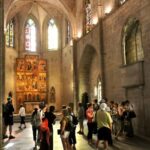
How guides like Ella, Edu, and Alan make the walk click
This tour lives or dies on the guide. The strong pattern here is clear: guides keep the pace steady, answer questions directly, and use visual aids when history gets complex.
In the English-guided format, you’re not stuck reading signage alone. Guides such as Ella and Lilach are mentioned for clearly bringing medieval Jewish life and the broader Catalonia and Barcelona context together. Guides like Alan are also praised for practical tools such as photos and mockups, plus maps that help you orient as you go.
Then there’s the human side. Several experiences highlight that the guide pays attention to safety in bad weather and adjusts walking pace for people who need it. If you’re older, have mobility limits, or just prefer a tour that doesn’t rush you, this small-group setup supports that. With a max of 6 participants, it’s easier for your guide to notice when someone needs a slower moment.
You’ll also notice the best guides make room for your questions. Some tours overwhelm you with facts. Here, the approach is more conversational, and that helps you connect the sites with names, events, and everyday life.
Price and what $76 buys you in 2 hours
At $76 per person for a 2-hour walking tour, the price is not the cheapest way to see the Gothic Quarter. But it is also not just a casual stroll. You’re paying for three things that add up quickly:
- Expert, English live guide to explain multiple historic sites and the political story behind them
- Small group (up to 6), which makes pace and questions practical
- Skip-the-ticket-line handling so you spend more time learning and less time waiting
You will still want to plan for extra costs. The entrance fee to the Synagogue Museum is not included, so you may face that at the relevant stop depending on how the day’s access works. If you’re budgeting, treat that as a “possible add-on” rather than a surprise.
In value terms, I think this is a good deal if you care about meaning. If your goal is only quick photos, you might not use the guide enough. But if you want context that turns ruins and alleyways into a coherent story, $76 feels fair for the time you get.
Who should take this Jewish Quarter walk
This is a smart pick if you fall into one of these groups:
- You like walking tours that combine architecture and story, not just sightseeing
- You want a clear timeline, including Jewish arrival in the region after the destruction of the Second Temple period and the later shift around 1391
- You’re interested in why institutions like synagogues and ritual spaces like the Mikve mattered to daily life
- You want to understand why a tiny area around the Gothic Quarter and Roman walls carried so much significance
It’s also a good fit for people with light walking issues, because the small group format makes pace adjustments easier. One caution: Gothic Quarter streets are old and narrow. Even with pacing help, comfortable shoes still matter.
Should you book the Barcelona Jewish Quarter 2-hour walking tour?
If you want a meaningful Jewish heritage walk that explains more than what your eyes can see, I’d book this. The combination of Sinagoga Mayor Barcelona, the medieval Mikve, and the Shlomo Ben Adret ruins gives you both landmark sites and the “how did this all fit together” map the Gothic Quarter can otherwise hide from you.
Skip it only if you are primarily after an easy, low-context stroll, or if you strongly dislike tours that include heavy historical turns like the events of 1391. Also, if you prefer fully indoor time or you absolutely need museum access to be included and guaranteed, plan for the fact that the museum entrance fee is separate and access can vary.
FAQ
How long is the Barcelona Jewish Quarter walking tour?
It lasts about 2 hours.
Where do I meet for the tour?
You meet at Plaça Sant Jaume, next to the Alcampo store, and the tour ends back at the meeting point.
What is the price of the tour?
The price is $76 per person.
Is the tour wheelchair accessible?
Yes, it is wheelchair accessible.
Is this a small group tour?
Yes. It is limited to 6 participants.
Is the synagogue museum entrance fee included?
No. Entrance fee to the Synagogue Museum is not included.
What language is the tour in?
The tour is in English.
What is the cancellation policy?
Free cancellation is available up to 24 hours in advance for a full refund.
More Walking Tours in Barcelona


More Tours in Barcelona




More Tour Reviews in Barcelona

Not for you? Here's more nearby things to do in Barcelona we have reviewed








More Barcelona City Tours worth opening.
 ★ 4.4Park Güell Admission TicketFrom $2576,534 reviews
 ★ 4.7Casa Batlló Entry with Self-Audioguide TourFrom $3425,359 reviews
 ★ 4.424 or 48-Hour Hop-On Hop-Off Bus TourFrom $3920,872 reviews
 ★ 4.7Park Guell Guided Tour with Skip The Line EntryFrom $3117,563 reviews
 ★ 5.0Barcelona in 1 Day: Sagrada Familia, Park Guell,Old Town & PickupFrom $12013,541 reviews
 ★ 4.3Barcelona Aquarium: Entry TicketFrom $3113,335 reviews
 ★ 4.8Sagrada Familia Skip-the-Line Entry Ticket & TourFrom $6712,789 reviews
 ★ 4.4FC Barcelona Museum “Barça Immersive Tour” TicketFrom $3510,944 reviews
Continue by place or experience