
REVIEW · BARCELONA CITY TOURS
Barcelona: Palau de la Música Guided Tour
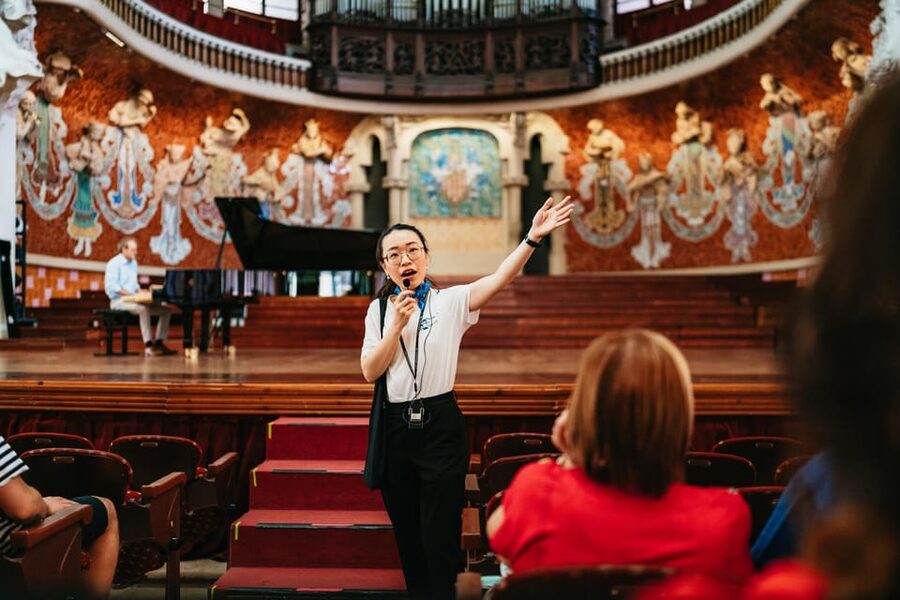
Barcelona’s music palace feels like a painting. In this guided visit to Palau de la Música Catalana, I like how the tour grants access to areas that are usually off-limits, and I especially love the ornate floral grand staircase that sets the tone for everything you’ll see next.
One thing to keep in mind: this is a 50-minute circuit. You’ll get time to look and take photos, but you won’t have long stretches to stop wherever you want.
Key highlights you should care about
- Off-limits access inside one of Barcelona’s most recognizable Modernist landmarks
- Rehearsal Hall of Orfeó Català, including the 1905 foundation-stone story
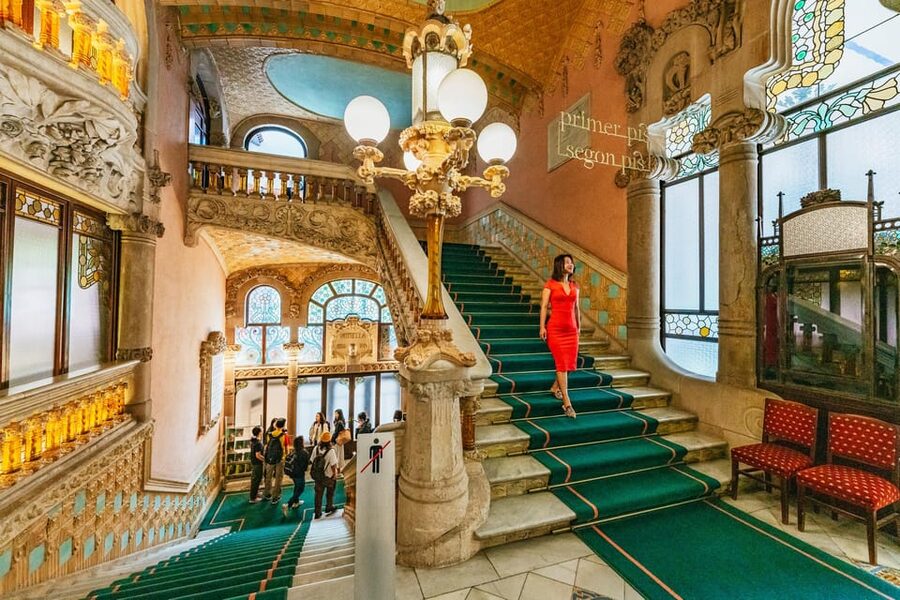
- Grand staircase florals and flags, made with a mix of materials that reward close-up photos
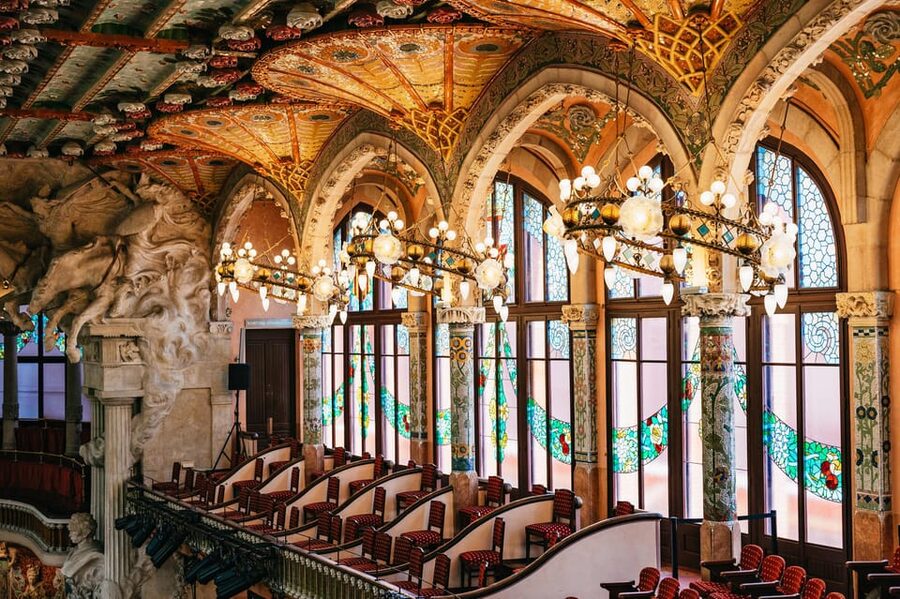
- Concert Hall design details, from color and light to the symbolism around the balcony
- Organ finale, a short performance that lands right after you’ve absorbed the architecture
Why this Palau de la Música tour feels worth $28
The Palau de la Música Catalana works on two levels at once. Visually, it’s packed with shapes, colors, and carved detail. Audibly, it’s tied to music in a way that you feel the moment you step into the building.
This tour’s main value is that you’re not just viewing the Palau from the usual public edges. You’re guided through key rooms, including parts of the complex that are typically closed off, and you end with an organ moment. For $28 per person and about 50 minutes, that’s a strong deal, especially if your Barcelona time is tight.
You can also read our reviews of more guided tours in Barcelona
Getting there from Plaza Catalunya and Las Ramblas
The Palau is a straightforward walk from Plaza Catalunya and Las Ramblas, about 10 minutes on foot. That matters because it means you can slot it between other sightseeing without overthinking transit.
For the meeting point, the guidance can vary depending on the option booked. One practical tip from real logistics: the meeting spot may be behind a coffee shop near the main entrance, so arrive early, check for staff signage, and don’t assume the first doorway you see is your start point.
Also plan for the ID check. You may be asked to present your ID at the box office to confirm your tour. That takes one extra minute, but it prevents awkward delays right when you’re ready to enter.
The Rehearsal Hall of Orfeó Català: 1905 to today
The tour starts in the Rehearsal Hall of the Orfeó Catala, where the foundation stone was laid in 1905. That date isn’t just trivia. It gives the building a sense of living continuity, because the choir rehearses regularly, in a rhythm that’s been going for more than 100 years.
What I like about beginning here is that it frames the Palau as a working space. Before you hit the big wow moments like the staircase and the Concert Hall, you already understand this place wasn’t designed as a static monument.
If you’re the type who enjoys architecture with a purpose, this opening stop is the right match. You’re not only learning what it looks like, you’re learning what it’s for.
The grand staircase: where the detail does the talking
Next comes the grand staircase, a space built to impress up close. The floral and decorative work includes ornate elements like flowers and flags, made with a range of materials, so the look changes as you move your head and adjust your angle.
This is your best photo zone, and it’s also the place where a camera really earns its keep. The Palau is full of fine work, but the staircase concentrates it. If your photos usually come out too dark or too flat inside churches and theaters, this stop is where you should take a little time to experiment with position and exposure.
One possible limitation: the Palau can be busy, and you may be sharing close spaces with other groups. That doesn’t ruin the experience, but it does mean you should pause, frame, then move on without blocking anyone.
Lluís Millet Hall: the balcony and the idea of nature
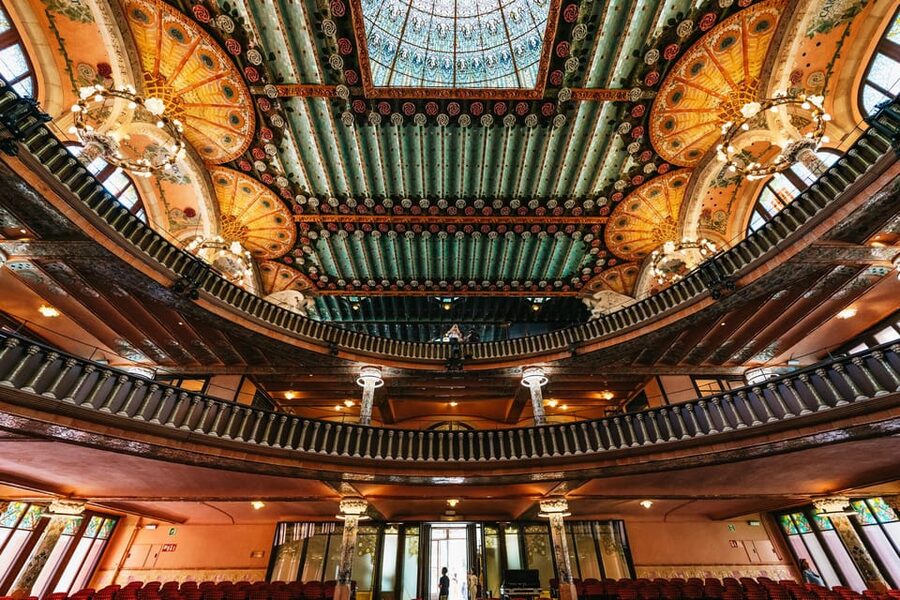
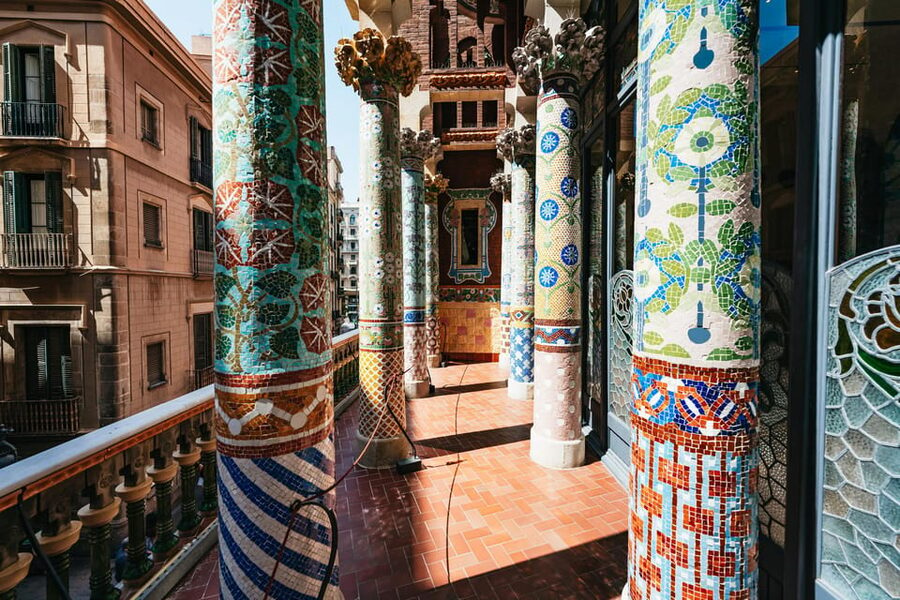
After the staircase, you’ll reach the Lluís Millet Hall. Here, you glimpse a large balcony with columns that symbolize nature. It’s a small visual idea that adds meaning to all the ornament you’ve already seen.
The symbolism is the point. You’re not just looking at decoration, you’re seeing a design approach where natural forms and movement feel translated into architecture. If you tend to enjoy Modernism for its symbolism rather than just its style, this stop will land well.
Take a moment at the balcony view before moving on to the Concert Hall. It’s one of those in-between moments that helps you understand the building’s logic, instead of only chasing highlights.

Concert Hall and the skylight: color, light, and acoustics
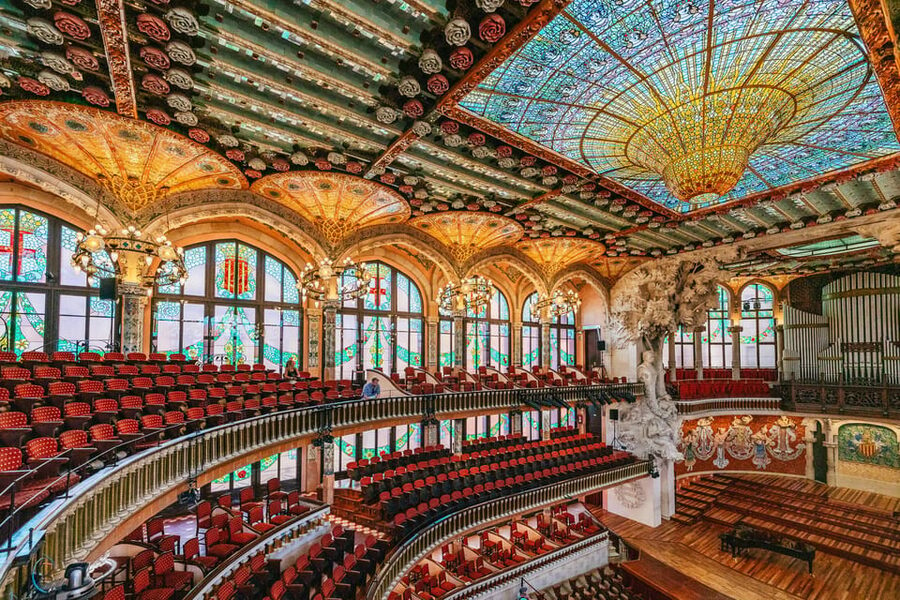
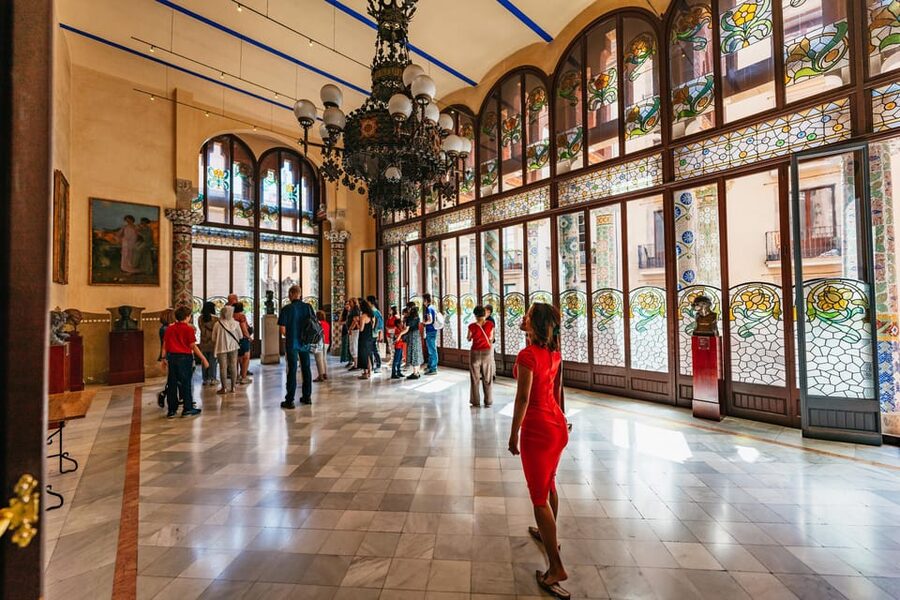
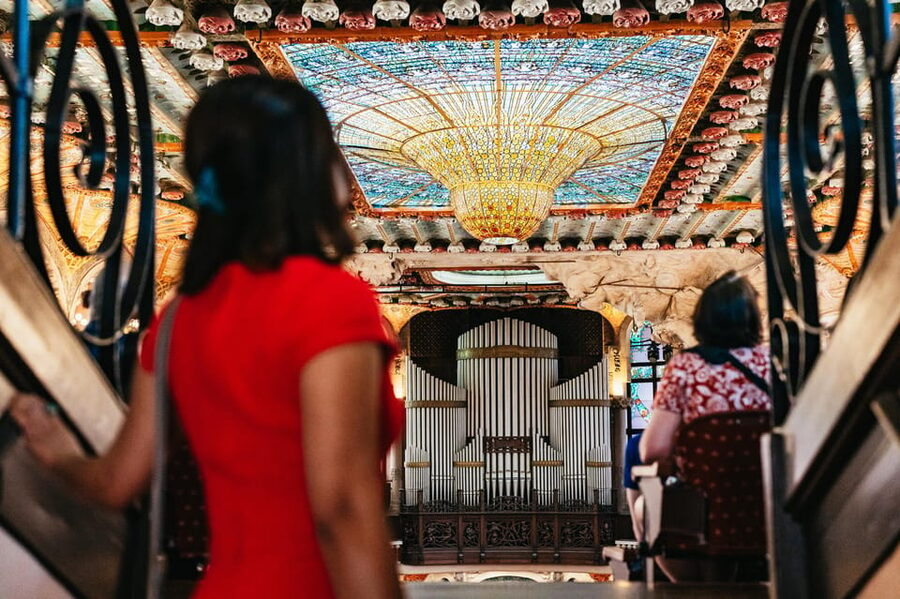
Then you enter the Concert Hall, where the design hits you all at once. Expect an explosion of colors, shapes, and light. This is the room that most people picture when they think of Palau de la Música, and the tour route is built to bring you in right when the impact is strongest.
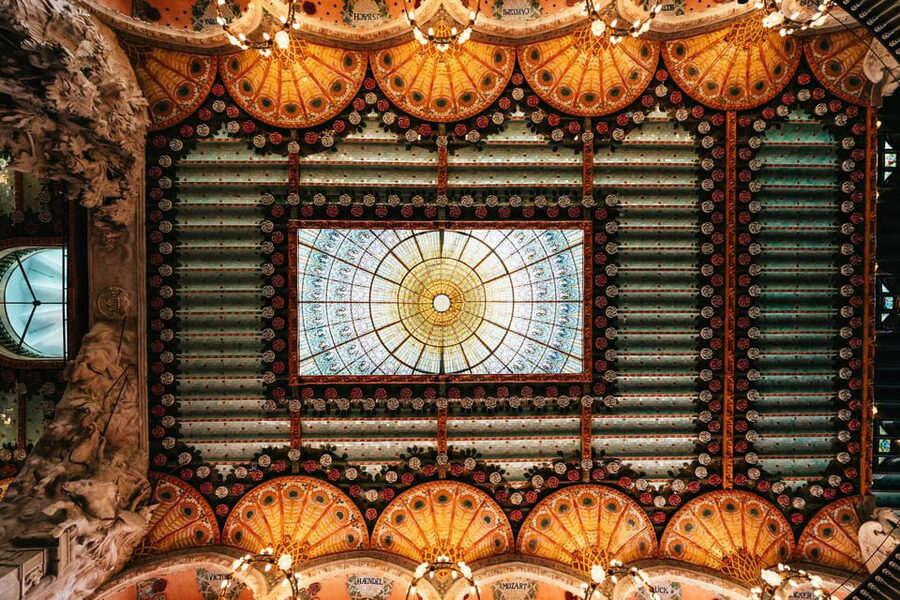
You’ll also go up to the 2nd floor to admire the grand skylight. If you’ve ever felt like a building photo looks better in your memory than on your phone, this skylight is the kind of detail that can save that. The effect is strongly tied to how daylight falls, and that makes the skylight feel like a live part of the architecture.
One important practical point: you’ll be moving through a sequence of rooms, not wandering freely. So when you see something you love, commit to it. Spend your best viewing time on the skylight area and the Concert Hall entry moment, then let the tour guide you forward.
Organ finale: the sound you remember
The tour ends with a short performance from the Palau’s organ. This is more than a nice bonus. It connects the visual experience to the building’s real reason for existing.
Even if you’re not a music expert, an organ in a hall like this tends to create a physical sense of sound. Notes carry differently in ornate, acoustically shaped spaces, and ending with music is a clever way to leave with something more lasting than photos alone.
The organ moment also explains why the Palau is worth your time even if you’re only doing a short visit. You’re not just sightseeing a theater, you’re stepping into its sound-world.
Value and best ways to pair it with a concert night
Your ticket includes the guided tour and entrance to the Palau de la Musica. Concert tickets are not included, so if you want a full performance, you’ll need to book separately.
Still, this matters for value. At $28 for about 50 minutes, you’re paying for access plus context plus an organ finale. That’s a great entry point if you’re unsure you want to spend the extra money on a concert right away.
The smart way to level up is to plan your visit for a time when you can also attend a concert. The guidance explicitly suggests booking at night and pairing your tour with a Concert Hall performance to appreciate the acoustics. If you’re a music lover, this pairing is where the day turns into a complete Barcelona memory.
Guides, ear pieces, and how to hear the story clearly
Most people rate this tour very highly, and a big reason is the guiding. Several different guide names pop up in experiences, including Yu, Juan, Axel, Marco, and Fei Fei. The consistent theme is clear explanation and a friendly, energetic approach.
One real consideration: hearing can depend on the day. Some visits mention that construction affected hearing, and others mention ear pieces that weren’t comfortable or were hard to understand. If you rely on the audio system, don’t be shy about adjusting the ear piece for clearer sound, or asking the guide to repeat something if you miss it.
This is also why standing positions matter. When the group tightens up, you’ll hear better if you stay close and avoid drifting too far for photos.
Timing your visit: what can change from day to day
Availability can vary depending on the day, and you’re asked to confirm your arrival time with the supplier because schedules shift. That’s normal for a functioning venue, and it’s especially true for buildings that host rehearsals and music events.
One tip I recommend: if you care about the rehearsal atmosphere, try to schedule your visit around times when a choir practice might be happening. The tour begins in a rehearsal hall and ends in music, and on some days you may catch extra musical energy in the flow.
Also, keep expectations realistic. The experience is designed as a short, focused circuit. If you’re hoping for a museum-style slow wander, this won’t be that format.
Who should book this Palau tour, and who might not
You should book if you want:
- Architecture with purpose, not just sightseeing
- A short, efficient activity that still includes the key rooms
- A music finale, where the organ helps you connect what you saw to how it sounds
- A guided experience with explanations across multiple languages, including English, French, Italian, Catalan, Spanish, and Chinese
You might reconsider if:
- You hate group pacing and prefer long, silent wandering
- You are very dependent on crystal-clear audio and worry about ear piece quality in crowds
- You want only photography time and don’t care about the historical and design context
Should you book this Palau de la Música guided tour?
Yes, I’d book it if you want the most efficient way to experience one of Barcelona’s signature buildings. For $28 and about 50 minutes, you get structured access, standout rooms like the rehearsal hall and Concert Hall, and a final organ performance that makes the visit feel complete.
If you have extra time and you’re a music fan, I’d also try to align the tour with a concert night. That’s the easiest way to turn this guided architecture walk into an evening where Barcelona’s sound and design come together.
FAQ
How long is the Barcelona Palau de la Música guided tour?
The tour lasts 50 minutes.
Where is the Palau de la Música located?
It is about a 10-minute walk from Plaza Catalunya and Las Ramblas.
What is the price?
The price is $28 per person.
What’s included in the tour?
The guided tour and entrance to the Palau de la Musica are included.
What is not included?
Cafe and restaurant time and concert tickets are not included.
What languages are available for the live guide?
The tour guide is available in Italian, French, English, Chinese, Catalan, and Spanish.
Is the tour wheelchair accessible?
Yes, it is wheelchair accessible.
Do I need to bring ID?
You may need to present your ID at the box office to confirm the tour.
Can I cancel for a refund?
You can cancel up to 24 hours in advance for a full refund.
Is it possible to reserve now and pay later?
Yes, you can reserve now and pay later.
More Guided Tours in Barcelona


More Tours in Barcelona


More Tour Reviews in Barcelona
Not for you? Here's more nearby things to do in Barcelona we have reviewed









More Barcelona City Tours worth opening.
 ★ 4.4Park Güell Admission TicketFrom $2576,534 reviews
 ★ 4.7Casa Batlló Entry with Self-Audioguide TourFrom $3425,359 reviews
 ★ 4.424 or 48-Hour Hop-On Hop-Off Bus TourFrom $3920,872 reviews
 ★ 4.7Park Guell Guided Tour with Skip The Line EntryFrom $3117,563 reviews
 ★ 5.0Barcelona in 1 Day: Sagrada Familia, Park Guell,Old Town & PickupFrom $12013,541 reviews
 ★ 4.3Barcelona Aquarium: Entry TicketFrom $3113,335 reviews
 ★ 4.8Sagrada Familia Skip-the-Line Entry Ticket & TourFrom $6712,789 reviews
 ★ 4.4FC Barcelona Museum “Barça Immersive Tour” TicketFrom $3510,944 reviews