
REVIEW · GOTHIC QUARTER TOURS
Barcelona: Old Town and Gothic Quarter Walking Tour
Barcelona turns history into street-level stories. This Old Town and Gothic Quarter walk strings together Roman leftovers, medieval power spots, and today’s food-and-street energy. I like that you get the route in a sensible order, and I also like the way guides such as Alba and Omid use names and details so the city stops feeling like random sights.
The tour is listed for 2.5 to 4 hours, so the only real drawback is the simple one: you need to be comfortable on your feet in a dense area (and La Rambla and the market can get crowded).
Key Highlights You’ll Feel in Your Feet
- Max 15 people keeps the walk interactive and easier to follow
- Plaça de Sant Jaume connects today’s political center to where a Roman Forum once stood
- A preserved Roman wall plus stories about ancient baths at Pati Llimona
- Plaça del Rei and Palau Reial tie Gothic Barcelona to the Columbus welcome after the Americas
- Santa Maria del Mar shows off Catalan Gothic, including the fast building story
- La Rambla and La Boqueria Market give you a real taste of Catalan daily life, not just photos
Why This Walk Works: Roman to Gothic in One Logical Loop
Barcelona’s Old Town can feel like a maze until someone gives it a spine. This tour gives you that spine by moving through the Roman layers first, then the medieval core, then out toward the lively street life on La Rambla and through El Born.
At $21 per person, the value is in the guide time and the way the tour links places that are otherwise just impressive buildings. You are paying for interpretation, not for a bus ride or a long museum ticket line.
One more plus: the small group size (up to 15) means you are not lost in a crowd of strangers. A lot of guides get praised for keeping the pace moving and the stories clear, with humor and architecture talk that stays human.
You can also read our reviews of more walking tours in Barcelona



Starting at Plaça de Sant Jaume, Where Rome Left a Mark
You begin at Plaça de Sant Jaume, and the first trick this tour pulls is context. The square is famous for modern governance, but it is also tied to the Roman Forum that once stood here, which changes how you see the space immediately.
You also get an idea of why Barcelona can feel both political and poetic at the same time. Even if you only remember one thing from this stop, you will likely remember the square as a long-running stage for power, not a random stop on a walking route.
A good guide will also help you notice the details around you, not just the big landmarks. That kind of orientation is what makes the rest of the walk click.
Roman Walls and Pati Llimona Baths: Real Life, Not Just Ruins
One of the most memorable moments is walking along one of the best-preserved Roman walls in the world. The tour does not treat it like a trophy wall, though. Instead, you get stories that connect the stone to everyday routines.
From there, you hear about the Roman baths of Pati Llimona and how baths shaped daily life. Even if you have seen Roman ruins elsewhere, you tend to understand these places better when a guide explains what people actually did there, not only how old the stones are.
This is also where you learn a practical way to enjoy Roman remains in Barcelona. You start to look for how different periods used the same space, instead of treating each era like a separate theme park.
Into the Gothic Quarter: Plaça del Rei and the Power Plays
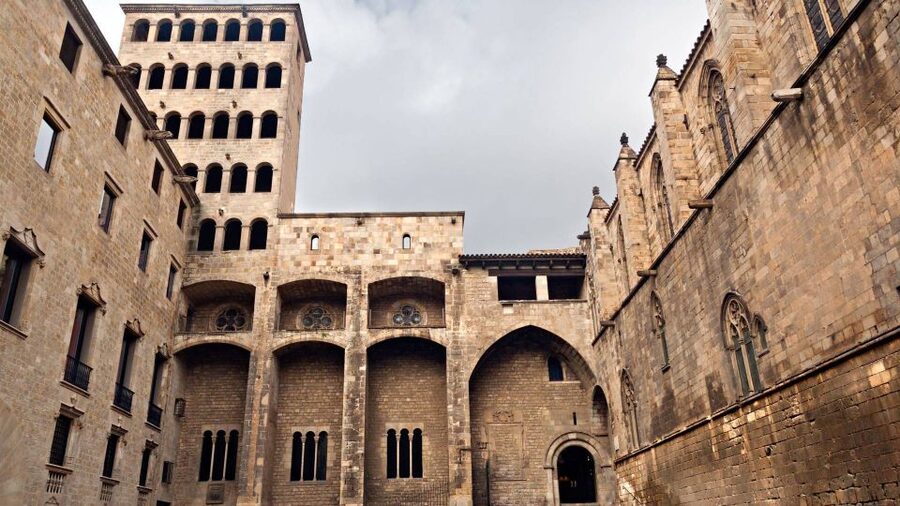
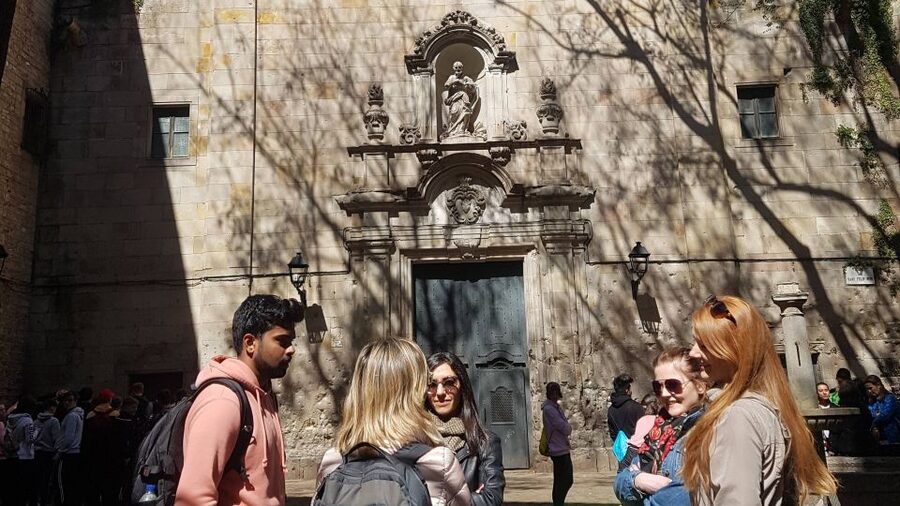
The Gothic Quarter portion is built around the idea that medieval Barcelona ran on ceremony and control. You spend time at Plaça del Rei, a key setting tied to the Palace of the Viceroy and the broader political machinery of the time.
Then you move toward Palau Reial, where the tour highlights the famous moment of Christopher Columbus being welcomed by the Catholic Monarchs after his journey to the Americas. It is a surprisingly concrete link between city streets and world history, and it gives the Gothic streets a bigger frame than just architecture.
If you like history that names actors and explains why decisions mattered, this part usually lands well. Several guides are praised for balancing architectural observation with story, so you do not end up with a lecture that forgets you are walking.
Barcelona Cathedral and Santa Maria del Mar: Two Styles of Catalan Gothic
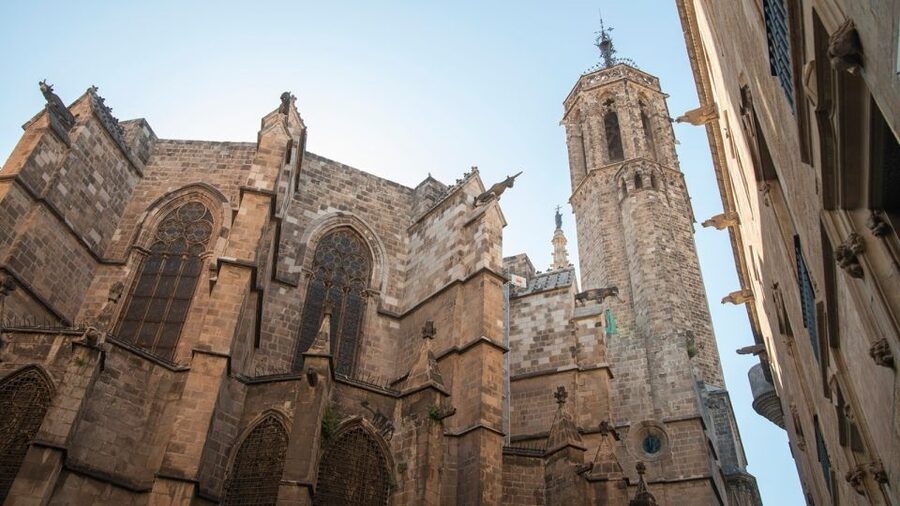
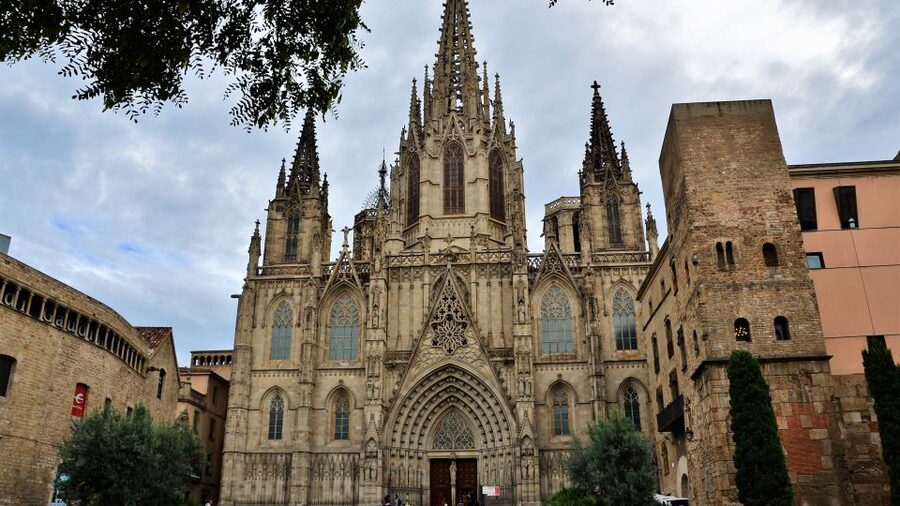
The tour brings you to Barcelona Cathedral, then continues to Santa Maria del Mar (the St. Mary of the Sea Cathedral). This is a great pairing because both are Gothic, but they feel different in personality.
For Santa Maria del Mar, the standout point is the story about how it was built in an incredibly short time, which is a clue about medieval organization and engineering. You start to understand Gothic architecture as more than decoration, it is a system that required planning, labor, and momentum.
You also learn what to look for while standing in place. Instead of snapping photos and moving on, you get little prompts that make the facades and details feel readable.
Timing note: because this is a walking tour, you do not get to sit forever. That can be a downside if you love slow museum-style visits, but for most first-time visitors, it is exactly the right amount of time to build familiarity.


La Rambla: Street Life with Landmarks in the Mix
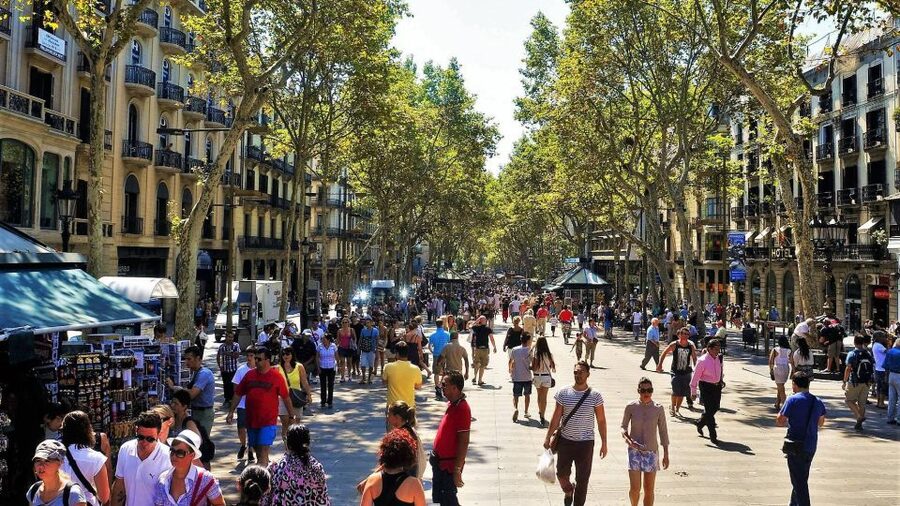
Once you head down La Rambla, the tone shifts from stone stories to street-level Barcelona. You pass the flower stalls, see entertainers, and catch the pattern of outdoor cafes and quick stops that locals and visitors keep repeating.
This section works best when you treat it like an orientation walk. You are learning where energy gathers, where people move, and how the boulevard connects different neighborhoods. Later, when you return on your own, you will know what you are seeing.
One consideration: La Rambla and the market area can be crowded. Plan for slower movement through tight spots and keep your personal belongings secure in the densest areas.
La Boqueria Market: More Than a Photo Stop
La Boqueria is a highlight for a reason, and the tour frames it well. With 300-plus stalls offering local products, it is not just one shop with snacks, it is a full ecosystem of Catalan food culture.
The tour experience here is usually about seeing the range, understanding what people buy, and getting the context to make choices later. If you like food markets, you will enjoy how this stop turns your memory into a map of flavors.
Also, you get something practical: a guided sense of what is worth your time. Many guides are praised for offering good eating and drinking recommendations at the end, which matters because Barcelona has no shortage of places trying to win your money.
El Born and the Streets Around Palau de la Música Catalana
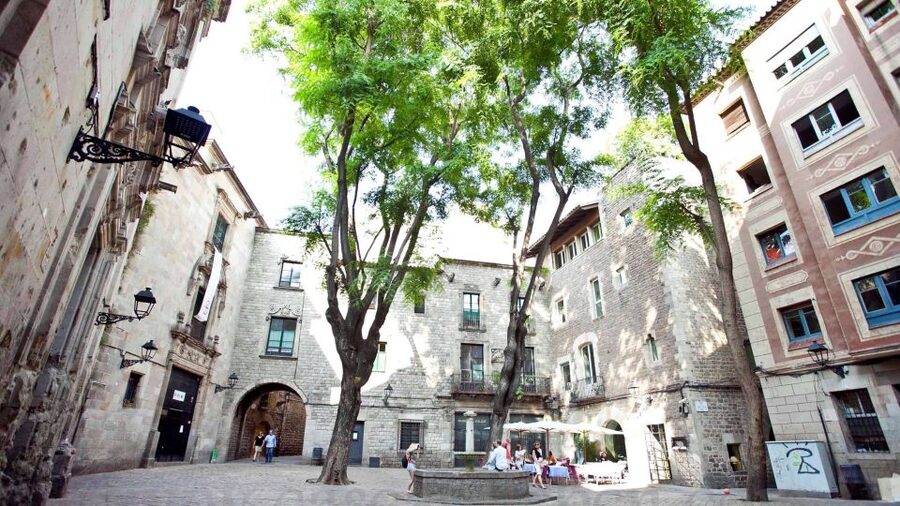
El Born is where the tour adds atmosphere. You get that mix of trendy cafes, boutique shops, and lively streets, and you also get a sense of why this part of town feels like it has a modern identity built on older streets.
You may also pass by Palau de la Música Catalana, and even from the outside it helps you understand the neighborhood’s artistic pull. It is the kind of visual anchor that makes you want to come back, even if you do not go inside on this walk.
One nice effect of ending your walk around the Born area is that your day usually gets easier afterward. You finish close to a district where you can keep exploring without needing another transport plan.
Meeting a Guide Who Actually Brings It to Life
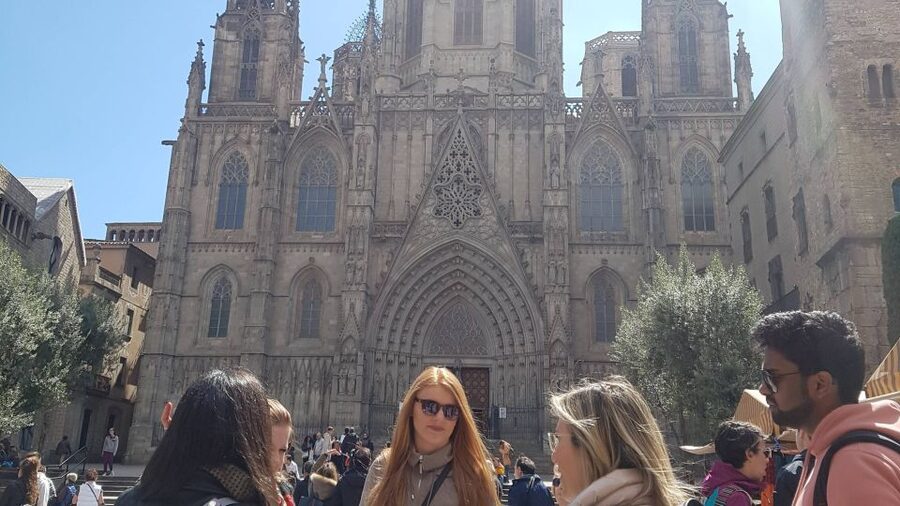
A big reason this tour earns such strong ratings is the guide factor. Names that show up again and again in feedback include Alba, Omid, Jose Carlos, Nilo, Joris, and Steven. The common thread is storytelling that stays connected to architecture and street layout.
What I appreciate in the best performances is the balance. Some guides are praised for giving enough detail to feel smart, but not so much that you lose your group. Others are praised for interactivity, humor, and answering questions without making people feel rushed.
If you care about more than checklist sightseeing, pick this tour for the guide’s voice. The Roman-to-medieval chain is complicated on its own, and a great guide makes it feel like a conversation you can follow even while walking.
Price and Value: Why $21 Can Make Sense in Barcelona
Barcelona has plenty of pricey attractions, so $21 sounds almost too simple. The value comes from what you are getting: a guided route through multiple major areas, interpretation of several landmark sites, and a small group setup that helps you hear and ask questions.
You are also spending time where you would otherwise need to do your own research. If you have ever wandered the Gothic Quarter, you know how easy it is to see impressive buildings and still feel like you do not fully understand what you are looking at. A guide compresses that learning curve.
One small warning on value: this is not an all-day tour and it is not designed to be a slow, sit-down experience. If you want heavy cathedral time, private museum depth, or lots of interior entry, you may want to pair this with a separate attraction later.
Practical Tips So You Enjoy the Walk, Not End It Miserably
Wear comfortable shoes. This sounds obvious, but it is the difference between a fun morning and a sore-afternoon bargain.
You also cannot bring luggage or large bags, so travel light. In dense areas like the Gothic Quarter and La Rambla, carrying extra bulk becomes a hassle fast.
For timing, the tour runs about 2.5 to 4 hours, depending on the start and the flow of the group. If you have a strict dinner reservation, I suggest planning a little buffer after the walk, since the end point is around Passeig del Born.
If weather is rough, dress smart. Even in cold or rainy conditions, you can still enjoy the tour if you stay comfortable and keep moving with the group rather than drifting off for one more photo.
Who This Tour Suits Best (and Who Might Want a Different Option)
This is a strong fit if you are:
- visiting Barcelona for the first time and want a guided sense of the Old Town
- curious about how Roman and medieval Barcelona still shapes what you see today
- interested in architecture and want a clear route instead of guessing your way through narrow streets
It might feel less ideal if you:
- hate walking for a few hours in the center of the city
- want lots of indoor time and long stops inside major churches
- expect the tour to function like a food tour with extensive tastings (this includes the market experience, but it is still a walking route)
FAQ
Do I need to bring anything specific?
You should bring comfortable shoes. The tour is a walking route through multiple neighborhoods.
How long is the tour?
The duration is listed as 2.5 to 4 hours.
How much does it cost?
The price is $21 per person.
What languages are the guides?
Guides are available in English and Spanish.
How big is the group?
This is a small group tour with a maximum of 15 participants.
Where do we meet the guide?
The meeting point may vary depending on the option booked. One listed starting option includes Movistar Centre.
Where does the tour end?
The tour ends at Passeig del Born, 08003 Barcelona, España.
Are luggage or large bags allowed?
No. Luggage or large bags are not allowed.
Can kids join?
Children under 2 years old can join for free.
Is a private group available?
Yes. A private group option is available.
Should You Book This Old Town and Gothic Quarter Walking Tour?
I would book it if you want a fast, well-guided way to understand what you are seeing in Barcelona’s oldest streets. For $21, you get a tight route that connects Roman foundations, Gothic landmarks, and the everyday street life of La Rambla and La Boqueria.
Skip it only if you are looking for long indoor visits or a slow pace. If your priority is getting oriented and learning the stories behind the stones while staying in a small group, this one is a smart choice.
More Walking Tours in Barcelona


More Tours in Barcelona
More Tour Reviews in Barcelona
Not for you? Here's more nearby things to do in Barcelona we have reviewed








More Gothic Quarter Tours worth opening.
 ★ 5.0Barcelona Gothic Quarter Tapas & Taverns Food & Wine TourFrom $1311,470 reviews
 ★ 4.7Gothic Quarter Ghosts and Legends Walking TourFrom $191,443 reviews
 ★ 5.0Barcelona Old Town & Gothic Quarter Small Group TourFrom $221,308 reviews
 ★ 4.8El Born and Gothic Quarter Wine & Tapas Bar TourFrom $81674 reviews
 ★ 5.0Kids and Family Gothic Quarter Walking Tour in BarcelonaFrom $25465 reviews
 ★ 4.5Barcelona Gothic Quarter Walking TourFrom $33456 reviews
★ 4.9Gothic Quarter Walking TourFrom $212383 reviews
★ 4.5Barcelona Gothic Quarter Walking TourFrom $33456 reviews
★ 4.9Gothic Quarter Walking TourFrom $212383 reviews
 ★ 5.0Barcelona Gothic Quarter VIP Tapas & Wine TourFrom $181276 reviews
Continue by place or experience