

REVIEW · BARCELONA CITY TOURS
Barcelona: City Sightseeing Hop-On Hop-Off Bus Tour
Two routes, one simple plan. If you want easy orientation without committing to tours inside every neighborhood, this open-top bus is a smart way to start. I like that you can pick your own stops for Sagrada Familia, the modernist sights along Passeig de Gracia, and the city’s wider seaside and hill areas.
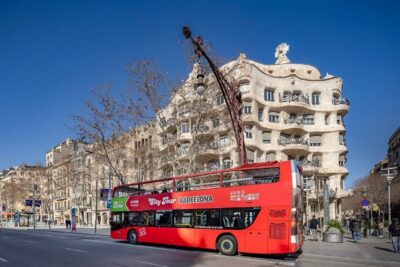
The setup is straightforward. You ride open-deck double-deckers with audio guide headphones in 16 languages, plus free Wi-Fi and a city map. The only real drawback is timing and walking, the last bus goes at 7pm and some stops still mean hills or a longer walk to major spots.
Key points before you buy
- Two routes, one ticket rhythm: Use Red and Blue across 24 or 48 hours so you do not feel forced into a fixed schedule.
- 38 stops that cover big distances: You get central sights plus outlying areas, so you waste less time in transit.
- Audio guide in 16 languages: Headphones are included on site, covering Spanish, Catalan, English, French, German, Italian, Chinese, Japanese, Portuguese, Russian, Dutch, Hebrew, Swedish, Arabic, Turkish, and Norwegian.
- First bus at 9am, last at 7pm: Plan your day around that end time.
- Frequent service for hop-on hop-off: Buses run every 20 minutes, with especially frequent service noted for busy periods.
- Football stop is real: If Camp Nou matters, the Blue route includes a Futbol Club Barcelona stop.
Why this Barcelona hop-on hop-off works for first-timers

Barcelona is beautiful, but the sights are spread out. One day can turn into a blur of taxis, metro lines, and sore feet if you are trying to hit everything on your own. This tour’s main win is that it gives you a moving base, then lets you step off when a stop matters to you.
It is also a good match for different travel styles. If you love walking, you can hop off for a neighborhood and come back later. If you prefer shorter walks and more viewing time, you can keep it mostly bus-based and still get the big-name landmarks.
Just remember this is not a guided walking tour. The bus is your backbone, but your best outcomes depend on how you plan your few priority stops.
You can also read our reviews of more city tours in Barcelona


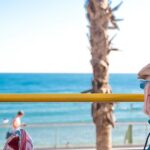
Route Red: Montjuïc to the port, then back toward Sagrada Família
The Red Line reads like Barcelona’s “south and seafront” tour. It starts at Plaça de Catalunya, then moves you through key central areas and out toward Montjuïc, before swinging back inland near the major landmark you will want to see up close.
A strong early pick is Casa Batlló and the Fundació Antoni Tàpies area (it is listed on the route). This puts you right on the modernist side of the city, with great city-window views from the upper deck. Next you roll through Eixample and Estació de Sants, which gives you a sense of the city’s scale beyond the postcard center.
Then comes Montjuïc energy. Red includes Plaça d’Espanya, CaixaForum and Pavelló Mies Van der Rohe, plus Poble Espanyol. If you are into architecture or you want a break from pure sightseeing, these stops help you switch gears without thinking too hard.
From there the route climbs in mood. You can hop for Museu Nacional d’Art de Catalunya, the Anella Olimpica, and the Fundació Joan Miró, then continue up toward Teleferic de Montjuïc and the Miramar (Jardins Costa i Llobera) viewpoint area. This is where the bus feels useful, because some of these places are not “quick walk” stops.
After Montjuïc, Red swings toward the water. You get World Trade Center, Colom to La Rambla, Museu d’Historia de Catalunya, and the Port Olímpic area. From there it continues along the beach zone with stops that include Platja del Bogatell, Platja Nova Mar Bella, and Forum, plus Parc Diagonal Mar and Poblenou. In practical terms, this is your chance to see Barcelona as both beach and city.
Then the route brings you back toward the big finish. It includes Torre Glòries, Sagrada Família, and ends with Arc de Triomf. If you want a one-day flow that covers a lot of terrain, Red is the route that makes that happen.
Route Blue: Passeig de Gracia modernism, Park Güell, and Camp Nou

If Red leans toward Montjuïc and the sea, the Blue Line is more about Barcelona’s modernist backbone and viewpoints up higher. It also starts at Plaça de Catalunya, then heads through central modern streets.
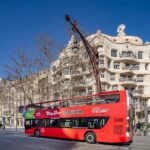
You quickly reach Passeig de Gràcia for La Pedrera, plus modernist anchors like Sant Pau Recinte Modernista. This is the kind of route that helps you understand why Barcelona looks different than other Spanish cities, because the architecture is not background, it is the main event.
Next you get the hilltop stretch. Blue includes Park Güell, and it lists Tramvia Blau and Tibidabo related stops. Even if you do not plan to go far beyond the stop itself, the bus ride gives you a preview of the city’s geography: it is not flat, and you will feel it.
Blue also reaches into quieter or residential-feeling areas, with stops like Sarria and Monestir de Pedralbes. Then you hit Palau Reial (Pavellons Güell), a nice contrast to the busy commercial core.
And yes, there is a football moment built in. The Blue route includes a Futbol Club Barcelona stop. If you are a Camp Nou fan, that alone can justify choosing the Blue route at least once.
The route rounds out with Diagonal – Les Corts, Francesc Macià – Diagonal, Eixample, and ends at Sant Antoni. That last stretch is useful if you want to keep the night plan flexible, because you can hop off and still be close to dinner areas without needing a big commute.
How I’d plan your 24 hours in Barcelona (without rushing)
This tour is designed for flexibility, so the mistake is trying to do every stop. Your best move is to pick 3 to 5 priority stops, then treat the rest as bonus viewing from the top deck.
Here’s a practical approach that fits how the buses run:
- Start early if you can. The first bus departs from Stop 1 at 9am.
- Pick one “anchor” landmark for the morning, then one “neighborhood” stop for the afternoon.
- Use hop-on hop-off as a way to reposition, not as a replacement for choosing which sights truly matter.
A common winning rhythm is Blue in the morning for modernism and higher viewpoints, then Red later for Montjuïc, the waterfront, and the return toward Sagrada Família. That order also helps you avoid trying to see every big-name photo spot at the same time of day.
Also keep a hard boundary in mind: buses run until 7pm. One review experience noted the bus stops at 7pm regardless of which stop you are at, so do not count on a late push if you want to stroll after dinner.
If you have 48 hours, plan to use both days, because 48-hour tickets must be used on consecutive days. This is a great option when you want the bus to act like transportation between two or three scheduled tickets, not just sightseeing.
What the ride is like: open deck, headphones, and real-world comfort

The bus experience is why this tour is so popular. It is a double-decker, open-top style ride, and you can keep your eyes up for skyline changes and street texture as you move. On a clear day, that matters. Even on a warmer day, people tend to appreciate the breezes up top, even if you still need sunscreen.
Comfort can vary by season. One practical note from a recent experience: in colder months, the open deck can feel chilly. In summer, some riders found the buses hot, so if you are sensitive to heat, plan your ride during the cooler parts of the day and take shade breaks on foot where needed.
The audio guide is part of the value package. You pick up headphones on site, and you get commentary in 16 languages. In real use, audio can cut out at moments, so have the map ready and watch for the stop names you care about.
Wi-Fi is included, but it may not always work on every bus, based on firsthand notes. That is not a deal-breaker, since the main job is getting you from place to place, but it is good to know if you rely on it.
Finally, photos can be a little tricky. Some stops have quick timing for getting on and off, and reflections from glass or angle from the top deck can get in the way. The fix is simple: prioritize one or two key photo moments and give yourself enough time to disembark, then shoot, then re-board.


Specific stops I would treat as priorities
There are a lot of stops, so here are the ones I would plan around, based on what the route is set up to deliver.
Sagrada Família
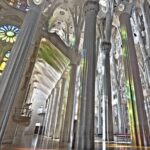
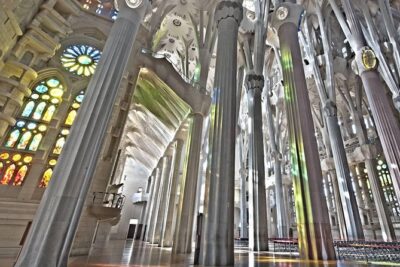
Sagrada Família is the obvious headline. It is listed on the Red route, and it is a stop you should plan for, not just pass by. One rider noted the bus can get busy at Sagrada Família, so if you want less stress, try to time it earlier in the day.
Also, the stop is helpful even if you still need to walk to the gates, because you can use the bus to position yourself without having to guess the best transit route.
Passeig de Gracia modernism (Casa Batlló and La Pedrera)
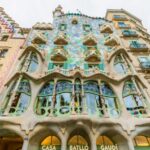
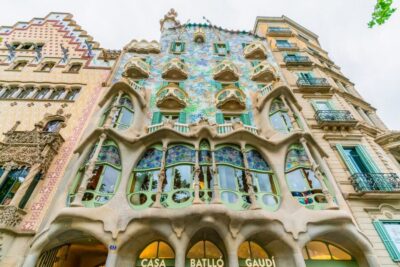
Blue gives you La Pedrera and both routes list Casa Batlló plus the Fundació Antoni Tàpies area. This is where the city’s style becomes obvious fast. If you only have time for one modernist corridor, choose one route that hits these spots and then spend your walking time there.
Park Güell
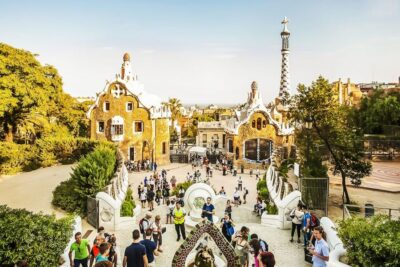
Park Güell is listed on Blue. One practical downside: the bus stop can drop you a distance from the park entrance, with a steep uphill walk. If you have limited mobility, plan that walk carefully, or use this as a bus viewing moment rather than a full park day.
La Rambla and the Old City feel
The Red route includes Colom to La Rambla, which is an easy way to link Old City vibes with a straightforward bus hop. From there, you can wander into the medieval streets feel around the Gothic Quarter area. Just know you will still want time to walk, eat, and reset, rather than trying to do it like an appointment.
Camp Nou
The Blue route includes Futbol Club Barcelona. If your Barcelona trip is tied to football, this is the cleanest way to solve the transit problem. Hop off at the stop, plan your stadium time, then use the same ticket to get back without hunting down a route.
Price and value: how to judge the $39 ticket fairly
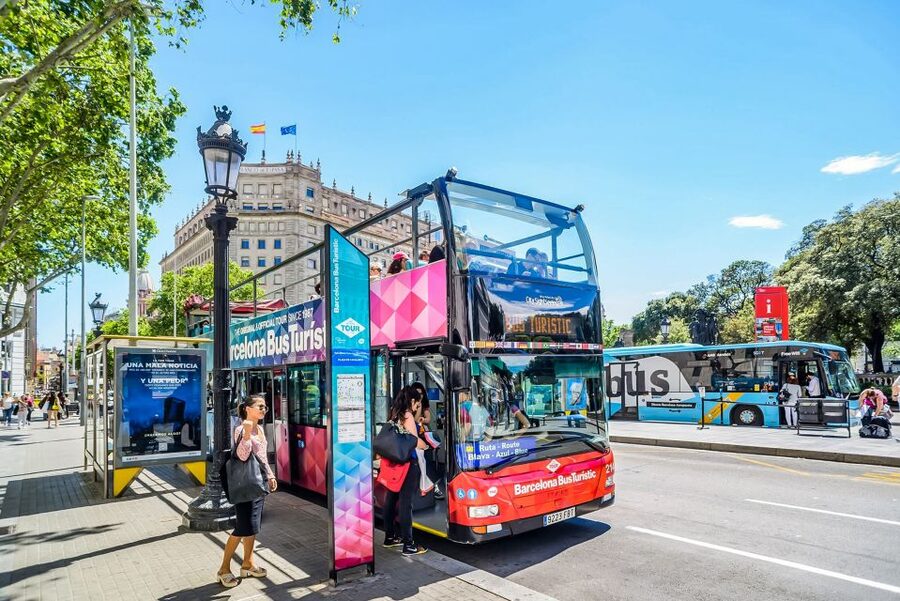
The listed price is $39 per person, with 24 or 48-hour options. The value question is not just the price of the ride. It is what it replaces: taxis between far-flung sights, extra transit trips, and time spent figuring out connections.
For value, ask yourself this:
- Are you likely to visit multiple areas across the city?
- Do you want a low-stress way to reposition midday, when sightseeing feels heavy?
- Do you need a simple first-day orientation tool?
If you are trying to cover central sights plus at least one outlying area (Montjuïc, the beaches, Park Güell, or Camp Nou), this pass can pay off quickly. If your plan is mostly one tight neighborhood on foot, you might find a smaller guided tour or public transport more cost-efficient.
Also, you are not paying only for the seats. You get headphones audio, a city map, and a discount booklet for local attractions and food and shopping options. Attraction tickets and meals are not included, so you still need to budget separately for paid entries you want to do.
One more value angle: this is a good “buffer day” activity. If you have another reservation timed to a specific hour, hop-on hop-off fills the gaps before and after.
Practical heads-up: timing, stops, and what can go wrong
No tour runs perfectly for everyone. Here are the real-world considerations that matter most with this one.
1) End time is firm
The last bus departs from Stop 1 at 7pm, and at least one experience noted the bus stops at 7pm no matter where you are. Build your schedule so you are back on the bus well before the end time.
2) Some stops involve walking hills
Park Güell is the clearest example from firsthand notes. Others may also require short to medium walks, even if you are dropping close. Bring comfortable shoes, then let the bus do the long-distance movement.
3) Signage can be mixed
A few experiences pointed out that when you hop off, some stops can be hard to navigate because signage is not always clear. Use the provided map and keep an eye on the stop names. If you are on the top deck, watch the route info so you do not miss your intended get-off.
4) Frequency helps, but delays happen
Buses run about every 20 minutes, and the operator notes especially frequent service in high season. That said, there can be waits at high demand stops like Sagrada Família or when people are boarding for photo time.
5) Seasonal exceptions exist
The tour operates all year except January 1st and December 25th, and service is suspended on Thursday February 12th. If you are traveling around those dates, double-check availability for your exact day.
Should you book this Barcelona hop-on hop-off bus tour?
Book it if you want a practical way to see Barcelona in a DIY style, especially if you have limited time, want city orientation, or you do not want to plan every transit step. It is also a good choice for families and groups, because the bus lets everyone move at their own pace instead of syncing up for walking-heavy days.
Skip or reconsider if your plan is very tight and mostly one neighborhood, because the pass is built around city-spread sightseeing. Also think carefully if you hate walking uphill, because some major attractions can require a meaningful walk from the stop.
If you do book it, I recommend you use both Red and Blue across your time, then choose your priority sights before you start. Treat the bus as your map in motion, and you will end up with the kind of Barcelona day that feels organized, not chaotic.
FAQ
How long is the bus tour?
The tour ride time is listed as 120 minutes. Your ticket is valid for 1 to 2 days depending on the option you choose, so you can hop on and off during that window.
Does the tour run on both routes with one ticket?
Yes. The activity uses two routes, Red and Blue, and your ticket is for a 24 or 48-hour hop-on hop-off experience across the city.
What time do buses start and stop running?
Both routes depart from Stop 1. The first bus departs at 9am and the last bus departs at 7pm.
How often do the buses arrive?
The buses run every 20 minutes, with frequent service described for busy periods.
What is included in the ticket price?
Included items are the 24 or 48-hour hop-on hop-off bus tour, audio guide commentary in 16 languages with headphones, free Wi-Fi, a Barcelona city map, and a discount booklet.
Are pets allowed on the bus?
No. Pets are not allowed, and smoking is also not allowed.
More City Tours in Barcelona




More Tours in Barcelona

More Tour Reviews in Barcelona
Not for you? Here's more nearby things to do in Barcelona we have reviewed









More Barcelona City Tours worth opening.
 ★ 4.4Park Güell Admission TicketFrom $2576,534 reviews
 ★ 4.7Casa Batlló Entry with Self-Audioguide TourFrom $3425,359 reviews
 ★ 4.424 or 48-Hour Hop-On Hop-Off Bus TourFrom $3920,872 reviews
 ★ 4.7Park Guell Guided Tour with Skip The Line EntryFrom $3117,563 reviews
 ★ 5.0Barcelona in 1 Day: Sagrada Familia, Park Guell,Old Town & PickupFrom $12013,541 reviews
 ★ 4.3Barcelona Aquarium: Entry TicketFrom $3113,335 reviews
 ★ 4.8Sagrada Familia Skip-the-Line Entry Ticket & TourFrom $6712,789 reviews
 ★ 4.4FC Barcelona Museum “Barça Immersive Tour” TicketFrom $3510,944 reviews
Continue by place or experience