
REVIEW · GOTHIC QUARTER TOURS
Barcelona: Gothic Quarter Walking Tour with Optional Pintxos
Gothic streets plus a pintxos finale. This guided walk through Barcelona’s Gothic Quarter brings the city’s story into focus, from Roman leftovers in the pavement to the way key squares shaped daily life. I also like the built-in pintxos tasting option at the end, where you get a drink plus two pintxos to round out the experience.
One thing to consider: this is a walking tour with a lot of on-foot time, and the information given suggests it may be challenging if you have reduced mobility or if you use a wheelchair.
Key Points You’ll Appreciate on This Tour
- Gothic Quarter orientation: You get a guided path through the oldest neighborhood, not just random sightseeing.
- Roman vestiges you can actually spot: The guide points out remnants still present in the streets.
- Big landmark “connect-the-dots” moments: You move from the Ramblas area to Nova Square and back through key plazas.
- Historical figures you’ll recognize: St. Roque, Wilfredo the Hairy, and more come up in the stories behind the stone.
- Bilingual guide support: Live commentary in English and Spanish, which helps if your group has mixed language skills.
- Optional pintxos upgrade: One drink and two pintxos are included only if you select that option.
Starting at Pl. de Catalunya and Finding the Fountain of the Six Putti
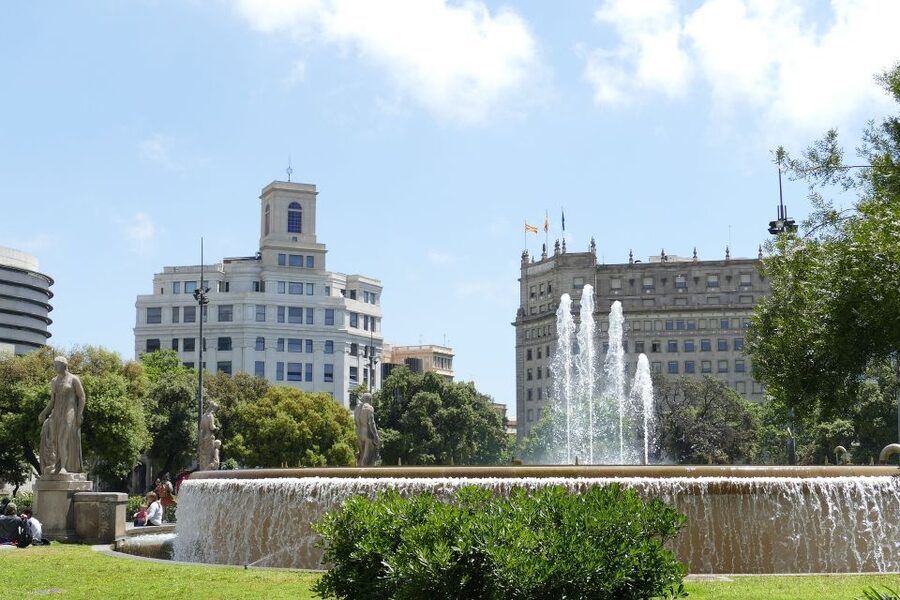
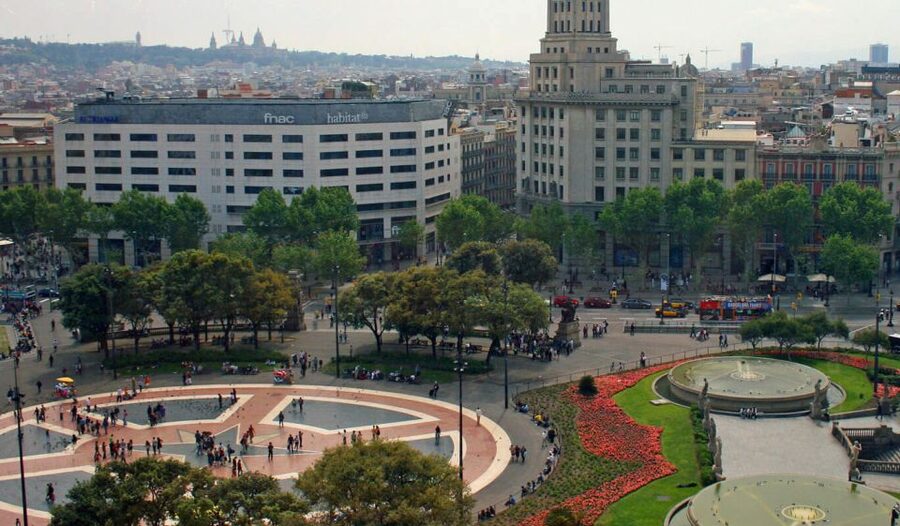
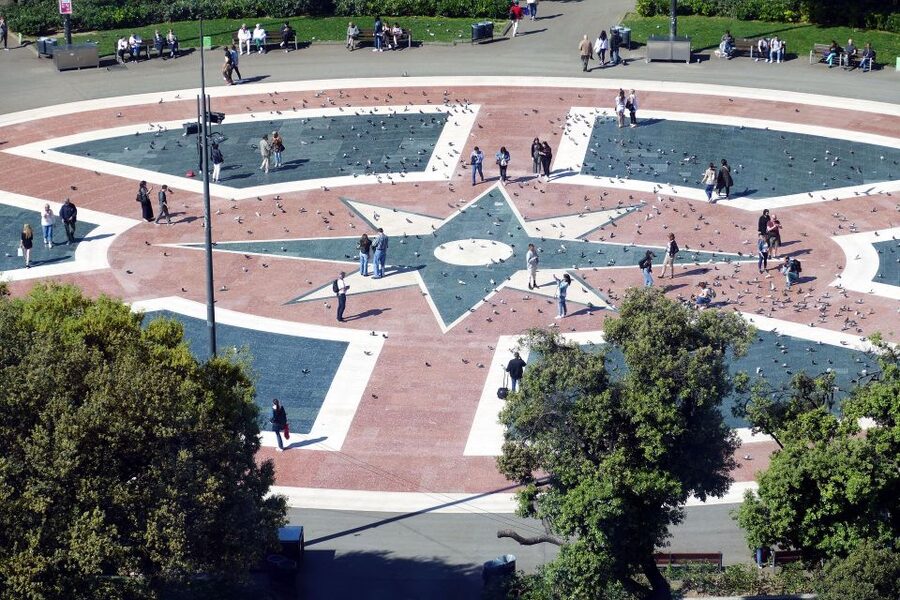
The tour kicks off right where it’s easy to regroup: Pl. de Catalunya area, next to the Fountain of the Six Putti (Pl. de Catalunya, 31). Your guide carries an Amigo Tours sign, so it’s not a guessing game when you arrive.
This starting choice matters. Pl. de Catalunya is a practical anchor in Barcelona, and walking tours work best when the first stop is simple to locate. You can get your bearings fast, then head into the Gothic Quarter maze with less friction.
If you’re the type who likes to arrive a few minutes early, do it here. The meeting point is straightforward, but the city can be busy, and you’ll want calm footing before the walk starts.
You can also read our reviews of more walking tours in Barcelona



Gothic Quarter Streets, Roman Traces, and How Barcelona Gets Its Shape
Once you’re in the Gothic Quarter, you’re not just looking at old buildings. You’re learning how Barcelona formed. The guide focuses on how the city was founded and how later layers built onto earlier ones.
One of the most satisfying parts is the attention to Roman vestiges still present in the streets. Even if you don’t consider yourself a “Roman person,” these moments turn Barcelona from postcard history into something you can physically track. You start to recognize that the Gothic Quarter is not a single era, but a stacking of eras.
You’ll also hear stories about Barcelona’s development through specific historical figures. Expect names like St. Roque and Wilfredo the Hairy to show up in the narrative. That’s a big help, because it gives you hooks for memory. Instead of seeing stones, you remember people and the reason people mattered.
I like that the guide connects the past to what you can still see. When the tour explains why streets, squares, and routes matter, the neighborhood feels more usable, and you’ll wander better on your own after the tour ends.
The Ramblas Link and Emperor Augustus Backstory
The walk includes a move along one of the most famous avenues in Barcelona, the Ramblas. Guides use this as a “movement line” through the city story. You go from narrow Gothic Quarter streets to a wider landmark corridor, and the shift makes the history easier to follow.
Here’s the key point: your guide tells you how the city was founded by Emperor Augustus. Whether you already know Roman history or not, this framing helps you place Barcelona in a larger Mediterranean timeline, rather than treating it like an isolated city that simply appeared.
If you’re traveling with teens or anyone who needs a reason to care beyond photos, this is usually where the tour clicks. A founding story plus a clear route makes the walking feel purposeful, not repetitive.
Old Port and the Remains of the City Wall
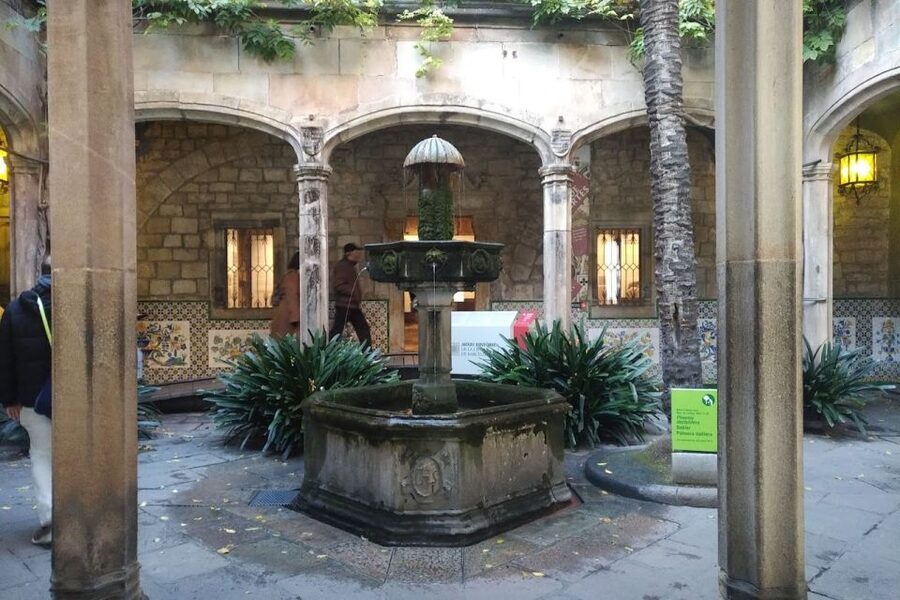
After the Ramblas segment, you head toward the old port area. This is where the tour becomes more “show me” and less “lecture.”
You can see the remains of an old city wall as you walk through the Gothic Quarter’s narrow streets. That combination is great for two reasons. First, walls are physical evidence, so it’s easier to grasp the past. Second, narrow streets force you to slow down, and that helps you notice details you might otherwise miss.
This is also a nice contrast to the wider, busier areas of the city. The Gothic Quarter streets feel more intimate. You end up feeling the scale difference without having to do anything complicated.
Nova Square and the Gothic Cathedral Moment
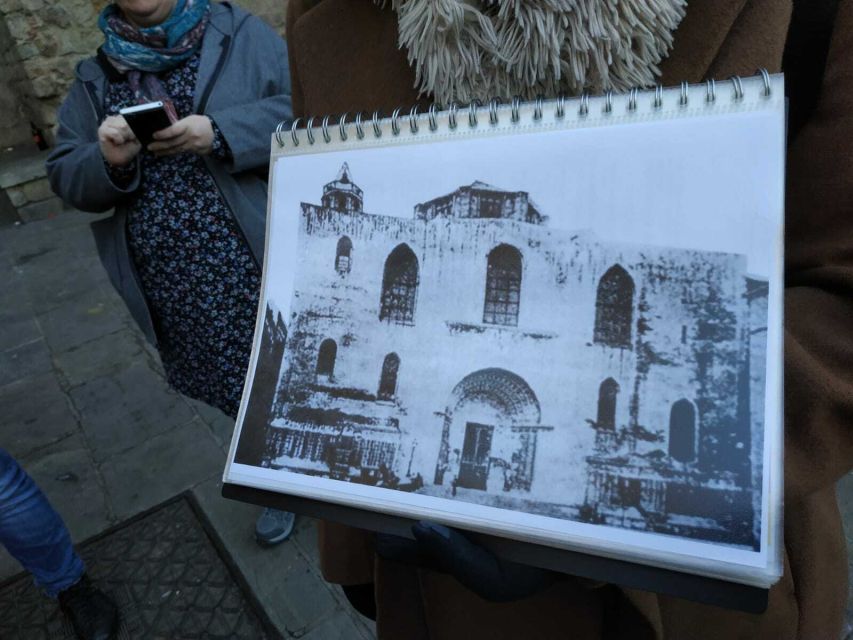
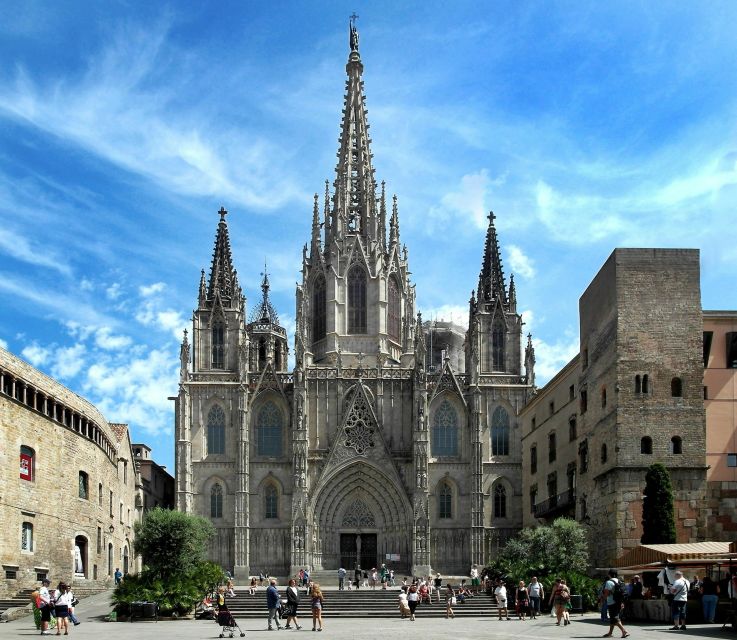
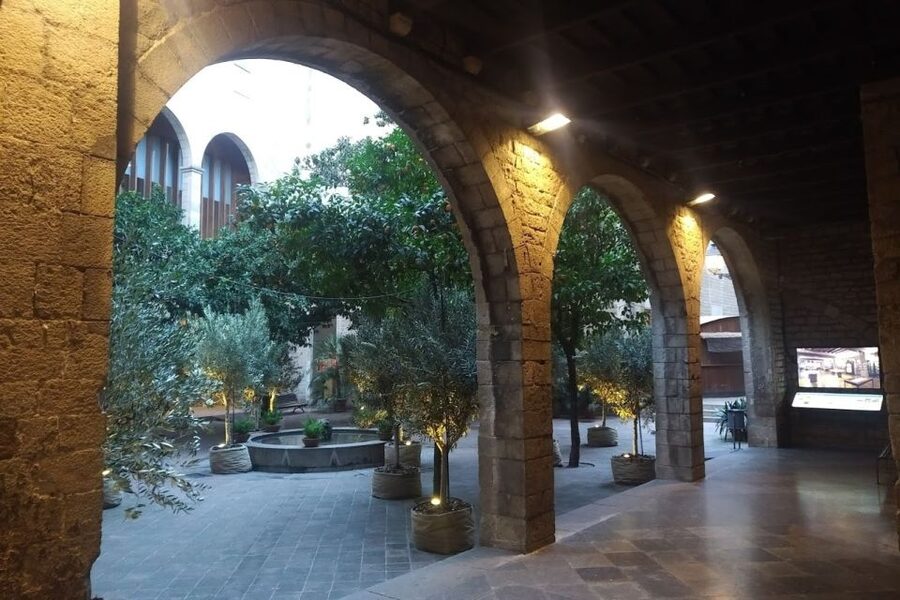
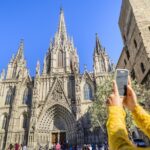
In the center of the Gothic Quarter, the itinerary brings you to Nova Square, where you can admire a Cathedral of Gothic style. Even without tickets or entry, the exterior and the setting do the job. You get architectural cues and a sense of why this area became the neighborhood’s visual center.
This stop is valuable because it gives you a “pause point.” Tours move fast in Barcelona, and you need a moment where you can stand still, look up, and reset your eyes for the next streets.
Practical note: tickets to monuments are not included. So if you had your heart set on going inside certain sights, plan to check opening hours and ticket options on your own. The tour is designed for the walking and storytelling, not for paid entries.



Plaça del Rei, Plaça del Pi, and Plaça de Sant Jaume: The City Runs on These Corners
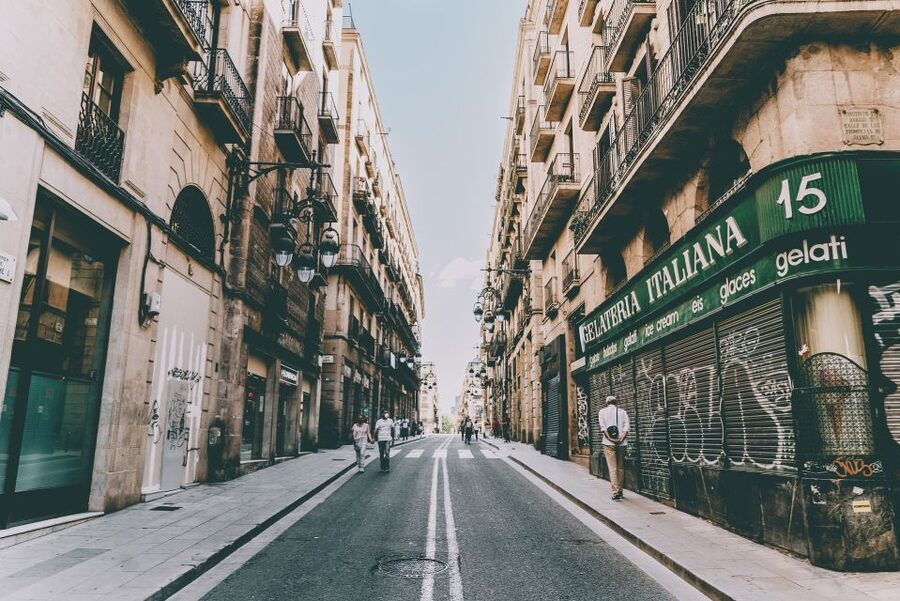
After the cathedral area, the route continues through major plazas: Plaça del Rei and Plaça del Pi, then onward to Plaça de Sant Jaume.
This part is where the tour shifts from cultural storytelling to civic reality. Plaça de Sant Jaume is described as the city’s current administrative and political center. That’s not just a fact to hear and forget. It helps you understand why Barcelona’s city life keeps circling around certain spaces.
You’ll also see the town hall and the Palau de la Generalitat. Even if you only view them from the outside, the tour frames them so you know what you’re looking at and why it matters.
The storytelling here helps a lot if you’re planning the rest of your Barcelona days. When you understand which plazas drive civic power, your self-guided wandering becomes smarter. You’ll know where to aim when you want views of Barcelona’s “decision-making” backdrop.
Catalonia’s Flag, Local Identity, and Why Symbols Belong on the Walking Route
One of the most interesting angles mentioned is how the current design of Catalonia’s flag was developed. A symbol like a flag can feel abstract when you first see it around town. Put it into a walking tour narrative, and it becomes a little clearer.
This is also why the tour works for people who like culture more than pure architecture. You’re learning about identity, not just buildings.
As you move through different squares, you’ll notice how each place carries a different kind of meaning. Flag development ties the story back to the region’s self-understanding, which pairs well with what you see at civic sites like Plaça de Sant Jaume.
Who Guides This? The Sylvia Factor and What You Should Look For
Amigo Tours Spain runs the experience with professional guides and live bilingual commentary in English and Spanish. One guide name that comes up in the feedback is Sylvia, and the consistent theme in the comments is clear explanations and a friendly approach.
When a tour has language support plus good storytelling, you’re more likely to stay engaged. This tour’s structure gives you multiple “story checkpoints,” and a good guide keeps them connected so nothing feels random.
If you care about getting the most out of guided time, you should watch for whether your guide explains the why behind each stop, not just the what. From the guide praise, the best moments here are when you get a clear picture of Barcelona culture.
Pintxos Upgrade: One Drink and Two Bites to Finish Strong
The optional upgrade is simple, and it’s one of the best ways to make a walking tour feel complete. If you select the pintxos option when booking, you get one drink of your choice, plus two pintxos.
This is a practical way to learn local eating habits without turning your evening into a research project. You’re not trying to guess what’s popular or where to go. The tour handles that decision, and you get a taste of Catalan-style bar culture.
Also, the tour ends back at the meeting point, and the pintxos stop is described as going to a local bar at the end. This is a good moment to ask questions while your guide is still in “help mode.”
Pro tip for value: if you’re hungry anyway, choosing the pintxos option can feel like a bargain. You’re paying for guide time either way, and the food and drink add a tangible payoff at the end.
Price and Value: Does $18 Really Make Sense Here?
At $18 per person, this tour sits in the “easy to try” category. That price is basically buying three things:
- A professional guide for roughly 2 to 3 hours
- Live English and Spanish commentary
- Optional pintxos tasting that includes a drink plus two pintxos (only if you pick the tasting option)
What’s not included matters for value. Transportation is not included, and tickets to monuments are not included. So if your personal “must do” list requires paid entries into major sights, you’ll likely spend extra later.
But for many visitors, that’s not a dealbreaker. The tour’s sweet spot is the walking route plus the stories you can’t easily find on your own, especially in a compact area like the Gothic Quarter. The cost also reflects that you’re paying for guidance that helps you make sense of what you’re seeing.
With a rating of 4.1 across 41 reviews, the overall signal is steady: the experience seems to deliver for people who want a structured way to understand the neighborhood.
Timing, Walking Pace, and What to Wear
The duration is listed as 2 to 3 hours, with starting times depending on availability. That time window is long enough to cover several key plazas and streets, but not so long that you need a full day plan around it.
Wear comfortable shoes. This is emphasized for a reason: this is a walking tour where a lot of walking is involved, and Barcelona’s old streets are rarely flat and smooth.
If you have reduced mobility, pay close attention to the mixed accessibility notes. One part of the activity information states wheelchair accessibility, but another section says it may not be recommended for reduced mobility and not suitable for wheelchair users. If that applies to you, I’d treat this as a yellow flag and confirm with the operator before booking.
A Practical Take on What You’ll Leave With
By the end, you should feel like you can navigate the Gothic Quarter with more confidence. You’ll know the route that links Ramblas to the old port area, you’ll understand why Nova Square and the Gothic cathedral area matters, and you’ll recognize the civic importance of Plaça de Sant Jaume.
Most importantly, the tour gives you names and stories to attach to the places. When you remember that St. Roque and Wilfredo the Hairy show up in the narrative, and when you understand the flag’s design development, the neighborhood stops being just walls and windows.
And if you take the pintxos option, you’ll also leave with a simple local meal experience that ties the history lesson to real life.
Should You Book This Gothic Quarter Walking Tour?
I think you should book if you want a guided route that helps you understand the Gothic Quarter without turning your trip into an all-day research project. The price is reasonable, the tour covers major squares, and the optional pintxos upgrade is a nice, practical finish.
Skip it or double-check first if you strongly want to enter paid monuments during the tour, since tickets to monuments are not included. Also consider skipping if you know long walking distances will be an issue for your body, since the information provided warns about mobility limits.
If you like city history explained in plain terms, with helpful bilingual guidance and a route that makes sense, this is a solid way to get oriented fast.
FAQ
How long is the Barcelona Gothic Quarter walking tour?
The tour lasts about 2 to 3 hours. Starting times vary, so you should check availability.
Where does the tour meet?
Meet your guide next to the Fountain of the Six Putti at Pl. de Catalunya, 31, 08002 Barcelona. The guide carries an Amigo Tours sign.
How much does the tour cost?
The price is $18 per person.
Is the pintxos tasting included?
Pintxos are included only if you select the pintxos option before booking. That option includes one drink and two pintxos.
What languages are offered during the tour?
The tour provides live bilingual commentary in English and Spanish.
Are monument tickets or transportation included?
No. Tickets to monuments and transportation are not included.
More Walking Tours in Barcelona


More Tours in Barcelona


More Tour Reviews in Barcelona
Not for you? Here's more nearby things to do in Barcelona we have reviewed








More Gothic Quarter Tours worth opening.
 ★ 5.0Barcelona Gothic Quarter Tapas & Taverns Food & Wine TourFrom $1311,470 reviews
 ★ 4.7Gothic Quarter Ghosts and Legends Walking TourFrom $191,443 reviews
 ★ 4.8Old Town and Gothic Quarter Walking TourFrom $211,393 reviews
 ★ 5.0Barcelona Old Town & Gothic Quarter Small Group TourFrom $221,308 reviews
 ★ 4.8El Born and Gothic Quarter Wine & Tapas Bar TourFrom $81674 reviews
 ★ 5.0Kids and Family Gothic Quarter Walking Tour in BarcelonaFrom $25465 reviews
 ★ 4.5Barcelona Gothic Quarter Walking TourFrom $33456 reviews
★ 4.9Gothic Quarter Walking TourFrom $212383 reviews
★ 4.5Barcelona Gothic Quarter Walking TourFrom $33456 reviews
★ 4.9Gothic Quarter Walking TourFrom $212383 reviews
Continue by place or experience