
REVIEW · BARCELONA CITY TOURS
Barcelona: Guided Walking Tour of Top Sights and Hidden Gems
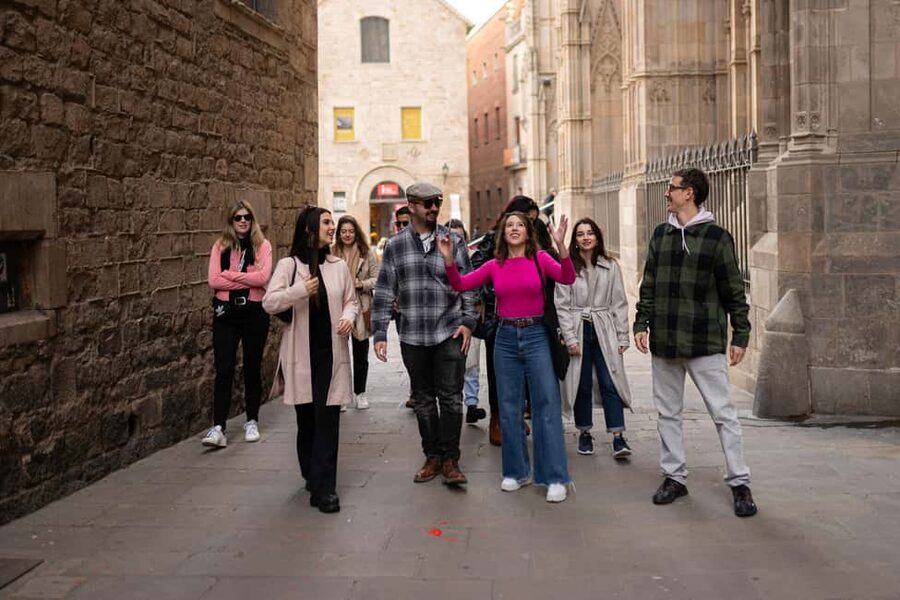
One street at a time, Barcelona tells stories. This guided walking tour strings together about 2,000 years of history in just two hours, mixing famous cathedral sights with quirky local legends, so the Gothic Quarter makes sense fast.
I particularly like how the route is built for discovery on foot, with expert-led stop-by-stop commentary that turns stone, plaques, and small squares into something you can picture and remember. One thing to note, the tour does not include entry into cathedrals and basilicas, so if you want interiors, you will need a separate plan.
You will also get a strong feel for Catalan culture and identity, including darker chapters like the Spanish Inquisition and the Spanish Civil War. And because the guide keeps the pace moving, you are not just sightseeing, you are getting context without spending the whole day. A possible drawback is that two hours is tight, so you may want to save extra time for a second pass if you fall in love with a stop and want to linger.
Key highlights worth your time and feet
- Roman Barcino to the Gothic Quarter’s core: You start at the Barcino sculpture and work forward through layers of the city’s past.
- Cathedrals and plazas, explained clearly: Major landmarks like Barcelona Cathedral and multiple squares get real-world context on the sidewalk.
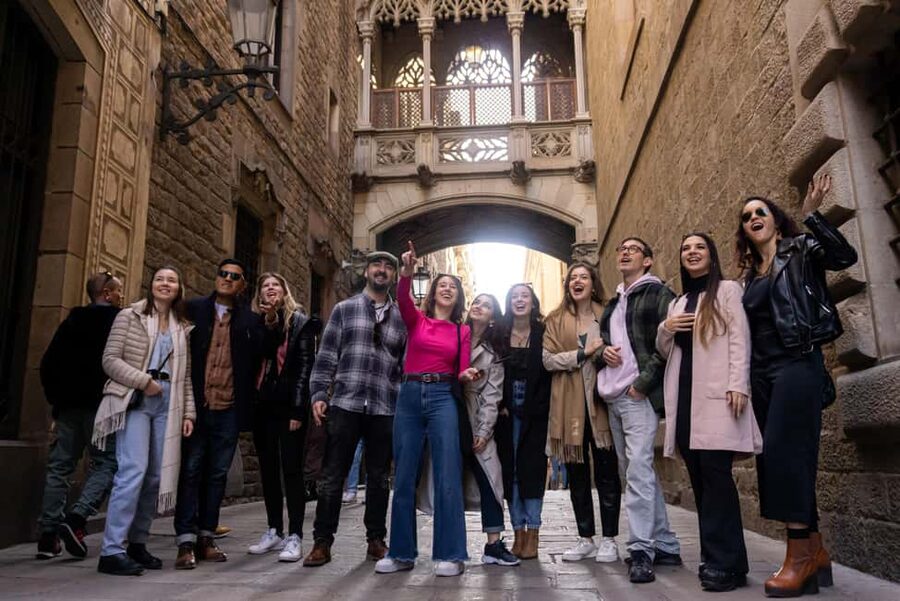
- Legend talk you actually remember: You hear bizarre stories, including the legend of the secret skull connected to Pont del Bisbe and what happens if you look at it.
- A guide who handles questions: Reviews repeatedly mention guides like Jordan, Darren, Mariah, Petra, Lindsay, Sara, Tamara, and Kiki staying patient and answering people.
- A solid 2-hour loop: About 10 minutes per stop keeps things flowing, with time to take photos and ask for recommendations.
A 2-hour Gothic Quarter walk that gives Barcelona momentum
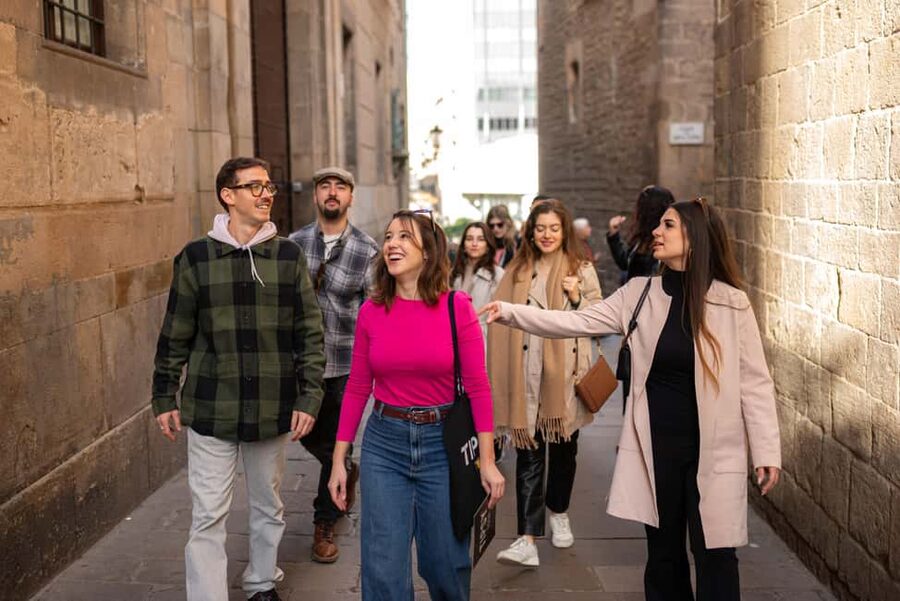
Barcelona can feel like a “wow” city, but the Gothic Quarter can also feel like “where do I even start?” This is why a guided walk makes sense early in your trip. You get a tight route that connects the city’s ancient beginnings to later turning points, including the Golden Age and the Spanish Inquisition and Spanish Civil War. That combo helps you see the neighborhood as a timeline, not a pile of old buildings.
I like the structure here because it is built for short attention spans and real vacation days. You are moving, stopping, listening, and then moving again. In practice, that means you spend less time guessing what matters, and more time noticing details you would normally walk past. The tour is also in English, which matters in a part of Barcelona where signage and street names can be a mix of languages and abbreviations.
One more practical point, this is a walking tour, so bring shoes you can trust. Reviews and the tour basics both point to the same message: you will be on your feet for the full 2 hours, and the streets around the Gothic Quarter are not exactly flat and wide.
You can also read our reviews of more walking tours in Barcelona



Finding your guide at Plaça Nova, and why the Barcino sculpture is a smart opener
The meeting point is easy to miss if you are not looking for it: Plaça Nova, 40, right in front of the prominent sculpture with large letters reading Barcino. Your guide is holding a yellow Carpe Diem Tours sign, so you will not have to hunt for a random group.
Starting at the Barcino sculpture is a good choice because it gives you a foundation before you get swept up in gothic arches and tiny lanes. Barcino is the Roman colony the tour uses as a starting thread, and that matters because the Gothic Quarter is all about layering. The streets and buildings you see today sit on top of earlier eras, and hearing that early makes everything later click into place.
You then transition straight into the neighborhood’s rhythm. Expect short guided stops, photo opportunities, and clear explanations that are built to keep the story moving rather than turning into a lecture. If you tend to get lost in cities with lots of similar-looking streets, this opening helps you build a mental map quickly.
Els Quatre Gats: a quick stop that adds personality to old stone
One of the best surprises on this tour is how it mixes major landmarks with stops that feel more human. Els Quatre Gats is a perfect example. Even if you only get a short guided look, you leave with a stronger sense that Barcelona was always more than architecture, it was also people, ideas, and culture.
This is also where you start to notice the tour’s tone. The guide does not just name places. You get anecdotes and the kind of detail that helps you picture the city when it was younger. That matters because Barcelona’s Gothic Quarter is full of “pretty” sights, but the storytelling is what keeps you from zoning out.
You will likely spend about 10 minutes here. That is a sweet spot for most visitors. Long enough to understand why the place matters, short enough to keep the pace lively.
The Kiss of Freedom and Barcelona Cathedral: the tour turns corners into meaning
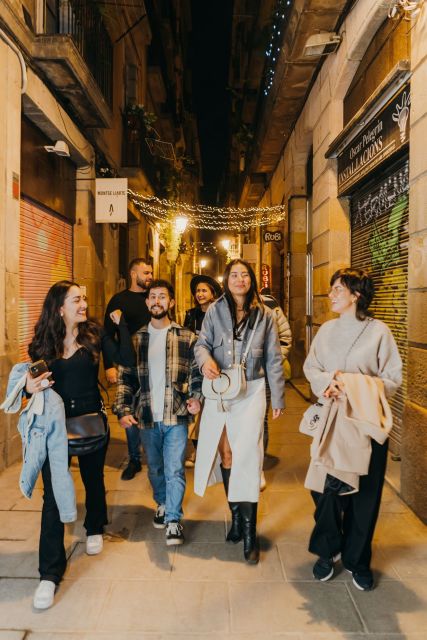
Next comes The Kiss of Freedom and then Barcelona Cathedral, with the stops designed so you feel the shift from street-level history to major civic and religious space.
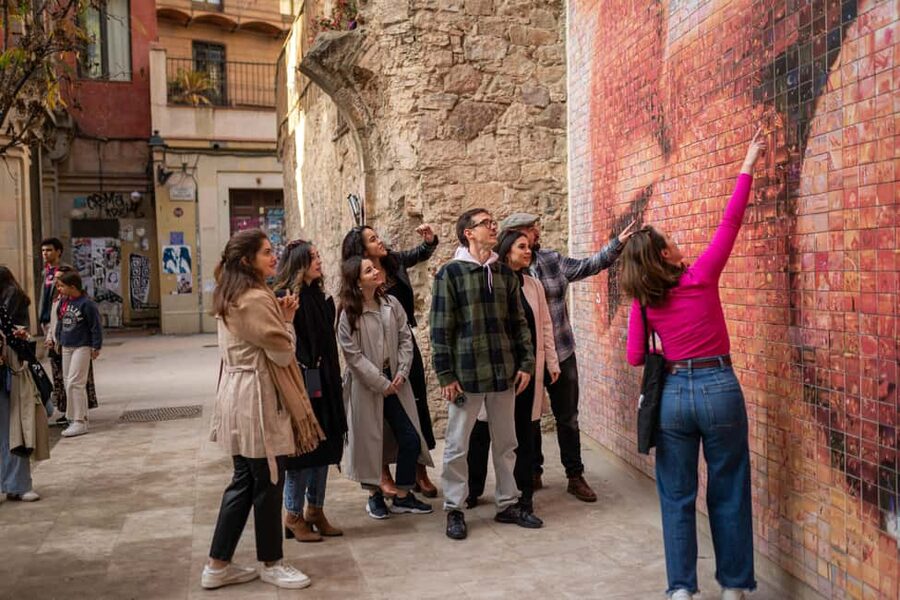
The Kiss of Freedom is the kind of stop that can be easy to overlook on your own, because it is more about what it represents than about sheer size. With a guide, it becomes a readable clue about how ideas about rights and identity show up in the city’s artwork and public spaces.
Then you reach Barcelona Cathedral. This is a big name, but the value here is not just getting a photo. It is hearing what the guide highlights, and understanding why the cathedral area is so important to the Gothic Quarter’s identity. You do not get included entry into cathedrals or basilicas, so you should expect to look around what is available without paid access. If you want to go inside, plan that as a separate add-on after the tour, when you can take your time.
A nearby bonus stop is La Casa de l’Ardiaca. Even if you are not planning to study architecture in depth, a guided stop like this helps you notice what you would otherwise miss: differences in design, symbolic details, and the fact that the Gothic Quarter’s charm comes from constant, small variations.
At Carrer del Bisbe, the tour leans into atmosphere. This is one of those streets where the angle of buildings and the feel of the corridor matter. A guide can also help you connect what you saw at the cathedral to the feel of the street outside it, so you understand how these places connect rather than treating each stop like a separate postcard.
Plaça de Sant Felip Neri and the Pont del Bisbe secret skull legend
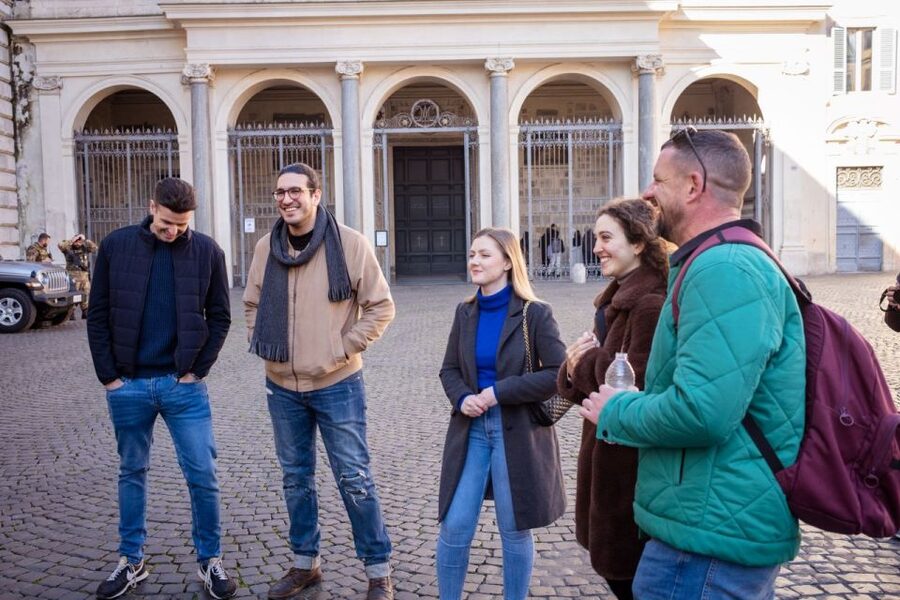
The tour includes Plaça de Sant Felip Neri, a quieter moment that works as a breath between heavier sights. Squares like this are where you can pause, take a photo, and let the stories settle. On a walking tour, that pause is useful. It prevents the experience from turning into a blur of stops.
Then there is the legend side of Barcelona, the kind of story that makes the Gothic Quarter feel slightly alive. The tour mentions bizarre legends tied to Pont del Bisbe, including the idea of a secret skull and what happens if you look at it. You might not verify the story after the tour, but that is not the point. Legends like this are part of Barcelona’s tradition of weaving history, rumor, and place into one.
This is also where I think the guide quality really shows. Several guides are praised in feedback for making stories clear and funny without turning them into pure theatrics. People specifically liked how guides keep the group together, explain well, and handle questions calmly. That matters in a place like this, where there is lots to look at and it is easy for a group to drift if the leader does not manage the flow.
The good news: the tour keeps each segment short. You get the legend and the context without feeling trapped in one spot too long.
You can also read our reviews of more guided tours in Barcelona


MUHBA El Call: history that adds weight to the Gothic Quarter
A key stop on this route is MUHBA El Call. The tour frames the Gothic Quarter timeline with major historical pressures, including the Spanish Inquisition and the Spanish Civil War. Even though you are not getting a full museum-style deep dive, you do get a reminder that the past here includes fear and control, not just art and romance.
I like this inclusion because it prevents the Gothic Quarter from becoming a theme park of pretty streets. Yes, you are seeing beautiful architecture and iconic squares, but you are also learning why certain neighborhoods and structures feel the way they do. When the guide connects the setting to events like persecution and upheaval, the city starts to feel human, not staged.
This stop also helps you understand that “hidden” in Barcelona does not always mean secret. Sometimes it just means you need a guide to point out where the city remembers tough chapters, even when the street looks calm today.
Plaça de Sant Jaume, Plaça del Rei, and the small squares that steer the story
From there, you roll into the heart of civic and symbolic spaces, with multiple plazas that keep the story moving. You will hit Plaça de Sant Jaume and Plaça del Rei, then continue on to Plaça de l’Àngel and Plaça de Santa Maria, 1.
These stops matter because squares in the Gothic Quarter are not just open space. They are where power, religion, and community intersect. When the guide talks through the significance of each place, you start to see why Barcelona’s city life grew around these locations. You also learn how the city’s identity keeps reinventing itself over centuries, even when the stones stay put.
Here is what makes this work for you as a visitor. If you try to plan these sights yourself without a thread, you can end up collecting photos but not meaning. With a guided route, the plazas become checkpoints in your mental timeline. That is how a tour turns into something you can replay later when you are back in your hotel, telling friends what you saw.
And because you are only on the move for about two hours, you are not overloaded. You get enough context to feel oriented, but you still have energy left to explore on your own afterward.
What $22 buys you, and how to plan cathedral time
At $22 per person for a 2-hour English guided walk, this is good value if you want speed plus context. You are paying for a local guide who can connect Roman origins, later cultural highlights, and major historical events to specific corners you would otherwise treat like scenery.
The biggest “read the fine print” consideration is this: entry into cathedrals and basilicas is not included. That means you should think of the tour as a guided orientation plus exterior and area-focused viewing. If you care about going inside Barcelona Cathedral or any other church stops, budget time to do it separately. A lot of people like taking a second pass the next day once they know what they care about most.
I also think it is smart that the tour emphasizes what to bring. Comfortable shoes are not optional here. A camera helps, but the real star is your ability to keep walking without losing interest. Comfortable clothes matter too, because you want to stay focused on the story rather than feeling stiff and impatient.
Guide quality: why names like Jordan and Mariah keep showing up
One of the strongest reasons to trust this tour is guide consistency. Multiple guides receive top praise in feedback for being patient, answering questions, staying well paced, and speaking clearly in English. Names that show up include Jordan, Darren, Mariah, Petra, Lindsay, Sara, Tamara, and Kiki.
I do not just care that they are good at talking. I care that they are good at adapting to a group. When reviews mention that you can ask questions, that the guide keeps people together, and that explanations are clear even for non-native speakers, it tells me the tour is set up for real vacation needs, not just for people who already know Barcelona.
So if you like tours where you can stop and ask, this one tends to fit that style. And if you prefer humor mixed with facts, the feedback suggests the guides often use light storytelling to keep the walk fun without turning serious history into a joke.
Who should book this walking tour of the Gothic Quarter
This is a great match if you want:
- A fast way to understand 2,000 years of Barcelona without building your own itinerary from scratch
- A guide who explains why places matter, including major historical turning points
- A route that works well at the start of your trip, so later wandering feels less random
It may not be the best fit if:
- You only want museum time or long interior visits, because cathedral entry is not included
- You hate walking. Two hours is manageable for most people, but it still adds up in cobblestone streets
Should you book this Barcelona Gothic Quarter tour?
Yes, if you want an efficient first taste of the city’s layers. The price is reasonable for a guided route with lots of meaningful stops, and the top feedback points to guides who stay patient, tell stories well, and keep the pacing comfortable. Starting at Plaça Nova with the Barcino reference also makes the entire walk easier to understand, which is exactly what you want in a dense area like the Gothic Quarter.
If your top goal is inside-the-cathedral time, treat this as the orientation layer. After the tour, pick one place that grabbed you and spend more time there on your own.
FAQ
Where does the tour meet?
The guide meets you at Plaça Nova, 40, in front of the prominent Barcino sculpture and holding a yellow Carpe Diem Tours sign.
How long is the tour?
It is a 2-hour walking tour.
Is entry into cathedrals or basilicas included?
No. Entry into cathedrals and basilicas is not included.
What language is the tour offered in?
The live tour guide speaks English.
Is there free cancellation?
Yes, free cancellation is available up to 24 hours in advance for a full refund.
What should I bring?
Bring comfortable shoes, a camera, and comfortable clothes.
More Walking Tours in Barcelona


More Tours in Barcelona


More Tour Reviews in Barcelona
Not for you? Here's more nearby things to do in Barcelona we have reviewed
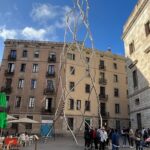








More Barcelona City Tours worth opening.
 ★ 4.4Park Güell Admission TicketFrom $2576,534 reviews
 ★ 4.7Casa Batlló Entry with Self-Audioguide TourFrom $3425,359 reviews
 ★ 4.424 or 48-Hour Hop-On Hop-Off Bus TourFrom $3920,872 reviews
 ★ 4.7Park Guell Guided Tour with Skip The Line EntryFrom $3117,563 reviews
 ★ 5.0Barcelona in 1 Day: Sagrada Familia, Park Guell,Old Town & PickupFrom $12013,541 reviews
 ★ 4.3Barcelona Aquarium: Entry TicketFrom $3113,335 reviews
 ★ 4.8Sagrada Familia Skip-the-Line Entry Ticket & TourFrom $6712,789 reviews
 ★ 4.4FC Barcelona Museum “Barça Immersive Tour” TicketFrom $3510,944 reviews
Continue by place or experience