
REVIEW · BARCELONA CITY TOURS
Street Art, Sculptures & Crime Stories Walking Tour – Barcelona
Street art gets real in Barcelona. This 2.5-hour guided walk connects murals, mosaics, and street-corner details to the neighborhoods that shaped them, with a small group and a local guide who keeps the context clear. In reviews, guides like Liliia and Leila stand out for thoughtful pacing and for answering questions, plus sharing practical picks for coffee and lunch.
The main trade-off is simple: you are walking the whole time, and there are no snacks included. Plan water, wear comfy shoes, and expect some stops to be quick so you can keep moving between stories.
Key Highlights You Should Actually Care About
- Small group size (max 15), so you are not stuck listening over a crowd
- Route is built around stories, from crime-era echoes in El Raval to Picasso-era layers in the Gothic Quarter
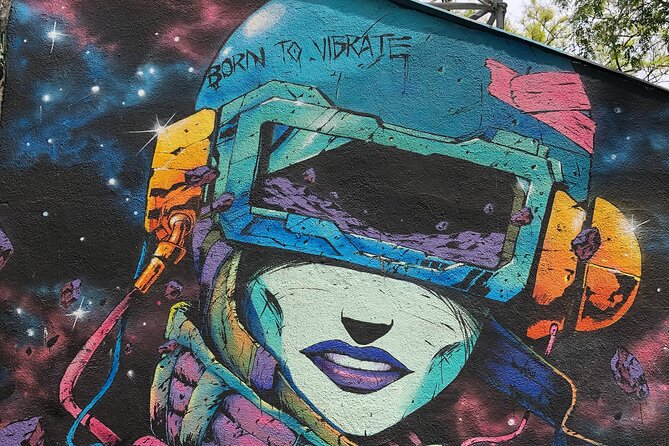
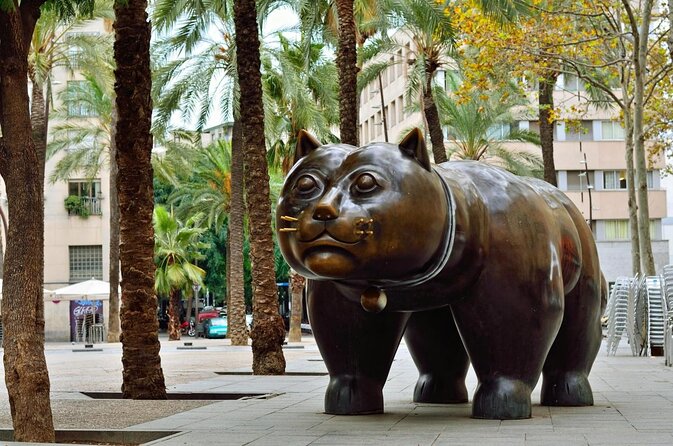
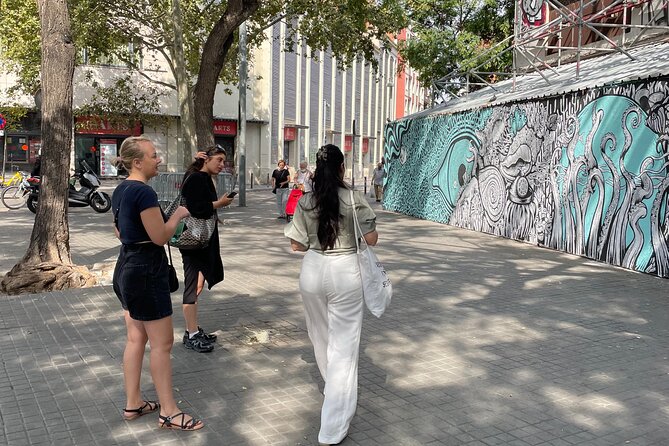
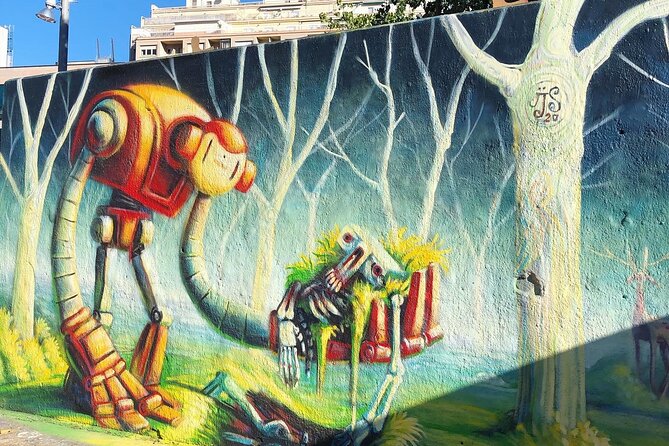
- Mix of art types: big murals, tiny hidden details, mosaics in pavement, and optical illusion pieces
- Admission included on some stops and free access on others, so your budget is easier to manage
- Finish in El Born, close to Ciutadella, where you can keep exploring right after the tour
What You’re Paying For (And Why It Feels Fair)
At $108.37 per person, this is not a budget-only activity. But it does line up with what you get: a guided, story-led walking route that spans four of Barcelona’s most art-rich areas in about 2.5 hours, with English service and a cap of 15 travelers.
The value shows up in three ways.
First, the structure is tight. You are not bouncing between far-flung stops. The itinerary clusters art discoveries in El Raval, La Rambla, the Gothic Quarter, and El Born, then ends in the Born area near Ciutadella. That helps you spend time seeing, not transferring.
Second, the tour includes an admission ticket at certain points (El Raval and the Gothic Quarter), while other segments (La Rambla and El Born) are free to visit. That mix matters because it keeps the walk moving while still letting the guide show works tied to specific places.
Third, you are paying for interpretation. Street art is easy to treat like decoration. This route frames it as social commentary, memorial, and local identity, including references to neighborhood crime stories and major historical moments that shaped what people painted on the walls.
If you want a guided route mainly for photos, you might feel it is pricier than a self-guided app. If you want the “why” behind the art, the cost starts to make sense fast.
You can also read our reviews of more walking tours in Barcelona

Start in El Raval, Where the Walls Hold the Past
El Raval is where the tour’s tone turns serious. This is Barcelona’s gritty, multicultural zone that has long attracted conflict, activism, and survival stories. The art here tends to feel direct. It points at real life, including the dark past and the intense present that people still talk about today.
In this stop, expect your guide to steer you toward several layers of street creativity:
- large-scale murals tied to social struggles and local legends
- smaller, more careful pieces tucked into alleys and doorways
- a site linked to a dramatic historical killing that inspired neighborhood art
- mosaic-style symbols meant to reflect Raval’s rebellious spirit
- extra “in-between” details that show how a danger zone changed into a cultural hotspot
Why this stop works: murals and mosaics are easy to spot when you know where to look. But the guide’s job is to get you to notice the stuff you would miss on your own, especially the tiny works hidden off the main path.
Possible consideration: Raval streets can be visually busy, and this stop is about recognition and meaning, not just watching art go by. If you want ultra-light walking and zero heavy topics, you may find the crime-story framing a bit intense. On the other hand, if you like learning how Barcelona’s streets communicate, this is the heart of the tour.
La Rambla and the Miró Mosaic You Walk Over Without Realizing
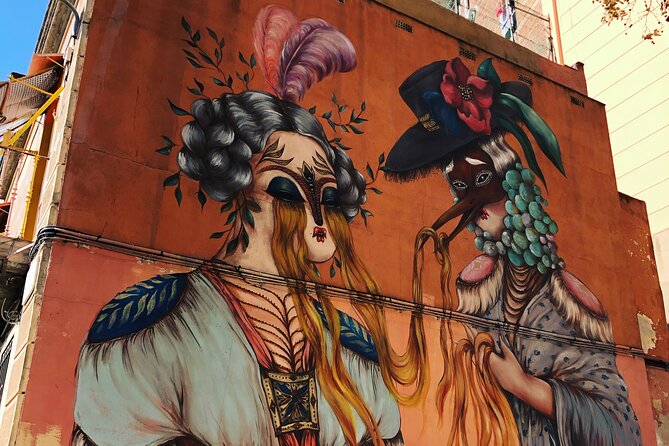
After Raval, the route shifts pace. La Rambla is one of Barcelona’s most recognizable streets, full of people, performers, and old-school landmarks. Even if you already know La Rambla, this stop gives you a reason to slow down.
You are looking for urban art embedded in the everyday flow of the city. The headline moment here is Joan Miró’s mosaic artwork set into the pavement. The guide explains it as a colorful tribute by the Catalan master that many people pass over without noticing.
You also get a second layer:
- contemporary street art by local artists with philosophical themes
- murals and installations focused on identity, freedom, and city life
Why this stop adds value: La Rambla is a classic tourist route, so it can feel like a “walk-through.” With the guide’s focus, it turns into an outdoor art lesson where the art is literally under your feet.
A practical tip: since La Rambla is crowded, you will likely move in short bursts. The guide’s timing matters because you do not want to be stuck waiting for gaps in foot traffic.
Gothic Quarter: Roman Stones Meet Modern Spray Paint
The Gothic Quarter is Barcelona’s old core, where medieval streets and archways still shape how you move. This stop is about contrast: thousand-year-old stone alongside contemporary street art techniques.
Here’s what you can expect the guide to point out:
- modern murals placed so they work with Gothic arches and Roman ruins
- hidden contemporary pieces tucked into ancient alleys and courtyards
- references to iconic artworks connected to Picasso’s early Barcelona days
- urban installations that reinterpret medieval legends
- the dramatic visual clash of old masonry and fresh spray paint
The big win in this segment is the “collision” feeling. You get to see how street artists respond to place, not just permission. When art is placed inside historic architecture, it changes the way you read both. You start noticing how angles, walls, and shadows frame the work.
Possible consideration: this stop is shorter than the Raval segment. That can be great if you want momentum. If you prefer longer time on one neighborhood, you might wish the guide could linger more on the most impressive pieces here.
El Born and Santa Caterina: Optical Illusions and the Staring Building
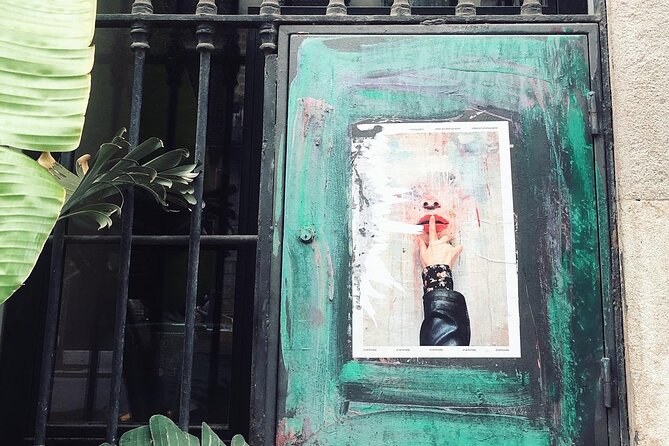
The final neighborhood is El Born, often where people go when they want a mix of art and atmosphere. In this route, El Born is treated like a living gallery, but it is also connected to darker legends that linger in the streets and the architecture.
This is where you shift from reading the past to being tricked by it, in a fun way.
You’ll likely spend time on:
- optical illusion street art made by internationally known local artists
- the famous staring building facade, with windows and details that seem to watch you as you pass
- vibrant murals around Santa Caterina Market
- the market area’s wavy Gaudí-inspired roof as a landmark backdrop
Why this stop is a strong ending: it feels lighter than the crime-story tone of El Raval, without becoming shallow. Optical illusions make you engage with the art. They also help you slow down at the end of a long walk, which is when a lot of people get tired and start missing details.
Practical angle: the tour ends around Born, finishing near Ciutadella. That is convenient because you can transition directly into your own food stop or a final museum-and-market wander.
More Barcelona tours and experiences for the shortlist



How the Guide Changes the Whole Experience
The route details matter, but so does the human. The strongest theme in the feedback is that the guides take time and explain context. Names that come up repeatedly include Liliia and Leila, with comments about friendly, personable delivery and the ability to answer questions without rushing you along.
In practice, that usually means:
- you understand what you’re looking at, not just where it is
- you learn how each neighborhood’s history shaped the art
- you get useful suggestions for what to do next
You also get a practical add-on: a list of recommendations after the tour. Even if you already have your own Barcelona plan, this kind of curated local guidance can fill gaps, especially for coffee and meals.
Two small-but-important notes. First, the tour is offered in English, which is good if you want your street art stories in plain language. Second, it can be customized for your group, which helps if you want more time at one stop or less time at another.
Timing, Group Size, and Meeting Points That Keep You From Stressing
This tour is listed at about 2 hours 30 minutes. That is long enough for a real neighborhood arc, short enough to still fit into a day of museums and meals.
Group size max is 15, which is a big deal here. Street art is detail work. When the group is too large, you spend the tour watching heads in front of you instead of learning from the art. With this limit, you are more likely to actually see what the guide points to.
You meet at:
- Carrer Nou de la Rambla, 105, Ciutat Vella, 08001 Barcelona, Spain
You finish at:
- Carrer Antic de Sant Joan, 7, Ciutat Vella, 08003 Barcelona, Spain
The tour ends in the Born area, not far from Ciutadella, which makes it easy to keep going without backtracking across the city.
One more scheduling detail that can help: the experience is available across a wide daily window (7:00 AM to 8:00 PM). You can usually pick a time that avoids the hottest midday hours if you plan smart.
What to Do Before You Go (So You Get More Out of Every Stop)
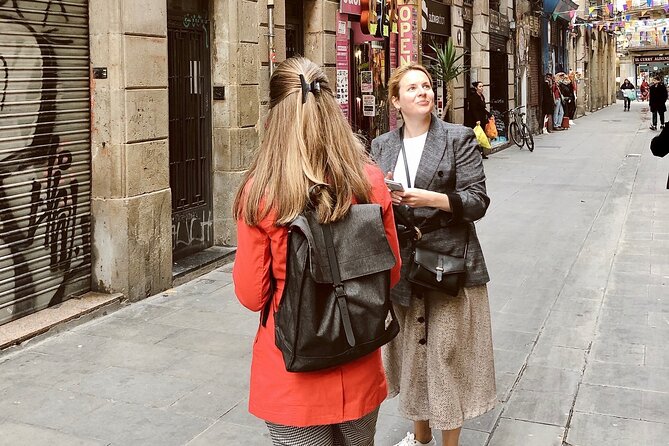
This tour is simple, but preparation makes it better.
Wear:
- shoes you can walk in for a while
- clothes you are okay with getting dusty from street-level walking
Bring:
- water (snacks are not included)
- a charged phone for photos, because street art is easy to miss if you are not capturing what you want to remember
Come with:
- a curious mindset. This route rewards attention to tiny details, like small hidden pieces in doorways and alley corners.
- willingness to hear crime-related neighborhood context in El Raval. It is part of how the art is framed.
If you like art but hate long museum lines, this is a nice alternative. If you love history but get bored by lecture-style tours, the story comes through murals and street details instead of slide decks.
Who This Tour Suits Best
This is a strong match for you if:
- you want Barcelona street art with explanations tied to real neighborhoods
- you enjoy political street art and crime-story context, not just aesthetic photos
- you prefer small-group walking over big bus-style sightseeing
- you want practical local suggestions for food and coffee after the tour
It might be less ideal if:
- you are looking for a mostly light, purely scenic walk
- you are very sensitive to darker historical material
- you dislike walking for a couple of hours without a sit-down stop
Booking Sense Check: Should You Book It?
I’d book this tour if you care about the story behind street art and you like getting off the main tourist track just enough to see details. The combination of El Raval’s intense context, La Rambla’s pavement mosaic moments, Gothic Quarter’s old-stone-and-new-paint contrasts, and El Born’s optical illusions makes it a well-rounded arc for one afternoon or late morning.
Also, the small group limit and the guide-centered format are exactly the kind of details that protect your time. If you have ever done a big walking tour where everyone hears different parts, this smaller size is a good sign.
If your budget is tight, compare it to other Barcelona walks. But if you want a guide to connect art to place, this one reads like value, not just a price tag.
FAQ
How long is the Barcelona street art walking tour?
The tour runs about 2 hours 30 minutes.
Where do I meet, and where does the tour finish?
You start at Carrer Nou de la Rambla, 105, Ciutat Vella, and finish at Carrer Antic de Sant Joan, 7, near Born (close to Ciutadella).
Is the tour offered in English?
Yes, it is offered in English.
What is the group size limit?
The tour has a maximum of 15 travelers.
Are admission tickets included?
Admission tickets are included on the El Raval stop and the Gothic Quarter stop. La Rambla and El Born stops are listed as free.
Are snacks included?
No, snacks are not included.
If you want, tell me your travel month and where you’re staying, and I’ll suggest the easiest time window to start the walk and how to plan your next meal near the Born finish.
More Walking Tours in Barcelona

More Tours in Barcelona



More Tour Reviews in Barcelona
Not for you? Here's more nearby things to do in Barcelona we have reviewed







More Barcelona City Tours worth opening.
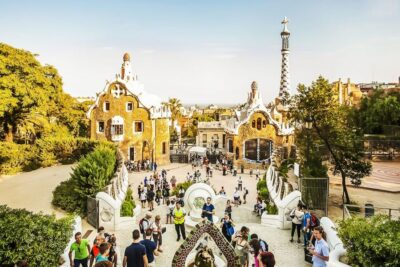 ★ 4.4Park Güell Admission TicketFrom $2576,534 reviews
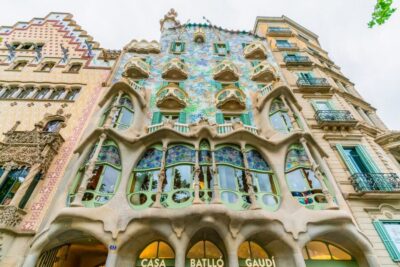 ★ 4.7Casa Batlló Entry with Self-Audioguide TourFrom $3425,359 reviews
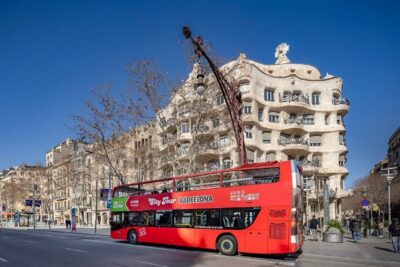 ★ 4.424 or 48-Hour Hop-On Hop-Off Bus TourFrom $3920,872 reviews
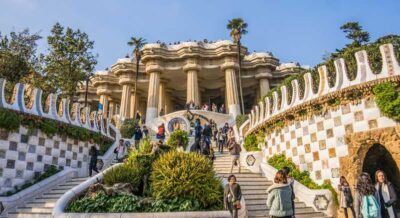 ★ 4.7Park Guell Guided Tour with Skip The Line EntryFrom $3117,563 reviews
 ★ 5.0Barcelona in 1 Day: Sagrada Familia, Park Guell,Old Town & PickupFrom $12013,541 reviews
 ★ 4.3Barcelona Aquarium: Entry TicketFrom $3113,335 reviews
 ★ 4.8Sagrada Familia Skip-the-Line Entry Ticket & TourFrom $6712,789 reviews
 ★ 4.4FC Barcelona Museum “Barça Immersive Tour” TicketFrom $3510,944 reviews
Continue by place or experience