
REVIEW · BARCELONA CITY TOURS
The Secret of Cerdà – Barcelona
A good city game beats another walking tour. This one turns Barcelona’s historic center into a puzzle route, using Cerdà’s 1856 plan as the thread from stop to stop. I like that you are not just looking, you are solving, so the streets and buildings start to feel personal instead of just scenic.
One thing to weigh before you book is value. At $26.36 per person, it can feel a bit steep if your group is mostly adults and expects lots of staff time during the game, since it is set up like a self-guided mystery once you start.
Key things to know before you go
- A 3 km walk with about 2 hours of play time, focused on the historic center and the Eixample story
- Mobile ticket + private group experience, so your party plays without mixing with strangers
- Clues and puzzles on the street, designed to get you noticing details you might skip on your own
- A clear stop sequence, Palace of Catalan Music, Eixample, Manzana de la Discordia, then Plaza de Catalunya
- Family-friendly pace, with kids able to engage alongside adults
- A small end-of-game prize (a pin), which some people will love and others will find underwhelming
A Walking Puzzle Through Barcelona’s Cerdà-Eixample Story
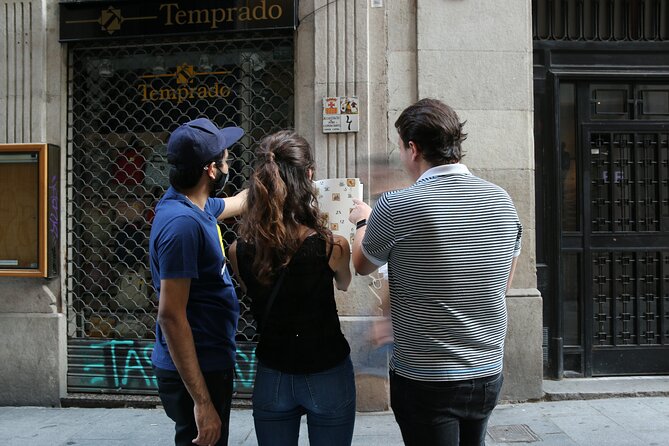
If you like Barcelona but feel you have already done the checklist, this kind of game is a smart reset. The Secret of Cerdà is built around a simple premise: in 1856, Barcelona needed to grow, and Ildefons Cerdà’s design was chosen for the new city. From there, you peel back layers as you walk, with the mystery tying your route to the iconic Eixample expansion.
What makes it interesting is the way it reframes the city. Instead of you passively absorbing explanations, you actively work through clues. That is a different way to learn, especially if your travel style is more hands-on than lecture-based.
I also like the tone of the experience. It is not trying to be an escape room in a basement, it is about turning the streets into your “game board.” You keep moving, you compare what you see with what the puzzles ask, and you learn true stories as the city unfolds in front of you.
You can also read our reviews of more tours and experiences in Barcelona.



How the Game Works: 3 km, 2 Hours, and a Mobile Ticket
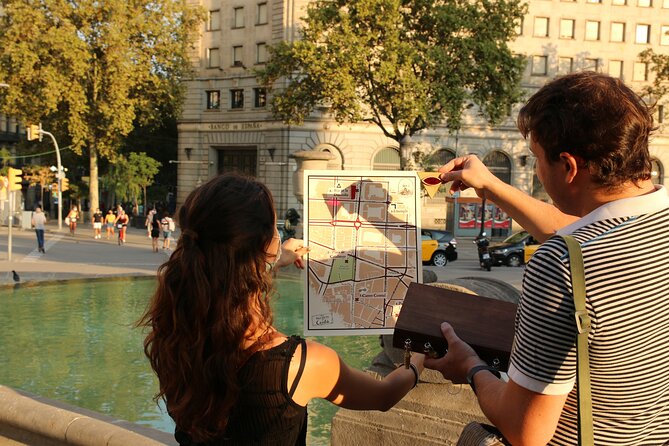
Plan on roughly 2 hours of play for a route of about 3 km through the city center. You will be walking between four key areas, and the experience is designed so you can play at your own pace within that window.
The format is straightforward:
- You start at a set meeting point
- You receive a mobile ticket, which keeps check-in low-stress
- You follow the route and solve puzzles as you go
- You end back at the same meeting point
In practical terms, this matters because you can fit it into a day of sightseeing without turning your schedule into a math problem. Two hours is long enough to feel like an activity, short enough that you can still eat, wander, and pivot if you stumble on a side street worth your time.
Also, the route is offered in English, and it is additionally available in Spanish, Catalan, and French. So even if your group has mixed language comfort, you should have options.
Stop by Stop: Palace of Catalan Music and the Eixample Stretch
Your journey begins at Carrer de Trafalgar, 17, in L’Eixample (08010 Barcelona). From there, the first stop is the Palace of Catalan Music. Even if you already know the landmark by name, treat this part like a warm-up. Early in the game, you are basically learning the rhythm: look around, read the prompt, then work out what clue the street is asking you to find.
Next you move into the Eixample segment of the route. This is where the Cerdà theme becomes more than just a name on a ticket. The game is built to connect what you are seeing to the broader idea of Barcelona’s expansion and planning. You will be solving puzzles as you go, so your eyes stay busy and your brain has something to do besides “where is the next famous building.”
Why I think this structure works: Eixample can sometimes feel like architecture you admire but do not fully understand unless someone points out the story behind it. The puzzle format forces that connection. You are not learning because someone told you, you are learning because the clue demands it.
If you like city tours where you get to stop, observe, and then instantly connect the dots, this is a good match. If you hate anything that resembles a scavenger hunt, you may want to mentally switch expectations before you start, because the activity depends on solving.
Manzana de la Discordia: When the Streets Become a Clue
After the Eixample section, the game takes you to Manzana de la Discordia. This stop is one of the points where the activity can feel especially fun, because the mystery encourages you to look closely at the details you might normally walk past.
The overall theme stays consistent: you are peeling back layers of Barcelona’s story through prompts and puzzles. But at this stage, you usually hit a comfortable groove. You know how the game asks for answers, and you are less likely to feel lost.
This matters for groups. If you are traveling with friends or family, the Manzana de la Discordia stop is often where teamwork pays off. People naturally split roles: one person scans for visual cues, another reads instructions, and someone else cross-checks logic. You end up doing the tourist thing, plus the friend thing, all at once.
Plaza de Catalunya Finish: Keeping Momentum to the End
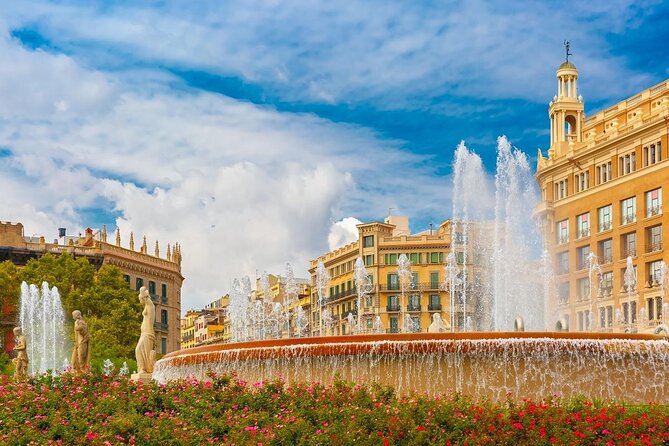
The last stop on the route is Plaza de Catalunya. By the time you reach this area, you have already worked through enough clues that the ending feels earned rather than rushed.
The best part about finishing here is practical. Plaza de Catalunya is a familiar hub area for many visitors, so once the game ends and you are back at the meeting point, you can easily continue your day with food, rest, or more walking. Since the activity ends back at the same starting point, you do not have to solve a second logistics problem while you are tired.
One small note to calibrate expectations: there can be a small end-of-game prize, and at least one group found it smaller than they hoped. If you are the kind of traveler who cares more about the learning and the fun than the souvenir, you will likely be fine. If you expect something big, you might feel a little let down.



Who This Suits Best, and When It Might Not
This is best for people who want to see Barcelona in motion, not just in photos. I think it fits especially well for:
- Groups of friends who enjoy puzzles and light competition
- Families with kids old enough to follow instructions and take turns
- Anyone who likes the escape room vibe but prefers it outdoors
It is also useful for Barcelona citizens who want to learn facts without sitting through a formal lecture. A game like this turns everyday streets into something new to notice. That is a big deal, because local knowledge is often built through repeated looking. The puzzles speed up that process.
Where it might not fit as well:
- If you are traveling solo and do not particularly enjoy solving puzzles
- If your group expects a fully guided, staff-led tour for the entire 2 hours
- If $26.36 per person feels high for your group size or budget, given that the game becomes self-directed after you start
In other words, it is not “a history lecture with breaks.” It is a walking puzzle with history woven in.
Price and Value: What $26.36 Buys You
The price is $26.36 per person for about 2 hours and roughly 3 km of play. That sounds straightforward, but value depends on your expectations.
Here is how I would evaluate it:
- You are paying for a structured activity that controls time, route, and pacing.
- You are not paying for a long, fully staff-led guided tour, since much of the work is done through the game materials and your group’s problem-solving.
- You are paying to turn sightseeing into an interactive challenge, which can make the learning stick longer than a traditional walk-and-listen format.
If your group enjoys that kind of format, it is easy to justify. If you are traveling with adults who prefer passive sightseeing, the same structure can feel overpriced, especially if you expected staff to do more during the walk.
One practical strategy: treat it like you are buying a guaranteed experience, not just “a walk.” If it makes you look at details differently, it is worth it. If you would have walked the same route anyway with no problem-solving element, you might feel the cost more sharply.
Practical Tips for a Smooth Mystery City Game
A little prep makes a big difference with any street-based puzzle.
First, keep your group roles simple. One person can handle reading, another can scan for clues, and a third can keep time so you stay within the 2-hour rhythm. The route is about 3 km, but your pace depends on how quickly you solve.
Second, pay attention to the diary. One of the best practical tips I saw is that the diary is treated as essential. So do not assume you can skip it. Even if you think you will rely on your phone, keep the diary with you and use it as the game intends.
Third, plan your start so you are not rushing. You meet at Carrer de Trafalgar, 17, and the experience ends back there. If you show up late, you start playing late, and then the game pressure rises and enjoyment drops.
Finally, if you are sensitive to crowding or logistics, look for nearby public transportation and give yourself a cushion. The tour notes that it is near public transit, which is helpful when you are juggling trains, buses, and other plans.
If you need flexibility, free cancellation is available if you cancel at least 24 hours before the start time, based on local time. That is a nice safety net if weather, energy levels, or schedule changes.
A Quick Reality Check Before You Book
Should you book The Secret of Cerdà? Here is my honest take: book it if you want a new way to explore Barcelona’s historic center and you enjoy solving problems while you walk. It is especially good for families and groups who want shared fun, not just shared photos.
Skip or rethink it if your ideal trip is mostly guided narration, because this experience runs on puzzle-solving once you begin. Also, set expectations about the end-of-game prize, since at least one group reported it was only a pin.
If you are on the fence, use this simple checklist:
- You enjoy interactive activities during sightseeing
- Your group can work together on clues
- You are excited to learn through your own observations
- You want a 2-hour, around-3 km plan that does not swallow your whole day
If those boxes are true, you are likely to have a great time with the Cerdà story.
FAQ
How long is The Secret of Cerdà in Barcelona?
It takes about 2 hours of play time.
How far do you walk during the game?
The route is about 3 km through Barcelona’s city center.
What does the tour cost?
The price listed is $26.36 per person.
Where do you meet for the activity?
The meeting point is Carrer de Trafalgar, 17, L’Eixample, 08010 Barcelona, Spain.
What are the main stops during the experience?
You pass through Palace of Catalan Music, the Eixample area, Manzana de la Discordia, and Plaza de Catalunya.
Is it available in English?
Yes. The experience is offered in English.
Is the tour private?
Yes, it is private, and only your group participates.
Do you use a mobile ticket?
Yes, it includes a mobile ticket.
Is it good for families or kids?
It is designed so most travelers can participate, and it is described as a great activity for groups of friends or families.
What is the cancellation policy?
Free cancellation is available up to 24 hours in advance for a full refund, based on local time.
More Tour Reviews in Barcelona
Not for you? Here's more nearby things to do in Barcelona we have reviewed









More Barcelona City Tours worth opening.
 ★ 4.4Park Güell Admission TicketFrom $2576,534 reviews
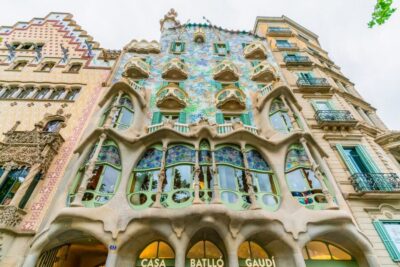 ★ 4.7Casa Batlló Entry with Self-Audioguide TourFrom $3425,359 reviews
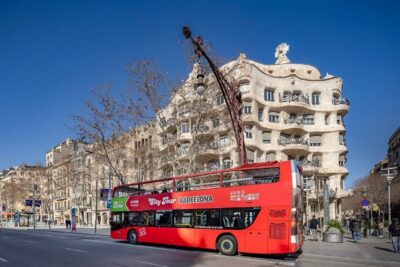 ★ 4.424 or 48-Hour Hop-On Hop-Off Bus TourFrom $3920,872 reviews
 ★ 4.7Park Guell Guided Tour with Skip The Line EntryFrom $3117,563 reviews
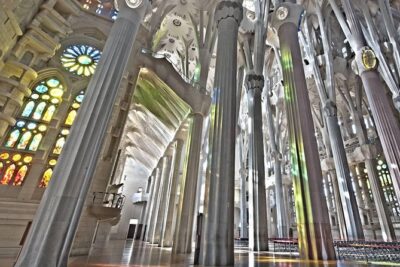 ★ 5.0Barcelona in 1 Day: Sagrada Familia, Park Guell,Old Town & PickupFrom $12013,541 reviews
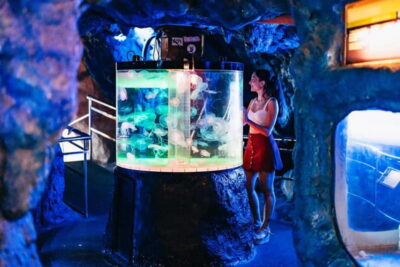 ★ 4.3Barcelona Aquarium: Entry TicketFrom $3113,335 reviews
 ★ 4.8Sagrada Familia Skip-the-Line Entry Ticket & TourFrom $6712,789 reviews
 ★ 4.4FC Barcelona Museum “Barça Immersive Tour” TicketFrom $3510,944 reviews