
REVIEW · BARCELONA CITY TOURS
Raval Street Art and Graffiti Guided Tour in Barcelona
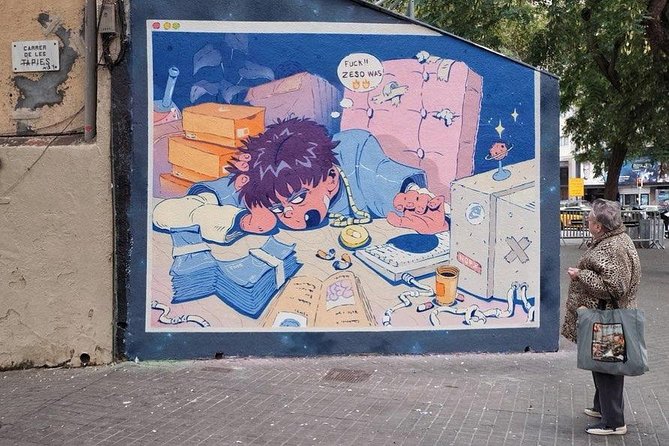
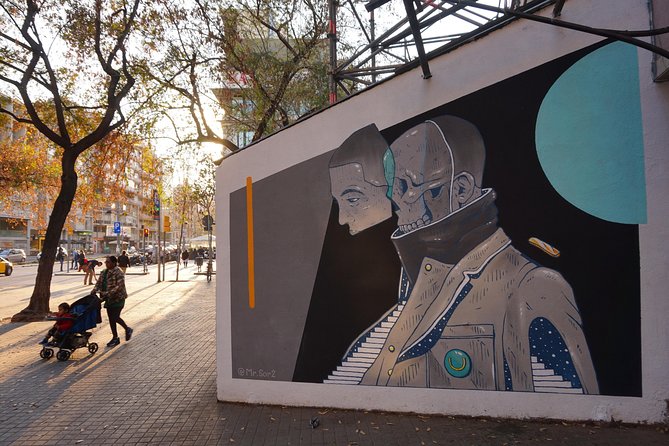
If you think graffiti is just random scribbles, Raval will change your mind. This small-group street art tour threads art, neighborhood history, and real local hangouts into a walk you can actually follow. You’ll see walls, shutters, and street details you’d otherwise miss, plus time at Tres Chemineas, the skate spot locals talk about.
Two things I really like are the small group size (max 15, so you get real conversation) and the way your guide ties each piece to who made it and what it meant. Guides like Juan, Olga, Jeanne, and Anaïs bring different angles, but the common thread is clear, practical interpretation of what you’re looking at.
One drawback to keep in mind is logistics. The tour ends near MACBA, and there have been occasional issues when people go to the ending location first, so double-check that first meeting point address before you head out.
Key Highlights You Should Care About
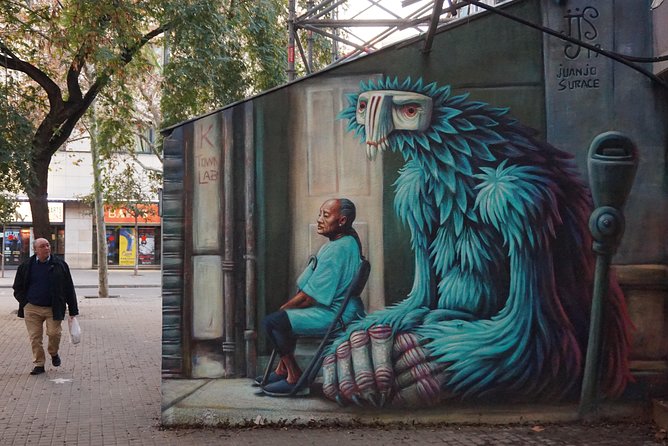
- Small-group pace keeps questions flowing, not just photo stops.
- Guides with street credibility (Juan is a street artist himself in one case) explain technique and context in plain language.
- Raval side streets, not tourist-only views means you’ll see the city through local eyes.
- Tres Chemineas stop connects graffiti culture to everyday street life.
- A route that finishes central makes it easy to keep exploring right after the tour.
Street Art Turns Raval Into a Living Museum
Raval is the kind of Barcelona neighborhood where the street itself looks like a scrapbook. Every corner can carry layers: old walls, newer paste-ups, tags, bigger murals, and the small details that usually get ignored while you’re hunting for the big sights.
What makes this tour work is that it treats street art like a language. You don’t just get to look, you learn how to read it. That matters in Raval, because the art is often tied to identity, protest, humor, and the constant push and pull between people who live there and people who arrive.
You can also read our reviews of more guided tours in Barcelona


Price and Value for a Two-Hour Walk
At $32.58 per person for about two hours, you’re paying for three things: a local guide, a focused route through street-level art, and interpretation you can’t easily guess on your own. This is not a museum with timed entry, it’s a guided street hunt, so the value comes from what you’re shown and what you’re taught to notice.
Also, the group size helps the math. With a max of 15, you’re more likely to get personal attention and better explanations. If you love learning by walking, this price usually feels fair.
Group Size, English, and What That Means for Your Experience
This is offered in English, and it’s set up as a maximum of 15 travelers. In practice, that small number matters because street art tours can get “walk, point, move on” when groups are big. Here, the format is built to slow down enough for questions.
Most travelers can participate, and service animals are allowed. You’ll still be on your feet for a guided walk, so comfortable shoes are a smart idea.
Meeting Point in Sant Antoni, End Point Near MACBA
The tour starts at Jardins Talía, Sant Antoni, Eixample, 08015 Barcelona, Spain. It ends at Museu d’Art Contemporani de Barcelona, Plaça dels Àngels, 1, Ciutat Vella, 08001 Barcelona.
That end location is a strong plus. It puts you near central sights and transit, so after the walk you can keep going without feeling stuck back in the outskirts. It also means you should plan your day around an easy finish in the Ciutat Vella area.
Start Smart: Avoid the Common Meeting Point Mix-Up
Here’s the practical tip that can save you stress. The tour ends near MACBA, and there have been cases where people accidentally went to the ending spot first, because some maps or apps route you there.
Before you leave, save the exact start address and use it as your anchor. If you’re meeting right at the start time, give yourself extra buffer to find Jardins Talía, Sant Antoni. It’s the kind of area where a few wrong turns can cost you time.
More Barcelona tours and experiences for the shortlist





From City-Center Streets Into Raval’s Old-Popular Neighborhood
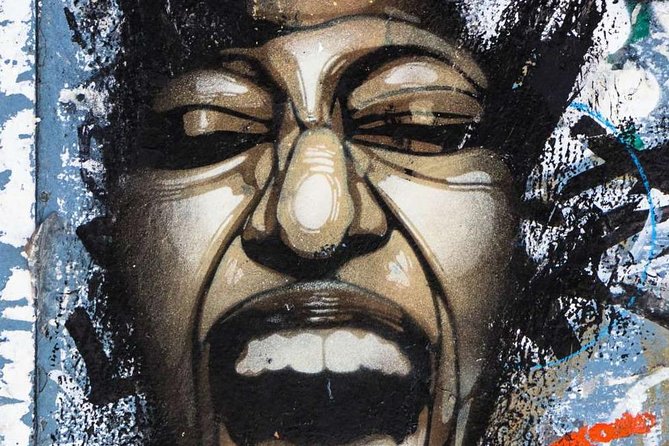
The route begins with a local-style introduction to the antic popular neighborhood feel in the city center. Translation: you’re not just seeing street art on a postcard route. You’re walking through a real neighborhood fabric, with older streets and everyday life as the backdrop.
This part of the tour usually sets your “reading glasses” for what’s coming next. You start noticing how artists place work where people actually pass, not where tourists happen to stop. You also get a sense of how the neighborhood changed over time, including why the art can feel political and personal, not random.
If you care about social context, this section matters. Raval’s street art often acts like a commentary track for what’s happening in the community.
Your Raval Stop: How Guides Explain Artists and Meaning
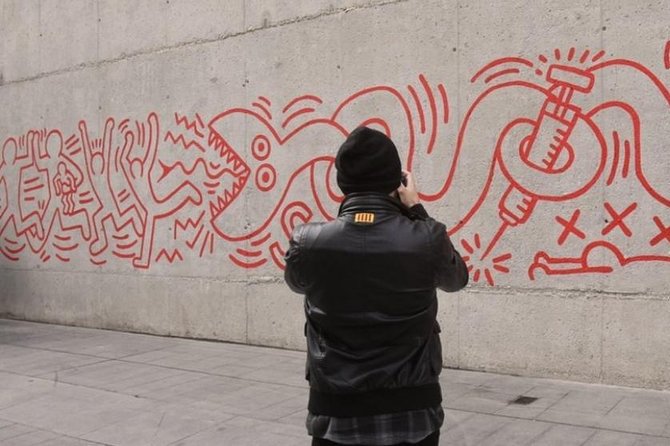
The heart of the tour is the guided walk through Raval’s street art scene, with time to see and talk about different works. You’re not only looking at surfaces. You’re learning how artists use formats and placement to communicate.
In real life, guides tend to highlight:
- style differences, like tags versus bigger pieces
- why some work appears where it does
- how messages shift when neighborhoods shift
One review theme that comes up often is that guides also talk about artists as people. Guides like Juan, who is a street artist himself, can connect technique to intent. Guides like Olga are known for weaving in the art community angle, so you come away with more than just pretty walls.
Tres Chemineas: The Skate Spot Moment That Feels Local
A standout element is a hang around at the legendary skate spot, Tres Chemineas. This isn’t added as a random stop for a quick photo. It’s there to connect street art to the street culture that helps it live.
Skate spots and street art share a mindset: making space where there wasn’t one, and building identity through visible creativity. When you take the time to pause here, it helps the rest of the walk click. You start to see graffiti not as decoration, but as part of neighborhood rhythm.
Optional Detours You Might Get, Like Church History and Secret Courtyard Access
Not every walk is identical, but guides sometimes add story-driven side stops when the route and timing allow. For example, one guide, Juan, is described as explaining the oldest church in the area and how it predates the gothic churches while still being used.
Another standout detail from the experience notes is access to a secret garden spot, with a key required to get in, and an introduction through community activist Flora, who has been linked to the space for decades.
You should treat these as “you might get this” moments rather than guaranteed inclusions. Still, the fact that your guide can unlock or explain them is a sign of something important: this tour is built around relationships and local storytelling, not just a fixed script.
What You’ll Learn About Street Art Without Needing an Art Degree
Street art can look chaotic until you know what to pay attention to. This tour helps you slow down and notice the craft and decisions behind what you see.
You’ll likely leave with better instincts for:
- reading details on shutters, not just murals on walls
- spotting paste-ups and smaller work above street signs
- understanding how artists use public space to respond to the neighborhood
Also, there’s a big theme of photo-friendly learning. People often come away with lots of pictures, but more importantly, with the ability to explain what they photographed. After a good tour, the city stops being a background and starts being a visual conversation.
Pace and Comfort: Two Hours Works Best When You’re Ready to Walk
This is about two hours. That’s a sweet spot for a neighborhood art tour because it gives enough time to see multiple areas and still keeps you from getting “tour fatigue.”
Still, it’s a walking tour. Plan for uneven sidewalks and neighborhood crossings. If you’re using public transport to get to the meeting point, aim to arrive early, then settle in and let your guide set the pace.
Also, don’t expect the experience to be silent. The magic is in the explanations. If you’re the type who likes asking questions, this size and duration make that realistic.
Who This Tour Fits Best, and Who Might Skip It
I’d recommend this for you if you want:
- an off-the-beaten-path look at Barcelona that feels local
- street art context, not just a list of murals
- a small-group format where you can actually talk
It can be a bit less satisfying if you’re expecting a long, deep dive into every nook of Raval with hours and hours of wandering. The experience is structured and time-bound, so you’ll see key works and themes, not every street-level detail the neighborhood has.
Also, if you’re extremely sensitive to itinerary changes due to weather or operational issues, consider building in flexibility. There have been cancellations and reschedules linked to a guide accident or missed arrival, though refunds were handled in those cases.
How to Plan Your Day Around the Tour
I like tours like this early in your trip. Once you’ve learned to read the city, everything you see later feels more meaningful. You’ll spot street-level art everywhere, and you’ll understand why it shows up where it does.
Because it ends near MACBA, plan a next stop that uses that location. Grab a coffee, wander nearby streets, or visit another central attraction while the neighborhood stories are still fresh in your head.
Quick Take: Should You Book This Raval Street Art Tour?
Book it if you want a guided street art experience with strong interpretation, a small-group feel, and a stop at Tres Chemineas. The overall reputation is excellent, with a high recommended rate and top scores tied to guides who are passionate, story-driven, and able to connect art to neighborhood reality.
Skip or think twice if you’re the type who needs absolutely predictable operations with no risk of last-minute change. Also, double-check the meeting point carefully, because start and end locations are close enough to cause confusion in map apps.
If you bring good walking shoes and a curious mindset, this is one of those Barcelona tours that helps you see the city like you live there, not like you’re passing through.
FAQ
How long is the Raval Street Art and Graffiti Guided Tour?
It runs for about 2 hours.
How large is the group?
The tour has a maximum of 15 travelers.
What language is the tour offered in?
The tour is offered in English.
Where do I meet the guide, and where does the tour end?
You meet at Jardins Talía, Sant Antoni, Eixample, 08015 Barcelona, Spain. The tour ends at Museu d’Art Contemporani de Barcelona, Plaça dels Àngels, 1, Ciutat Vella, 08001 Barcelona.
What’s included in the price?
You get a local guide and the street art experience focused on artistic talent and the Barcelona art scene in Raval. Food and drinks are not included.
Can I get a refund if plans change?
Yes. You can cancel up to 24 hours in advance for a full refund. If you cancel less than 24 hours before the start time, the amount paid will not be refunded.
More Guided Tours in Barcelona


More Tours in Barcelona




More Tour Reviews in Barcelona

Not for you? Here's more nearby things to do in Barcelona we have reviewed









More Barcelona City Tours worth opening.
 ★ 4.4Park Güell Admission TicketFrom $2576,534 reviews
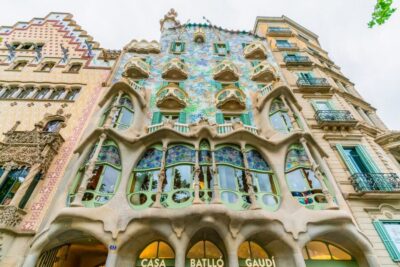 ★ 4.7Casa Batlló Entry with Self-Audioguide TourFrom $3425,359 reviews
 ★ 4.424 or 48-Hour Hop-On Hop-Off Bus TourFrom $3920,872 reviews
 ★ 4.7Park Guell Guided Tour with Skip The Line EntryFrom $3117,563 reviews
 ★ 5.0Barcelona in 1 Day: Sagrada Familia, Park Guell,Old Town & PickupFrom $12013,541 reviews
 ★ 4.3Barcelona Aquarium: Entry TicketFrom $3113,335 reviews
 ★ 4.8Sagrada Familia Skip-the-Line Entry Ticket & TourFrom $6712,789 reviews
 ★ 4.4FC Barcelona Museum “Barça Immersive Tour” TicketFrom $3510,944 reviews
Continue by place or experience