
REVIEW · GOTHIC QUARTER TOURS
Gothic Quarter Insights & Tapas Experience
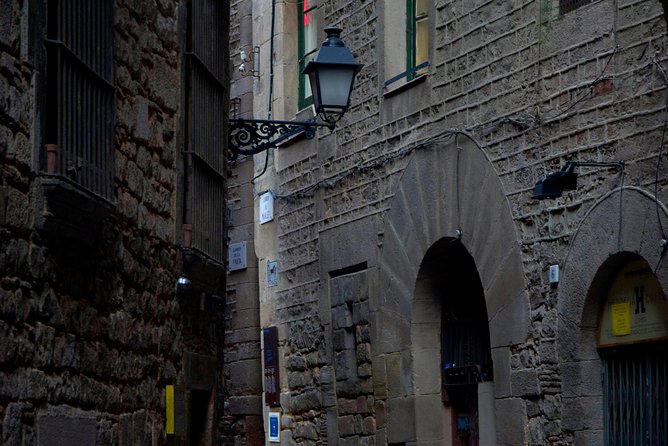
Barcelona’s medieval maze is a smart afternoon plan.
This 2.5-hour Gothic Quarter walk lines up landmark stops from Plaça Nova to Santa Maria del Mar, with a guide who works in multiple languages. You also stay fueled with a built-in pintxo moment at the end.
I especially like how the tour ties the streets together into one story, from Roman foundations up through medieval Barcelona. I also like the simple value add, one pintxo and one drink included, so you get a real taste of the area without hunting for a place first. One thing to consider, it is a walking-focused tour, so bring comfortable shoes and be on time at the meeting point.
Quick hits
- Plaça Nova’s Barcino letters: giant bronze and aluminum characters tied to Joan Brossa’s alphabet art
- Roman-to-medieval transitions: you pass the Cathedral area and the Portal del Bisbe context tied to Roman walls
- Casa de l’Ardiaca details: courtyard, Renaissance-style touches, and a terrace reached by a staircase
- Small squares with character: Sant Felip Neri and Placeta del Pi open up the maze and slow you down
- Temple d’August columns: four surviving columns more than 2,000 years old
- Pintxo and drink at the finish: a practical stop that also helps you learn what a pintxo is
A strong plan for an afternoon in the Gothic Quarter
This tour is built for a very specific Barcelona moment: late afternoon, when you want the old city to feel walkable and not rushed. It starts at 3:30 pm and runs about 2 hours 30 minutes, so you get time for the big sights plus time to breathe between them.
The group stays small, with a maximum of 20 people, which matters in tight medieval streets. And since the guide is available in English (with a multilingual set up that can include English, Spanish, French, and Italian), you are not locked into one style of telling the story.
My favorite part of this format is the rhythm. You get a sequence of stops that move from one layer of the city to the next, instead of bouncing around without context. The included snack also changes how the tour feels, because you can keep moving without spending extra time deciding where to eat.
You can also read our reviews of more tours and experiences in Barcelona.
Starting at Lamaro Hotel, then finding Plaça Nova’s Barcino letters
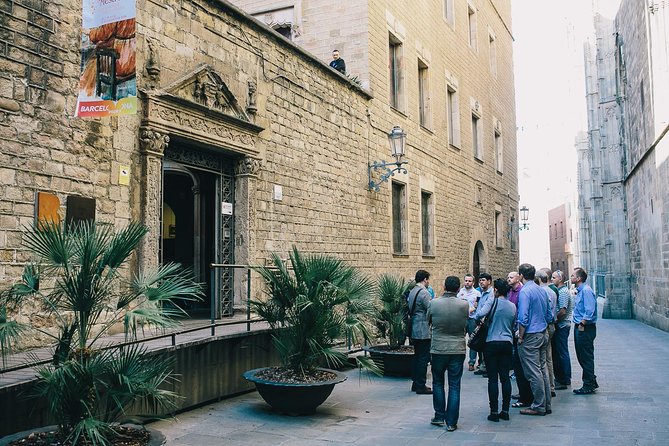
You meet at Lamaro Hotel Barcelona, Av. de la Catedral, 7, Ciutat Vella, and the tour ends back at the same place. That makes this one easier to plug into your day, whether you are staying nearby or using public transport for access to the Gothic area.
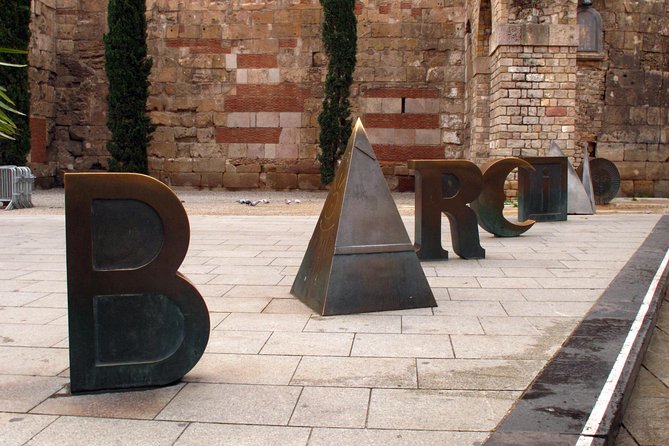
From the start, you are aimed at Plaça Nova. The highlight here is the seven giant letters that spell Barcino, part of Joan Brossa’s alphabet concept. Six letters are made of bronze, one is aluminium, and they sit bolted to the ground right in front of historic surroundings.
This stop is fun because it is not just “look at a building.” You are looking at a modern artistic layer placed into an ancient setting. It gives you an instant sense of how Barcelona often works, old and new stacked together, not separated into neat eras.
A practical tip: the starting zone can get busy, especially if there is a street fair atmosphere. One guide was easy to spot because she used a red umbrella, so if your meet-up feels chaotic, watch for something distinctive like that.
Cathedral area and the Portal del Bisbe context
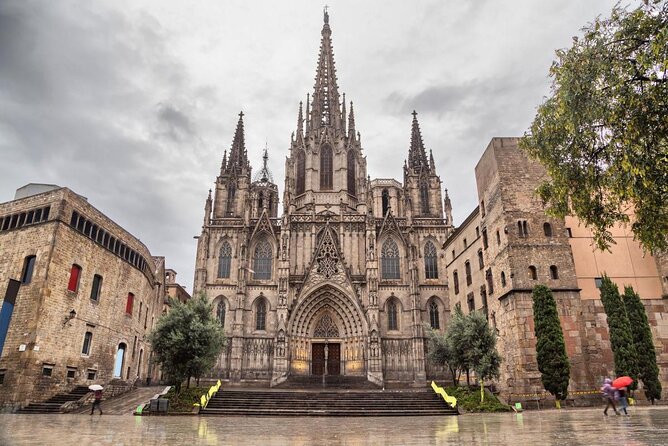
After Plaça Nova, you move into the heart of the medieval religious landscape at the Catedral de Barcelona area, including the Palace of the Bishop idea and how it connects to the walled city. The way this gets explained is useful if you tend to see churches as single dates. Here, you get the sense of how the city kept reusing and adapting space, including building “new episcopal Barcelona” in relation to Roman foundations.
A nearby spotlight is the New Square, opened in front of the Porta Praetoria of the Roman wall, known locally as the Portal del Bisbe. You also learn the practical reason behind the square’s creation, water being channeled to Collserola and buildings being demolished so the portal could face the open space.
This is a great stretch for photos because the setting helps you orient quickly. If you want to walk the Gothic Quarter later on your own, this part gives you a mental map, not just a list of stops.
The time is short here, around 5 minutes per stop, so it is not a lecture marathon. Still, if you are the type who wants a lot of legends and dramatic storytelling at every corner, you might find this portion more focused on architecture and city structure.
Casa de l’Ardiaca: the 12th-century ecclesiastical home
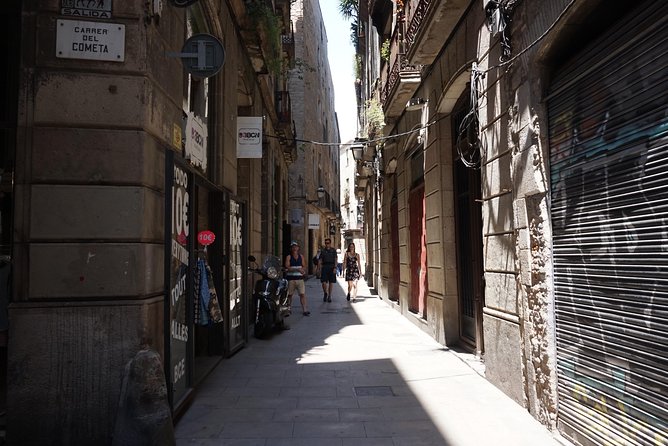
Next up is Casa de l’Ardiaca, described as a residence for the ecclesiastical hierarchy from the 12th century onward. The value of this stop is in the layers. The building has been altered over time, including early 16th-century work that connected it with the dean’s residence.
You also get the central courtyard with a porticoed layout and Renaissance-style decorations that tie into the flamboyant Gothic feel of the original building. Then there is the physical detail that makes it feel real, a staircase leading up to a terrace that is compared to a Romeo and Juliet-style balcony.
This is one of those stops where you can easily imagine daily life, not just big monuments. It also helps you understand why the Gothic Quarter feels like a series of rooms you move through, squares, courtyards, and terraces tucked into the street plan.
Sant Felip Neri and Placeta del Pi: where the maze opens up
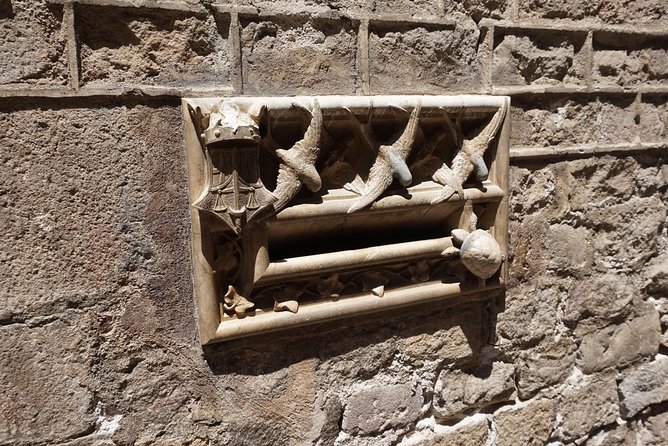
The Gothic Quarter is often best understood through its surprises. Placa Sant Felip Neri is exactly that kind of stop, because it feels like a pocket that suddenly appears from the tight streets.
Here you are looking at a tiny square with a fountain and the baroque church of Sant Felip Neri watching over it. You also see evidence of old guild presence in the building sides, once home to the city’s shoemakers’ and coppersmiths’ guilds.
Then the walk rounds into Placeta del Pi, another “pause” moment. This one is built around a Gothic basilica and the two surrounding squares, plus the transformation of older cemetery space into the kind of small art and artisan areas where painters and artisans exhibit their work.
These stops matter because they change your pace. Instead of rushing from one major site to the next, you get short resets where the city feels human scale. If you plan to do the Gothic Quarter on your own afterward, you will remember these kinds of corners, because they break up the labyrinth feeling.


Plaça del Rei: the medieval royal palace feel
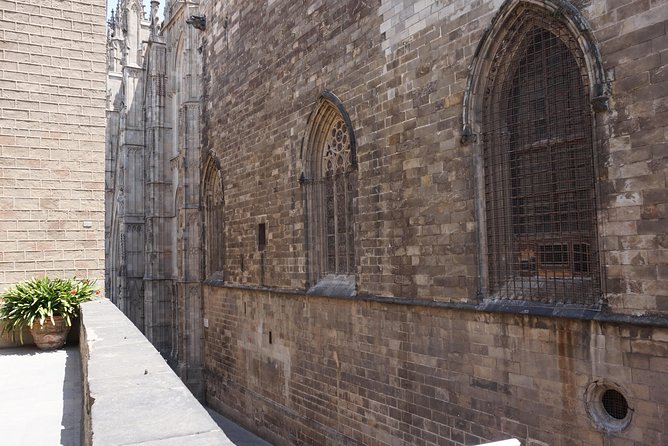
Plaça Del Rei is where the tour slows you down mentally, even if the stop itself is brief. This Conjunt Monumental is presented as the Gothic architectural ensemble that best exemplifies Barcelona’s medieval past.
What you see, in simple terms, is a peaceful square enclosed by the royal palace and surrounding buildings, including the Palau Reial Major. It is framed as a place that still carries the medieval atmosphere of Barcelona.
If you have never visited medieval civic and royal spaces, this is a helpful primer. Instead of only focusing on church buildings, you get a sense of how power, governance, and ceremony shaped the city plan.
This also makes the following stops land better. After you understand the medieval “center of gravity” here, the older Roman and imperial references around the corner feel less random.
MUHBA Temple d’August: four surviving Roman columns
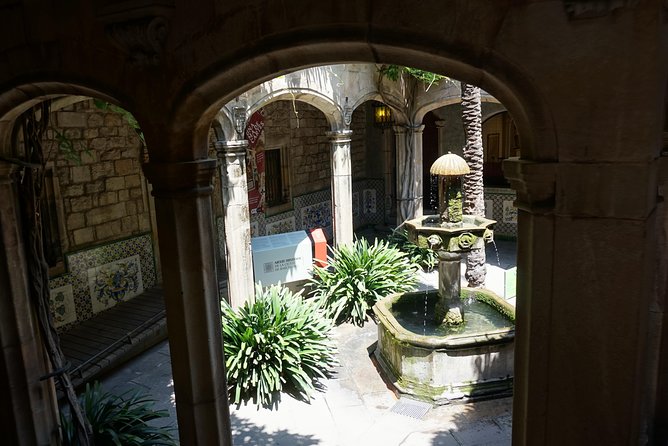
This is one of the most compelling “wait, really?” moments on the route: MUHBA Temple d’August. In a small medieval courtyard on Carrer Paradís, four columns from the Temple of Augustus have survived for over 2,000 years.
The practical value is how this stop changes your sense of depth. Walking the Gothic Quarter often makes you think you are only seeing medieval stone. This stop forces a new layer into the picture, and it does it with a small set of objects that are easy to focus on.
If you love archaeology-in-the-city details, this stop is a payoff. Even if you are not, it helps you connect the dots between Roman remains and later reuse of the area.
It is also a good spot for a break. You get a little courtyard calm before moving again.
Santa Maria del Mar: the neighborhood-built medieval cathedral
Then comes Basilica de Santa Maria del Mar, presented as the “real cathedral” of the Old Town because it was founded and built by people from the neighborhood. The tour frames it as an emblem of Catalan Gothic art and calls it a must-see in the Gothic Quarter.
This stop is powerful because it is tied to community building, not just royal or clerical design. Even if you are not studying architecture, you will feel the difference in how the story is told, grounded in local participation and medieval identity.
If you like church interiors and clean sightlines, plan your attention here. The stop is about 10 minutes, so you will want to decide early what you are going to look at first.
I also like that this stop balances the religious theme across the route. Earlier, you had the bishop palace and the Cathedral setting. Here, you get a different angle on what made the old city “work,” neighborhood effort and a defining Gothic landmark.
Carrer de Montcada: medieval civic architecture in a single street
The tour finishes its main sight sequence with Carrer de Montcada, described as the most important area of medieval civic architecture in the city. This street stretches from a Romanesque Marcus chapel in the 12th century to Plaça del Born.
There is also a clear explanation of how the street changed over time. It used to be all one single street, but in the 19th century it was divided into two by the opening of Carrer Princesa in 1853.
Finally, the street name comes from the Montcada family, tied to land in the 12th century associated with support provided to King Ramon Berenguer IV during the conquest of Majorca.
This is a great wrap-up stop, because it gives you a “walkable takeaway.” You can picture the kind of buildings that might line other medieval streets, and you have a specific story to attach to what you see next if you keep exploring.
The pintxo and drink stop: practical, and it teaches you the local snack culture
After all the walking, you get your included meal moment, which means you do not end the tour with the stress of finding food right away. You receive one pintxo and one drink, with the exact choice dependent on the partner stop.
One review highlights pintxos and beer as the perfect finish. Another calls out that the guide explained what a pintxer is and the difference between that and tapas, which is genuinely useful in Barcelona.
This part is not just about calories. It is also about social ease. You get to meet the other people in your small group, and you have a relaxed setting to ask the guide quick questions before you head off on your own.
If you want to shop or snack around the area later, this is also when you will learn what to look for, like how some guides even helped with practical recommendations, such as calling an olive oil shop to help someone choose oil to bring home.
Price and value for $54.06: what you get for a short time
At $54.06 per person for about 2 hours 30 minutes, you are paying for three things: guided orientation, curated stops across the Gothic Quarter, and the included snack and drink.
The value is strongest if you are short on time but want context. Without a guide, you can still wander and see beautiful places. With a guide, you understand why a square exists, why a portal matters, and how Roman and medieval pieces fit together in the same streets.
It is also a fair price when you compare it to paying separately for a good guided experience plus food. Because you already have a pintxo and drink planned, the tour reduces decision fatigue, especially if you arrive in Barcelona mid-afternoon and want your first impression to be effective.
One more practical point: the tour is booked far ahead on average, around 101 days. If you are traveling in high season or have fixed plans, it is smart to lock your slot earlier rather than waiting.
Who should book this Gothic Quarter insights walk
This is a good match if you want a structured route through key Gothic Quarter landmarks and you like learning the “why” behind what you see.
It also works well for first-time visitors who need fast orientation, including people coming in after cruises who want to make the most of a short window near the Old Town. The time of day helps too, because the tour is late enough to feel like an afternoon stroll but early enough to avoid late-night exhaustion.
You might consider a different option if you crave long legend-heavy storytelling at every stop, because the pacing and structure are clearly built around historical and architectural context.
If your group includes mixed ages, the format still tends to work because each stop is short, and the guide keeps things moving through multiple points of interest.
Should you book this tour?
If you are trying to see the Gothic Quarter in a smart order, get your bearings fast, and finish with a real local-style snack, book it. The mix of Roman-linked context, medieval squares, and the standout MUHBA Temple d’August columns gives you enough variety without making the day feel heavy.
I would especially recommend it if you are traveling with limited time and you want a guided plan that includes food, not just sightseeing. Arrive at 3:30 pm on the dot, wear shoes that can handle uneven medieval streets, and you will get a smooth afternoon with a clear payoff.
FAQ
How long is the Gothic Quarter Insights & Tapas tour?
It lasts about 2 hours 30 minutes.
Where does the tour start and end?
It starts at Lamaro Hotel Barcelona on Av. de la Catedral, 7, Ciutat Vella (08002 Barcelona) and ends back at the same meeting point.
Is the tour offered in English?
Yes. The tour is offered in English, and the guide is listed as professional with English/Spanish and French available.
What food and drinks are included?
One pintxo and one drink are included.
Are the stops free to enter?
Each stop listed shows admission ticket free for the included sights.
Is hotel pickup included?
No. Hotel pickup and drop-off are not included.
What is the group size?
The tour has a maximum of 20 travelers.
What should I wear?
Wear comfortable shoes, since this is a walking tour.
What is the cancellation policy?
You can cancel for a full refund if you cancel at least 24 hours before the experience’s start time.
More Tour Reviews in Barcelona
Not for you? Here's more nearby things to do in Barcelona we have reviewed








More Gothic Quarter Tours worth opening.
 ★ 5.0Barcelona Gothic Quarter Tapas & Taverns Food & Wine TourFrom $1311,470 reviews
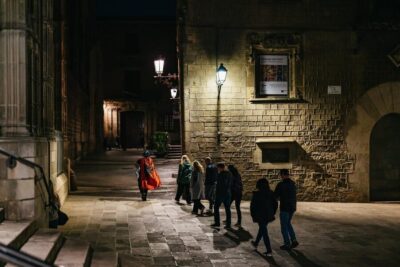 ★ 4.7Gothic Quarter Ghosts and Legends Walking TourFrom $191,443 reviews
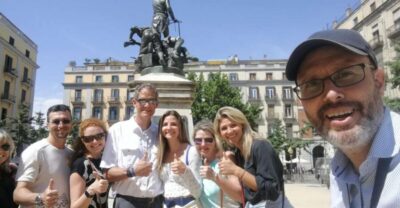 ★ 4.8Old Town and Gothic Quarter Walking TourFrom $211,393 reviews
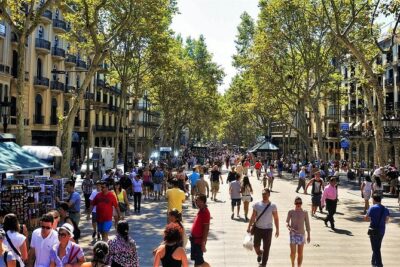 ★ 5.0Barcelona Old Town & Gothic Quarter Small Group TourFrom $221,308 reviews
 ★ 4.8El Born and Gothic Quarter Wine & Tapas Bar TourFrom $81674 reviews
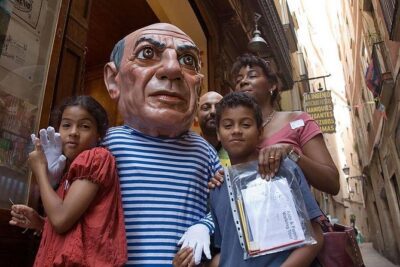 ★ 5.0Kids and Family Gothic Quarter Walking Tour in BarcelonaFrom $25465 reviews
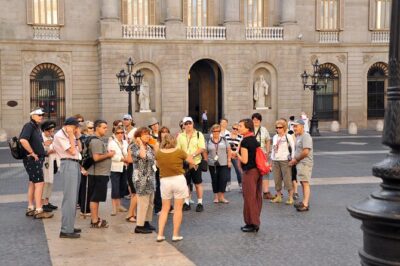 ★ 4.5Barcelona Gothic Quarter Walking TourFrom $33456 reviews
★ 4.9Gothic Quarter Walking TourFrom $212383 reviews
★ 4.5Barcelona Gothic Quarter Walking TourFrom $33456 reviews
★ 4.9Gothic Quarter Walking TourFrom $212383 reviews
Continue by place or experience