
REVIEW · BARCELONA CITY TOURS
Sightseeing Segway Tour in Barcelona
Glide through Barcelona in one smooth loop. I love how the short Segway training gets you moving quickly, and I like that you cover a ton of sights without doing nonstop walking through the Gothic streets.
The biggest thing to consider is practical: Segway rules are strict (local law puts the Segway minimum age at 16, with younger kids on electric bicycles), and there are weight limits (45 kg to 117 kg).
Key Highlights That Make This Tour Worth Your Time
- Quick Segway start with helmets, water, and raincoats included
- Ciutadella Park highlights like the Arc de Triomf and Modernist Castell dels Tres Dragons
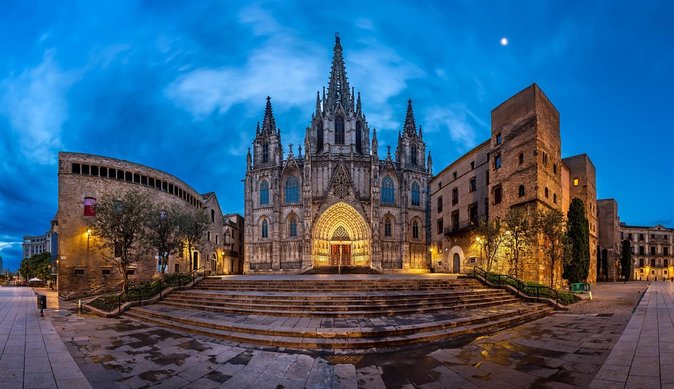
- A Gothic Quarter to waterfront sweep that’s ideal for limited time
- Small groups, up to 18 travelers, plus a private option if you want more personal pacing
- Rain-ready operation so you do not lose the day just because clouds show up
Why a Segway Tour Works So Well in Barcelona
Barcelona has neighborhoods you want to see, but getting between them can eat time. This tour is built for people who want the big sights plus a little local context, without spending the whole day bouncing from museum line to museum line.
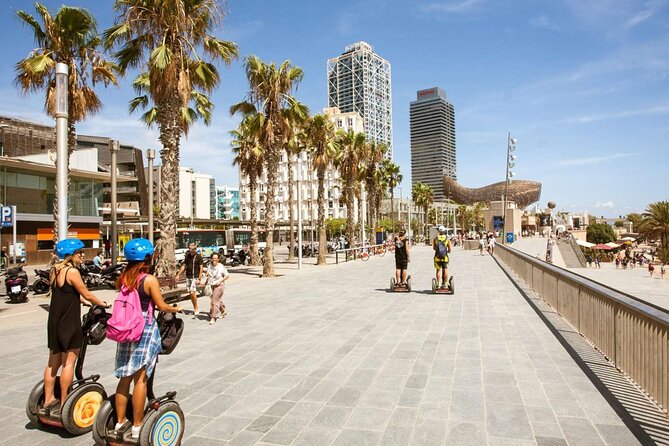
For me, the real win is speed with style. You glide past the 4th-century Roman Wall section, thread through the Gothic area, then swing into green space and finally land by the harbor and beaches. The route stays easy to manage because Barcelona’s streets and paths are set up for bike movement in many areas, so you are not constantly dodging slow foot traffic.
You are also paying for guidance, not just transportation. The guide points out what matters, explains what you are seeing, and keeps the group moving so you do not end up lost while the city keeps going.
You can also read our reviews of more tours and experiences in Barcelona.


Entering the Ride: Training, Helmets, and What Feels Easiest
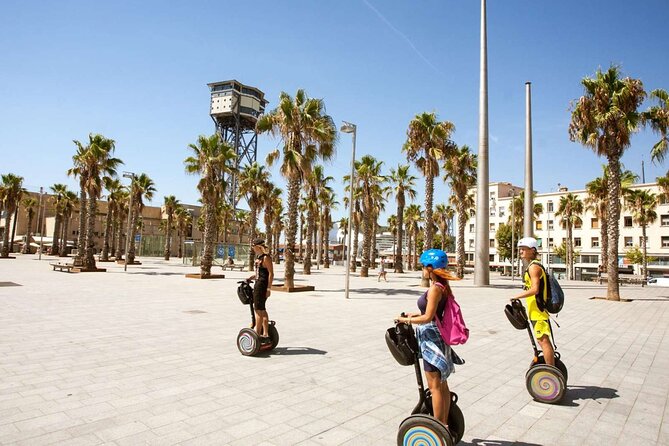
The tour begins at Carrer del Correu Vell, 6, in Ciutat Vella. After you meet your guide, you get a short training session. This is not a long “course,” it is the basics you need to glide confidently, plus the reassurance you want if you are mounting a Segway for the first time.
A few details make this feel smoother from the start:
- Helmets are mandatory, and you get one in your size.
- Bottled water is provided.
- Raincoats are provided if weather turns.
If your group has beginners, watch for the guide’s pacing. In past groups, guides like Pablo and Philippe are praised for being patient and efficient with instruction, which matters because nervous riders can slow everyone down.
Also, do yourself a favor and arrive a bit early. Some people get tripped up by where to check in versus where you practice, so I recommend showing up with at least 20 minutes to spare.
The Route in Plain English: Roman Wall to Port Vell and Back
Think of this as a city loop with a strong theme: ancient roots, Modernist Barcelona, a major park, then the waterfront and beach.
You start around the ancient Roman Wall and head toward Port Vell, the old harbor area. From there, the tour spends real time in and around Parc de la Ciutadella, crosses back through historic districts and iconic architecture, and ends with a seaside finish. Then it all rolls back to your original departure point.
One subtle bonus: because it is a guided route, you get the why behind the visuals. You stop at key places long enough to understand what you are looking at, but the tour avoids long museum detours. That is exactly what makes it work for limited time.
Roman Wall and Port Vell: The Tour’s Two Anchors
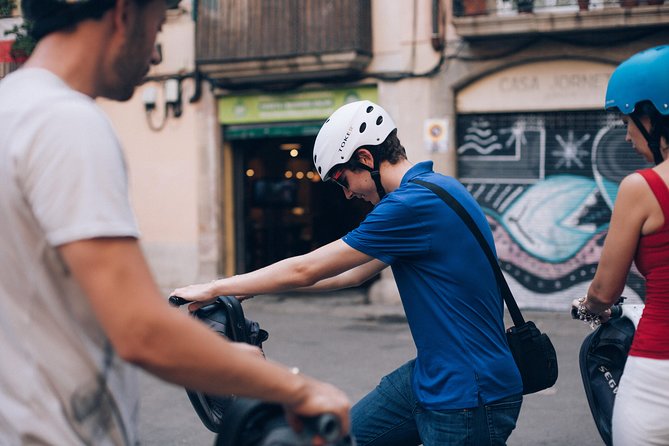
The first anchor is the Roman Wall area. You get a chance to see that Barcelona was not always a modern city of boulevards and beach clubs. The wall section the tour references connects you to the older layers of the city, before you shift into medieval and then Modernist Barcelona.
The second anchor is Port Vell, Barcelona’s redeveloped old harbor. This is where the tour transitions from stone history to a more open, waterfront vibe. You get views of the marina and the promenade energy, with the sea close enough to smell the salt.
Even if you plan to revisit Port Vell later on your own, getting oriented by Segway first is a smart move. You leave knowing where you are and what street names and landmarks mean.
Parc de la Ciutadella: Barcelona’s Green Lung, Built for 1888
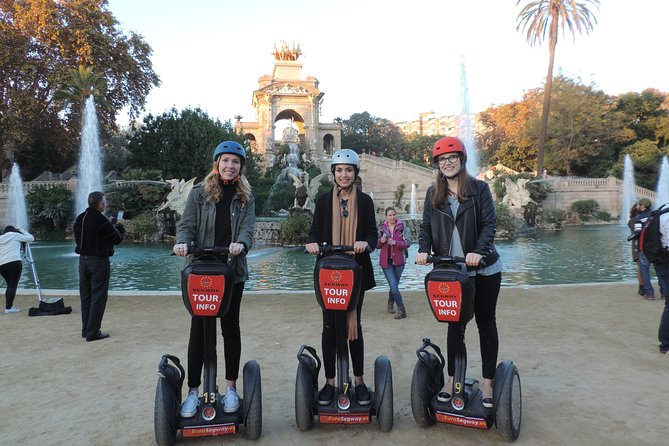
This is the section that most people remember, because it combines space, architecture, and fun details in one concentrated zone.



Arc de Triomf and the 1888 World Fair Spirit
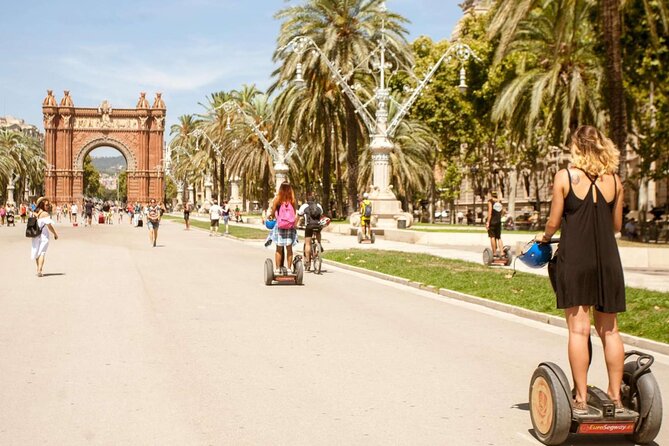
You start with Parc de la Ciutadella, and near the entrance you pass the Arc de Triomf. It is a monumental gateway associated with the first World Fair in Spain. The scale is what hits first, especially after tight Gothic streets. It is also a classic “photo moment” without needing tickets.
Cascada Monumental and the park’s showpiece energy
Next up is the Cascada monumental, the park’s standout fountain scene. It is not just decorative. It is the park’s way of showing that this is an engineered garden space, not a random patch of green.
Parliament of Catalonia: red-and-gold landmark views
Then you reach the Parliament of Catalonia. The building has an 18th-century origin as an arsenal, later converted for parliamentary use. The red-and-gold look is hard to miss, and the way the tour positions it gives you quick context without needing a long stop.
Modernist architecture hits: Castell dels Tres Dragons
One of the most distinct stops is the Castell dels Tres Dragons. It looks like a medieval castle but is tied to Modernisme and the 1888 Universal Exhibition. Even if you are not a Modernist architecture superfan, the red brick and towers make it memorable fast.
Greenhouses (Hivernacle and Umbráculo): when iron and glass go scenic
Two more standout stops are the greenhouse structures:
- Hivernacle del Parc de la Ciutadella
- Umbráculo del Parque de la Ciutadella
These are late 19th-century iron and glass feats, and the tour’s pacing makes it easy to enjoy them without feeling rushed through a museum.
Gardens, lago, fountains, and the playful details
After the big architecture moments, you get the park charm: paths, viewpoints, the Gran Lago, and the Stork and the Fox fountain inspired by La Fontaine’s fables. That last one is small but delightful, especially when you want a story to remember, not just a building name.
The tour also references the Monument Homenatge a Picasso in the same park orbit. It is a quick cultural stop that helps link Barcelona’s art scene to the city’s public spaces.
Passeig de Lluís Companys to El Born: Gothic Beauty Without the Long Walk
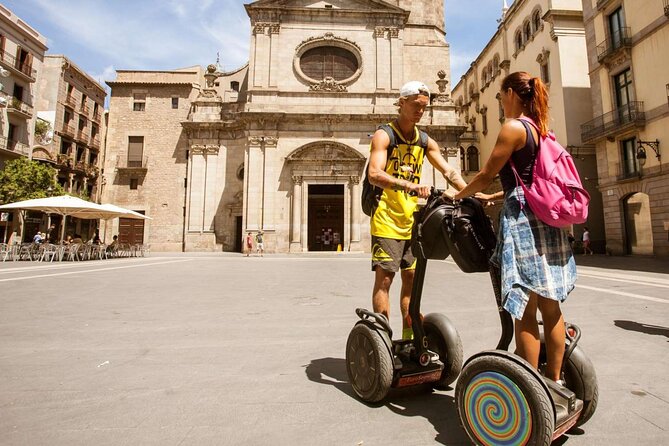
After the park, the tour shifts back toward the historic core via Passeig de Lluís Companys. This grand tree-lined avenue acts like a ceremonial corridor between areas, so it feels like you are moving through the city on purpose, not bouncing around randomly.
From there, the itinerary heads into El Born and nearby Gothic territory.
El Born Centre de Cultura i Memòria: archaeology vibes, no deep detours
You pass the El Born Centre de Cultura i Memòria, a cultural and historical center connected to archaeological remains from the 1700s. Even better for time crunches, the tour philosophy avoids long museum entry stops. So you get the location and context, without the expectation that you will spend half your day inside.
Basilica de Santa Maria del Mar: the serene Gothic stop
Next is Basilica de Santa Maria del Mar, a Catalan Gothic landmark built in the 14th century. The tour does not turn this into a long interior session, but you still benefit from seeing it in the right sequence. It often feels calmer than the street noise around it.
Estació de França: a train station that deserves attention
Then you roll toward Estació de França, known for its early 20th-century iron-and-glass roofing and mix of classic and Modernist elements. It is one of those city spots where architecture is the main attraction, not the trains.
Walls, Markets, and Civic Buildings: The Gothic Quarter’s Power Points
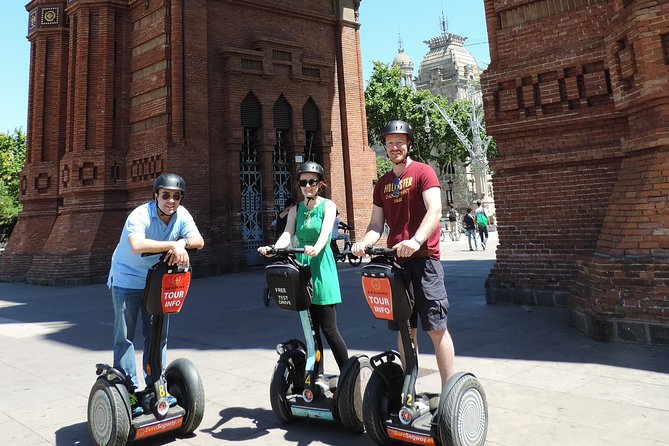
If you like history that shows up in everyday streets, this part is your sweet spot.
Muralla de Mar and Baluard de Migdia
You pass Muralla de Mar and Baluard de Migdia, remnants of 17th-century city fortifications near the waterfront. This is a good reminder that the sea was not always a leisure view. It was defense and protection.
Casa Llotja de Mar and Correus: commerce meets style
You also see:
- Casa Llotja de Mar, originally a merchants’ exchange from the 14th century
- Correus de Barcelona, the old post office building with ornate early 20th-century design
These are the kind of stops that help you understand Barcelona as a working city, not only a postcard city. They also help you appreciate why the Gothic Quarter feels so “alive” even when it is old.
La Cara de Barcelona: pop art in the middle of stone
A fun pivot comes with the La Cara de Barcelona, the large Lichtenstein-style sculptural head. It gives you a modern visual break, and it is a great spot for quick photos without needing a ticket.
Plaça de la Mercè and the Columbus moment
Then you pass Plaça de la Mercè, named for the city’s patron saint La Mercè. The route also includes the Monument a Colom, the tall 1888 Universal Exhibition column at the bottom of La Rambla. It is a classic landmark that helps you connect your Segway loop to the city’s main tourist axis.
Port Vell to the Beach: Where the Tour Turns from History to Air and Sea
When the tour reaches Port Vell and continues toward Barceloneta, the vibe changes quickly. You get open sightlines, sea-breeze feels, and the relaxed energy of waterfront neighborhoods.
A few stops matter here:
- Museu d’Història de Catalunya appears in the area, but the tour does not include museum entrance, so treat it as a view-and-context stop.
- Torre del Rellotge Barceloneta, an 18th-century clock tower tied to maritime facilities, adds a practical history angle.
- The route sweeps along Barceloneta Beach, plus Platja de Sant Sebastià and Platja del Somorrostro.
Mirador del Mediterrani: a quick payoff view
You also reach a viewpoint stop at Mirador del Mediterrani. This is the kind of stop that makes the tour feel complete. After walls, arches, and fountains, you get the payoff shot where the Mediterranean becomes the star.
Villa Olímpica and the 1992 Olympic setting
Next the tour moves into La Vila Olímpica del Poblenou, created for the 1992 Olympics. You get the modern neighborhood layout and the sea-adjacent feel, then pass Plaça dels Campions and head toward Platja de la Nova Icària.
If you want a single Segway tour that covers old Barcelona and newer seaside Barcelona, this is it.
David & Goliath: a dramatic stop you can actually spot
Near the beaches, the tour also references the David & Goliath sculpture, a public artwork that grabs attention with its scale and story. It is a nice “last act” stop before you head back toward the meeting point.
Comfort and Rules: The Practical Stuff That Can Save Your Trip
Segways are fun, but they come with real-world constraints. Here is how to plan so you are not stuck mid-tour.
Age and child options
- Minimum age for the tour is 12, and children must be accompanied by an adult.
- Local law sets the minimum age to ride a Segway at 16.
- For underaged participants, the operator provides electric bicycles for children at the same tour price.
If you have a mixed-age group, this is where the tour becomes family-friendly in a useful way. Just make sure the adults and teens in your group meet the Segway rules.
Weight limits
- Minimum weight: 45 kg (100 lbs)
- Maximum weight: 117 kg (260 lbs)
Weather
The tour operates in all weather. If it rains, you get raincoats, and you should wear comfortable shoes anyway. If weather is severe, an alternative date and time is offered.
I also like Barcelona’s own reality here: clouds can happen. This tour is one of the few ways to keep moving without switching plans all day.
Group size and personal attention
The tour caps at 18 travelers. That keeps things manageable for training, photos, and pacing. There is also a private tour option if you want less group energy and more time for questions.
Price and Value: What $35 Buys in Real Sightseeing Time
At $35 per person, this is one of the better deals for people who want to see major parts of Barcelona quickly.
Here is what you are really paying for:
- A guided loop that links major landmarks across neighborhoods
- A Segway training session so you do not feel lost
- Included gear (helmet) and included extras (water and raincoats)
- A format that skips museum entry time
Because museums are not part of the paid experience, you are not paying for ticketed indoor stops. Instead, you are buying outdoor orientation plus landmark context. If your goal is to sample the city and still have energy to explore on your own later, the price makes sense.
Also, the tour is offered in English, has mobile tickets, and includes group discounts. It is often booked about 18 days in advance, which tells me it is a popular “first few days in Barcelona” activity.
Should You Book This Barcelona Segway Tour?
Book it if:
- You are short on time and want a lot of highlights in one go.
- You want an easy way to handle the city’s distance between Gothic areas, Ciutadella, and the waterfront.
- You are comfortable learning a new ride style and you meet the age and weight rules.
Skip it (or consider carefully) if:
- You want long museum visits or slow, deep indoor time. This tour is designed to move.
- Your group includes riders who do not meet the Segway age or weight requirements. The child bicycle option helps, but the Segway limits are real.
- You hate the idea of riding in rain, even with raincoats. It is rain-ready, but you still need decent clothing.
If you are a first-timer, a couple, or traveling with teens who are old enough to ride, I think this is a smart, cost-effective way to get your bearings fast and enjoy Barcelona’s variety in a single afternoon.
FAQ
How long is the Segway sightseeing tour?
The duration is approximately 1 to 3 hours.
Where does the tour start and end?
It starts at Carrer del Correu Vell, 6, Ciutat Vella, 08002 Barcelona, Spain, and ends back at the same meeting point.
Do I need experience to ride a Segway?
No experience is needed. You begin with a short training session and then ride with your guide.
What are the age and Segway riding rules for children?
The minimum age to participate in the tour is 12, but local law requires participants to be at least 16 to ride a Segway. Children who are too young for a Segway are provided electric bicycles (tour price remains the same).
What are the weight limits for Segway riders?
The minimum weight is 45 kg (100 lbs) and the maximum is 117 kg (260 lbs).
What is included in the price?
Helmet (mandatory), bottled water, raincoats, and a guide or instructor are included.
Does the tour run in rainy weather?
Yes, it operates in all weather conditions. Raincoats are provided, and you should dress appropriately.
Are museum entrances included?
No. The tour is designed to be fast and easy, and it does not include entrance to museums or other buildings.
Is there free cancellation?
Yes, you can cancel up to 24 hours in advance for a full refund. If you cancel less than 24 hours before the start time, the amount paid is not refunded.
More Tours in Barcelona
More Tour Reviews in Barcelona
Not for you? Here's more nearby things to do in Barcelona we have reviewed










More Barcelona City Tours worth opening.
 ★ 4.4Park Güell Admission TicketFrom $2576,534 reviews
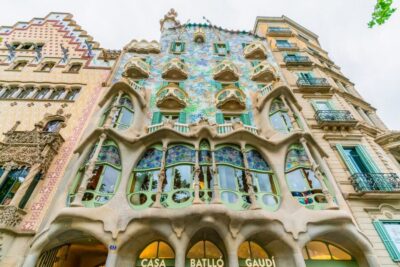 ★ 4.7Casa Batlló Entry with Self-Audioguide TourFrom $3425,359 reviews
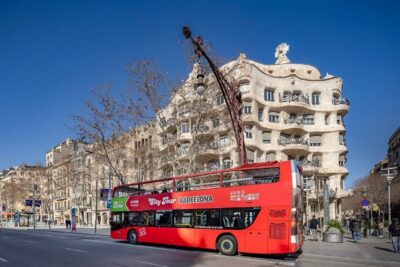 ★ 4.424 or 48-Hour Hop-On Hop-Off Bus TourFrom $3920,872 reviews
 ★ 4.7Park Guell Guided Tour with Skip The Line EntryFrom $3117,563 reviews
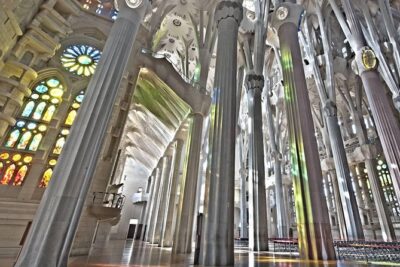 ★ 5.0Barcelona in 1 Day: Sagrada Familia, Park Guell,Old Town & PickupFrom $12013,541 reviews
 ★ 4.3Barcelona Aquarium: Entry TicketFrom $3113,335 reviews
 ★ 4.8Sagrada Familia Skip-the-Line Entry Ticket & TourFrom $6712,789 reviews
 ★ 4.4FC Barcelona Museum “Barça Immersive Tour” TicketFrom $3510,944 reviews