
REVIEW · BARCELONA CITY TOURS
Barcelona El Raval Dark History Walking Tour
A few blocks can change how you see Barcelona. This 2-hour El Raval dark history walk brings you close to the city’s foundling-care past, medical autopsy legacy, and old religious sites, with small-group storytelling from guides like Eoghan, Cal, Callum, Zeynep, Andres, and Albert. The big drawback: the theme leans gritty and unsettling at times, so if you want only pretty postcard sights, this may feel a bit heavy.
I like that the tour hits both sides of the neighborhood, crime-and-punishment stories alongside places that are still beautiful and lived-in. You also get practical payoffs, you’ll learn how Raval fits into Barcelona’s bigger story, and you’ll finish with a spot that’s easy to keep exploring on your own.
Key things to know before you go
- Max 15 people means the guide can slow down and answer questions while you’re walking
- 2 hours with free stop admissions keeps the pace focused and good value for $33.42
- Real local landmarks like Sant Pau del Camp and Jardins de les Tres Xemeneies anchor the stories
- Mobile ticket makes check-in simple
- Expect gritty history themes, including crime legends and hospital-era autopsies
A Side of Barcelona You Usually Miss in Plain Sight
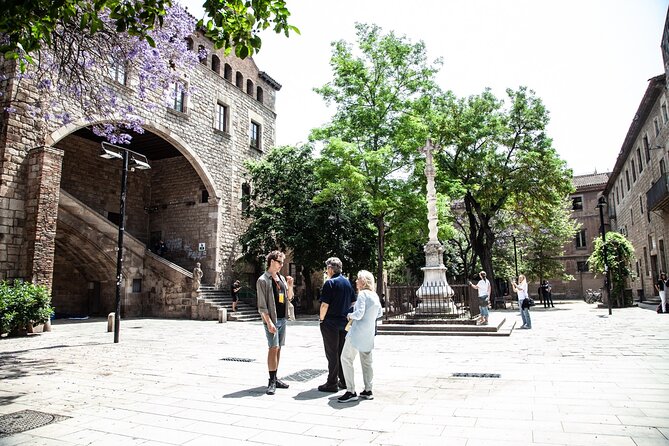
El Raval can look rough from the outside. This tour helps you read it. You’re not just passing by street corners, you’re learning why those corners matter, from care for abandoned infants to the medical world that grew out of old institutions.
What I like most is the way the guide turns “dark history” into clear street-level context. And I love that this is not some lecture with a wandering group, it’s a tight walk with stops at real places you can later point to on a map.
One consideration: the stories involve violence, death, and crime legends. The tone is often engaging and sometimes even light in delivery, but the subject matter stays dark.
You can also read our reviews of more walking tours in Barcelona



How the small-group size changes the vibe
With no more than 15 people, you get something you rarely get on big group tours, attention. The guide can keep the pace human. You can also ask questions without waiting for a gap in the line.
This matters in Raval. Some neighborhoods feel easier when someone local is literally walking you through them, explaining what you’re seeing. Many guide-led experiences here can feel scripted. This one tends to feel personal, especially when guides like Eoghan or Cal are leading, based on repeated feedback about their storytelling and upbeat presence.
If you’re coming with kids or family, this smaller format can help everyone stay engaged. And if you’re solo, it can feel less intimidating, because the group stays compact.
Starting Point: Sant Pere Nolasc Mercedaris and Pl. de Castella
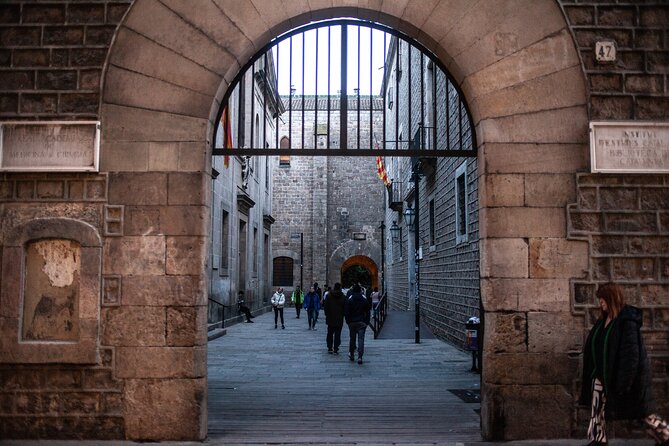
You meet at Parròquia de Sant Pere Nolasc Mercedaris, Pl. de Castella, 6, in Ciutat Vella. It’s a smart starting area because it sets a “local Barcelona” frame right away. You’re already in the district where old buildings have multiple lives, religious, charitable, medical, and later, cultural.
The tour runs about 2 hours. That timeframe is good because it’s long enough to connect the dots between the different kinds of history you’ll see, without turning into a half-day hike.
You’ll also be walking through streets that look ordinary but carry loaded stories. That’s the whole point. You’ll notice details more sharply after the guide explains what to look for.
Casa de Misericòrdia: the foundling wheel hidden in plain sight
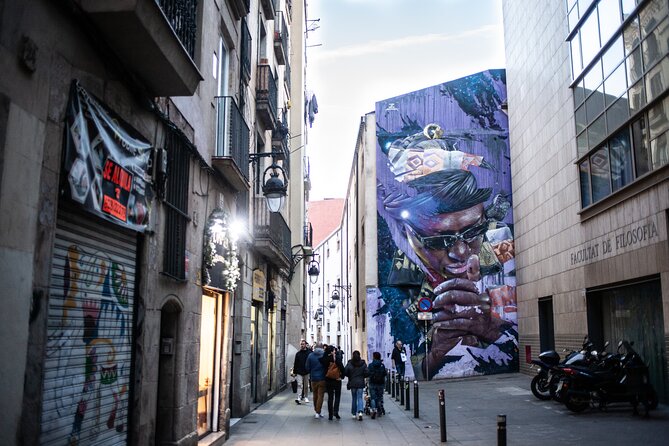
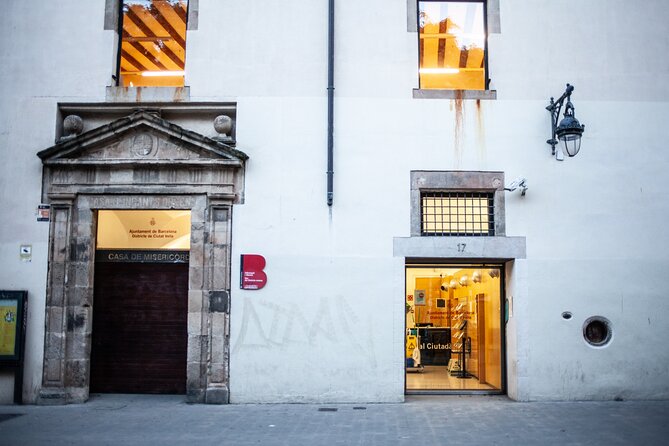
One stop is the Fundació Privada Casa de Misericòrdia de Barcelona, where a foundling wheel for unwanted infants is tucked into a charitable setting that many people would overlook. This is one of those moments where you realize history is right there, not sealed behind museum glass.
The value here is emotional and practical. You’re learning how the city managed hardship before modern social systems existed. And because the wheel is described as hidden in plain sight, you’ll understand the lesson even if you don’t know the architecture at first glance. The guide helps you connect the physical space to the human story.
Practical note: this is a free-admission stop, so you’re not paying extra once you’re on the ground. It also means you can focus on listening and looking, not budgeting for entry fees.
Carrer de Joaquín Costa: crime stories that make the streets make sense
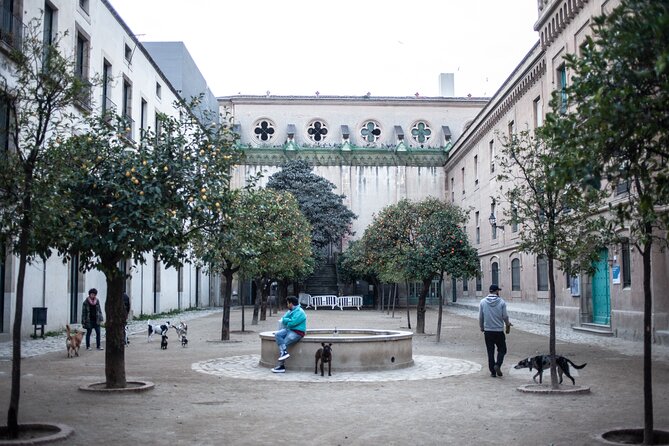
Next, you head to Carrer de Joaquín Costa, a street tied to a villain whose crimes are meant to make you think twice about what you assume when you hear the word Raval.
This stop can feel theatrical, but it’s meant to be educational. The guide is using the crime legend to explain how reputations form, how neighborhoods get labeled, and how those labels can stick even when the area changes.
I like this approach because it’s not fear for fear’s sake. It’s a way to talk about Barcelona’s underbelly without pretending it’s all gloom. You’ll come away understanding that “dark history” also has a social side, the way people, institutions, and power shaped what happened and what got remembered.
You can also read our reviews of more historical tours in Barcelona



Real Academia de Medicina de Cataluña: autopsies and a former hospital past
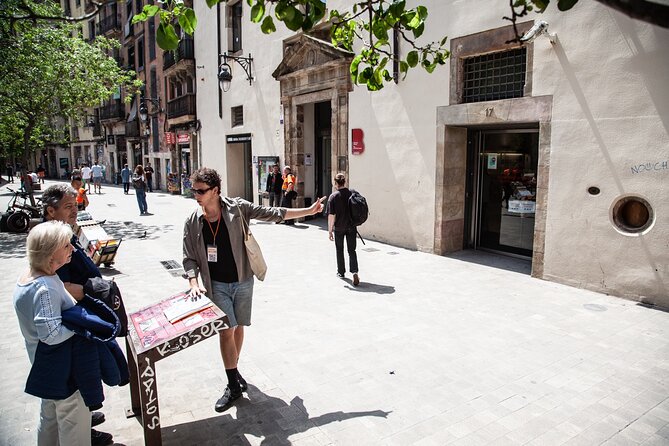
Then you visit the Real Academia de Medicina de Cataluña, part of the former Hospital of la Santa Creu, known for its autopsies.
This stop is for people who want history with real stakes. Medicine was not neutral. Death was not just tragic, it was a pathway to learning, but also a practice carried out in specific historical conditions. The guide’s job here is to keep it comprehensible, explaining what the institution was, why it mattered, and how that connects to the city’s broader evolution.
Because this stop is also listed as free admission, you’re getting high-impact content without extra ticket costs. It’s a strong pivot from street-level crime stories into institutional history, which helps the whole tour feel more complete.
If you’re sensitive to topics involving the dead, keep that in mind. The guide should frame it respectfully, but the subject is still about autopsy work.
Sant Pau del Camp: Barcelona’s oldest church with a violent backstory
At Sant Pau del Camp, you’re looking at Barcelona’s oldest church, with a previous monastery history that includes violence.
This is where the tour balances out. You get real architecture and a sense of continuity, old stones that have survived centuries of change. Then the guide adds the harder context, the fact that religious sites were not always peaceful places, and the city’s history includes conflict even where people came to pray.
I love stops like this because they change how you walk past “historic” buildings. Instead of seeing them as pretty backdrops, you see them as places where lives intersected, in good times and bad.
Sant Pau del Camp is also a free-admission stop, which keeps the tour moving smoothly. You won’t feel nickeled-and-dimed, and you can linger just enough to take photos without losing the story flow.
Avenida del Paralelo: the Chinese district and 20th-century nightlife

You then move to Avenida del Paralelo, described as connected to the Chinese district and the hub of 20th-century nightlife that leaned “seedier.”
This is a tricky part of many tours, because nightlife history can turn into vague clichés. Here, it’s presented as place-based history. The guide points you toward understanding how entertainment districts grow, what industries cluster nearby, and how immigrant communities and migration patterns can intersect with city life.
It also shifts the mood. After serious topics and old institutional walls, you’re back to a street that feels like a living avenue. Even if the area looks different today, you’ll learn what it used to represent.
For me, this stop is one of the reasons the tour is worth it even if you’re not looking for horror-themed stories. It’s also about urban change, who lived where, and how the city’s nightlife shaped its identity.
Jardins de les Tres Xemeneies: where industry meets graffiti
The tour finishes at Plaça de Les Tres Xemeneies, at Jardins de les Tres Chimeneies along Av. del Paral·lel.
This ending spot is smart. The gardens are tied to a past as a center of industrial Barcelona, and now they’re known as a great place for graffiti art lovers. It’s the “then and now” ending you want after a dark-history walk. You see that neighborhoods do not only decay or repeat tragedy. They transform.
If you like street art, this is a natural place to continue your Barcelona day without booking another activity. You can sit for a moment, then explore nearby at your own pace while the stories are fresh in your head.
Price and value: is $33.42 a good deal?
At $33.42 per person for about 2 hours, this tour can be strong value because several things line up:
- You get an experienced local guide with a clear theme and specific stop locations
- The major stops listed are free admission, so you’re not paying extra entry fees as you go
- The group is kept small (up to 15), which usually means a better listening experience than big-bus style tours
- You also get a mobile ticket, which reduces hassle on the day
So you’re paying for human interpretation, not just transportation and photos. That’s often where walking tours either shine or disappoint. Based on the strong feedback about guides like Eoghan and Cal, the guide performance is a big part of why people rate it so highly.
Who should book this Raval dark history walk
This tour fits best if you want:
- A neighborhood feel rather than only headline monuments
- History that includes the uncomfortable parts, without pretending they never happened
- A story-driven walking format that helps you connect streets to social change
You might skip it if:
- You want a very light, easygoing city intro with only cheerful themes
- You get easily uncomfortable with death, medical history, or crime narratives
For most people, though, it works well as an “orientation tour.” It’s the kind of walk that helps you understand why Raval looks the way it does and how it became part of Barcelona’s modern identity.
Quick tips so you enjoy it more
A few practical things will help:
- Wear comfortable shoes. It’s a walking tour through older streets and uneven sidewalks.
- Bring a phone battery. You’ll have a mobile ticket, and you’ll likely want to reference locations after the walk.
- If the theme is heavy for you, tell your guide early. A good guide will adjust the tone without stripping the content.
Should you book this tour or pass?
If you like your Barcelona history honest, not sanitized, I’d book it. The combination of small-group size, free admissions at multiple stops, and a route through iconic-but-often-missed places like Sant Pau del Camp and Jardins de les Tres Xemeneies makes it more than a gimmick.
My only caution is the subject matter. If you’re chasing sunshine and only want pretty sights, this isn’t the right fit. But if you want to understand Raval as a real neighborhood shaped by institutions, people, and hard times, this walk is a smart use of your time.
FAQ
How long is the Barcelona El Raval Dark History Walking Tour?
It runs for about 2 hours.
How much does the tour cost?
The price is $33.42 per person.
How big is the group?
The tour has a maximum of 15 travelers.
Where does the tour start and end?
It starts at Parròquia de Sant Pere Nolasc Mercedaris, Pl. de Castella, 6, Ciutat Vella and ends at Plaça de Les Tres Xemeneies, Av. del Paral·lel, 49, at Jardins de las Tres Chimeneies.
Are entrance fees included for the stops?
The listed stops indicate free admission tickets.
Is lunch included?
No. Lunch is not included.
Do I need a printed ticket?
No. The tour uses a mobile ticket.
Can I cancel for a refund?
Yes, you can cancel for a full refund if you cancel at least 24 hours before the experience starts.
Are service animals allowed?
Yes, service animals are allowed.
More Walking Tours in Barcelona


More Tours in Barcelona




More Tour Reviews in Barcelona

Not for you? Here's more nearby things to do in Barcelona we have reviewed









More Barcelona City Tours worth opening.
 ★ 4.4Park Güell Admission TicketFrom $2576,534 reviews
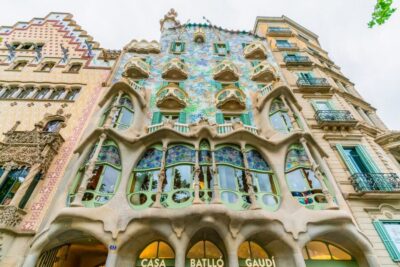 ★ 4.7Casa Batlló Entry with Self-Audioguide TourFrom $3425,359 reviews
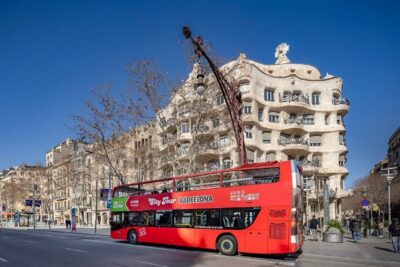 ★ 4.424 or 48-Hour Hop-On Hop-Off Bus TourFrom $3920,872 reviews
 ★ 4.7Park Guell Guided Tour with Skip The Line EntryFrom $3117,563 reviews
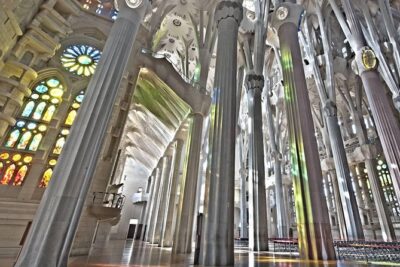 ★ 5.0Barcelona in 1 Day: Sagrada Familia, Park Guell,Old Town & PickupFrom $12013,541 reviews
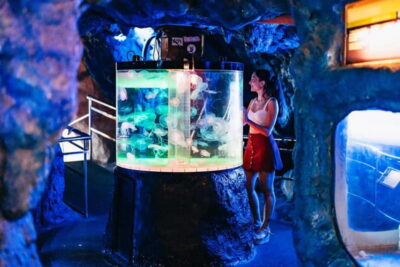 ★ 4.3Barcelona Aquarium: Entry TicketFrom $3113,335 reviews
 ★ 4.8Sagrada Familia Skip-the-Line Entry Ticket & TourFrom $6712,789 reviews
 ★ 4.4FC Barcelona Museum “Barça Immersive Tour” TicketFrom $3510,944 reviews
Continue by place or experience