
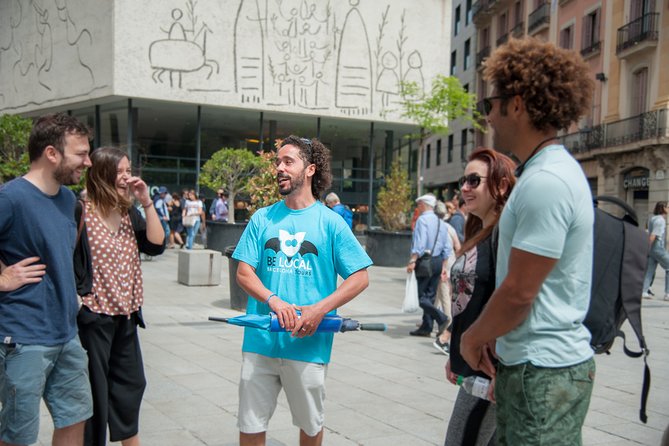
REVIEW · GOTHIC QUARTER TOURS
Gothic Quarter – Private Tour
Gothic Barcelona makes sense on foot. This private 2 hour 30 minute walk links Roman Barcino layers, medieval streets, and Catalan Gothic landmarks into one easy route, led in English by a local guide. You get a focused, human-scale tour of Ciutat Vella that feels like Barcelona’s past is right where you stand.
I like the way the route forces you to look closely, with stops that go beyond postcards, from outdoor Roman tombs to the Cathedral’s neo-Gothic front. You’ll also appreciate that pickup can be arranged within 0.5 km of Plaça de Catalunya, which reduces the usual first-day stress. The main consideration is practical: this is still a walking tour through tight historic streets, and it requires good weather, so pack for comfort.
Key highlights worth planning around
Roman Barcino outdoor tombs are part of the story, not just a photo stop
Catalan Gothic architecture gets explained at eye level, including a 14th-century church
Jewish Quarter alleys help you connect medieval life with what you still see today
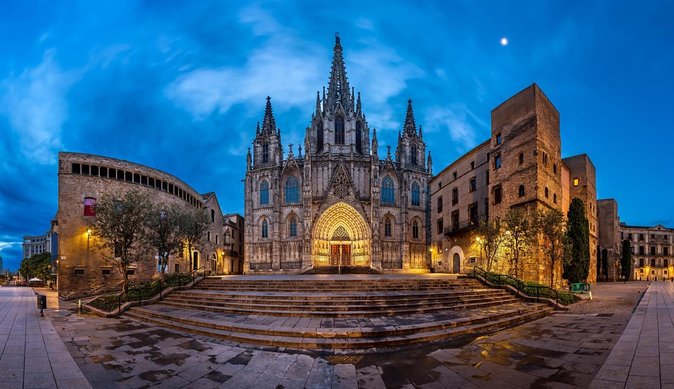
Santa Creu and Santa Eulalia brings together medieval origins and neo-Gothic design
Plaça del Rei and Santa Àgata show power, faith, and the city’s shifting identity
Private group pacing works well if you need slower breaks or want time for questions
Getting oriented at Plaça de Catalunya, then slipping into Ciutat Vella
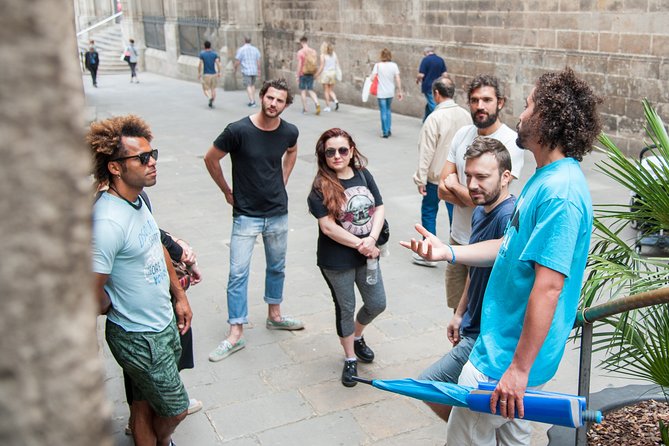
Most Barcelona first-timers start with the big hits. This tour starts with a smarter move: you meet at Plaça de Catalunya (L’Eixample), then head into the Gothic Quarter area. That shift matters. Plaça de Catalunya gives you a clean starting point near transit, and from there you can disappear into the old streets without feeling lost.
If you choose pickup, it can happen within 0.5 km of Catalunya Square. The guide carries a company card, so you are not left guessing who is with the tour. For me, that is the kind of small detail that saves the first 20 minutes of a walk, and in an area with narrow streets, saving time early helps you enjoy everything later.
The tour ends at Pl. de Correus in Ciutat Vella. That is useful because you are not forced back to your exact starting point. You can keep exploring right after the tour, grab a snack, or connect to other plans while your feet and your curiosity are still warmed up.
You can also read our reviews of more private tours in Barcelona



From La Rambla’s history to the medieval streets you can actually feel
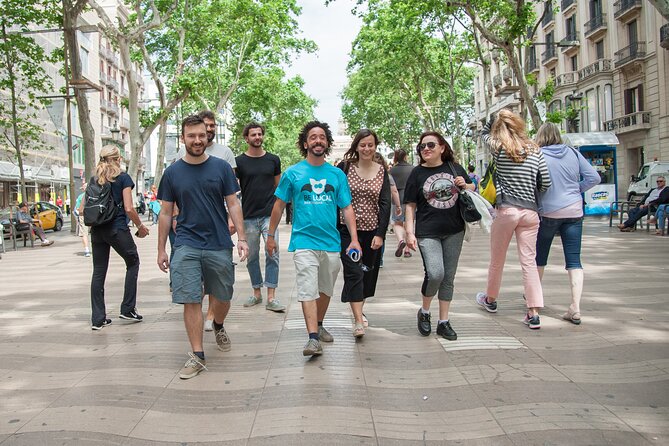
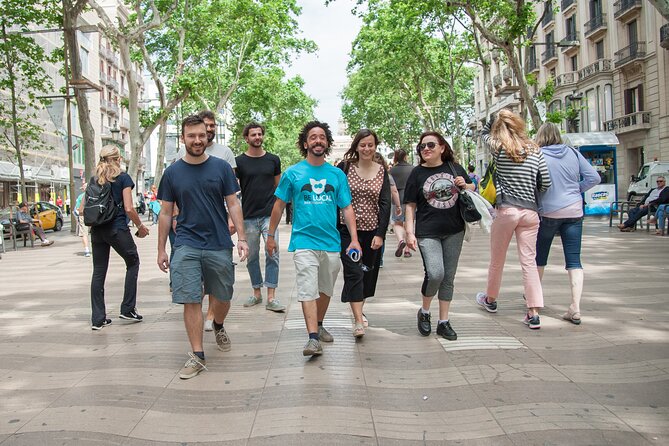
La Rambla is the obvious place to start, but the tour treats it like a gateway. You are not just looking at the avenue. You are being shown how it fits into Barcelona’s identity, with history, movement, and meaning tied to the city’s soul. That sets the tone for what comes next: the Gothic Quarter is not only dramatic stonework. It is also daily life that grew in the cracks between eras.
Then you move into one of Barcelona’s most distinctive zones, the medieval stretch of narrow lanes where churches and palaces from different periods sit close together. This is where a guide really earns their fee. Without someone to connect the dots, it is easy to see stone and towers. With a good explanation, you start seeing why the street layout and building choices mattered.
A practical note: plan for stop-and-look time. The streets are tight, and the buildings create constant little turns. Comfortable shoes help a lot, and so does a light jacket. Even if the weather is good, shaded alleys can feel cooler than open streets.
Roman Barcino and outdoor tombs, explained without turning into a lecture
One of the best reasons to choose a guided walking tour here is the way it brings time layers into focus. The tour includes an old imperial burial site where you can see numerous Roman outdoor tombs. This is the part that makes the Gothic Quarter more than medieval scenery.
The idea is simple but powerful: Barcelona was here long before the Gothic Quarter became the Gothic Quarter. When you stand near Roman remains, the medieval buildings stop feeling like they appeared out of nowhere. Instead, you understand the city as a long-running project, with later generations reusing, rebuilding, and redefining space.
I also like that the Roman segment is not isolated. It supports the rest of the walk, from medieval streets to political and religious landmarks. That continuity is what makes the tour stick in your head after you leave.
The old Jewish quarter, old-world alleys, and everyday pastimes
The tour moves into the old Jewish quarter of Barcelona, with alleys that keep a medieval flavor. This is one of those areas where the physical setting can do half the teaching, because narrow lanes and old street patterns make you slow down. A guide helps you slow down on purpose, not just because you are turning corners like everyone else.
You also get a stop at a charming street known for traditional churrerías and for details tied to Barcelona’s past. That combination is a smart choice. It prevents the tour from becoming only cathedrals and ruins. You get a sense of how people ate, walked, and lived, which is part of understanding any historic neighborhood.
If you care about food culture, you’ll likely enjoy the guide’s habit of pointing you toward places for pastry and chocolate after the history part. In at least a couple of accounts, guides like Patrick also offered recommendations for sweets, which makes the walking experience feel like it turns into a real day out, not just a lesson.
A 14th-century Catalan Gothic church, then Santa Creu and Santa Eulàlia
A major stop is a wonderful 14th-century church that is highlighted as a masterful example of Catalan Gothic architecture. Even if Gothic styles can blend together when you first see them, a guide will help you notice what to look for: shapes, proportions, and the way the building announces its style without needing giant crowds.
Then the walk reaches the Cathedral of Santa Creu and Santa Eulàlia, one of Barcelona’s most impressive churches. What I find especially useful here is the contrast the tour draws between time periods: a neo-Gothic façade over a medieval structure. You are not only looking at a big attraction. You are learning to read the building as a record of change.
This cathedral stop is a big reason the tour works well for first-time visitors. It puts your feet on a route that ends in a major landmark, so you finish feeling like you accomplished something tangible, not only a lot of turns.



Hidden squares, Spanish Civil War scars, and a neo-Gothic bridge with symbols
Barcelona has plenty of pretty squares. This tour adds something more interesting: a beautiful hidden square with a baroque church showing marks from the Spanish Civil War. Seeing those scars in context changes how you view the neighborhood. It is a reminder that history is not only costumes and anniversaries. It also includes what people endured.
The tour also includes an elaborate neo-Gothic bridge famous for its spectacular design and for curious, disturbing symbols. That description matters because it signals you will not ignore the weird stuff. A bridge like this is one of those places you could walk right past and only notice its look. With guidance, you see how symbols were used, and you start understanding how the city talks to itself through art and design.
If you enjoy meaning behind details, these stops are where the tour earns extra points. They add tension and surprise, which is exactly what makes historic walking tours memorable.
Palau de la Generalitat, Plaça del Rei, and Roman remains tucked out of sight
The tour includes an old medieval palace that served as a symbol of Barcelona’s power and now is the seat of the Government of the Autonomous region of Catalonia, the Palau de la Generalitat. For many visitors, government buildings are just landmarks. Here, you are guided into seeing why the building matters in the city’s long political story.
You then visit Plaça del Rei and the Chapel of Santa Ágata, described as a Gothic and neo-Gothic square with the old Royal Palace of the Kings of Aragon as part of the setting. This is a stop that helps connect architecture with authority. You can feel that the space was designed for power, not for casual wandering.
Another quick but meaningful addition is the remains of the temple of the ancient Roman city of Barcino, tucked into a corner hidden from view. I love stops like this because they train your eyes. You learn that the city does not only reveal itself in the big monuments. Sometimes it shows up in a corner you would never check without a guide.
Price and time: what $66.52 buys you on this walking route
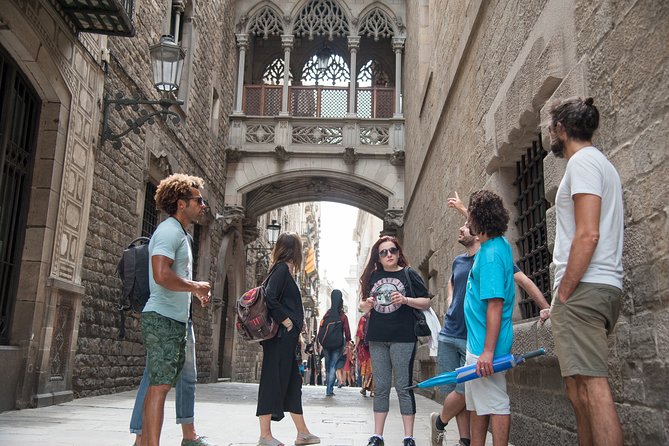
At $66.52 per person for about 2 hours 30 minutes, you are paying for two things: a guide’s time and a guided route that saves decision-making. It is not just facts, it is direction. In a dense place like the Gothic Quarter, knowing where to stand and what to notice is half the value.
The tour includes an experienced local guide and GST. Transport is not included, so you are relying on your own way to get to the meeting point, plus any pickup you request. If you already planned your transit, that is fine. If you were hoping for door-to-door rides, plan differently.
It is also a private tour, meaning only your group participates. That usually affects value in a good way. You can ask questions without waiting for a crowd, and you can adjust pace. Several accounts highlight how guides like Carlos and Patrick kept a comfortable rhythm and even accommodated slower mobility. That matters because walking tours can be fun, until you are fighting your schedule or your energy.
One more practical point: this tour is often booked about 33 days in advance. That suggests it is in demand, likely because it hits a smart route and delivers clear storytelling. If you want a specific date, don’t wait.
How to get the most out of the tour day
If you want this to feel like Barcelona and not like a stamp-collecting exercise, do a couple of things:
Wear comfortable shoes and expect uneven, old-stone footing.
Bring water, especially if you visit in warm months, even if the streets feel shaded at times.
Have one or two topics ready. Maybe you care more about Roman Barcelona, medieval politics, or religious architecture. A good guide can steer you toward what you will enjoy most.
Take photos, but listen first. Some of the most memorable details are symbolic and tied to what you are seeing, not just the view in your camera frame.
If you are traveling with kids or teens, look for a guide style that can keep attention. In multiple accounts, Carlos and Patrick are praised for keeping families engaged, including humor that got young people to pay attention (yes, even a joke involving a poop log). That is a real advantage if you do not want your historic day to turn into a reluctant walk.
Should you book this Gothic Quarter private tour?
Book it if you want a guided, story-driven walk that covers the big turning points of Barcelona, from Roman tombs to medieval churches to major squares. The private format helps, especially if your group includes mixed ages or if you prefer questions and explanations instead of a fast group shuffle.
Skip it or adjust expectations if you hate walking, dislike tight alleys, or need a tour that includes transport. Also, because the experience requires good weather, have a backup plan if rain is in the forecast.
FAQ
FAQ
Where is the tour meeting point?
The tour starts at Plaça de Catalunya, L’Eixample, 08002 Barcelona, Spain.
Can pickup be arranged?
Yes. Pickup is available within 0.5 km of Plaça de Catalunya. The guide will carry a company card.
What is the tour duration?
It lasts about 2 hours 30 minutes.
Is this tour private?
Yes. It is a private tour, so only your group participates.
What language is the tour offered in?
The tour is offered in English.
How much does it cost?
The price is $66.52 per person.
What is included in the price?
The price includes GST and an experienced local guide. It also uses a mobile ticket.
Is transport included?
No. Transport is not included.
What is the end location?
The tour ends at Pl. de Correus, Ciutat Vella, 08002 Barcelona, Spain.
Are service animals allowed?
Yes, service animals are allowed.
What if the weather is bad?
The tour requires good weather. If it is canceled due to poor weather, you’ll be offered a different date or a full refund.
What if I need to cancel?
You can cancel for free up to 24 hours in advance for a full refund.
More Private Tours in Barcelona

More Tours in Barcelona
More Tour Reviews in Barcelona

Not for you? Here's more nearby things to do in Barcelona we have reviewed








More Gothic Quarter Tours worth opening.
 ★ 5.0Barcelona Gothic Quarter Tapas & Taverns Food & Wine TourFrom $1311,470 reviews
 ★ 4.7Gothic Quarter Ghosts and Legends Walking TourFrom $191,443 reviews
 ★ 4.8Old Town and Gothic Quarter Walking TourFrom $211,393 reviews
 ★ 5.0Barcelona Old Town & Gothic Quarter Small Group TourFrom $221,308 reviews
 ★ 4.8El Born and Gothic Quarter Wine & Tapas Bar TourFrom $81674 reviews
 ★ 5.0Kids and Family Gothic Quarter Walking Tour in BarcelonaFrom $25465 reviews
 ★ 4.5Barcelona Gothic Quarter Walking TourFrom $33456 reviews
★ 4.9Gothic Quarter Walking TourFrom $212383 reviews
Continue by place or experience